Hood design-Week 2
HOOD:
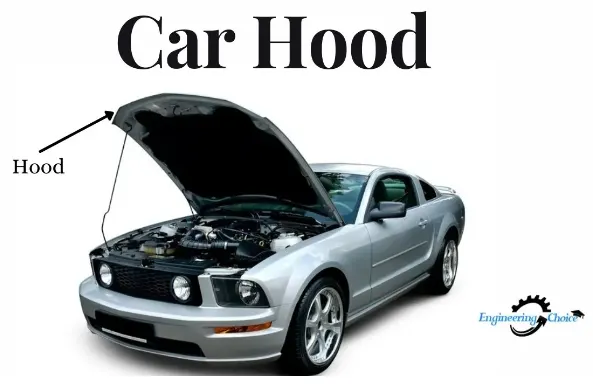
A car hood is the metal part that covers the engine of an automobile. The term car hood is a North American term, used primarily in America and Canada. Hood comes from the Old English word hod which means a hood, a soft covering for the head. Hood is one of the other major closure systems in a vehicle and is fundamentally a reinforced skin with many design quality and safety regulations. Hood may come with several subcomponents, but the two most important ones are the outer and inner panels. A car hood, also referred to as a bonnet in some other countries, is the hinged cover that rests over the engine of a front-engine vehicle. Its purpose is to provide access to the engine for repair and maintenance.
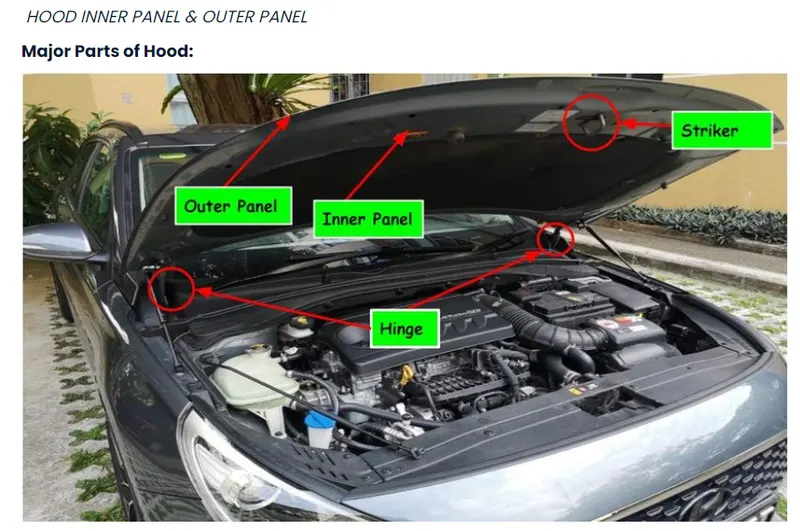
Major parts of Hood assembly are:
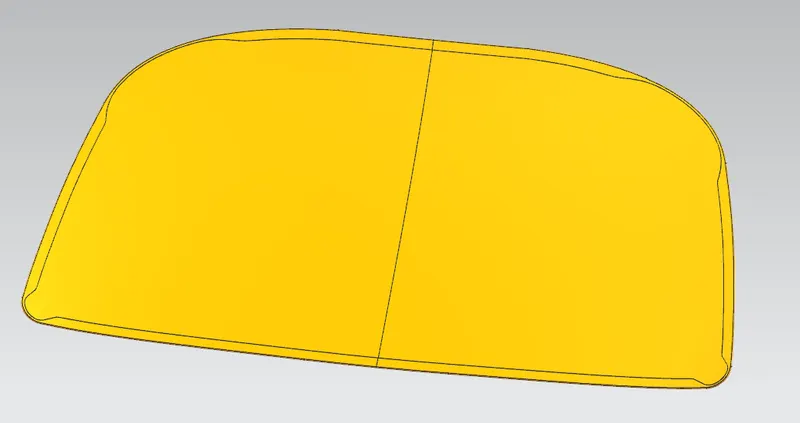
1) Outer panel: It is the part which gives luxurious look to the the inner bonnet. It is joined to the inner pannel by the process of hemming.
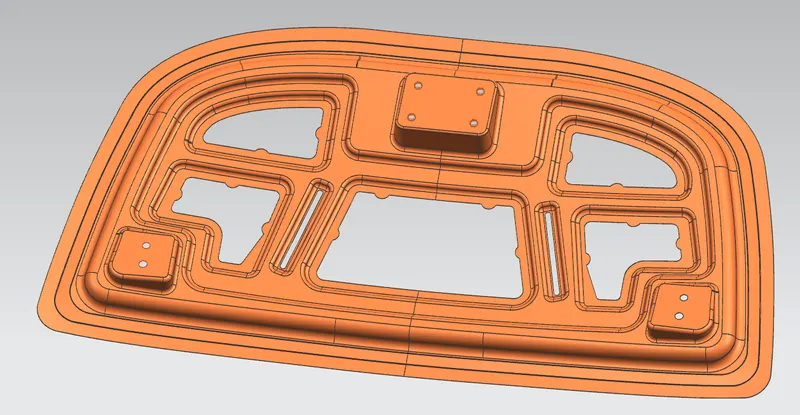
2) Inner panel: Inner panel supports outer panel. It consists of different embosses and holes at different places. Embosses provide stiffness as well as dissipate energy towards hinges.
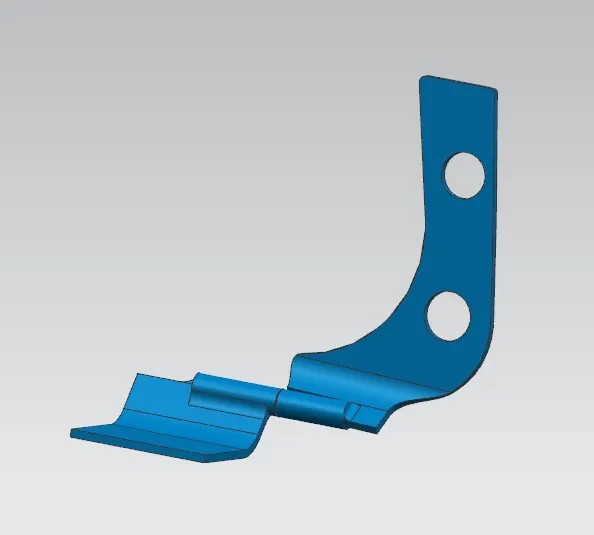
3) Hinges: It guides and holds the hood during opening and closing.
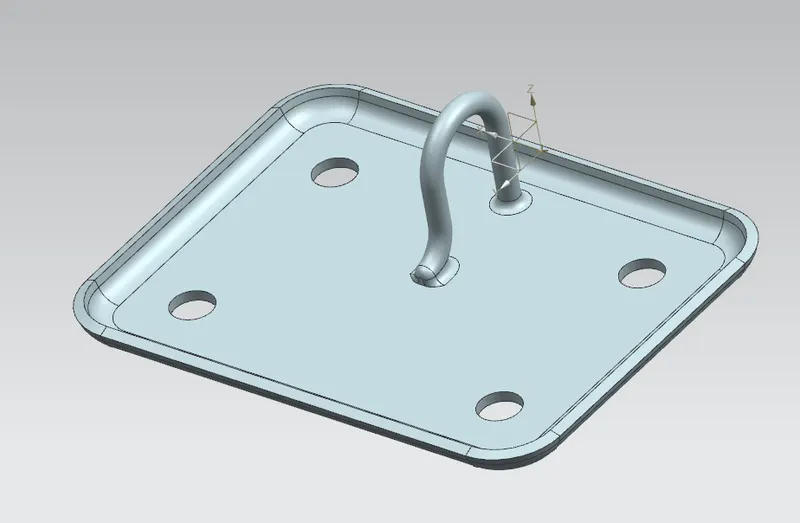
4) Latch and Striker: The hood latch on any car is used to connect the hood release cable to the hood locking mechanism:
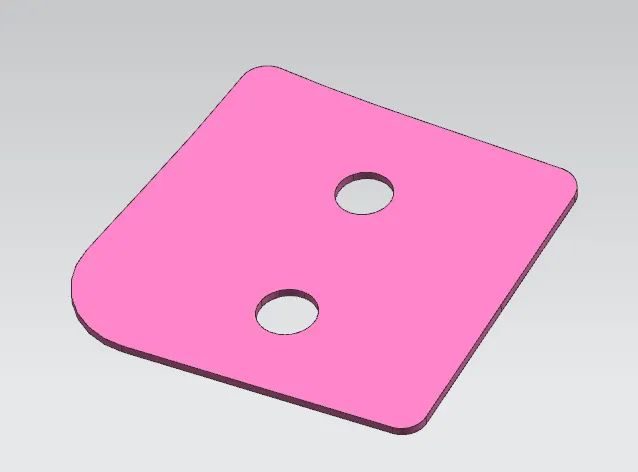
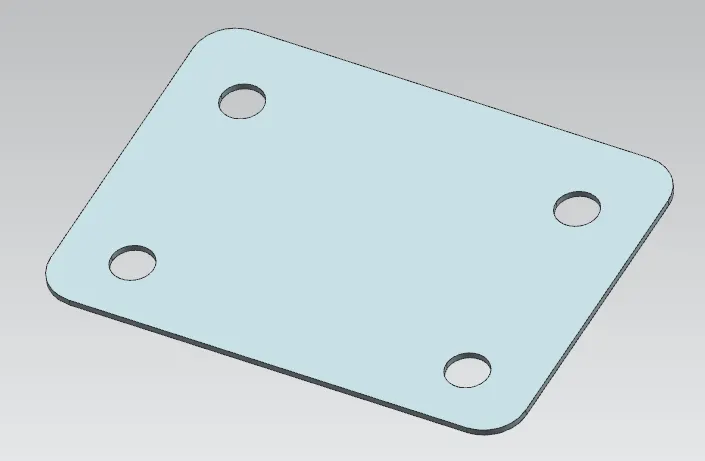
5) Reinforcement Brackets: The addition of Hinges, Latches and Striker will decrease the strength of the inner panel. In order to improve the strength and stiffness of inner panel, additional reinforcement brackets for hinge and latches are provided.
DESIGN CONSIDERATIONS:
1) Head clearance zone:
Head clearance zone is the clearance such that when the hood is in fully open condition it does not hurt the head of the person that is standing next to the hood. This is controlled by the opening angle of the hood. The opening angle of the hood is decided for the region the car is manufactured. Some region may have people with average height of 5.5 ft and another region may have people with average height of 6 ft. So deciding the right opening angle for the hood is an important criteria.
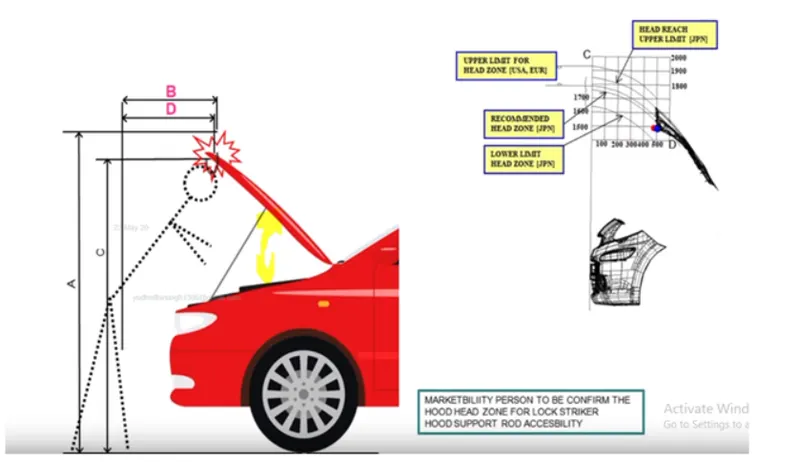
2) Hood stay: A Hood stay is a device which is used to keep the hood in an open position.
There are two types of hood stay:
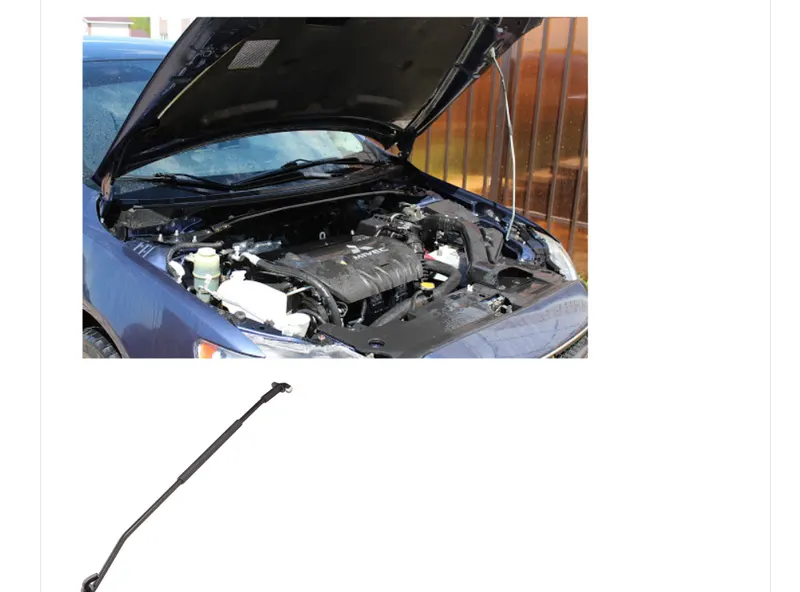
i) Support Rod: Support rod is usually inside the engine compartment , when we open the hood and keep it in open condition , one end of the support rod attaches to the hood and supports it . this support rod has to be fixed manually onto the hood . design of support rod is not linear but it should have some bends to increase the rigidity and strength of the rod . the support rod shoud be mounted such that it does not collided with other parts , also the support rod should be mounted on opposite side of battery to avoid interference with each other .
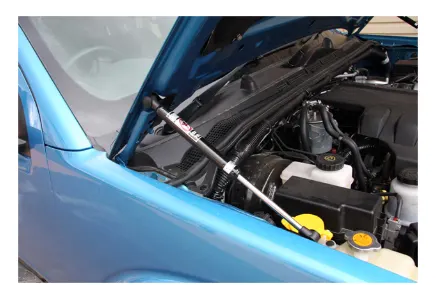
ii) Gas stay: A gas stay is used to open the hood , keep it in a opened state and then closing the hood . this is a automatic process , that is the gas stay uses an actuator to open and close the hood . one side of gas stay is mounted on body side and other side is mounted on the hood . gas stay for the front hood are mainly used in high end performance cars .
3) Consideration of Noise Vibration Harshness (NVH): NVH plays an important role in car design . the noise and vibration produced by the car should be minimized. in the hood , to avoid vibrations stiffner pads are provided . mastic sealants also reduce the nvh . stiffnerpads and mastic are added between inner and outer panel of the hood .
4) Pedestrian safety:
Safety is the most important criteria in automobile design which concentrates on both pedestrian and occupant safety. The pedestrians are the most vulnerable road users and are at high risk of traffic accidents. The major reason for the fatality of the pedestrian in traffic accident is due to the head injury resulting from the hard impact of the head against the stiffer hood or the ground. In order to reduce the head injury of the pedestrian the local stiffness over the area of head impact has to be reduced.
Inorder to make Hood for different pedestrial rating, following methods are used:
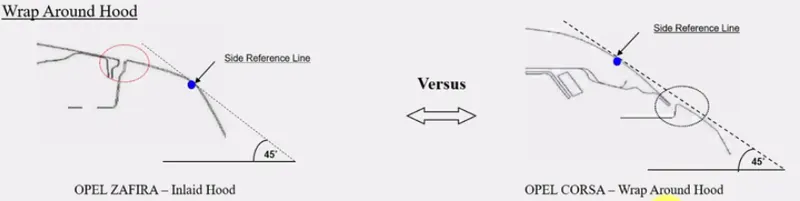
Inlaid Hood:The line which is drawn 45 deg. from ground to Side Reference of car and which is meeting point on fender is called Inlaid Hood.
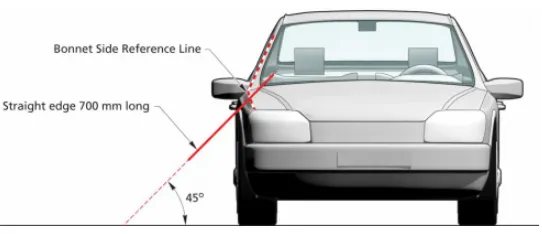
Wrap Around Hood: The line which is drawn 45 deg. from ground to front surface of the Hood and which is the meeting point on the outer panel is called Inlaid Hood.
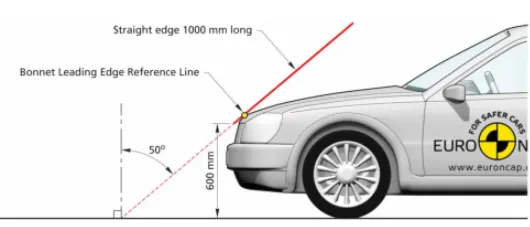
Vehicle designers usually focus on understanding the car-pedestrian interaction, which is characterized by the following sequence of events: the vehicle bumper first contacts the lower limbs of the pedestrian, the leading edge of the hood hits the upper thigh or pelvis, and the head and upper torso are struck by the top surface of the hood and/or windshield. Most pedestrian deaths occur due to the traumatic brain injury resulting from the hard impact of the head against the stiff hood or windshield. In addition, although usually non-fatal, injuries to the lower limb (usually to the knee joint and long bones) are the most common cause of disabilities. The hood of most vehicles is usually fabricated from sheet metal, which is a compliant energy absorbing structure which poses a comparatively small threat. Most serious head injuries occur when there is insufficient clearance between the hood and the stiff underlying engine components. A gap of approximately 10 cm is usually enough to allow the pedestrian’s head to have a controlled deceleration and a significantly reduced risk of death. Most limb injuries occur due to a direct blow from the bumper and the leading edge of the hood. Wrap Around Distance (WAD) is the distance from the ground level to the end of the hood as shown in the image.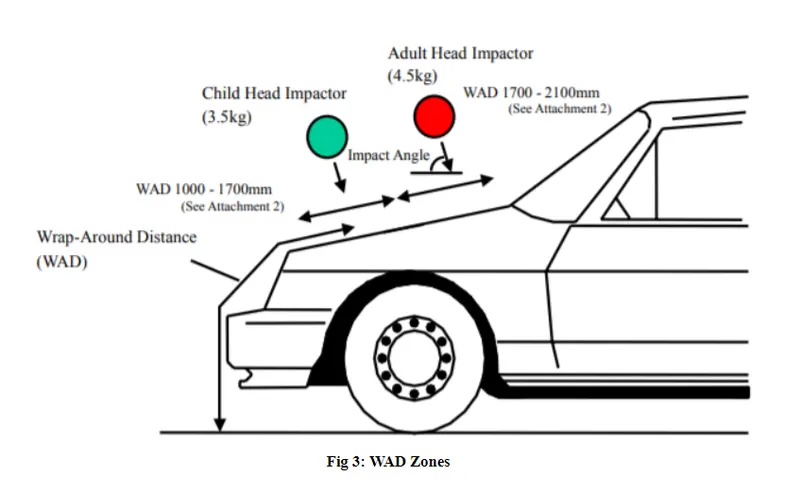
There are two main zones that are considered while designing stage; Child head impact zone (1000mm to 1700mm WAD) and Adult head impact zone. (1700mm to 2100mm WAD). . If the side reference line is on the fender, the WAD will be more and impact zone will be less and vice versa.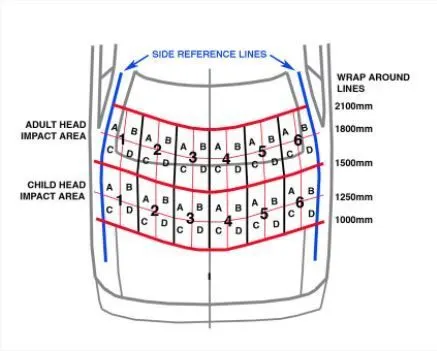
5. Occupant safety: The hood panels should be designed in such a way that it diverges the impact forces during collision away from the occupants inside the cabin. The forces should be damped properly to avoid or reduce the risk of injuries and death.
6. Manufacturing feasibility: Sheet metal operations such as blanking, piercing, embossing, hemming etc are used for manufacturing the hood components. Minimum 7 degree draft angle is maintained respective to the tooling direction considering the stamping process. Mastic points were implemented to join the outer and inner panels as we cannot apply spot welding process here. The materials used are typically steel or aluminium based.
Manufacturing process
Deep drawing
- The deep drawing process is a forming process which occurs under a combination of tensile and compressive conditions.
- A flat sheet metal blank is formed into a hollow body open on one side or a hollow body is formed into a hollow body with a smaller cross-section.
In the automotive industry, deep drawing is usually carried out using rigid tools.
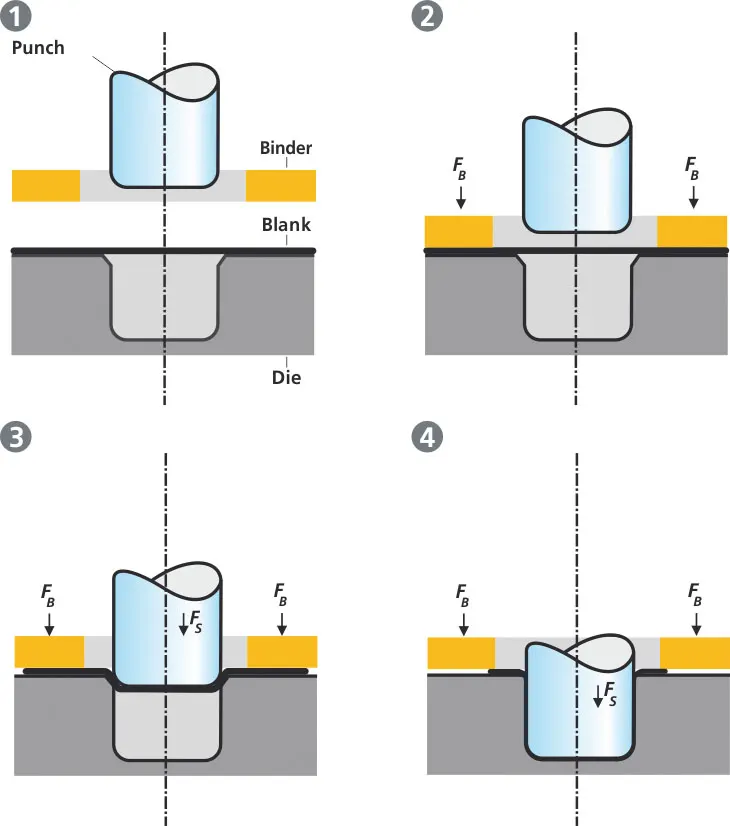
The figure illustrates the deep drawing process. The rigid tools consist of a punch, die and binder. In deep drawing, the plate holder closes after the metal sheet blank has been inserted.
- Next the sheet is clamped between the die and the binder. This process slows down the flow of the sheet while it is being drawn and thereby prevents wrinkles from forming under the binder. The punch stretches the sheet over the die radius and forms it in the die. The amount of punch force necessary for forming is thereby continually increased up to the lower dead center of the punch.
-
Whereas in pure deep drawing there is no reduction of sheet metal thickness, forming is achieved in stretch forming purely as a result of a decrease in sheet metal thickness. Stretch forming is extensively used for the forming of only slightly curved parts with low depth of draw (e.g. roofs, doors).
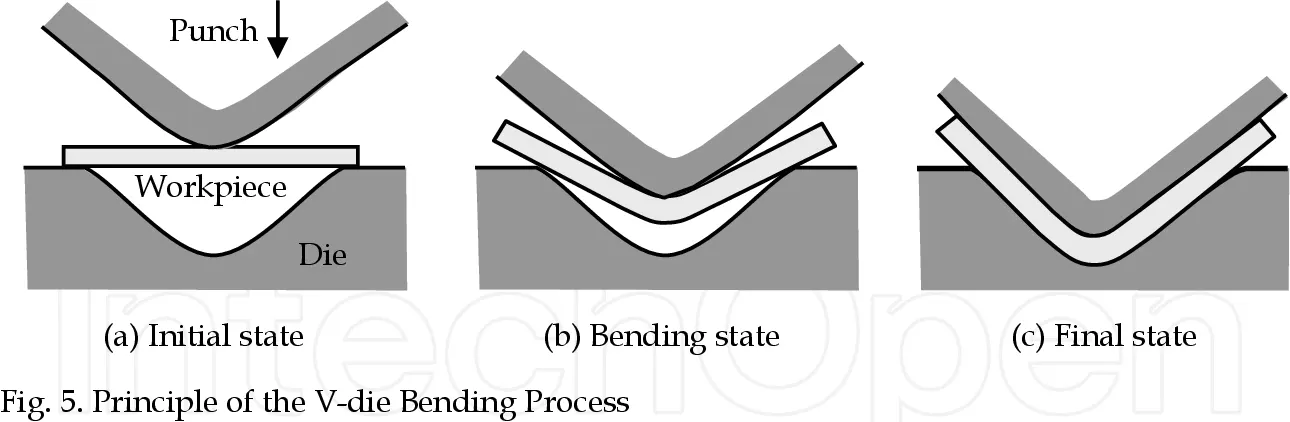
Bending: In bending, force is applied to a sheet metal workpiece to produce a curvature of the surface. Bending is generally used to produce simple curved surfaces rather than complex ones. A mechanically operated press drives a punch against sheet metal forcing it into a simple due with enough pressure to produce a permanent change in the metal shape. They amount of pressure is important. If not enough pressure is applied, the metal can simply sitting back into its original shape. If too much is applied, it can break.
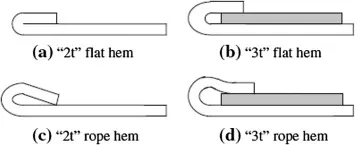
Hemming is a sheet metal forming process in which sheets are joined by bending it to 180°. Automotive body panels and automotive parts such as deck-lids, trunk-lids, doors, hoods and tailgates are formed by hemming process. In this process, usually a sheet is bent with the help of inner sheet in three different stages.
Design Procedure:
Hood Thickness Information
- Outer Panel Thickness = 0.75mm
- Inner Panel Thickness = 0.75mm
- Reinforcement Thickness = 1.5mm
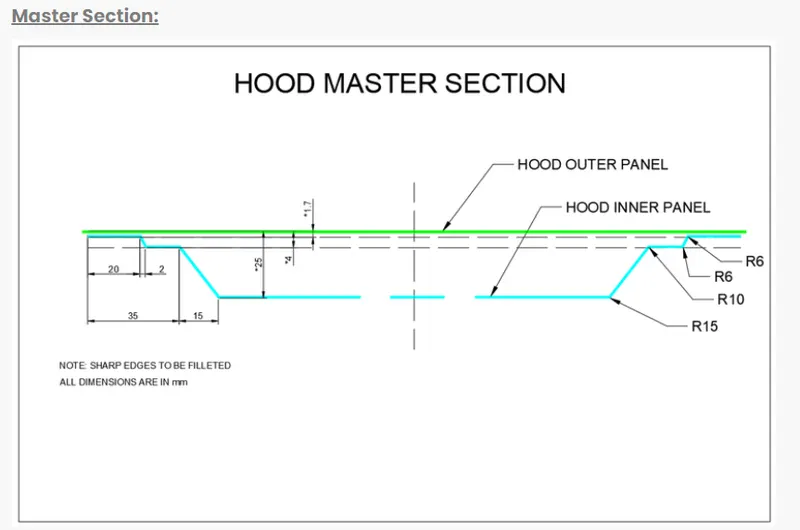
1) Inner panel: By using the data from the master section. We create the inner panel and its reinforcements.
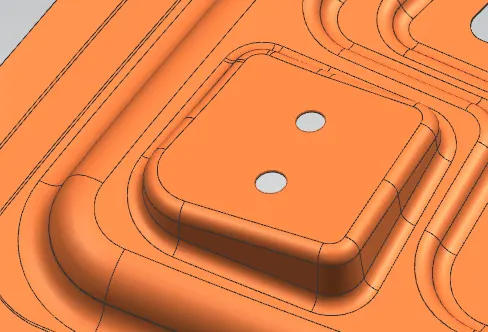
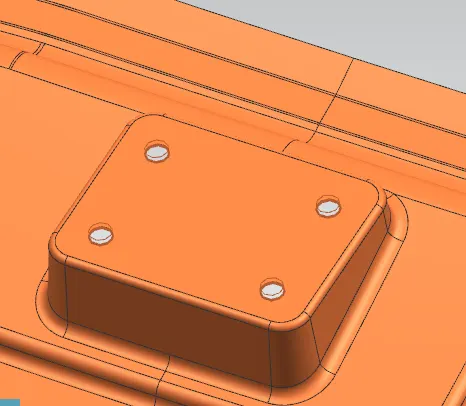
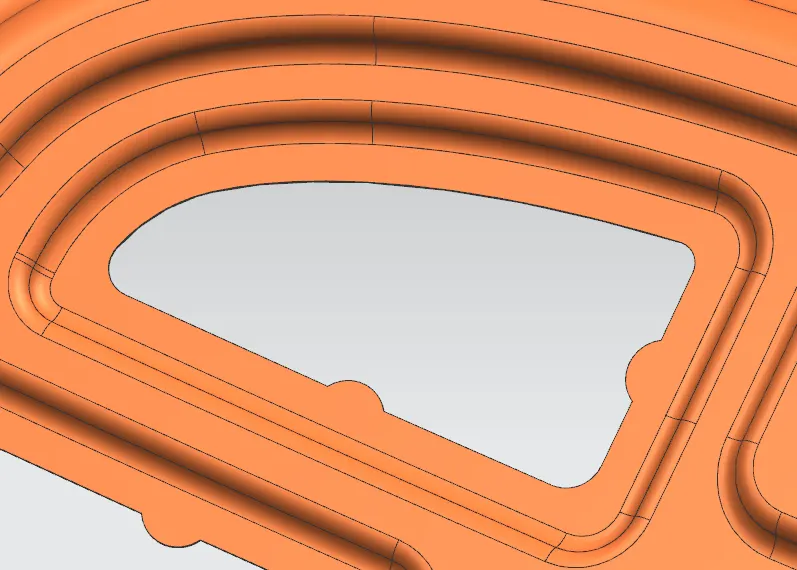
a) Embossing: The Emboss feature raises or recesses a profile relative to the model face by a specified depth and direction. The embossed area can provide a surface for a decal or painting. A recessed embossed area can provide clearance for another component in an assembly. Embosses are provided in the inner panel structure to divert the collision forces towards the hinges , hence protecting the occupants.
b) Mastic sealants: Mastic points are areas where the inner hood panel is joined with the outer panel hem using a mastic glue. This mastic glue keeps the inner panel stuck to the outer panel.
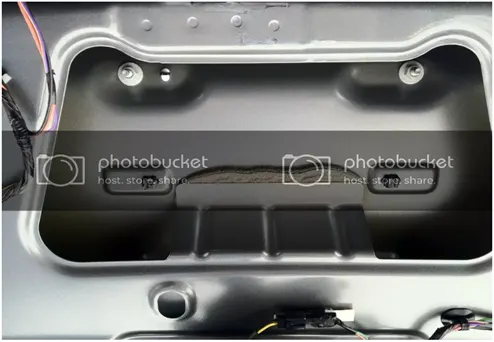
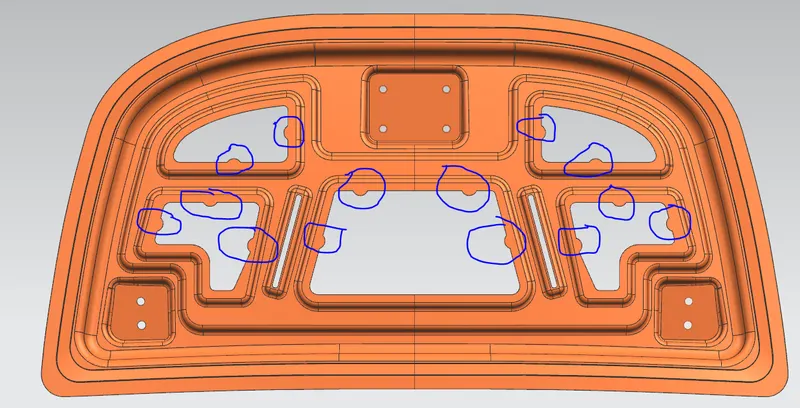
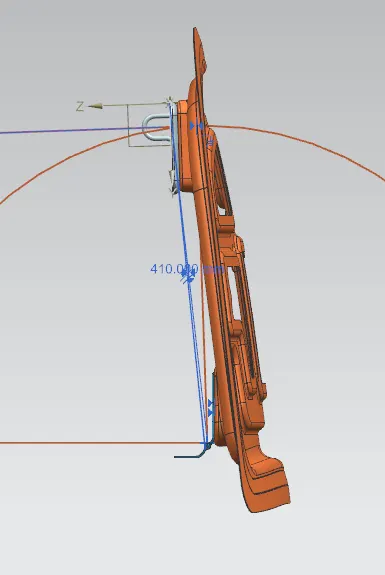
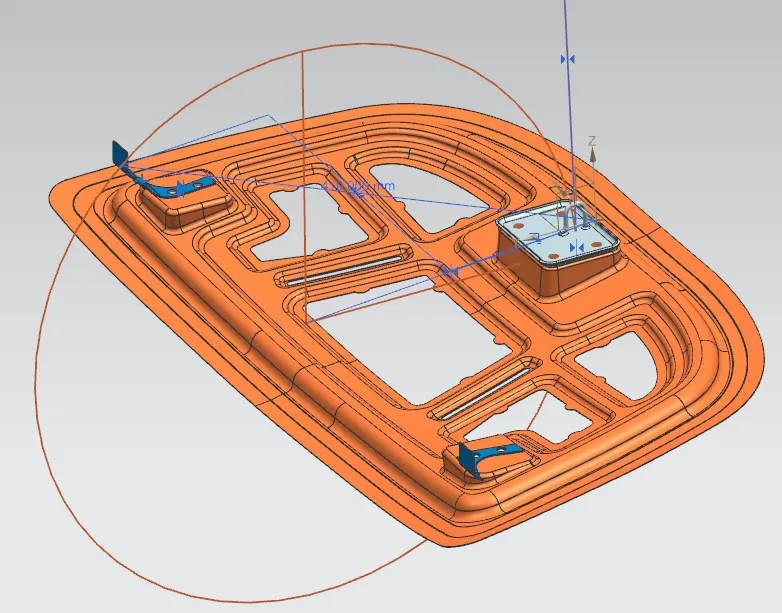
2) Latch and Striker Position Check: The trajectory for opening and closing the hood is considered to be an important factor where the striker center axis is coincidental with the hood center axis . The striker axis is perpendicular to the circle which is drawn by considering the center of the two hinge axis.
Hinge axis is established tentatively, perpendicularity of the striker axis to the the circle obtained from the hinge axis is checked. After this confirmation, hinge axis and striker mechanism position is finalized
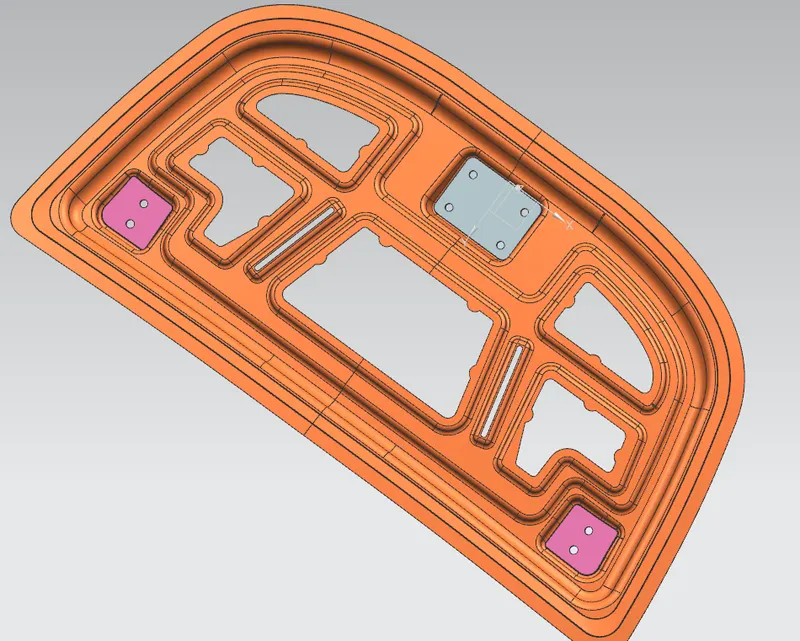
3) Design of reinforcements for the Hood panel:
At certain positions in the hood panel, we need to provide more strength to the inner panel as these areas are prone to loading and unloading. The two main positions which tend to be under stress a lot are
- The latch and striker joining area
- The hinge joining area
The latch is attached to the inner panel and this adds more weight to the inner panel at one particular point. This region is under stress whenever we close the hood with force to lock the latch into the striker. We need to provide reinforcement is this region to handle all the loading cases.
The hinge joining area is again a functional area of the hood panel. This means that we need to provide reinforcements there in order to strengthen the component and make the functioning smooth.
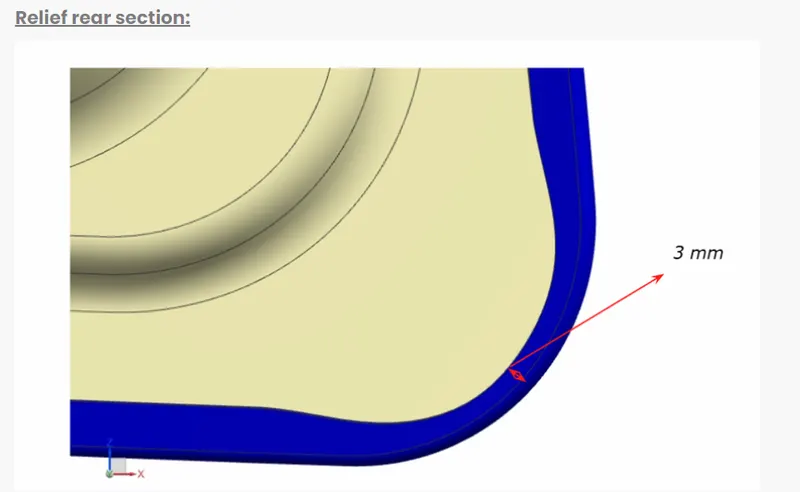
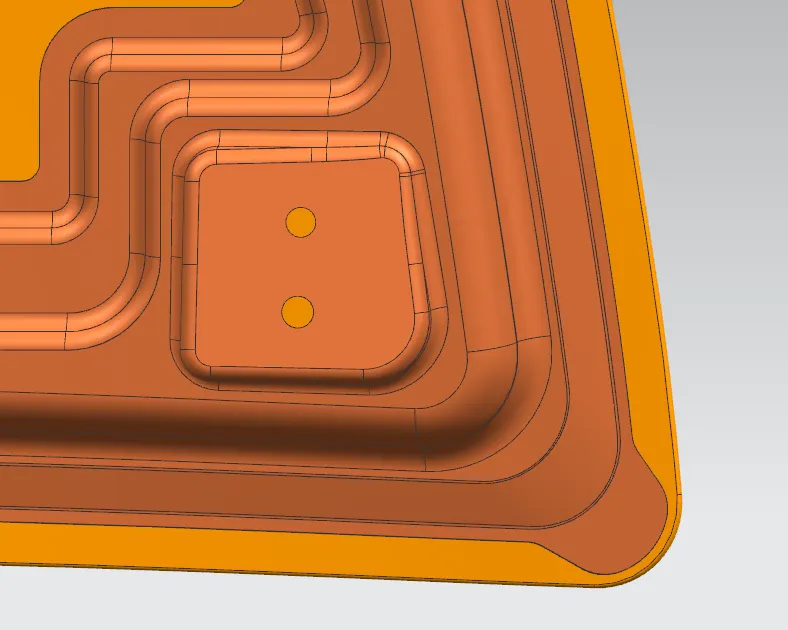
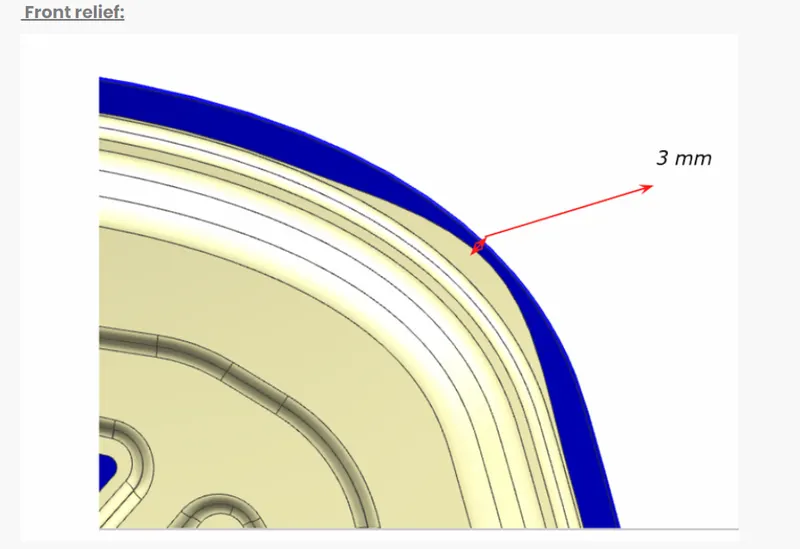
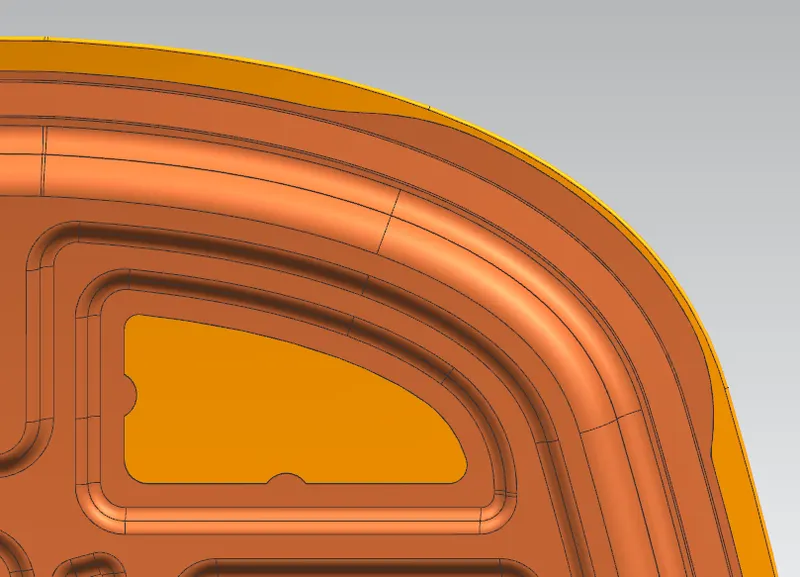
4) Outer Panel: Finally the hemming portion of outer panel is designed considering the effective hemming length. Necessary frontal and rear relief is provided in the outer panel as per requirement.
Conclusion:
1) The inner panel, the outer panel has been designed from the given styling surface according to the Euro-NCAP standards.
2) The latch and striker positions were studied.
3) Necessary reinforcements were developed for the inner panel.