Hood design-Week 2
DESIGN OF HOOD
Contents:-
|
OBJECTIVE |
| INTRODUCTION |
| DESIGN REQUIREMENTS |
| DESIGN APPROACH |
| CONCLUSION |
Objective :-
The main objective of this project is to design a hood with proper engineering rules and features to get an effecient output from the hood.
Introuction :-
The design of hood includes the whole assembly of it which means inner panel, outer panel with an attachment features of latch and stricker, mastic points,hood stay and hinges. The design of hood is done in such a way that the iit shoul satisfy all the coustamer requirements.before going to design the hood we should know some basic topics which helps to in design of hood
Some topics which we should know to design a hood :-
HOOD:-
It is an opening body panel which covers the engine in a front engine vehicle.
It can open to allow access to the engine compartment for maintenence and repair. Hood is generally made of the same material as the rest of the body like alluminium, steel carbon fiber, fiber glass. For effective performance and to ecrease the weight of the body steel is used.
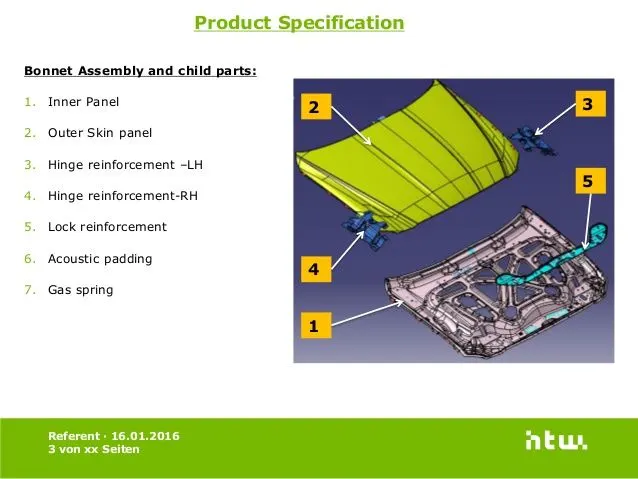
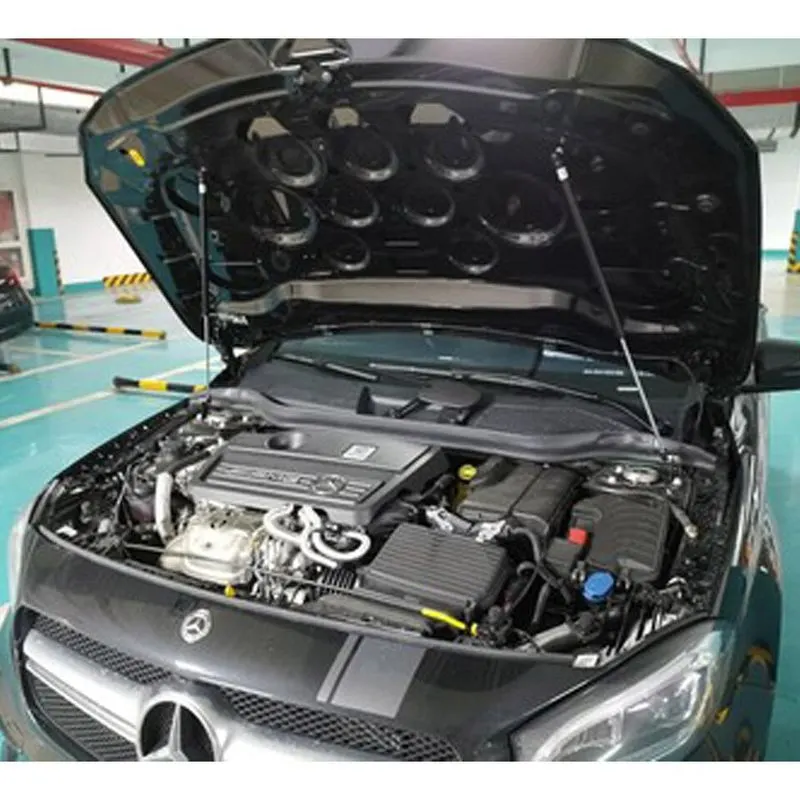
Reinforcements:- These are the once which are additionally given to the hood to improve strength locally
- If these reinforcement is given to the latch and stricker it is called as latch and stricker reinforcements
- If it is given to the hinge then it is called as hinge reinforcement
- The thickness of the reinforcements are base on the parent cars
Stiffener pad:- these are the aitional attachments to avoid NVH(Noice,Vibration and Harshness).these are in the range of 0.65-0.75mm thickness.
Mastic sealents:- It is the aditional feature which is use for supporting purpose for the embossing along 85mm dia of its surface.
Hood stay:-
It is a devive for supporting the engine head of a motor vehicle in its open position.
- Support rod - It is a devive for supporting the engine head of a motor vehicle in its open position by means of a rod.
- Gas stay - It is a devive for supporting the engine head of a motor vehicle in its open position by means of an actuator which is activate by gas.
Above two are the types of gas stays
Design requirements :-
Headzone criteria:-
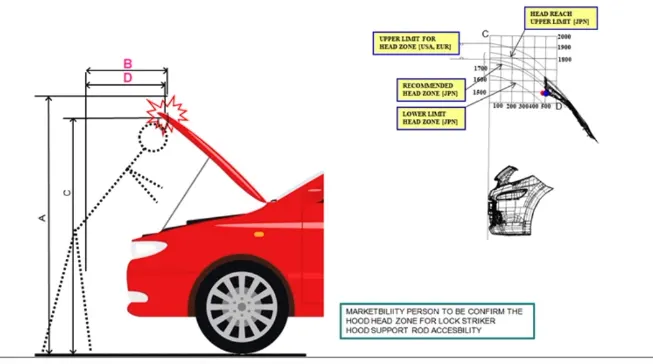
Open and close balancer:-
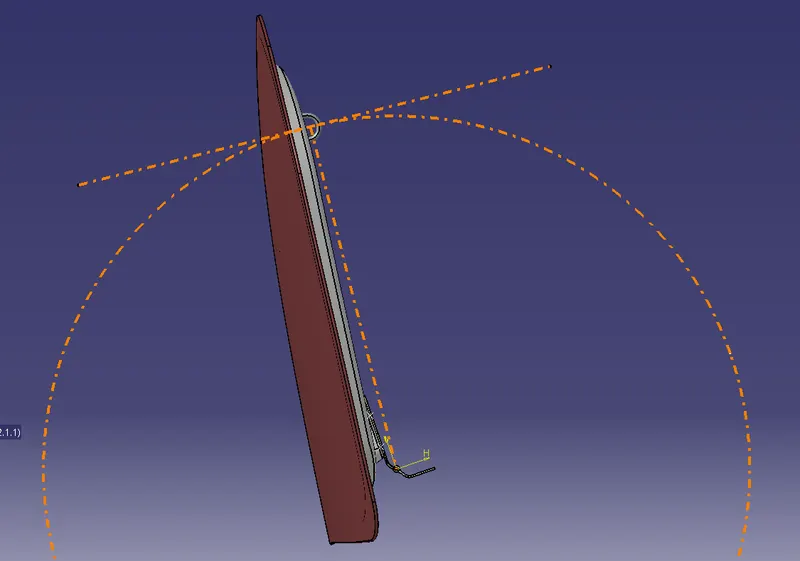
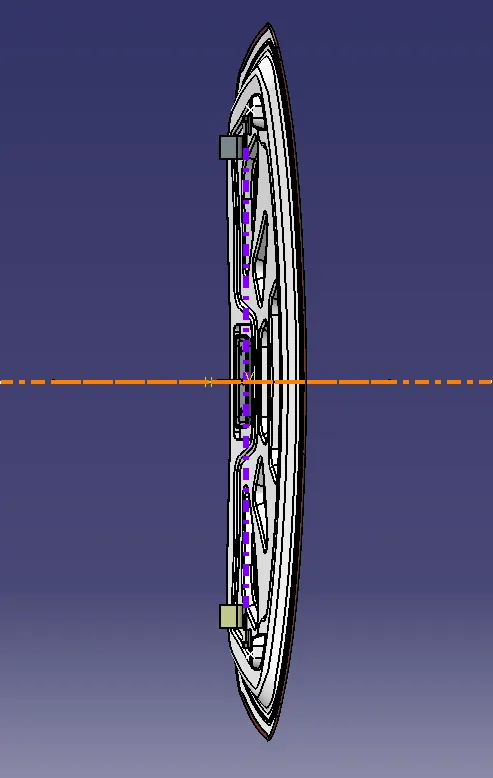
After that create the refeence circle on which the hood moves.For creating the reference axis initially we should create the flat line from one hinge rotating axis to another and make a straight line as showen in below figure.
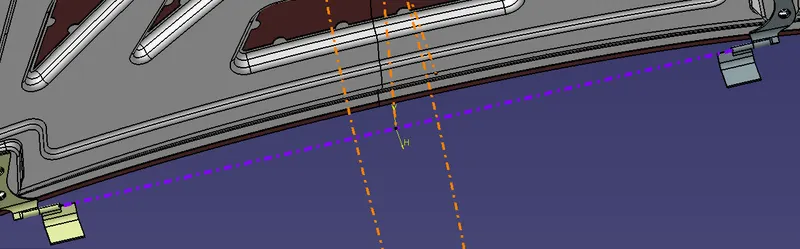
By taking that line as a reference take a point on the line which is at middle of the line and also take the point at the midle of the stricker and make a line from the point on stricker to the point on the line.take an axis at the point on line and draw a circle axis which touches the stricker point and raw a tangent line on the circle.then check the circle which is straightly alligned to the line or not and also check the circle an the hinge axis is perpendiculat or not.
NVH(Noice,Vibration and Harshness):-
NVH is the study and modification of noice and vibration characterstics of the vehicles, particularly for cars and trucks. Interior NVH deals with noise and vibration experienced by the occupants of the cabin, while exterior NVH is largely concerned with the noise radiated by the vehicle, and includes drive-by noise testing
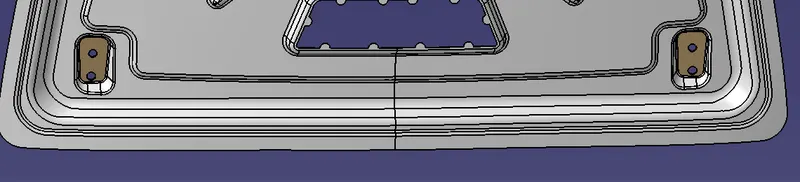
For that we create reinforcements like hinge reinforcement, latch and stricker reinforcement ,mastic sealents and stiffner pads which gives the strength locally and controls the noice and vibrations produced by engine.
Design approach:-
Procedure :-
Initially hood inner panel surface is create by taking the reference of given class A of hood outer panel. Make sure that the end point of the inner panel is 25mm from the top surface of the outer panel and then follow the the maaster section for further dimensions
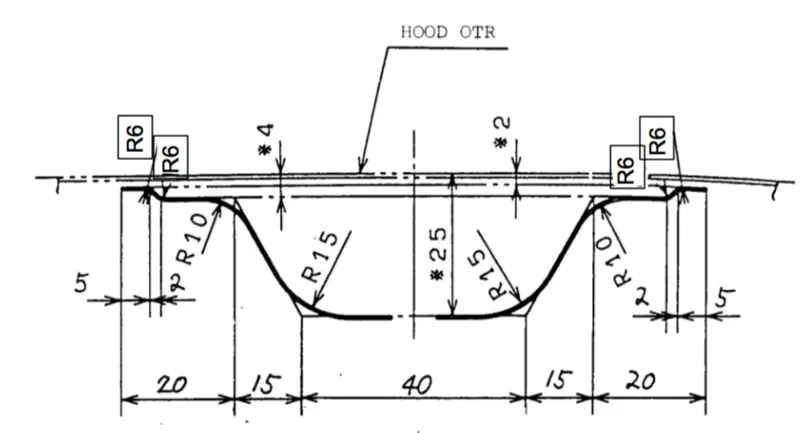
Create the embossses on inner panel with an offset value of 5mm. These embosses are made in such a way that it diverts the impact force to sides of the panel when the car met with an accident from front by these we can reduce the force affecting the passenger in accident
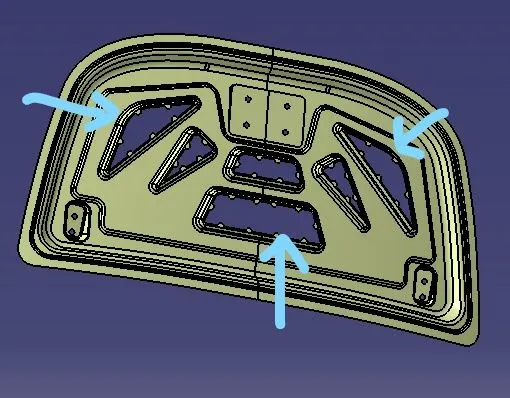
In the above figure the arrowes showes the embosses along with mastic points these mastic points suppotrs the embossing 85mm dia along its dimension
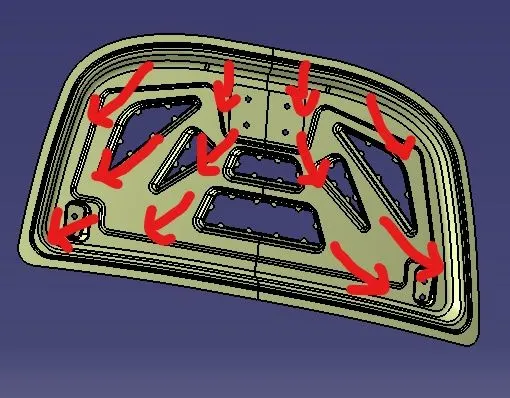
In above figure the arrowes showes the force dissipation to the sides
After that create the hinge emboss and latchand stricker emboss withe flat surface.because if there is any irregular surface at hinge,latch and stricker the insertion of hood stay is difficult some time not even possible.so make sure that the embosses for hinges and latch and stricker should be flat.
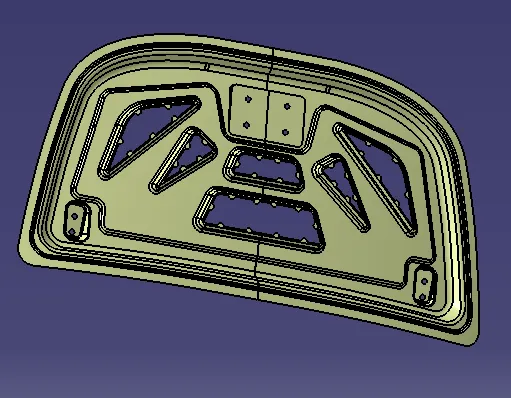
Then give thickness of 0.75mm to the surface and then take the outer surface and offset it for 2.75mm and extract it to 7.75 as given in master section and close the surface by blend command then give thickness
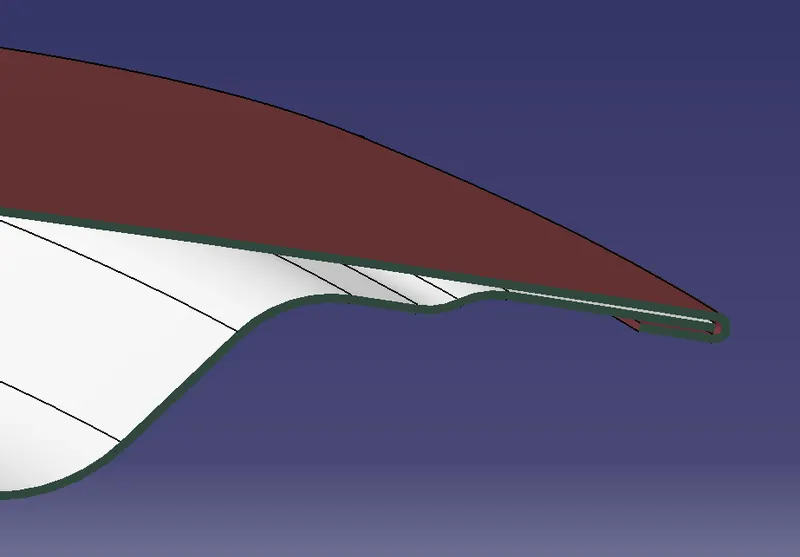
If you see the corner of that outer panel there is a bend. The process of making that bend at edge of the surface and make it close with respect to another part is called hemming. By doing hemming process we can avoid spot welds.
Conclusion:-
By taking the master section as a reference the hood is designed by considering the Headzone criteria, open and close balancing and NVH