Hood design-Week 2
OBJECTIVE :-
Design a Car Hood outer panel, Inner panel, Reinforcements by followiing master section references and consider all dimensions.
PROCEDURE:-
1.Introduction
2. Assembly flow
3.Design parameters
4. Manufaturing considerations
5. Design approach
6. Cad approach
7. Conclusion
1.INTRODUCTION :-
HOOD :-
A car hood, also referred to as a bonnet in some other countries, is the hinged cover that rests over the engine of a front-engine vehicle. Its purpose is to provide access to the engine for repair and maintenance. A concealed latch is typically used to hold down the hood. On vehicles with an aftermarket hood and on racecars, hood pins may be used to hold down the car hood. Hoods sometimes also contain a hood scoop, wiper jets, power bulge, and/or hood ornament. Car hoods are typically constructed from steel and sometimes from aluminum. Aftermarket car hoods may be constructed from various other materials, including carbon fiber, fiberglass, or dry carbon. The hood design may vary from one make and model to another.
2.ASSEMBLY FLOW :-
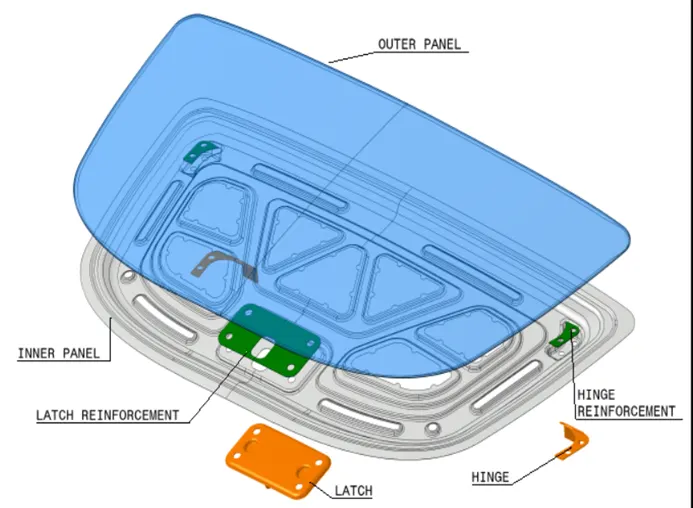
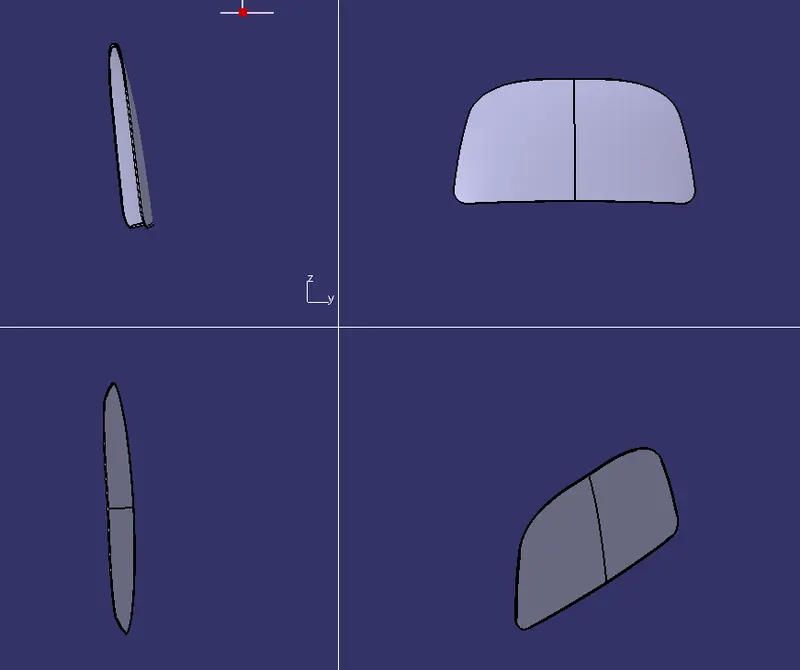
a.Car hood outer panel :-
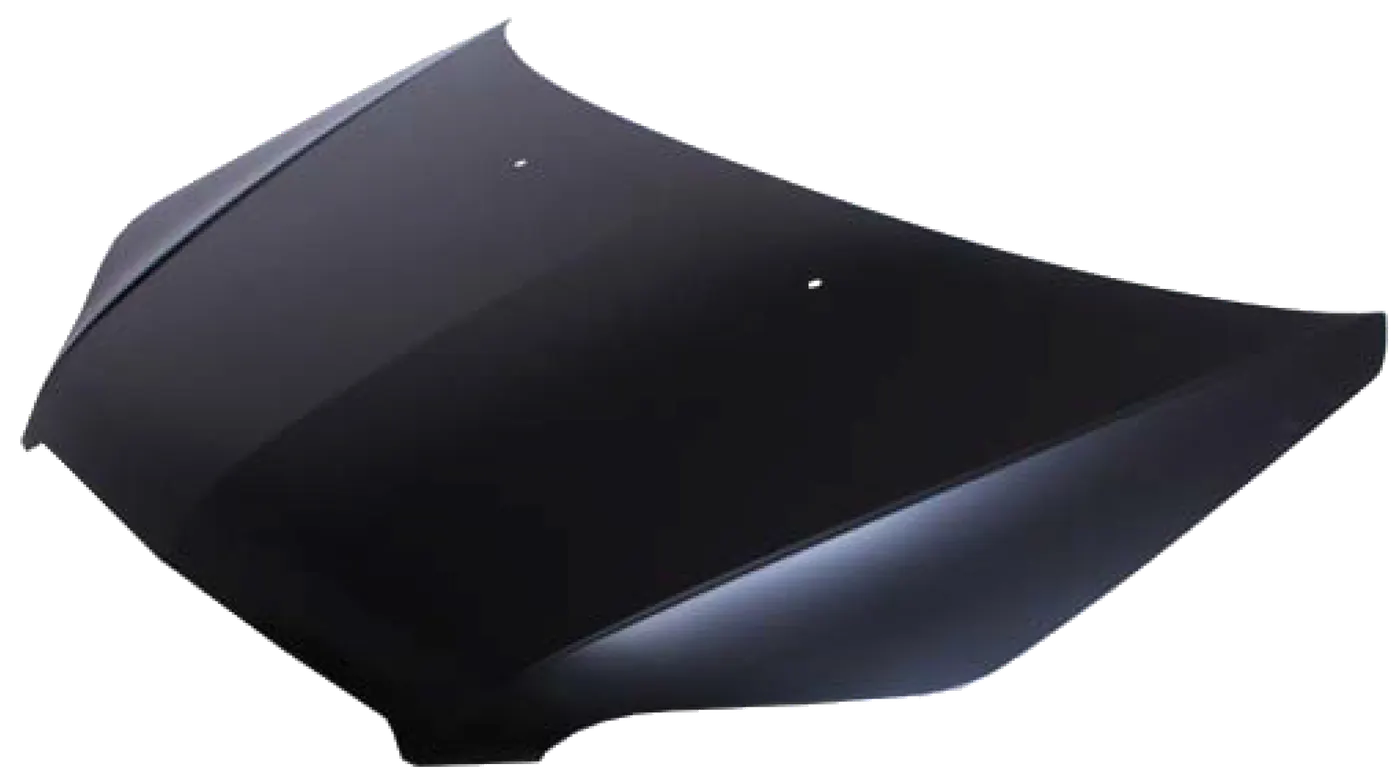
Outer panel is nothing but a outer skin of the inner panel. Otherwise called as cover of inner panel. It is the part which gives luxurious look to the hood or bonet. Outer panel and inner panel can't join by any welding process like spot welding or rivet, which spoils the outer look of a car. The outer panel is generally extracted model from the prototype design.
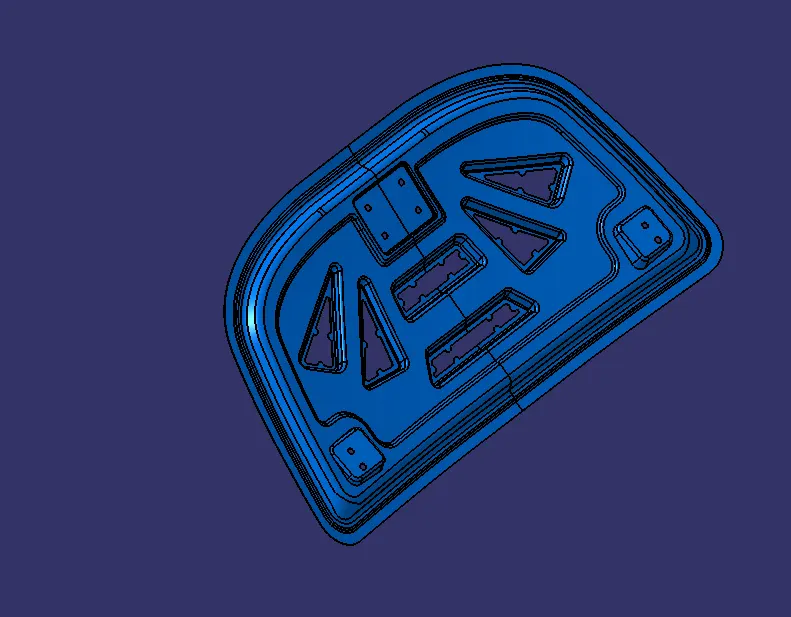
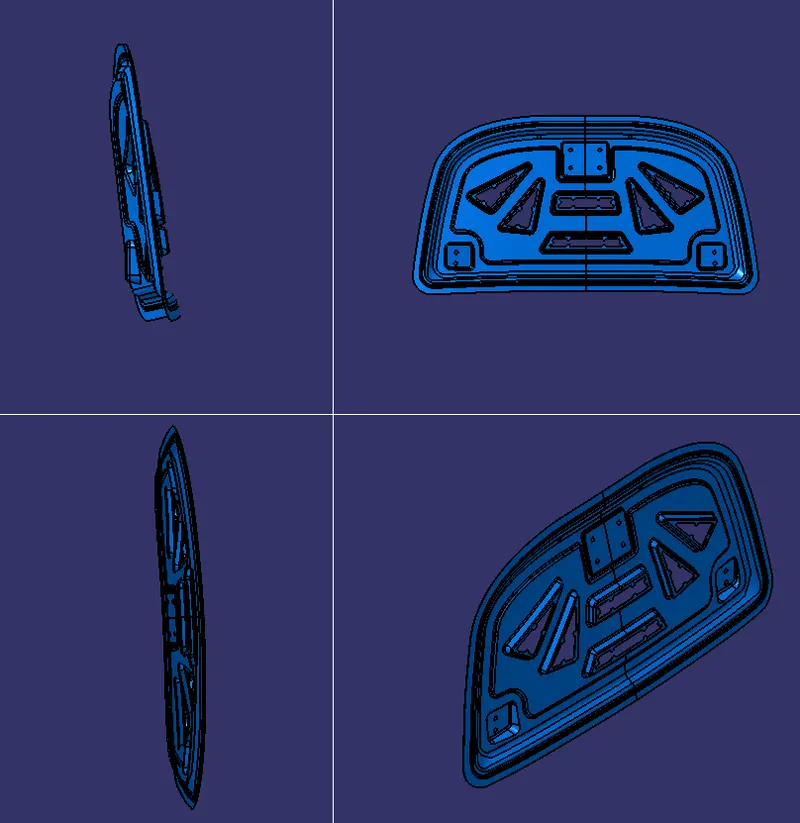
b.Inner panel :-
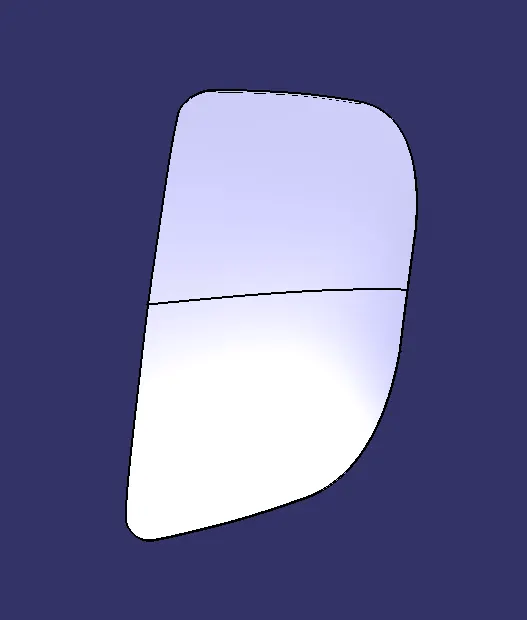
Inner panel supports outer panel. It consists of different embosses and hole at different places. Embosses provide stiffness as well as dissipate energy towards hinges. To determine the most effective position of hole, the method of model siffness is employed. Inner panel is offset of the parent work surface. Inner panel thickness is 075mm.
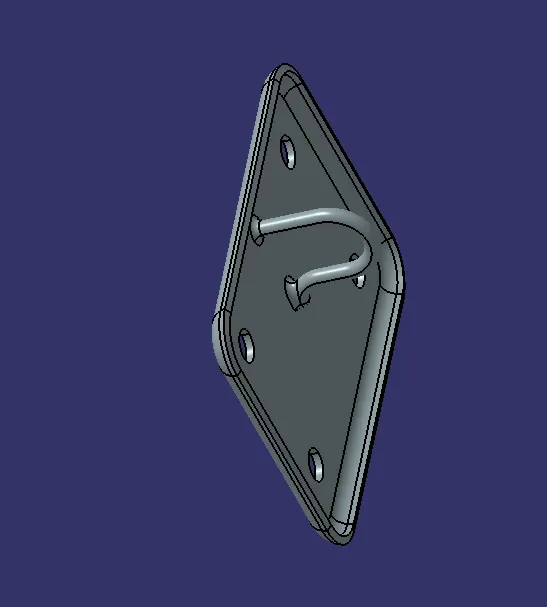
c.Latch and striker with reinforcement :-
latch system ensures that the hood stays locked, therefore protecting the engine and the many other parts that reside within the hood of the car. hood should not swing open at once, and therefore, a safety hook must be present to catch the unlocked hood and keep it closed.
Part images :-
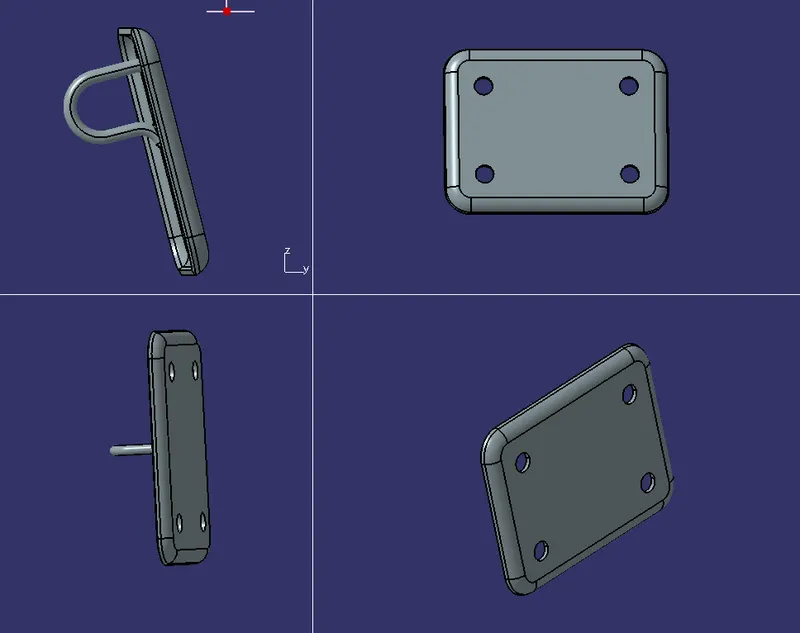
d.Hinge:-
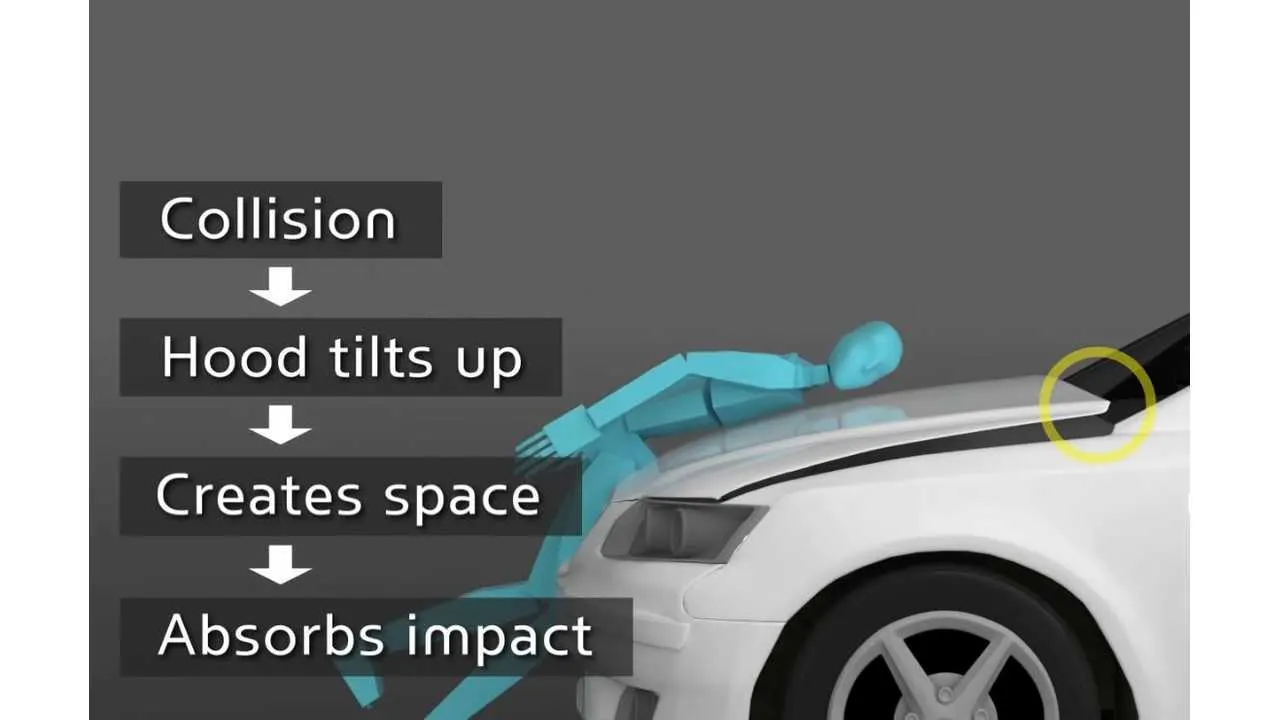
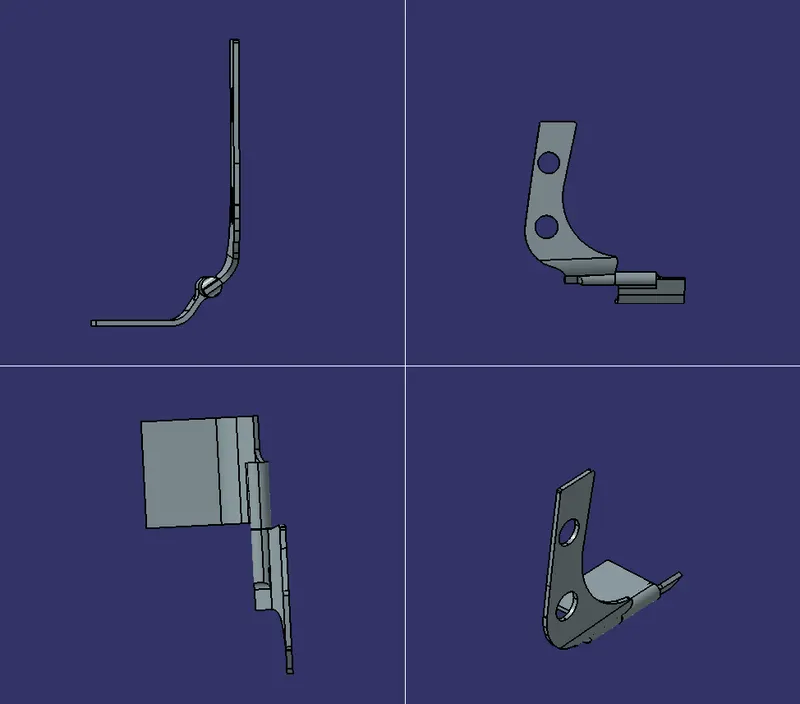
The active hinge must lift up the rear part of the bonnet in appropriate short time to extend the deformation space between the bonnet and the rigid parts of the engine compartment. Fast and controlled lifting of the bonnet mitigates the consequences of collision between pedestrian and a vehicle.
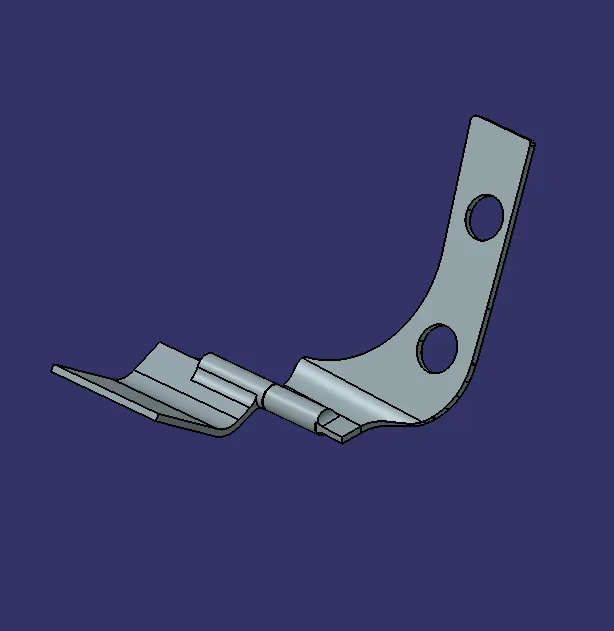
Hinge part images :-
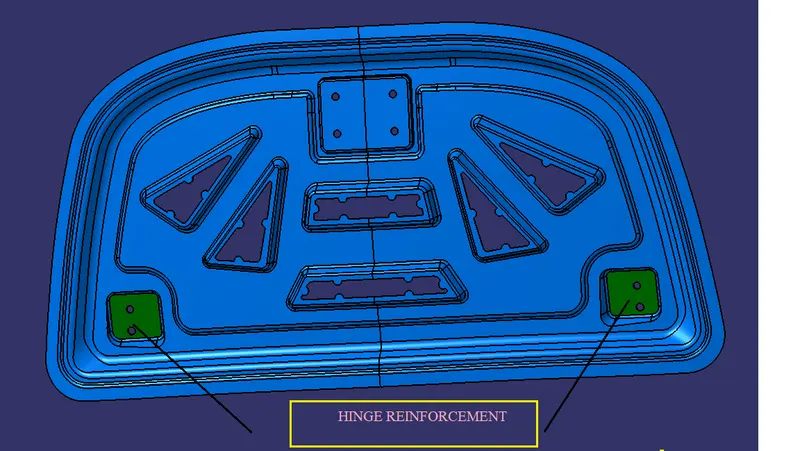
e.Hinge reinforcement :-
Hinge reinforcement structure as provided to reduce imapct in collisions to passangers. Generally reinforcement of hinges are made around to 1mm and 1.5mm thickness.
Assembly Of Hood Design :-
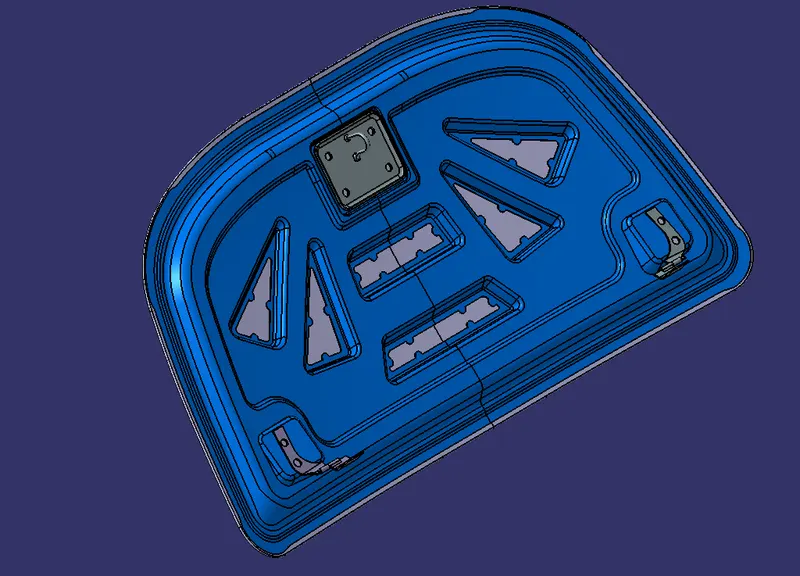
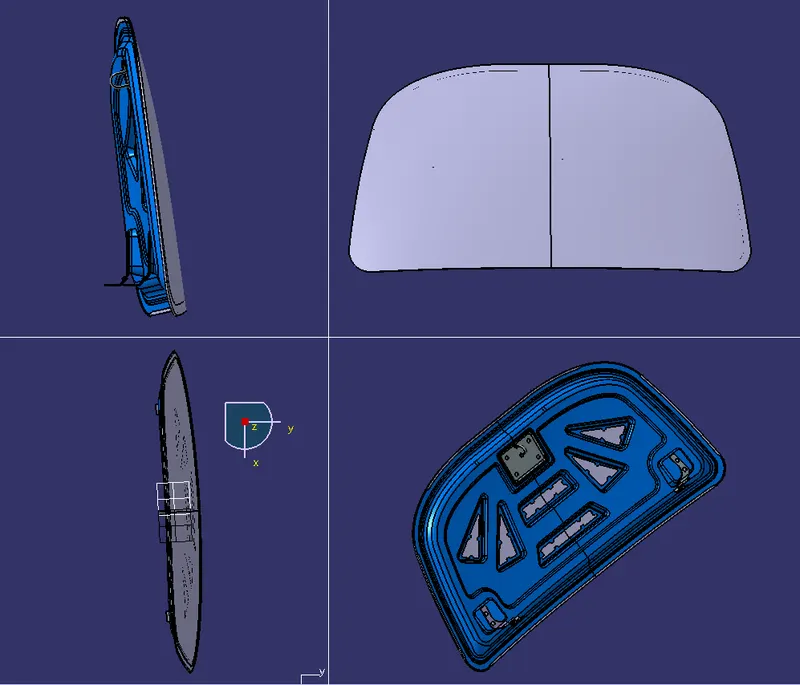
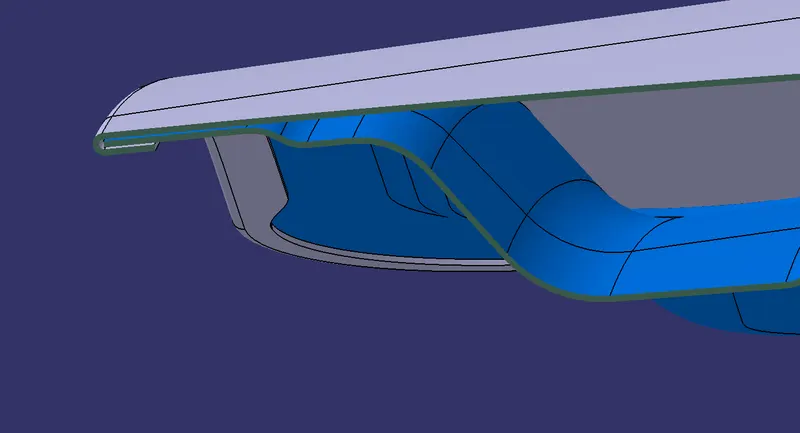
CUT SECTION VIEW :-
3.DESIGN PARAMETERS :-
- Hood itself has two types :-
a.wrap around hood :-
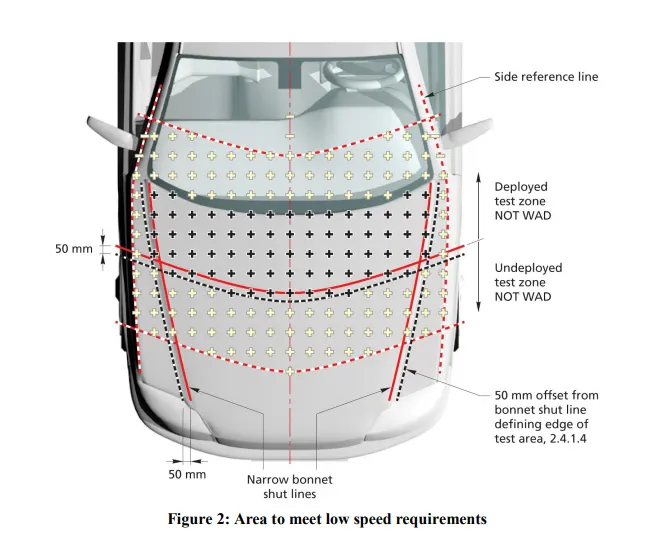
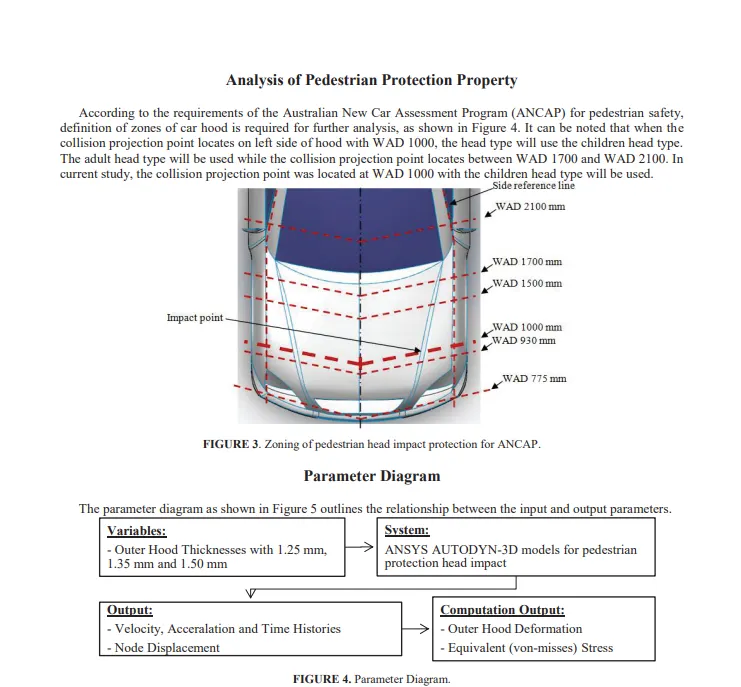
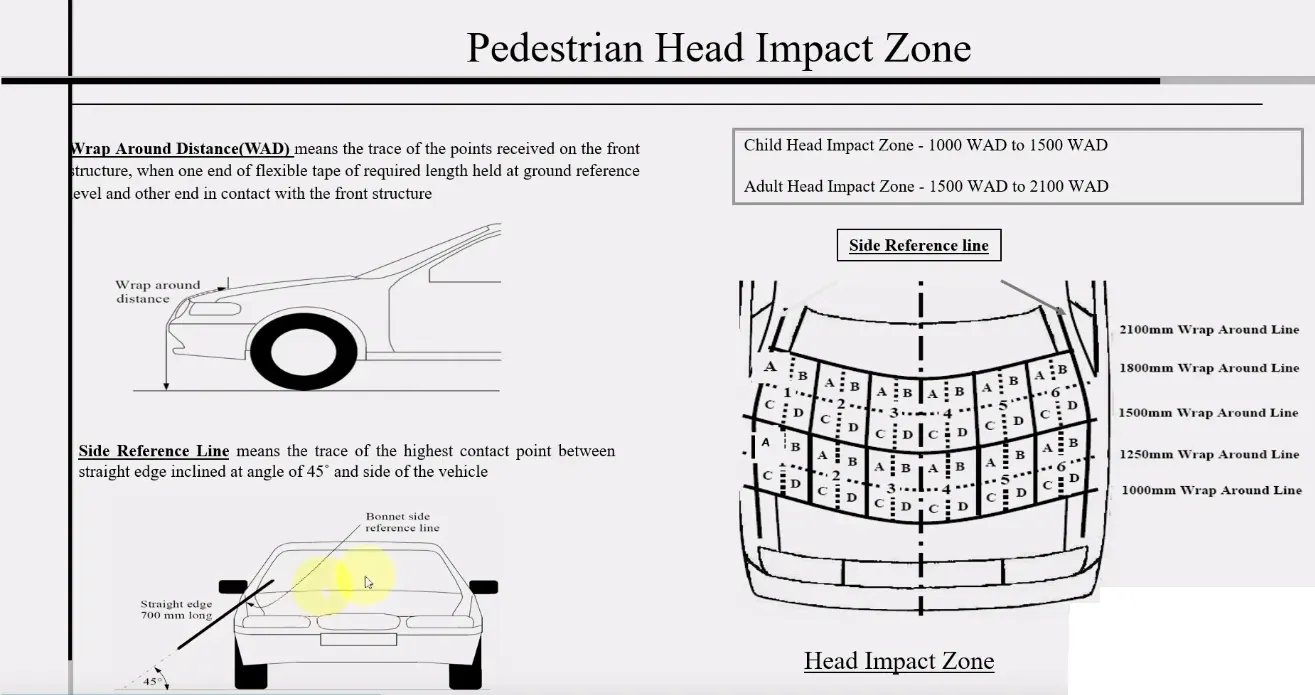
When the end point of the cars lies on the hood then it is called as arap around hood . Wrap around distance is the trace of the points recived on the front structure when one end of flexible tape of required length held at ground level and another end is in contact with the front structure.
Side reference line :- It means the heighest contact point between the stright edge inclined at an angle of 45 degree and the side of the vehicle.
b. Inlaid hood :-
When the end point of the car lies on the fender then it is called Inlaid hood.
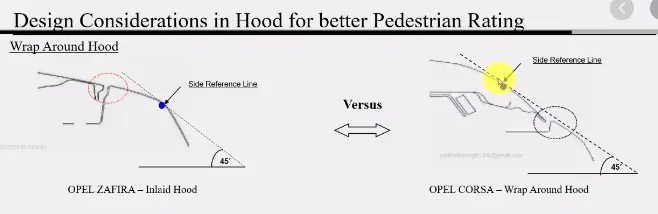
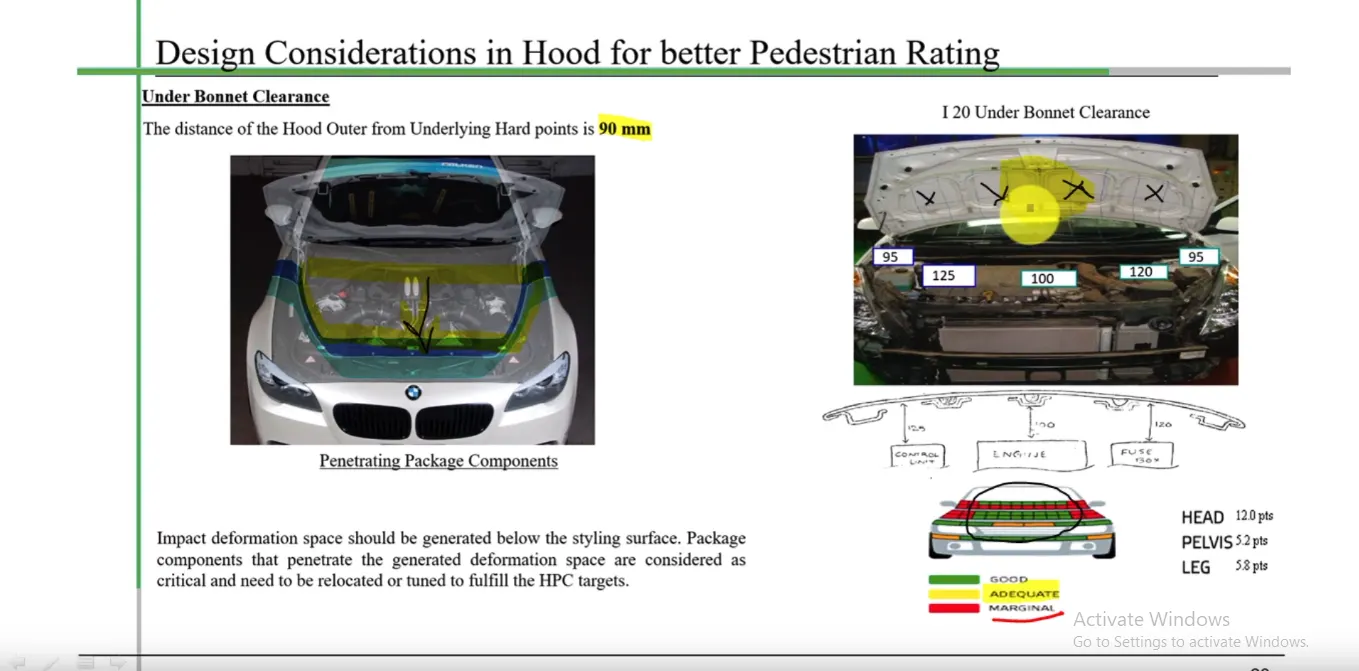
2.DESIGN CONSIDERATIONS IN HOOD FOR BETTER PEDESTRIAN RATING:-
3.HEAD CLEARANCE :-
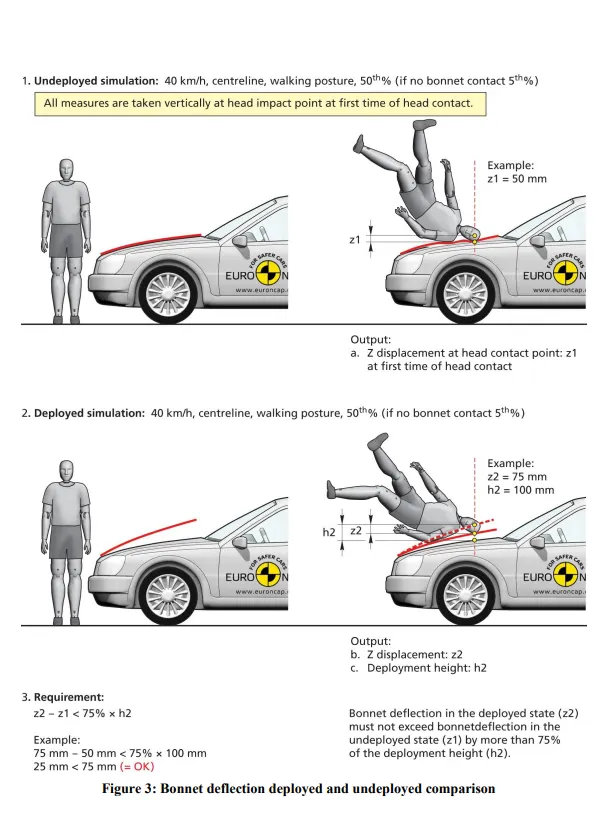
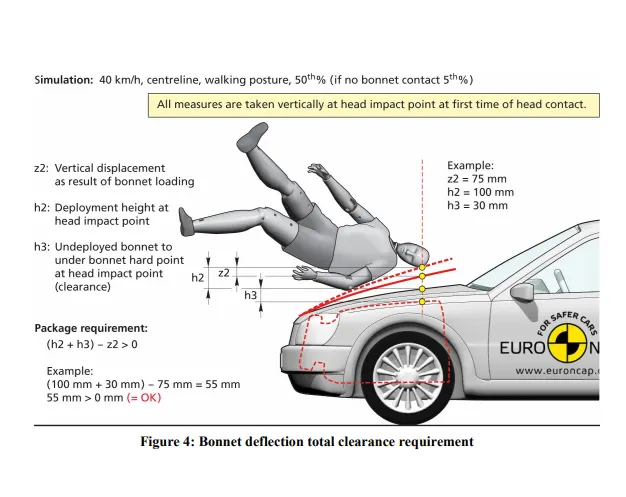
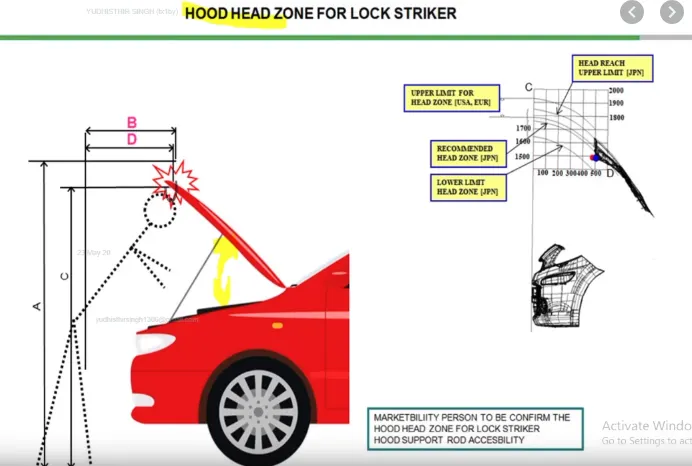
It is the one of the main criteria while designing a hood of a car. The opening angle of the Hood varies from place to place and to country to country. This design based on the average heaight of the people in that country.
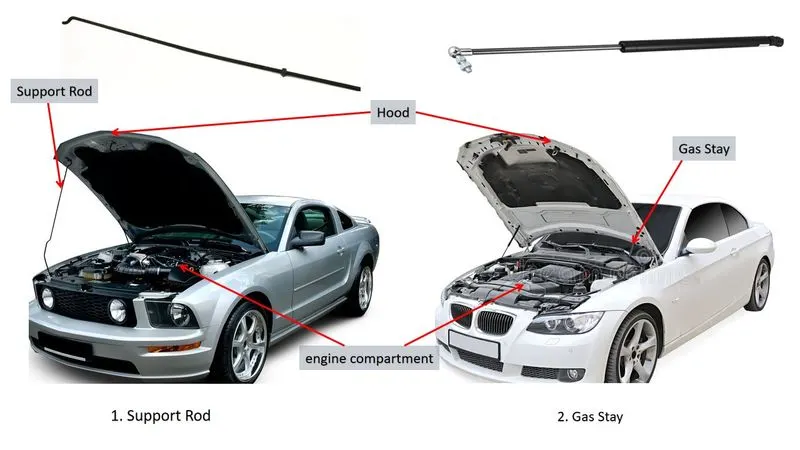
4.TYPES OF GOOD STAY :-
b.SUPPORT ROD
Advantegs :-
- cost effective
- sinmple
Disadvantages :-
- When striking with the automatic body panel which leaves scars which are likely cause to rust.
- It withstands lesser weights only.
Design considerations For Support rod:-
- When Hood is closed, during that the support rod will stay in place& positioned where it gets enough clearnce to laydown and it does not hit and create rattling noise while in motion.
- Support rod is always place opposite postion to the battery position. So it doesn't interferance with the rod.
- Now s stright support rod could wobble as the weight it is going to support around 8to9kg. So a little deflection will be given in rod and design engineer has freedom to give it anywhere along the rod, but the deflection should not be more than 35mm.
b. GAS STAY:-
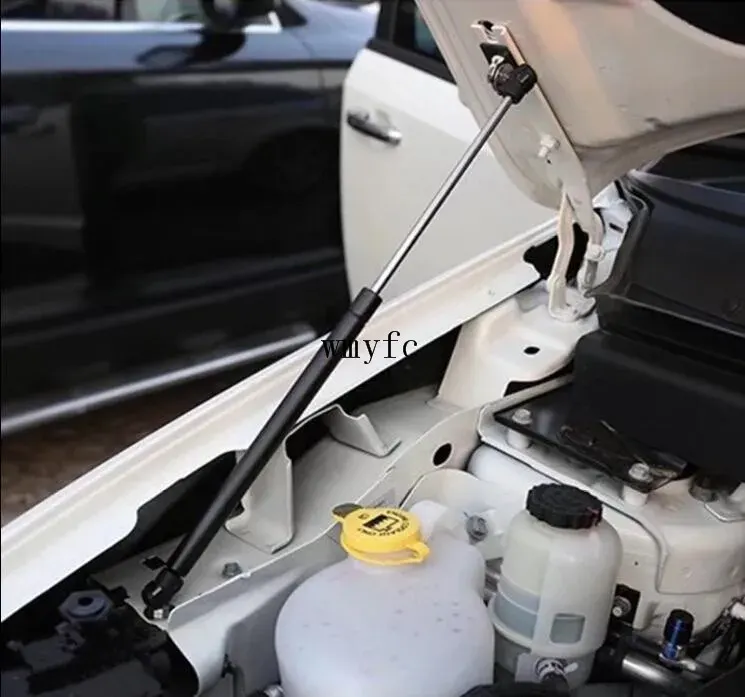
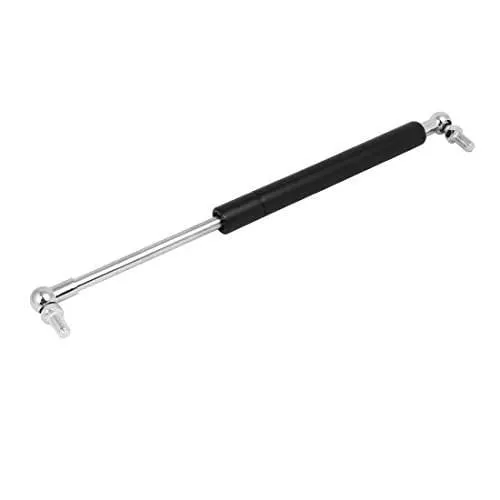
This is mostly used in the suv type cars where the hood (bonnet) is heavy, which cannot be handle easily. This works with a hydraulic mechanism through whih the hood can lift itself without any external force.
Advantages :-
- Automatic
- it can lift higher weights
Disadvantages :-
- High cost
Design considerations for Gas stay rod :-
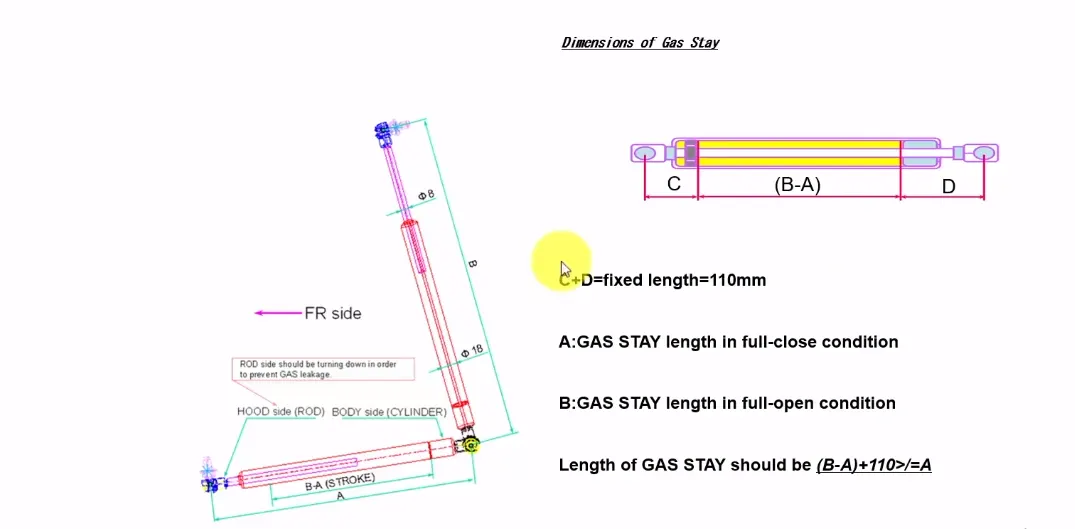
5. Latch and hinge arrangement :-
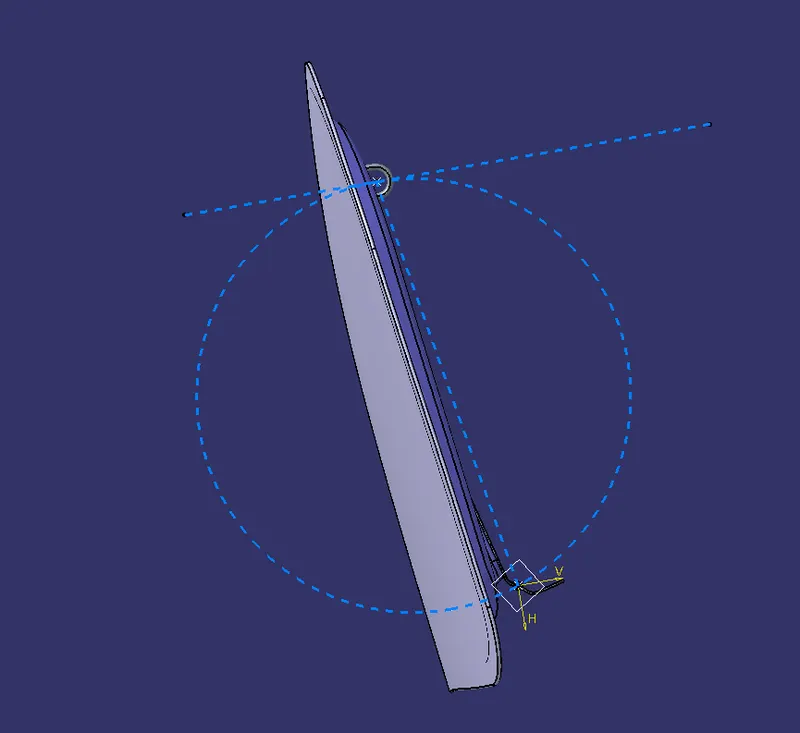
For postioning of the hinge and striker we have to place hinge tantatively and take hinge axis point and place position from the parent car or our own. The major functional of the hood is opening and closing of the hood. This is done with the help of latch and striker. To postion the latch and strker properly, we position the hinge and draw the hinge axis. Now, using the hinge axis as the centre we draw a big circle to the position where we need the latch to be placed. Then, we draw a tangent line to the circle at the point and place the latch in that region. And the latches trajectory must be perpendicular to the hinge axis.
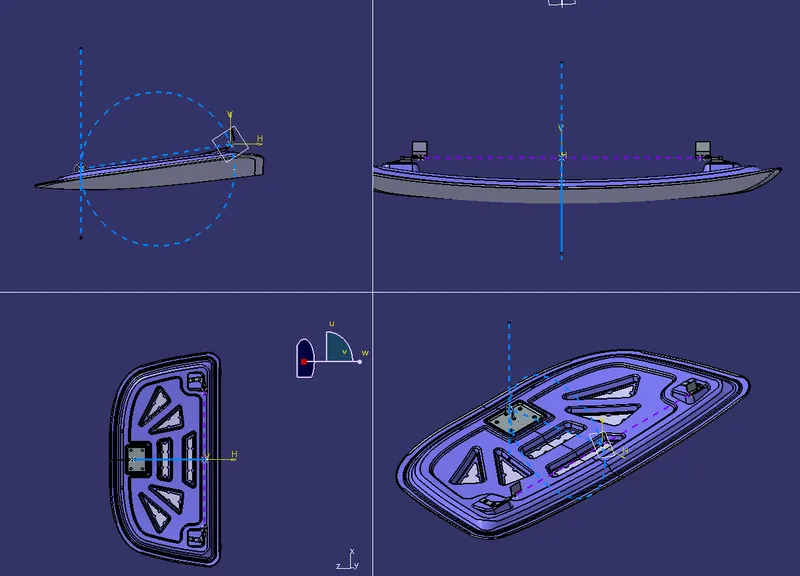
6. EMBOSSING :-
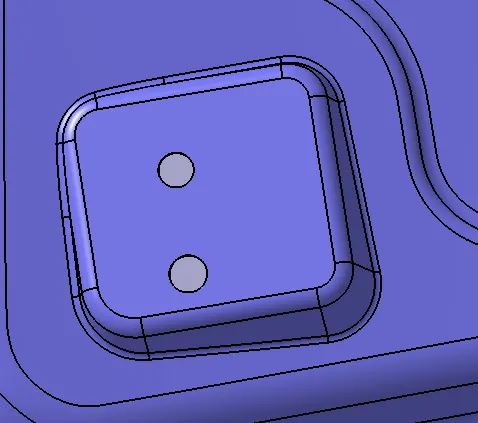
Embossing is an operation in which sheet metal is drawn to shallow depths with male and female dies. The operation is carried out mostly for the purpose of stiffening flat surface and design in inner panel. It is also made that, when the car crashed the force will be passed to cabin.
7. MASTIC POINTS :-
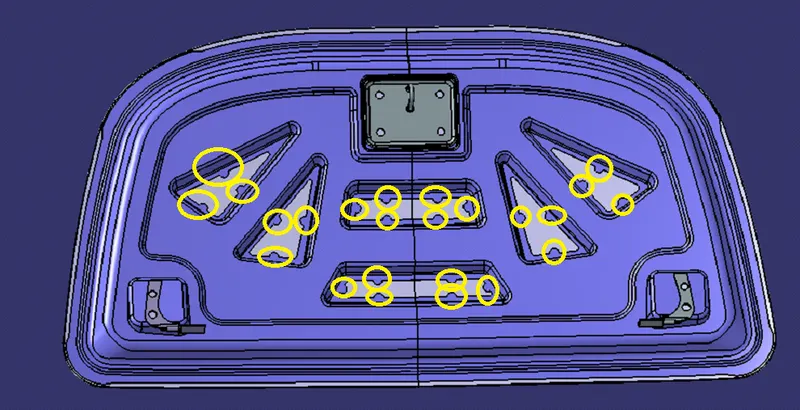
The Mastic sealant or the Mastic point is an elastic compound that behaves like a rubber. The mastic points are defined on the hood inner panel where the hood can easily deform. They help the hood outer panel to come back to its original shape after it gets deformed. The mastic has an influence area of 80mm.
8. fORCE DISTRIBUTION :-
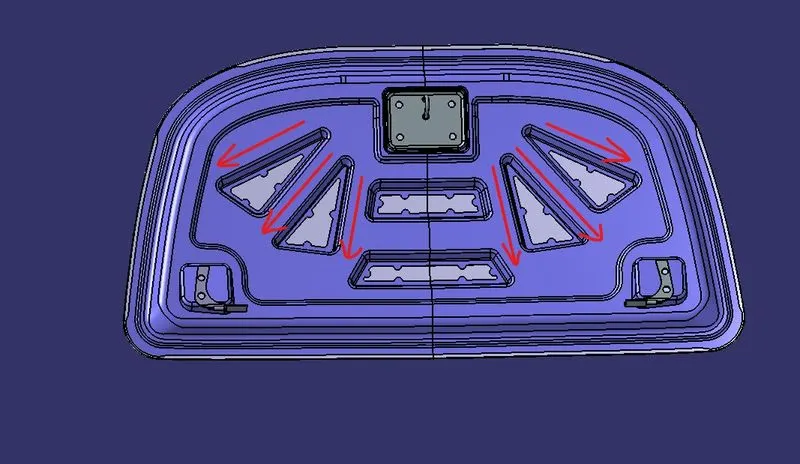
A hood design must be made in such a way that when a force is impacted in the front of the hood. All the forces must be directed towards outside of the vehicle. And the distribution of the force must be controlled along with the hood.
4.MANUFACTURING CONSIDERATIONS :-
a.HEMMING :-
Hemming is a sheet metal forming process in which sheets are joined by bending it usually to 180°. Automotive body panels and automotive parts such as deck-lids, trunk-lids, doors, hoods and tailgates are formed by hemming process.
b..DEEP DRWAING :-
Deep drawing is a sheet metal forming process in which a sheet metal blank is radially drawn into a forming die by the mechanical action of a punch. It is thus a shape transformation process with material retention. The process is considered "deep" drawing when the depth of the drawn part exceeds its diameter.
c.Piercing :-
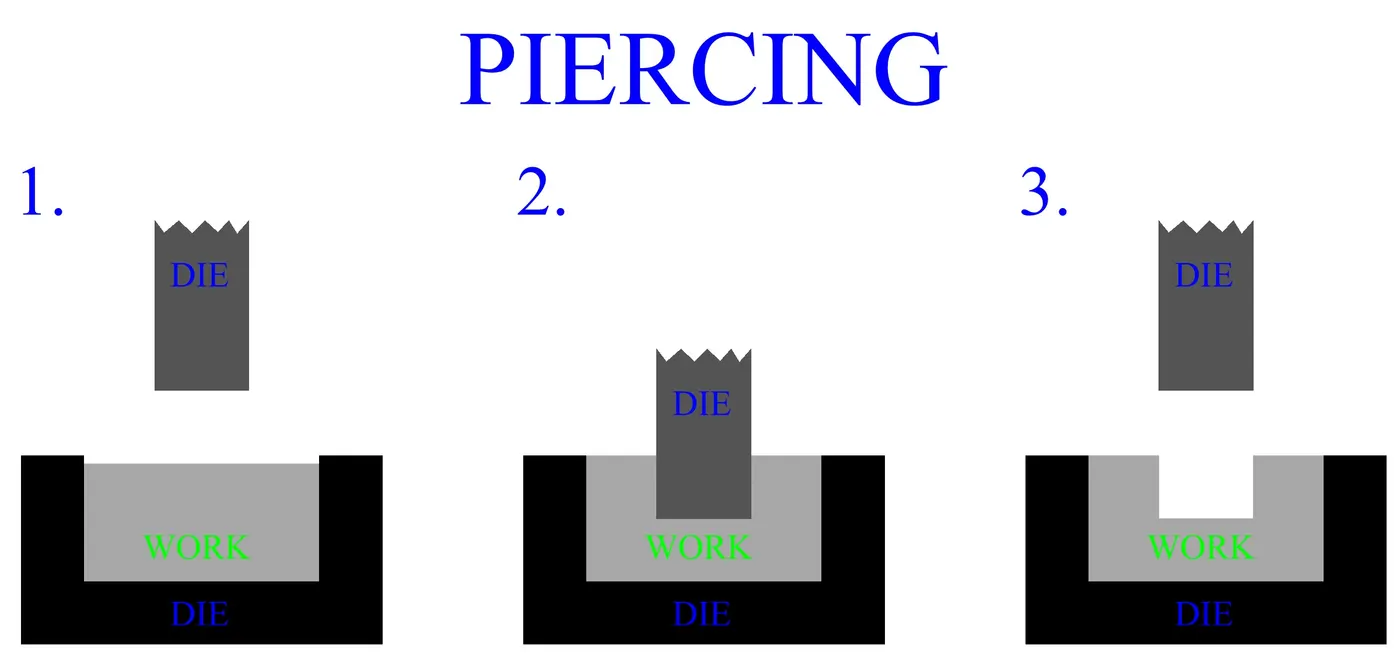
Piercing is a shearing process in which raw metal is pierced with a machining tool, resulting in the creation of a circular or other shaped hole. The piercing machine forces a tool, known as a blanking punch, through the sheet meta
d.Bend relief:-
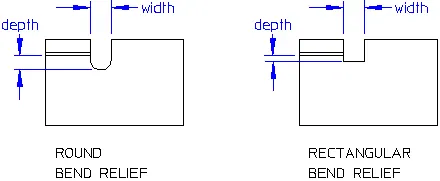
When sheet metal makes a transition from a bend to a flat surface, or to another bend, it tends to rip and tear. To eliminate this, a bend relief is added so the edge of the sheet metal is perpendicular to the bend. In general, a minimum bend relief is equal to the material thickness plus the inside bend radius.
e.Trimming :-
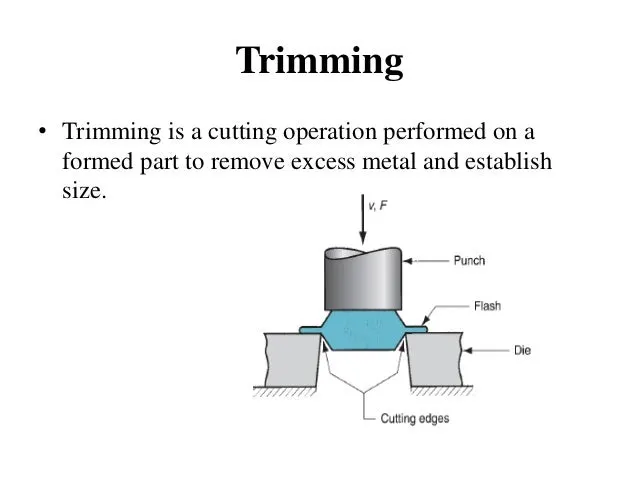
f. Flanging :-
Flanging metal is the act of swiping sheet metal in a direction contrary to its previous position. Forming a sheet metal blank into the shape required by design is initially performed in a draw die. Additional forming of specialized areas can be accomplished with pressure forming or flanging in later die operations.
5.DESIGN APPROACH :-
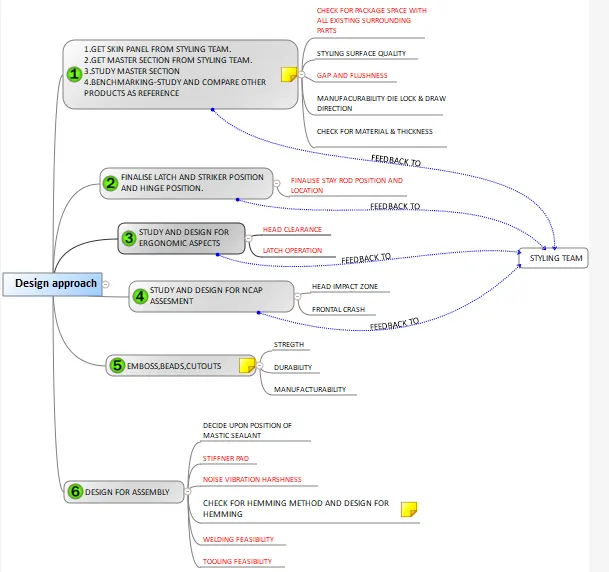
6.CAD APPROACH :-
Master section :-
Hood Thickness Information
- Outer Panel Thickness = 0.75mm
- Inner Panel Thickness = 0.75mm
- Reinforcement Thickness = 1.5mm
Tools used :-
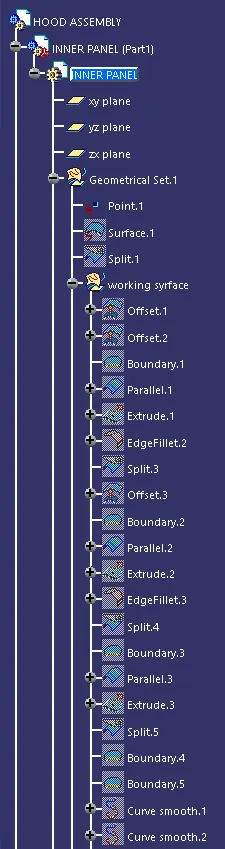
Position sketch
Offset
Boundary
Parallel curve
Extract
Multiple extract
Split
Smooth curve
Projection curve
Trim
Sweep
Edge fillet
Join
Thicken surface
Close surface
Fill
Symmetry
Coincidence
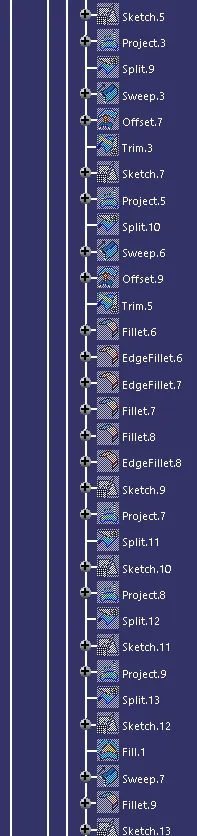
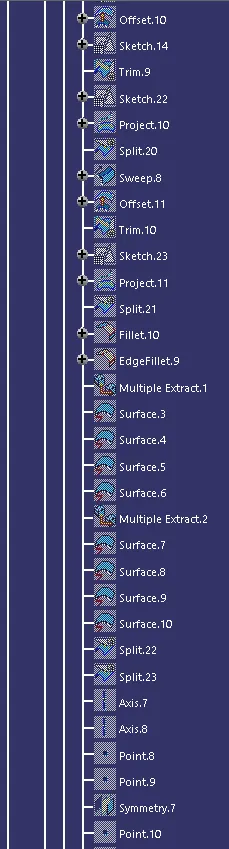
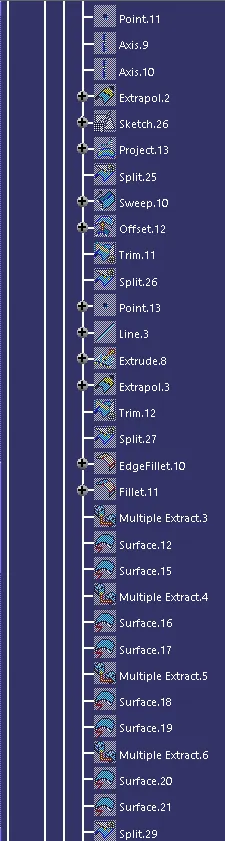
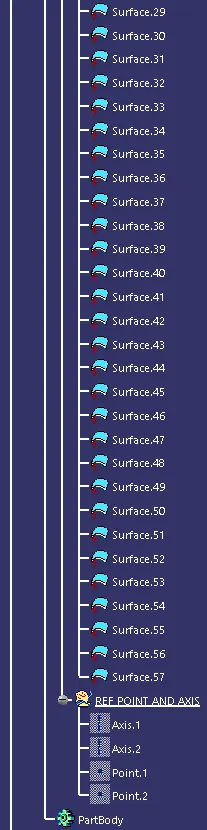
Feature tree of Hood inner panel :-
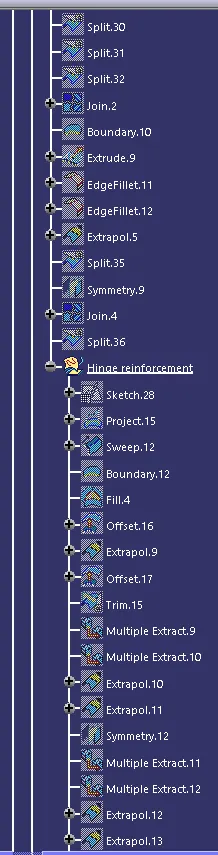
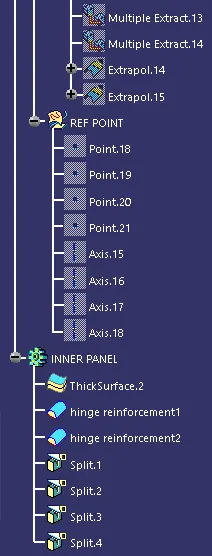
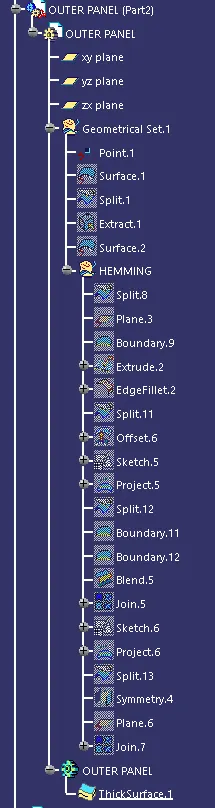
Feature tree for Hood Outer panel :-
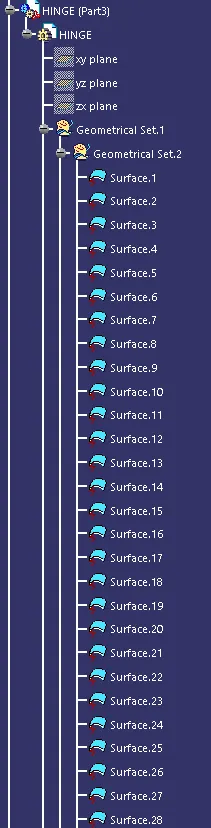
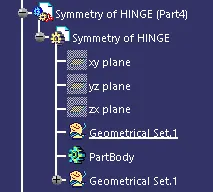
Feature tree for Hinge1 and Hinge2 :-
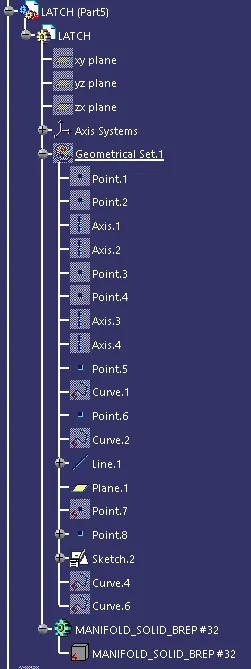
Feature tree for Latch and striker :-
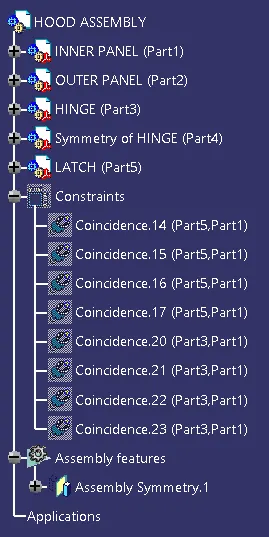
Feature tree for Hood assembly :-
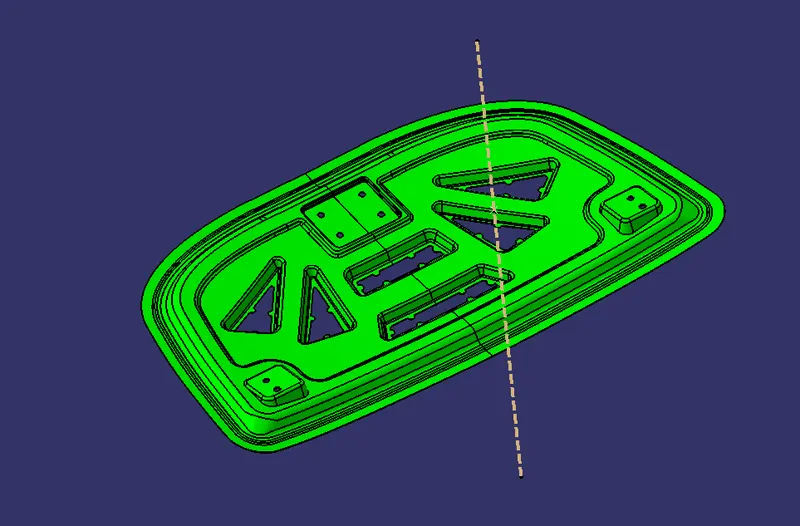
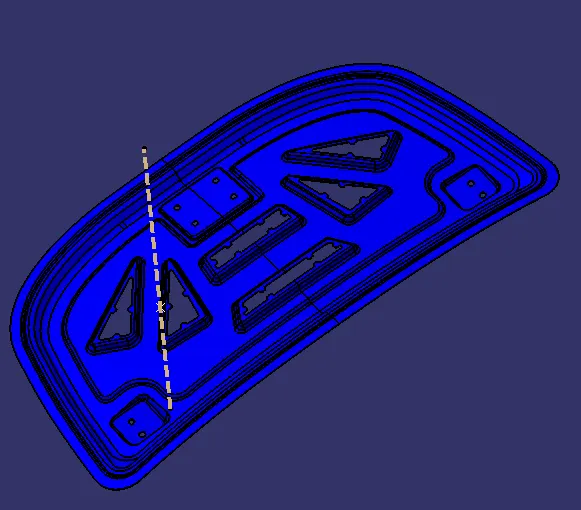
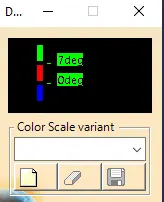
Draft analysis for inner panel :-
7.CONCLUSION :-
Thus the car hood design is completed with full design considerations and the requirements using Catia V5.