Hood design-Week 2
Hood -
- The Hood/Bonnet is an opening body panel or BiW part, which covers the front of a vehicle
- It covers the engine room in case of the front-engine vehicles and luggage room in rear-engine ones
- A hood is similar to a door
Commonly used materials in Hood -
- These materials are selected based on the required properties -
- Steel
- Aluminium
- Magnesium
- Composite materials
- Desired Properties -
- Strength, Manufacturability, Availability, Cost, Chemical or Mechanical resistance, durability etc.
Components of Hood -
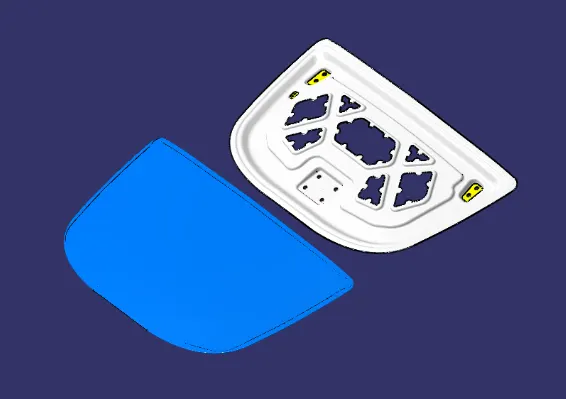
- Hood Outer Panel
- Hood Inner Panel
- Hinge Reinforcement (LH)
- Hinge Reinforcement (RH)
- Latch Reinforcement
- Hood Stiffener
Hemming -
- Hemming is a process of joining the sheet metal parts together by bending a sheet over another
- The flange which forms after bending is called a Hemmed Flange or Hem Flange. There are various types of
HemSafety Standards -
- NCAP - New Car Assessment Program - Created in 1979 by the US National Highway Traffic Safety Administration. It was put into practice in order to produce better and safer vehicles
- Every car follows a set of standards
- Regions (except Global NCAP) -
- Bharat - NCAP
- European - NCAP
- Japan - NCAP
- British - NCAP
Pedestrian Safety -
- Pedestrian Head Impact
- Wrap-Around Distance (WAD)
- Under Bonnet Clearance
- Head Form Test Method
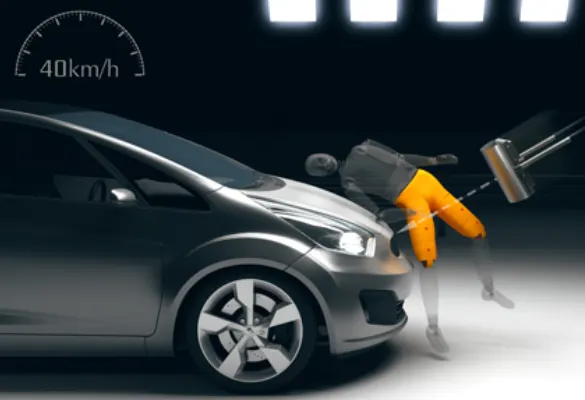
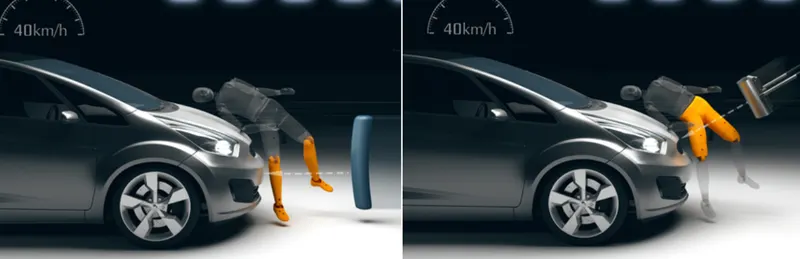
Wrap Around Distance -
- Distance which is traced by a line which goes from the ground to the end point of contact.
- Child - 1000mm to 1500mm
- Adult - 1500mm to 2100mm
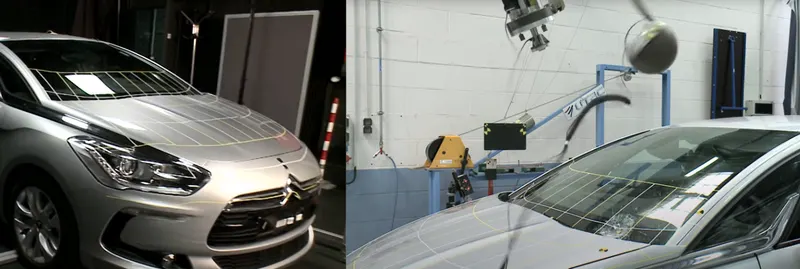
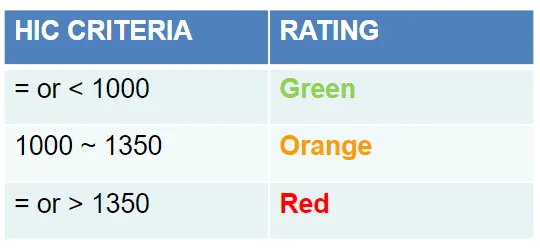
HIC - Head Injury Criterion :
- HIC is the value on the basis of which the safety rating for head impact is determined.
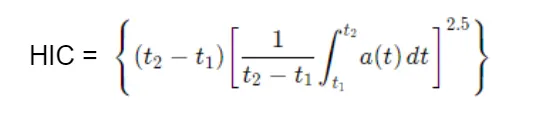
- a = Resultant accl. Measured in units of gravity
- t1 and t2 = Time considered during A-3 ms
- A-3 ms = Maximum force that lasted for 3 ms
- Data considered during HIC -
- Event Duration - 100 to 250 ms
- Instances duration - 35 to 45 ms
- Instances are taken considering A-3 ms