Hood design-Week 2
Hood & its Components
Hood: A Hood, also referred as Bonnet, is a hinged cover that rests over the engine of the front-engine vehicle. It provides access to the engine for repair or maintenance. It consists of outer and panels. The outer panel is a styling surface where as the inner panel provides strength. It also helps to dessipate the energy outwards of the hood away from the cabin towards the pillers side during any collision.
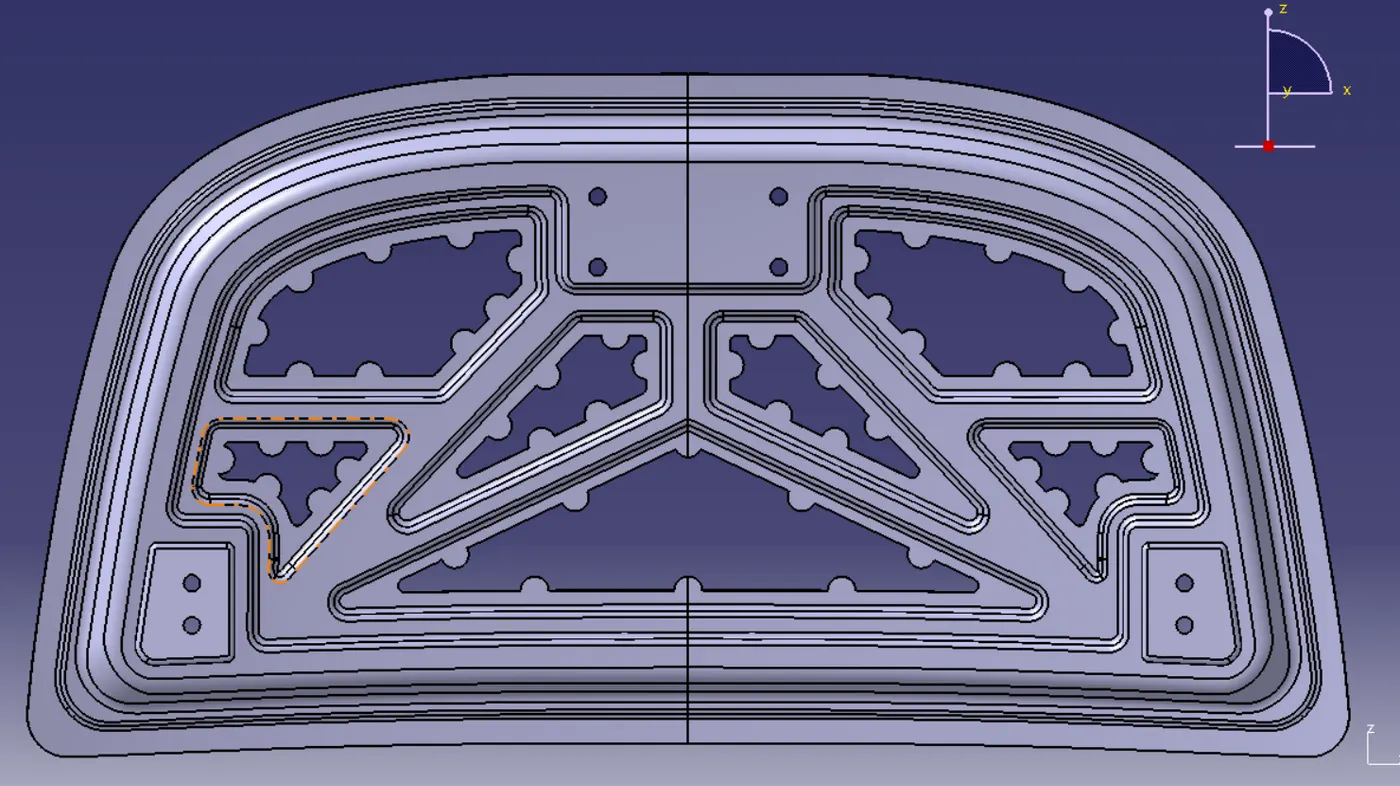
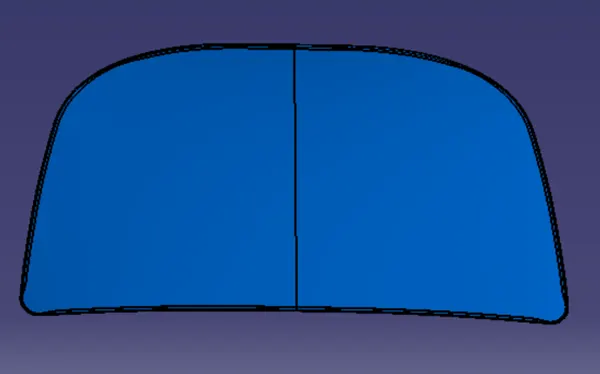
Hood Inner Panel Hood Outer Panel
Hinges: Hinges are the assembly components, which joins two parts together, allowing them to rotate relative to each other.
Hinge assembly
Latch and Striker: The Latch and striker mechanism consists of latch in the engine compartmentas well as a U-shaped anchor that is fastened to the inner panel, which inturn locks the hood with the engine compartment.
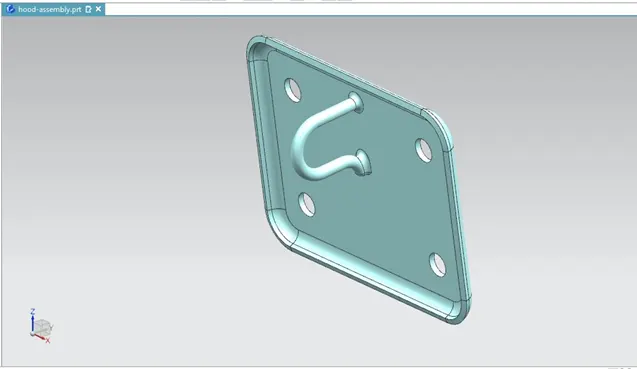
Latch
Support Rod: It is a supporting the hood of a vehicle in its open position by means of a rod. The rod can be given a curvature to provide strength. The curvature cannot be more than 35mm, else the weight of the hood deforms the rod. The rod can be supported by Grommet in rest condition.
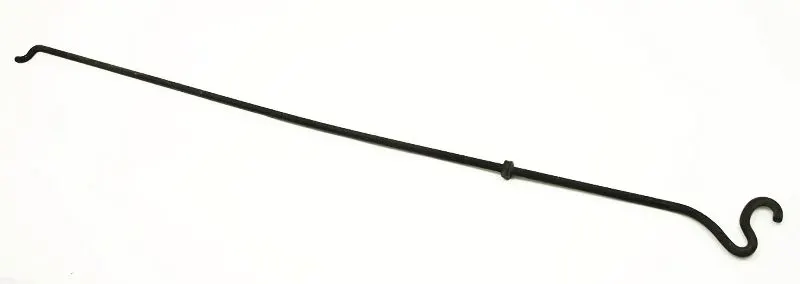
Hood Support Rod
Gas Stay: It is a supporting the hood of a vehicle in its open position by means of a actuator. It is supported by Ball studs on both sides attached to reinforcements.
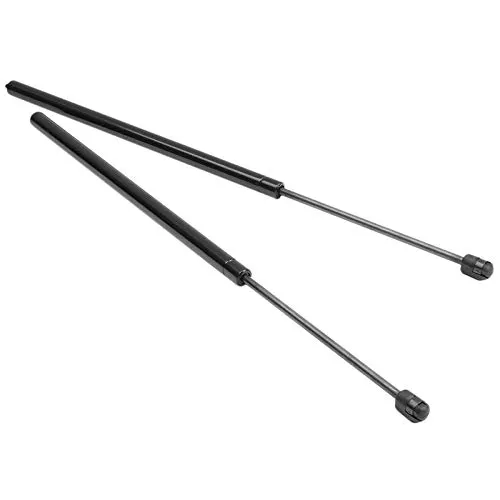
Hood Gas Stay
Mastic Data
Mastics are introduced as a paste at specified points between outer and inner panels of the hood, which when enters a furnace for heating gets hardened. As we know that the main purpose of the outer panel is for the aesthetic looks. Thus we cannot use bolts or welding. This has to be done with the help of the hemming and mastic sealants.
Every mastic sealant can tend to improve strenght locally around 80mm diameter. More number of mastics introduced, better the strength becomes.
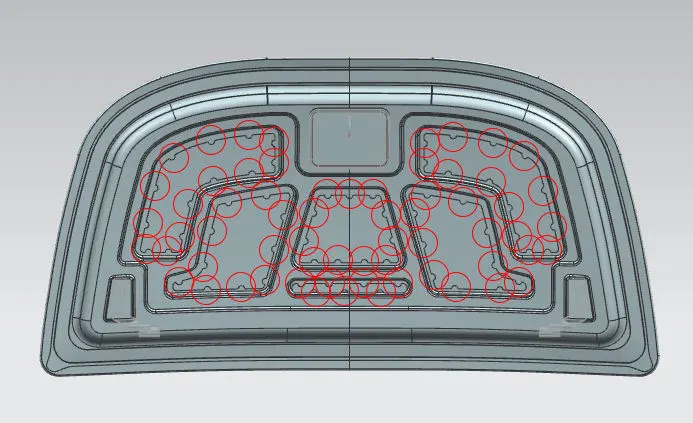
Mastic points
Latch Trajectory
While assmblying latch with hood panel the positionof the latch and striker should be positioned in such a way that the latch striker exactly fits into lock hole of the engine compartment. keepinng in mind the latch striker are placed on the inner hood panel suing latch trajectory path. the path is created usin hinge axis as referance.
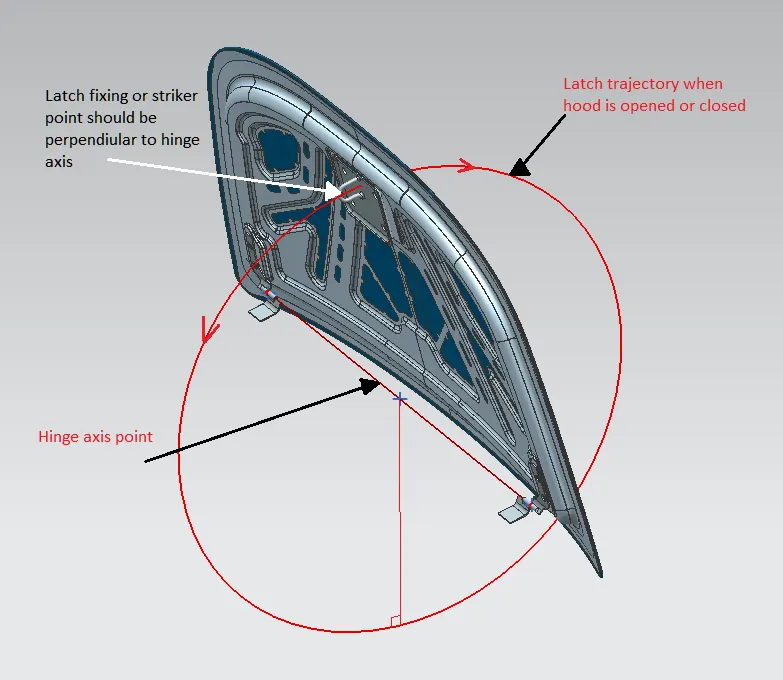
Latch Trajectory
Emboss
Embossed surfaceplays an important role in car hood while a crash. During collision, hood is the most affected part which sustains all the impact force duriing collision. emboss are created in such a way that the forces exerted during collision are dessipated towards the corners of the car.
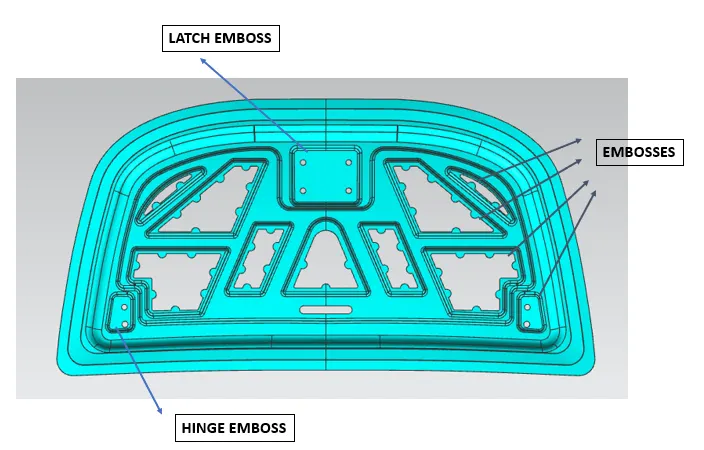
Embossed surfaces on inner panel
Manufacturing Processes
Deep Drawing: Deep drawing is a sheetmetal forming process in which a sheet metal blank is radially drawn into a forming die by the mechanical action of a punch. It is thus a shape transformation process with material retention. The process is considered "deep" drawing when the depth of the drawn part exceeds its diameter.
Deep Drawing process
Hemming: Hemming processs is basically used to join the inner hood panel & outer hood panel together. Hemming is a metal working process in which a sheetmetal edge is rolled over onto itself. Hemming is the process in which the edge is rolled flush to itself, while a seam joins the edges of two materials.
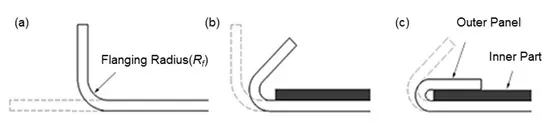
Hemming Process
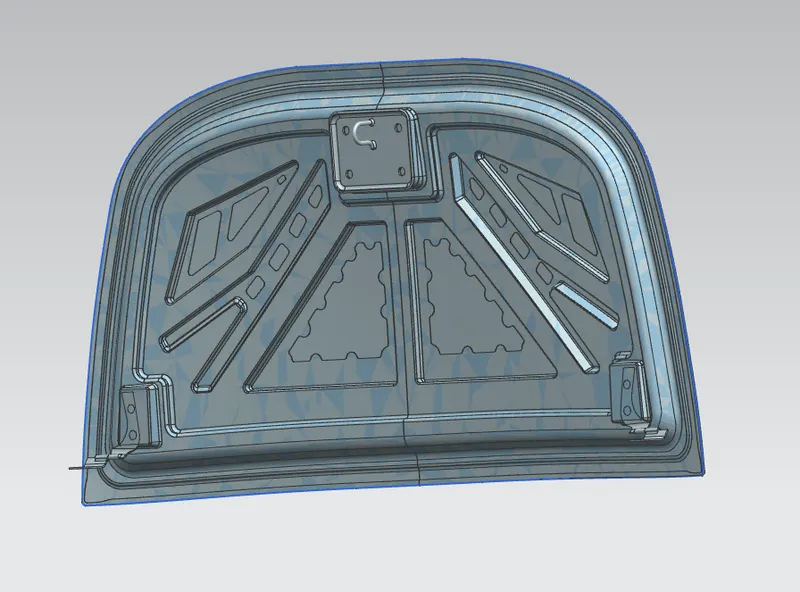
Hood assembly designed using the given design data