Hood design-Week 2
HOOD DESIGN
AIM
To Design a Hood outer panel, Inner panel, and necessary reinforcements by following the master Section and to make a detailed Explanation about Latch trajectory, mastic data, and Manufacturing processes like Deep drawing and hemming.
TOOL USED
Siemens NX CAD
Data to be used:
Hood Thickness Information
- Outer Panel Thickness = 0.75mm
- Inner Panel Thickness = 0.75mm
- Reinforcement Thickness = 1.5mm
Introduction
A Hood or Bonnet is a type of door which is hinged to cover the engine compartment of the car. It has an inner and outer panel. Inner Panel gives Strength and the outer panel is a metal that gives an aesthetic to a car.
COMPONENTS
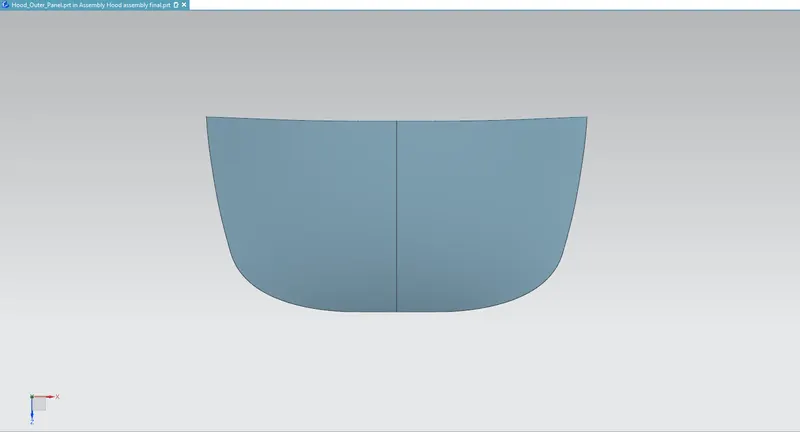
OUTER PANEL
The outer panel is a metal Cover that is covered over the inner panel. It gives an aesthetic to the hood.
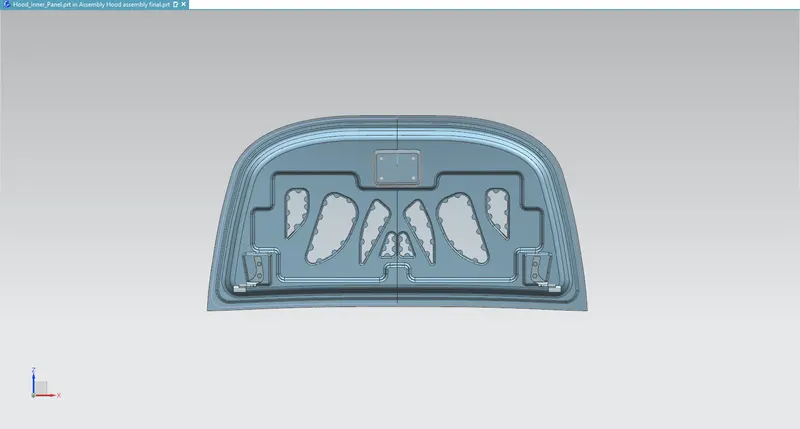
Inner Panel
The inner panel is an important part of the Hood that Gives strength to the hood and holds the latch and striker, Support Rod, etc.
Reinforcements
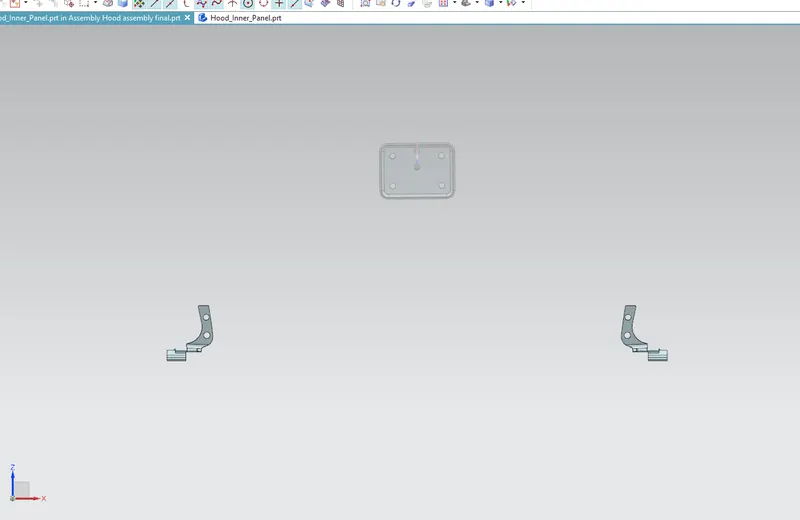
The Purpose of Reinforcements is to increase the strength in the Latch and Hinge area locally. It is provided based on design Requirements. For Our Requirement, the Reinforcement thickness should be 1.5
Manufacturing Process
Deep Drawing
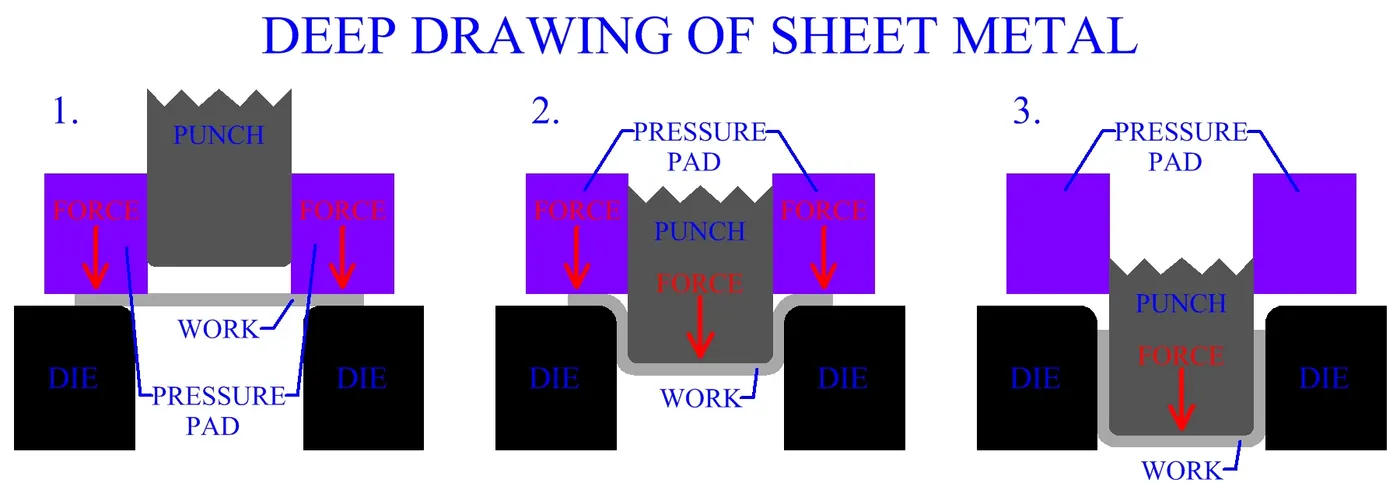
Deep Drawing is the manufacturing method widely used to form sheet metal into structures. It is used in the Automobile industry to make car body parts. Deep drawing is a sheet metal forming process in which a sheet metal blank is radially drawn into a forming die by the mechanical action of a punch. It is thus a shape transformation process with material retention. The process is considered a deep drawing when the depth of the drawn part exceeds its diameter.
|
Hemming
Hemming is a process of joining two sheet metals by folding the edges to 180°. It is also a forming method of sheet metal. In Hood, it is used to join outer and inner panels together. It will improve the appearance and give good reinforcement and a tight fit.
Hemming is an important process since it affects the Appearance and quality if it goes wrong. It should be handled carefully.
Types of Hemming Processes
- Conventional Hemming
- Roll Hemming
Conventional Hemming
It is used for mass production. It consists of three steps example Bending, Pre hemming, and hemming.
Roll Hemming
Roll hemming consists of Rollers which is guided by robots to create a flange.Roll hemming is very flexible to use and tool costs are significantly lower as compared to those of conventional die hemming. However, the cycle times are much higher since the hemming is realized using a hemming roller which follows a defined path.
Latch Trajectory
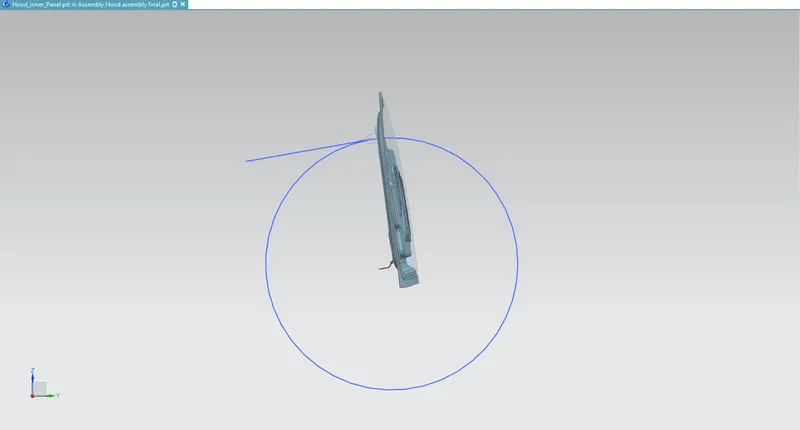
The latch trajectory is the path that the striker will follow when the hood is open/closed while pivoting on the hinge axis. The latch trajectory is taken as a circle with the hinge axis as the center of the circle. The striker is placed 90 degrees such that it is tangent to the circle.
Mastic Data
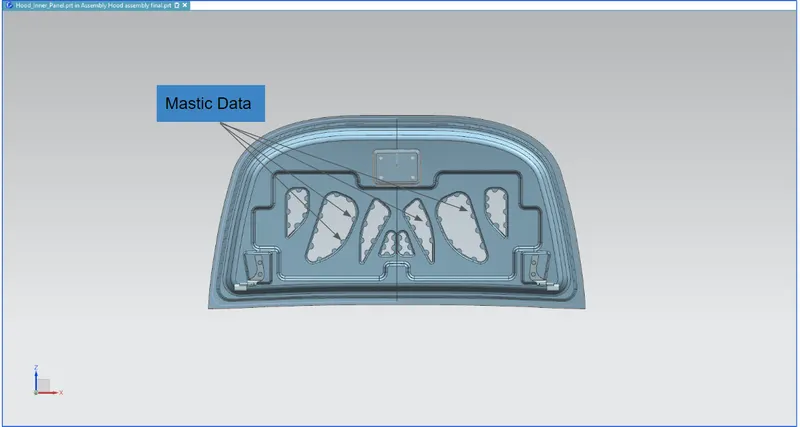
Mastic is a sealant that is used to join the outer and inner panels since the Surface area of the hood is larger in Size. Mastic sealants are elastic compounds that behave like rubber. It is applied between the inner and outer panels at specified spots. Each spot of mastic sealants has its effect around a circular region of 80mm diameter. Thus, the mastic points are arranged in such a way that it covers the areas away from the hemming which is more vulnerable to vibrating.
Result
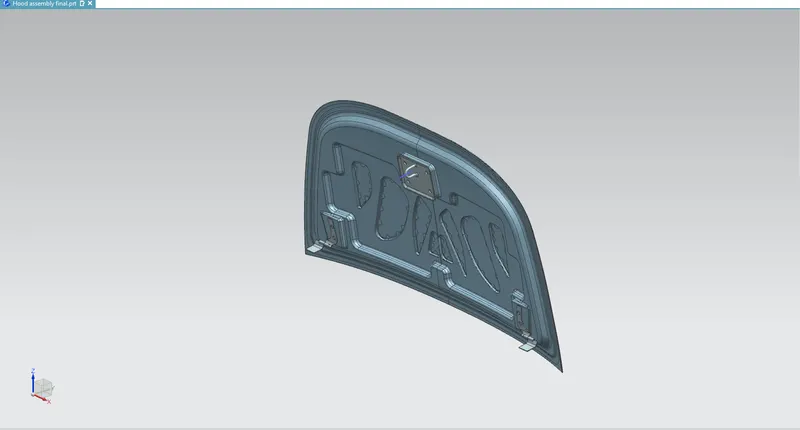
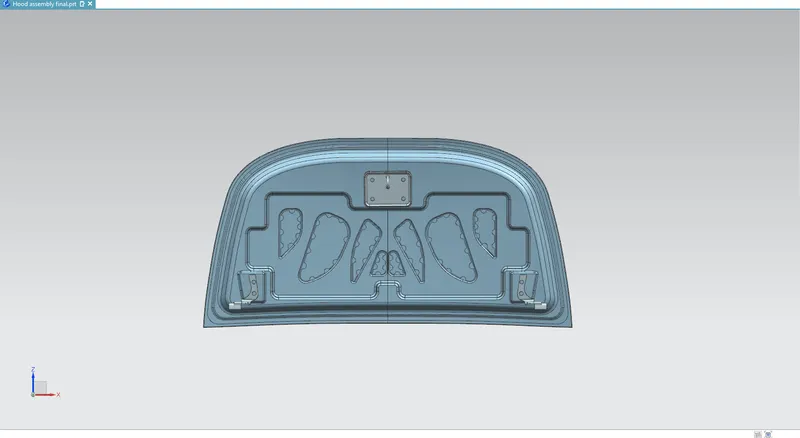
Final Design and Assembly Of Hood
Final Design of Hood using NX Seimens. It consists of Hinges and Stricker, Embosses, and Mastic data.