Hood design-Week 2
Design of the Hood Assembly
Objective: The main aim of the project is to design the hood of a car using the outer surface provided and taking into account of directing the force of impact to the corners or hinge assembly. Also the design is created by keep in mind the following aspects; safety to pedestrians, position of hinges and striker, opening angle of the hood.
Introduction: Hood or Bonnet is the part of the car which covers engine part (in some cases like rear engine vehicles, it acts as the cover of the boot space or trunk). Hoods also play a major role in the aerodynamics of the car, thereby reducing the drag and increasing the down force of the car. Hood also helps to direct impact of the any head-on collisions away from the passenger cabin there-by reducing the damages to the passengers. These Hoods are designed in such a way that less damages are caused to the pedestrians during accident.
Materials: Most of the car hoods are manufactured using stainless steel and its varieties. Other materials used are carbon fibers, aluminum and materials with fiberglass and the use of these materials are used depending upon the cost of the car and also depends on the purpose of the car usage (domestic, luxury and racing).
Sheet Metal Design: is a process of manufacturing components/parts from a metal sheet by punching, cutting, shaping and bending. Sheet metal parts are highly durable and are using in various applications and this process is suitable for high volume productions. This process in car/vehicle manufacture industries is mainly adopted for the production of many components/parts such as outer/inner panels, chassis, etc.
The manufacturing process of car hood consists of the following processes:
1. Blanking
2. Stretch forming
3. Trimming and punching
4. Deburring
5. Welding
6. Grinding
7. Painting
8. Baking
9. Polishing and Waxing
10. Coating
Emboss: is a stamping process of raising or sinking designs of reliefs in a sheet metal components which in some of the components helps in providing cushioning effect and also help in force distribution.
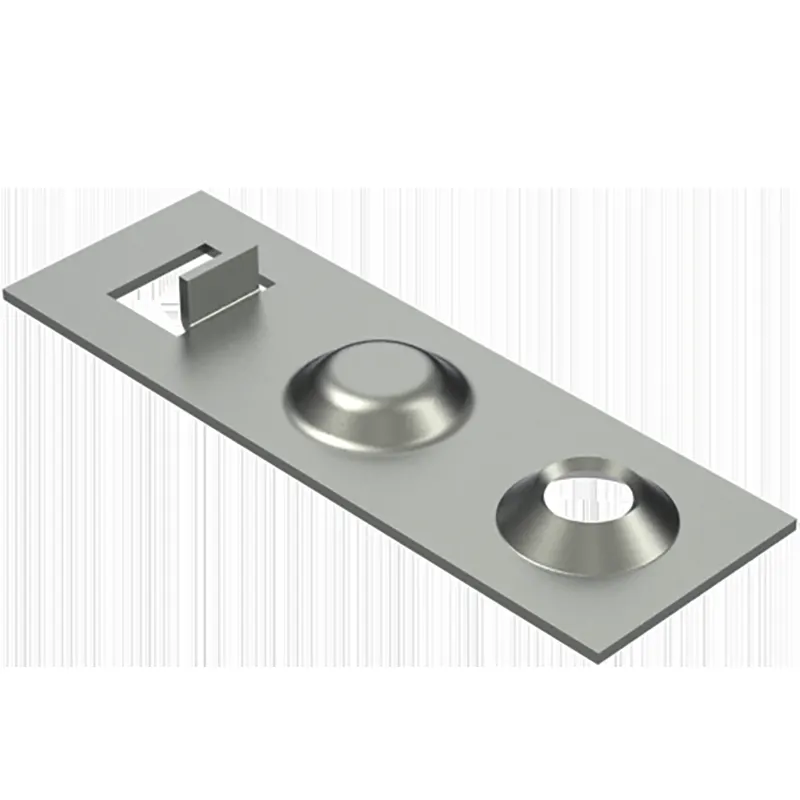
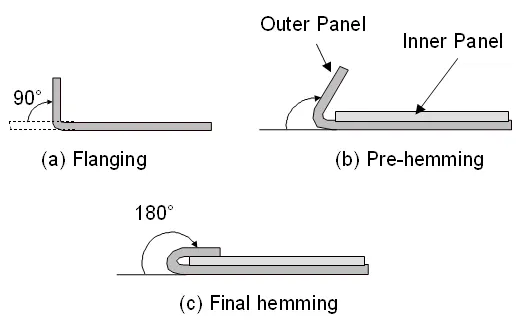
Hemming: is a process of folding or bending of one sheet metal over the other to aid for a joining process to attain aesthetic looks to the component/part and also to avoid the sharp edges on the components. Creating the hems is an expensive process.
The following image show the hemming process:
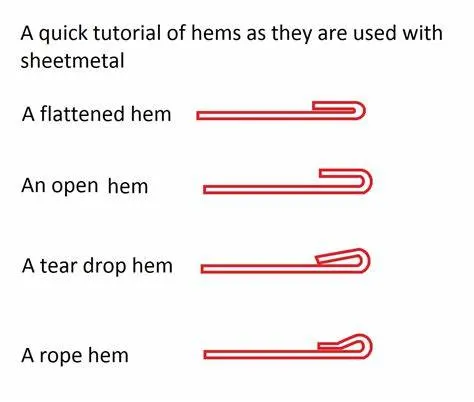
The following image shows the types of hem:
Features:
1. Sketch
2. Offset surface
3. Trim surface
4. Projected curves
5. Law extensions
6. Face blend
7. Edge blend
8. Emboss
9. Mirror geometry
10. Sew
11. Thickness
Thickness used:
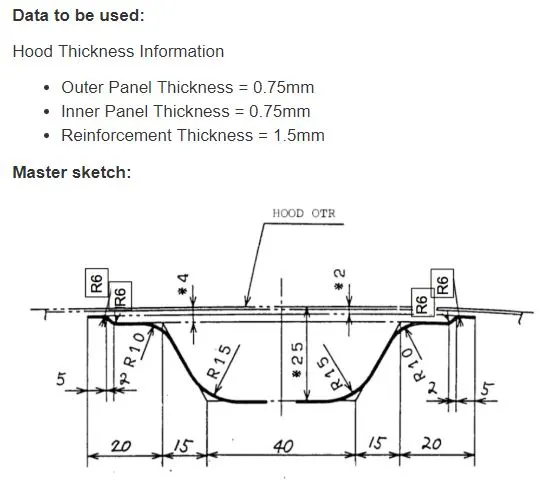
1. Outer Panel: 0.75 mm
2. Inner Panel: 0.75 mm
3. Reinforcement Thickness: 1.5 mm
Reference Surface:
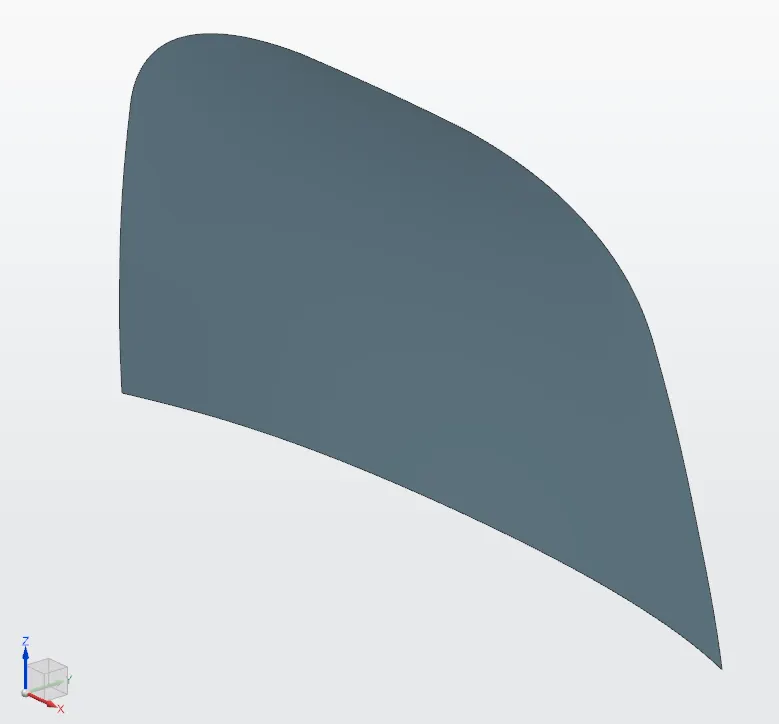
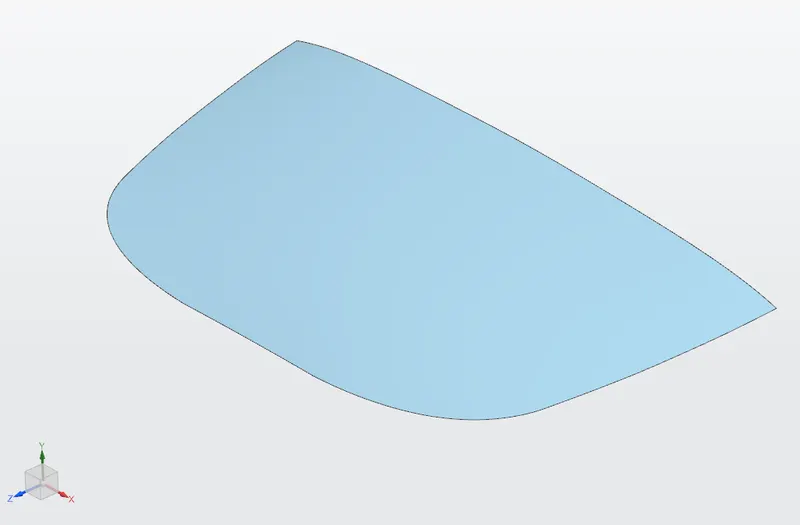
It is the reference using which both the outer and inner panels are designed. It is created by styling team who are responsible for the aesthetic looks of the out body of the car.
Inner Panel:
The inner panel is created using the master section data which is shown in the image below. Here the dimensions needed to create the embossing can be obtained. its thickness varies from 0.6 mm to 0.75 mm depending on the car company
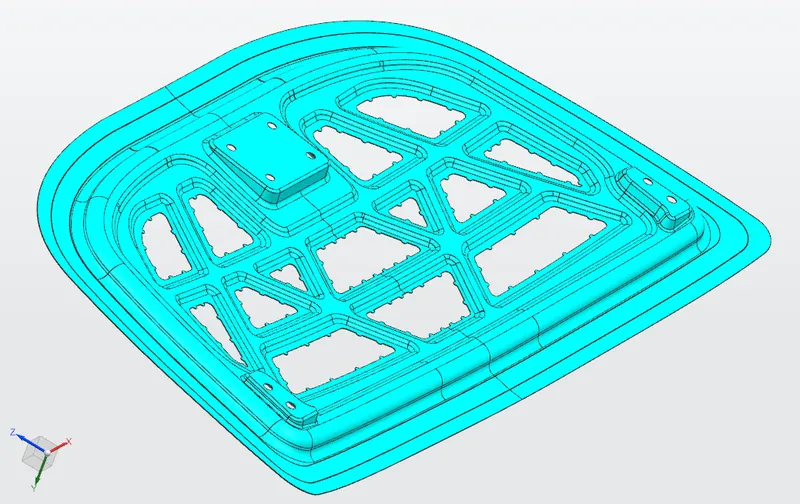
Initially a surface is offset from the reference surface and the embossing is provided to obtain the desired inner panel surface and it looks as below.
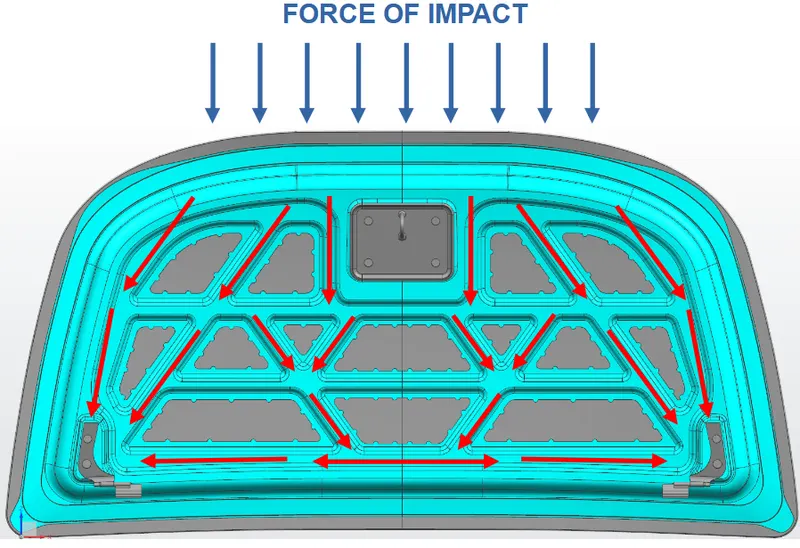
The emboss on the inner panel is created in such a way to direct the impact forces towards the hings to reduce the impact on the passengers in the cabin. The force flow is as shown in the figure below. The red lines depict the force distribution.
Outer Panel:
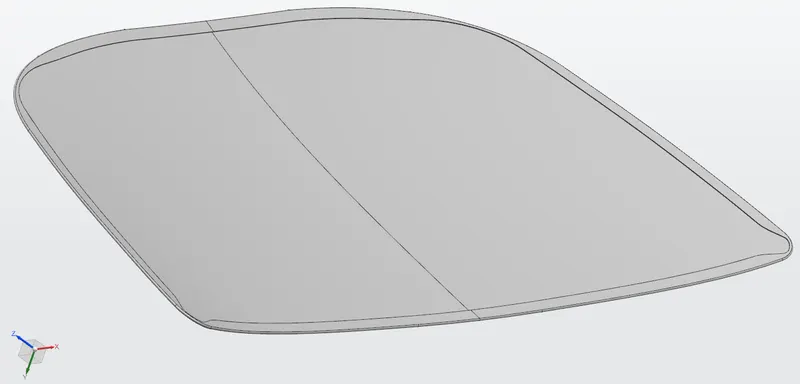
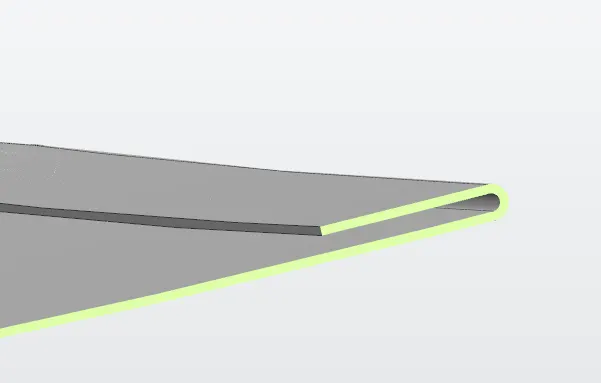
Outer does not consists of any embossing. It is also designed by offsetting the reference surface and its thickness varies from 0.6 mm to 0.75 mm depending on the car company. The hemming is carried out on the outer panel and it is wrapped around the inner panel.
Corner Relief:
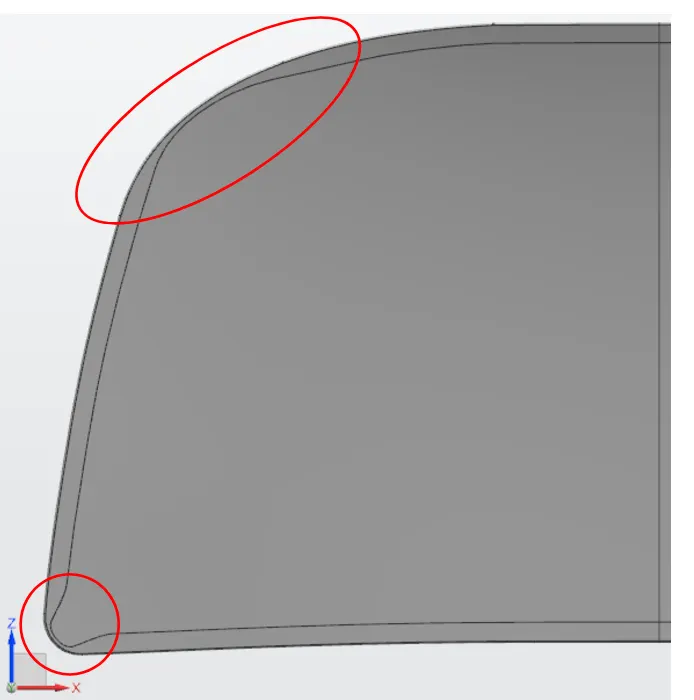
Corner reliefs are provided to ensure smooth hemming process at the corners or other locations where it is difficult to bend the surface. It helps to avoid stresses introduced in the sheet metal and also reduce formation of folding of the sheet metal or formation of cracks.
Latch and Striker Assembly:
Latch is the part/component which is used in locking the closed hood to the chassis under the normal circumstances. This movement of the hood is made easy by the hinges provided on either side as shown below.
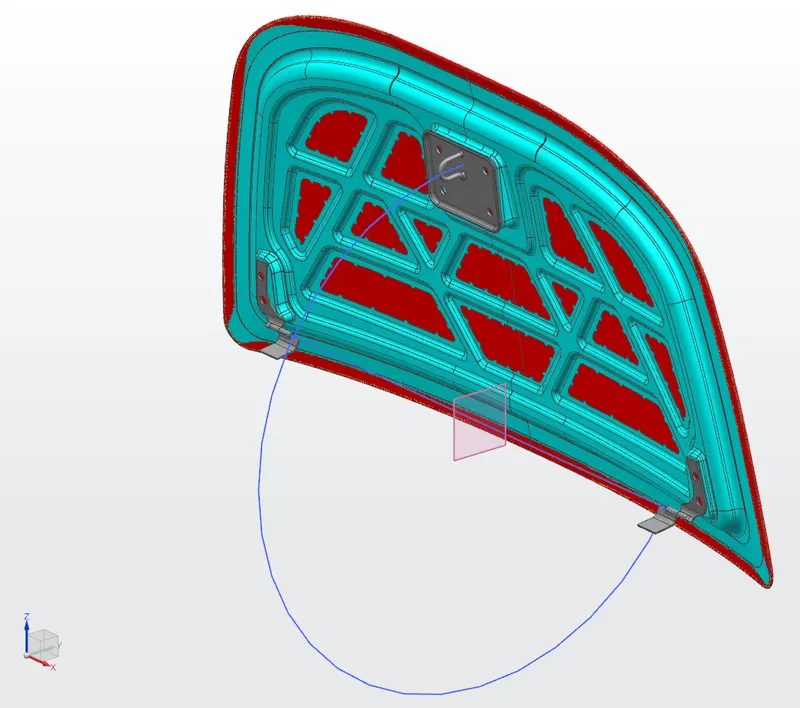
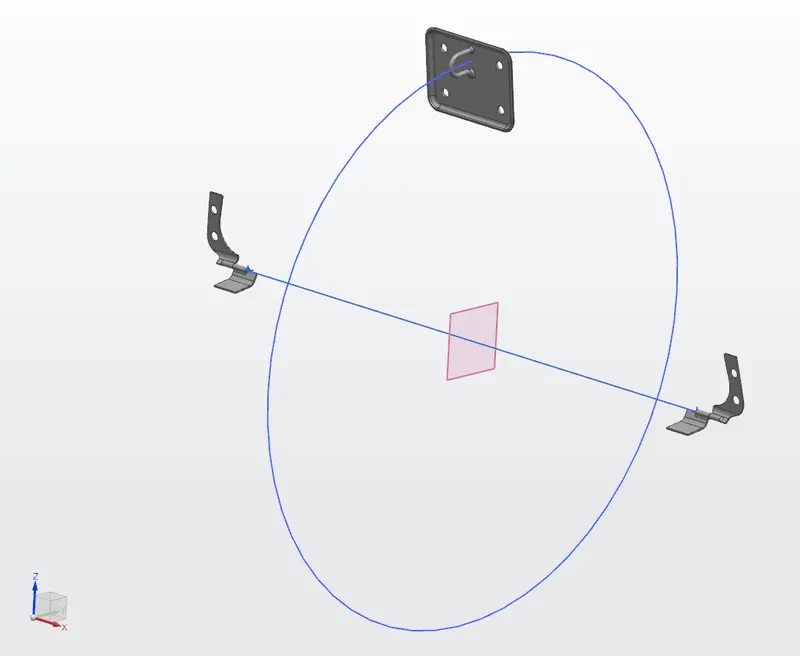
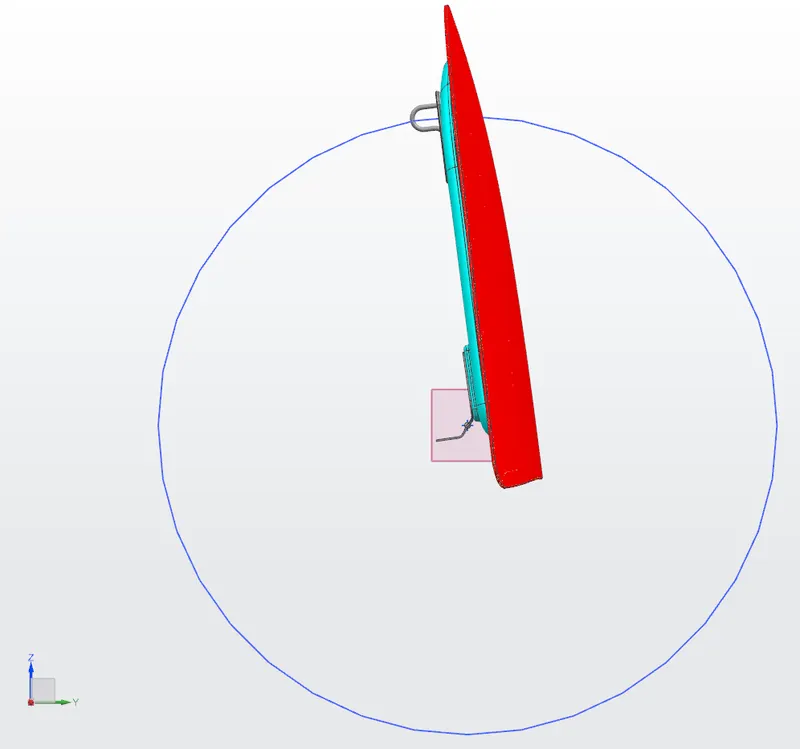
The latch and striker assembly is to be placed at an exact point where the circle drawn from the mid point of the line joining the two hinges crosses the hood as shown in the above figure.
Mastic points:
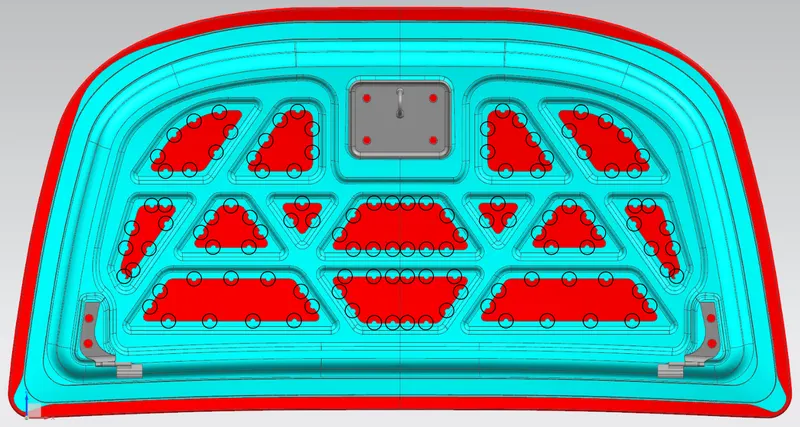
These are the points on the metal sheet which are designed to join the two panels together which aids in preventing the vibration between the panels during the drive. Sealants are used to for the fastening purpose. These sealants are used in place of welding or revetts.