Hood design-Week 2
Design of Hood of a car:
WHAT IS A HOOD?
A car hood, also referred to as Bonnet in some countries, is the hinged cover that rests over the engine of a front engine vehicle. Its purpose is to provide access to the engine compartment for any repair and maintenance issue. The term HOOD is a North America term used primarily in America and Canada. Hood comes from the old English word HOD which means a soft cover for the head.
When we talk about hood from design point of view, the hood of a car is considered as the frontal BIW enclosure component. Hood are designed to reduce air resistance as the air flow around the car. The shape of the hood is made aerodynamic in order to reduce reduce the air effect.
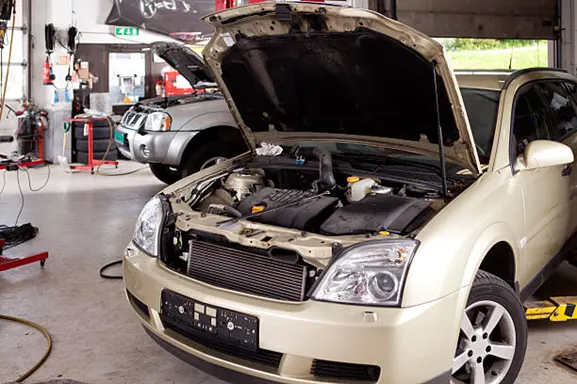
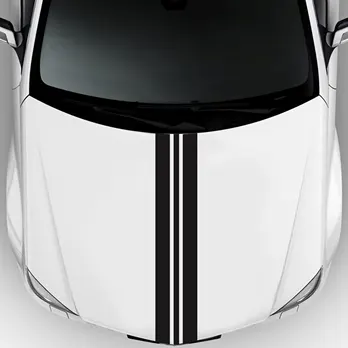
The main function of hood to decorate the car and give luxurious look to the car.
HOOD DESIGN:
Before designing the hood there are some basic consideration for the hood design.
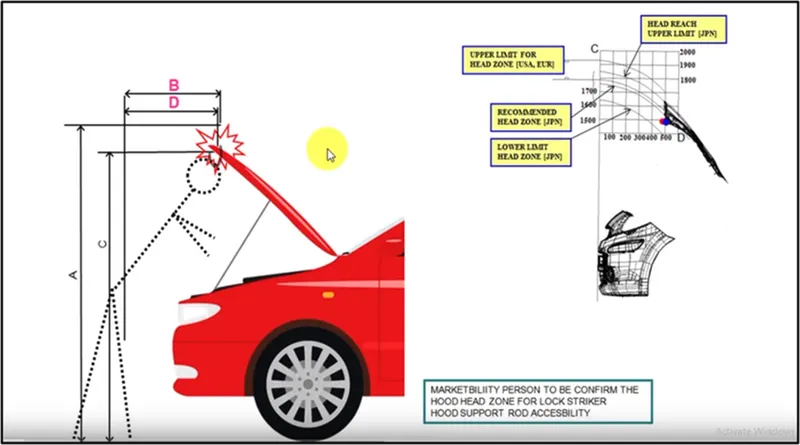
- The height of the hood various country to country, it should be depend on the height of the person, because the average height of person various place to place.
- The material consideration also should be cost effective for manufacturing.
The hood should be designed with light weight to achieve pedestrian safety as the person hit the hood should get minimal harm and the passenger as well.
WHAT IS WRADP AROUND DISTANCE (WAD)?
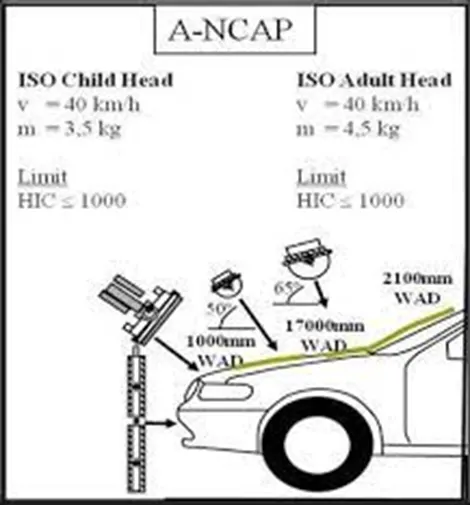
When a car crashes on a pedestrian, the whole human body wrap around the front shape of the car and the head impact on the bonnet and windscreen. The distance on which the head impact on the car from the ground is called as the Wrap around Distance (WAD)
To be specific the wrap around distance is a measurement of distance from ground to the head impact zone over the outer surface of the car. The wrap around distance is measured longitudinally in the centre of the vehicle from the ground
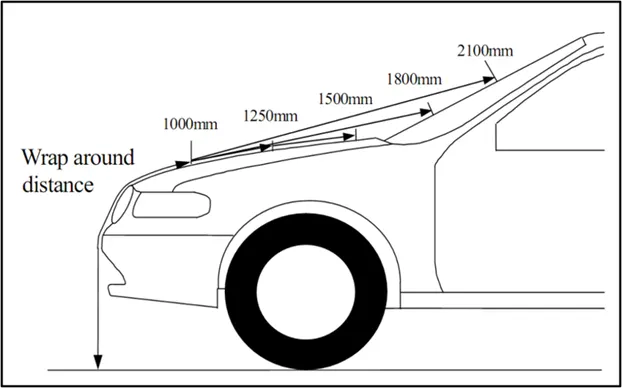
The severity of the injury caused by the frontal crash depends on the type and shape of the vehicle, speed of the vehicle and the movement of the pedestrian relative to the vehicle. In addition to these parameter, the wrap around distance plays a vital role in safety measurement of a pedestrian . During the crash analysis, Based on the WAD, two test area will be created namely child head impact zone and adult impact zone. The child impact zone in between 1000 to 1700mm WAD and adult head impact zone is between 1700 to 2100mm WAD. These data are as per the A-NCAP
‘
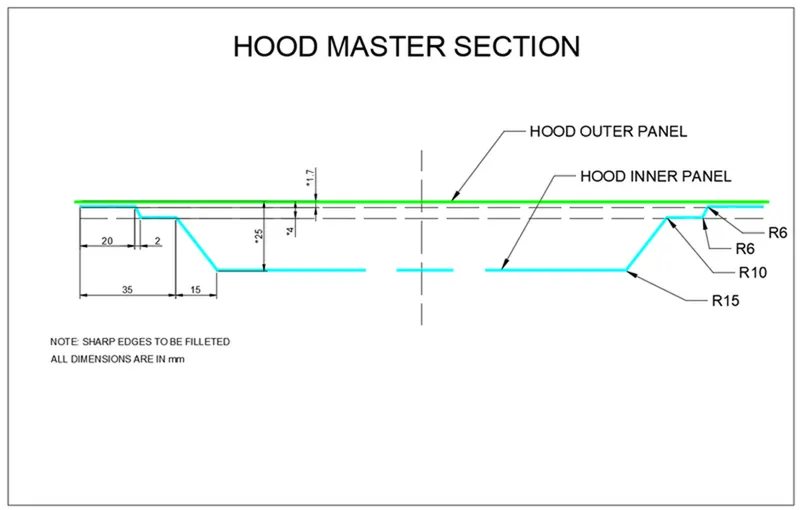
Hood is the assembly of the following,
- Outer panel
- Inner panel
- Hinge Assembly
- sticker
OUTER Panel:
Outer panel play vital role in hood. The main purpose of outer panel is to cover the inner panel to provide aesthetic look to the car and at the same time panel should be curve and sleek so that it behave aerodynamically and reflect the air hitting front of the car efficiently. Here rather than using normal joining method like spot weld or seam weld unique method namely hemming process is used.
WHAT IS HEMMING?
Hemming is one of the unique method of joining two sheet metal. In this process rollers are used to join the sheets. It is a type of folding or warp around process in which the roller bend and press the extended flange on the outer panel to join or fold over the inner panel which hold the inner panel firmly.
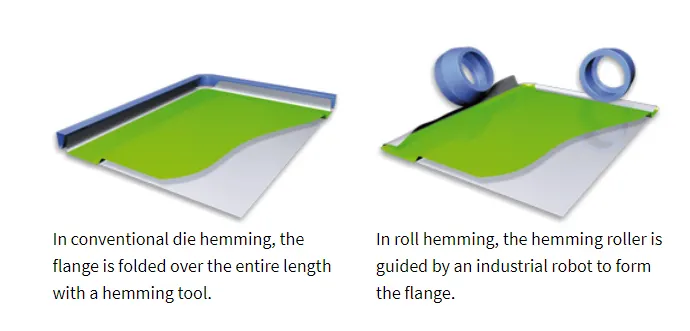
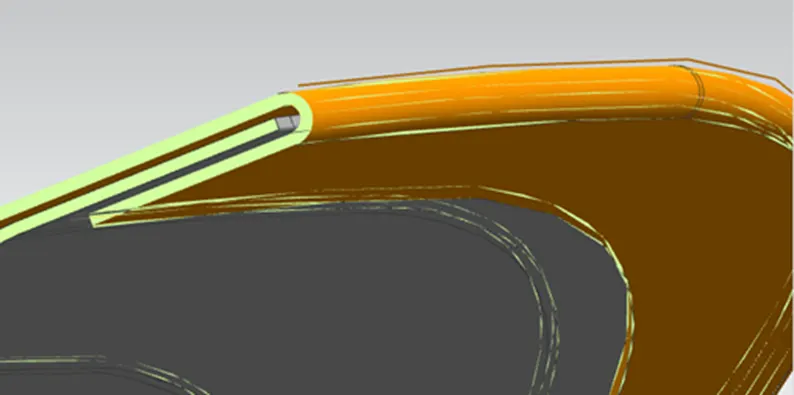
The above shown image is the hemming on the outer panel.
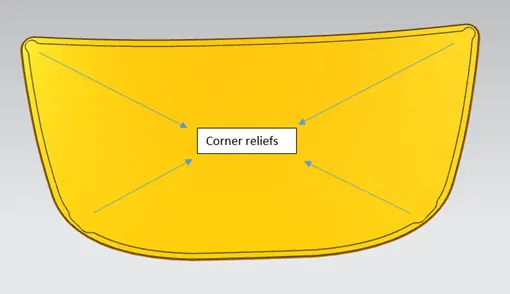
Corner reliefs:
Reliefs are provided to do the hemming operation easlily and smoothly.
INNER PANEL:
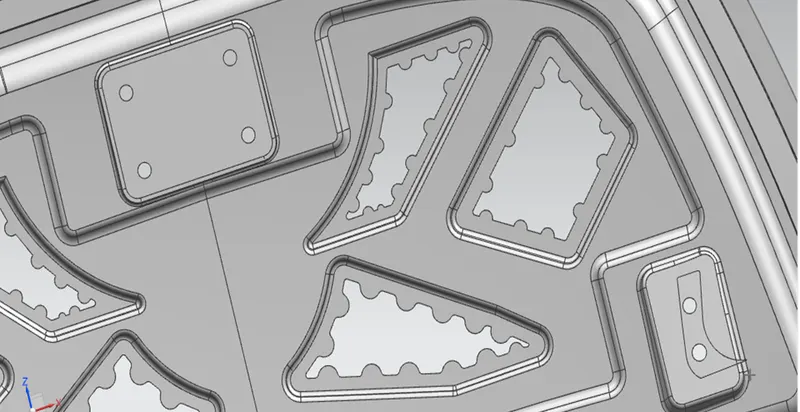
Inner panel play a major role in achieving the pedestrian safety. Inner panel consist of lot of design constrain that should attain pedestrian safety. Inner panel is designed in such a way that if a collusion happens the driver and as well as the passenger should be safe and get minimal injure. To achieve this constrain we provide embosses that the force get deviated to the outer side of the panel.
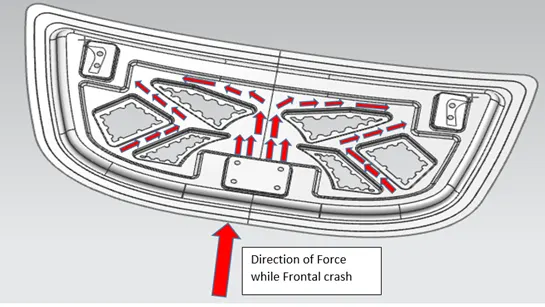
- Another important criteria for the inner panel of hood design is the protection of the occupants inside the car during front crash. The design of the inner panel should be in such a way that during the collision, the force should travel in the upward direction through embosses & directed towards the body of car. Thus protecting the occupants inside.
- Sheet metal embossing is a stamping process for producing raised or relief in sheet metal. This process can be made by male and female dies of desired pattern. This operation is commonly accomplished with a combination of heat and pressure on the sheet metal, depend on the type of embossing required.
- Metal sheet is drawn through the male and female rollers dies, producing a pattern. Depending on the roller used, different pattern can be used produced on the sheet metal. The combination of heat and pressure actually irons the metal and make it smooth.
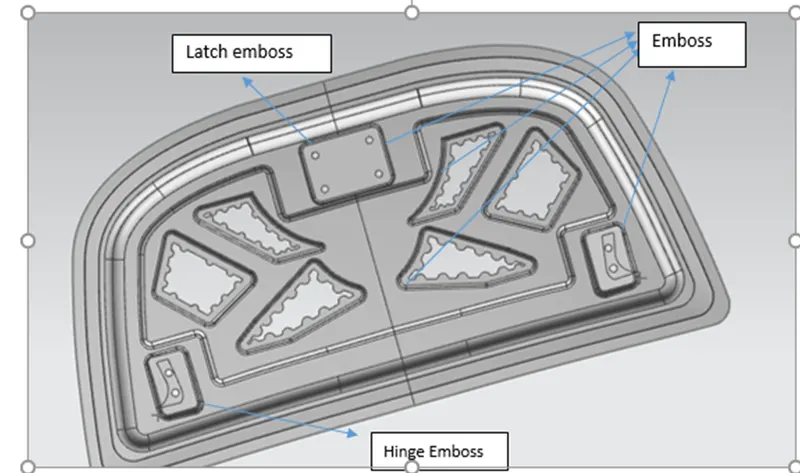
- To attach the hood inner panel with the hood outer panel mastic sealerare used, in the automotive industry this is the most important criteria while making any product is that the aesthetic part of the vehicle which is visible to the naked eye should not have any sort of irregularities of damages, considering this important factor mastic sealer will be used to attach both the panels.
Hinge assembly:
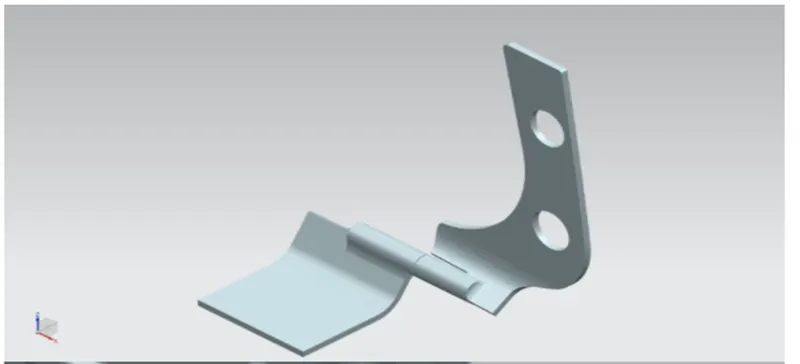
Hinge is the assembly which has two components one is attached in the inner panel of car and other one is attached to the car body which is connected by a rod. It is used to open and close the hood.
Sticker assembly:
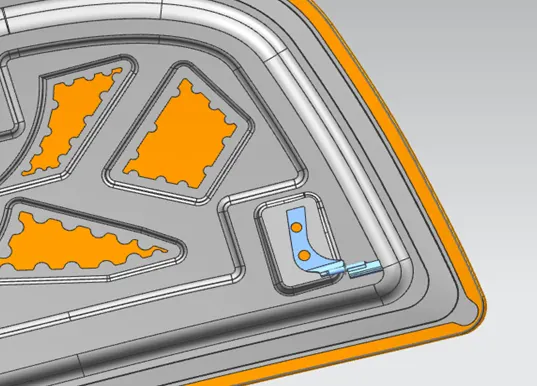
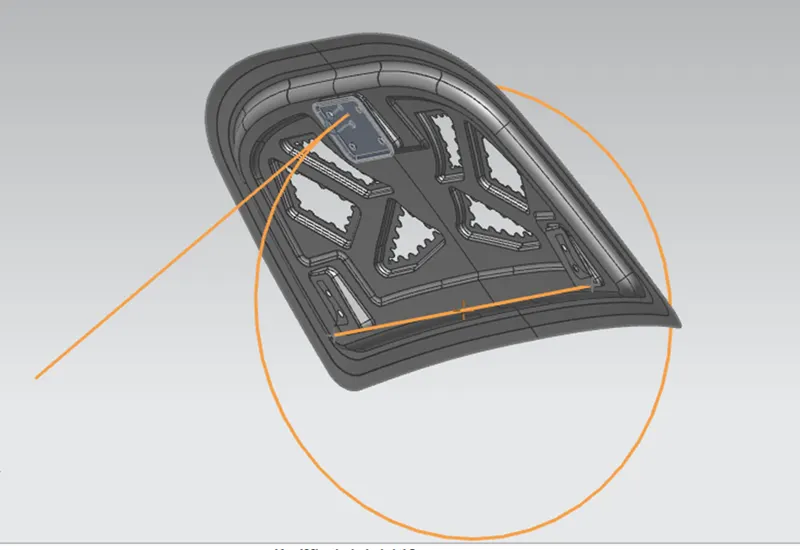
- The latch should be placed at appropriate position so that it does not become obstacle while the hood is opened and closed. For this purpose it should be placed perpendicular to the hinge
- To achieve the above condition a line should be drawn using the axis of the hinges on the opposite ends. About the midpoint of this line a datum plane should be made and then a sketch is done on the datum plane.
- Inside the sketch a circle is made which should indicate the trajectory of the opening and closing angle of the hood. Then a line is drawn tangent to circle and a point is marked.
- Another straight line will should be drawn on the latch which would be perpendicular to the latch.
- Now both the straight line are coincided with each another using the align feature in the assembly workbench. By doing this the latch will get arrested perpendicularly and will follow the circular path so that hood can be opened and closed easily.
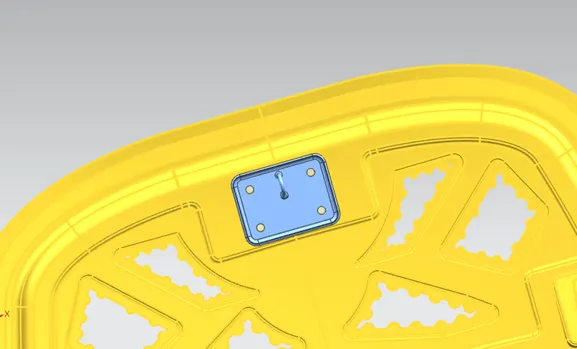
Reinforcement for latch and hinges:
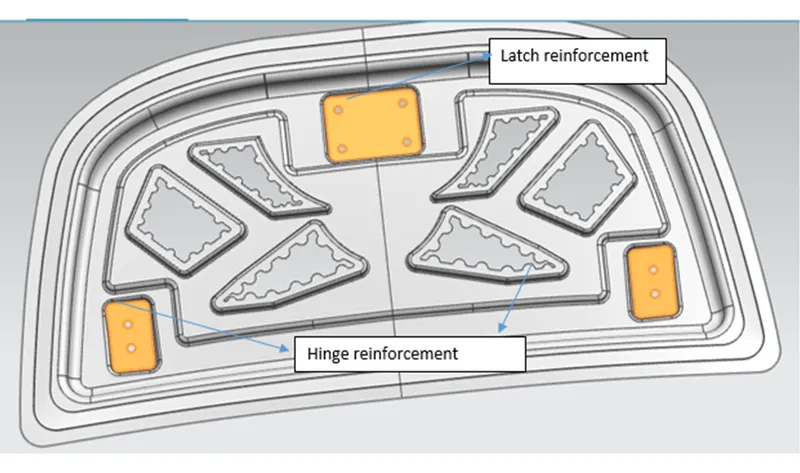
- The material that strengthen the existing material when adding to it are called reinforcement material. While placing the hinge and latch on the embosses, the strength on the area of latch and as well as hinge position will be less that tend to get easily damaged during motion.
- To get rid of this damage, reinforcement material are added to that areas to strengthen the latch and hinge
- In order to provide strength reinforcement metal part of 5mm thickness is spot welded into emboss of the hinge and striker. It can’t be seen from the outside as it will be welded in the back portion of the hood inner panel
Manufacturing process involved in making different features of the sheetmetal
1. Deep Drawing
The deep drawing is a forming process which occurs under a combination of tensile and compressive conditions. A flat sheet metal blank is formed into a hollow body open on one side or a hollow body is formed into a hollow body with a smaller cross-section.
Deep drawing processes are divided into three types:
- Deep drawing with tools
- Deep drawing with active means
- Deep drawing with active energy
In the automotive industry, deep drawing is usually carried out using rigid tools.
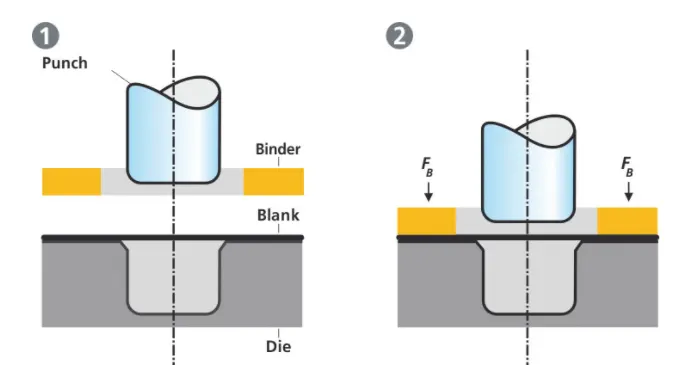
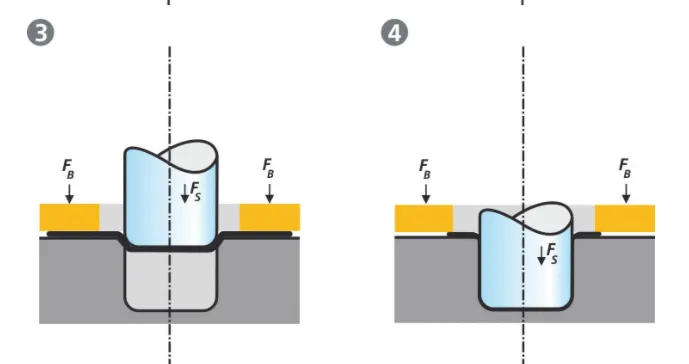
- The rigid tools consist of a punch, die and binder. In deep drawing, the plate holder closes after the metal sheet blank has been inserted.
- Next the sheet is clamped between the die and the binder. This process slows down the flow of the sheet while it is being drawn and thereby prevents wrinkles from forming under the binder. The punch stretches the sheet over the die radius and forms it in the die.
- Whereas in pure deep drawing there is no reduction of sheet metal thickness, forming is achieved in stretch forming purely as a result of a decrease in sheet metal thickness. Stretch forming is extensively used for the forming of only slightly curved parts with low depth of draw (e.g. roofs, doors).
- When drawing complex car body parts in practice, there is usually a combination of stretch and deep drawing involved. It is necessary that the sheet metal is stretched as well as possible without reaching the material’s limits (e.g. splits, wrinkles).
Different views of HOOD :
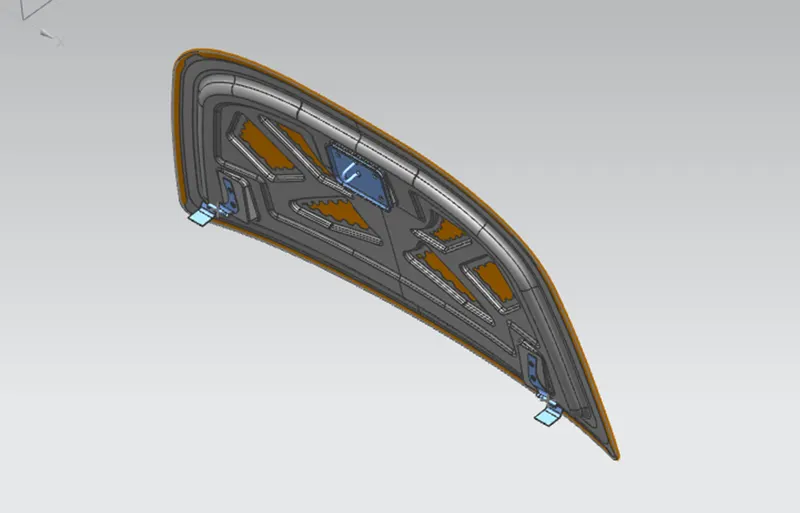
1. ISOMETRIC VIEW:
2. FRONT VIEW:
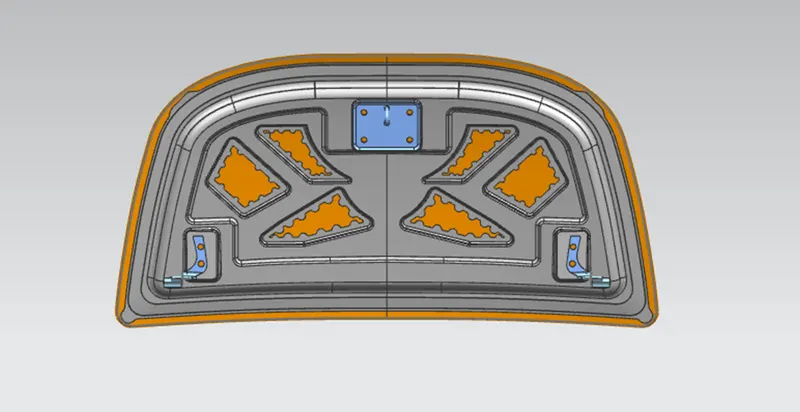
THICKEN OPERATION:
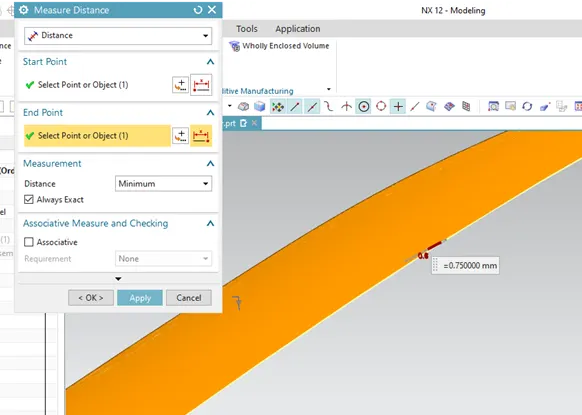
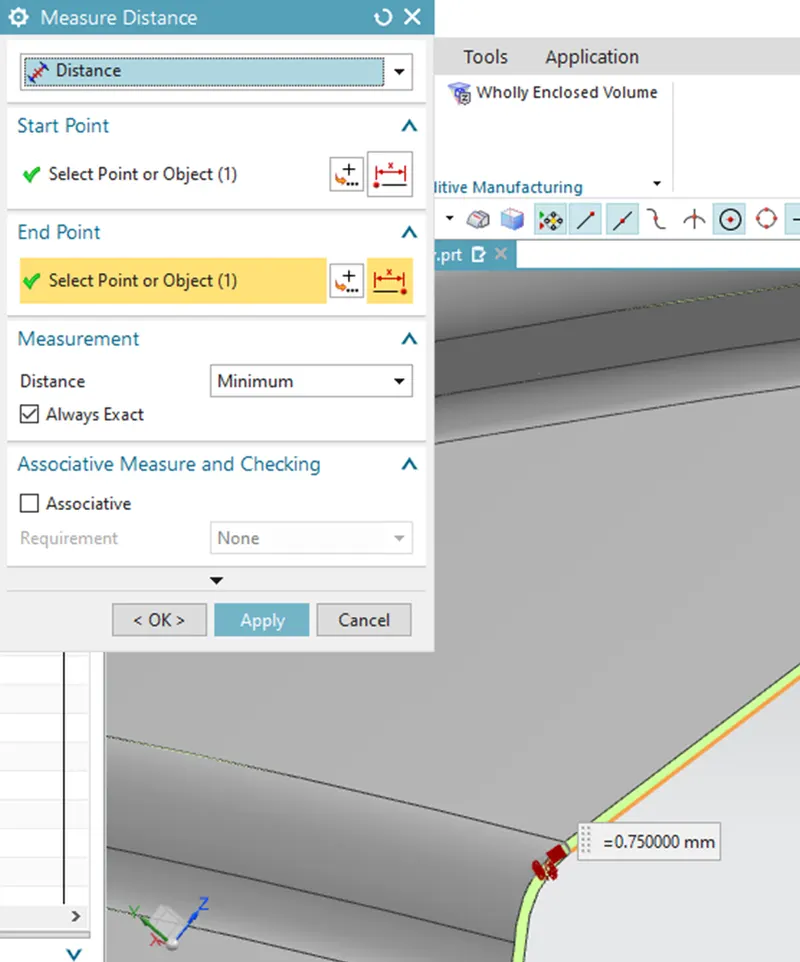
FINALLY the hood assembly is thicken as follow,
- Outer Panel Thickness = 0.75mm
- Inner Panel Thickness = 0.75mm
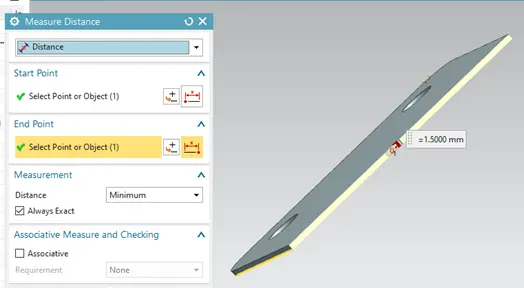
- Reinforcement Thickness = 1.5mm
CONCLUSION:
- The complete assembly of the hood outer and hood inner panel was designed as per requirement.
- The latch and the hinges were also placed at appropriate position by following a latch trajectory strategy.