Hood design-Week 2
Aim: Design Hood Outer Panel, Inner Panel and the necessary reinforcements by following the Master Section mentioned with the Design parameters using NX Cad Software.
Introduction: The Hood is an opening body panel that covers the engine in a front-engine vehicle. The hood is also considered as another type of door in a vehicle as it contains of an outer panel & inner panel. The inner panel provides strength while the outer panel functions as the metal cover. The main purpose of an automotive engine hood is arranged to be opened for the purposes of inspecting the engine room, Replenishing cooling water & Engine oil, changing parts, making repairs etc.
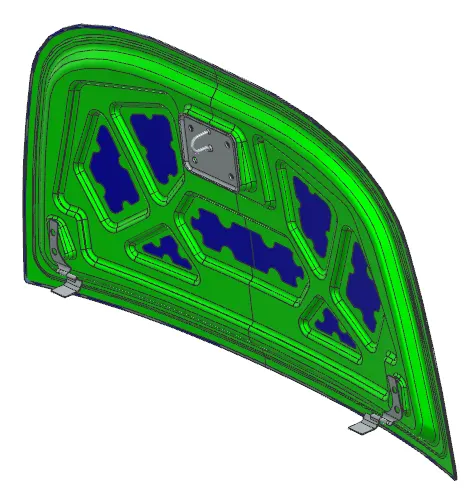
Sub-parts:
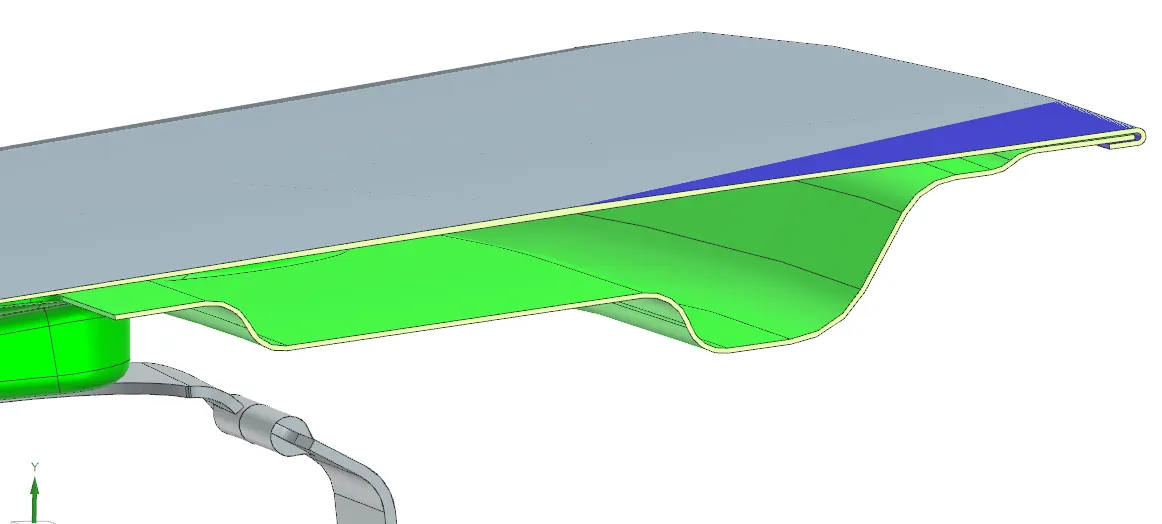
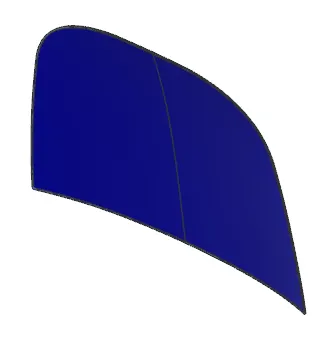
Hood Outer Panel: Outer panel are the aesthetic part of a car received from styling team who provides the skin. The shape, position and size of the hood should satisfy the safety norms. The outer panel is attached to the inner panel by hemming. We also provide mastic sealants between outer panel and inner panel to reduce vibration & it has tendency of improving the strength locally & it's a hard rubber.
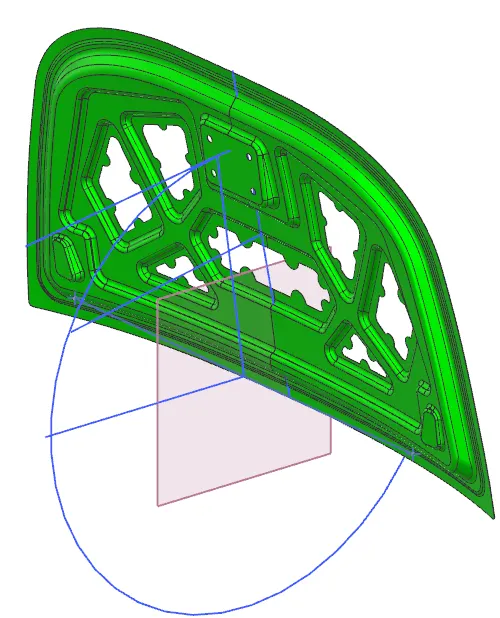
Hood Inner Panel: To design inner panel, we should consider NVH, Gas stay mounting, Latch & Striker points, Hinge axis, Deformable bracket, Pedestrain rating, Euro NCAP regulations. Inner panel should be always thickened in the upward direction & outer panel is downward. Embosses are provided to increase the stiffness of the inner panel. The shape and size of the embosses also determines the direction of the force distribution resuled from the frontal collision.
Master section: It's a predefined sketch which will be adoptable at different situations. In software, we use Wave Geometry Linker to extract the surface of the outer panel to be copied to present inner panel.
Tooling axis: It purely depends on the manufacturing process which we are going to produce particcular inner panel. Inner panel is manufactured or produce by a method known as stamping process. The direction where the tool advances towards the die is called as Tooling direction & the min. draft angle is 7deg.
Striker: Its mounting should be always tangential to the trajectory of hood about hinge axis.
Trajectory of hood: The path followed by hood about hinge axis while opening & closing is called as Trajectory & its in circular shape. The niormal path of that striker should be coinciding with the tangent.
Reasons behind the tangential is when the hood is closing, it should properly locked with the latch, so that hook is aligned & it will be properly meeting, then it will have proper lock. Atlast make sure the assembly constraints are properly followed to get proper output of inner panel.