Hood design-Week 2
CAR HOOD DESIGN
Aim: To design car hood in NX using given master section and provided design parameters.
Hood and its components:
. Hood:
Hoods are usually made from the same material as the rest of the body. This can be steel, aluminum, fiberglass, or carbon fiber. However, some aftermarket companies produce fiberglass or carbon fiber steel hood replacements to make the vehicle lighter.
The hood release system is common on most vehicles and typically consists of an inner hood latch/lock handle, a hood release cable, and a hood lock assembly. The hood lock handle is usually located under the steering wheel, next to the driver’s seat, or in the door frame.
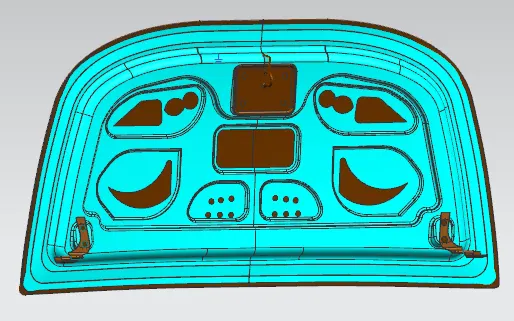
Fig 1.Hood
COMPONENTS:
Hood Outer Panel:
The outer panel work as metal cover.It is responsible for aesthetics of the vehicle.
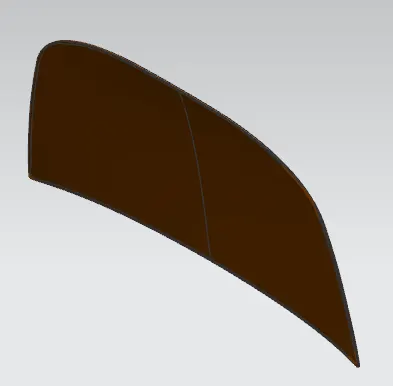
Fig 2.Hood outer panel
Hood Inner Panel:
The inner panel provides strength and supports the outer panel. It is where hood balancer and hinges are attached.
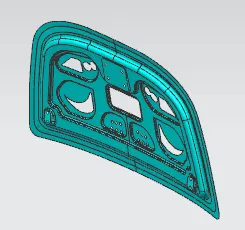
Fig 3. Hood inner panel
Hinges:
The hinges allow the hood to rotate around a fixed axis for opening and closing movement. One part of the hinge is fixed with engine compartment, while other part is connected to hood.
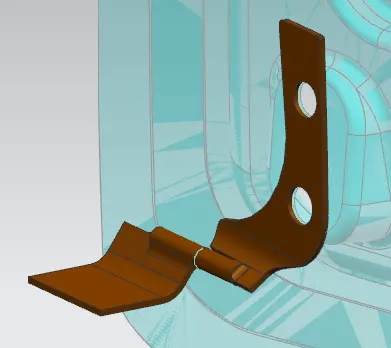
Fig 4. Hinges Assembly
Latch And Striker:
Latch and striker mechanism is provided lock the hood, in order to prevent accidental opening of hood during driving. The latch is present on the engine compartment while the striker is attached to the inner panel of hood.
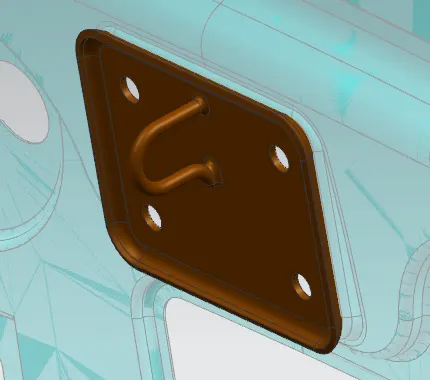
Fig 5. Hood latch and striker
Reinforcement:
Reinforcement are provided according to the design requirements. Mainly it is provided at the hinge and latch regions to improve the strength locally. Usually thickness of reinforcement will be higher than that of inner panels and the value varies according to the cost and requirement. According to the design requirement here it is given 1.5mm thickness to both latch reinforcement and hinge.
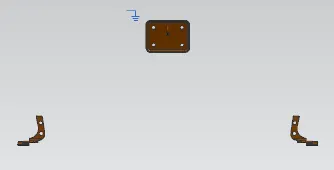
Fig 6. Hinge and latch reinforcement
Latch Trajectory:
Latch trajectory is given by the circle drawn from hinge axis point. Hinge axis point is the center point of hinge axis. First, we can fix either the latch or the hinge. If we have fixed the hinge position then we should plot the trajectory circle for the latch. For proper mating condition the striker axis through the tip of the striker should be tangential to the latch trajectory.
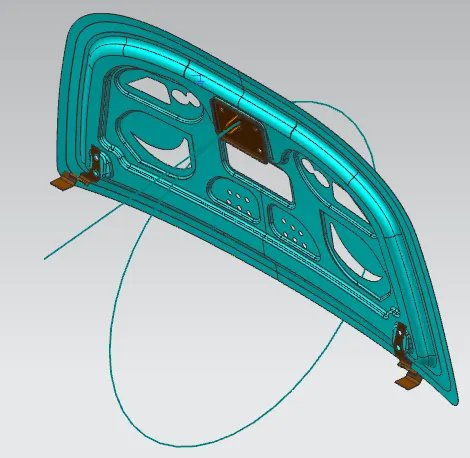
Fig 7. Latch trajectory
Emboss Defination:
Throughout the inner panel we provided different embosses. We can increase the stiffness of the inner panel through these embosses. The shape and size of the embosses is also determine the direction of the force distribution resulted from frontal collision. The force should be always distributed away from the passengers. The embosses are designed in such a way that the force is directed to either sides of a car.
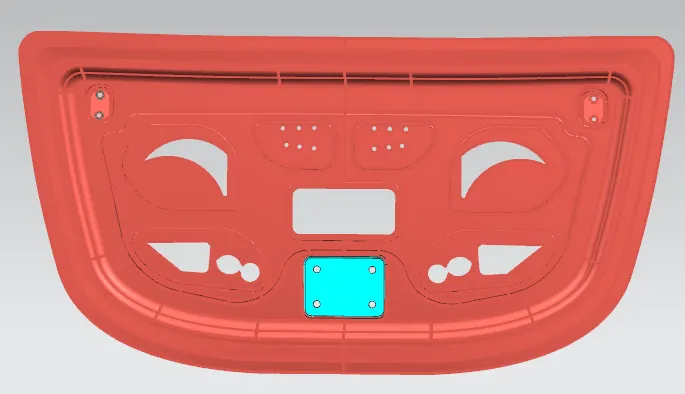
Fig 8. Embosses
Hemming:
Hemming is a forming operation in which the edges of the sheet are folded or folded another part in order to achieve a tight fit. Normally hemming opertaion are used to connect parts together. To improve the appearence of part and to reinforce part edges.
In car part production, hemming is used in assembly as a secondary operation after deep drawing , trimming, and flanging operation to join two sheet metal parts outer and inner together. Typical part for this type of assembly are hoods, doors, trunk lids, and fenders.
They are two types of hemming operation
1. Conventional die hemming
2. Roll hemming
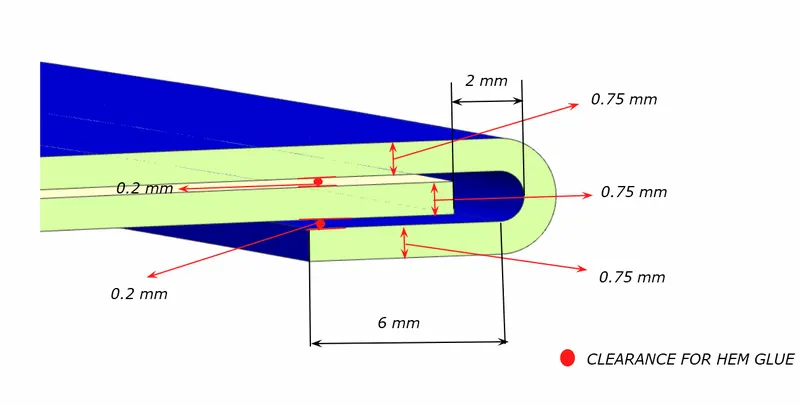
Fig 9. Hemming
Relief:
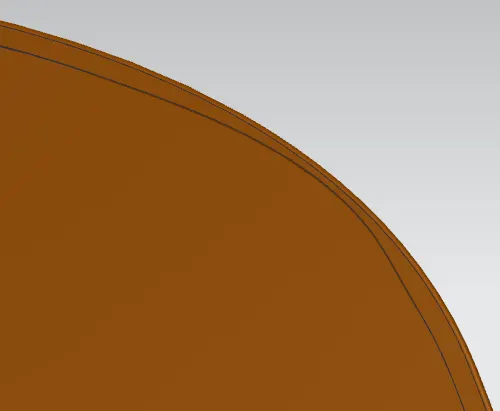
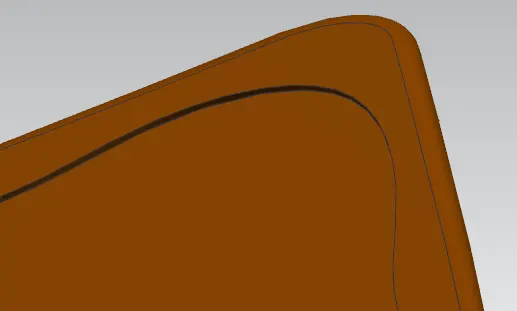 Fig 10. Front relief and rear relief
Design parameters:
Hood Thickness Information
- Outer Panel Thickness = 0.75mm
- Inner Panel Thickness = 0.75mm
- Reinforcement Thickness = 1.5mm
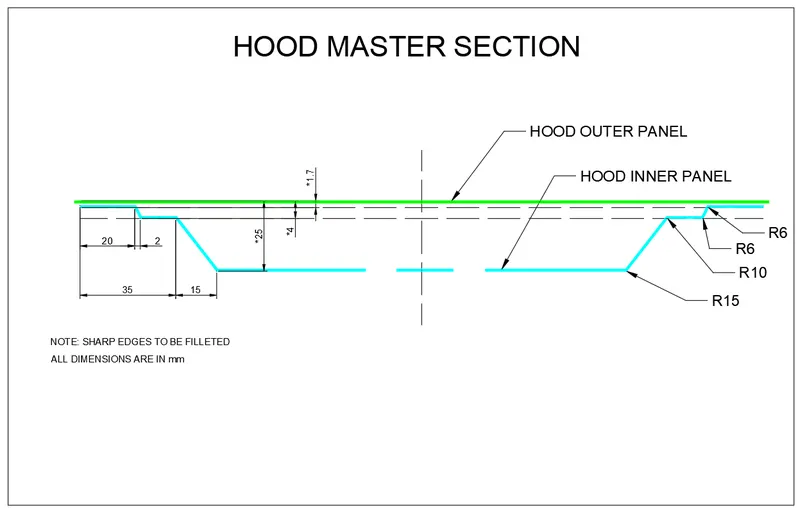
Master Section:
CONCLUSION:
Therefore we have designed a hood that falls under the rules and regulations of the manufacturer's standards.