Fender Design - Wheel Arch Challenge
Aim:
Calculate the wheel arc area and prove whether the car will pass the standards or not by using the European regulation.
What Is a Fender on a Car?
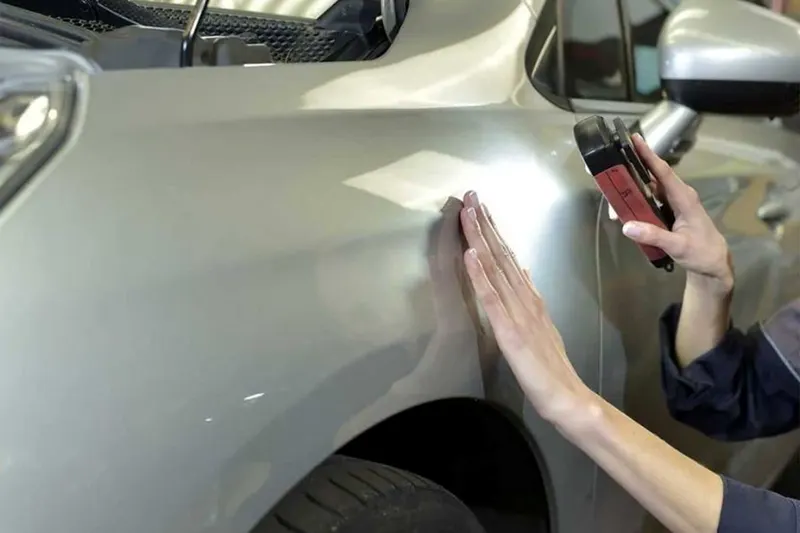
The fender car part is the body kit or body part installed on the left and right sides of the vehicle. Manufacturers usually attach fenders to the wheel arches. There are different reasons why they are a requirement in vehicles. One obvious reason is to improve the aesthetics of the vehicle.
Fenders also enhance the car’s aerodynamics. They also prevent mud, sand, rocks, liquid, and all sorts of debris from being thrown in the air while you’re driving your car.
Types of fenders:
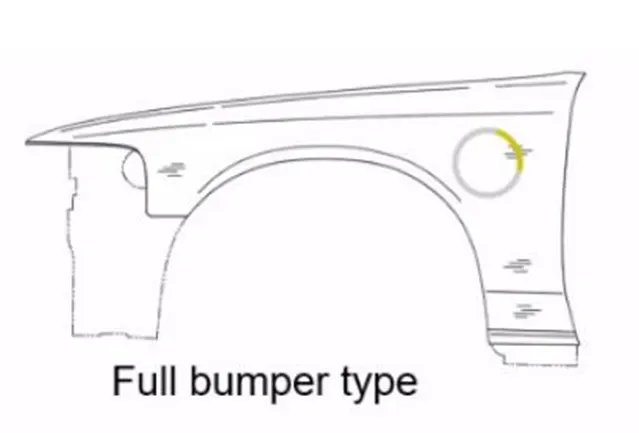
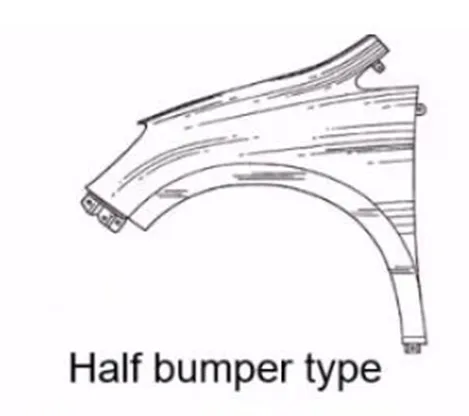
The type of fender is based upon the area covered i.e., full fender type and half fender type.
Full fender type:
Full fender type is traditional type of fender where more material consumption is observed. This type is used in old design of automobiles where it increases the overall weight and thus reduces performance. The maintenance also relatively more due to more surface.
Half fender type:
Half fender type is modern design where less material consumption is observed, so productivity increases by reducing size of blank and thus providing more performance. The maintenance also relatively low compared to full bumper type.
Japan requirements for fender wheel arch:
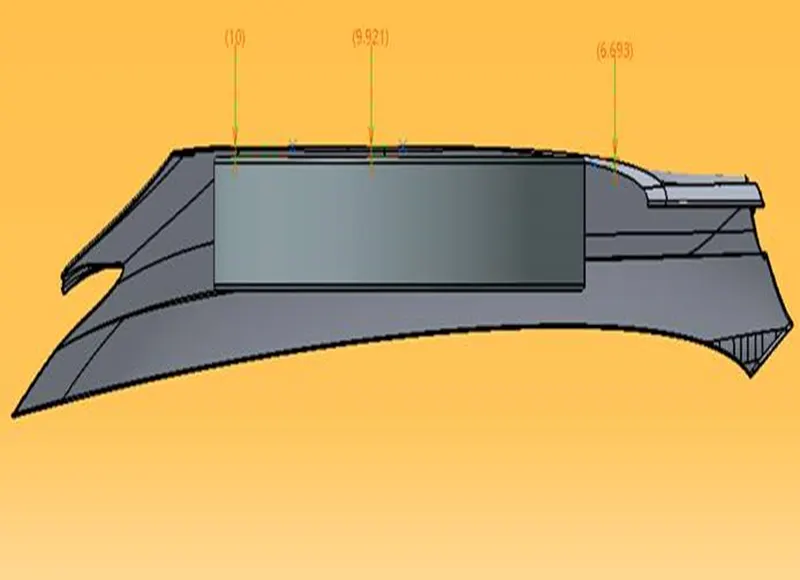
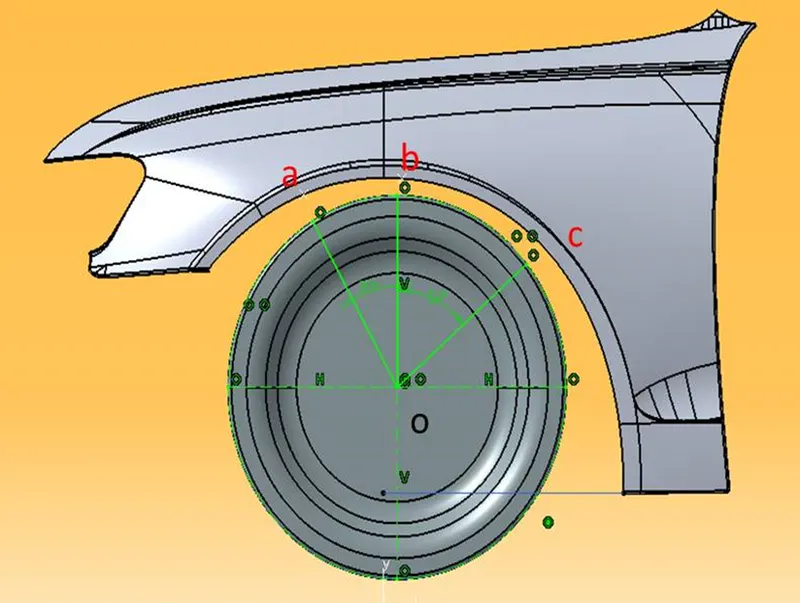
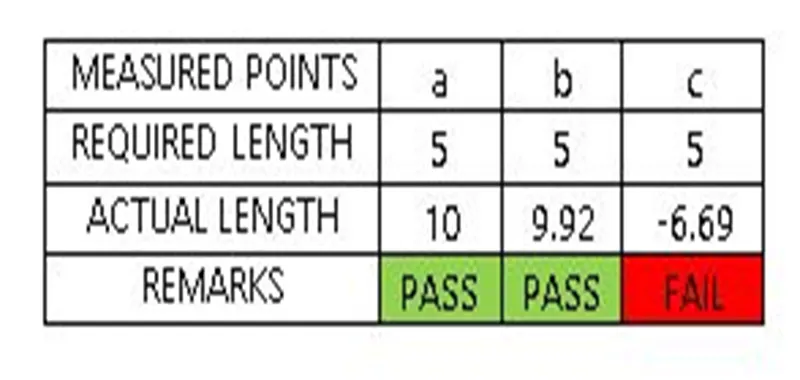
As per Japanese regulation, the clearance between tyre and fender must be greater than 5mm. The projected points to be measured are at an angle 30° forward & 50° rearward respectively.
Conclusion:
As per Japanese regulation, the clearance between tyre and fender must be greater than 5mm. The projected points to be measured are at an angle 30° forward & 50° rearward respectively. Thus at point c, the clearance value is in negative value which denoted interference and hence the modifications are to be carried out.
US standards regulation for fender wheel arch:
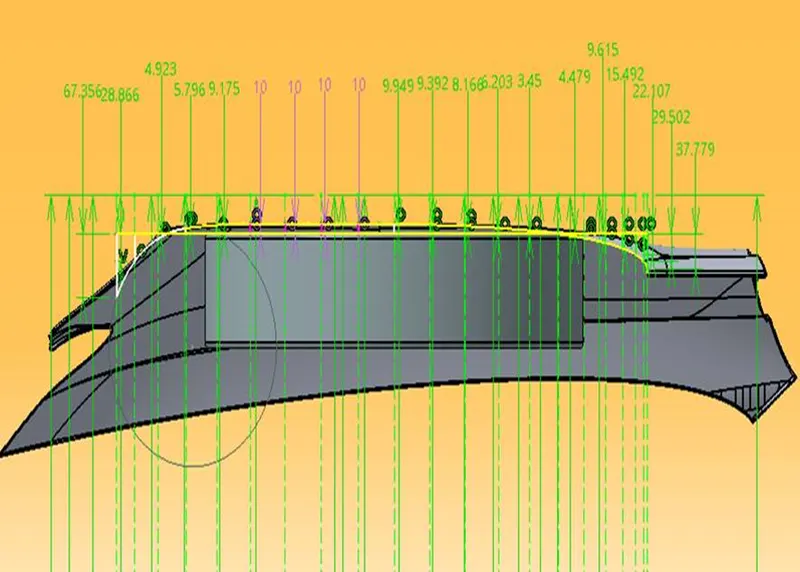
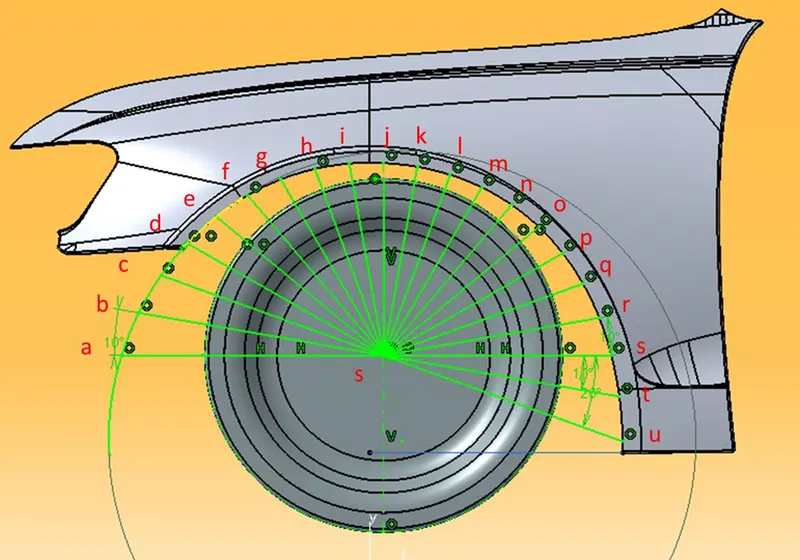
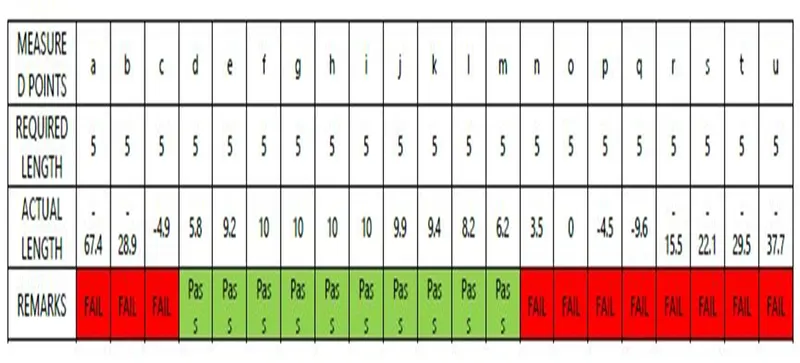
As per US regulation, the clearance between tyre and fender must be greater than 5mm. The projected points to be measured are at an angle 0° forward to 100° respectively. Thus each position is divided into 10°. Thus the projected distances are measured at around 21 different points.
Conclusion:
As per the table mentioned at points between d to m the value of clearance is more than 5mm but at several points from a to b & n to u the clearance value is very low or negative clearance which denotes the interference of tyre and fender assembly. Thus design modification has to be done on the specified points in order to meet the UG regulation requirements.
European regulation:
As per European regulation, the clearance value between fender and tyre profile must be greater than 10mm. The value is measured in projected point at an angle 30° forward and 50° rearward respectively. The measurement took in five different positions of the tyre at point a & b the clearance is acceptable. But at point c, d & e there is a negative sign which denoted the interference of wheel arch with a tyre.
The below figures show the sketch representing the lines SA, SB, SC, SD and SE and the distance between the outermost surface of wheel and outer edge of fender.
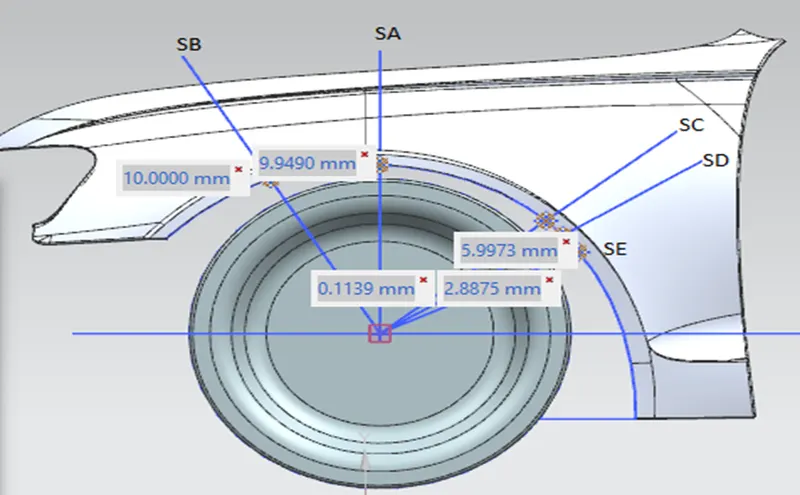
points SA SC SD and SE are less than 10mm from the fender surface. Hence, it is recommended that the styling corresponding to these points, be modified to achieve a 10mm clearance.
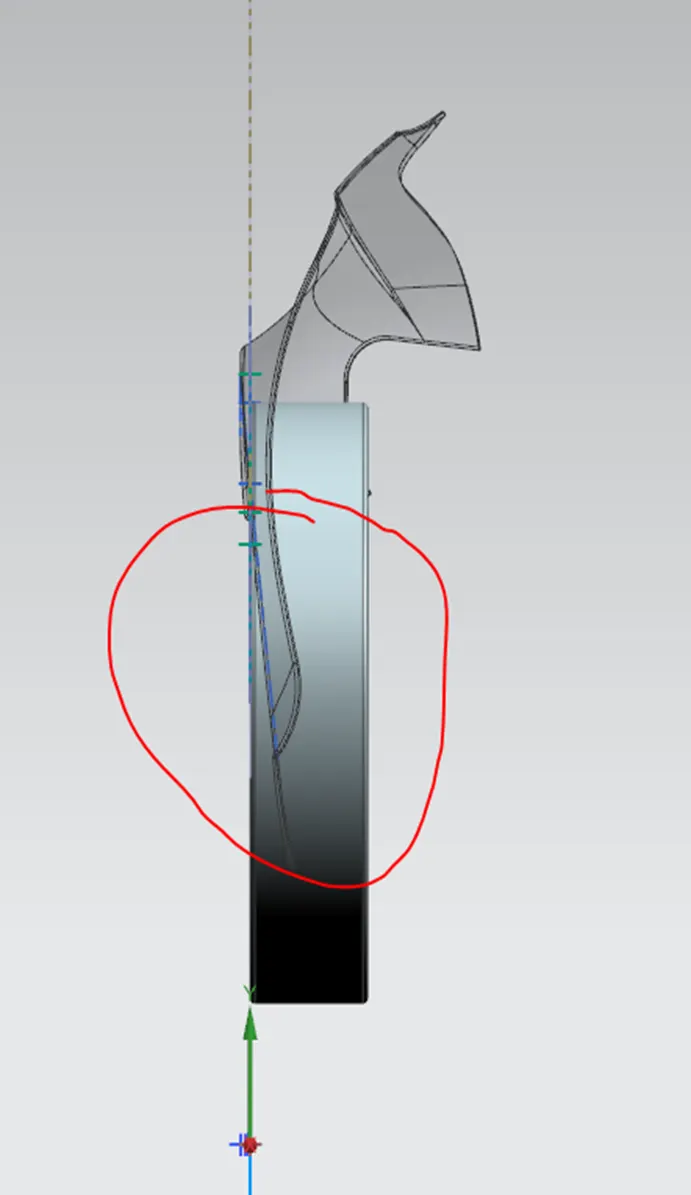
The above image shows that the wheel arch of the fender part is to be modified such that the wheels are inside the fender at all 5 points.
Measurements:
Clearance Table
Positions value(mm) Clearance min value Note
as per standard
SA 9.9490 10 Doesn’t satisfy
SB 10 10 Doesn’t satisfy
SC 0.1139 10 Doesn’t satisfy
SD 2.8875 10 Doesn’t satisfy
SE 5.9973 10 Doesn’t satisfy
Conclusion:
Since the European regulation requires a minimum of 10 mm clearance at the given points thus the design of fender must be modified.