Hood design-Week 2
Aim:
* Submit an ASSEMBLY of Hood Inner Panel, Outer Panel, Latch, Hinge and the Reinforcements.A detailed report about the Hood Design which includes a detailed explanation about hood and its components, Latch Trajectory, Mastic Data, Emboss Definitions, Manufacturing process like Deep-Drawing and Hemming, and all the parameters followed in the design.
OBJECTIVES:
STEP 1: To modeled the inner panel first using panel skin data for referenc with the help of NX CAD
STEP 2: Provided hemming to outer panel
STEP 3: Assemble the hinge, striker,outer panel & inner panel.
INTRODUCTION:
*The hood or bonnet is the hinged cover over the engine of motor vehicles.hoods can open to allow access to the engine compartment for maintenace and repair.on front mouted cars,thr hood may behinged at either the front or the rear edges,or in earlier models it may be split into two sections,A further variant combines the bonnet and wheel arches into one section and allows the entire front bodywork to tilt forwards around a pivot near the front of the vehicle.from s design perspetive,the hood should meet some specific conditions like pedestrian safety.a hood head zone for the lock stricker.force distribution when subjected to frontal collision,manufacturability,etc.
A typical hood assembly consists of a hood outer panel,latch & striker,hinge,and hood stay.
The hood is made out of the same material as the rest of the body work,which is steel and aluminum.
Deep drawing,hemming blanking and piercing are the comman sheet metal operations that are used in manufacturing hood in automotive industries.
Hood Thickness Information :
Outer Panel Thickness = 0.75mm
Inner Panel Thickness = 0.75mm
Reinforcement Thickness = 1.5mm
Master section:
Hemming data:
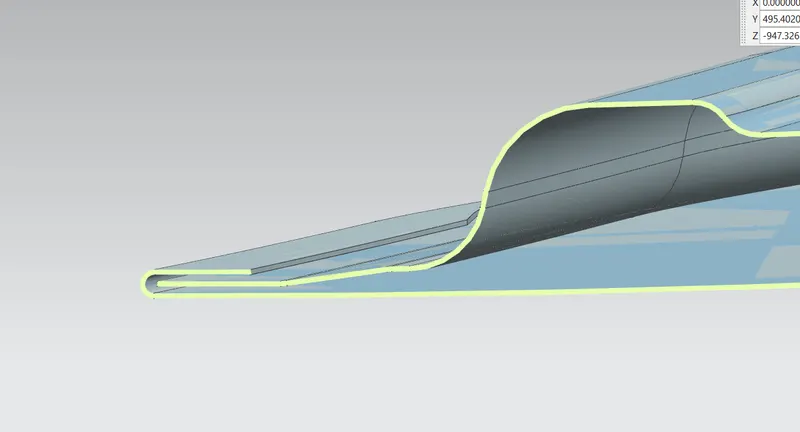
rear relife section:
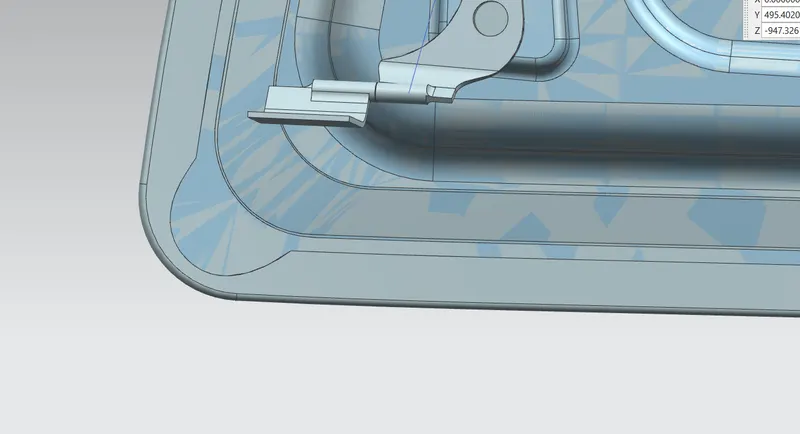
front relife section:
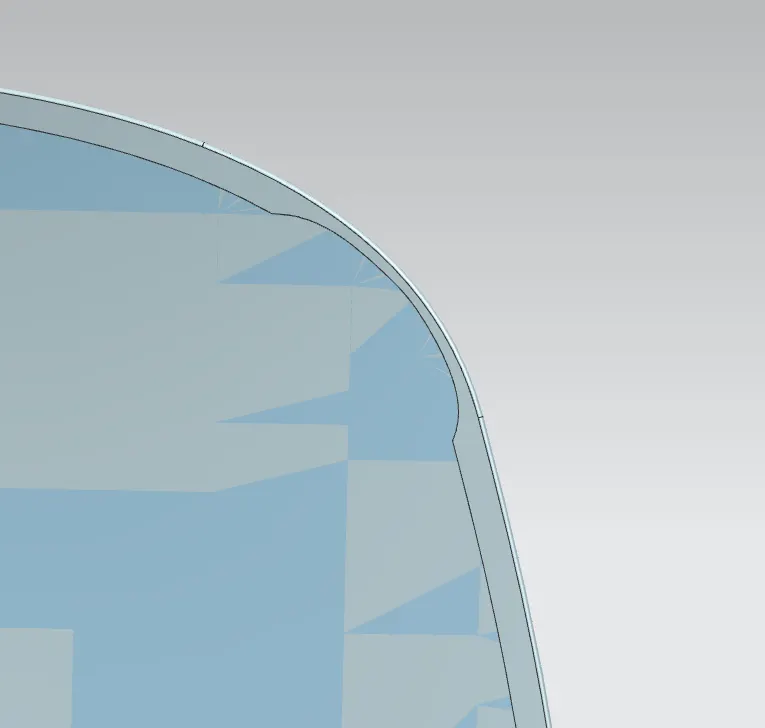
Hood outer panel:
The outer panel is the aesthetic element of a car.it is th styling team that provids the skin for the outer panel.The shape,position,and size of the hood should satisfy the safety norms.the outer panel is attached to the inner panel by hemming.so it is necessary to provide hemming flange and reliefd for the hemming operation.
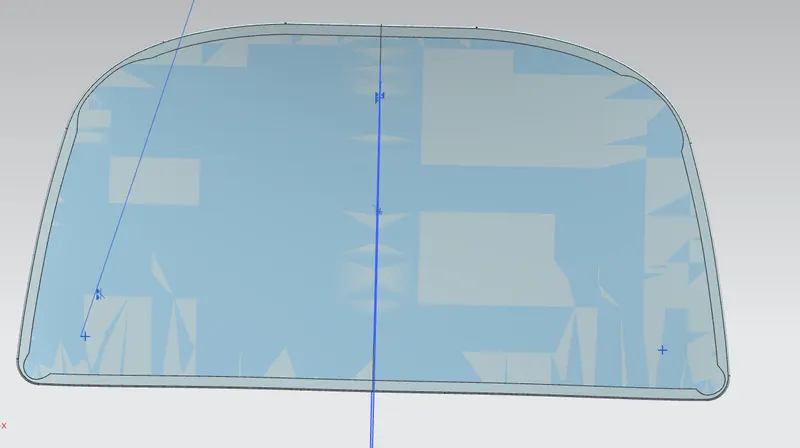
Hood inner panel:
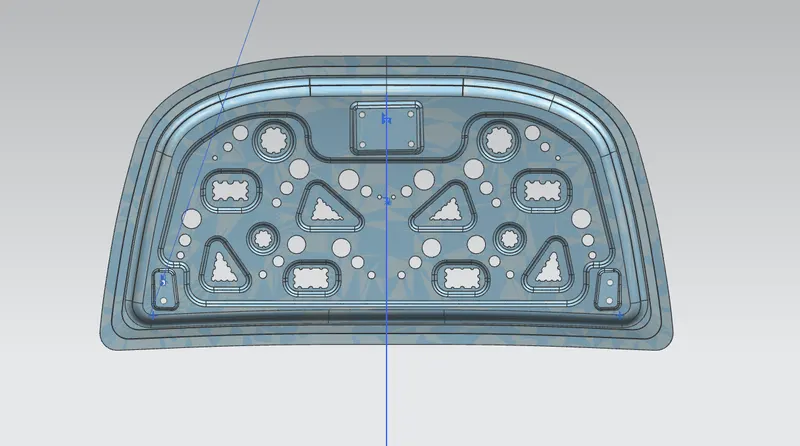
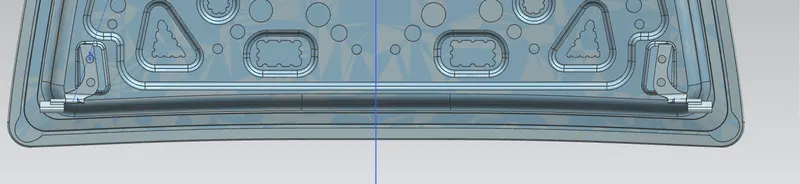
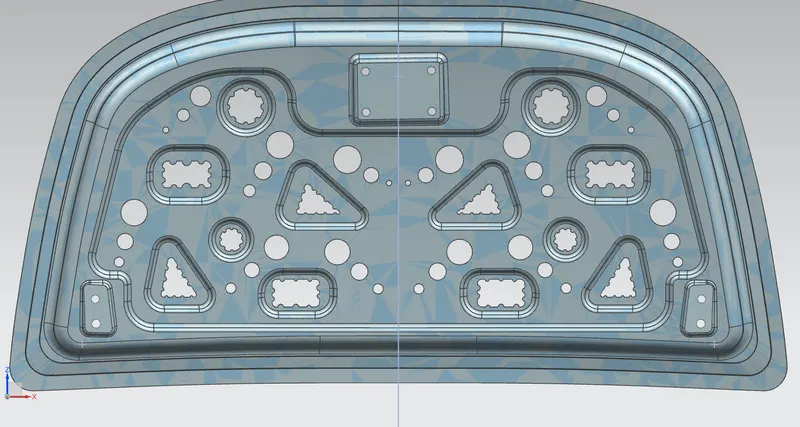
The inner panel is the part that gives strength and rigidity to the outer panel.The master section represents the initial emboss shape and size.It is where the hood balancer and hinges are attached.
Hinge:
A hinge is a component that fixes the hood to the engine compartment of the car.one patrt of the hinge is connected to the engine compartment and the other part is connected to the hood inner panel.The hinge allows the hood to roytate around a fixed axis for opening and closing movement.
striker:
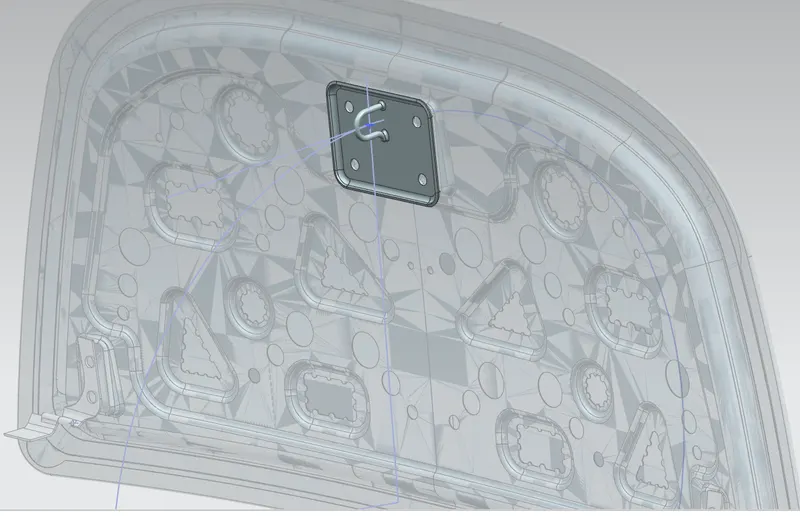
A latch and striker mechanism os provided to lock the hood the latch and stricker ensure that your hood is securely connected to the vehicle and its does not open unexpectedly which driving,the latch is present on the engine compartment while the striker is attached to the inner part of the hood.when tension is applied to the cable from the hood release handle,it pivots the secondary latch,which pulls away from aretaining seat located under the hood.by design the secondary latch then releases the hood a few inches before a safety latch takes over.
reinforcement:
reinforcement are provided according to the design requirements.mainly it is provided at the hinge and latch regions to improve the strength locally.usually,the thickness of reinforcementwill be higher than that of the inner panels and the values varies according to cost snd requriment.according to the design requriment here it is given 1.5mm thickness to both hinge and latch reinforcements.
Latch trajectory:
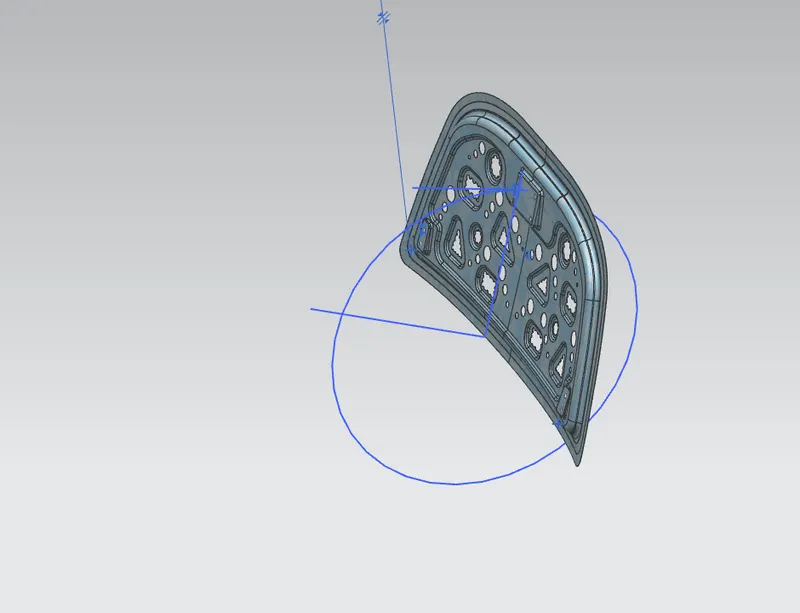
latch trajectory is given by the circle drawn from the hinge axis point.The hinh=ge axis point is the center point of the hinge axis.frist we can fix eigther the latch or thr hinge.if we have fixed the hinge position then we should plot the trajectory circle for the latch .for proper matching conditions,the striker axis throught the trip of the striker should be tanfential to the latch trajectory.
MASTIC DATA:
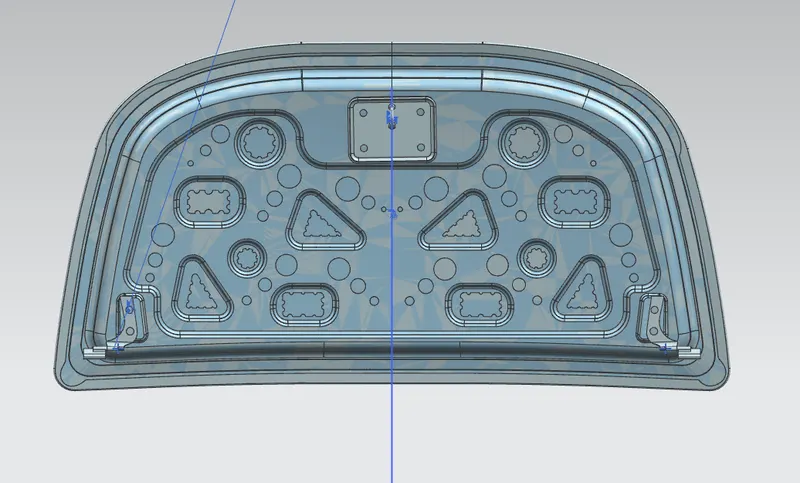
Hood commonly possesses a large surface area and hemming can only be provided throught its boundary.we cannot use other joining techiniqes like welding,riveting.etc because they leave marks on the outer panel which spoils its aesthetic apperance.so,mastic sealantare used to sticks the inner surface of the outer panel and inner panel.mastic sealants atr elastic compounds thet behave like rubber,it is applied between the inner and outer panels at specified spots.each spot of mastic sealants has its effect around a circular region of 80mm diameter.Thus the mastic points are arranged in such a way that it covers the areas away from the hemming which is more vulnerable to vibrate.
IMPACT FORCE DISTRIBUTION:
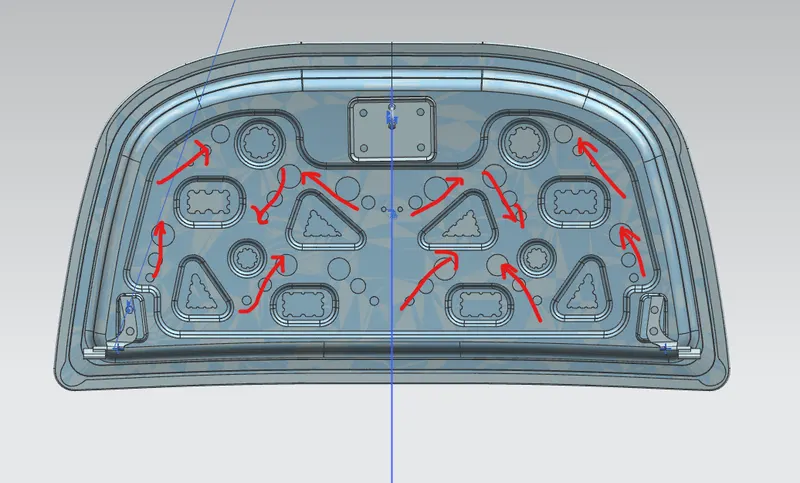
A hood design must be made in such a way that when a force is impacted in the front of the hood,all the forces must be directed outwards from the vehicle.It will drastically reduce the inpact on the passengers here in the figure embosses are designed in such a way that the force is directed to either side of the car.
DEEP DRAWING:
It is a sheet metal forming process in which a sheetmetal blank is radially draw into a forming die by the mechanical action of punch.The process is considered deep drawing when of the deoth of the draw part exceeds its diameter.
Hemming:
Hemming is a forming operation in which the edges of the sheet are folded over other parts or simply folded in order to achieve a tight fit.in car part production,hemming is used in assembly as a secondary operation after deep drawing,trimming, and flanging operations to join two sheet metal parts (outer and inner)together.
Embossing:
sheet metal embossing is a stamping process fro producing raised or sunken designs or relief in sheet metel.this process is carried out by means of matched male and female roller dies,or bypassing the sheet or rolls of metal between rolls of the desired pattern.
piercing & blanking:
It is a shearing process in which raw sheet metal is pieraced with a machining tool,resulting inthe creation of a particular sharpe hole in the sheet.The major different between blanking and piercing is that in blanking the cut out is the workpieace and the outer part is scrap,while in piearcing the cut is scrap andthe outer sheet is the workpieace.