Hood design-Week 2
Design of hood
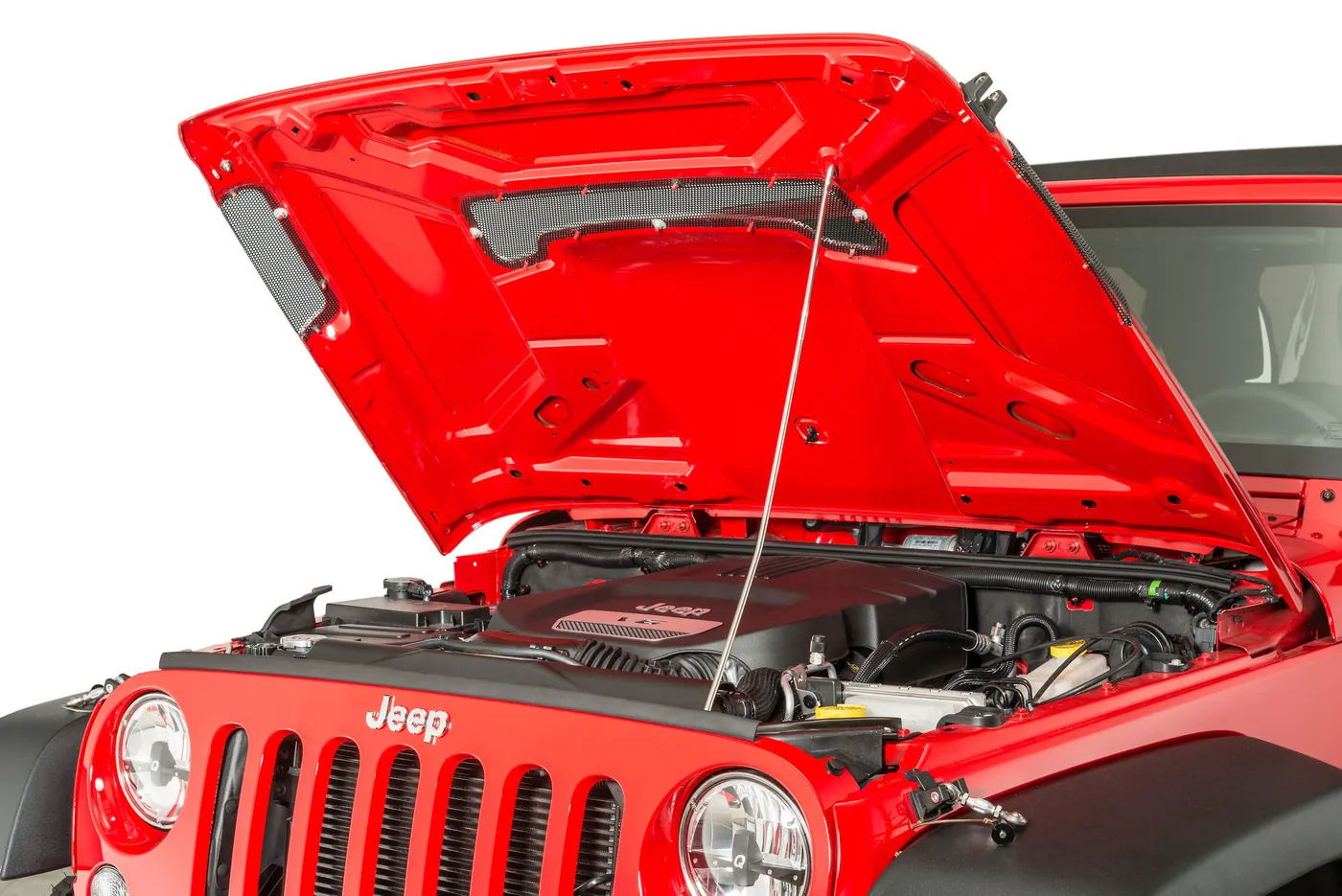
HOOD is main component of a car at the front portion. It is used to decorate the car and add luxurious look.
The shape of the hood is made aerodynamic in order to minimize the air drag .
hood is generally used to access the parts easily such as radiator, engine and many other part.
Hood protect the passenger form crash situation .hood is also called bonnet .
bonnet is open position by the support rod or gas stay.
Support rod is like different curves and bend to made it more strong to support hood.
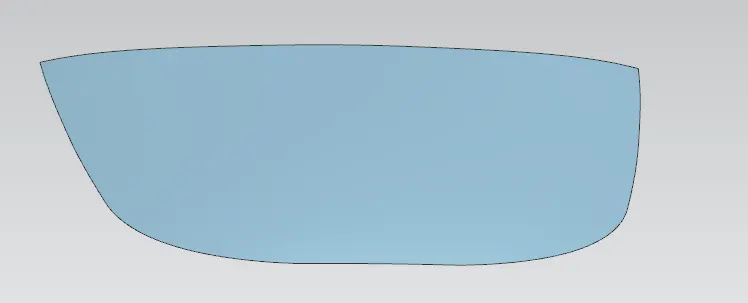
Hood outer panel
Hood outer panel is skin of hood inner panel . it is design by styling department .
It give luxurious look to the hood. Hood outer and inner panel cannot join by welding process like spot welding or rivet ,
which spoil the outer look of car ,to avoid this we use hemming process for join outer and inner panel .
thickness of outer panel is 0.65-0.75mm.
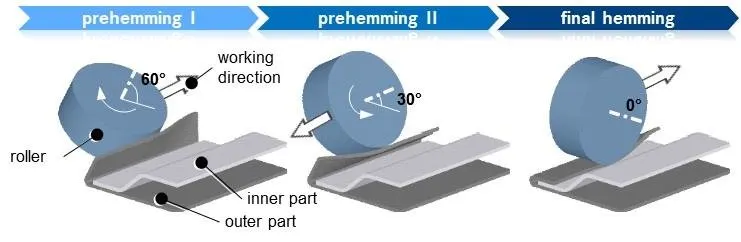
Hemming process
Hemming in the automotive industry, which is a method used to join two sheet metal panels by bending the flange
of the outer panel over the inner panel .hemming can done in short time and less cost.it not spoil the outer look of hood.
Dimension of hemming
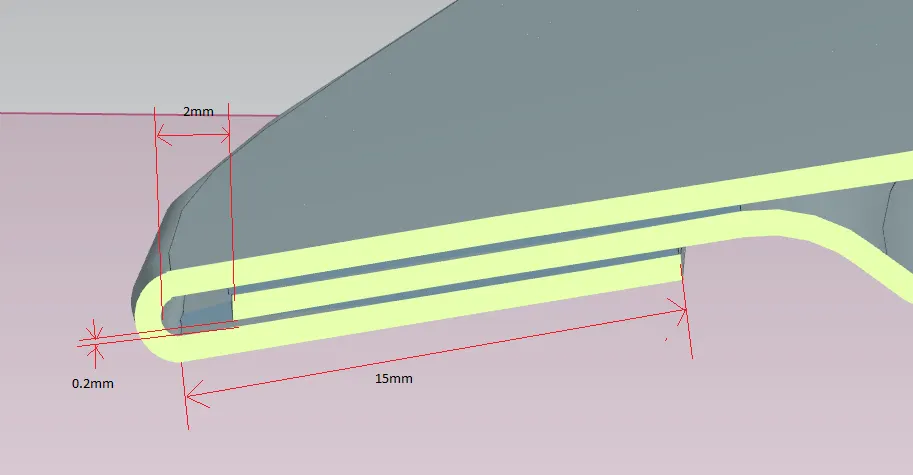
Thickness of panel is 0.75mm
Gap between inner and outer panel is -0.2mm
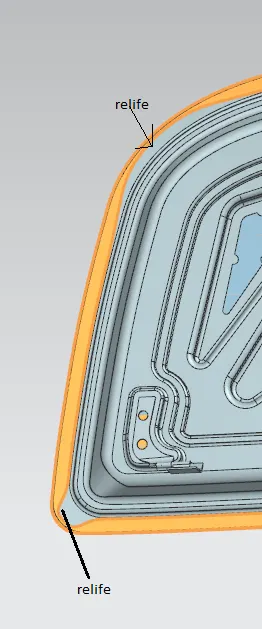
Hemming relief
When we pass roller ball over the sheet vibration are produce at corner and it disturb the outer panel to avoid that we give relief at corners .
Design of inner panel
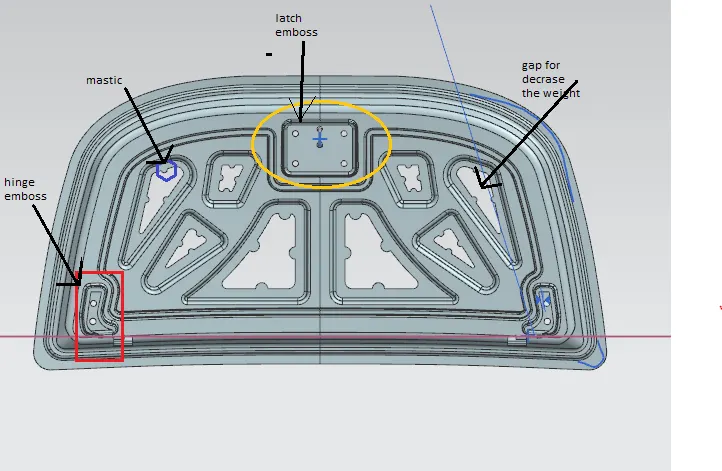
Inner panel is done by offset of outer panel .inner panel give support to outer panel.
Emboss ,holes ,mastic are consists In inner panel .latch and hinge is placed on inner panel.
Thickness of inner panel is 0.75mm.
Gap between inner emboss and outer panel is 5mm for mastic seal.
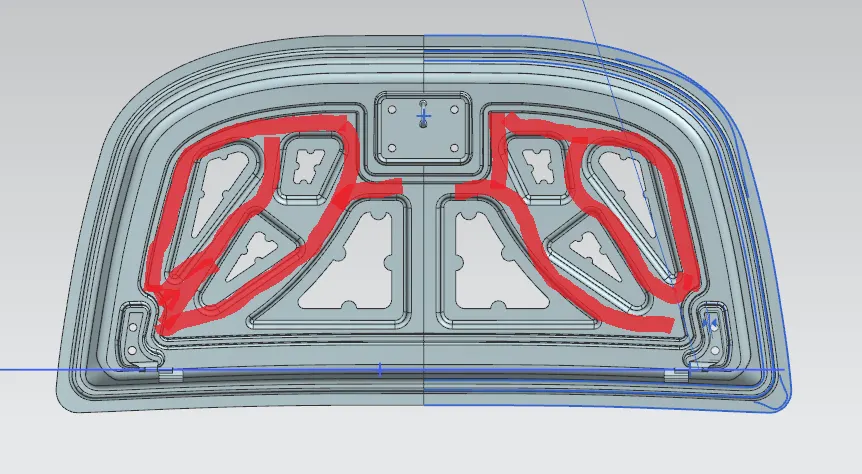
Use of Emboss
When the car crashed the force will passed to cabin. If emboss are made, the force are made
to passed or divided through emboss to hinge so passengers inside the car will be safe.
face bland and edge bland should done for every emboss .
DIVERTING THE FORCE TOWORDS HINGE
POSITION OF HINGE AND STRIKER
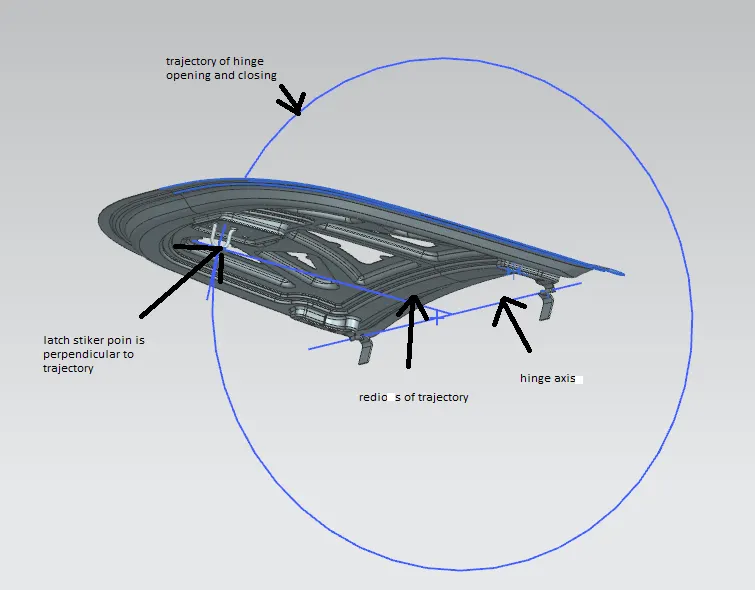
Position of striker is done by crating hinge axis along x axis . radios of trajectory is form hinge center point to striker point on latch.
Latch striker point is perpendicular to this circle trajectory .
trajectory for hood is use to opening and closing .
Mastic data
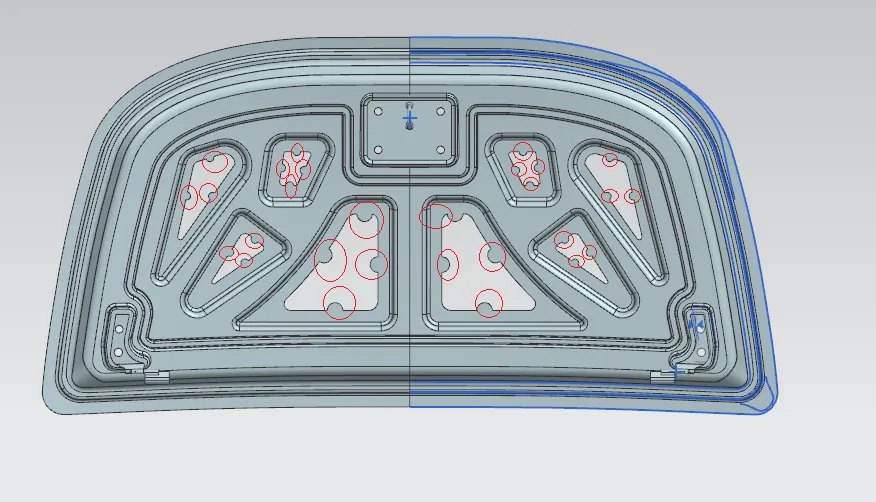
Mastic seal is a kind of hard rubber glue added between outer and inner panel of hood
to join at different point called mastic points locally around 80mm diameter .
there should be minimum 5mm gap between outer and inner panel to make a constant joint .
Reinforcement
Hood reinforcement structure as provide to reduce impact in collision to passenger .
when latch and striker attached to the panel ,the will be reduced that area .
in order to improve the strength in that area the reinforcement is added.
In between outer and inner panel there will be stiffner pad is also added to avoid
NHV (noise, vibration ,hardness).
Thickness of Reinforcement 1.5mm.