Hood design-Week 2
HOOD DESIGN
- Introduction.
A car hood also referred to as a bonnet in some other countries is a hinged cover that rests over the engine of a front-engined vehicle its purpose is to provide access to the engine for repair and maintenance. The concealed latch is typically used to hold down the hood.
Bonnet is the main component of a car at the front position the hood or bonnet of the car is considered the frontal BIW enclosure component is designed to reduce air resistance as the air flows around the car it is also used to decorate the car and at a look, the shape of the bonnet is made aerodynamic in order to minimize the aerodynamic effect and it is generally used to access the parts easily such as radiator engine and many other parts in the automobile. The weight Optimisation of the hood also plays an important role.
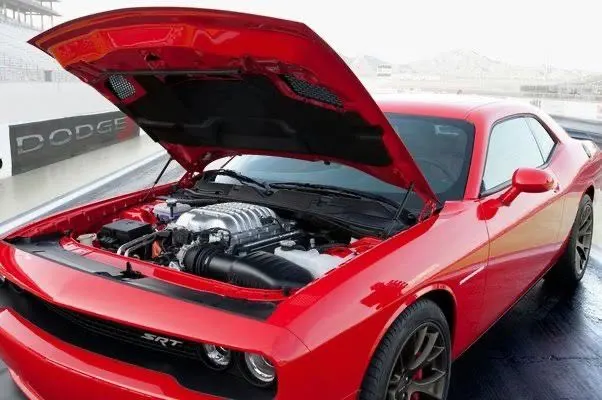
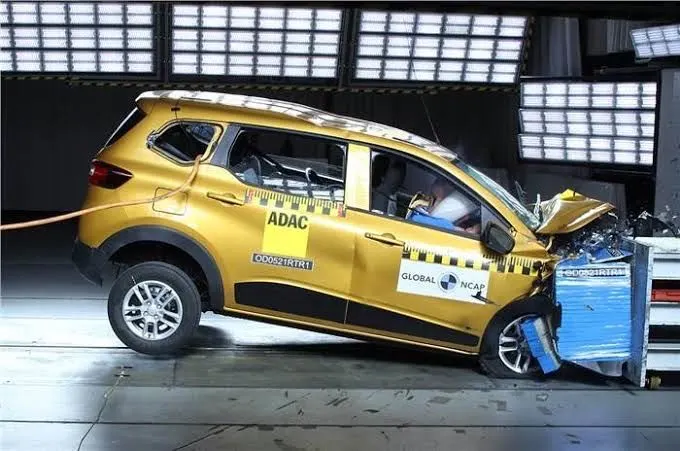
The front portion of the vehicle gets damaged including the bonnet when meeting an accident so there is a need to change the design of the bonnet or by changing the material. The hinged cover over the engine of a motor vehicle allows access to the engine component for maintenance and repair.
- Parts of a hood.
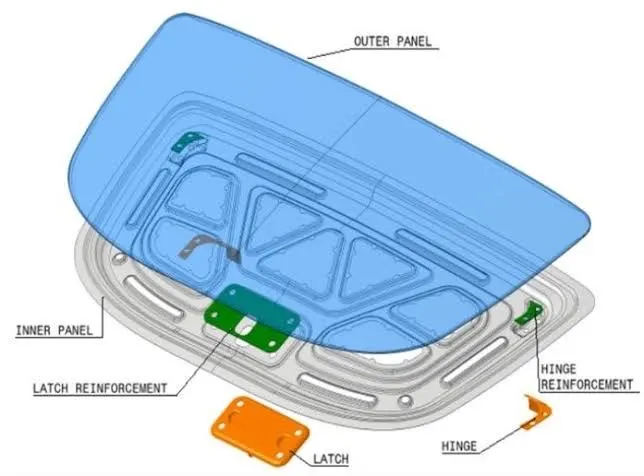
Basically, the hood has the inner panel, outer panel, reinforcement, and emboss. latch and striker mechanism is used to open and close the hood whenever needed. The latch and hinge have required some reinforcement for more strength.
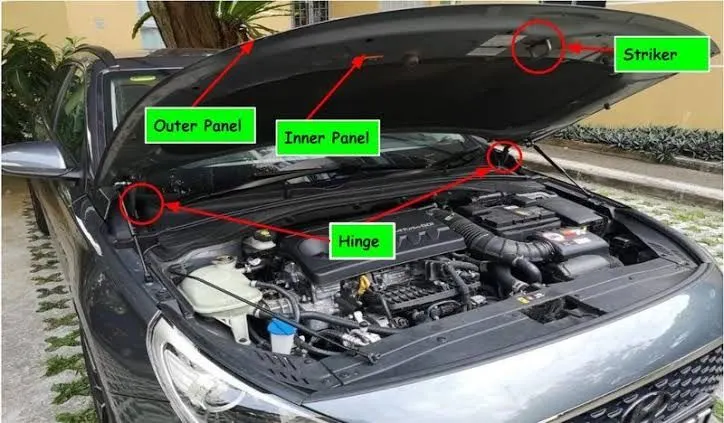
- Types of hood support.
1) Gas stay
2) Support Rod
1) Gas stay
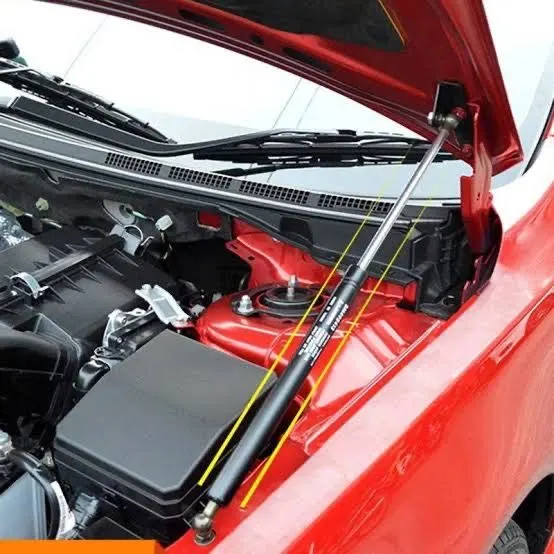
Gas stays are designed to be used on an upper lifting of the door once you have opened the door is likely that spring we will push the door to the open position, the size depends on the requirements. This is mostly used where the car hood weight is heavy.
2) Support rod
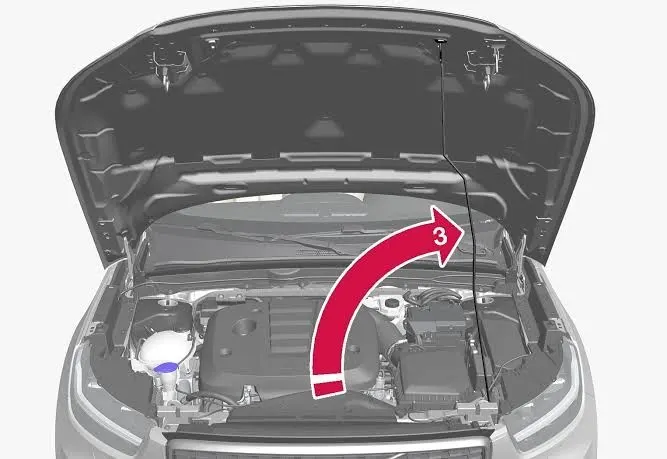
This is widely used in many cars because this is very easy and cheap, in this type you have to lift the hood by yourself and place the support rod in the space provided either in the hood or chassis.
- Inner panel
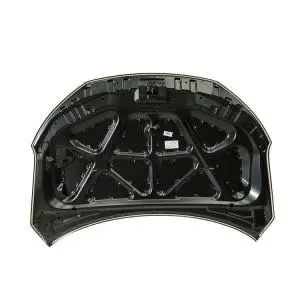
The inner panel supports the outer panel, it consists of different embosses and holes in different places.
- Outer pannel
The outer panel is nothing but the outer skin of the inner panel, it is the part that gives a luxurious look to the hood, welding processes like spot welding or rivet cannot be used as it downsides look of the car, the outer panel is generally extracted from the prototype design
- Emboss
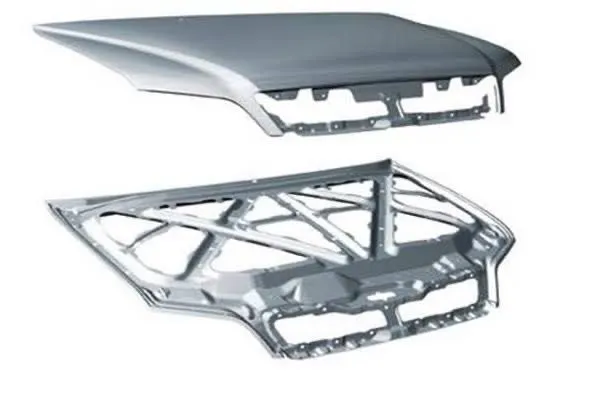
The geometry is created based on the master section that was designed after performing the initial stages of design we will provide local embosses to strengthen. The component will be straightened Based on the master section when a force impact the word from the front it travels in an upward direction the component is designed to divert forces away from the passenger into the hingesAmber says that it's kept at the maximum of 5MM to be on the safer side so that the part is manufacturable. 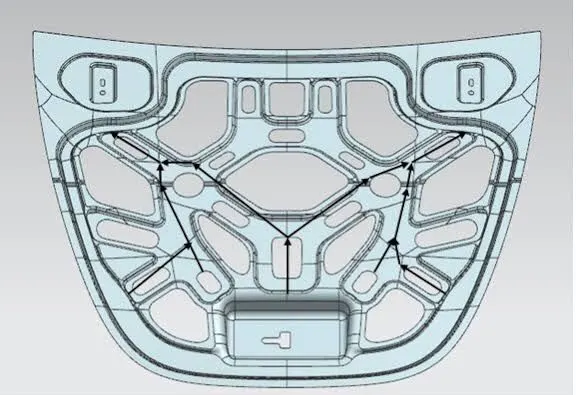
- Mastic sealant
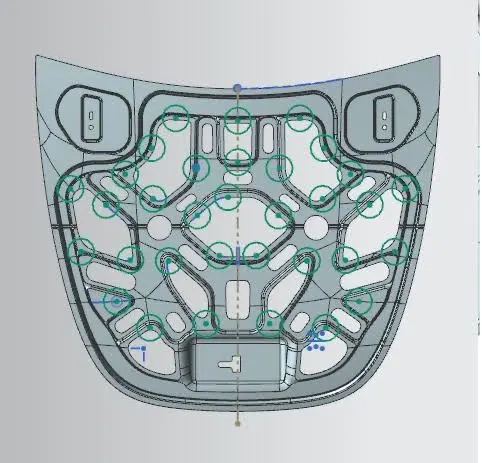
The mastic sealant or mastic point is an elastic component that behaves like a rubber mastic point is defined on the hood inner pannel where the hood can easily deform they help the hood outer panel to come back to its original shape after it gets deformed and mastic, the influence over 80 MM of diameter.
- Hemming
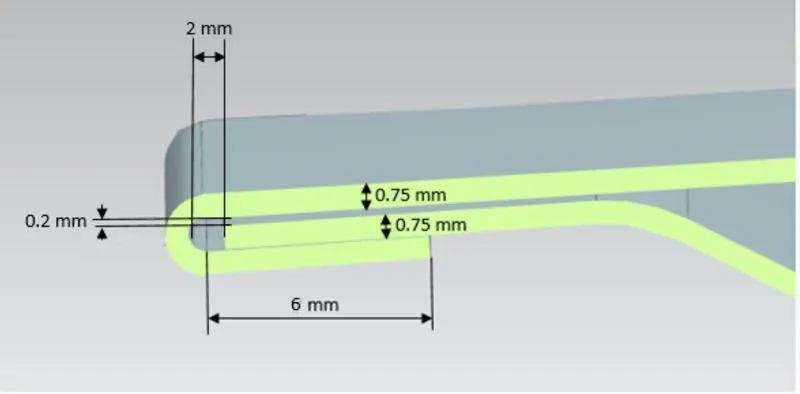
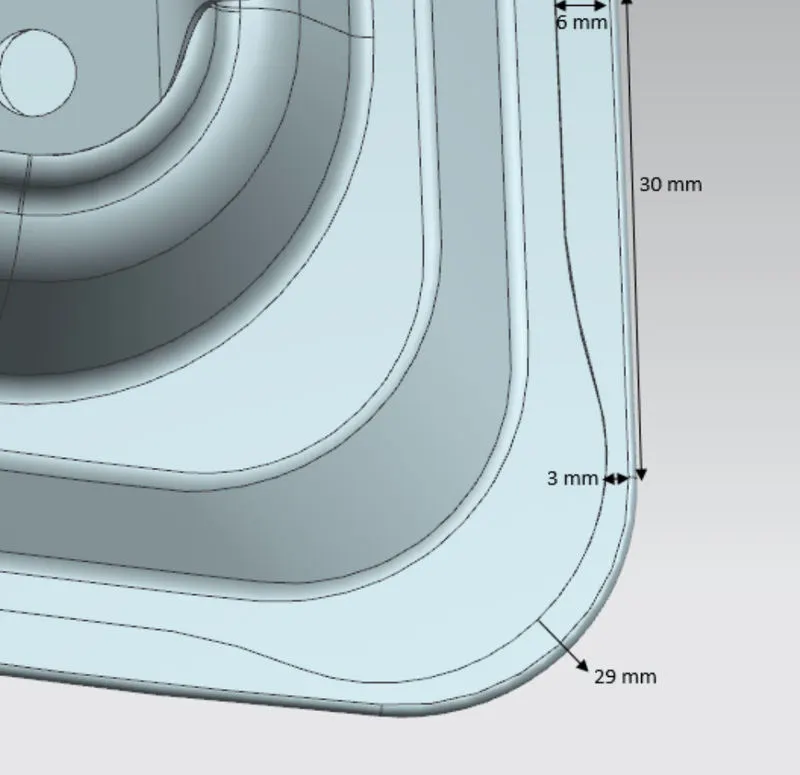
hemming is the process of joining both the outer and inner panel through the Heming process roll wraps the outer panel around the inner panel and holds it tightly together the following are the dimensions followed for hemming.
- Deep drawing
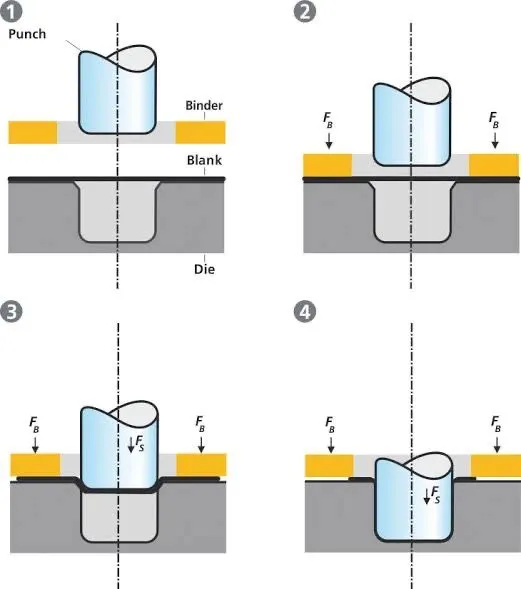
Deep drawing is one of the most widely used processes in sheet metal forming apart from its use in many other factors it is mainly used in the automotive industry for manufacturing car body parts. The deep drawing process is a forming process that occurs under a combination of conditions.
- Trajectory
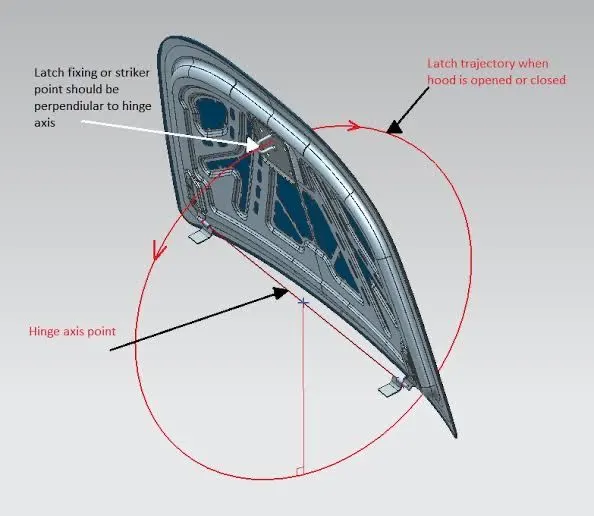
For positioning Hinge and striker have to place and tentatively take an access point and from data from the parent car, The trajectory angle or circle is fixed when the hinges are fixed which is to certify the latch mechanism fits in the exact position to get locked and unlocked easily.
- Reinforcement
After the development of the entire inner panel for the hood, we need to develop some additional reinforcement the latch striker and hinges will need a reinforcement that needs to be developed all the reinforcements are made from sheet metal of thickness 1.2MM.