Hood design-Week 2
Objective :
Design hood outer panal,inner panel and reinforcements with the given outer hood skin, master section and design parameters.
Introduction :
The hood or bonnet is the hinged cover over the engine of motor vechiles. Hoods can open to allow access to the engine compartment for maintenance and repair. In design persective hood should meet some specific conditions like pedestrain safety, hood head zone for the lock striker, force distribution when subjected to frontal collision, manufacturability.
A typical hood assembly consists of hood outer panel, latch and striker, himge, hood stay. Hood stay is an apparatus for supporting the engine hood of a moto vechile in its open position. Support rods are manually operated and they are cost effictive and simple to design where as gas stays requires no man power but they are costely.
Design parameters :
Hood thickness information
- Outer panel thickness = 0.75mm
- Inner pannel thickness = 0.75mm
- Reinforcement thickness = 1.5mm
Design of inner panel :
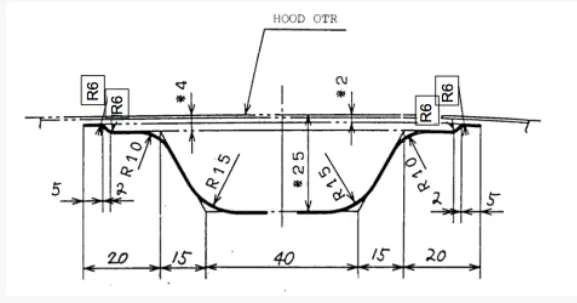
master section
Components :
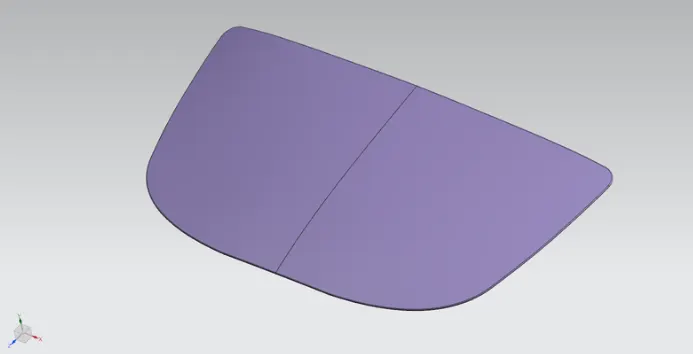
Hood outer panel :
Outer panel are the aesthetic elements of a car. It is the styling team who provides the skin for the outer panel. The shapes, positions and size of the hood should satisfy the safety norms. So while designing the hood we should give more imortance to pedestrain safety.
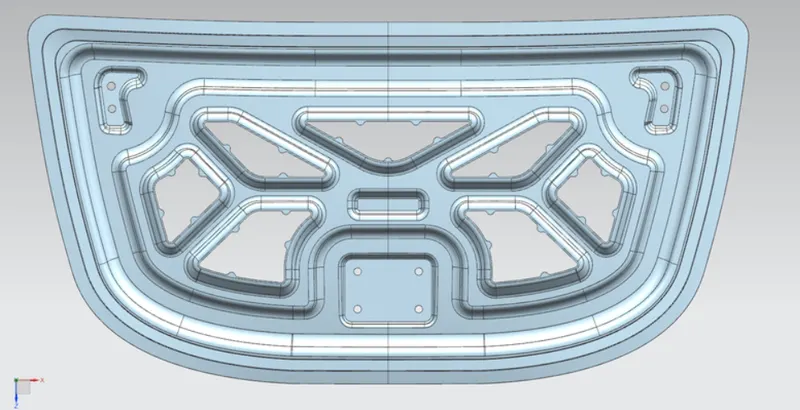
Hood inner panel :
Inner panel is the part that gives strength and rigidity to the outer panel. The master section represents the initial emboss shape and size. Then we provide the embose for the latch and hinge elements after fixing the locations.
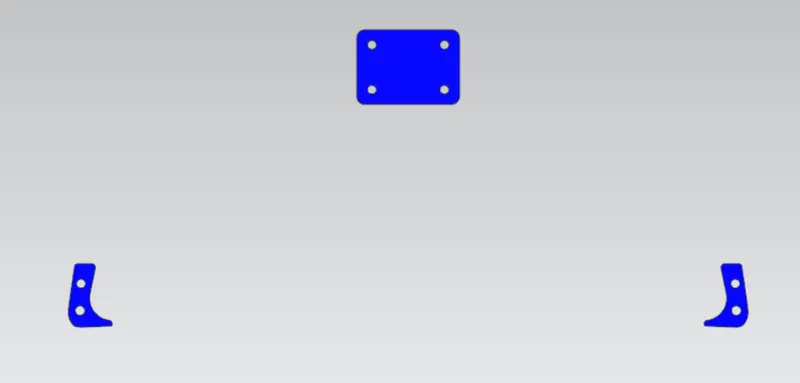
Reinforcement :
Reinforcement are provided according to the desing requirements. Mainly it is provided at the hinge and latch regions to improve the strength locally. Usually thickness of reinforcement will be higher than that of the inner panels and the value varies according to the cost and requirements.
Latch trajectory :
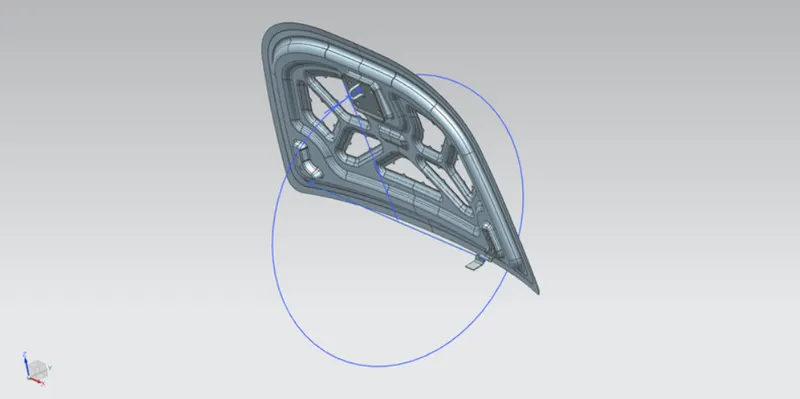
Latch trajectory is given by the circle drawn from the hinge axis point. Hinge axis point is the centeral point of the hinge axis. First we can fix either the latch or the hinge. If we have fixed the hinge position then we should plot the trajectory circle for the latch.
Emboss definations :
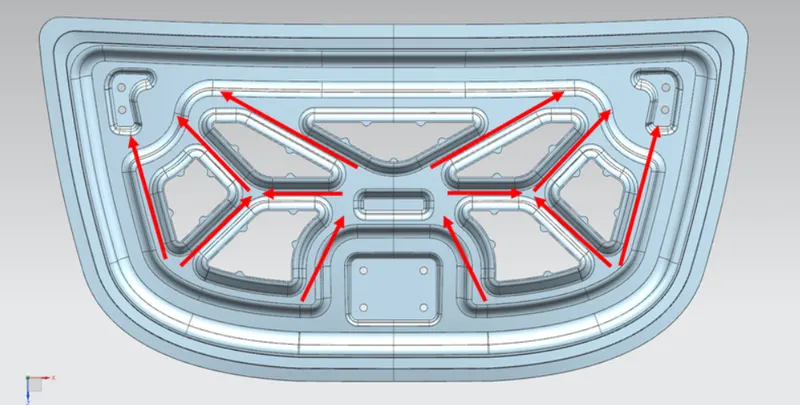
Throughout the inner panel we provide different embosses. We can increase the stiffness of the inner panel through these emboss. The shape and size of the embosses also determine the direction of the force distribution resulted from frontal collision. The force should be always distributed away from the passengers. Here in the figure the emboss are designed in such a way that force is directed to either sides of the car.
Deep drawing :
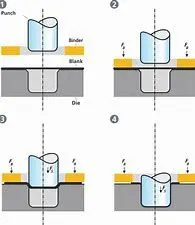
Deep drawing is one of the most widely used processes in sheet metal forming. A part from its use in many other sectors, it is applied in the automotive industry for the manufacturing of car body parts. Thedeep drawing process is a forming process which occers under a combination of tensile and compressive conditions.
Sheet metal blank is radially drawn into a forming die by the mechanical action of a punch. It is thus a shape transformation process with material retention. The process is considered deep drawing when the depth of the drawn part exceeds its diameter. This is achieved by drawing the part through a series of dies. The flange region experiences a radial drawing stress and a tangential compressive stress due to the material retention property.
Heeming :
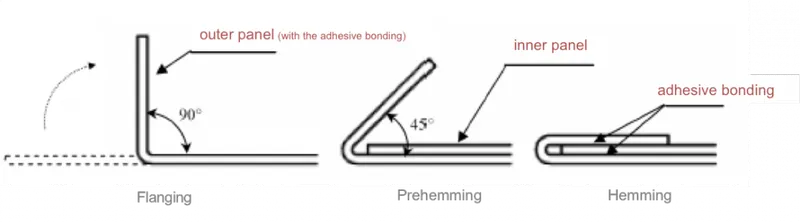
Heeming is a forming operation in which the edges of the sheet are folded over anothe part in order to achieve a tight fit. Normally heeming operations are used to connect parts together to improve the appearance of a part and to reinforce part edges.
There are two types of hemming operations :
- Conventional die heming
- Roll hemming.
Commands used while desingning :
- Trim body
- Offset surface
- Offset inface
- Trim sheet
- Through curves
- Law extension
- Trim and extend
- Face blend
- Edge blend
- Emboss
- Mirror geometry
- Sew
- Extrude
Final assembly :
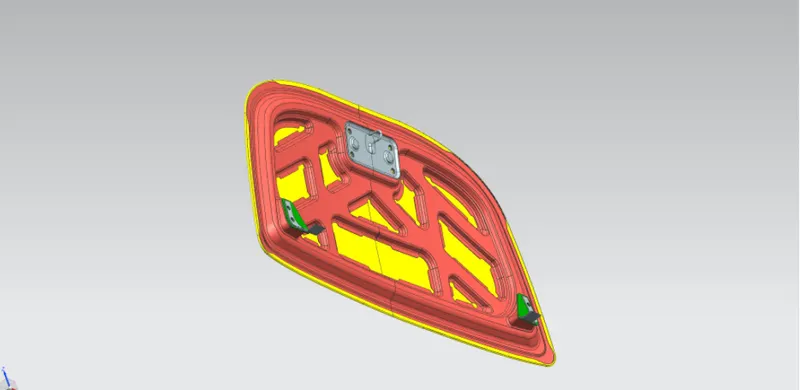
Conclution :
Hence we have designed a hood of the car along with its components and assembled, using NX CAD, under the given parameters.