Hood design-Week 2
A car hood is also referred a bonet, its is hinged cover that rests over the engine of a front engine vehicle. its purpose is to provide access to engine for repair and maintenance.
it is constructed usually by steel sometimes by aluminium. in the recent trend like for a sport car / performance car it is made up of materials like carbon fibre , fibre class or dry carbon.
over few decades concerns regarding severity of a potential pedestrian head injury during a collision with motor vehicle have led to advanced hood designs on many models.
hood mainly consists 4 components - inner panel, outer panel, latch & striker, hings. the outer panel in such a way that it gives good aesthetic looks and inner panel are provided with emboss for equal force distribution radially outward direction . and reinforcements for safty.
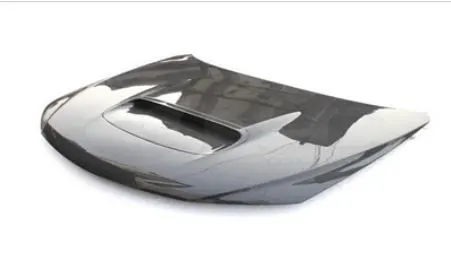
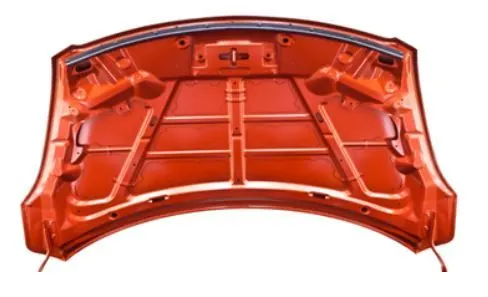
Automative metal forming -
for automative metal forming, the blank is often made of sheet metal, which can be stamped, cut or bent into a shape needed for an automobile's body. some of the commonly used sheet metal froming process,
bending, deep drawing, stamping, blanking, piercing, hemming.
according to the given data, i have designed the hood assembly.
1. hood outer panel-
outer panel provided the aesthetic look for hood of the car. design styling team provide skin for outer panel. shape size, posittion should be according to safty norms. so, while designing pedestrain safety is considered. ny hemming process, the outer panel is made to attch with inner panel. mastic sealamts are provided between outer panel and inner panel to reduce vibration.
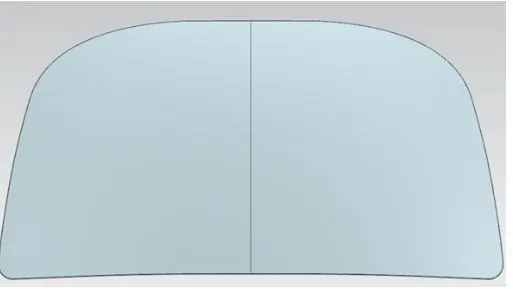
hemming relief at corner edges-
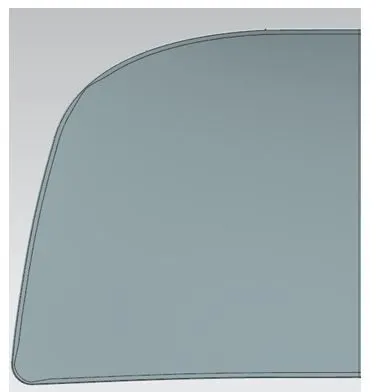
2. hood inner panel-
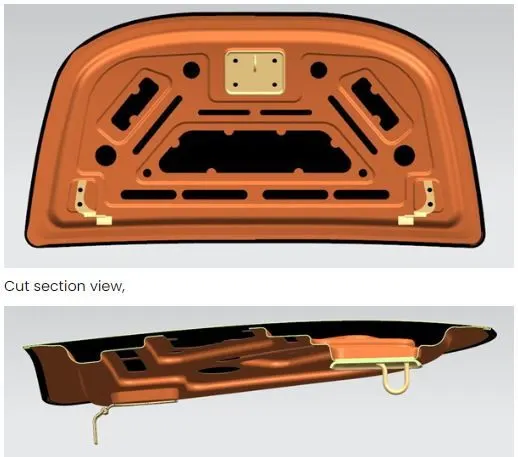
it provide the strength and rigidity to outer panel. the emboss is donein order to give strength to inner panel, cut is done on the inner panel to reduce the weight as well as to reduce the impact when the car front hits pedestrain. edge blend and face belnd is done on the corner and face to remove sharp edges and corner.
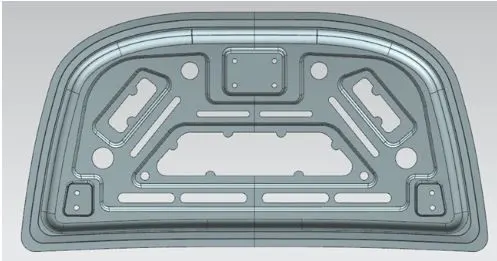
3. reinforcements -
these are given where there is need for more strength and this hood design its given for striker and hinge assemblies. and thickness will be greater than the inner panel thickness.
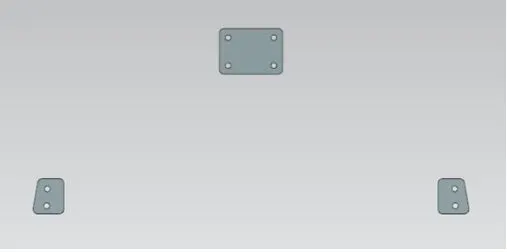
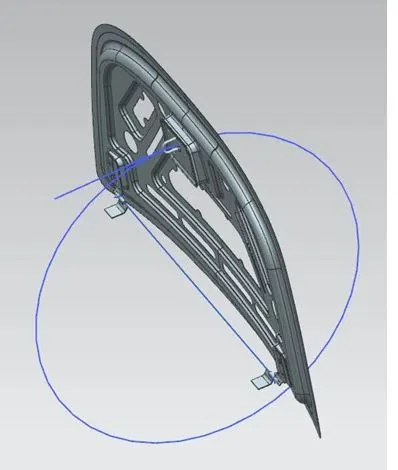
latch trajectory-
the latch trajectory is obtained by drawing the circle taking referance of hinge connecting line midpoint. after drawing dircle, a tangent line is drawn on the circumference at require angle, and a mid-line is drawn to striker latch. the tangent line on circle at an angle and the midline of striker latch are made coincident by applying constraints.
emboss defination-
emboss are provided on inner panel to give stiffness for the sheet metal. the emboss designs decides how the force is dissipated when the collision has happended with the pedestrain of any object at front. to reduce the impact force the force is made to go sidewards.
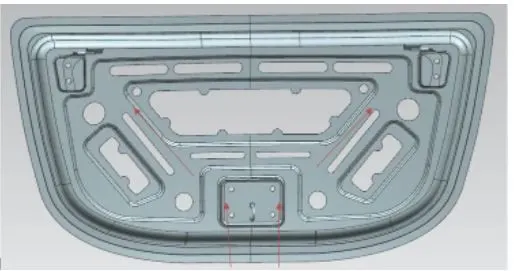
mastic data -
in order to join outer panel to inner panel hemming is done but which supprot at the edges. so to join the inner panel and outer panel we can not use spot welding, mechanical fastners to join because if affects the aesthetic of outer panel and cause weight.
so in order to join between two panels mastic sealants are used, its usually made of rubber material. each mastic sealants has grip upto 80mm in circular region.
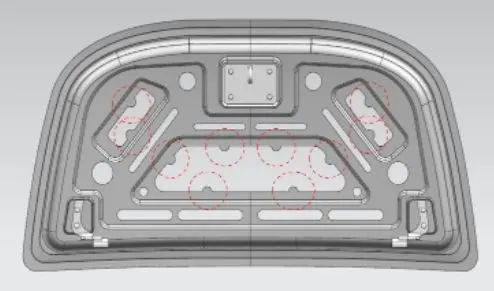
various directional views of hood with coloured appearance,
conclusion-
the hood designs comprises of outer panel, inner panel, hinge assembly, striker mechanism. refering according to the master section various feature are applied on the sheetmetal to obtain desired output.
google drive link-
here
https://drive.google.com/file/d/1vHN2AMlQKeJOk-bWPmU3VxTTGayDf_8W/view?usp=sharing