Hood design-Week 2
HOOD DESIGN
AIM: To design hood inner panel, outer panel, necessary reinforcement and the embosses by considering the master section and design parameters.
INTRODUCTION:
The hood is an opening body panel that covers the engine in a front engine vehicle. It is also considered as another type of door in a vehicle at it consists of an outer panel and inner panel. The inner panel of the hood provides strength while the outer panel functions as the metal cover. It is a critical component because of the frontal crash and pedestrian safety requirements. This is the one dissipates the energy outside the car body rather than sending it into inside car body.
On front-engine cars, the hood may be hinged at either or the rear edge, or in earlier models it may be split into two sections, one each side, each hinged along the center line . A further varient combines the bonnet and wheelarches into one section and allows the entire front bodywork to tilt forwards around a pivot near the front of the vehicle.
Hoods are typically made out of the same material as the rest of the body work. This may include steel, aluminium, fiberglass or carbon fiber. However , some aftermarket companies produce replacements for steel hoods in fiberglass or carbon fiber to make the vehicle lighter.
DESIGN CONSIDERATION FOR HOOD DESIGN:
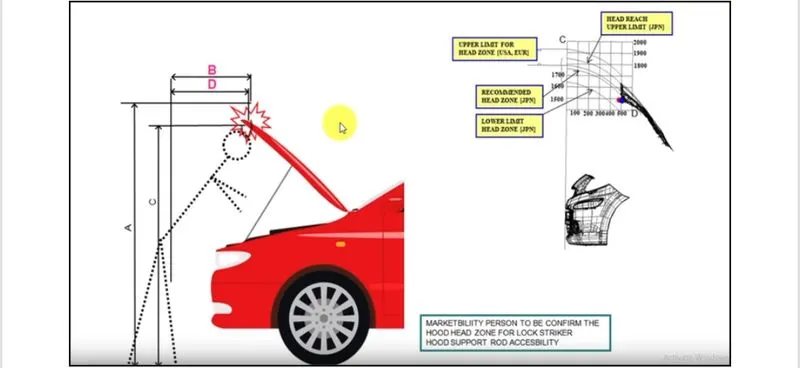
Head clearance zone
Head clearance zone is the clearance such that when the hood is in fully open condition it does not hurt the head of the person that is standing next to the hood. This is controlled by the opening angle of the hood . The opening angle of the hood is decided for the region the car is manufactured . Some region may have people with average height of 5.5 ft and another region may have people with average height of 6ft. So deciding the right opening angle for the hood is an important criteria.
Consideration of Noise Vibration Harness(NVH)
NVH plays an important role in car design. The noise and vibration produced by the car should be minimized. In the hood to avoid vibrations stiffner pads are provided. Mastic sealants also reduce the NVH . Stiffner pads and mistic are added between inner and outer panel of the hood.
Pedestrian safety
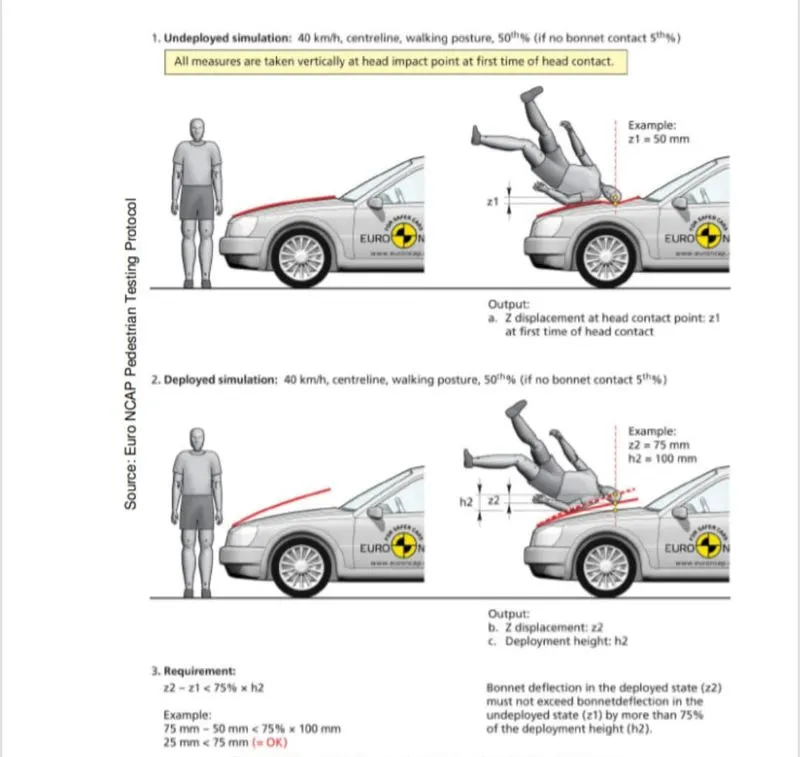
Safety is the most important criteria in automobile designs which concentrates on both pedestrian and occupant safety. The pedestrians are the most vulnerable road user and are at high risk of traffic accidents. The major reason for the fatality of the pedestrian in traffic accidents is due to the head injury resulting from the hard impact of the head against the stiffer and pedestrian friendly.
The head impact analysis on the present hood of the car was done to study the response of the adult head from at two different locations . Structural and modal analysis for the same present hood assembly was done to obserbe the local and global stiffness. In order to reduce the head injury of the pedestrian the local stiffness over the area of head impact has to reduced thus the new design hood inner panel was focused on that and the structural and modal analysis was done for new design. The design with lesser local stiffness and similar global stiffness compared to the existing hood was finalized. The head impact analysis for the new design of hood inner panel was performed.
GIVEN DATA
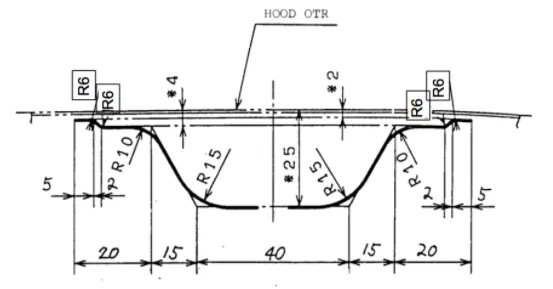
MASTER SECTION
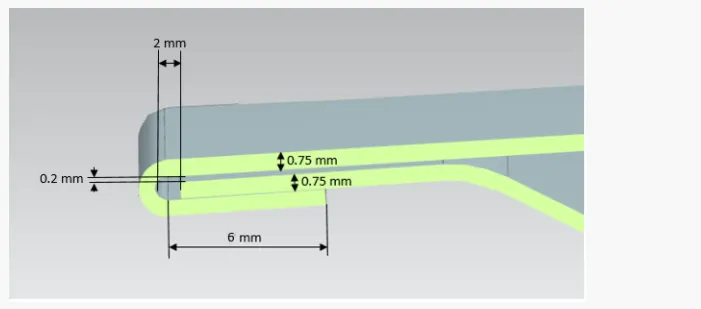
HEMMING DATA
RELIEF SECTION
PROCEDURE
DESIGN OF HOOD INNER PANEL
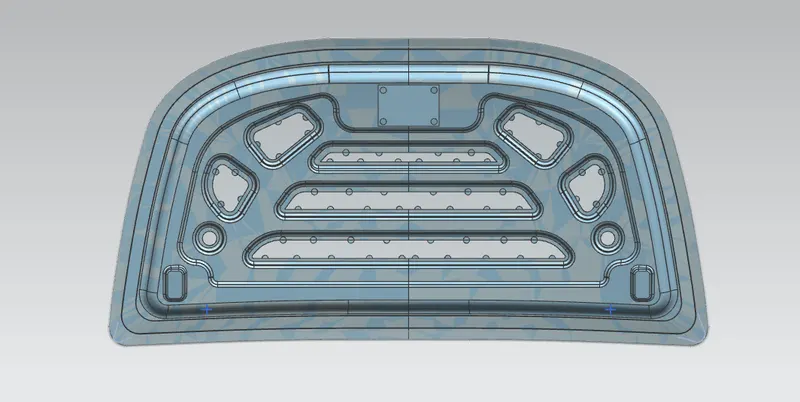
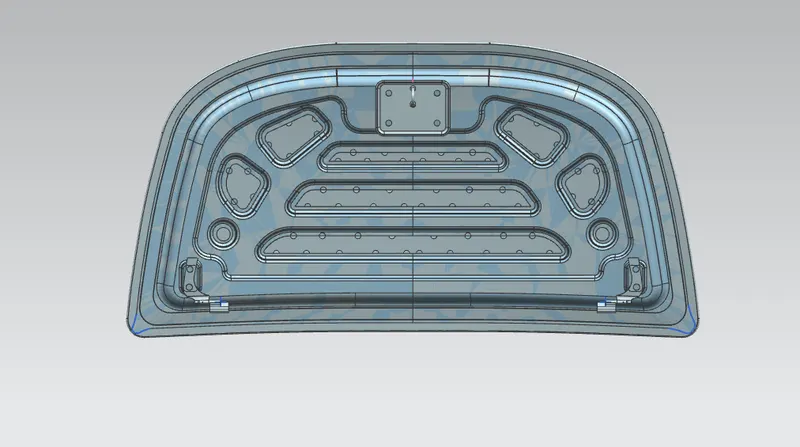
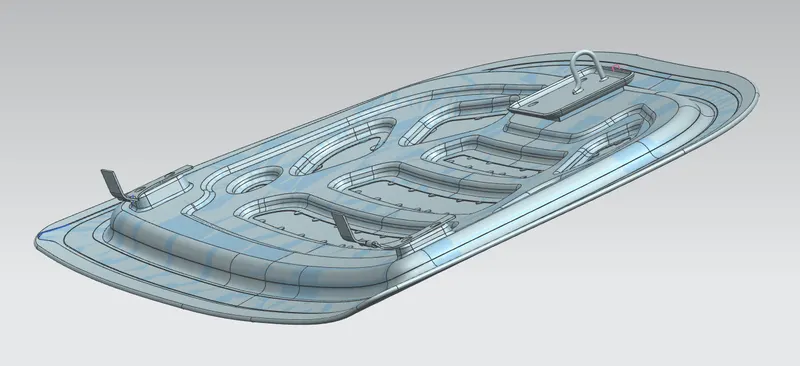
Inner panel is a major part which acts as a support for the outer panel. It consist of embosses which helps in distribution of forces during impact. The thickness of the inner panel is 0.75mm as per the given data. The inner panel is created using the master section shown in the given data.
HOOD OUTER PANEL
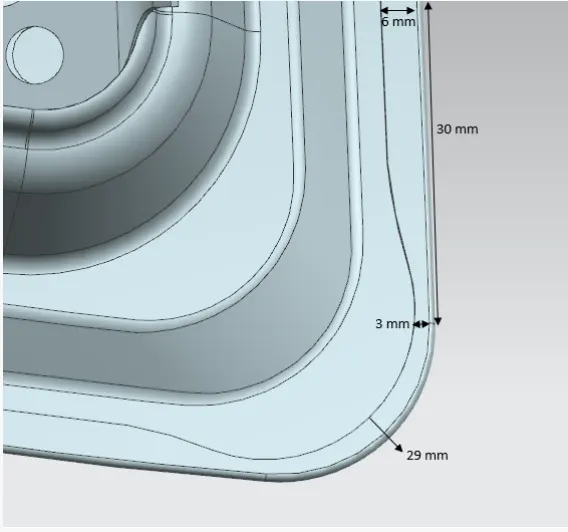
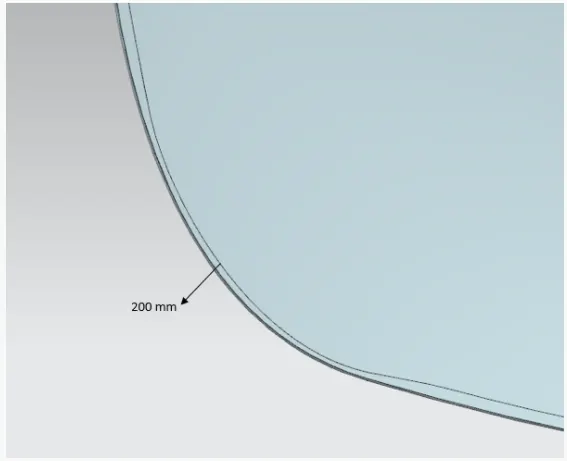
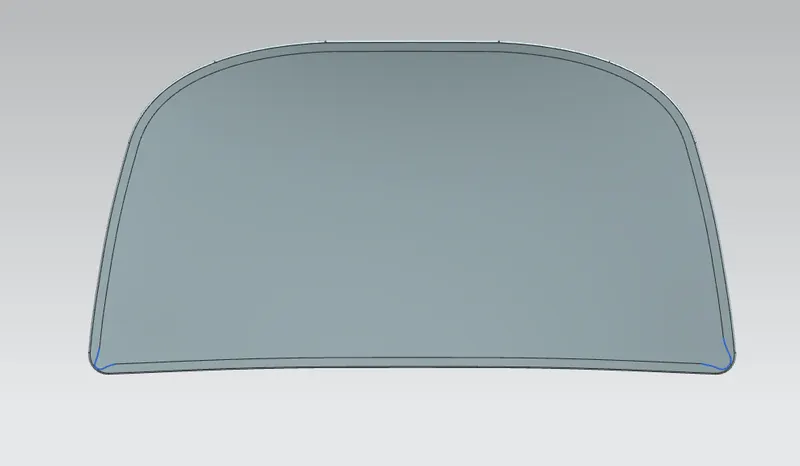
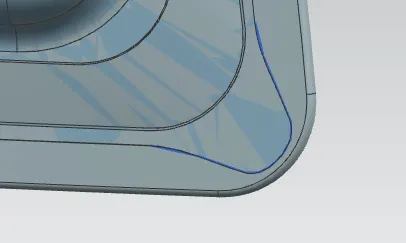
Outer panel is the skin of inner panel which gives a luxurious look to the car. The hemming region is created to the class surface , through which the outer panel is joined to the inner panel. The relief has given in the corners. Relief are provided on the surface to avoid springback situations. The thickness is given as per the data I.e, 0.75 mm.
REIENFORCEMENT
Whenever we add a weight to the material it losses its strength on that area locally . To componsate that loose , reinforcements are added.
EMBOSSES
Embosses will add a strength to the material. These will help in the distributing of forces during the impact rather than directing it towards the passenger sitting inside of the car.
STIFFNER PADS AND MASTIC SEALS
These both will help in minimizing the NVH in the vehicle during motion. Basically mastic seals are a rubber kind of material placed in between the inner panel and the outer panel of the hood which also helps in holding both together. Every mastic seals have a tendency to improve the strength locally by 80 mm diameter.
HEMMING
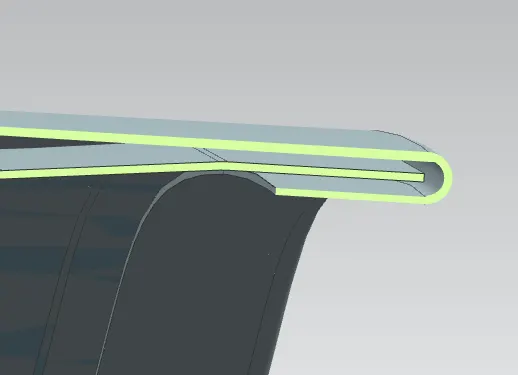
Hemming is the processes where the outer panel is joined with the inner panel by adding extra material on the outer panel and made to warp around the inner panel . The wrapping is done using the running ball rolls throught the end of the sheet.
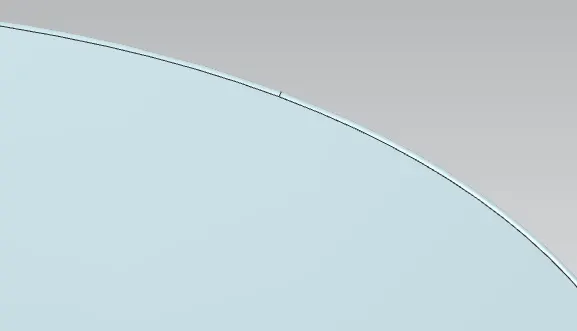
RELIEF AT THE CORNERS
POSITION STRIKER
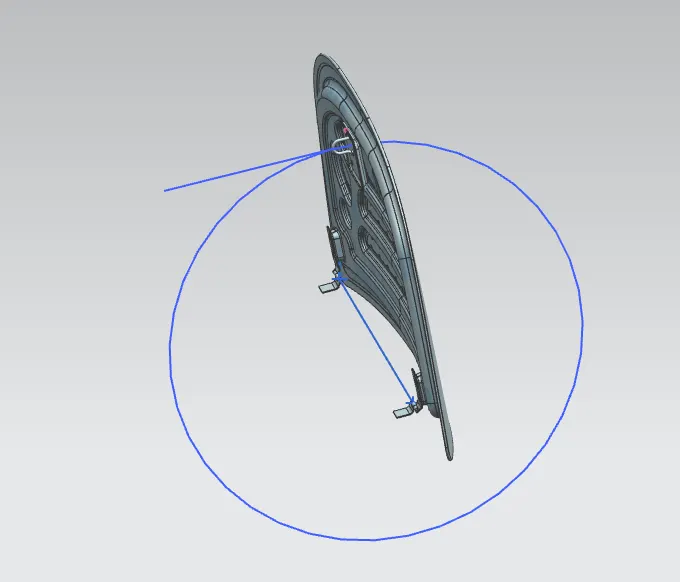
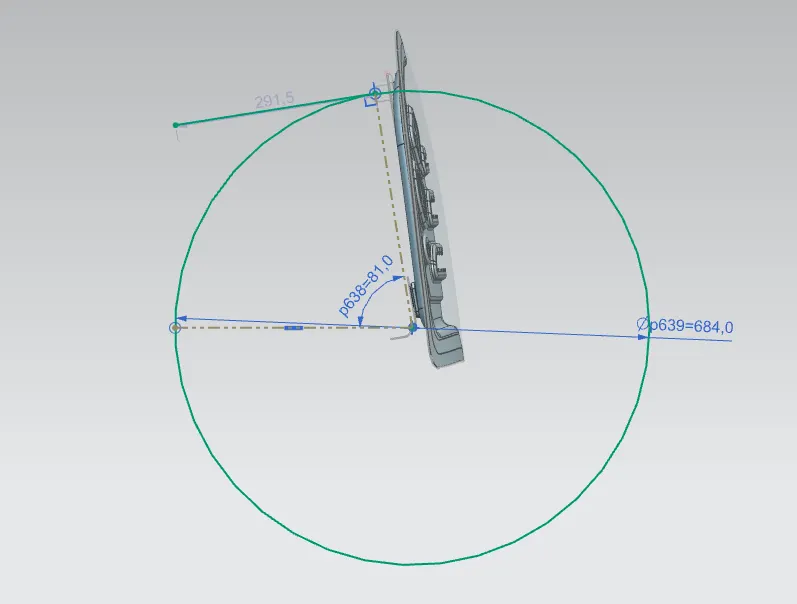
For the proper opening and closing of the hood , the striker should be positioned at a correct position. The striker should be perpendicular to the trajectory of the hood. The trajectory of the hood is denoted as a circle which drawn by using the centre of a straight line which passes through both the hinge axis as their respective position .
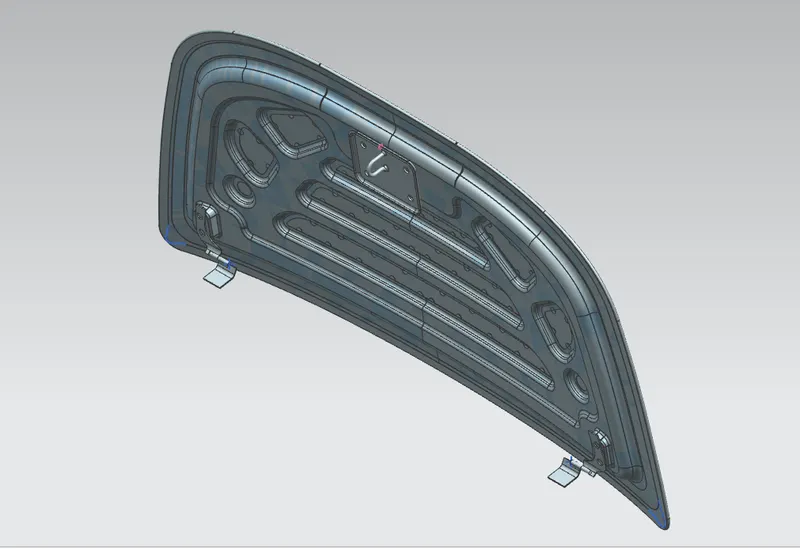
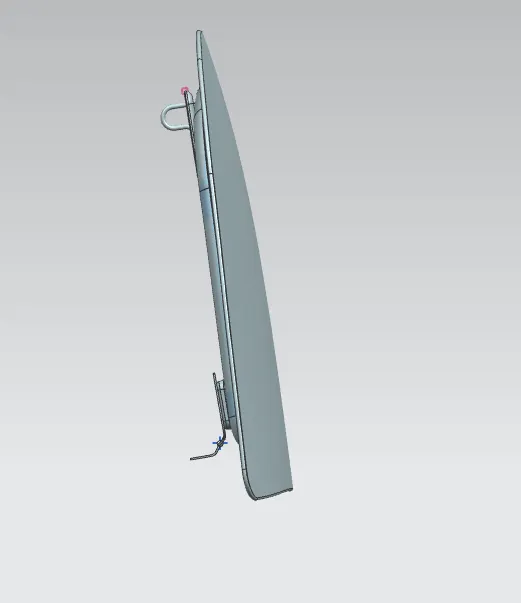
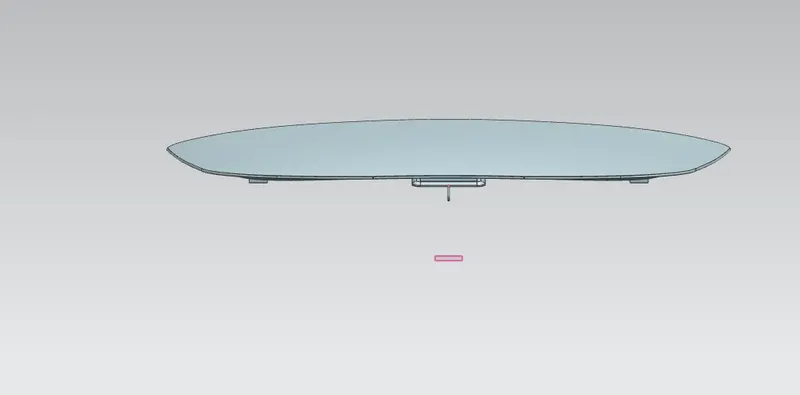
FINAL IMAGES OF ASSEMBLED HOOD
CONCLUSION
Hood is designed using NX 12 by understanding all the design parameters and considering the passengers and pedestrians safety.