Fender Design Challenge
DESIGN AND DEVELOPMENT OF FRONT FENDER FROM THE GIVEN SKIN DATA :
INTRODUCTION: Fender is the American english term for the part of an automobile , motorcycle, or other vehicle body that frames a wheel well. A fender is the curved portion of the car body that sits over and houses the wheels. Its primary purpose is to prevent sand, mud, rocks, liquids, and other roads spray from being thrown into the air by the rotating tire.
The fender not only protects your car from sustaining damage from road debris but it prevents thid debris from being thrown up at other vehicle and the pedestrians on the road. Most automobiles have four fenders, one over each wheel. But now only the panels over the front wheels are called fenders. The rear fender is now an integral part of the body itself.
The fenders opening for the wheel wells tend to be much larger than the diameter of the tire because they don’t move with the tire suspension and consequently must be larger enough to allow the full range of tire motion on the suspension without touching the interior of the wheel well.
For vehicles with a narrow car body that exposes the tire, the fender is an exposed curve over the top of the tire. For wide body vehicles that cover the tire, the fender forms the wheel well surrounding the tire and is not directly visible from above the car body.
Fenders that forms the wheel well surrounding the tire prevent the chipping of the debris effectively and such automobiles have high pedestrian safety. For other automobiles that have exposed tires, fender skirts/fender flares are installed for enclosing the outer edge of the wheel well.
There are 2 types of fenders.
- Full bumper type
- Half bumpertype
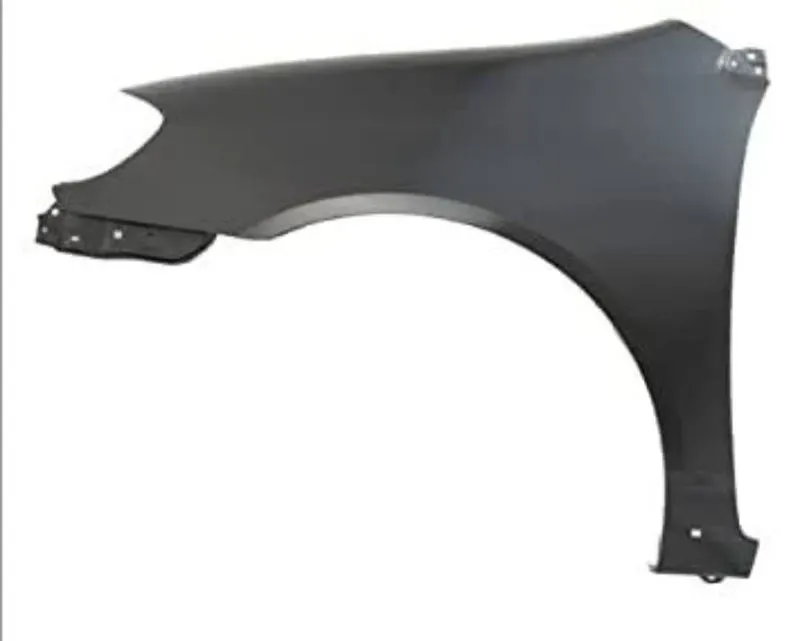
Full bumper-type fenders were used in old automobiles. The fender itself has the bumper bracket integrated with it. This adds extra material to the fender body which eventually increases the weight of the car. Also the blank size required to create this type of fender is more which leads to material wastage . In a single blank sheet only one full bumper fender can be produced.
In the case of half bumper type, we have a high possiblity of reducing the scarp. By slightly increasing the blank size we can produce two fenders at the same time (scarp management). We can drastically reduce the wastage of material.
Half bumper type fender allows us to use a lot of plastic on the bumper, which means we are reducing the certain proportion of weight from the fender. Hence , the lesser the weight higher the performance.
MOUNTAINING POINTS INA FENDER:
There are 5 mounting points in a fender
- Drip area
- Bumper
- A- pillar
- Sill
- Cowl
DRIP AREA:
- The drip area is a region that comes in contact with the engine compartment through deformable brackets with the help of fasteners.
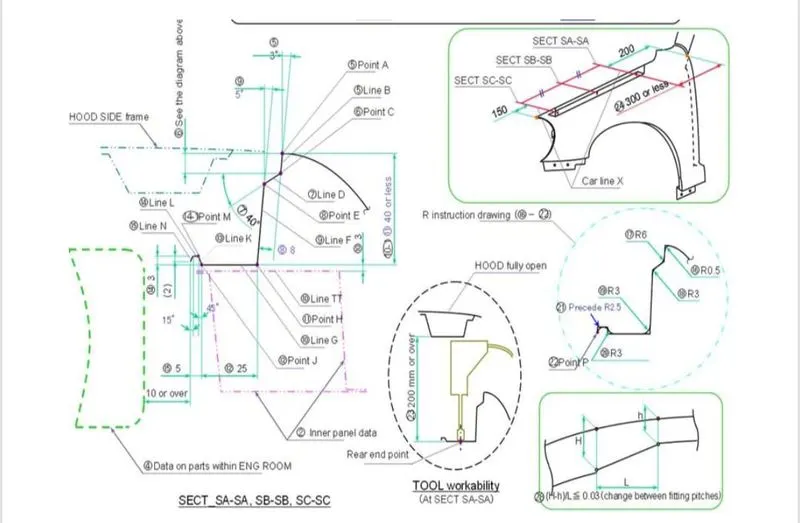
- The drip area is one of the most important design consideration in the fender development process. There are certain design constraints (master section) that need to be followed by all the OEM .
- A gap of 200mm (conventionally) is maintained between the rear end of the fender and the drip area. This gap is sufficient enough to install the cowl plastic mounting and the wiper motor components.
- A gap of 150mm (conventionally ) is provided between the front end of the fender and the drip area. The reason being, for the proper installation of the headlamps and their housing.
- The length of the drip area and the clearance provided depends on the length of the hood, unconventional size of the cowl, etc.
- The height of the fender should be 80mm(min) (child and 1700 max).
- A parting line should be provided within a range of 47.5mm from SRL(side reference line), if there is no problem in terms of styling surface. If the value goes beyond 47.5mm then we must inform the stlying team to do the required changes in the skin data.
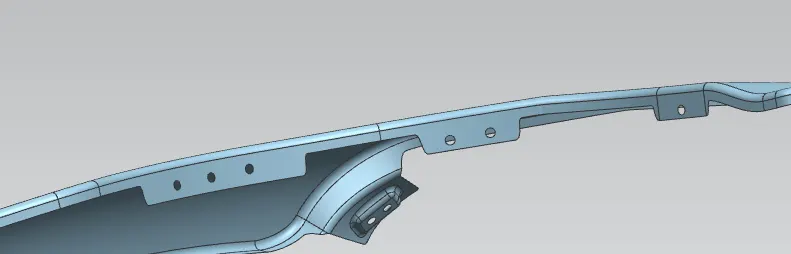
- If we are not sure about the height of the drip area then we provide ribs in order to strengthen the part and avoid the spring-back effect.
BUMPER MOUNTING AREA:
- A bumper is located on the front and rear of a vehicle. The purpose of a bumper is to absorb the impact of minor collisions.
A-PILLAR MOUNTING AREA:
- There are 3 main types of pillars when referring to the design of a car – A, B, C.
- The pillar or the vertical bar which you holding the windshield from sides, the right side A-pillar houses in most of the cars.
B-PILLAR MOUNTING AREA:
- The B-pillar is present in between the rear and the front door.
C-PILLAR MOUNTING AREA:
- This is where rear windows ends but on the body and not on the door.
SILL MOUNTING AREA:
- The mounting area at the panel is directly below the bottom of the door supporting the base.
WHEEL ARC AREA:
It is the semi circular region that forms wheel wells around the tires. There are certain wheel guard regulations that need to be followed. For every region we have different regulations across the globe. Japan regulation standard : The value of clearance must be greater than 5mm at a line 30deg forward and 50deg reward from the central vertical axis of the wheel.
European regulation standard: The clearance must be greater than 10mm at a line 30deg forward and 50deg reward , a line 150mm from the x-axis , midpoint between 50deg line and 150mm line.
US regulation standard: The clearance must be greater than 5mm for every 10deg from –20deg to 180deg.
DESIGN METHODOLOGY:
Objective : Our objective is to design the automobile fender by considering the given skin data, design constraints, safety regulations, and manufacturability for the vehicle development processes.
Design data:
- Skin data of the fender provided by the styling team .
- The thickness of the fender = 0.75mm
- Master section of the drip area that consists of dimentional values for radius, width, flange clearance etc.
DESIGN PROCESS:
- First we have developed the drip area from the given skin data and the given skin data and the master section. The most important consideration is the fender height which should be 40mm or less. But in our design , it is around 41-42mm.
- We have created two planes normal to the curve at 150mm and 200mm from the front end and rear end of the fender. This provides us the area within which the drip area must be lie. These values might change if we have unconventional design values for the cowl region or a larger hood length.
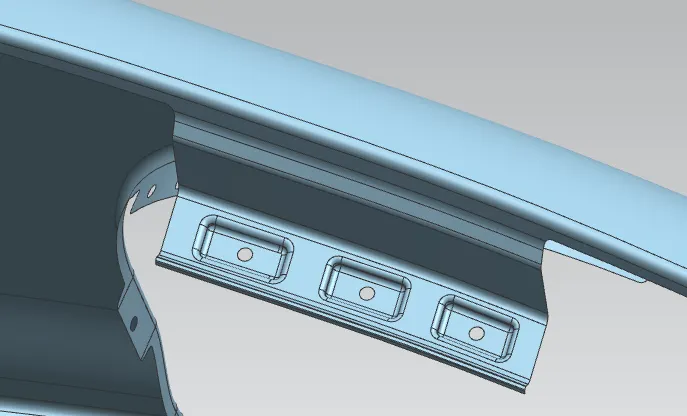
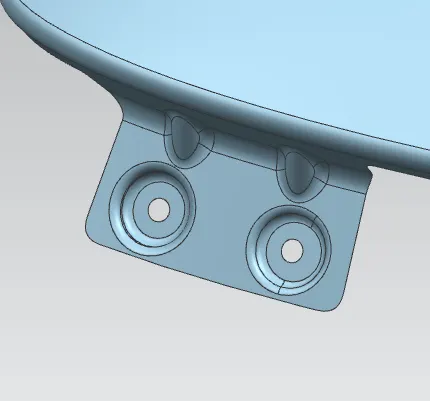
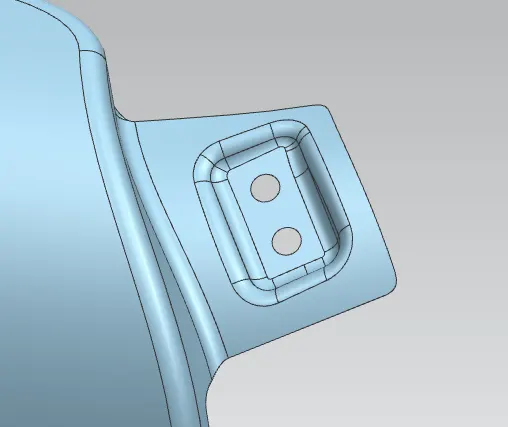
- For mounting points, we have created emboss with a mounting holes of dia 5mm. Fillet radius of 3mm provided to all the edges and corners.
- As per the master section the 1st flange of height 9mm at an angle of 3deg w.r.t vertical vector was created using the law extension command.
SILL MOUNTING AREA:
- Sill is the panel directly below the bottom of the door supporting the floor and may be used to combine the floor and the body. The bottom end of the fender is mounted on the sill body for reinforcement of the fender panel, thus the sill mounting position is designed with holes and emboss.
BUMPER MOUNTING AREA:
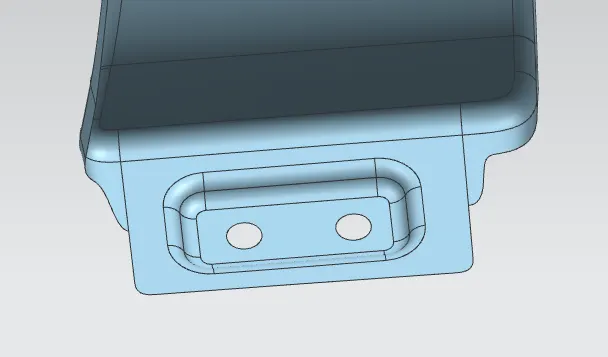
- Bumper mounting area is used to fix the bumper to the fender with the help of the fasteners.
A-PILLAR MOUNTING AREA:
- The A-pillar is the structural pillar that combines the body with the roof, this makes the sides of the windshield rest. Front fenders are fastened to the A-pillar to form a robust structure.
BAFFLE MOUNTING AREA:
- Baffle mounting are clip fit types of mounting on the inner side of the fender arch over the tire. It protects the car engine compartment and pedestrians from causing injuries from chipout debris on the road when the car is in motion. They are mounted on the fender using a special type of locking clips which are made up of plastics.
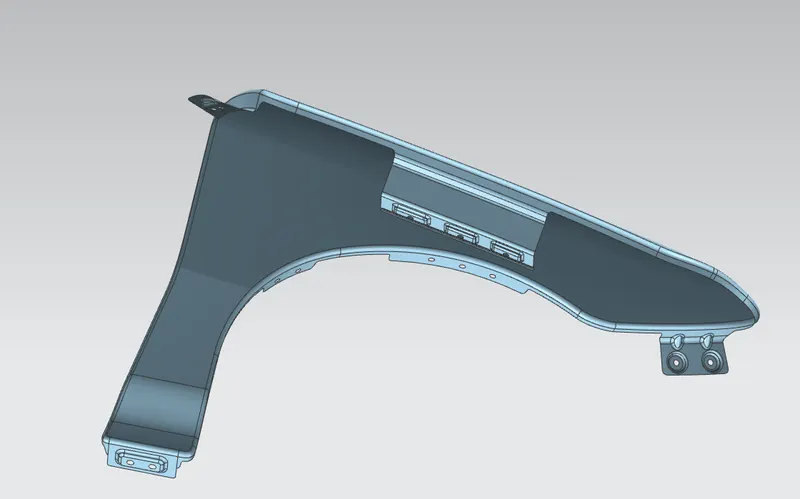
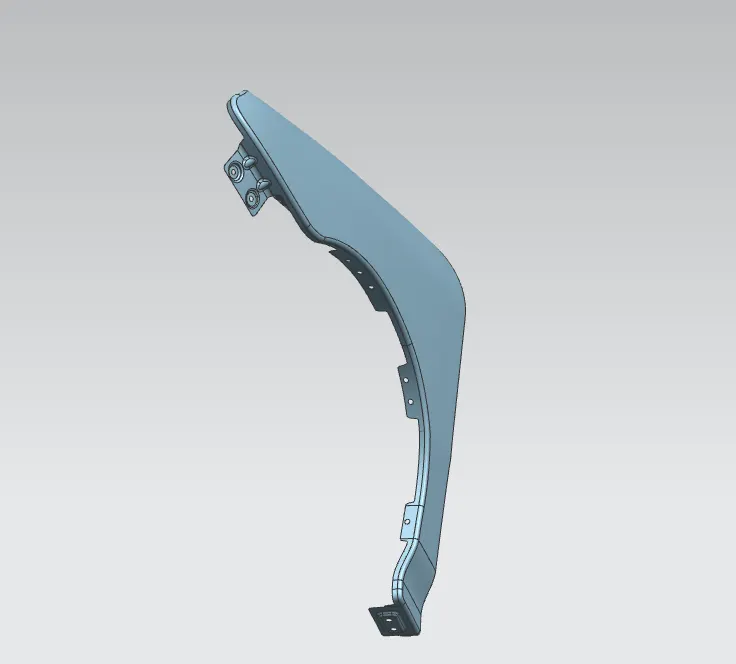
MODEL VIEWS:
CONCLUSION:
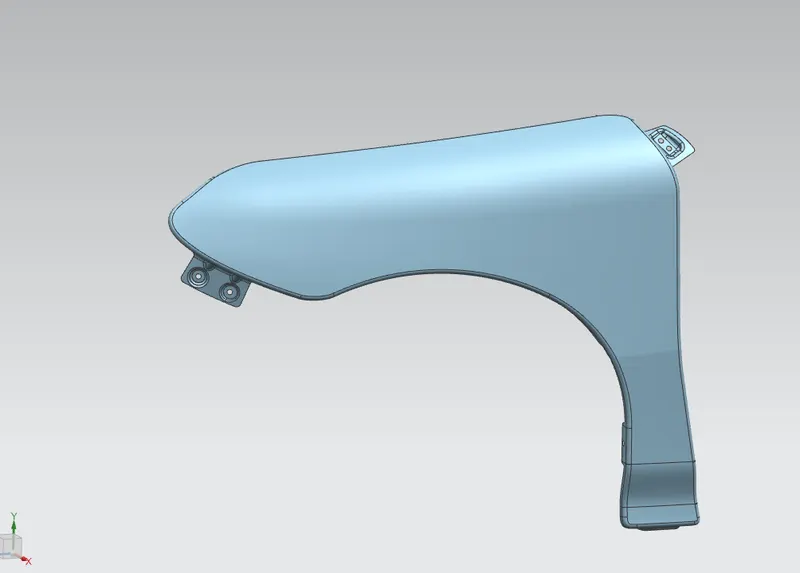
Designing of the front fender from the given skin data and the master section with drip mounting , A-pillar, sill, bumper mounting done.