Hood design-Week 2
AIM:-
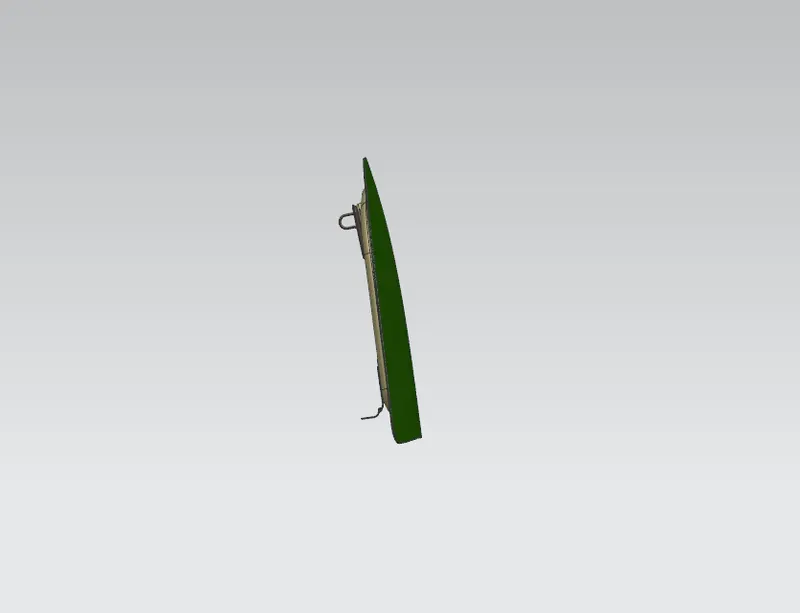
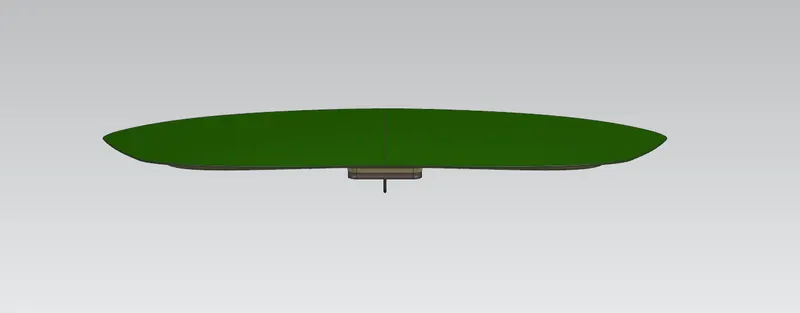
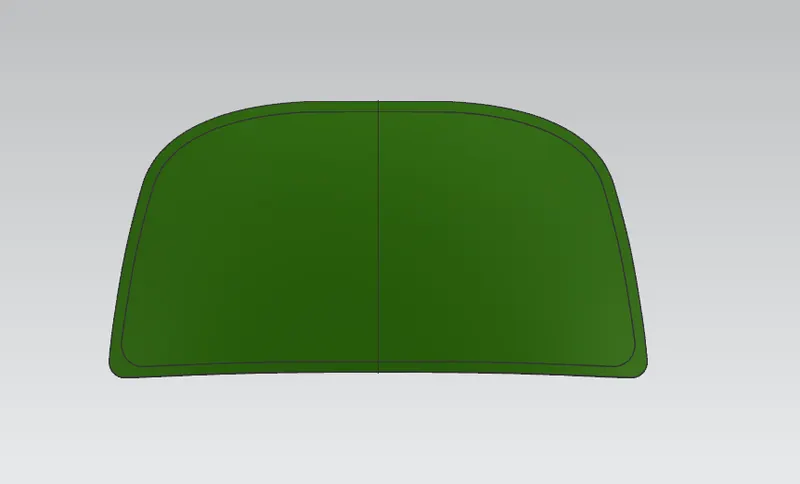
To design Hood outer panel, inner panel, and the necessary reinforcements by following the Master section mentioned with the design parameter and to submit an assembly of Hood inner panel, outer panel, latch, hinge, and the reinforcements
HOOD:-
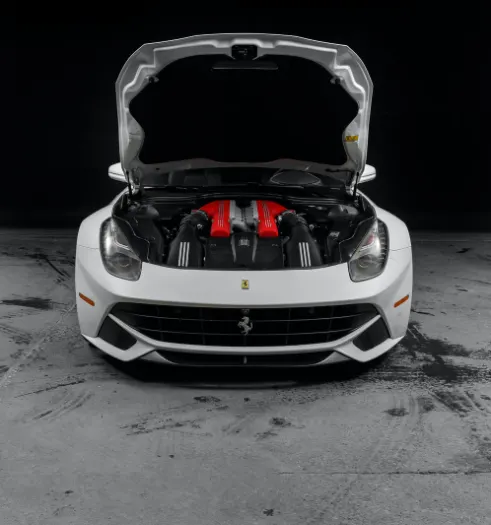
A car hood also referred to as a bonnet in some other countries is the hinged cover that rests over the engine of a front-engine vehicle. Its purpose is to provide access to the engine for repair and maintenance. It also protects the engine and other parts from rainwater or small stones kicked up by other cars which could puncture a fluid container or damage the engine. A concealed latch is typically used to hold down the hood.
PEDESTRIAN SAFETY:-
Pedestrians are the most vulnerable road users who are at high risk of vehicle collisions in traffic. Almost a 1.2million pedestrians are killed annually in road traffic accidents worldwide. The major injuries occur in the lower, upper leg and head of the pedestrian, where the fatalities of the pedestrians in the accident are mainly due to head injuries resulting from the hard impact of the head against the stiff hood or to the ground. In recent years, engineers are working on the vehicle front end design which includes bumper and hood to reduce injuries to the pedestrians in the event of a pedestrian-vehicle collision.
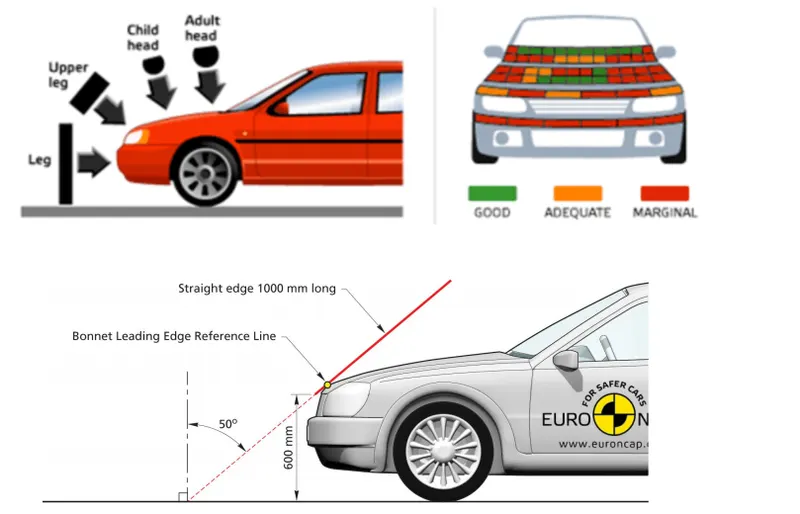
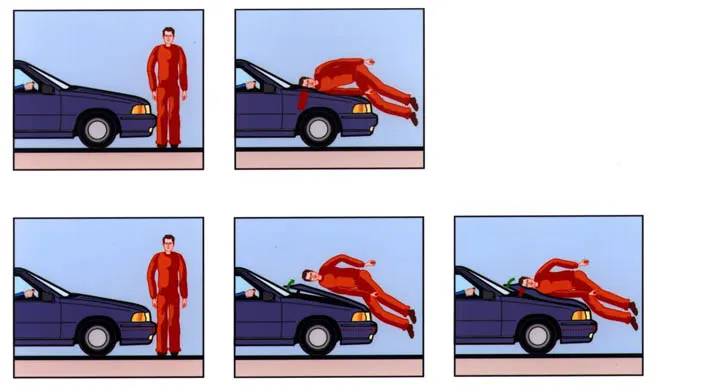
Many pedestrian crashes involve a forward-moving car. In such a crash, standing or walking pedestrian is struck and accelerated to the speed of the car and then continues forward as the car brakes o a halt. The pedestrian is impacted twice, first by the car and then by the ground, but most of the fatal injuries occur due to interaction with the car. Vehicle designers usually focus on understanding the car-pedestrian interaction, which is characterized by the following sequence of events: the vehicle bumper first contacts the lower limbs of the pedestrian, the leading edge of the hood hits the upper thigh or pelvis, and the head and the upper torso are struck by the top surface of the hood or windshield.
Methods to lift hood:-
- SUPPORT ROD:-
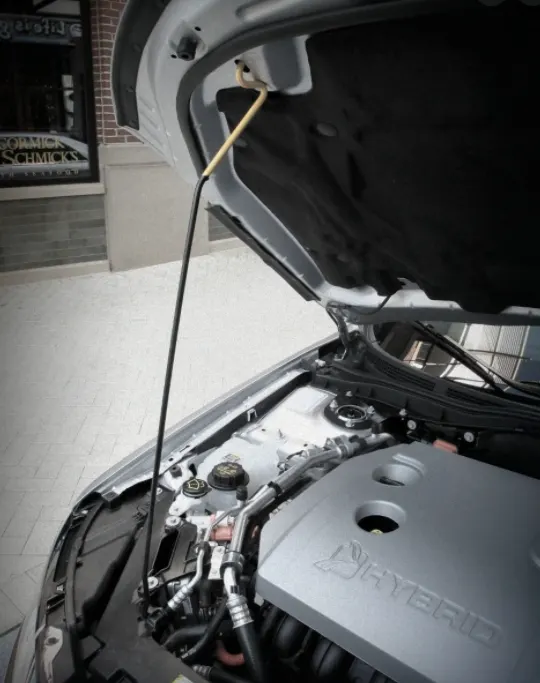
A hood rod is designed to hold your hood propped open whenever you need to do some work in your car's engine bay. When used, it must be firmly secured to ensure that it provides a stable hold on the hood. Meanwhile, when not in use, it must be kept stable in place and must not move around. The hood rod clip is the part assigned with that function. This clip clamps onto the rod and ensures that it is firm in its place when not in use. It keeps the rod from moving around under the hood and from causing trouble.
- GAS STAY:-
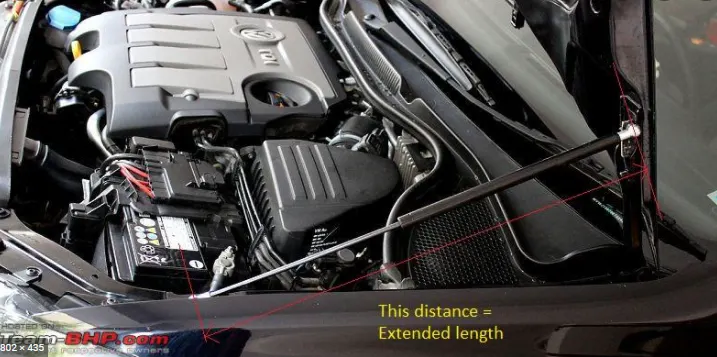
A gas stay is a type of spring that, unlike a typical mechanical spring that relies on elastic deformation, uses compressed gas contained within an enclosed cylinder sealed by a sliding piston to pneumatically store potential energy and withstand the external force applied parallel to the direction of the piston shaft.
HEMMING:-
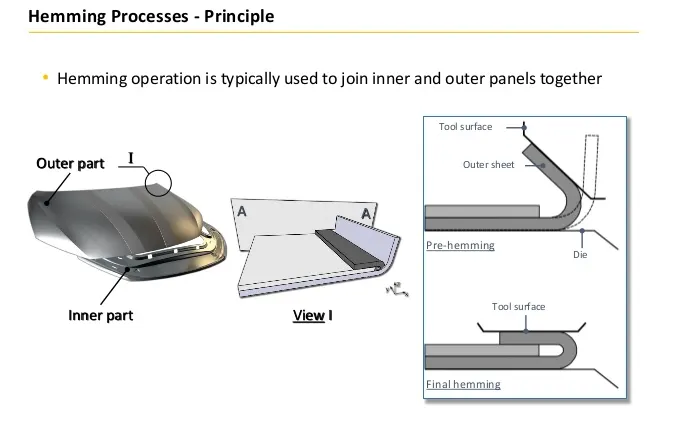
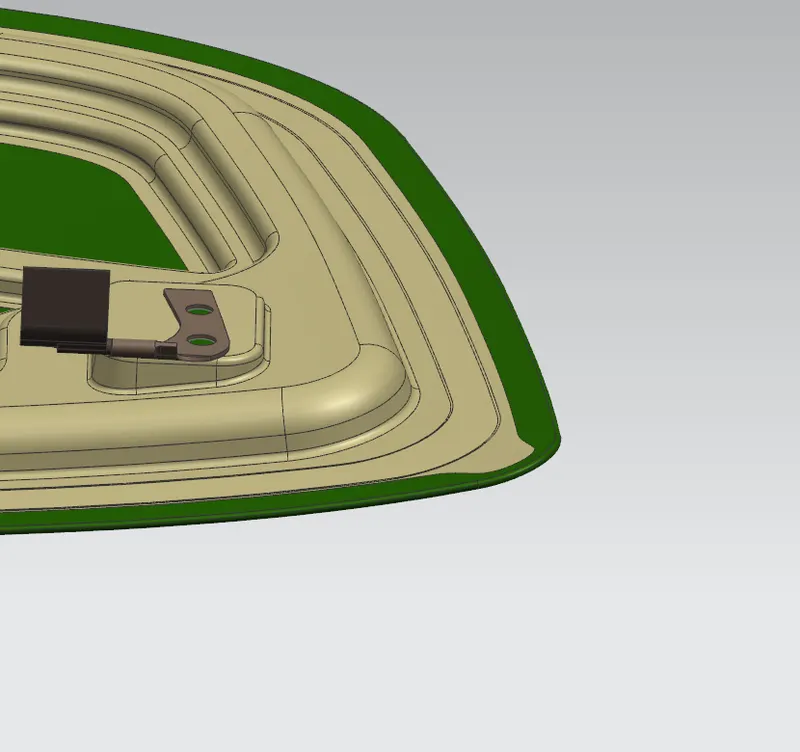
Hemming is a technology used in the automotive industry to join inner and outer closure panels together (hoods, doors, tailgates, etc.). It is the process of bending/folding the flange of the outer panel over the inner one. The accuracy of the operation significantly affects the appearance of the car's outer surfaces and is, therefore, a critical factor in the final quality of a finished vehicle.
Benefits of hemming:-
- Die storage systems
- Fully automatic die-changing systems with parameters that change with each die
- Pressing capacity is typically 60 to 180 tons
- Large panel-size capacity
- More than one part can be produced on the same line
- Electric hemmers do not need hydraulic oil, are quiet and eco-friendly
MASTERSECTION:-
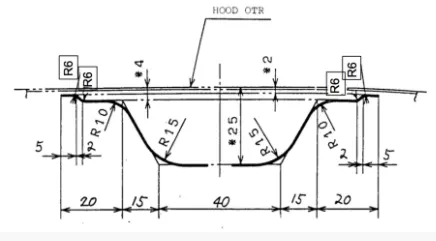
Master sections are the guides for design requirements that decide the component packaging after technical (Styling, Concept, or Class-A) surfaces.
CLASS A SURFACE:-
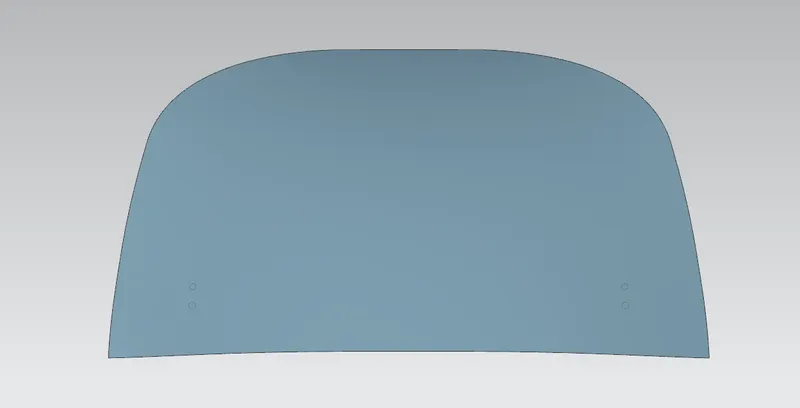
In automotive design, a class A surface is any of a set of freeform surfaces of high efficiency and quality. Although strictly, it is nothing more than saying the surfaces have curvature and tangency alignment - to ideal aesthetical reflection quality, many people interpret class A surfaces to have G2 (or even G3) curvature continuity to one another (see free form surface modeling). Class A surfacing is done using computer-aided industrial design applications. Class A surface modelers are also called "digital sculptors" in the industry. Industrial designers develop their design styling through the A-Surface, the physical surface the end-user can feel, touch, see, etc.
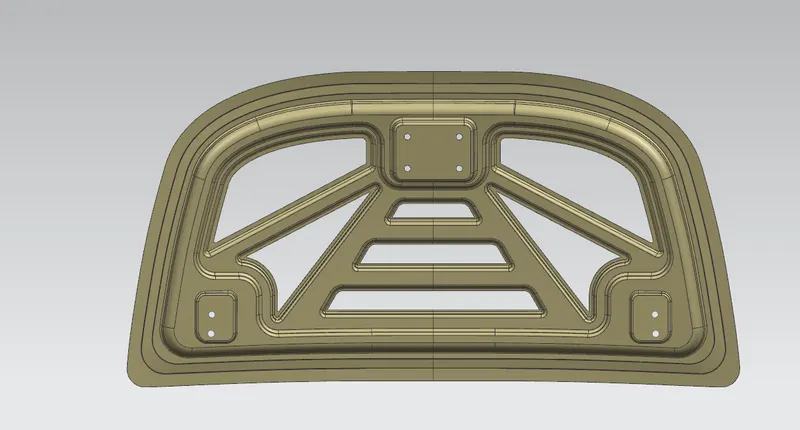
INNER PANEL:-
By considering all the above-mentioned safety measures, the inner panel is designed.
HINGE ASSEMBLY:-
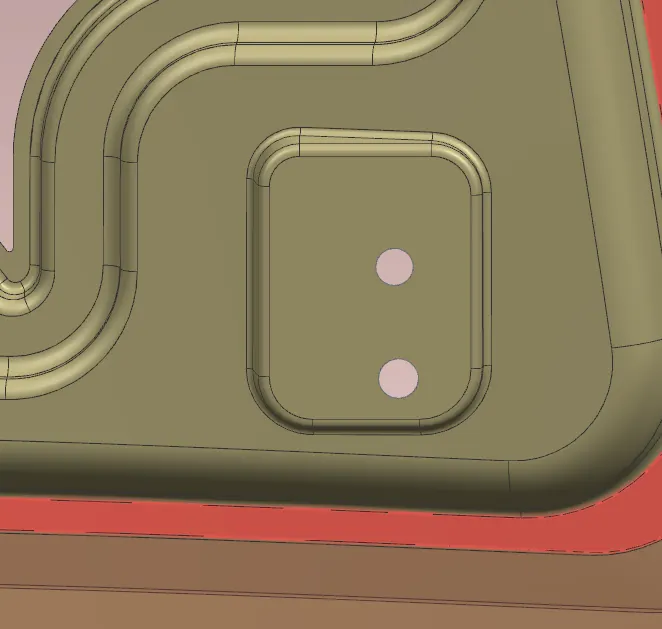
Hinges are the assembly of components connected to the door and body of the vehicle, linked to each other, and capable of rotating around the same axis. The conventional system consists of 2 hinges for each door, an upper hinge, and a lower hinge.
STRIKER ASSEMBLY:-
The door striker plates are installed in the door jambs, and precisely aligned with the door latches so that the latches catch onto the striker plate when the doors are closed. The door striker plate is made of hardened steel to resist wear as it is subjected to constant contact with the door latch.
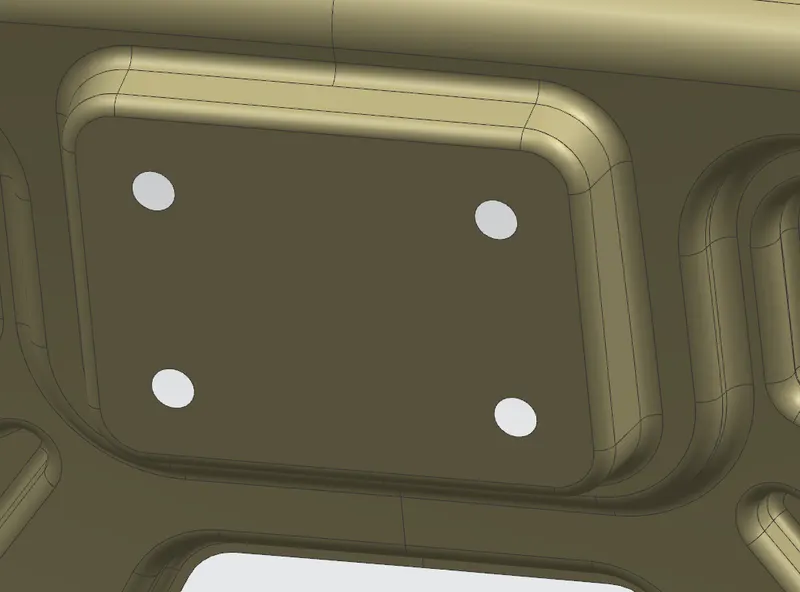
The hood latch system begins inside the compartment of the car. Located on the driver's side (usually on the left-hand lower corner of the dashboard) is the hood release handle. The hood release handle attaches to a cable which then routes through the dashboard towards the front of the vehicle.
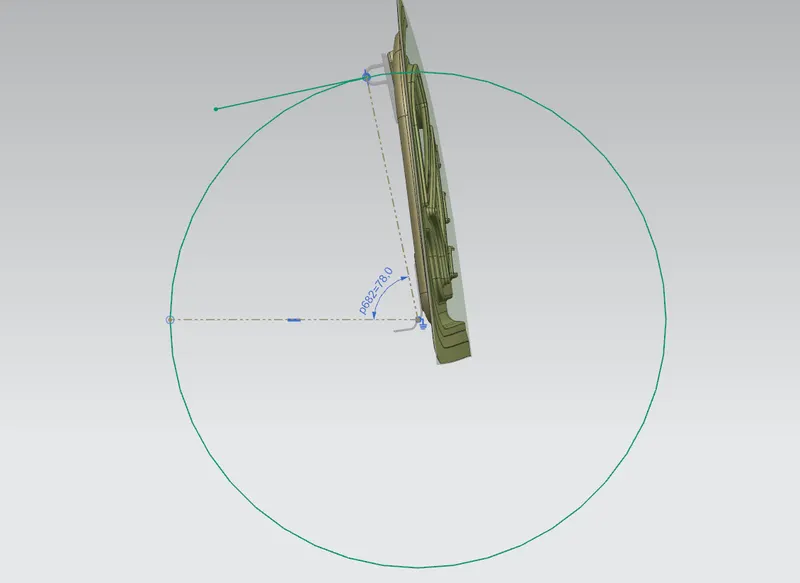
STRICKER ANGLE:-
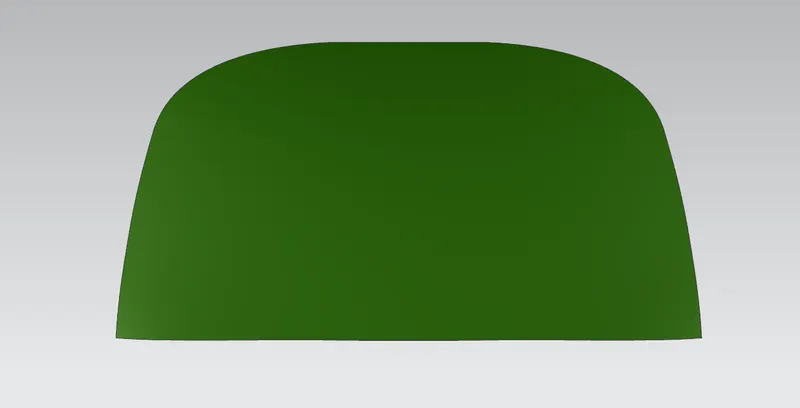
FINAL OUTER PANEL:-
HEMMING:-
TREE STRUCTURE:-
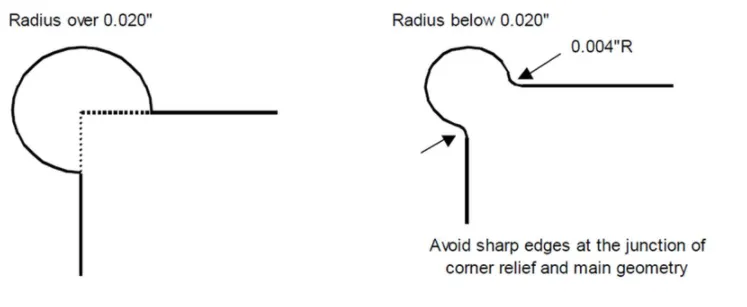
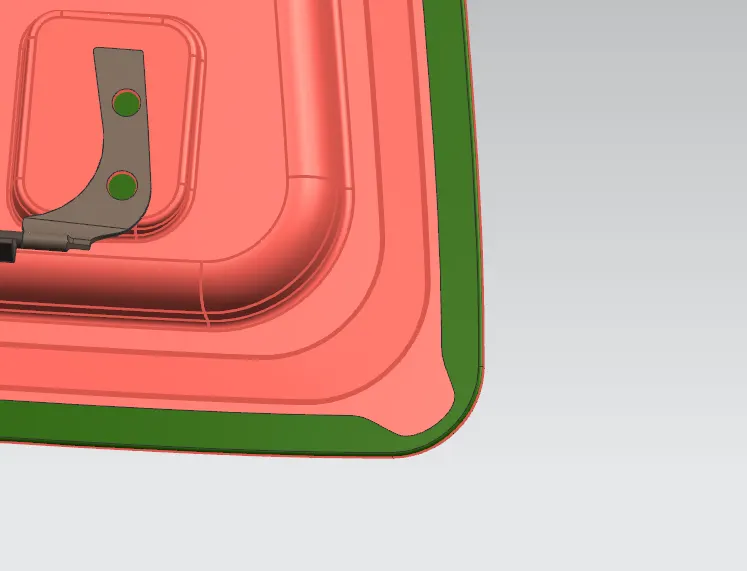
CORNER RELIEF FOR EASY MANUFACTURING:-
Bend relief is nothing more than two small incisions cut into a piece of sheet metal to free the metal in between. It separates the material you want to be able to fold from the rest of the part You only need it when there is material on either side of a bend. When the sheet metal is put through the process of bending the metal around the bend is deformed and stretched. As this happens you gain a small amount of total length on your part. The Bend Allowance is defined as the material you will add to the actual leg lengths of the part in order to develop a flat pattern.
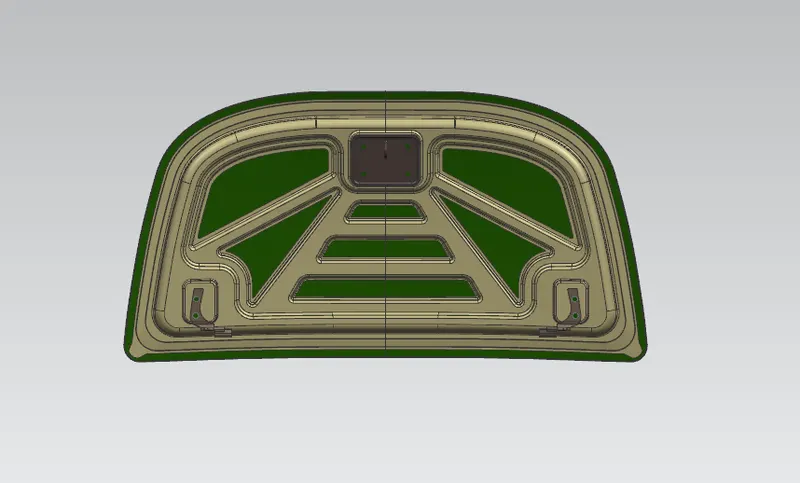
FINAL HOOD ASSEMBLY:-
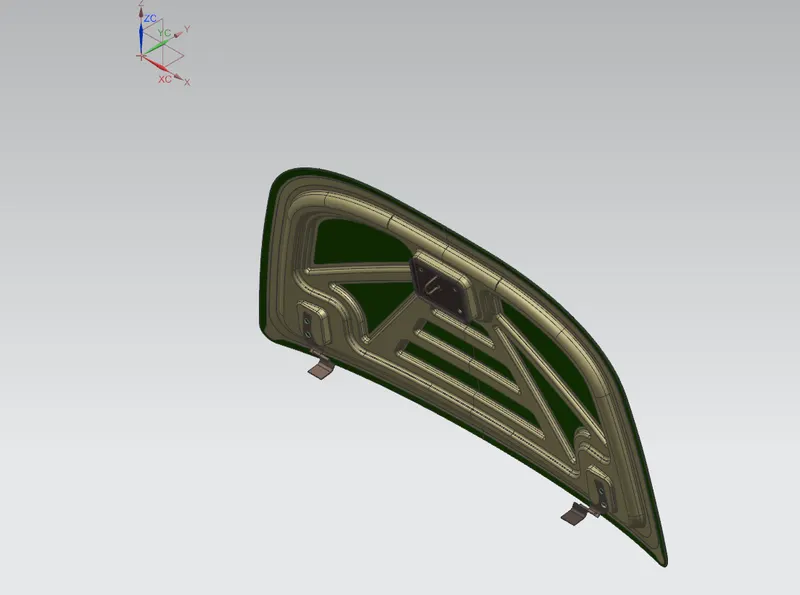
ISOMETRIC VIEW:-
SIDE VIEW:-
TOP VIEW:-
FRONT VIEW:-
STATEMENT:-
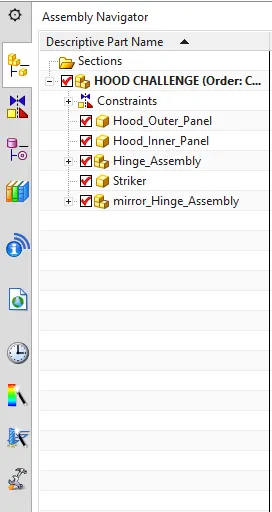
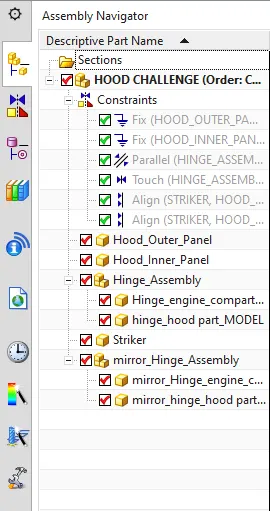
The final BIW-component - Hood inner panel, outer panel, hinges, and sticker are fixed and ready to manufacture.