Hood design-Week 2
HOOD DESIGN :
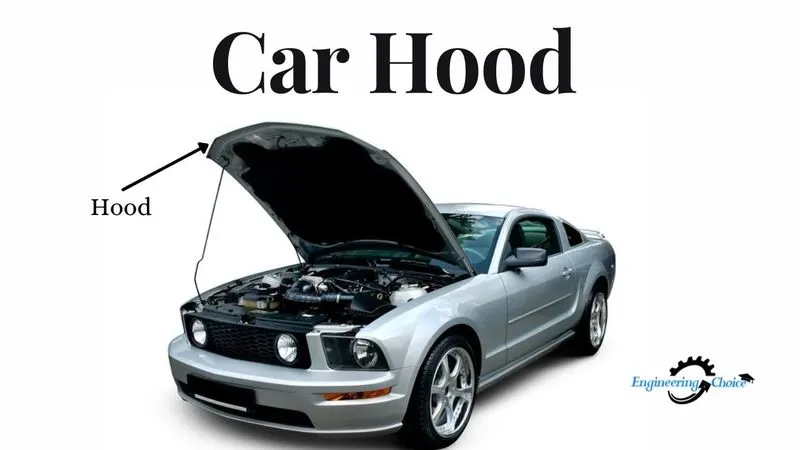
Introduction: Hood is front portion of the car. It is used to give look to the car. It is also known as bonnet, the shape of the bonnet is designed to make it aerodynamic in order to reduce the air effects.
Hood design considerations :
Hood is a frontal BIW enclosure component. Hood are designed to reduce air resistance as thew air flows over the car. Hood are also designed to meet several other requirements like the main purpose to portect the passengers in the car and pedestrains on the streets during accidents.
It also acts as the cover for the engine.
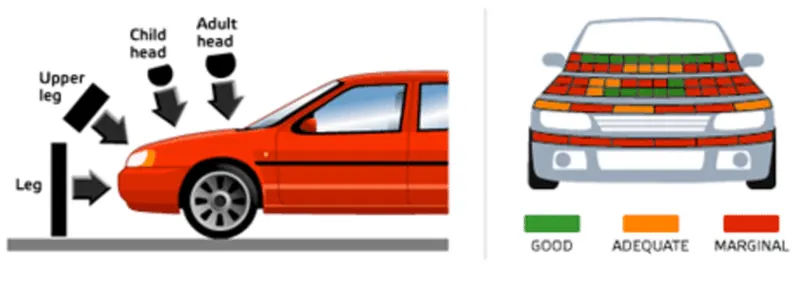
The european new car assessment program (euro NCAP) is a safty performance assessment program which has developed to test car specifications and rating system for assessing pedesterian injuries during impact at front of car with a bio-mimic collision at speed of 40 km/h.
To avoid sever injuries to the head, the impact area for the adults and childern are subjected to less thickness. also no renforcement should be provided in the area as during head collision, the hood will absorb the energy to reduce the injury.
another criteria of hood design is to protect the passengers in the car during fornt collision. The hood design should be in such a way that during collision the forces over the should transfered to the boddy of the car using embosses.
following parts are used in Hood Assembly
- Hood outer pannel
- Hood innner pannel
- hinge assembly
- stricker
Hood sheet metal thickness
outer pannel - 0.75mm
inner pannel - 0.75mm
renforcement thickness - 1.5mm
Given data:
Hood inner pannel:
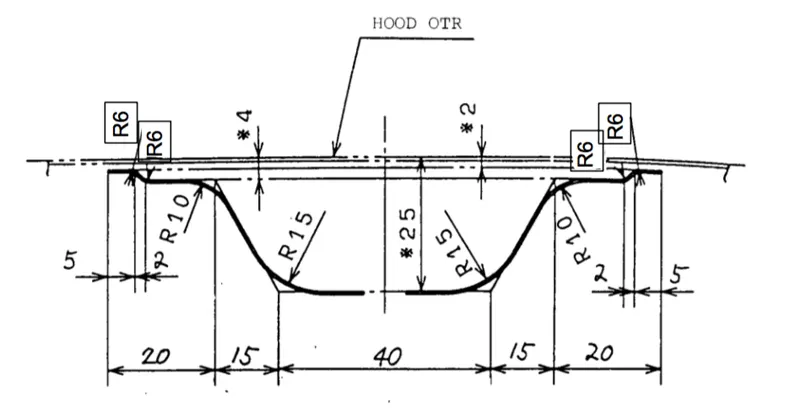
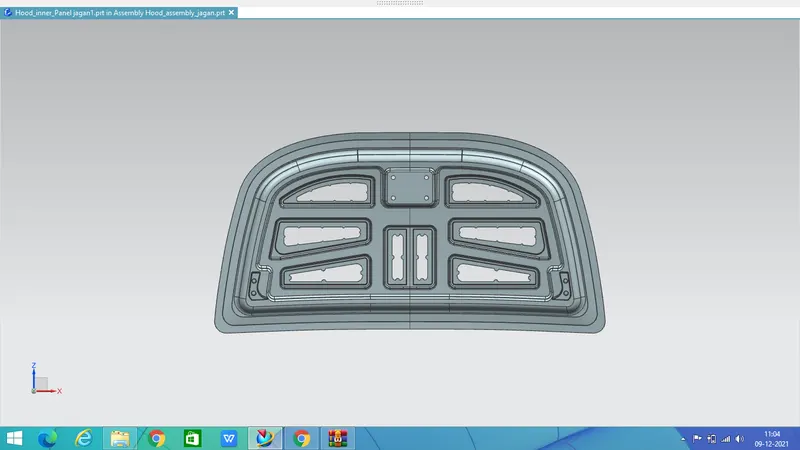
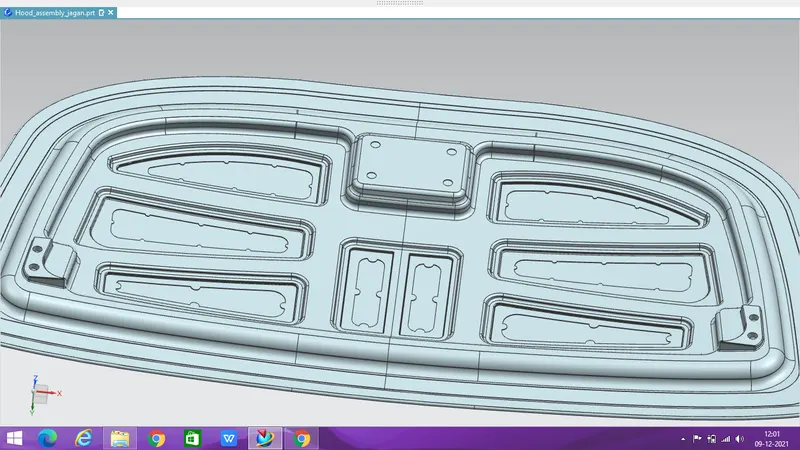
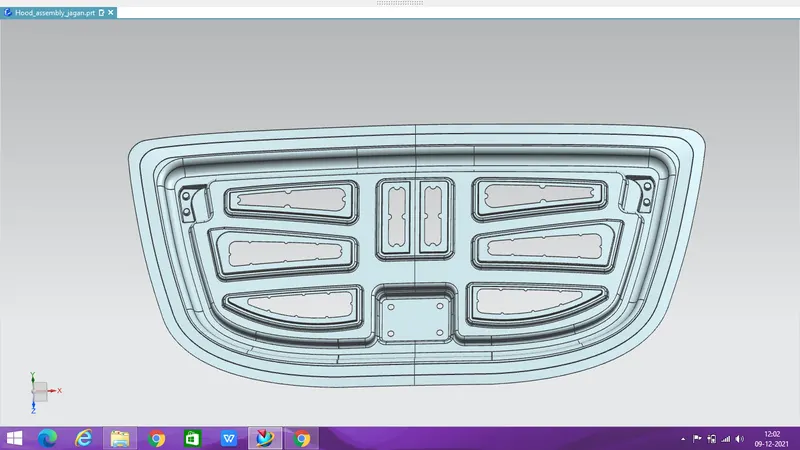
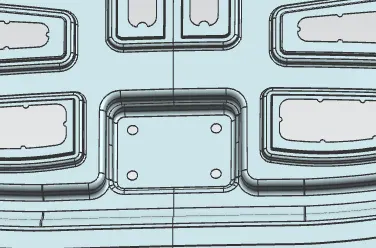
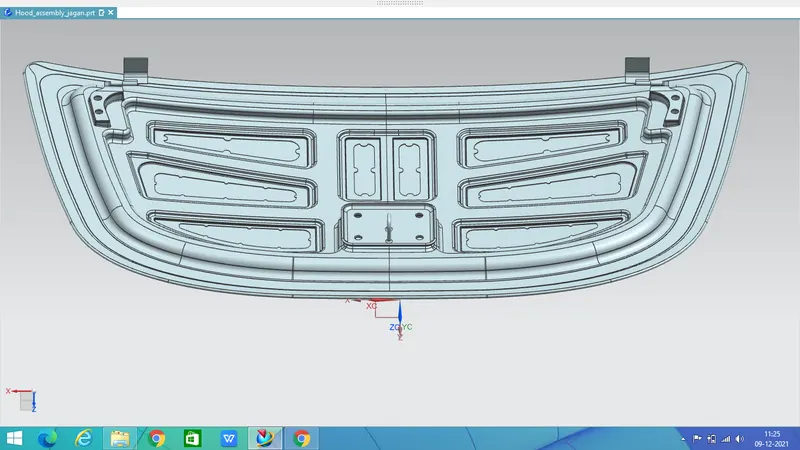
To design inner pannel of the hood using 2d data as given. The skin data of a outer pannel is taken as the referencer for the inner pannel design. We offset the outer pannel and hide it and taking offset data as the referance start designing inner pannel. First make offset face into half. the half surface is offseted at a distance of 2mm then using offset curve on face tool offset the curve to 20mm distance using trim sheet tool to trim the sheet and keep the edges of the sheet, Rpeat the same with 40mm of distance, then using through curves tool create a surface using to offset surfaces. Now using same tools offset of 25mm and offest curve of 55mm trim the sheet and kepp middle portion, now using law extension and trim extend tools create the base of the hood and give face blend and edge blends to surfaces as given the 2D data. The first part of inner pannel is done the second part is about the embosses and mounting space for hinges and stricker. The embosses should be created in oerder to satisfy the design standers of the hood.
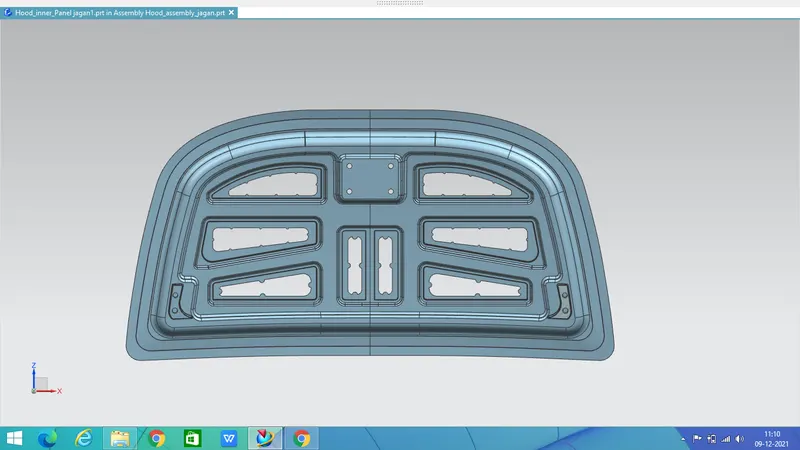
Thickned image
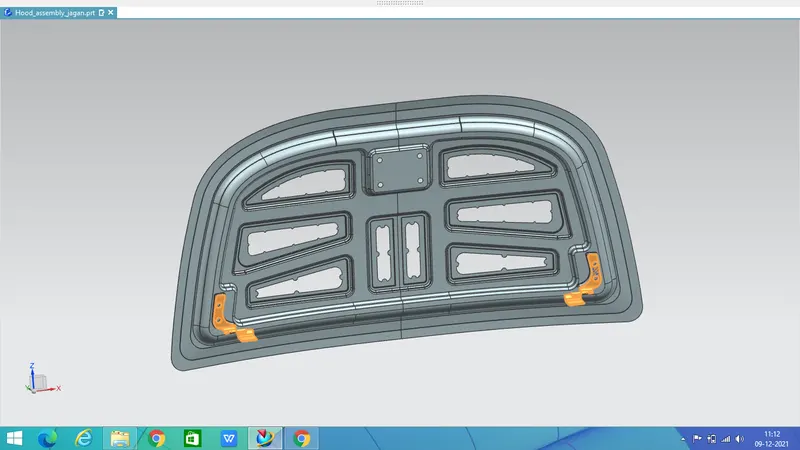
Hinges assembly:
Hinges are mounted to the hood perdendicularly, create a plane parpendicular to the inner pannel create sketch for the hinges mounting and create a emboss in referance to the created plane in order to get flat surface.
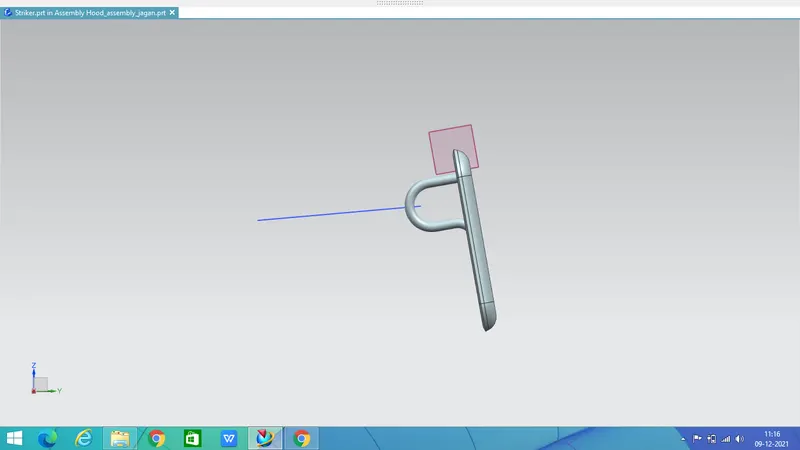
stricker assembly:
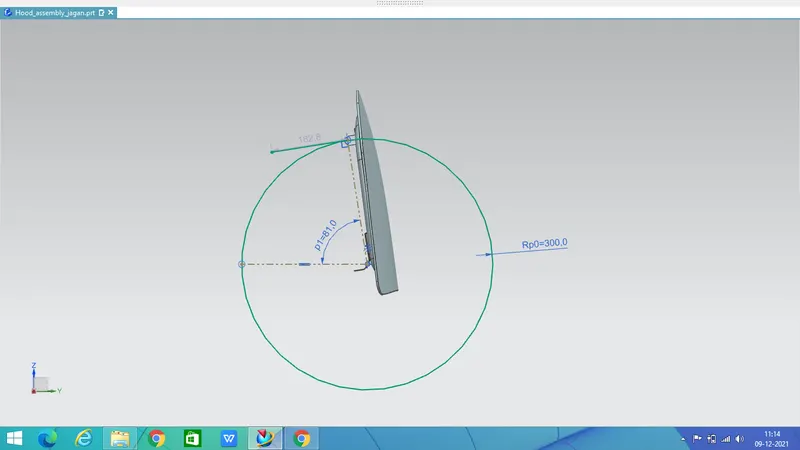
In order to assemble the stricker we use latch trajectory to ensure that stricker and lock latch are aligned perfectly at fixed point that is latch trajectory must be perpendicular to the hinge axis. To get this ceate a line using two hinge axis points and draw a circle at intersection of line. draw two construction lines in a angle, draw a tangent line at the intersection of construction lines and circle. Now at the stickert create a plane at center to sketch a line. using assembly constrains give toch constrains.
Latch trajectory:
While opening or closing the hood, the stricker must be prefectly aligned to the fixed point or sticker point. for that the latch trajectory must be perpendicular to the hinge axis.
Embosses:
The sheet metal embossing operation is commonly accompleshed with a cobination of heating and preasure on the sheet metal depending on what type of emboss is required.
Deep drawing:
Deep drawing is a manufecturing process that is used exclusively in the forming of sheet metal into a cap like strecture. pots and pans for cooking, containers, gas tank etc, are manufactured by sheet metal deep drawing.
Outer pannel:
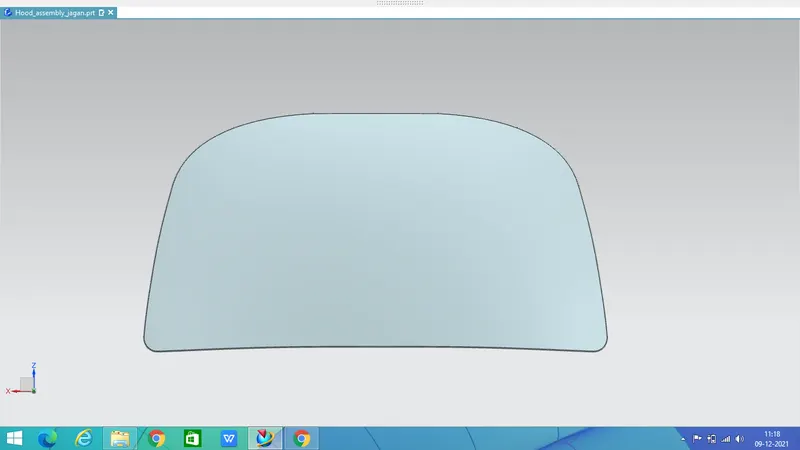
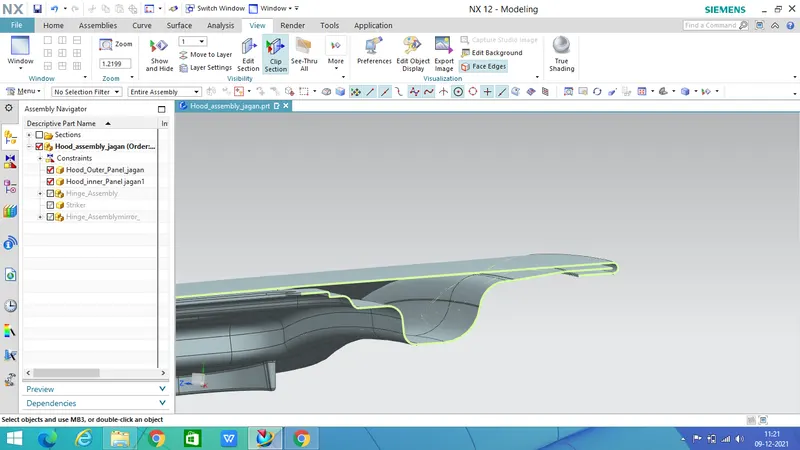
Outer pannel gives look to the car design so it is not welded or riveted to the inner pannel. we use hemmimg at the edges of the outer pannel and some sealent to it.
Hemming:
Hemming is a sheet metal forming process in which sheets are joined by bending to 180 degree. automotive body pannels and parts such as deck lid, trunk lid, doors,hoods etc, are formed by hemming process. Roller hemming is caried out incrementally with a hemming rollers. an industerial robot guides the hemming rollers and form the flange. Roller hemming process are 2 types pre hemming and final hemming process.
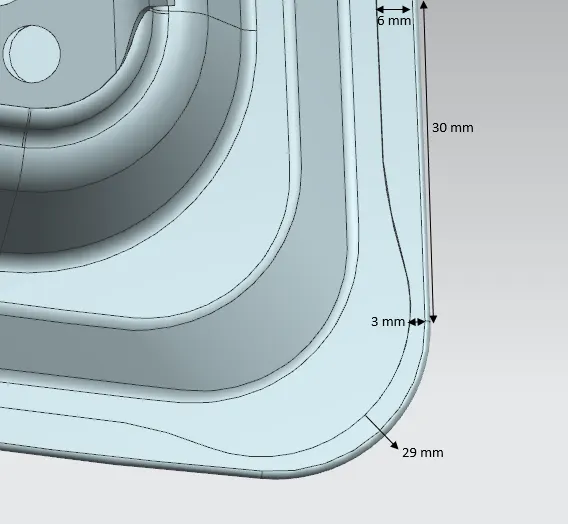
croner Relif:
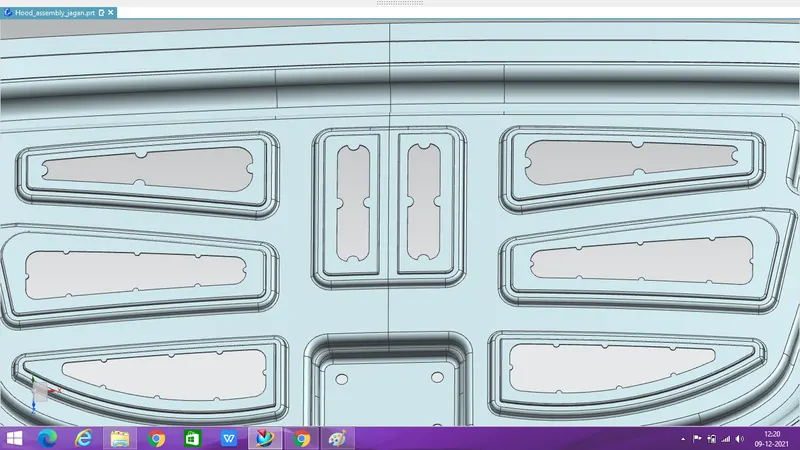
Mastic data:
Mastic is a adhesive or glue use to attach inner pannel and outer pannel of the hood. It is a rubber like material added at the mastic points on the inner pannel of the hood due heat treatment both inner pannel and outer pannel glued togather.
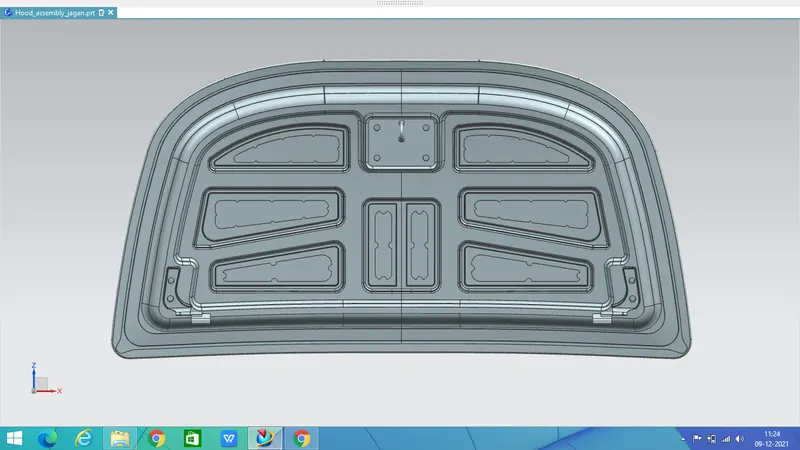
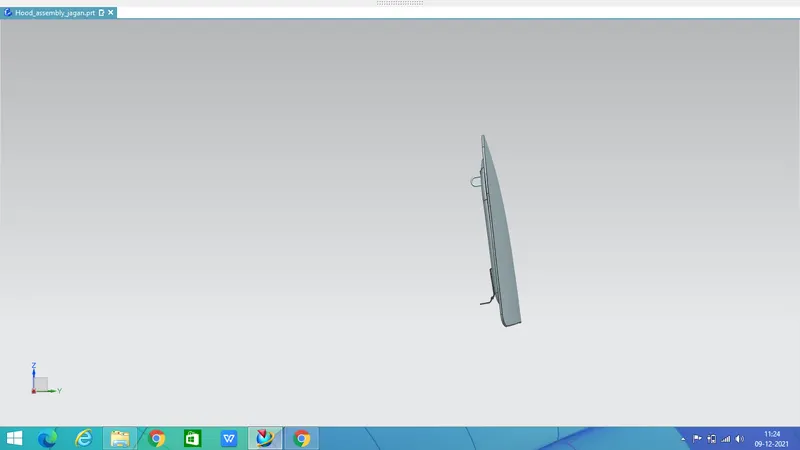
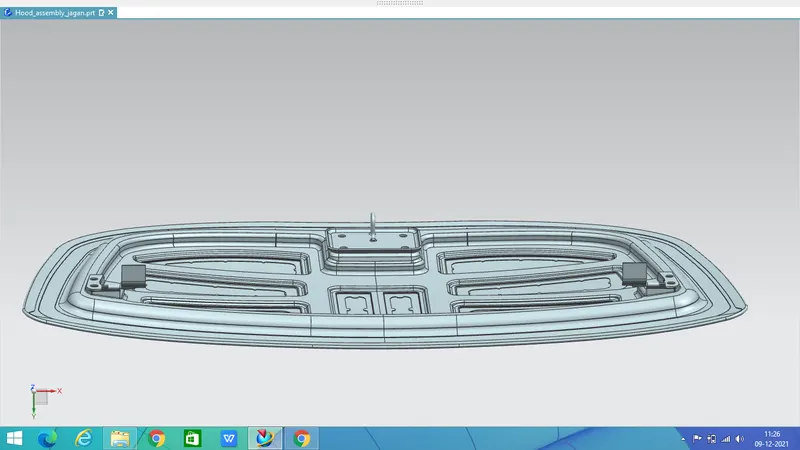
Final hood assembly:
Conclusion:
In this project i have learned new tools and undrestand design methodology of designing Hood in NX cad workbench.