Hood design-Week 2
HOOD DESIGN USING NX
INTRODUCTION
The automotive hood is a component which has the functions such as;
- To protect the engine and other components in the engine compartment from debre and weather.
- To protect pedestrians from a frontal crash.
- To give an asthetic beauty to the front of the vehicle.
- To give more aerodynamic flow of a air over the vehicle.
- It enables the access to the engine for maintenance and repair.
The software that i am going to used for the designing of hood is Siemens NX 10
DESIGN CONSIDERATIONS
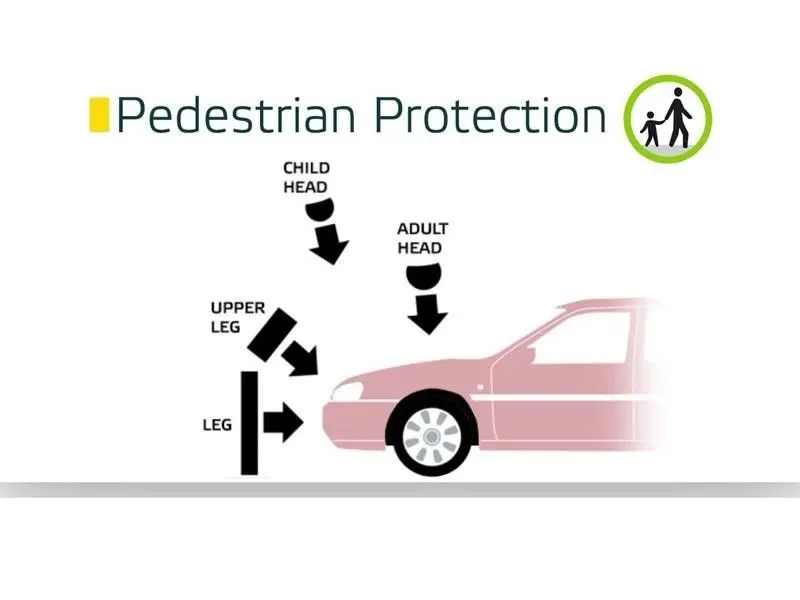
- Pedestrian Safety
Protecting the Head
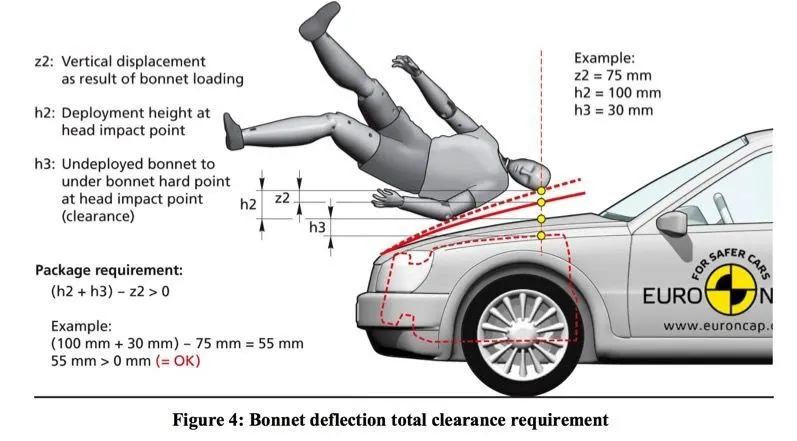
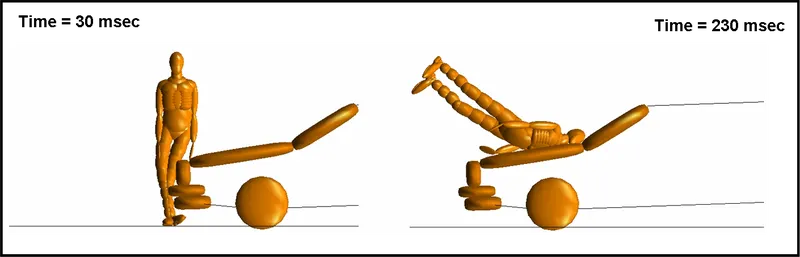
The hood of most vehicles is usually fabricated from sheet metal, which is a compliant energy absorbing structure which poses a comparatively small threat. Most serious head injuries occur when there is insufficient clearance between the hood and the stiff underlying engine components. A gap of approximately 10 cm is usually enough to allow the pedestrian’s head to have a controlled decelerationand a significantly reduced risk of death. Creating room under the hood is not always easy because usually there are other design constraints, such as aerodynamics and styling. In some regions of the hood it can be impossible. These include along the edges on which the hood is mounted and the cowl, where the hood meets the windshield. Engineers have attempted to overcome this problem by using deformable mounts, and by developing more ambitious solutions such as airbags that are activated during the crash and cover the stiff regions of the hood.
Protecting the Limb
Most limb injuries occur due to a direct blow from the bumper and the leading edge of the hood. This leads to contact fractures of the femure and the tibia/fibula and damage to the knees ligaments due to bending of the joint. Thus, attempts at reducing these injuries involve reducing the peak contact forces by making the bumper softer and increasing the contact area and by limiting the amount of knee bending by modifying the geometry of the front end of the car. Computer simulations and experiments with cadavers show that when cars have lower bumpers, the thigh and leg rotate together causing the knee to bend less and thus reducing the likelihood of ligament injuries. Deeper bumper profiles and structures under the bumper (such as the air dam) can also assist in limiting the rotation of the leg.
Design Parameters
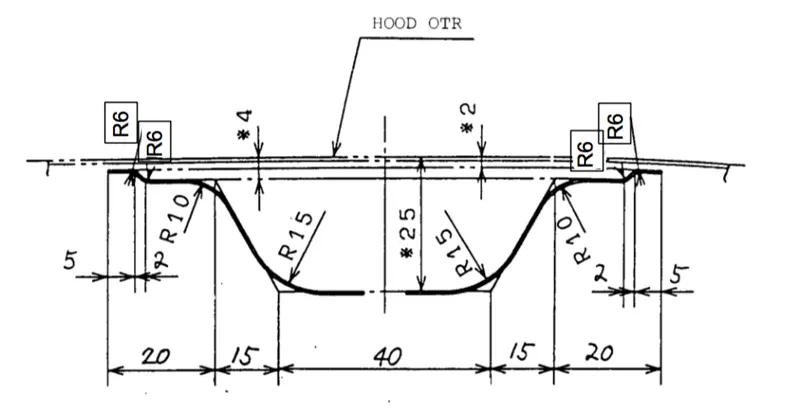
- Master Section
It is 2D cross sectional sketch of a reference hood design, from which we get the dimensions and emboss parameters and how the emboss is done.
- Thicknesses
Outer Panel = 0.75
Inner Panel = 0.75
Reinforcement = 1.5
- Manufacturing Processes
Blanking
Hemming
Piercing
Deep Drawing
Embossing
HOOD DESIGN
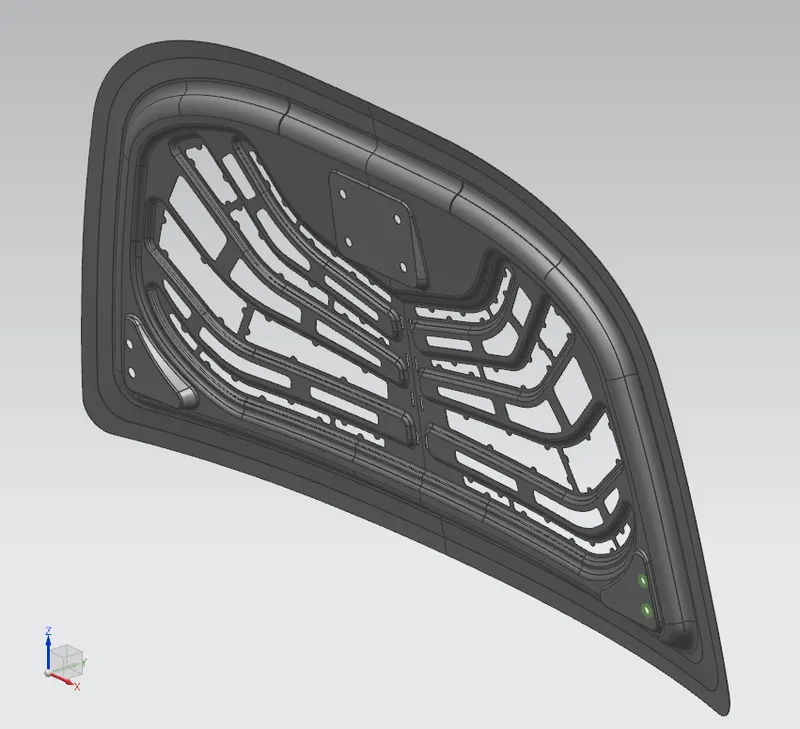
1. Inner Panel
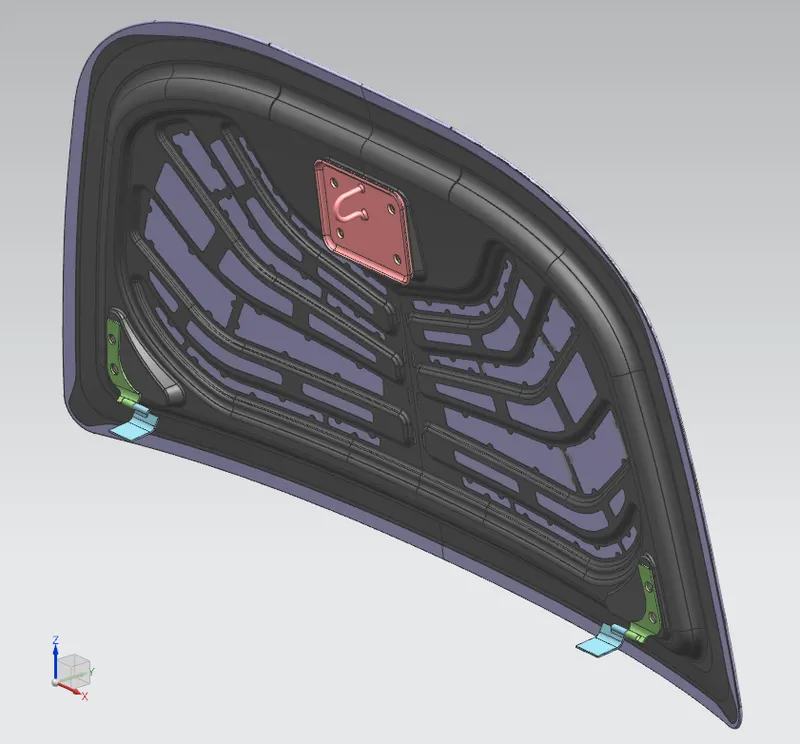
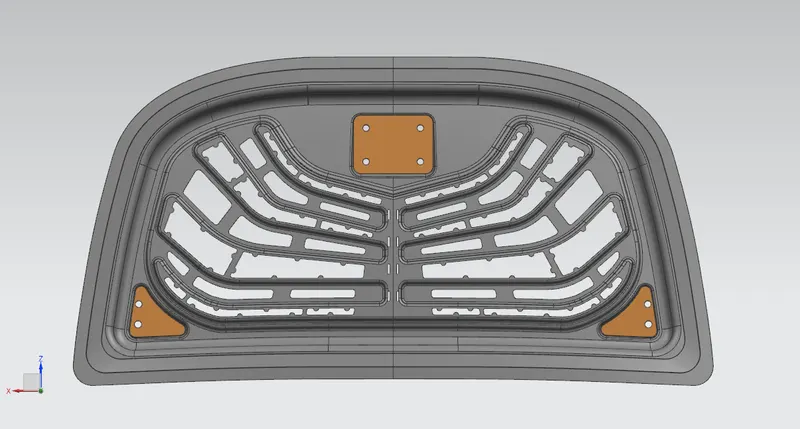
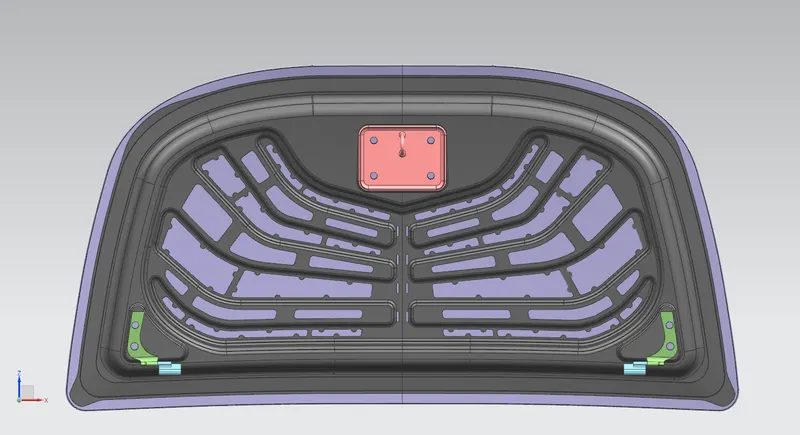
Inner panel is the part which give the hood it's structural integrity. While in a frontal collision the inner panel will direct the forces to the corners which prevent any injuries to the driver and the passengers. It also has structures to occupy the hinge assembly and the structure to hold the hood while opened. The reinforcements with in the design will ensure pedestrian safety while the head of the pedestrian hits the hood.
- Striker Emboss
Striker is the component which holds the hood in its place with the help of striker.
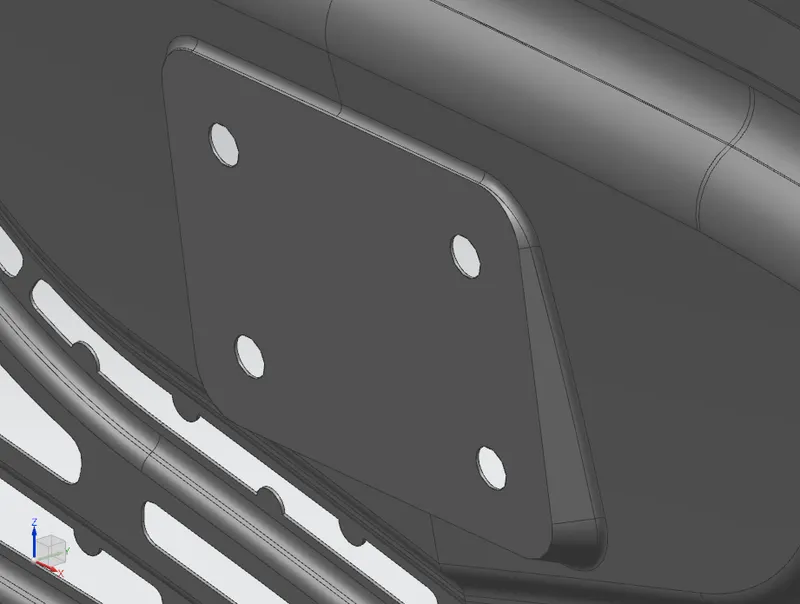
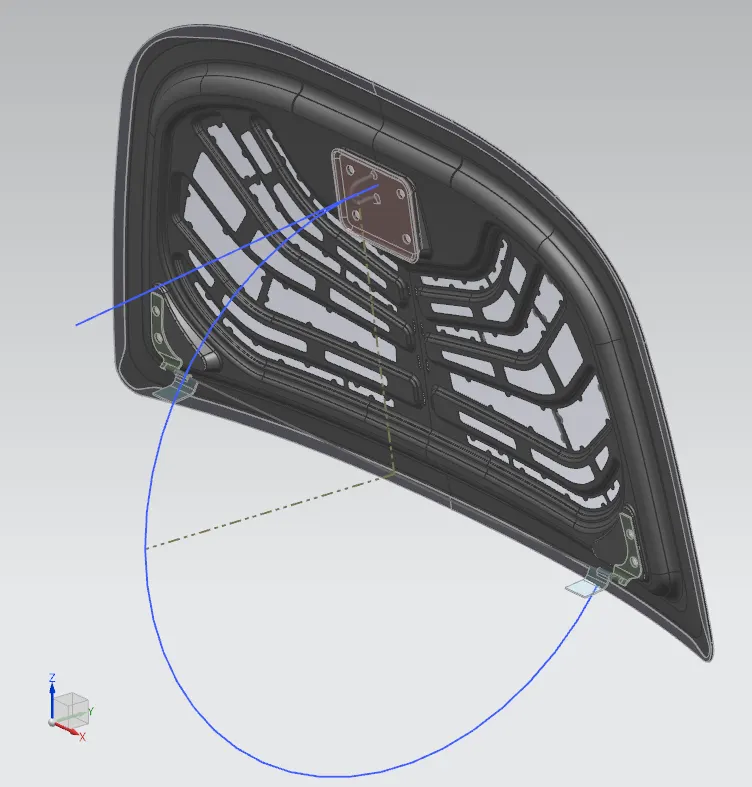
The positioning of the striker emboss is done with help of certain sketches. The plane of the striker emboss should be parallel with perpendicular radial line drawn from the hinge roational axis to a point on the striker emboss plane. For that first the hinge rotational axis is drawn and a circle is drawn with the axis as center. In that circle two raidal lines are drawn, on horizontal and other at an angle. Then a tangent line is drawn with respect to the angled radial line. A line line is also drawn at the centre of the striker perpendicularly. With the help of these two lines the striker and the inner panel is mated with each other thus resulting in a the movement of the striker in the circular trajectory.
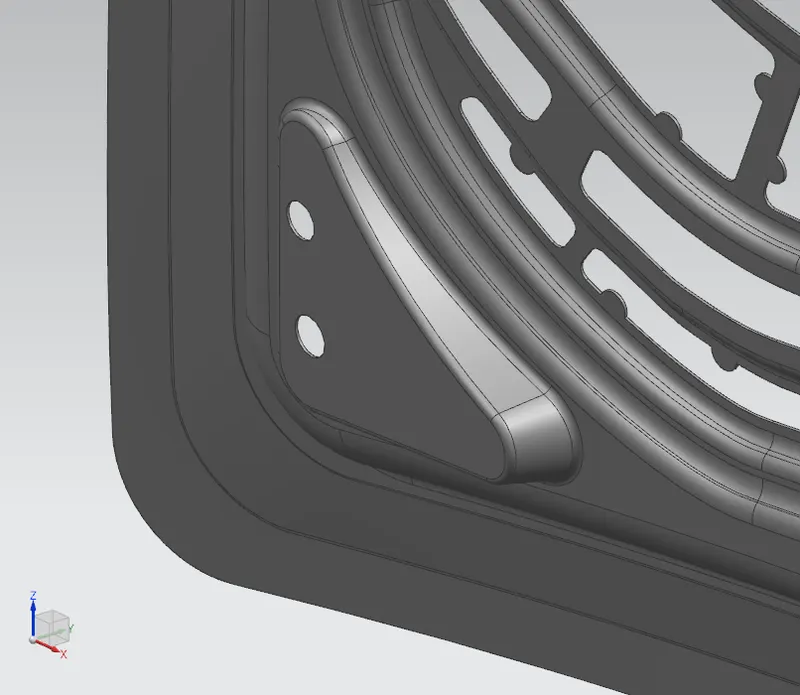
- Hinge Emboss
It is created to hold the hinge assembly component at a flat surface for the proper opening and closing of the hood.
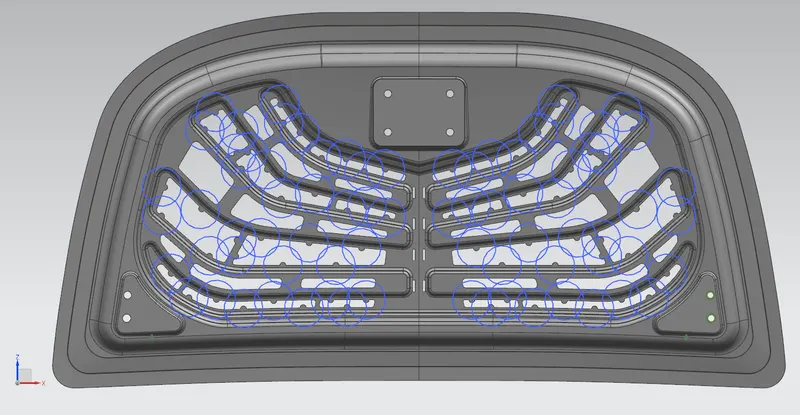
- Mastic Data
It is a purposefully spaced circular points were a mastic material is used in between inner panel and outer panel for the NVH(Noise, Vibration, Harshness) reduction.
2. Outer Panel
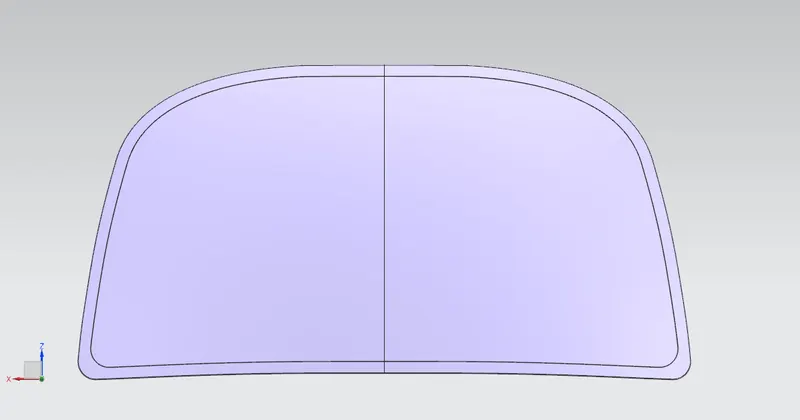
It is the component which will be viewed at the exterior of the hood. It gives aesthetic beauty to the vehicle and it is the surface which will be first in contact with head of the pedestrian while in a frontal crash while in a frontal pedestrian crash.
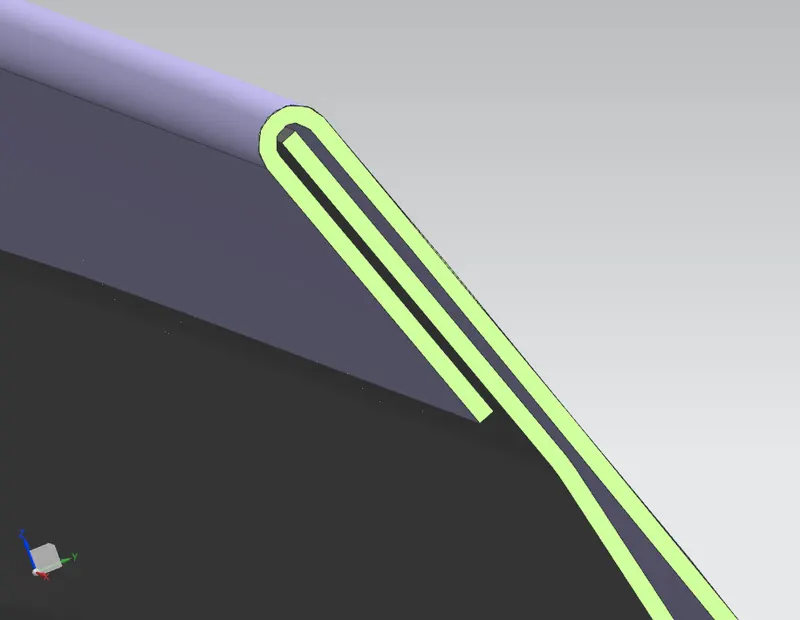
- Hemming
Hemming is a metalworking process that involves rolling the edge of sheet metal over and onto itself, essentially creating an area of two layers. During this process, the edge of sheet metal is folded over. The two newly formed layers then lie flush with each other. This process will avoid the use of any spot welding or reveting because those processes will not be asetheticaly pleasing to the eyes.
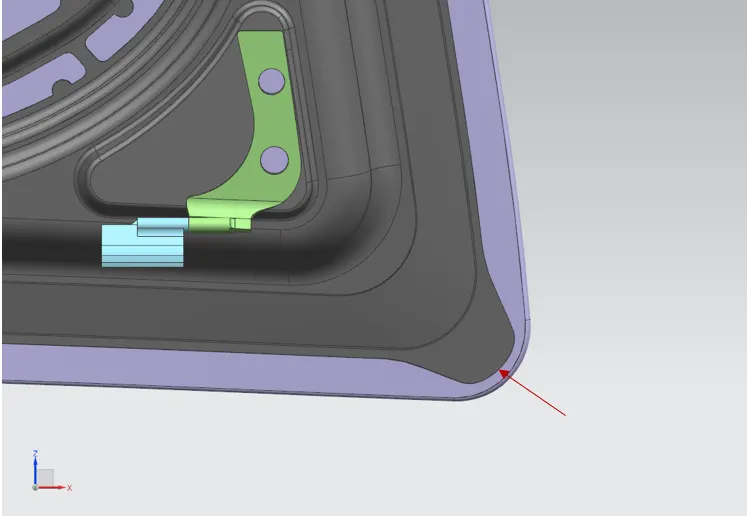
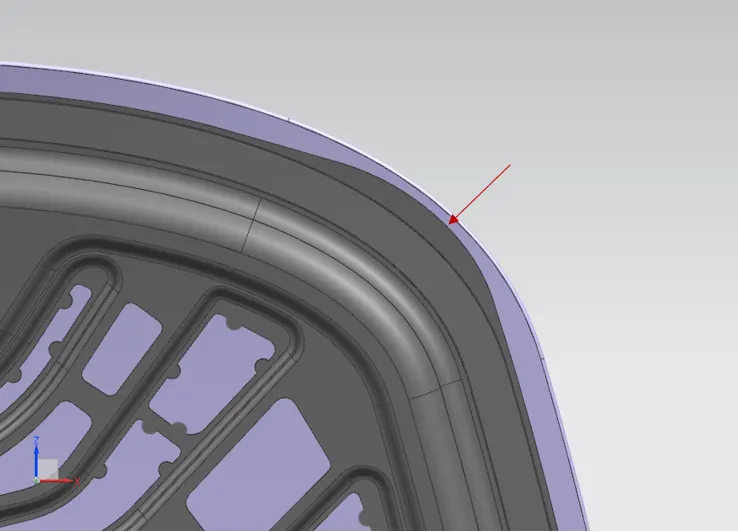
- Hemming Relief
This is a compulsary requirement for the proper hemming to occure. In the corners due to the concentration of material, there will be defects in the hemming or deformations. So to prevent this, intensionally material is removed uniformily around the inner section of the hem. In the hood it done on each bottom corner and the top corner.
3. Hinge Assembly
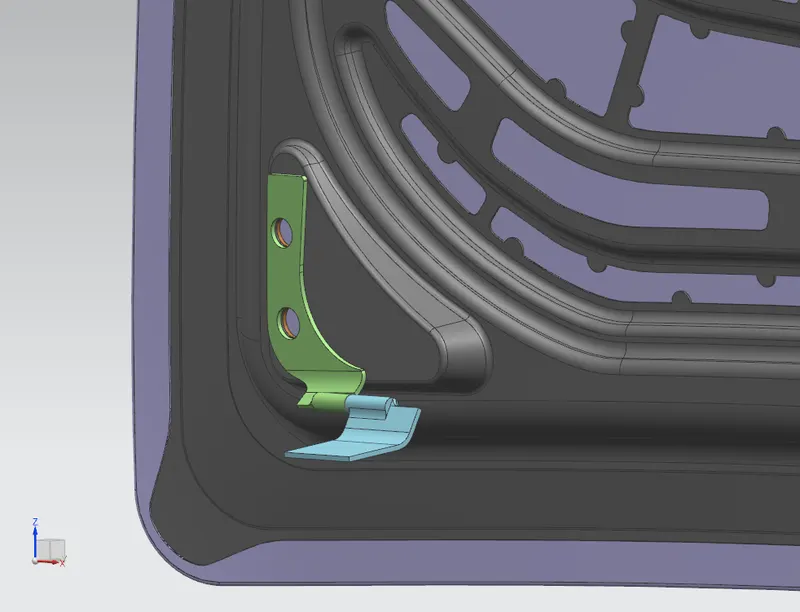
The hinge aseemby consist of two components, one which is connected to the engine compartment and the other which is connected to the inner panel, Both these components mates together at an axis.
4. Striker
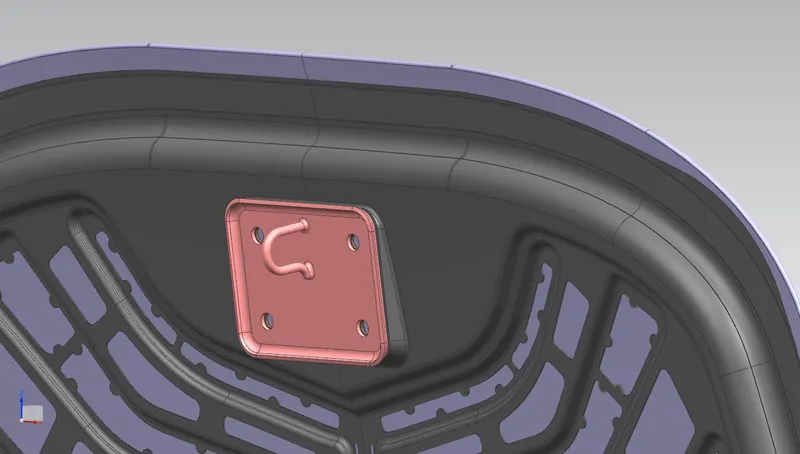
It is component which is fixed on to the inner panel. It's function is to lock with the latch in the engine compartment to constrain the hoods motion.
5. Reinforcements
The reinforcements are for the inner panel were there are reduction in strength because of attachment of other components with embosses. We add striker emboss reinforcemenet and hinge emboss reinforcement.
HOOD ASSEMBLY VIEWS
CONCLUSION
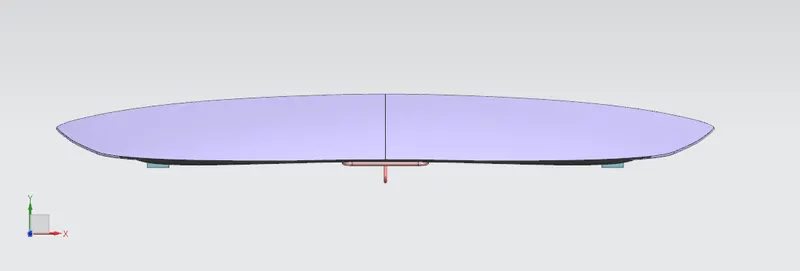
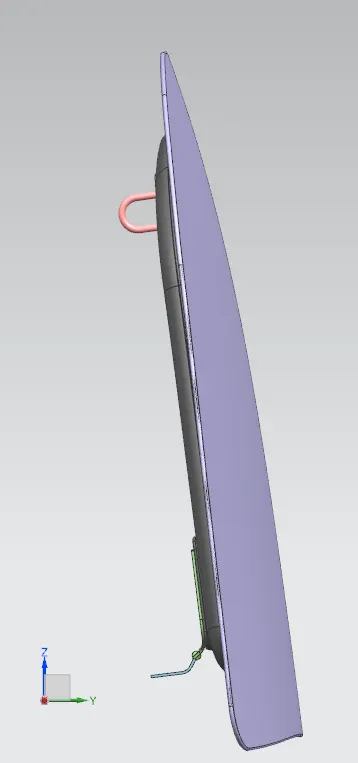
After understanding about the design conditions and requirements of an automotive hood, we have modelled the inner pannel with the hinge and striker embosses and assembeled the overall hood using Siemens NX 10 CAD software. Also gained basic knowledge on the software.