Hood design-Week 2
REPORT
ON
CAR HOOD
UNDER THE GUIDANCE
OF
SKILL LYNCE
Aim:-
- To creat a hood with outer panel and inner panel along with hinges and stricker on it.
- The Body in White (BIW)Inner panel and outer panel of the hood must be design and assembled with the hinge assembly . Latch and striker with thier reinforcements.
Description:-
- The Hood is an opening body panel that covers the engine in a front-engine vehicle in some cases like rear engine vehicle it acts as the cover of the boot space.
- The hood is also considered as another type of door in the vehicle as it consists of an outer panel and inner panel.
- The inner panel provide strength while the outer panel function as a metal cover.
- The hood also prat a major role in the aerodynamics of the car , thereby reeducing the drag and increase the downforce of the car.
- Hood also help to direct impact of the any head -on collisions away from the passenger cabin there -by reducing the damage to the passengers.
- the hood design in a such a way that less damage are caused to the pedestrains during accident.
DESIGNING:-
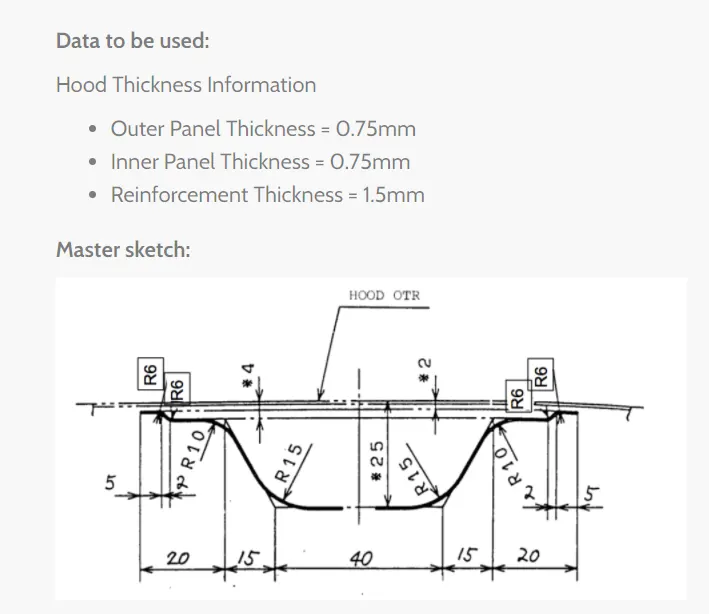
- There is a master sketch for every region which would be adoptable on different situation which gives us the dimensions of the part to be designed .The inner panel including all its embosses are designed by offsetting the outer panel.The maximum gap between the inner and outer panel in the mater sketch is 25mm,under which the engine compartment is situated. this specification is given taking into consideration pedestrain saftey .Process of deep drawing is used in manufacturing the inner panel and the design consideration are kept in the mind for the same.
DESIGN CONSIDERATION TO BE FOLLOWED:
- Passenger safety.
- pedestrain safety.
- Manufacturing Feasibility.
- Positioning the striker along the trajectory of the centre of hinge axis.
- joining techniques of inner and outer panel.
1.Passenger Safety:-
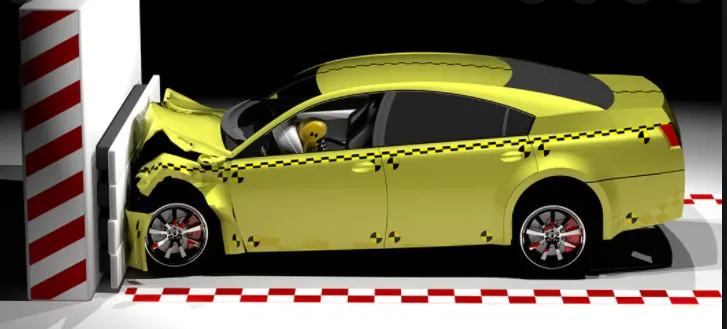
whenever the frontal crash takes place in a car the first part which will get affected will be hood .so , hood must be deisgn in such a way that it should not come off from the body of the car and must absorb the engergy as far as possible and diverting the force towards the side panel of the car so that the amount of force which is sent to the cabin is lesser since the force is lesser the passenger will experience less amount of force so that passenger safety is achieved .
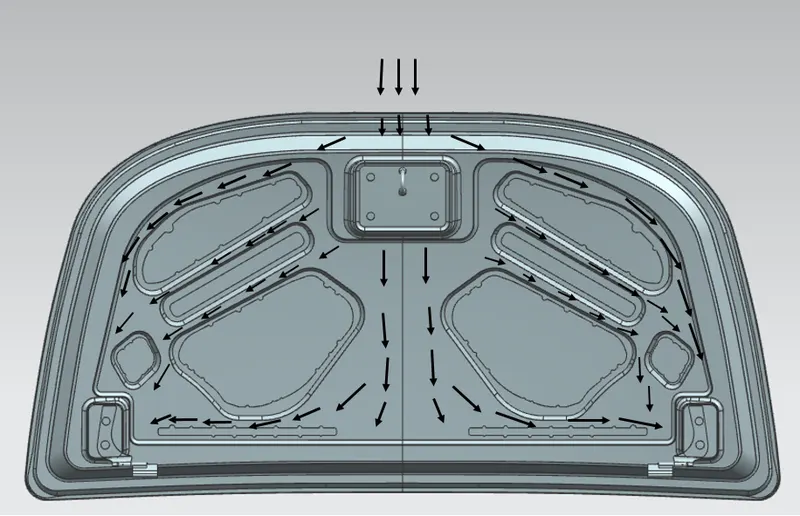
- Hood inner panel plays major role in dessipating the force away from the passengers. It is completely depending upon the emboss which is created in the inner panel .A typical emboss is shown below . the force will completely move along the direction shown above minimize the force exerted towards the cabin.
2.Pedestrain Safety:-
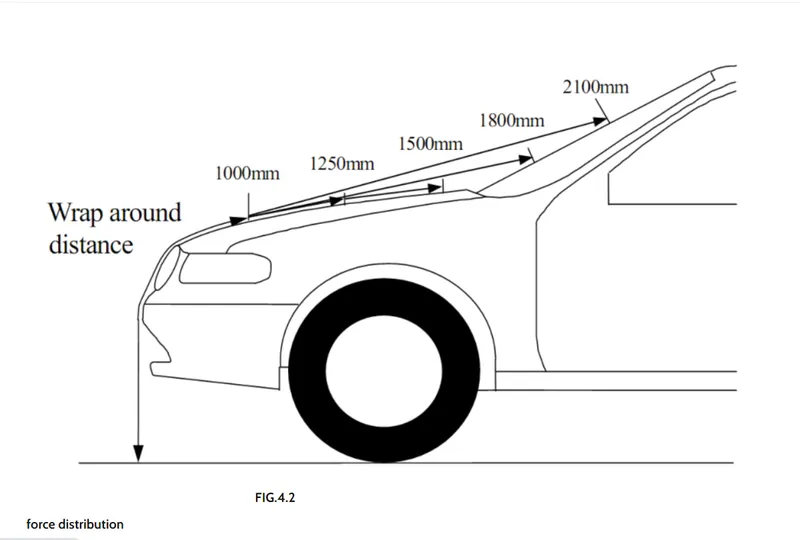
- The most important safety requirement to be considered while designing the bonnet is the pedestrain safety a frontal collisions.
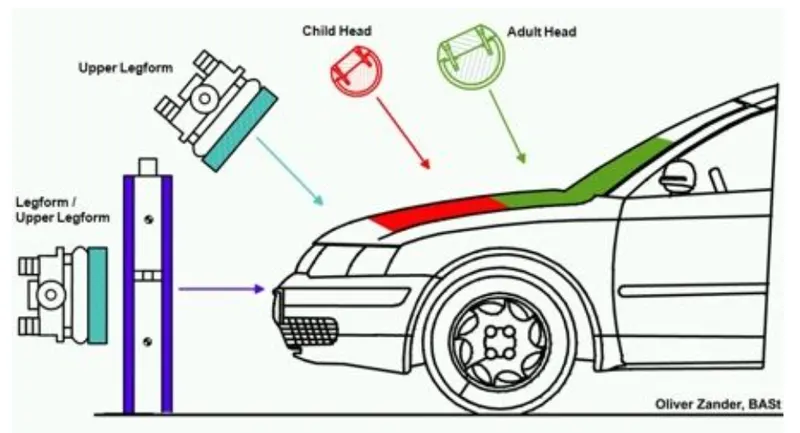
- The European new car assessment program(EURO NCAP) is a European car safety performance assessment program which has developed test specifications and rating system for accesssing pedestrain injuries during impacts with the frant of vehicles such tests include a series of tests using impactor designed to mimic collision at a speed of 40km/h . they describe a situation in which a pedestrain is situated laterally and a car first hits one of his legs . Test are conducted on the legs,upper leg and most importantly. the head ,as head trauma is most commonly responsible for casualities.
- Thus to avoid serve injuries to the head , the high imapct ara for adults and children is subjected to less thickness . Also, no reinforcement should be provided in that area as during the head collisions , the hood will absorb the head impact energy leading to the collapse of the hood and thus protecting the severe head injury.
- Another important criterion for the hood design is the protection of the occupants inside the car during the front collisions . the design of the hood should be in such a way that during the collisions , the force should travel in the upward direction through the embosses and directed towards the body of the car . thus protecting the occupants inside .
3.Manufacturing Feasiblity:-
- While designing a component a design engineer must make sure that the component can produced by any means of manufacturing methods with least amount of time , material, manpower . so that we can reduce the overall cost of car.
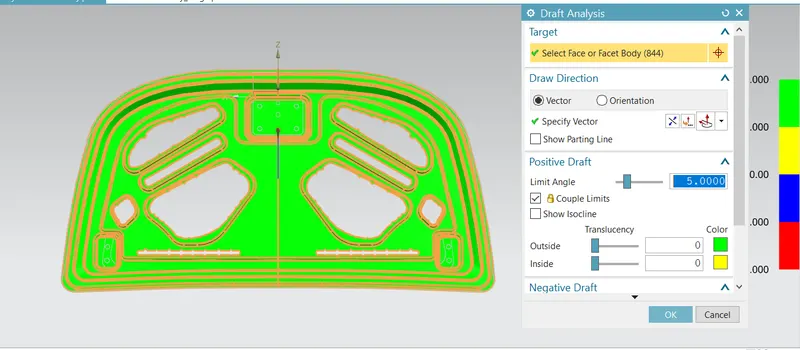
- when the hood is considered it is manufactured by deep drawing at most of the time deep drawing is the process where the single sheet of metal is place over a die which has the desired shape of the final output and sheet is pressed against it with a tool . for the tool to come out from the part usually pressing relief of 5 degree to 9 degree will be provided during modelling itself.
3.In NX draft analysis can be done after modelling so that we can verify whether the product is manufactured by pressing or not one side of the surface is highlighted by green and other side by red colour means that the model can be manufactured . result of draft analysis is shown in figure below.
4.Positioning the striker along the trajectory of centre of hinge axis:
- The striker needs to be place on the trajectory of the centre point of the hinge axis to ensure that it fix perfectly on the latch if not locking will not be smooth and affects the comfort and also it will creat NVH problem.
- the striker is aligned using following steps:
1.Drawing th line along the axis of the hinge.
2.Creating the point on the mid-point of the line
3.Drawing the circle from the mid-point of the latch where the striker will be mounted .
4.Drawing the line from center point to the mid-point of the striker rod.
5.Alien the lines end point and the mid-point of the striker to the circle .
6.Angle need to aligned so that the angle of the striker is perpendicular to the line drawn from mid-point of the striker .
5.Joining Techniques of inner and outer panel:-
- Inner panel and outer panel of the hood should be joined rigidly without distribution the styling surfce of hood which is the outer panel.here we use special joining method known as hemming and mastics.
- Hemming:-Hemming is the process of wrapping the flange of the outer panel to the flange of the inner panel so that they are fitting rigidly.After hemming process , the sealant were applied along the edge of the flange so that water tightness is achieved. the below image shown the cross - section of the inner and outer panel joined by the hemming process.
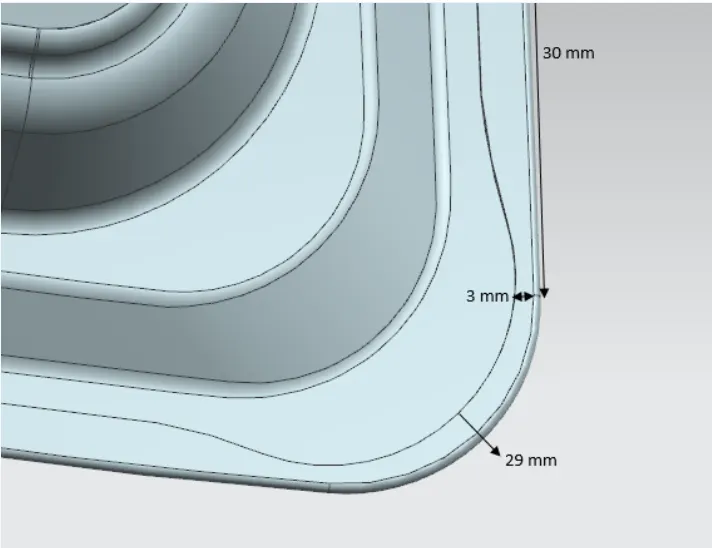
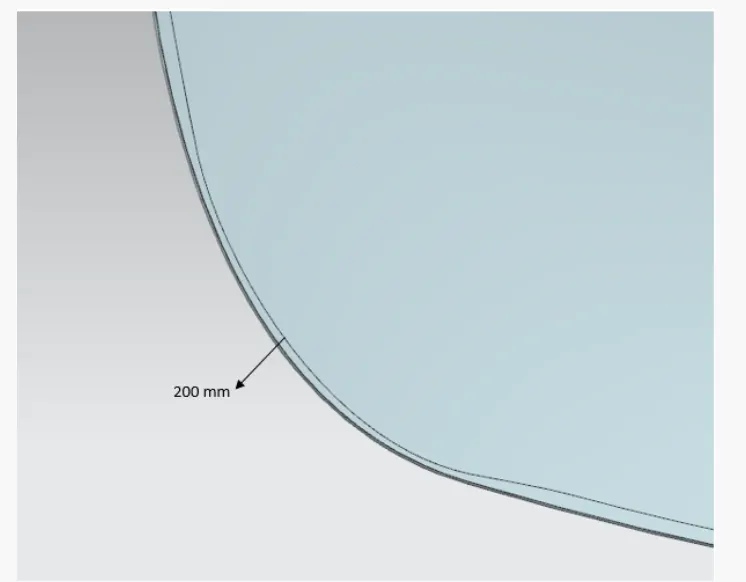
Usually , the reliefs were provided at the corner of the hemming flange to avoid the stress developed while hemming .stress developed during the hemming process .
Reinforcement:-
which is ading an extra material to increase the strength of the material(or) to compensate the strength of material on the particular region.
The area that i am going to attach my hinge assembly and striker those will lose thier strength to compensate i am goining attach reinforcement of 1.5mm thickness relevant pics are given below.
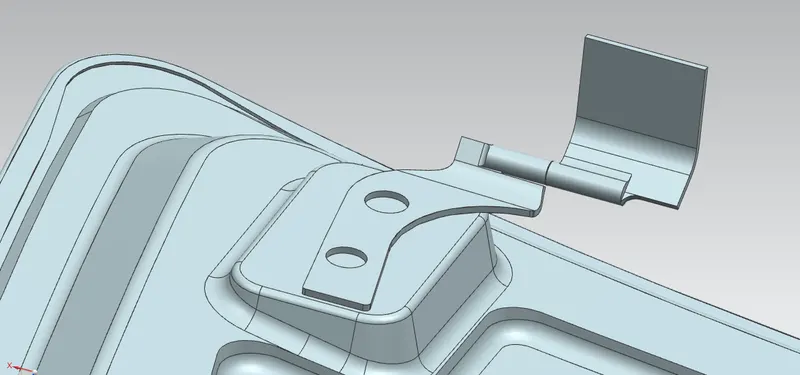
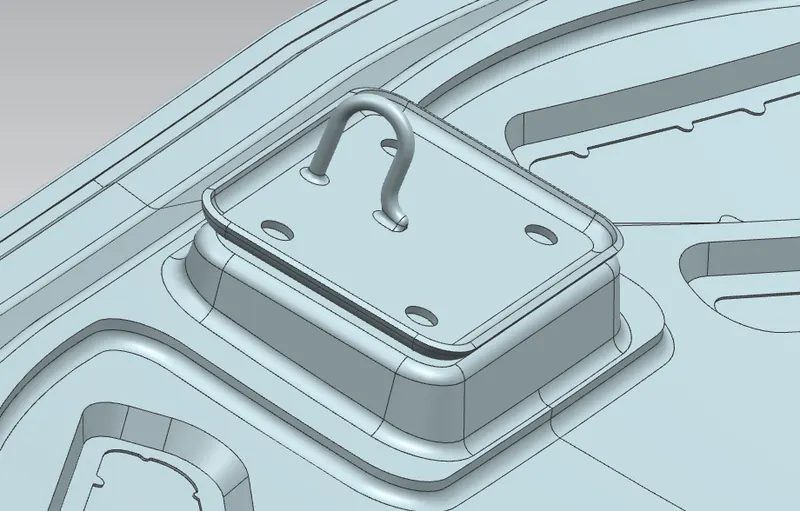
HINGE ASSY. ATTACHEMENT STRIKER ATTACHMENT
Mastic Point:-
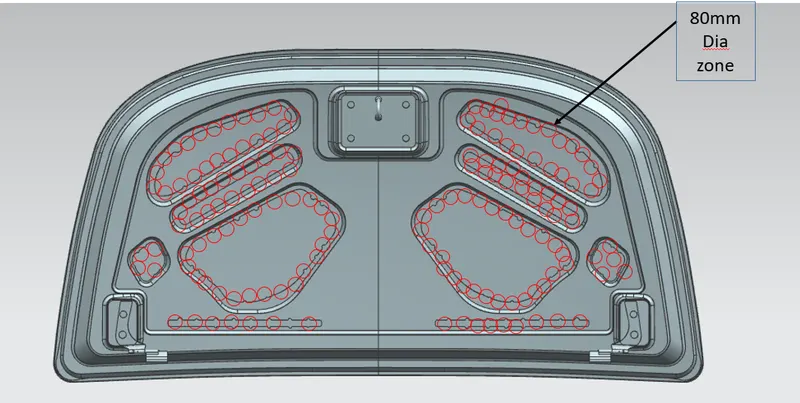
mastic point were the gluing point where the paste is applied between the inner and outer panel to join the panel. each mastic point will stiffness up to 80mm.surrounding so mastic to be added in such a way that it covers surface of the hood . if the gap is less than 5MM between the outer and inner panel without mastic point it will cause vibration resulting in NVH problem . above image shown the mastic point where the paste is applied and it will get hardened in further process resulting in a rigid joint .
Section Modulus
Intro:-
section modulus is geometric for a given cross-section used in the design of beam and flexural memeber by finding the section modulus we can find the resistance to remain unchanged when the force is applying to the object or substances.
S=I/Y
S-section modulus
I-the moment of inertia
Y-The distance between the neutral axis and the end of the object .
Moment of inertia
here we are considering the area moment of insertia also known as the second moment of inertia in a sectional mechanical application ,usually involving a section of any structure , the shape of the object and the plane of section will give us the 2nd part it called the section .
when he area of the section increases the moment of inertia also inrease .so the final result which is the section modulus also increases.
so we could say section modulus is proportional to the moment of inertia .
Objective :-To find a sectin modulus of the hood ,and optimizing the section modulus value using NX_CAD.
Section modulus of hood 1
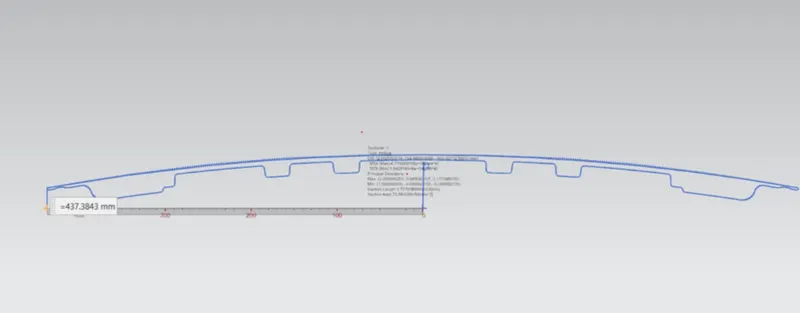
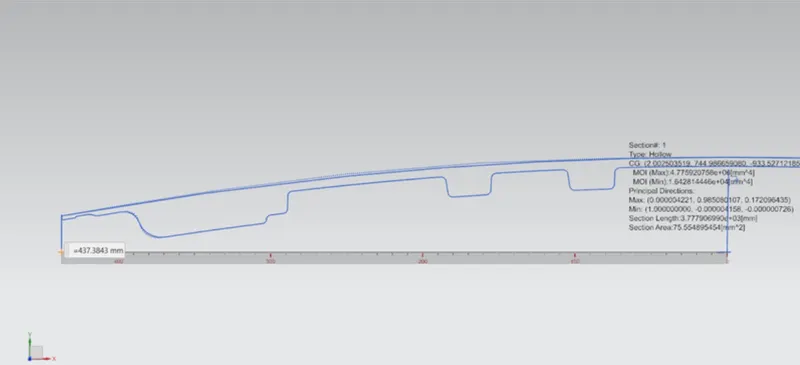
calculation
S=I/Y
where 1.642814e4 mm4
=1.642814e4/437.384
S=37.559mm3-this is the section value for the hood section .
we have to consider the minimum value because from the point only the substances starts to change from its original shape .
optimized section modulus -2
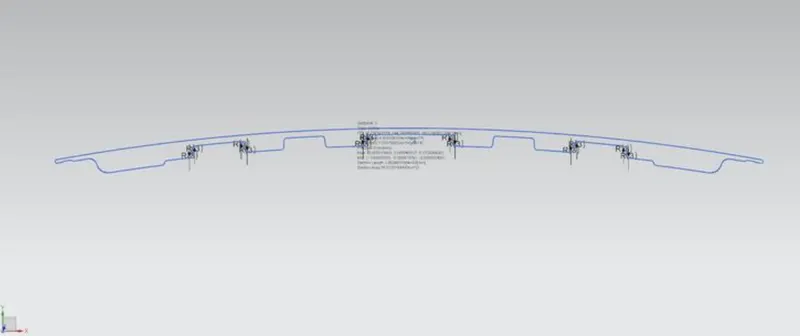
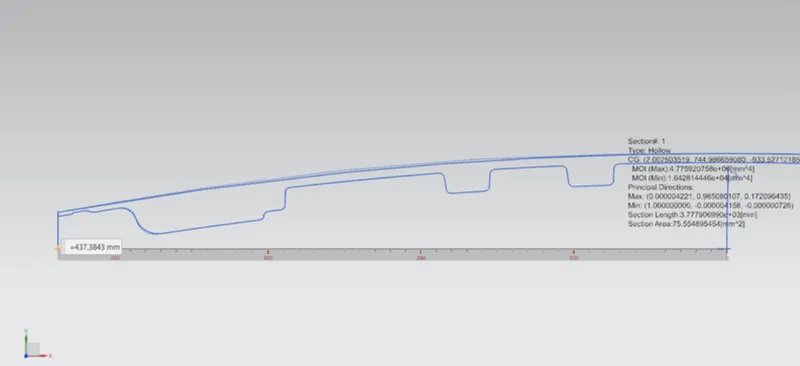
calculation:-
S=I/Y
MOImin=1.755756e4mm4,y=437.3843mm
=1.755756e4/437.3843
S=40.1421mm3
how optimization accomplished
#i have increased the distsnce between outer and inner panel by 2MM compared to the existing one . and also i have reduced the cutout area , so the total sectional area increased
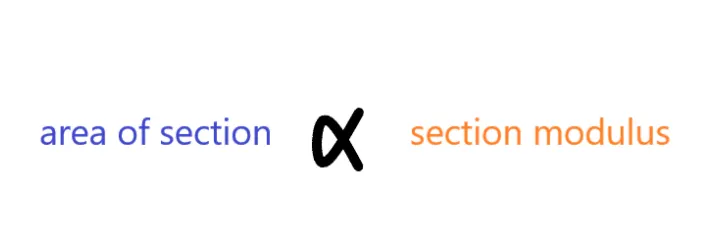
difference =S=40.1421-37.559=2.5822mm3
RESULT
section modulus was succesfully determined and improvised by increasing the section area .
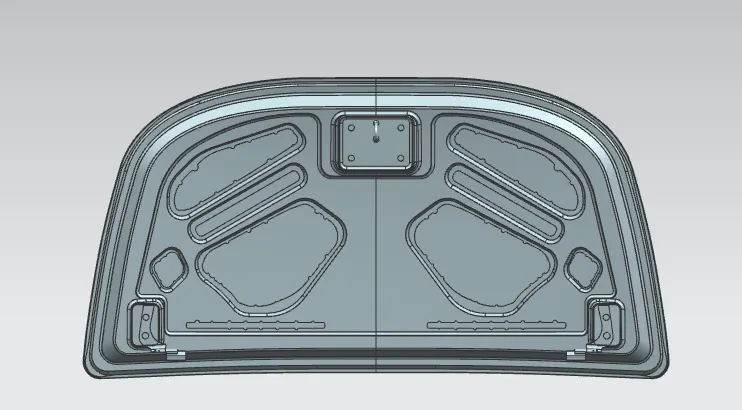
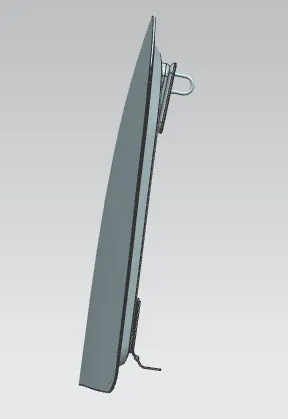
HOOD VIEWS
front view
side view
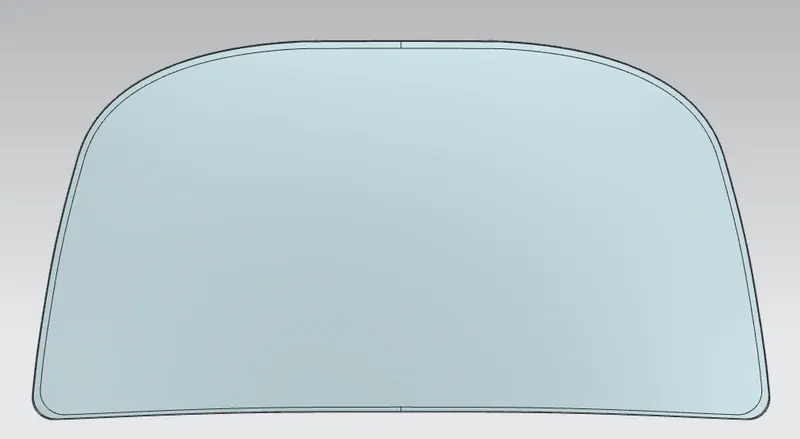
CONCLUSION:-In this challenge we learn how we design the hood with the help of master sketch . and also learn hood assembly with the inner panel and outer panel and hinge assembly and striker .and also learn the engineering technics of hood design.
please find my google drive link for hood assembly
https://drive.google.com/drive/folders/13L9GCxBxTAE1pZ3EXaNFr2KoT_r8NXZk?usp=sharing