Hood design-Week 2
Aim - To Design the inner panel of a hood with and provide necessary reinforcement to stiffen the part.
Theory - A Hood is a cover used to protect the engine Assembly from any external damage. Also, it is an important feature for pedestrian safety guidelines. Steal and aluminium are some of the common material used to manufacture the component but in high-end sports vehicle, high-quality plastic materials are also used.
The hood consists of 2 parts an outer and an inner panel. The Outer panel is for aesthetics purpose. while The inner panel provides support and required strength for passenger safety.
The inner part is joined by the process of hemming to the outer part. The hood panel should be designed in such a way that it can distribute the force of collision towards the outside of the body and not inside to reduce damage inside the passenger cabin.
Design Considerations -
- Pedestrian safety is an important factor while designing any kind of vehicle
- EURO NCAP is a European body which performs tests and defines standards for automotive developments.
- Tests are conducted for the lower torso and head of a human body.
- head trauma is a major cause for Casualty
- To avoid head injuries high impact areas should have less thickness and no reinforcement so that the hood panel can absorb the shock better and not damage the head.
- The hood should also be able to dissipate the shock towards the frame of the body of the car during a direct collision for passenger safety guidelines.
Design of inner panel -
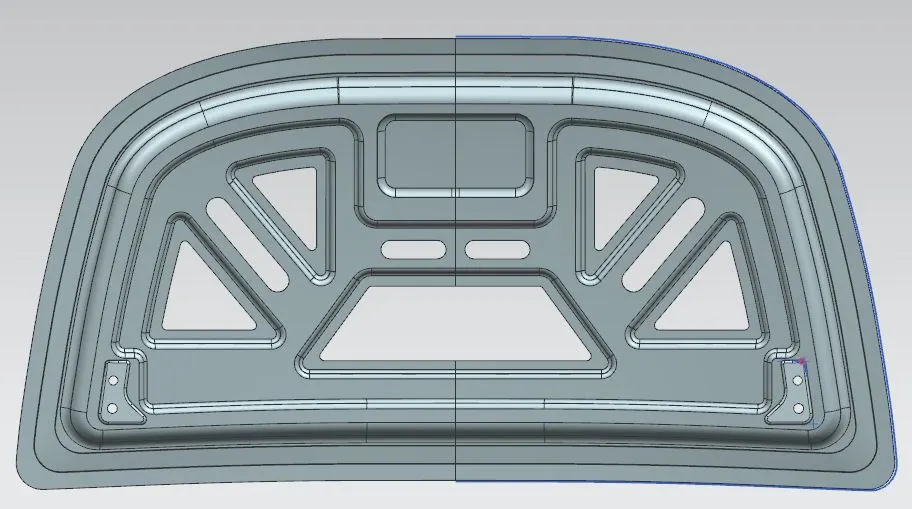
The design of the inner panel is based on the master section above
- The basic design of the Inner panel is based on the master-section. Master section is geometrical data which is common at any given section of the part.
- after creating a master section embossed are added to the part to provide strength
- necessary mounting points are provided and reinforcement are added.
- 0.75 mm thickness is provided to the part
Design of Outer panel -
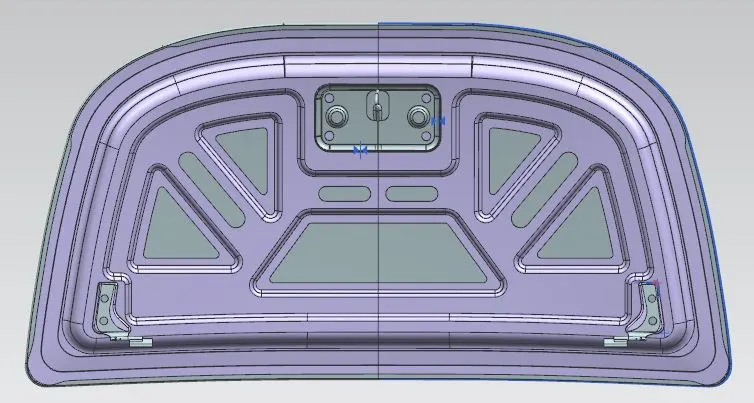
- The outer panel is a cosmetic part but it has an important purpose of protecting the engine part assembly from environmental damages
- hemming is used to combine the inner and outer panel
- front and end relief is provided during hemming to reduce stress concentration at the corner
- 0.75 mm thickness is provided
- the outer panel is a styling part so it is generally developed inside OEM's facility
Mastic Data & Stricker Mechanism -
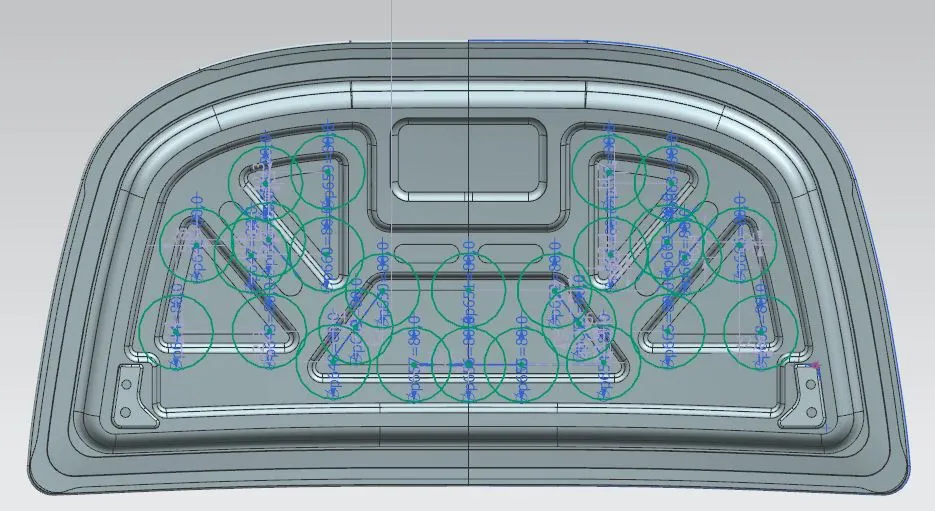
- Mastic Sealant is a rubber adhesive which is used to join the inner and outer panel of a hood.
- Mastics increases the strength significantly of the local region of around 80 mm in diameter.
- the positioning of the sealant is very important from the strengthening point of view.
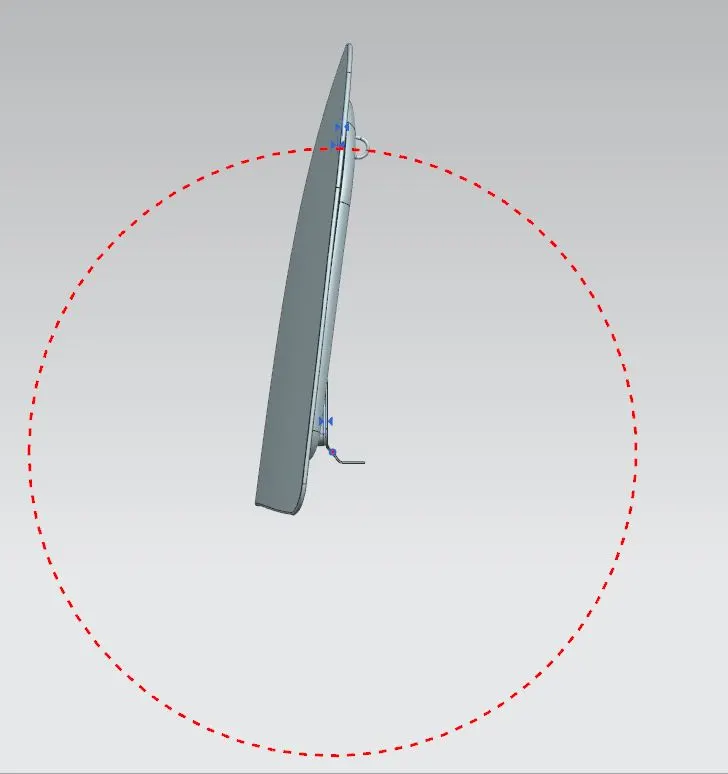
- we can easily trace the trajectory of the striker by simple drawing a circular profile which is tangent to the striker.
- This will help in positioning the lock and striker mechanism at the proper location.