Hood design-Week 2
Aim – To design the hood of the car
Introduction
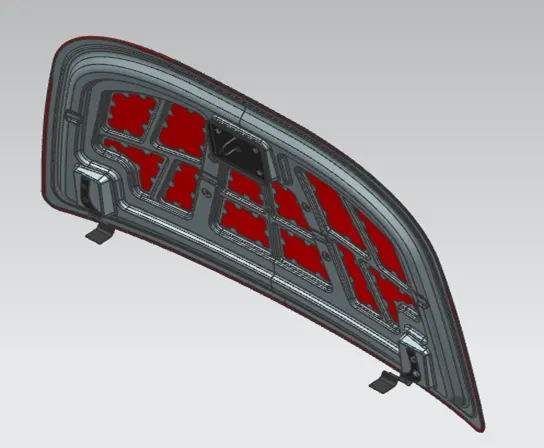
Bonnet Designed using Siemens NX software
The hood or bonnet is the hinged cover over the engine of motor vehicles. Hoods can open to allow access to the engine compartment
Hoods consist of outer panel and inner panel
outer panel
Adds aesthetic value to the car
It is made aerodynamic in shape to reduce the drag from the air, and it is used to cover car engine, radiator, and many other parts, therefore bonnet must be designed in such a way that all the maintenance parts should be ease of access and it should give a minimum impact of external disturbance on the engine.
Inner panel
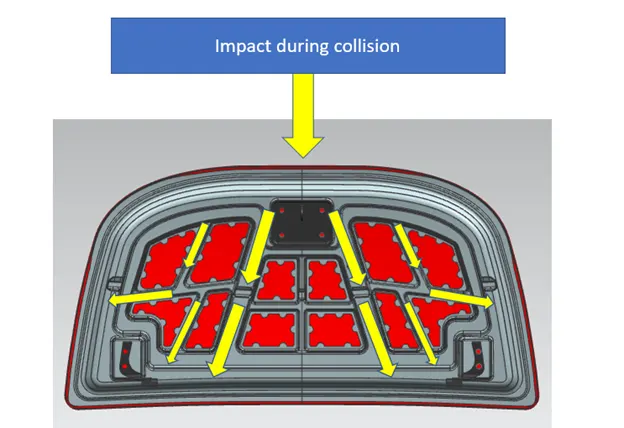
It mainly helps the force to deviate towards the sides due to any accident from the front.
There are many hollow regions provided in the inner panel which is far away from the engine components for safety of pedestrians.
EURO NCAP
The European New Car Assessment Programme (Euro NCAP) is a European voluntary car safety performance assessment programme (i.e., a New Car Assessment Program) based in Leuven (Belgium) formed in 1996, with the first results released in February 1997. Their slogan is "For Safer Cars".
Wrap Around Distance
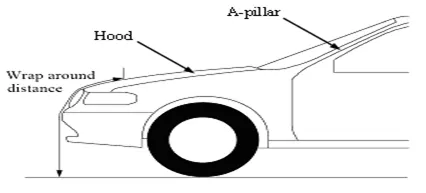
When a car crashes on the pedestrian, the whole human body wraps around the front shape of the car and the head impacts on the bonnet or the windscreen. The distance on which the head impacts on the car from the ground is called as the Wrap Around Distance (WAD). To be specific the Wrap Around Distance is a measurement of distance from the ground to the head impact zone over the outer surface of the car. The wrap around distance is measured longitudinally in the centre of the vehicle from the ground.
Zones
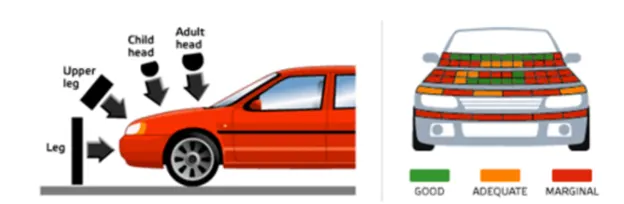
During the crash analysis, based on the Wrap Around Distance (WAD), two test areas will be created namely Child head impact zone and the adult head impact zone. The child head impact zone is between 1000 to 1700 mm WAD and the adult head impact zone ranges between 1700 to 2100 mm WAD.
Two types of hoods
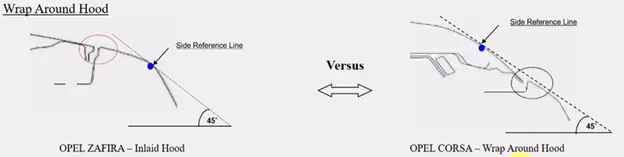
1) Inlaid hood: If the side reference line which is at 45 degrees from the ground lies on the fender, then it is called inlaid.
2) Wrap Around Hood: If the side reference line which is at 45 degrees from the ground lies on the Hood itself then it is called as the wrap around hood. This type of hood is better safety wise as it will have more green zone which will help to achieve higher Euro NCAP ratings. This is the most used Hood type these days.
Components in the hood and operations during Manufacturing
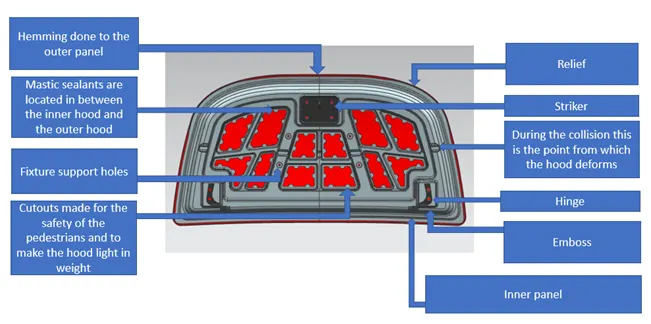
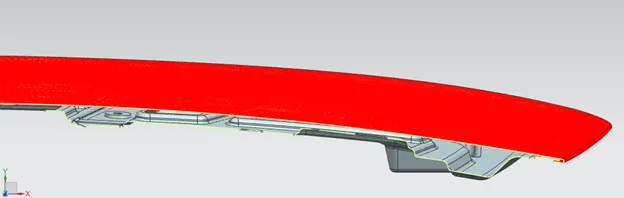
Sectional veiw
- Support Rod
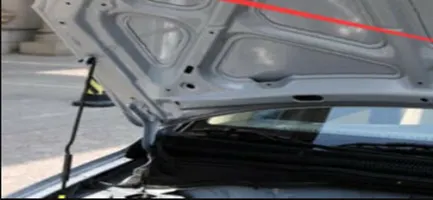
Support rod is an apparatus which can safely keep an engine hood in an open state. It Is the basic and most used support for the hood where the hood is not long as that of the high-performance cars. The support rod is slightly bent to add strength & rigidity to the rod which can hold the hood effectively. he maximum distance a rod can be bent is less than 35mm. And the hood support rod should be fixed at the opposite end of the battery compartment enabling the ease of operation near the battery area. Gromets are used to fix the support rod.
- Gas stays
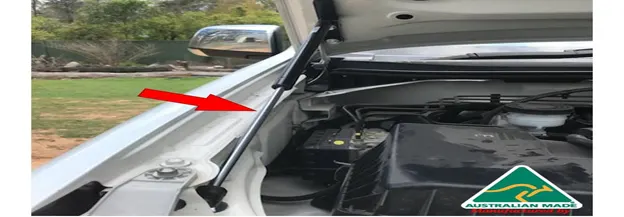
These types of hood support are used in high performance cars where the weight of the bonnet is higher. It adds weight to the car and makes it expensive as more components are used.
- Reinforcements
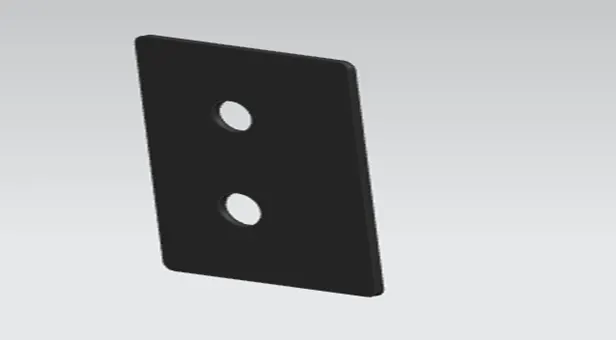
Reinforcement of 1.5 mm thickness
In hood to accommodate Latch and striker and hinges we must remove some material which will result in loss of strength of the material locally. Hence to improve strength locally we provide these reinforcements. The reinforcements provided in the latch and striker area is called Latch and Striker Reinforcements & the reinforcements provided in the Hinge area is called Hinge Reinforcements
- Mastic sealant
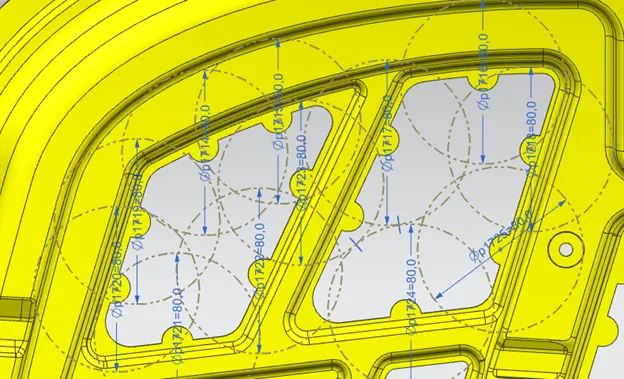
Mastic Sealant effective are is 80mm
It is used between the inner and outer panel. Mastic Sealants are used to Join Inner and outer Panel as welding will create a bad appearance on the outer surface of the hood. Hemming and Mastic sealant are therefore preferred. Mastic Sealant effective area is up to 80 mm
- Hinge
It consists of hinge hood part which is fixed to the hood and hinge engine part which is fixed the engine compartment. The Hinges helps to open and close the hood as it is fixed and rotates at its axis.
- Latch
It is a fastener which helps to keep the hood in the locked position and don’t let it open until required by the driver.
- Outer panel
The outer panel is called the skin of the vehicle which is designed by the styling team which adds the aesthetic value of the car.
- Inner panel
It mainly helps the force to deviate towards the sides due to any accident from the front. There are many hollow regions provided in the inner panel which is far away from the engine components for safety of pedestrians.
- Stiffener pads
It is a Hard Sponge type between outer and inner panel to reduce NVH (Noise, Vibration, Harshness).
Operation during Manufacturing
Embossing
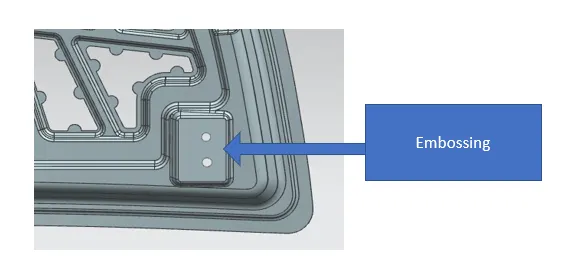
Sheet metal embossing is a stamping process for producing raised or sunken designs. This process can be made by means of matched male and female roller dies or by-passing sheet or a strip of metal between rolls of the desired pattern. To provide strength to the inner panel and to distribute the forces produced during the to ensure the safety of the passengers. The forces are directed outwards through the embossing path.
Hemming
It is a forming operation in which the edges of the sheet are folded over another part to achieve a tight fit.
Reliefs
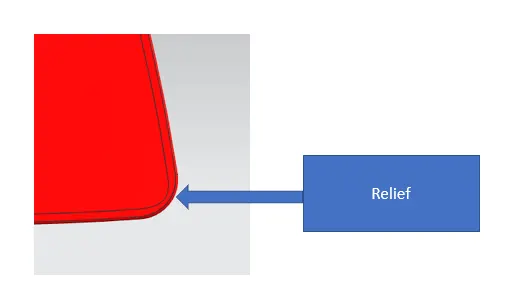
Are provided at the corners in order prevent the overlapping surfaces.
Types of hemming
1) In conventional die hemming, the flange is folded over the entire length with a hemming tool.
- Roll hemming It is the roll hemming process that is used for automotive sheet metals. Roll hemming is carried out incrementally with a hemming roller. An industrial robot guides the hemming roller and forms the flange.
Punching
Sheet metal punching is a cutting process in which material is removed from a piece of sheet metal to provide the cut outs.
Deep Drawing
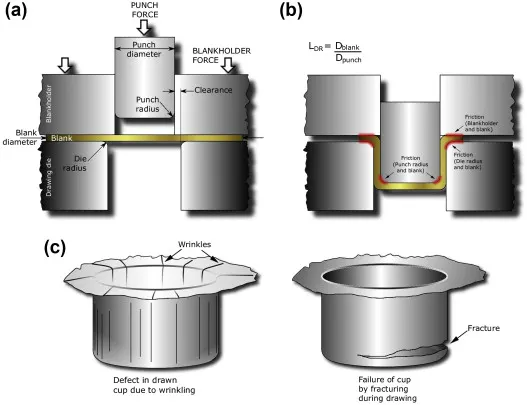
Deep drawing is sheet metal forming process in which a sheet metal blank is radially drawn into a forming die by the mechanical action of a punch. It is thus a shape transformation process with material retention. The process is considered "deep" drawing when the depth of the drawn part exceeds its diameter. Deep drawing is a sheet metal forming process in which a sheet metal blank is radially drawn into a forming die by the mechanical action of a punch. It is thus a shape transformation process with material retention. The process is considered "deep" drawing when the depth of the drawn part exceeds its diameter.
Procedure to design the hood
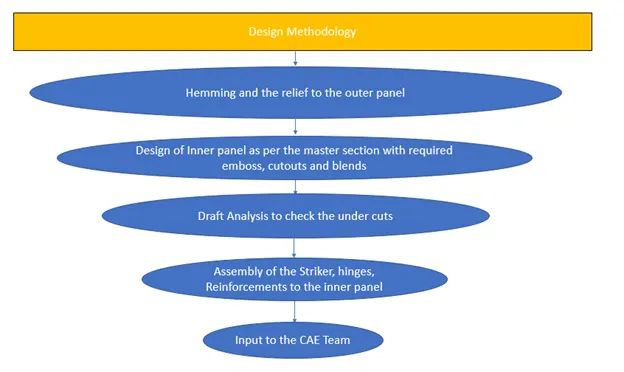
1)Design of the outer panel
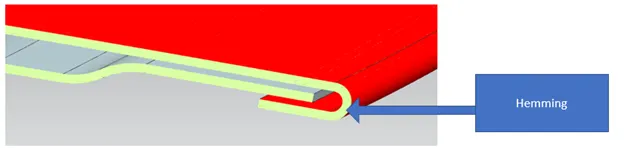
Hemming and the reliefs are provided to the outer panel
2)Design of the inner panel
Master section
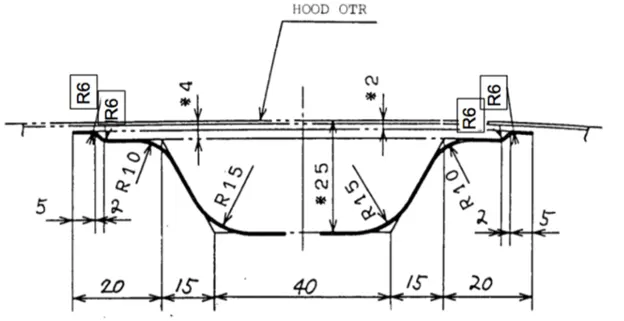
The structure for the inner panel is prepared as per the master section thereafter the emboss and the required cut-outs are provided and their functions are described earlier.
3) Assembly
All the parts such as reinforcements, striker, hinge, outer panel, inner panel are assembled.
reinforcement is provided to compensate for the strength drop which occurred due to the inclusion of latch and hinge placement
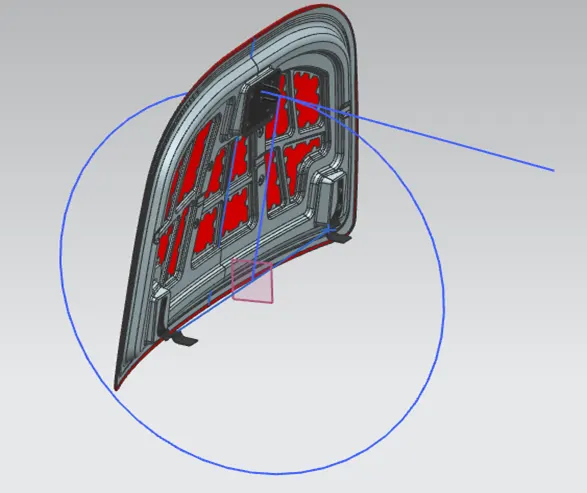
Positioning of hinge and striker
The striker’s tip is positioned in such a way that it perfectly follows the trajectory with hinge axis as centre to achieve proper opening and closing of the hood.
Design parameters considered
- Outer Panel Thickness = 0.75mm
- Inner Panel Thickness = 0.75mm
- Reinforcement Thickness = 1.5mm
- Minimum Blends radius = 3mm
- Minimum Emboss Angel = 5 degree (considered 9 degree and above)
- Distance between the closest point of the inner panel to the outer panel =5 mm
- Minimum width of the rib in the inner hood =5mm (considered 5mm)
- Mastic location diameter =15mm
4) Draft analysis
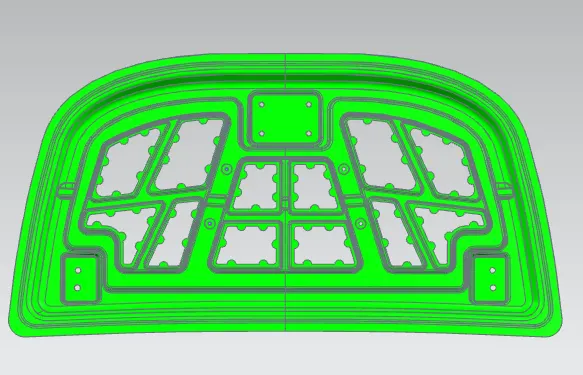
It is carried out to check if there is any negative draft in the designed model and if the negative draft exists then it indicates that it cannot be manufactured.
conculsion
Car hood inner panel was sucessfully designed using the Siemens NX software.
- Satish Jatothsuperb...................