Hood design-Week 2
DESIGN OF HOOD
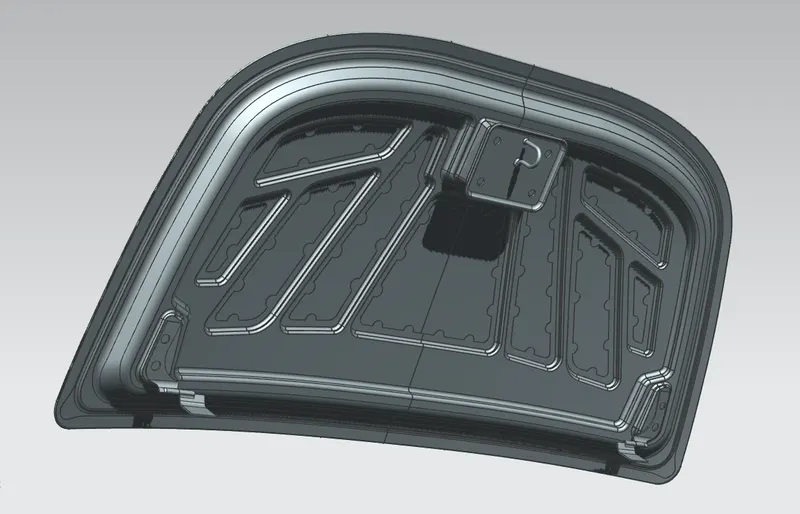
A Hood is an important part of an Automobile. It's primary purpose being that it provides cover to the Engine Assembly. But, more importantly, it makes a car road-safe from the perspective of a Pedestrian. A lot of thought is given in designing hoods about making it safe for Pedestrians in case of an accident. During this report, we shall see how it is designed keeping all those factors in mind.
But firstly, what makes up a Hood? The following are the components of a Hood -
- Outer Panel.
- Inner Panel.
- Hinge Assembly.
- Latch.
Outer Panel
This makes up the aesthetic part of the Hood. No mechanical features are added on this side. This is purely based on the appearance factor of the Car. Only mechanical feature to be thought of during designing this panel (only in high performance cars) is Aerodynamic Drag. But more often than not, this is an aesthetic component.
Inner Panel
This is the main component of a Hood. This forms the Skeleton of the entire Hood. All the main engineering features such as Latch, Striker, Hinges etc., are added on this component. The "Safety of Pedestrian" is handled on this component. As we shall in the latter part of the Report, we add certain necessary design elements to ensure that.
Hinge Assembly
Hinge Assembly consists of two sub-components. One part supports the Engine compartment and the other supports the Hood compartment. This basically creates a connection between the Hood and the BIW.
Latch & Striker
This is one of the more important components of the Hood. This makes sure the Hood closes properly. The latch is designed and placed such that it perfectly falls into the Striker hole.
LATCH TRAJECTORY
As mentioned earlier, Latch closing mechanism is one of the more important aspects of Hood Design. To make sure the Hood closes properly, we make a circle (using Hinge Axis as reference), tangent to the Latch to show the Trajectory it follows when it moved. Based on this, we find the accurate location of positioning the Striker hole.
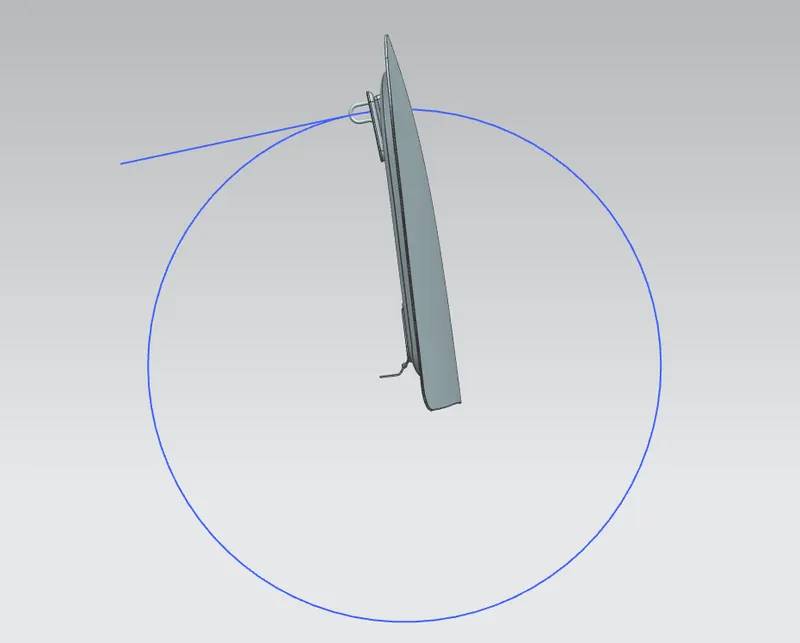
As can be seen from the picture above, we start by making a circle using the Hinge Axis as the reference. This is to see how the Latch moves with respect to the Hinge Assembly. This is important because, any movement in the Latch & Striker is enabled only by the Hinge Assembly.
ENERGY DISTRIBUTION
This is probably the most important aspect of Hood Design. This makes sure that the passengers absorb the least amount of force in case of an accident. This is ensured by removing material and then directing the energy away from the center of the hood to the side of the hood. This is implemented as shown in the picture below -
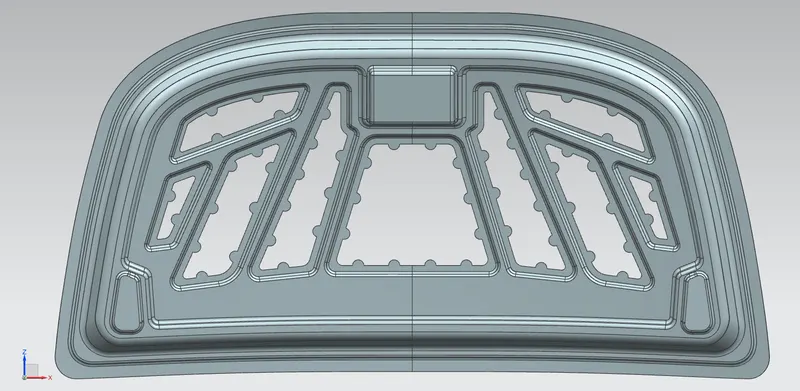
Our idealogy is obvious from the picture. We can see that the embosses are directed away from the center of the hood. The force is going to follow the embosses and it disperses off to the side of the Hood making sure that the passengers inside absorb the least amount of this energy.
Another reason for creating these embosses is to reduce the impact a Pedestrian takes in case of an accident. Removing the material through embossing reduces the amount of force the pedestrian's head absorbs.
MASTIC APPLICATION
We have many joining methods in Automotive BIW Manufacturing. The most common joining methods are spot-welding, nuts and bolts etc., But these methods aren't useful here because any spot weld would directly affect the Outer panel. This is not acceptable because this disrupts the aesthetics of Outer panel's look (which is a Class A surface). So, instead we use a Glueing Mechanism (Mastic). This is an adhesive. We apply it in the molten form and as the time passes, it solidifies and forms a bond between the Outer and Inner Panels. Every mastic point has a coverage area of around 300 mm. So, these points are strategically placed across the Hood panel so as to cover as much area as possible.
EMBOSSES
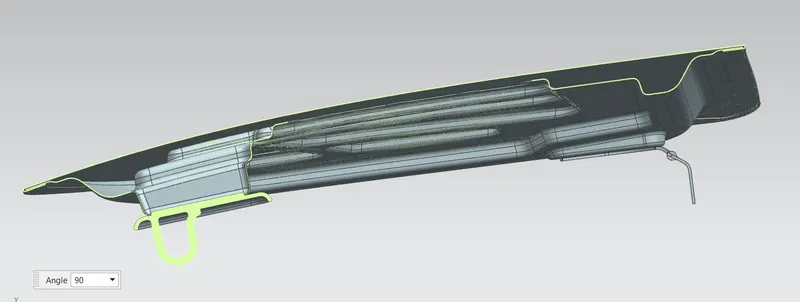
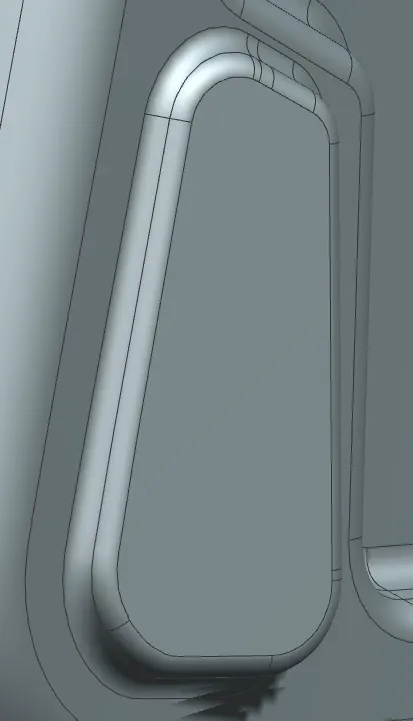
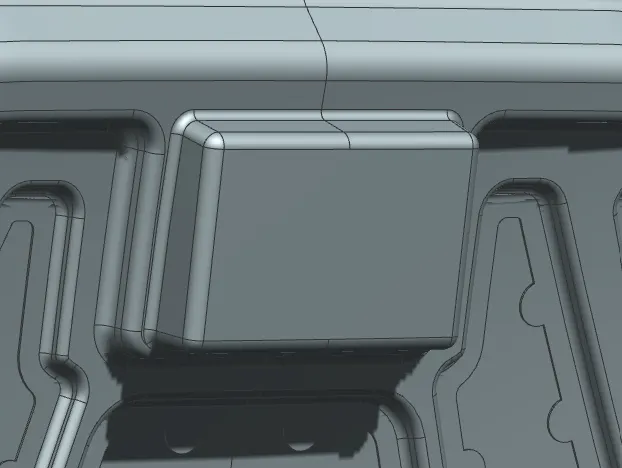
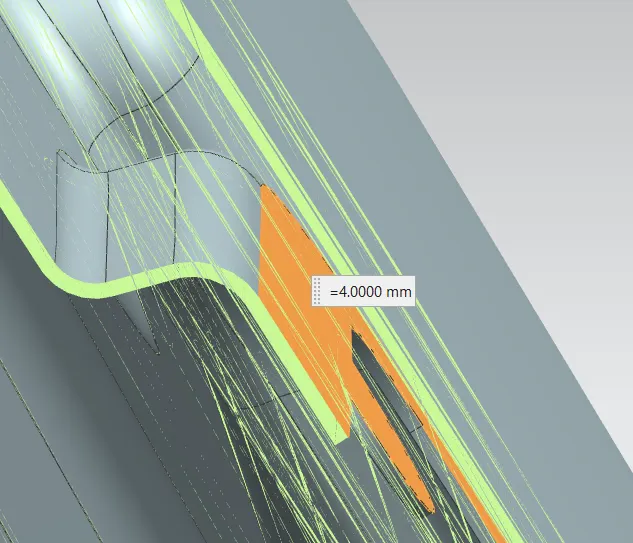
As it can be seen from the picture, we have multiple embosses along the length of the Inner Panel. As previously mentioned, embosses are used to remove material so as to decrease the force absorbed by the pedestrian's head in case of an accident. More the layers of embosses better it is in terms of safety and energy distribution. But, as the number of layers of embosses increases, the cost and complexity of production increases mulltifold. The least gap that is accepted between the lowest emboss and the outer panel is 4 mm. This gap is provided for Mastic application.
PARAMETERS FOLLOWED IN DESIGN
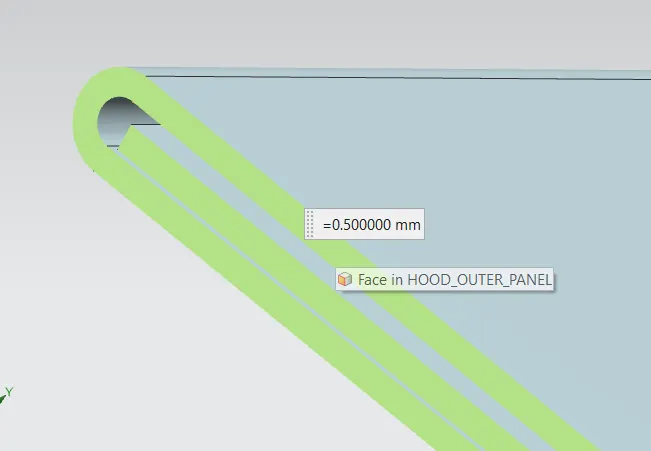
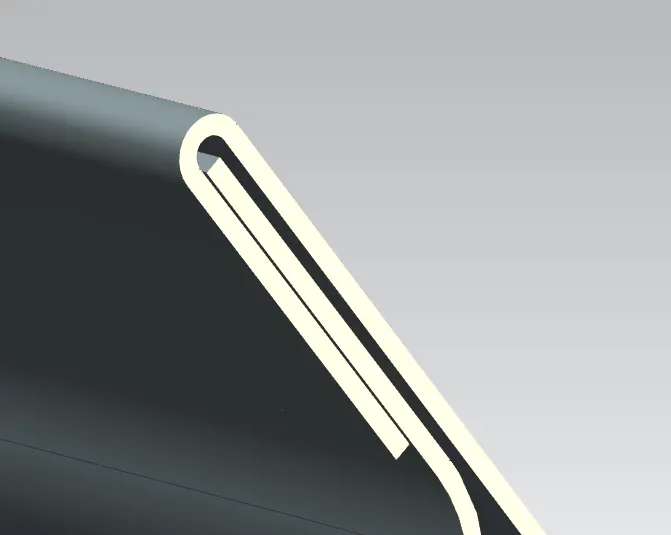
Gap between Hems - 0.5 mm.
Gap between surfaces of Inner and Outer Panels - 4 mm.
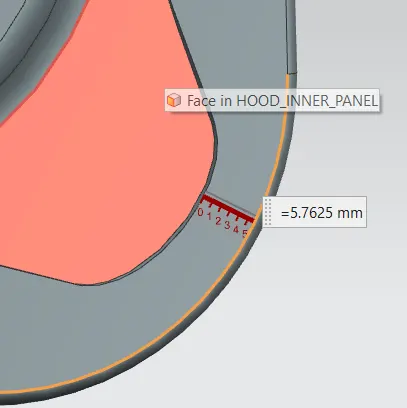
Corner Roll Relief Distance - 5.73 mm.
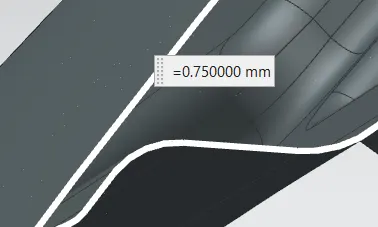
Panel Thickness - 0.75 mm.
DEEP DRAWING
Deep Drawing is the stock method of manufacturing Automotive Panels. These panels include Hood Panels, Roof Panels, Boot Panels & Door Panels.
Drawing is a Shape Transformation method of Sheet Metal Manufacturing. A Metal blank sheet is fed into a die and is then drawn into the desired shape using a mechanical punch. Through this the metal blank fills the crevices in the Metal Die and the excess sheet metal comes out through the shoulder area, which can later be finished. This is a Metal Retention method of Manufacturing. Deep Drawing is basically an extension of Drawing in the sense that the process is called Deep Drawing when the depth of the Metal component exceeds the Diameter of the final component. This method of manufacturing is facilitated by using a series of Dies instead of a single die like in Drawing.
Steps -
1. Blank is placed on the Die Shoulders and is perfectly aligned based on the design requirements.
2. The Blank holder is then moved down and placed on the edges of the Blank.
3. The Punch is then pushed down onto the Blank. This force makes the Blank deform and take the shape of the Die.
4. The Sheet metal is then removed from the Die Hole.
HEMMING
Hemming is the process of joining two sheet metals. This is a different method compared to other joining methods such as spot welding, nuts and bolts etc., As previously mentioned, we cannot afford to ruin the aesthetics of the Outer panel. And this is one of those few methods that doesn't affect the aesthetics of the sheet metal. In this method, we give one of the sheet metals some extra area so as to bend it around the other sheet metal, which then causes a Joint. This is extensively used in the Automotive Industry because of the aforementioned advantages.
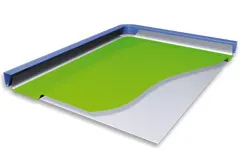
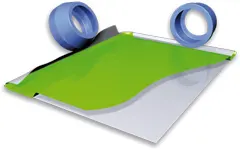
As it is quite clear from the pictures above, we use components like Rollers or Roller balls to help create a uniform and continuous force along the perimeter of the sheet metals to create a smooth Hem. It can be seen in the cut-section below how hemming exactly works.
FINAL HOOD DESIGN