Hood design-Week 2
HOOD DESIGN- CHALLANGE
Introduction:-
Hood is main component of a car at the front portion. It is used to decorate the car & add luxurious look. The shape of the bonnet is made aerodynamic in order to minimize the air effect.
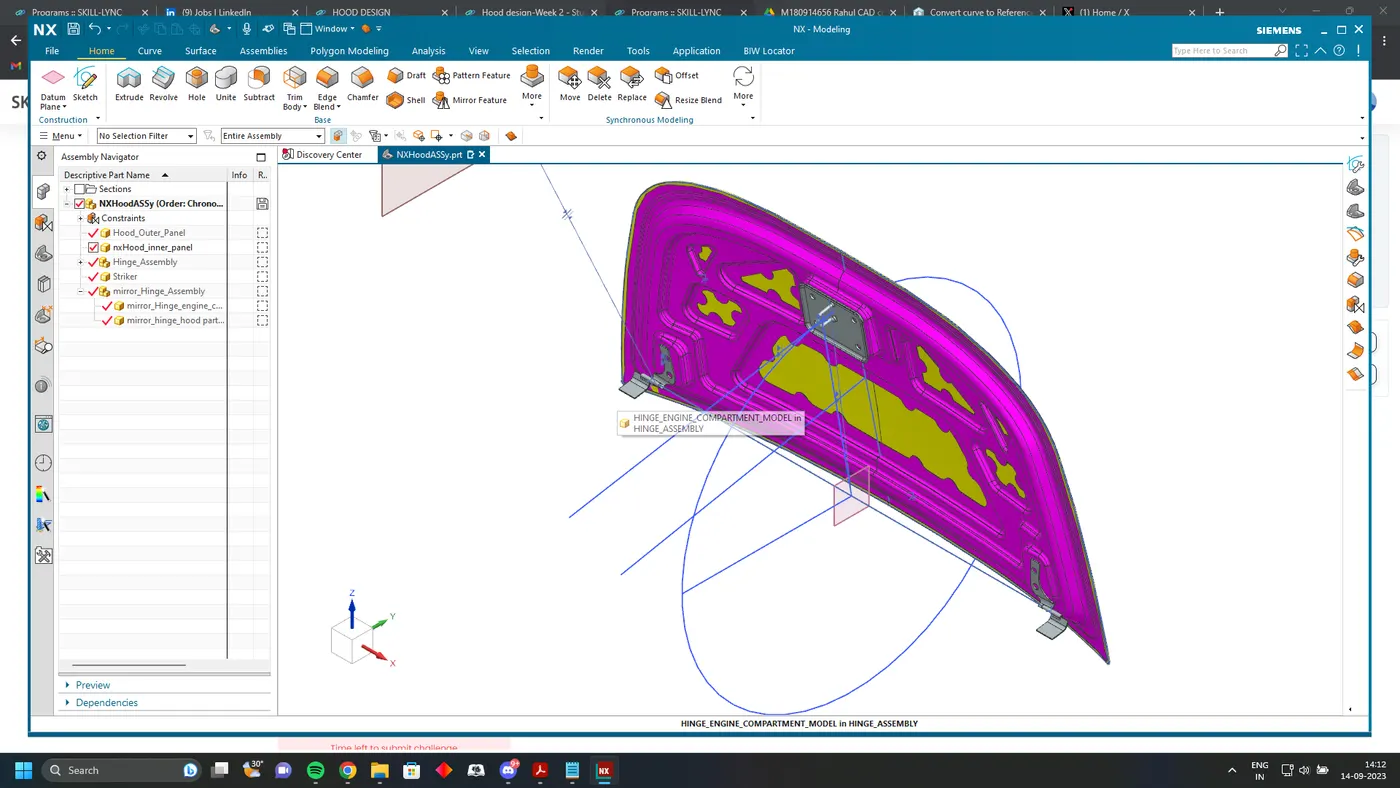
Hood Thickness Information
Outer Panel Thickness = 0.75mm
Inner Panel Thickness = 0.75mm
Reinforcement Thickness = 1.5mm
The process involved in designing hood as a sheet metal operation is
- Blanking
- hemming
- Punch cutting or piercing
- Deep drawing
- Embossing
Inner Panel-
In the inner panel only we can research & implement the safety of pedestrians & as well as the driver. In this panel only we can attach the reinforcement, embossed, mastic points etc.
Mastic data
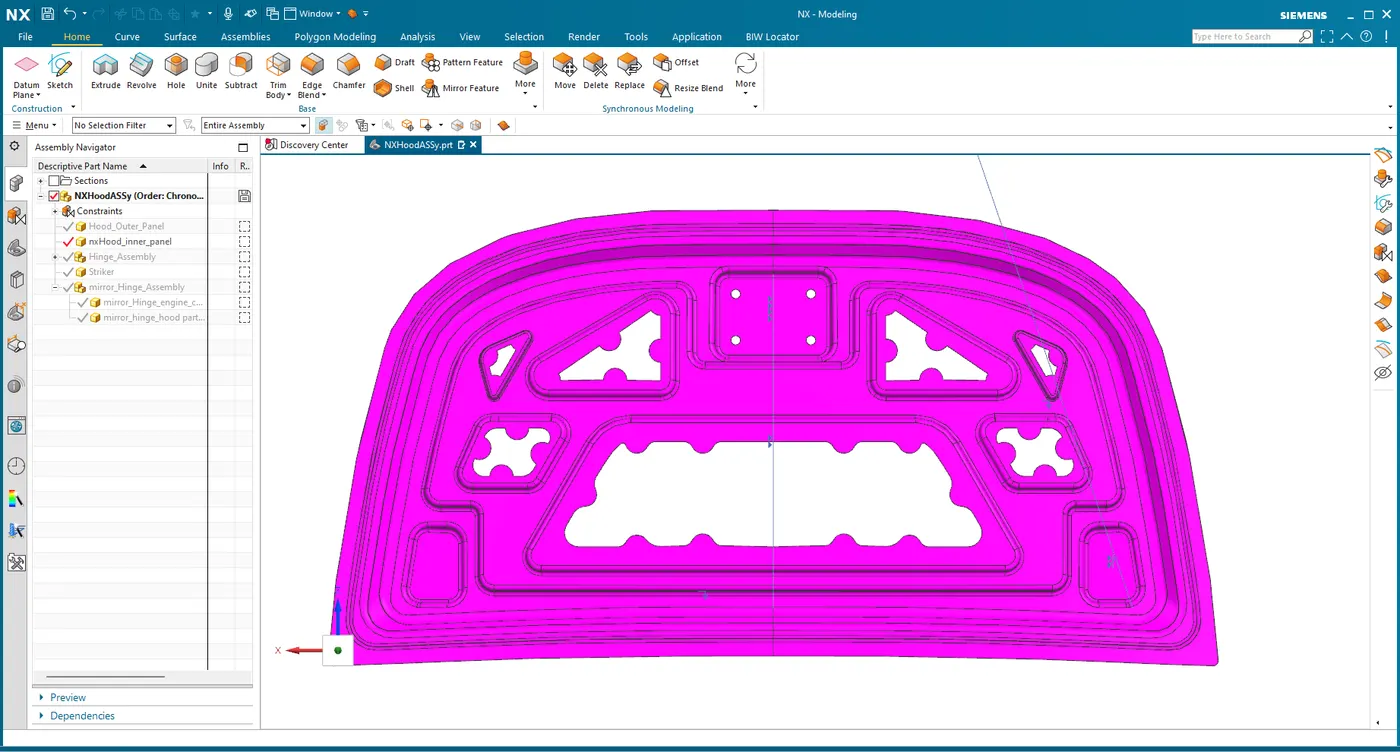
Mastic sealant
A mastic sealant data is used to fix or combine the hood outer panel and hood inner panel.
Embossing
The sheet metal embossing operation is commonly accomplished with a combination of heat & pressure on the sheet metal, depending on what type of embossing is required.
Outer Pannel
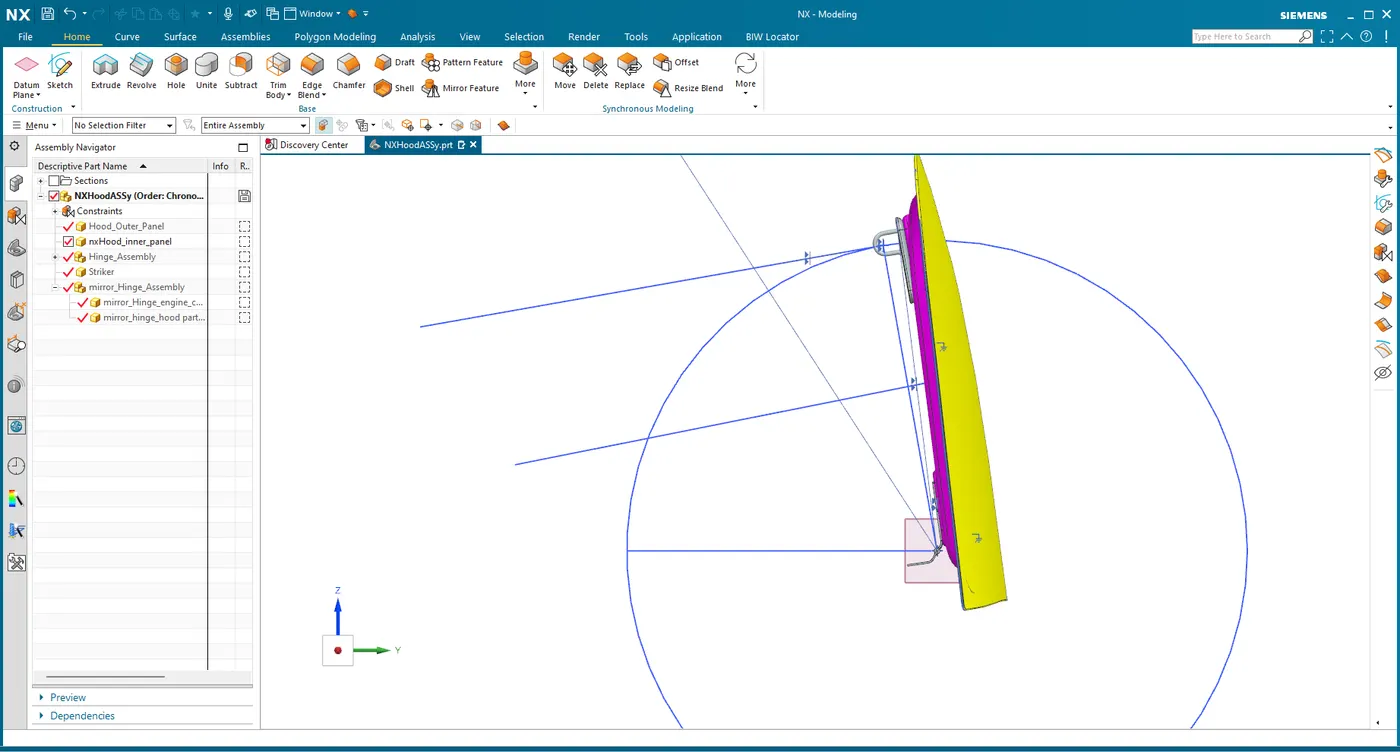
It is the styling team that provides the skin for the outer panel. The shape, position and size of the hood should satisfy the safety norms.r point. For that, the latches trajectory must be perpendicular to the hinge axis.
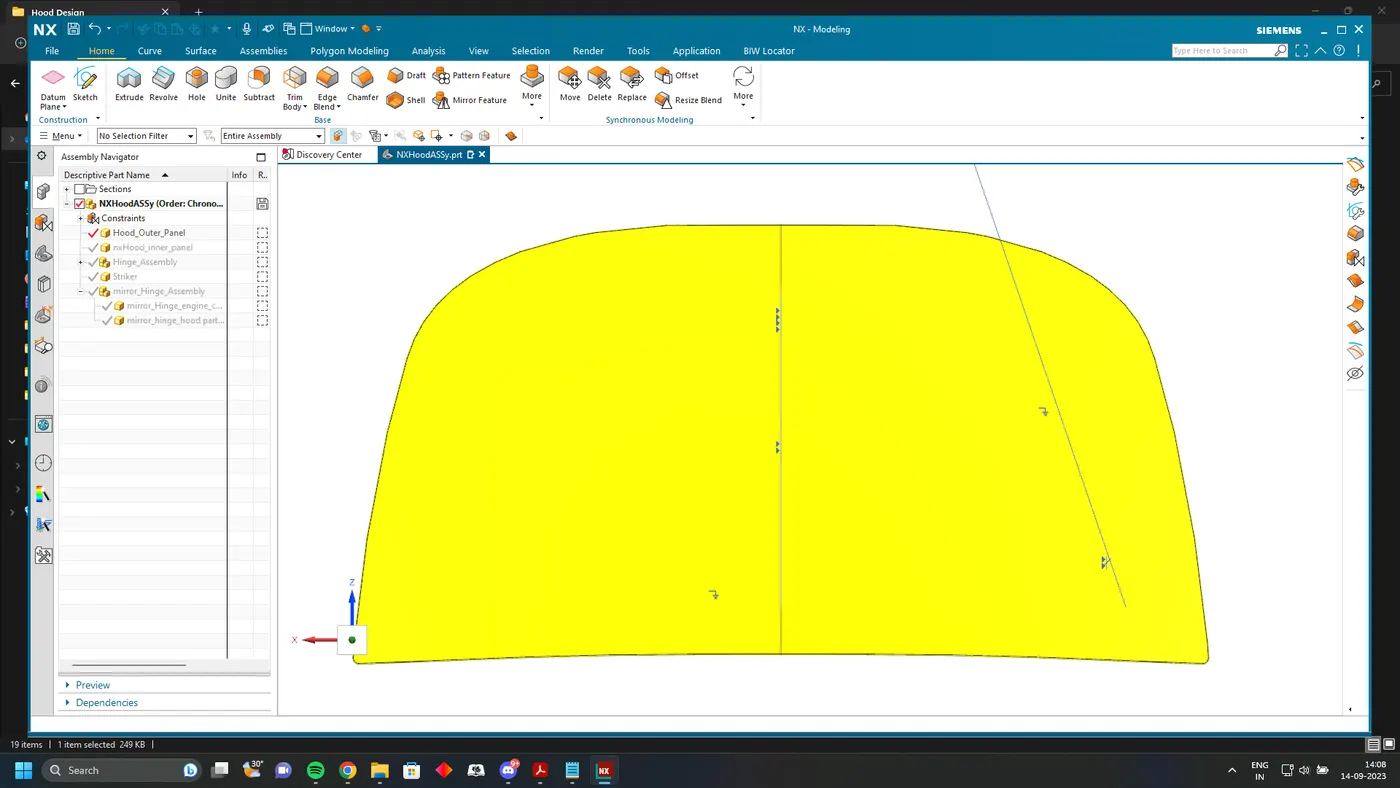
Hemming
Hemming is a sheet metal forming process in which sheets are joined by bending it usually to 180°. Automotive body panels and automotive parts such as deck-lids, trunk-lids, doors, hoods, and tailgates are formed by hemming processes.
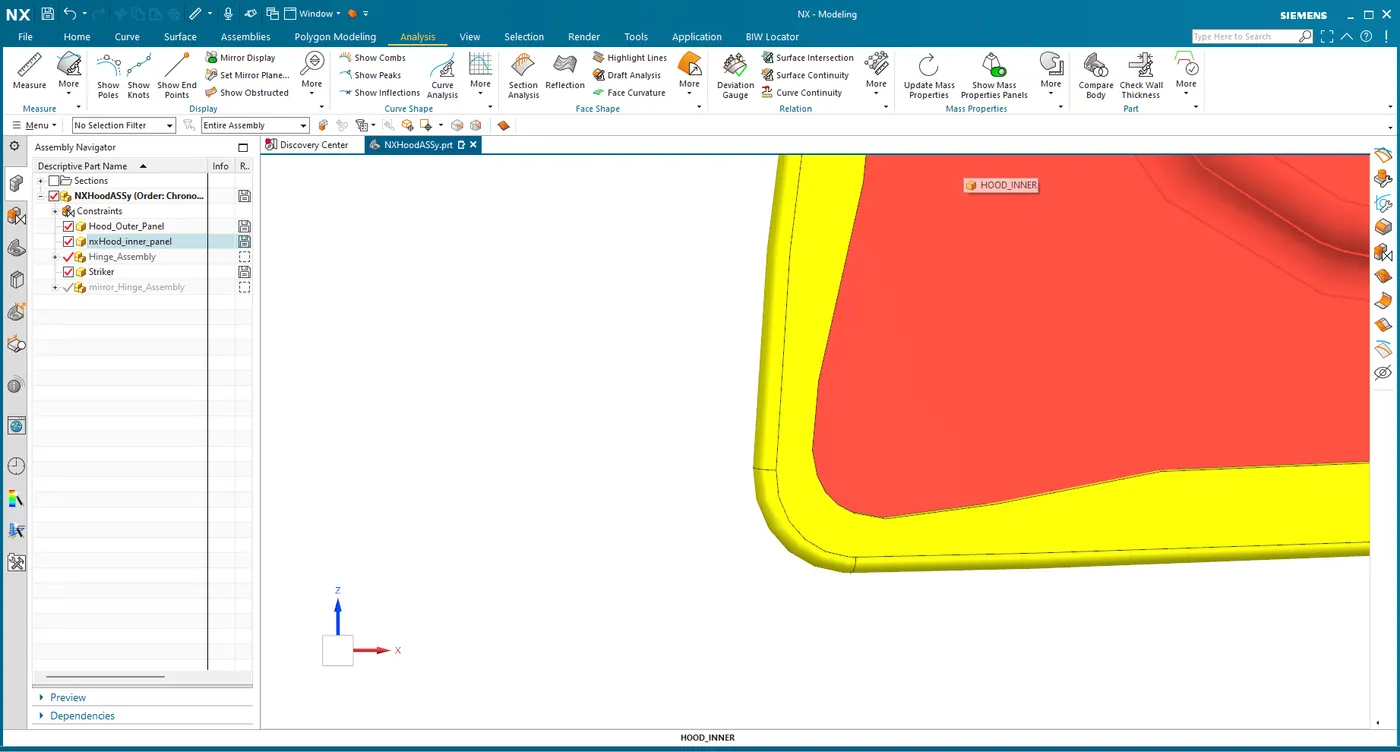
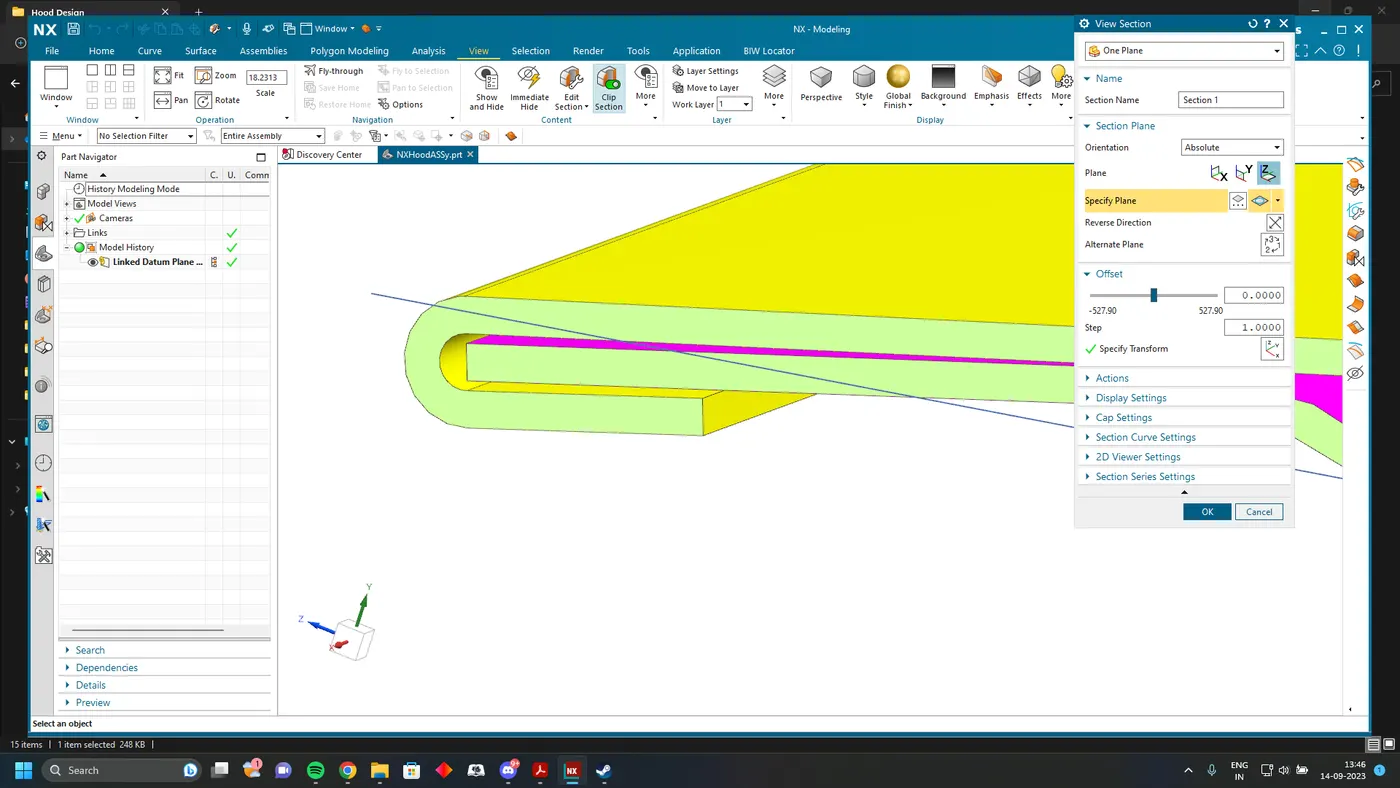
Latch trajectory
While opening or closing the hood, the latch must be perfectly aligned to the fixing or strikeOuter panels are the aesthetic elements of a car.
Mastic Sealant Distance
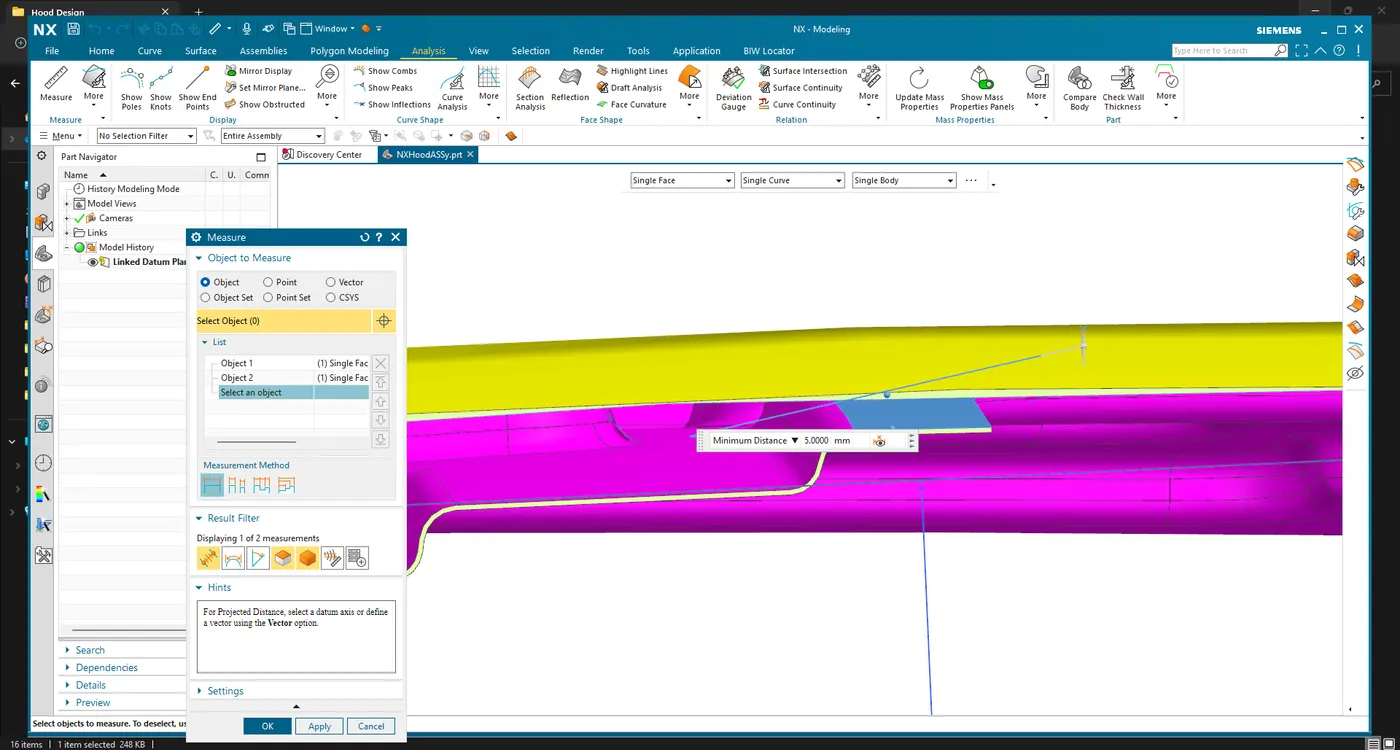
A minimum of 5 mm is given for mastic sealant distance from the upper panel
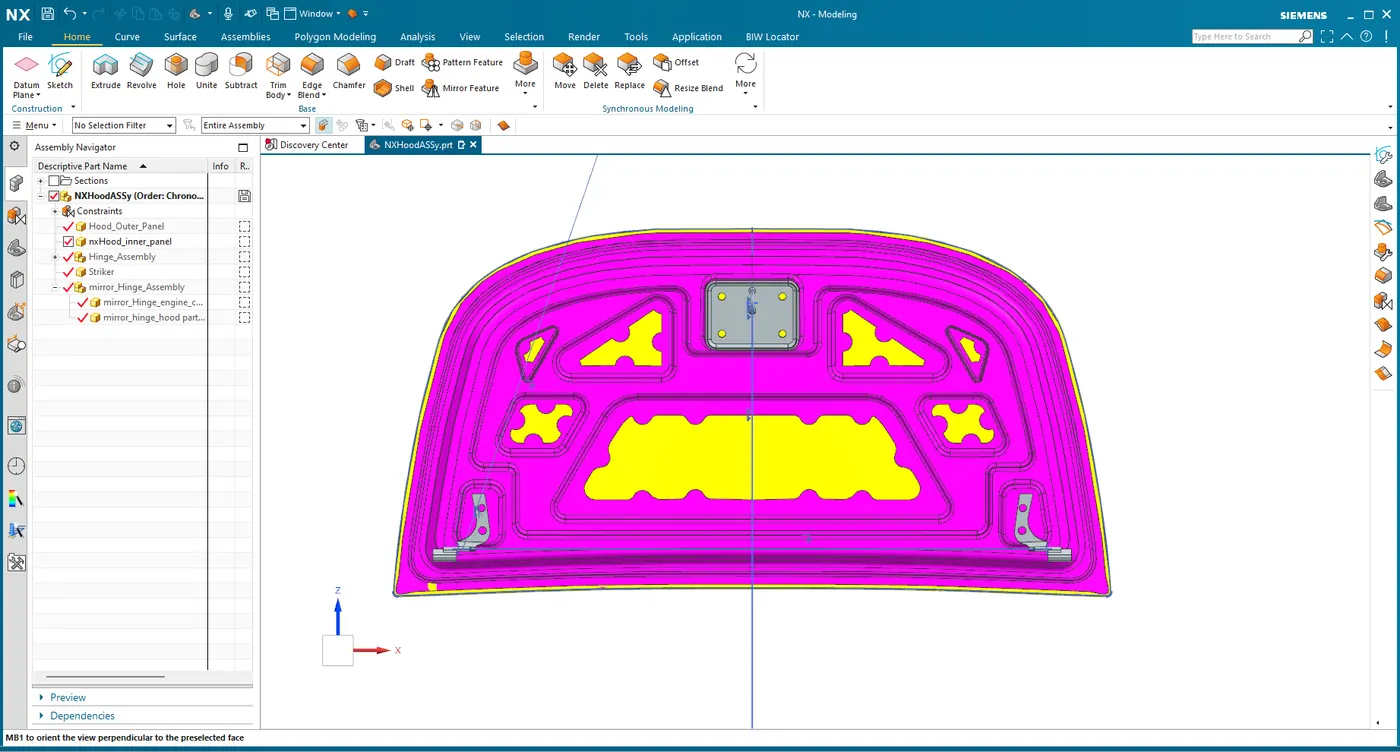
Final Assembly
Conclusion-
We have designed a hood that falls under the rules & regulations of the manufacturer's standards