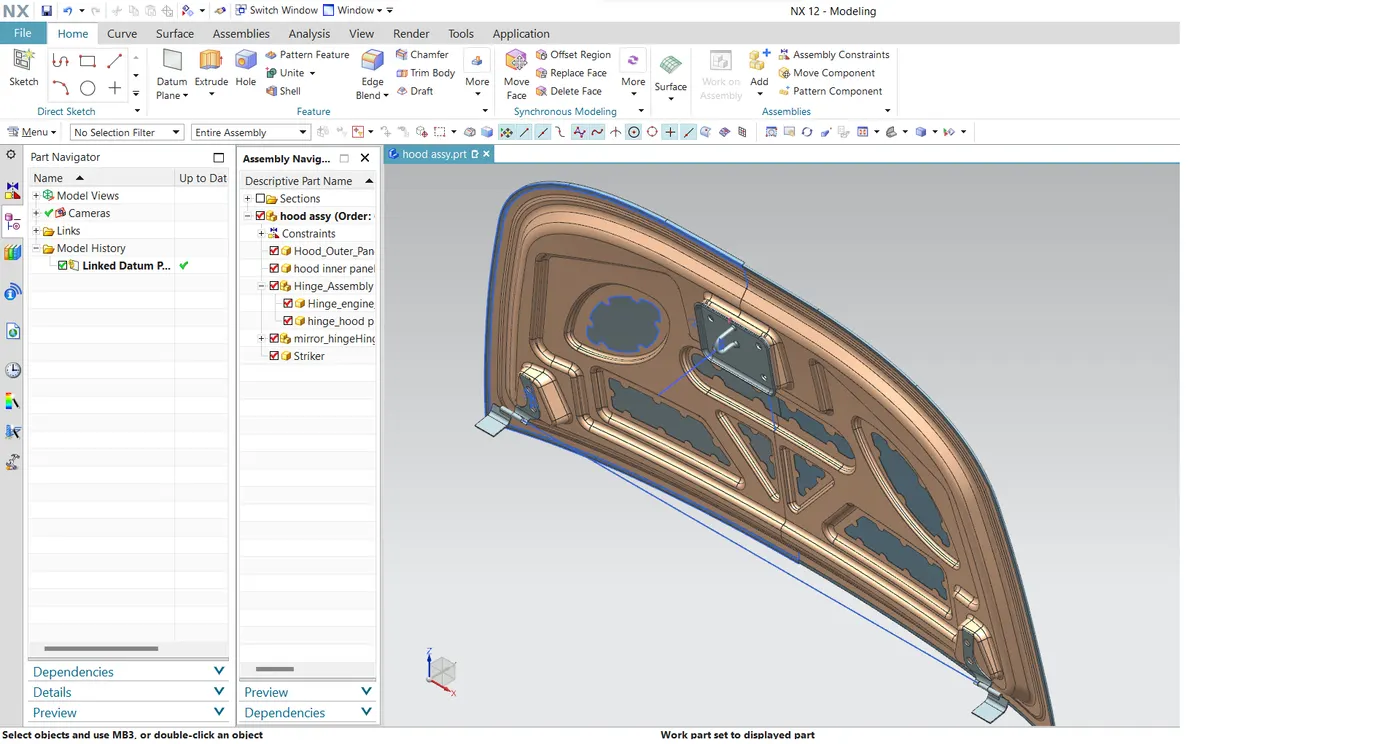
Hood design-Week 2
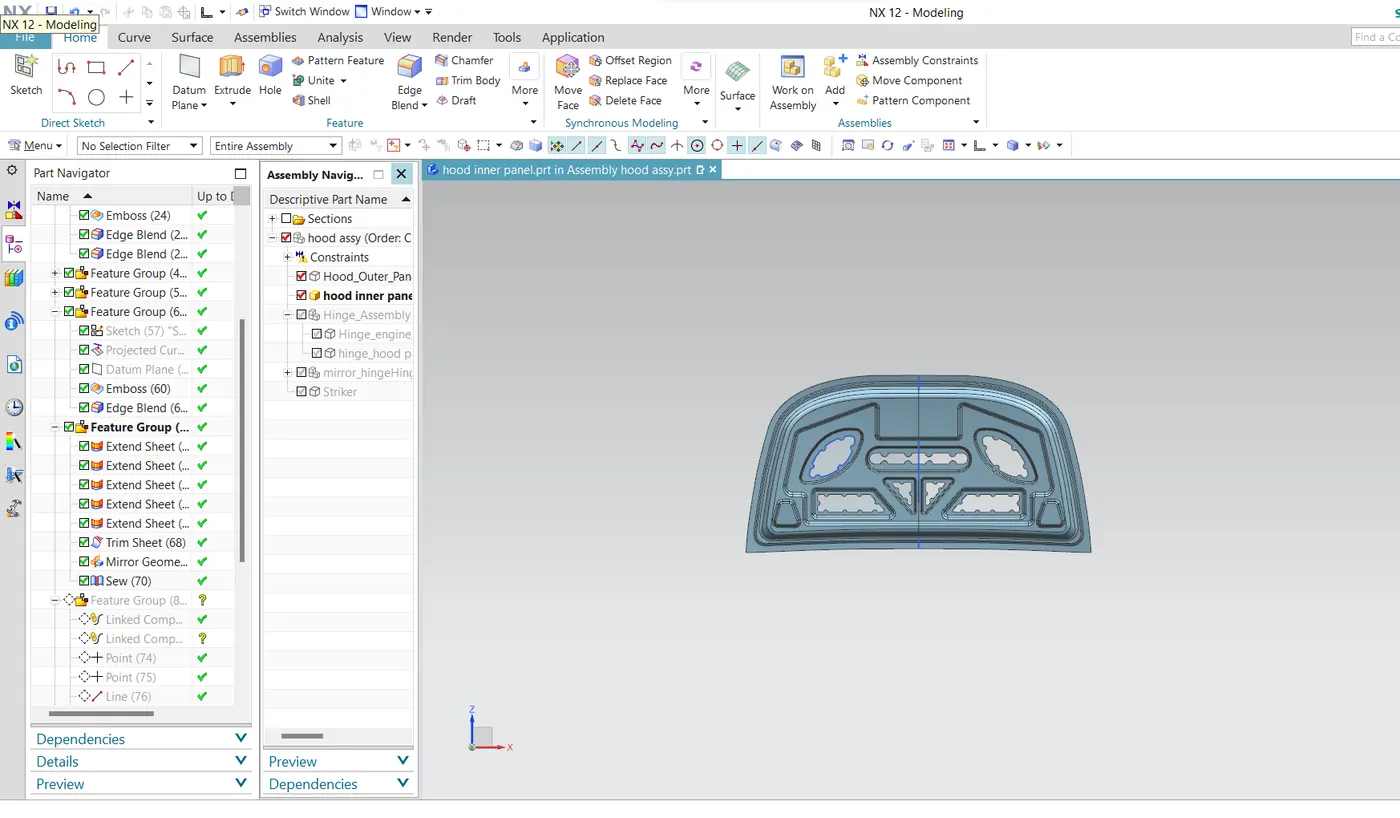
First the outer panel should be exactley halfed into middle using mid plane and should work on the half anel.Then all the features should be mirrored and and sewed together.
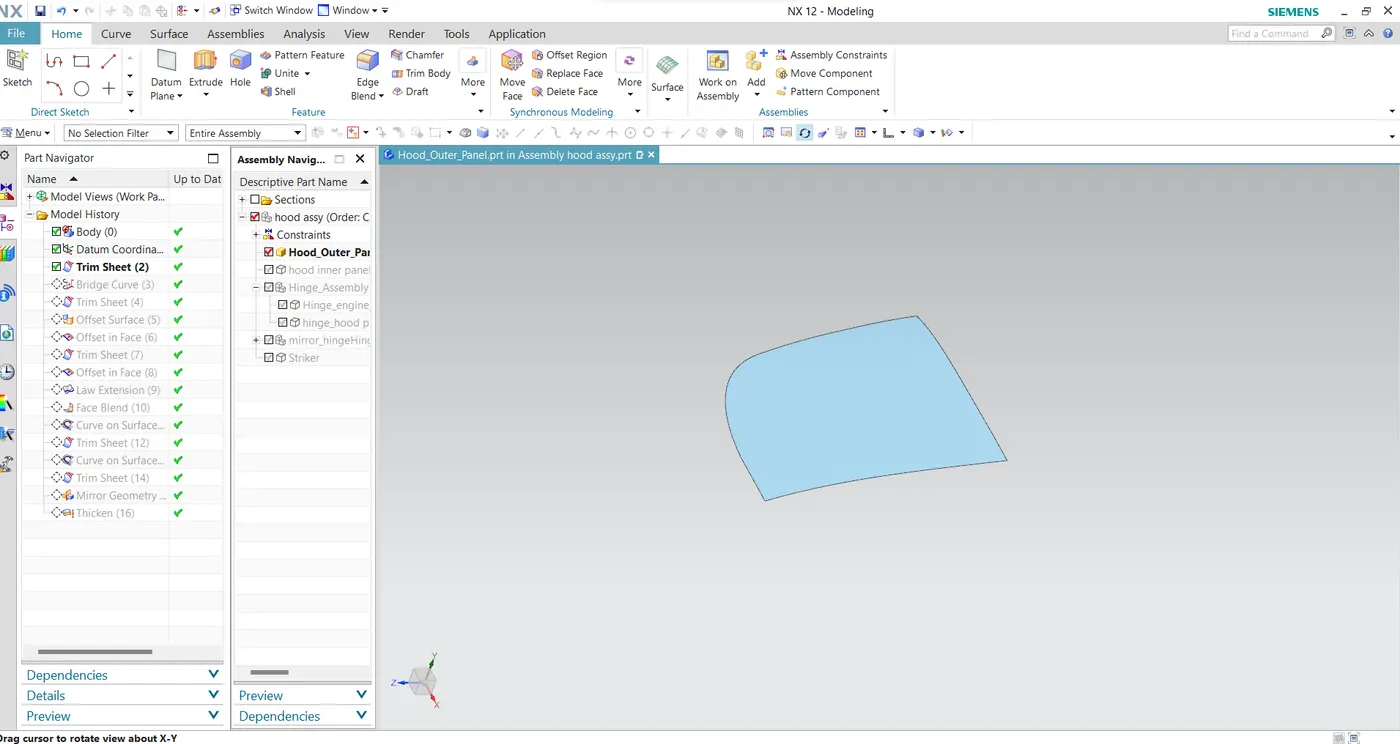
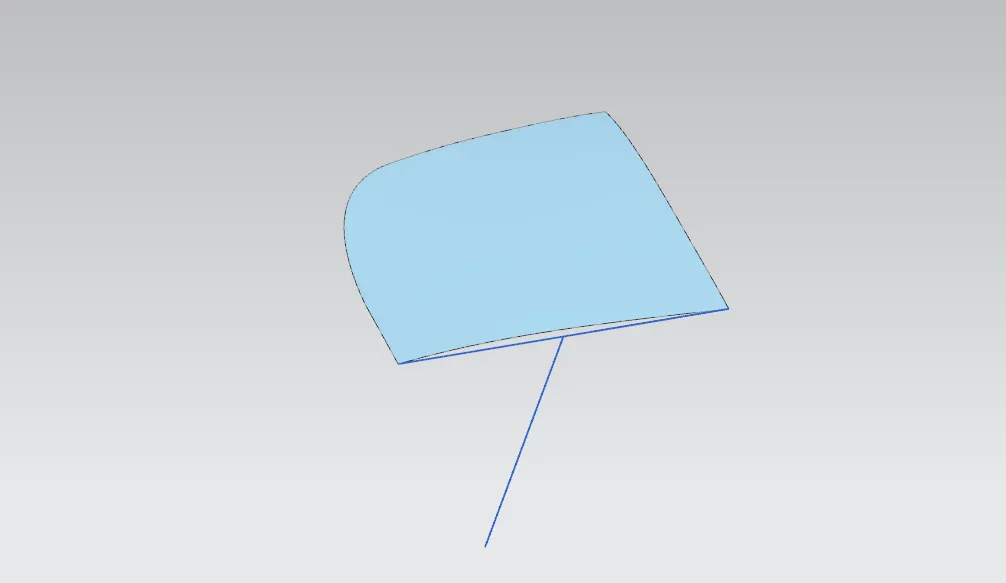
Now the features are to be built up like embosses, mastic points, embosses for hinges and latch.
The law extension command is used to combine upper edge and the offseted surface.
Through curves command is used to join between the both upper face and the lower offset faces.
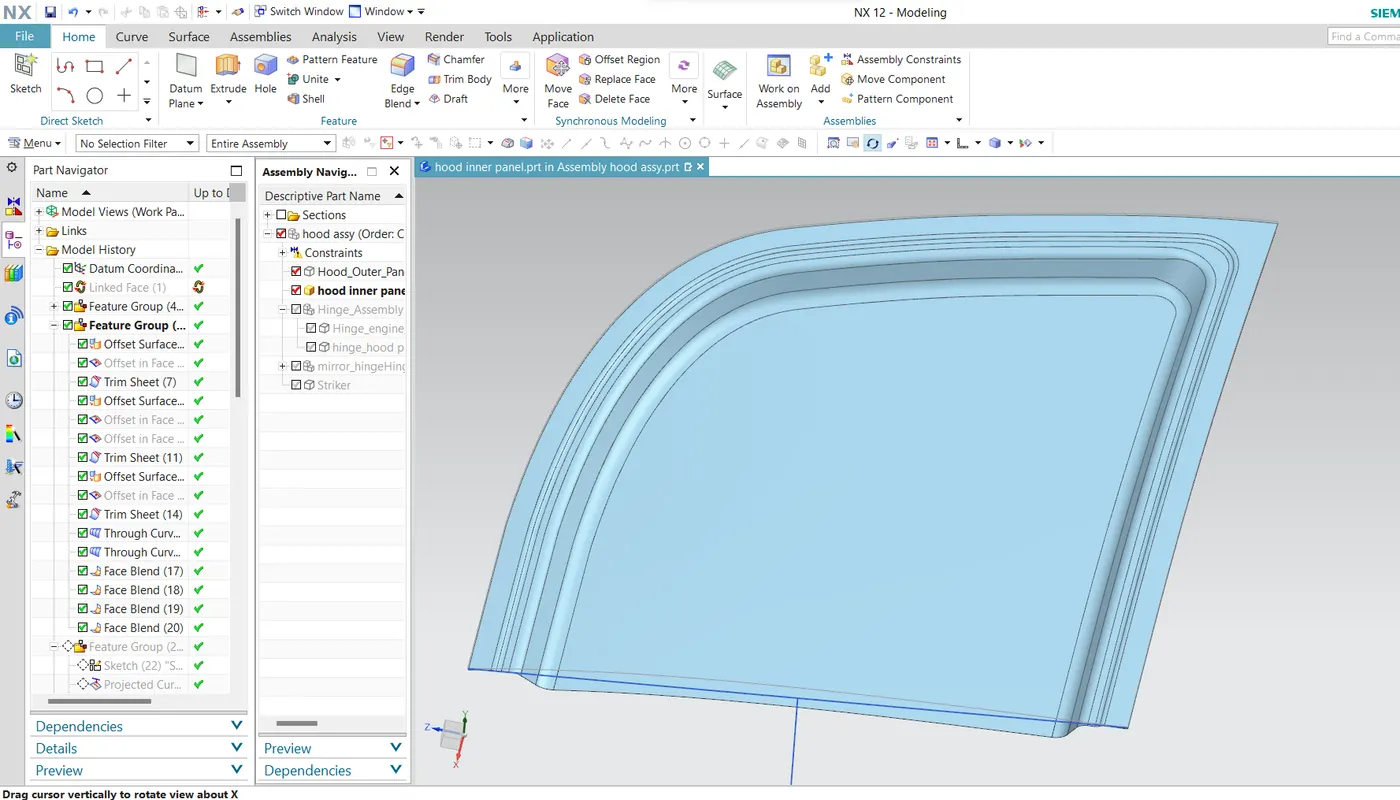
Now embosses should be created on the inner panel for removing material to get a light weight component.
- create a sketch and project it on the face of the inner panel
- make an emboss using the emboss
- emboss direction sould be based on the tooling axis
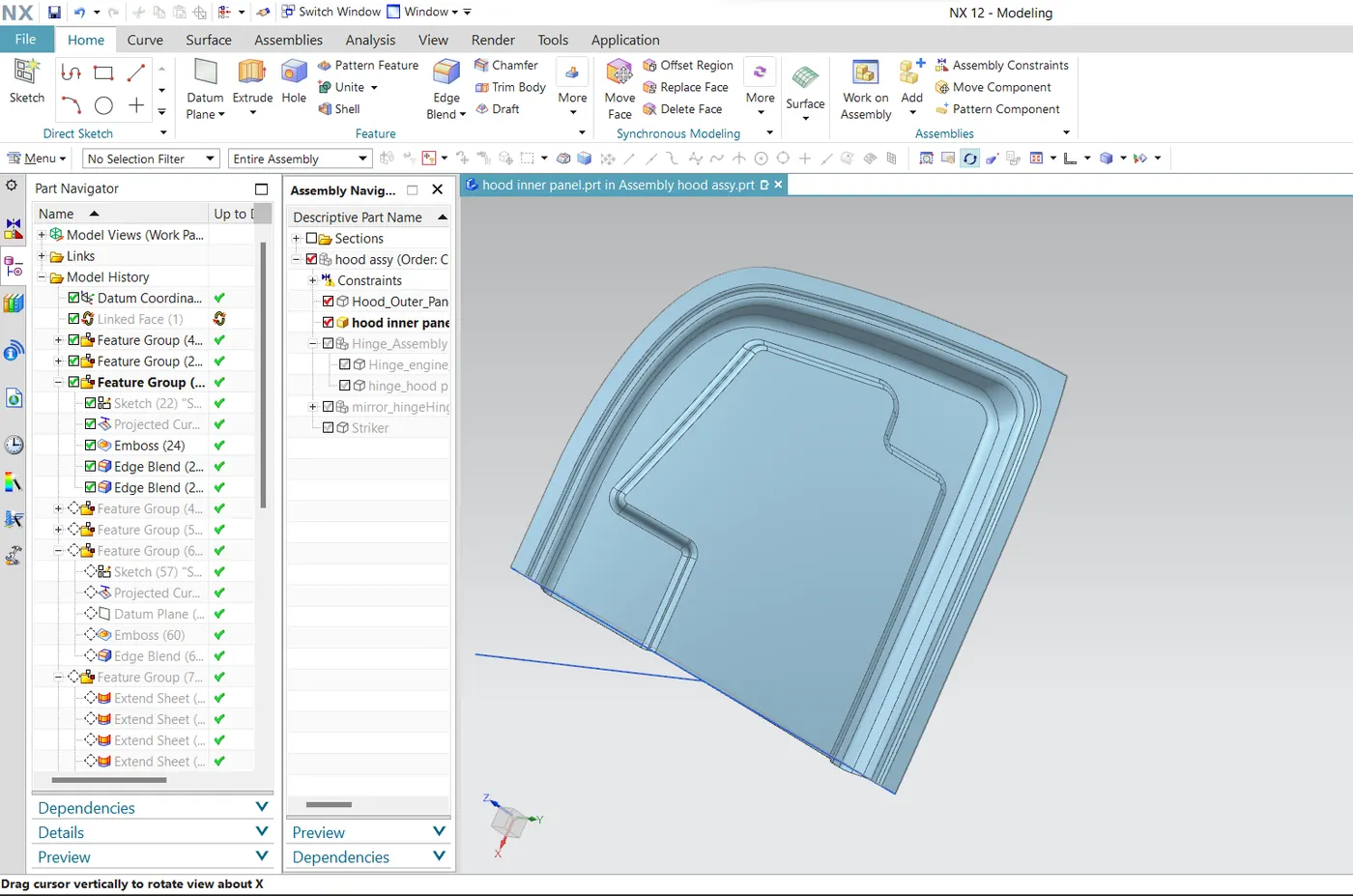
Mastic support emboss 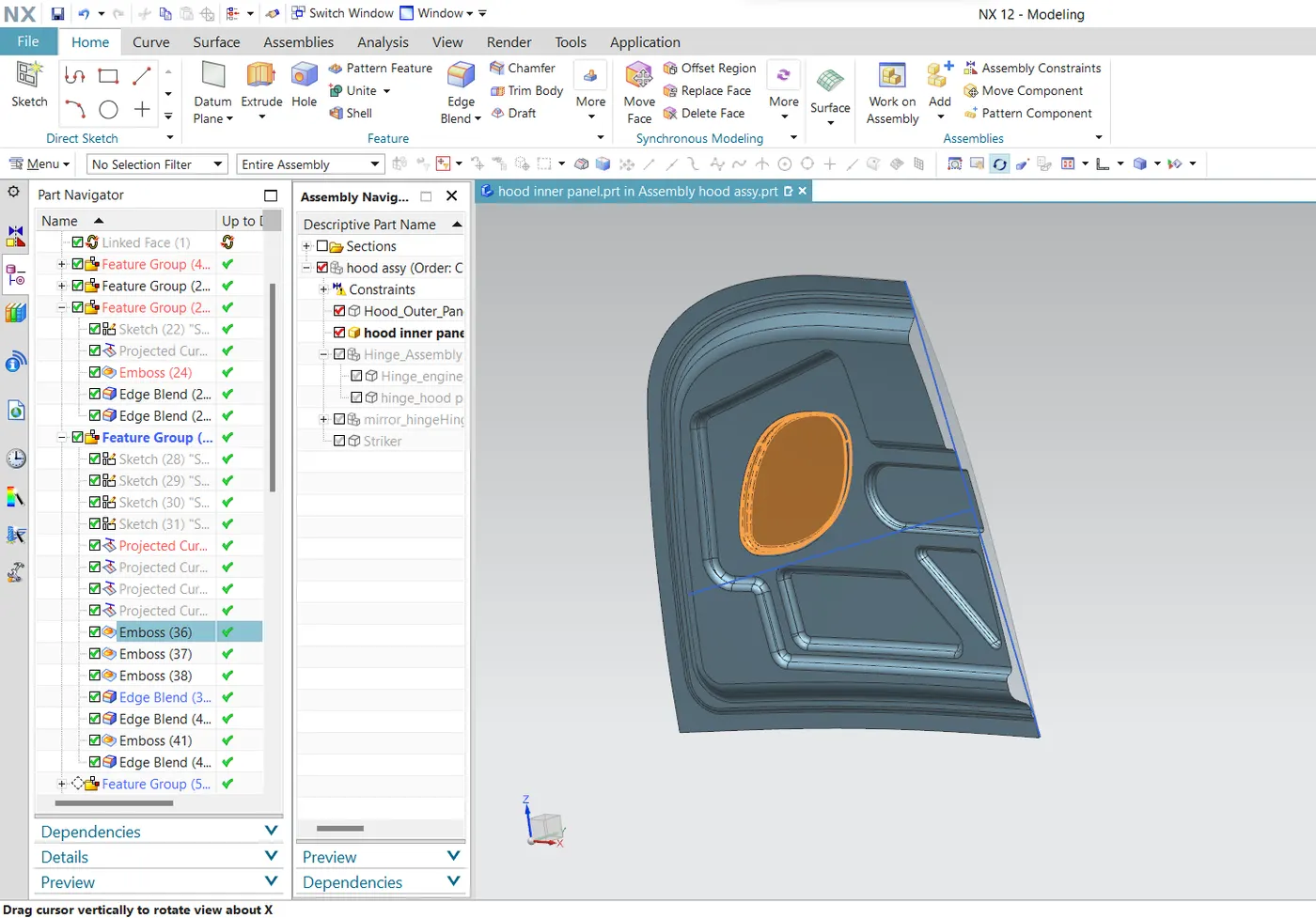
Mastic points
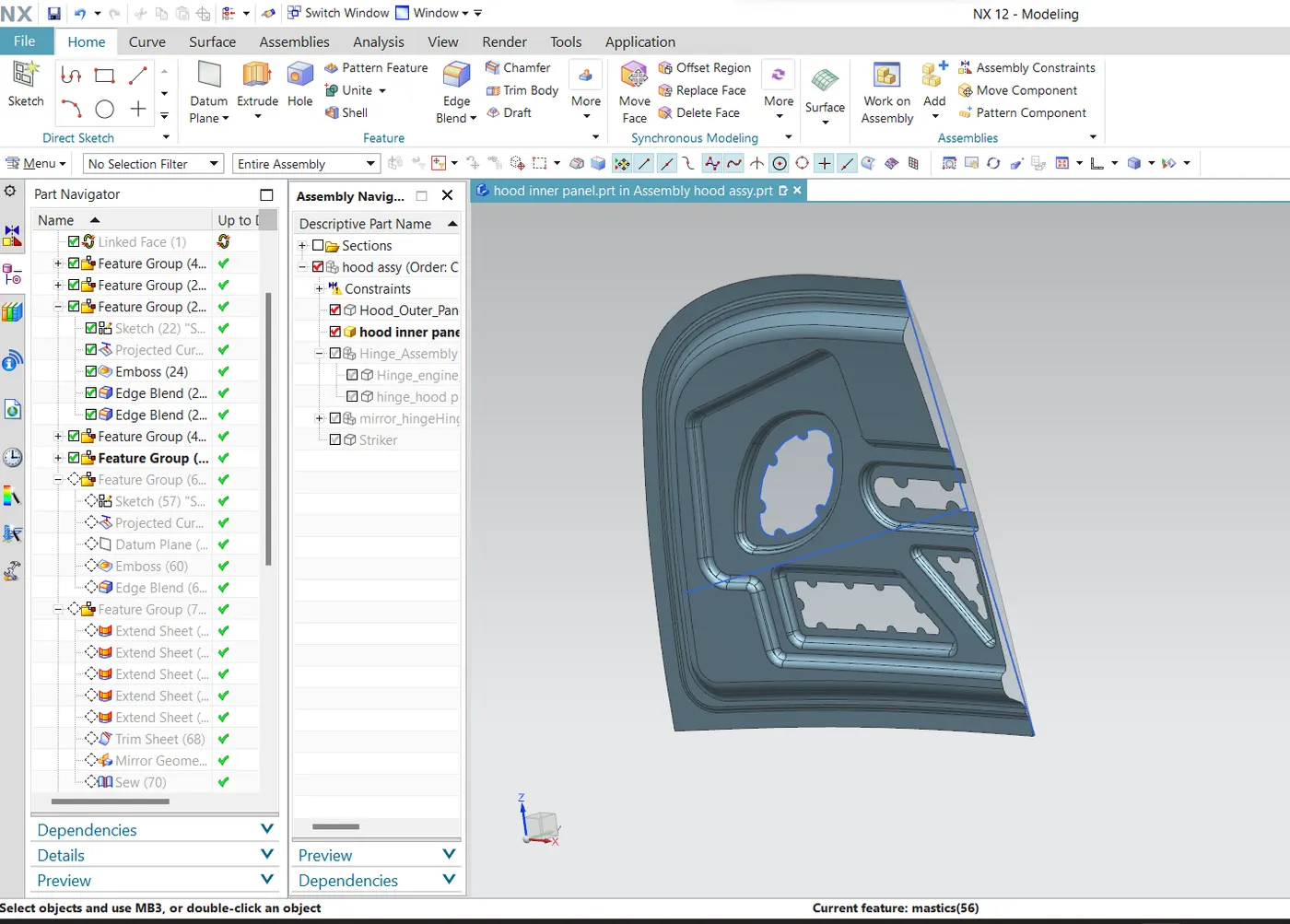
- create a sketch and project using project curves
- Using trim sheet select the projected curves and remove the required region
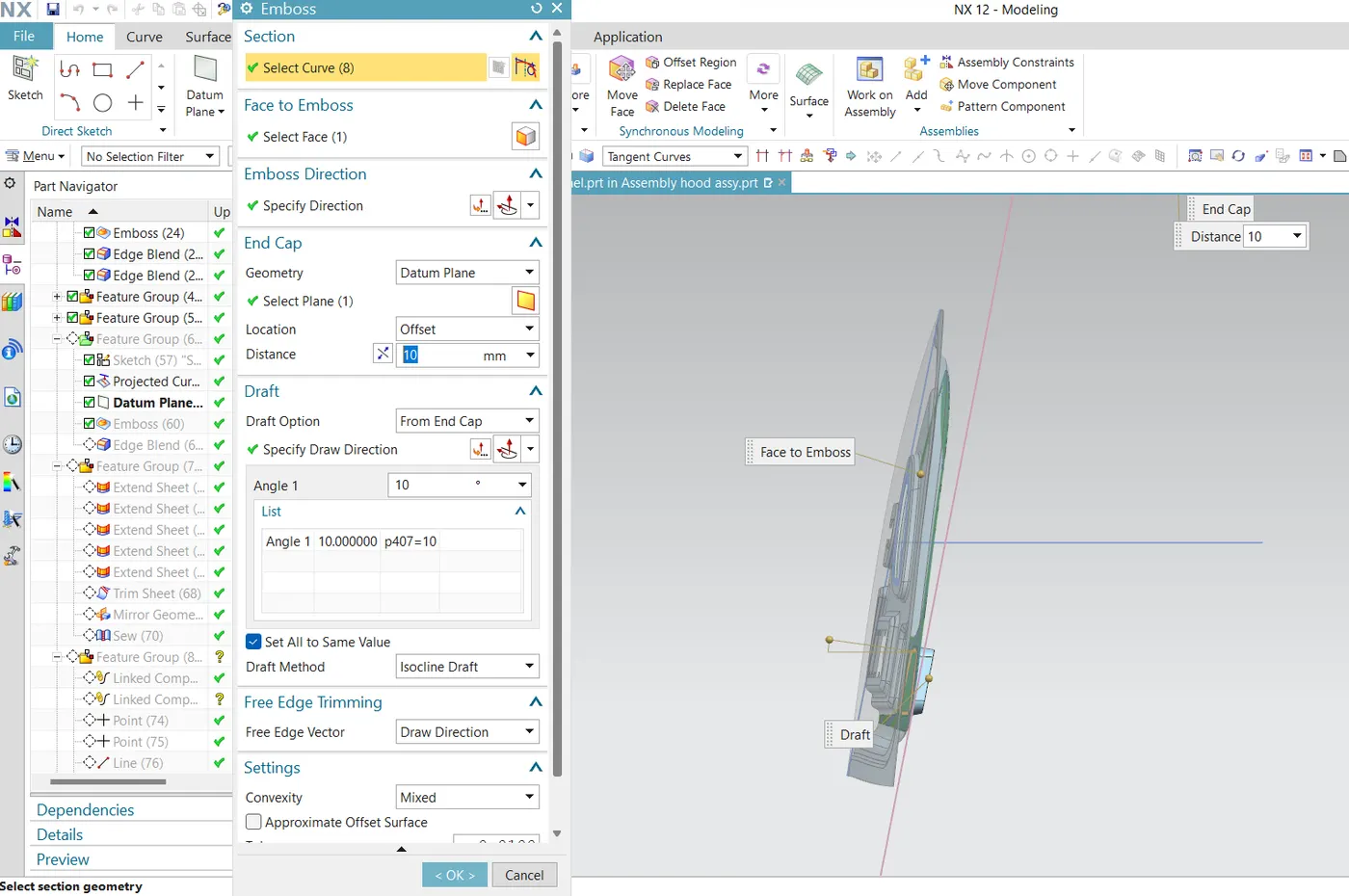
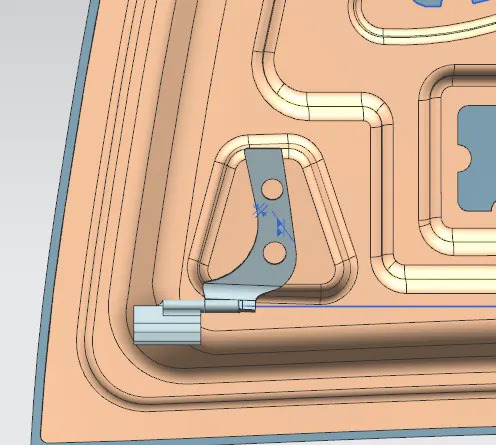
Hinge support
- create a sketch and project it to the face
- create a datum plane so that the emboss of the hinge support will be in flater surface
Mirror the geometry
extend the sheet if it is uneven and trim it with the center plane and mirror the improved sheet and sew them together
 HINGE PLACEMENT :
First hinges are placed on to the embosses and as inner panel is applied with fixed constraint hinge is placed parallel and touch constaint.Then the hinge is mirrored with assocative connection to other side to get the same hinge position on other side of the inner panel.
LATCH ATTACHMENT :
The latch/Striker is position from the basis of hinges centre point.Two points is marked from the two hinge axis and a line is drawn from the two points.A midpoint is taken from the line for positioning the latch.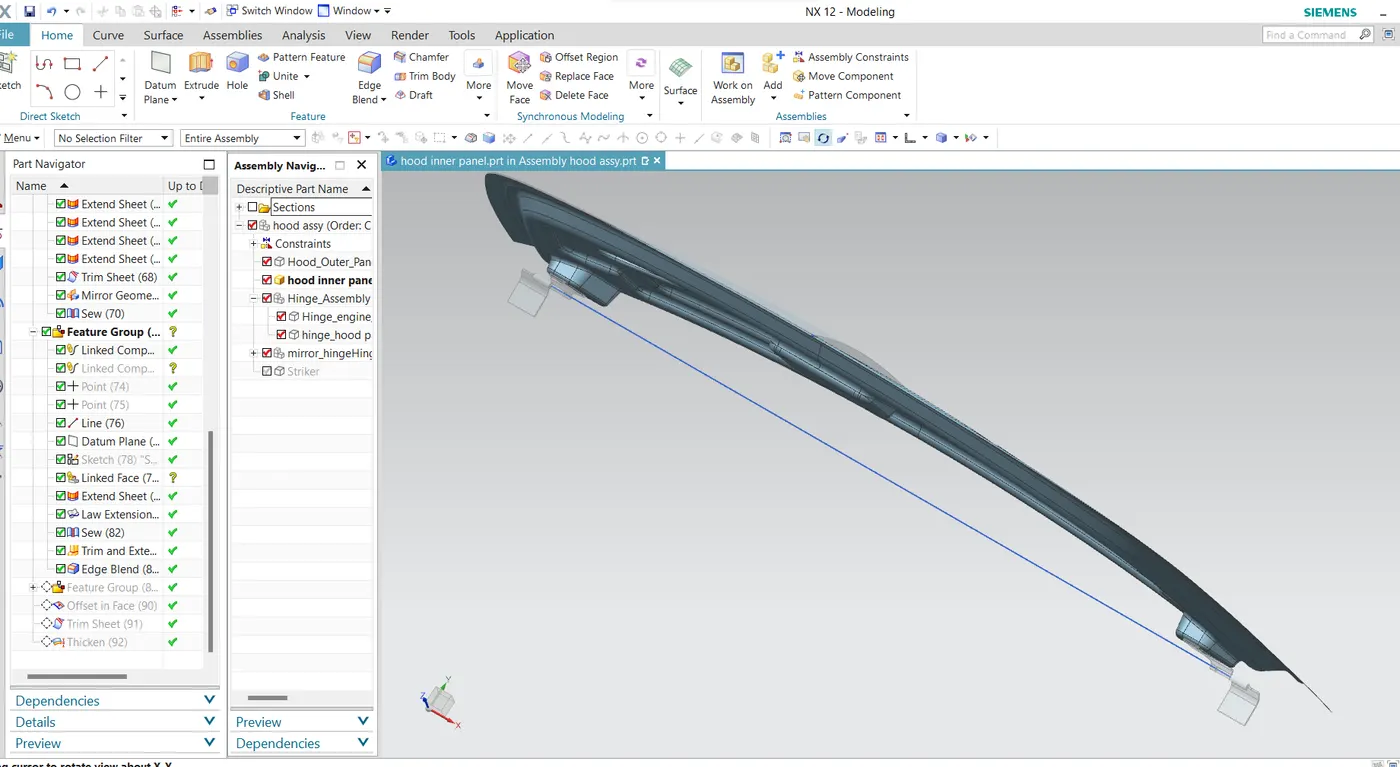
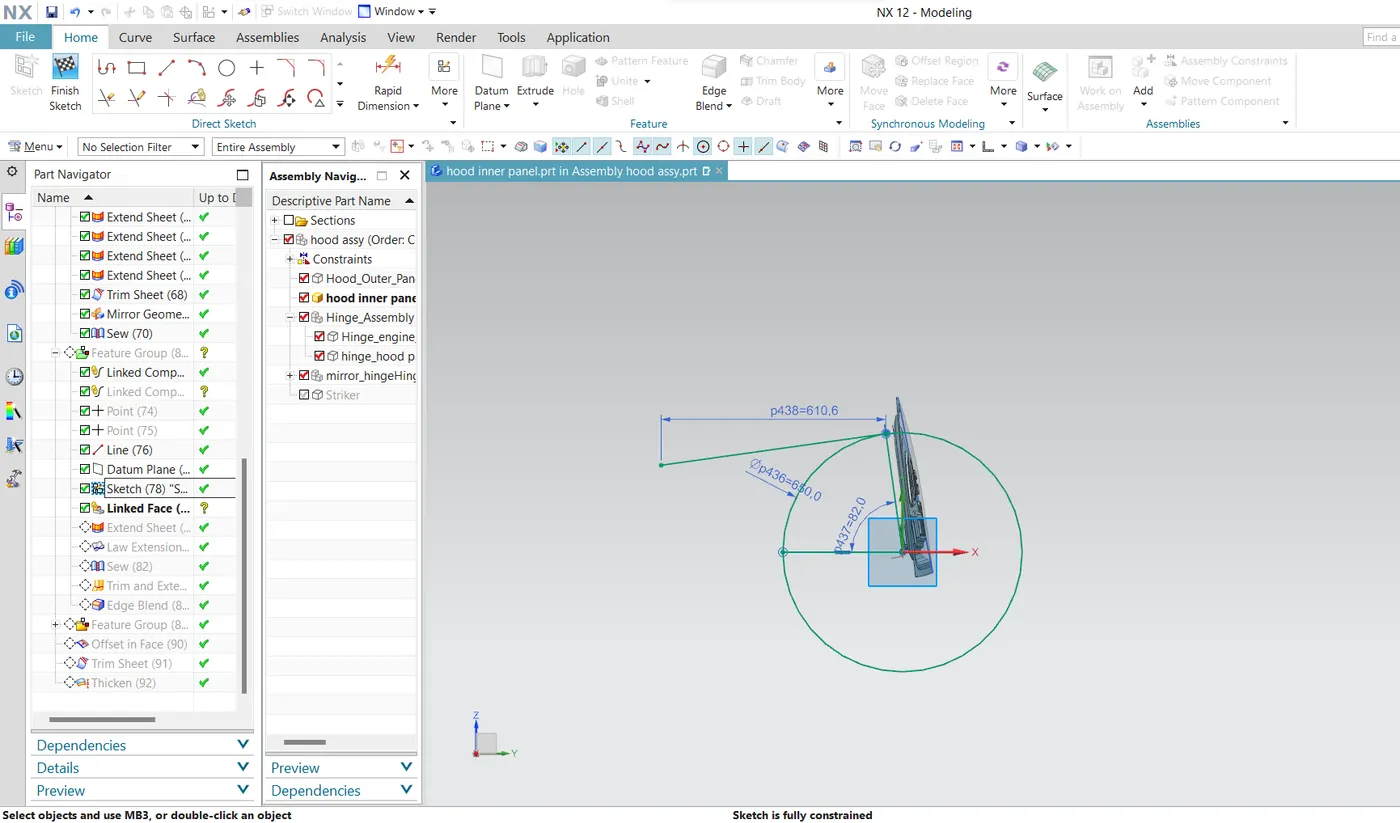
wave geometry linker is used to extract the face of the striker 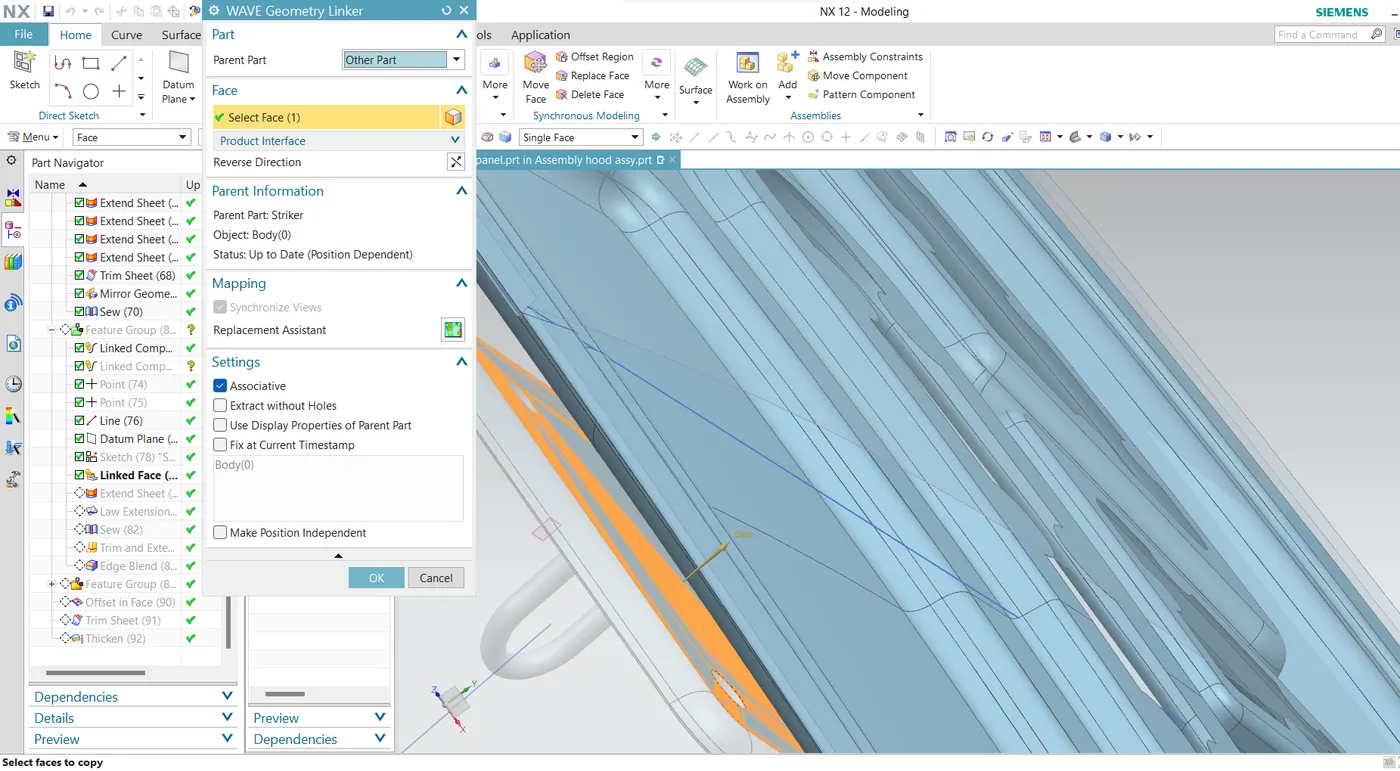
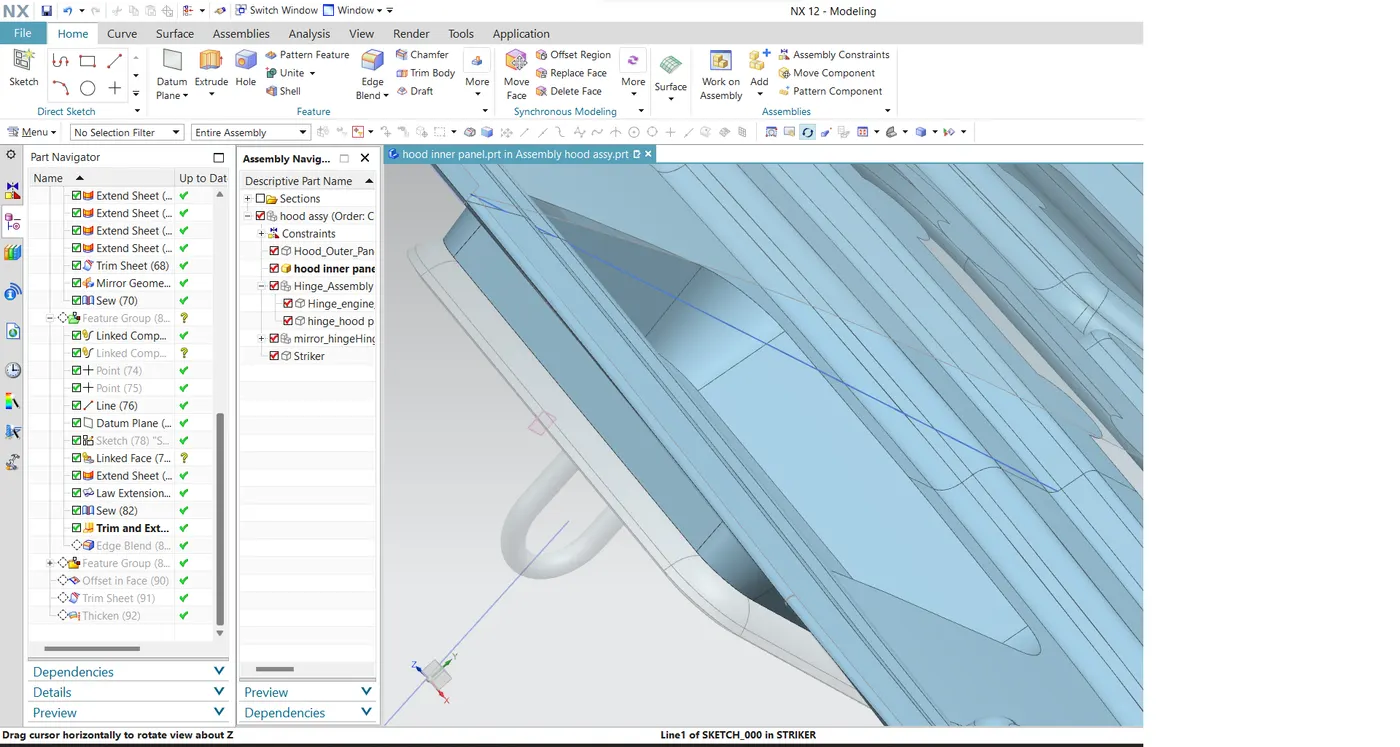
law extension
Trim and extent
Before triming sew the law extended surface with the iner panel so that both will be a single surface
HEMMING OPERATION :
Hemming is a forming operation in which the edges of the sheet are folded or folded over another part in order to achieve a tight fit. Normally hemming operations are used to connect parts together, to improve the appearance of a part and to reinforce part edges.
In car part production, hemming is used in assembly as a secondary operation after deep drawing, trimming and flanging operations to join two sheet metal parts (outer and inner) together. Typical parts for this type of assembly are hoods, doors, trunk lids and fenders.
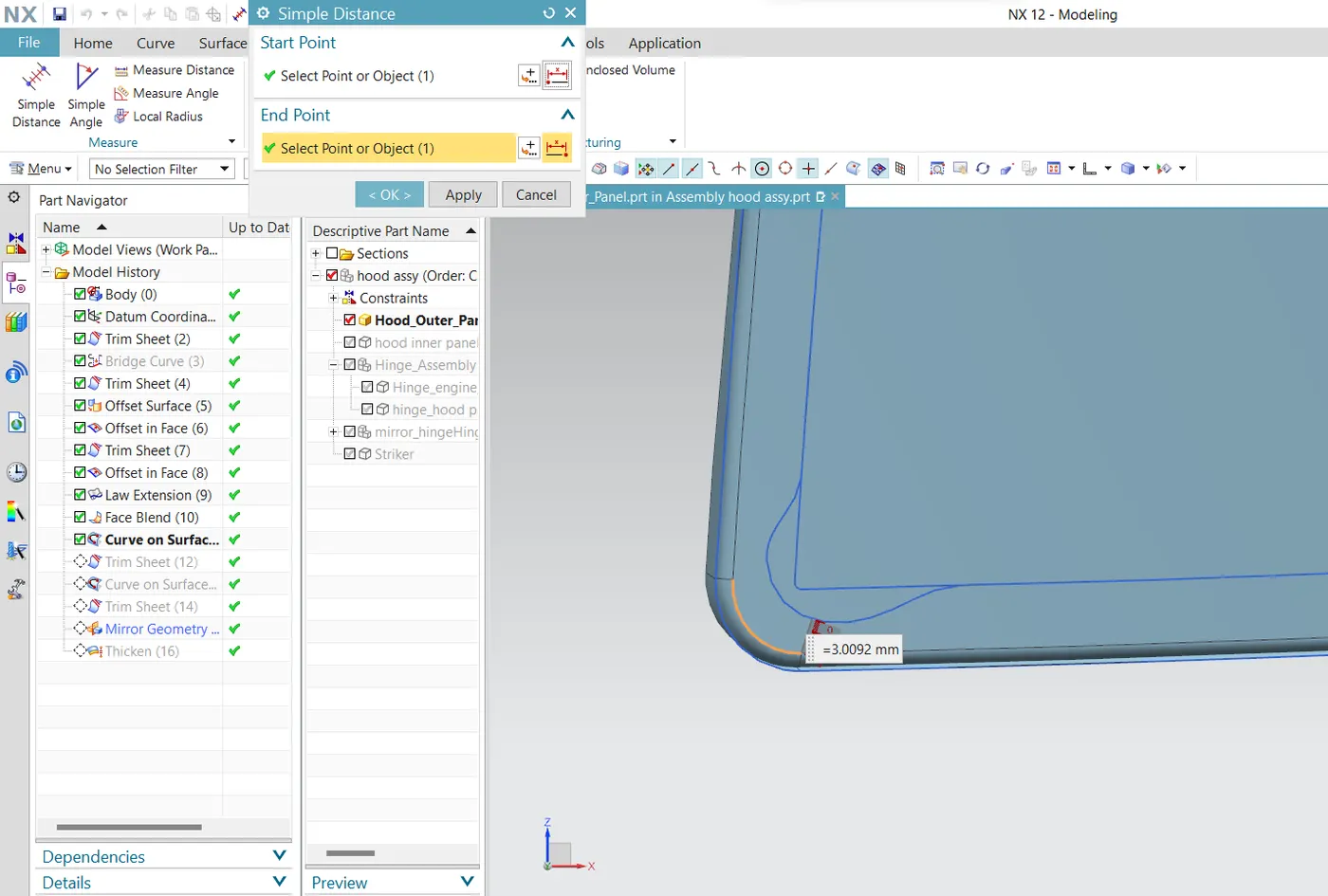
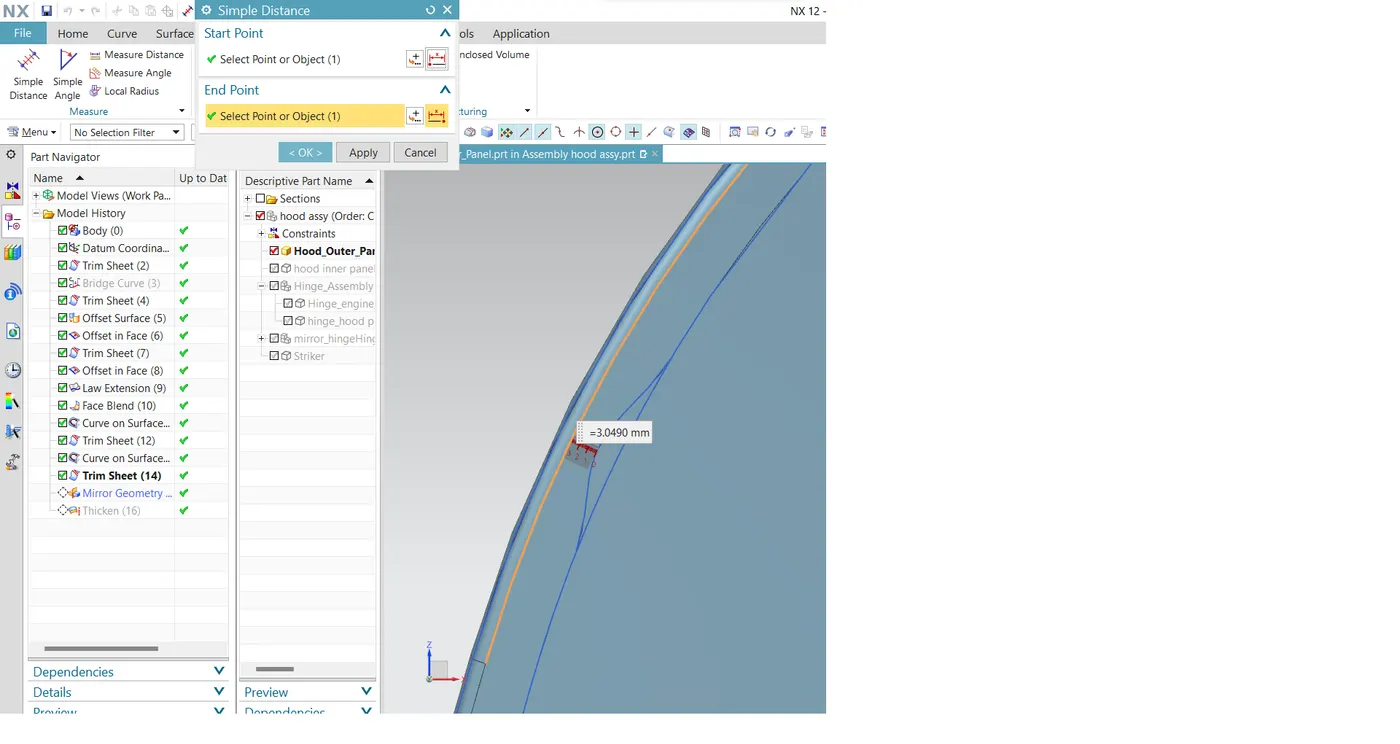
final output