Hood design-Week 2
Aim :- To design a Hood outer panel, inner panel and the necessary reinforcements by the given Master section and design parameters.
HOOD
The hood is the hinged cover over the engine of motor vehicles. Hoods can open to allow access to the engine compartment (or trunk on rear-engine and some mid-engine vehicles) for maintenance and repair. In design perspective hood should meet some specific conditions like pedestrian safety, hood head zone for the lock striker, force distribution when subjected to frontal collision (occupant safety), manufacturability etc. A typical hood assembly consist of hood outer panel, inner panel, latch and striker, hinge, hood stay. Hood stay is an apparatus for supporting the engine hood of a moto vehicle in its open position. It is the most critical part of the car as it is always exposed to the frontal crash, climatic conditions, heat generation by the engine compartment, etc. This gives access to the engine, battery, and other components which are always needed to be inspected at regular intervals. The time of inspection could be maintenance, repair or replacement of the parts. Hood is the combination of an outer and inner panel and as per its design consideration, it also dissipates energy outside the car body.
Hood mainly consist of 4 components:
Inner panel, Outer panel, Hinges and Latch striker.
DESIGN CONSIDERATIONS FOR CAR HOOD >
- Head Clearance Zone
The human comfort factor for automobile design is first consideration. It is a method to safeguard and protect space for the human user and necessary components that make up the vehicle being designed. All safety regulations are ensured during this process. Ergonomical consideration consist of Hood clearance, Hood Opening angle and location of support rod or gas stay.
Hood opening angle is different for different regions or countries. It is decided by the average height of the human in that particular country.
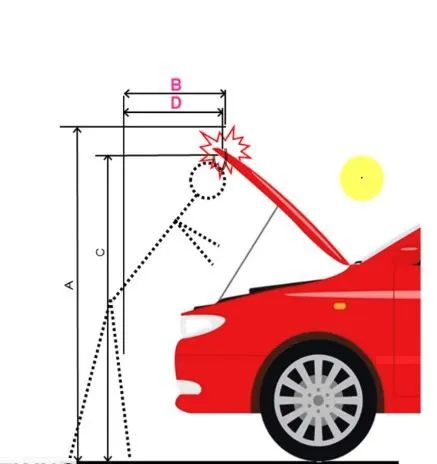
There are two types of hood stay, support rod and Gas stay which holds the position of hood at desired angle.
1) Support Rod :
The support rod is usually inside the engine compartment, when we open the hood and keep it in open condition, one end of the support rod attaches to the hood and supports it. this support rod has to be fixed manually onto the hood. The design of the support rod is not linear but it should have some bends to increase the rigidity and strength of the rod. the support rod should be mounted such that it does not collide with other parts, also the support rod should be mounted on the opposite side of the battery to avoid disturbance while removing the battery from car
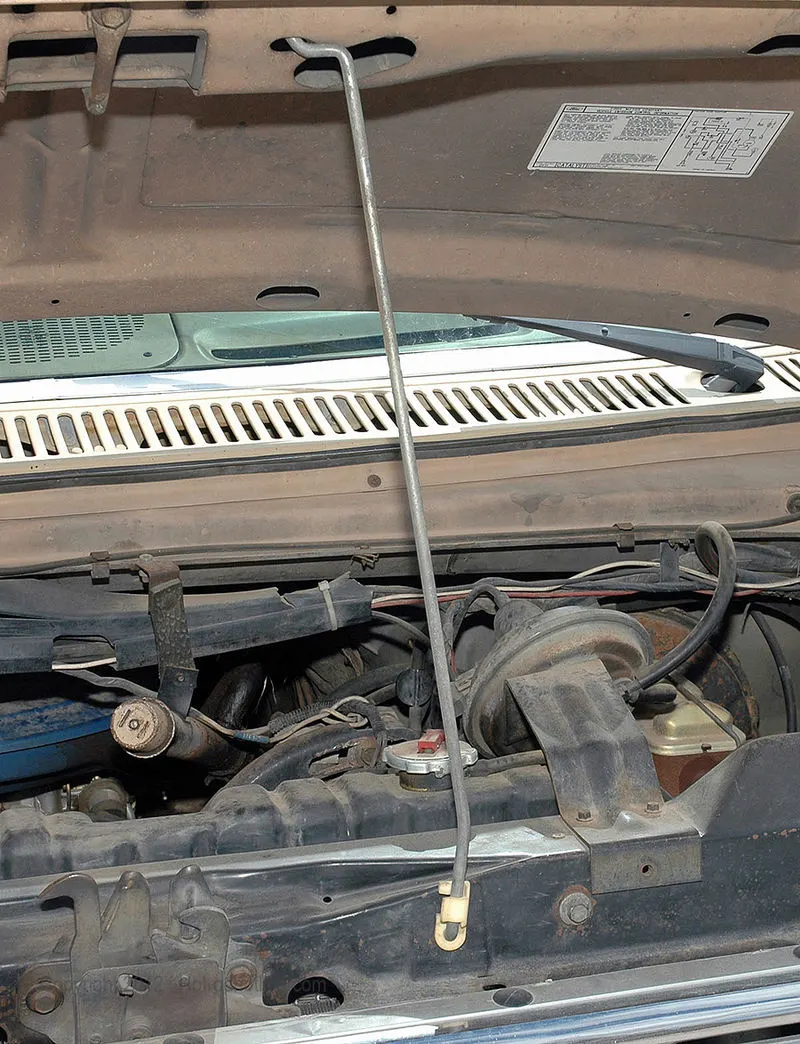
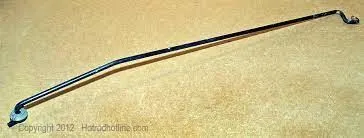
Advantages of support rod are as follows
- They are economical
- Light in weight.
Disadvantages of support rod are as follows
- When striking with the automotive body panel to leave scars which are very likely to cause rust.
- The metal rod is often too hot to be gripped by hands immidiately after the vehicle has been stopped.
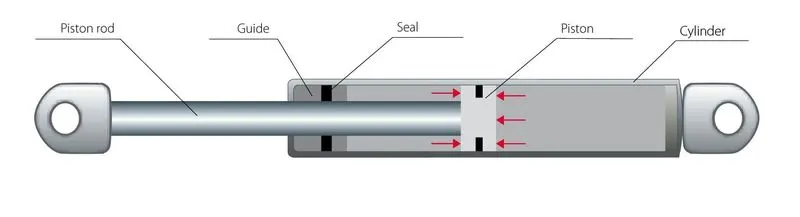
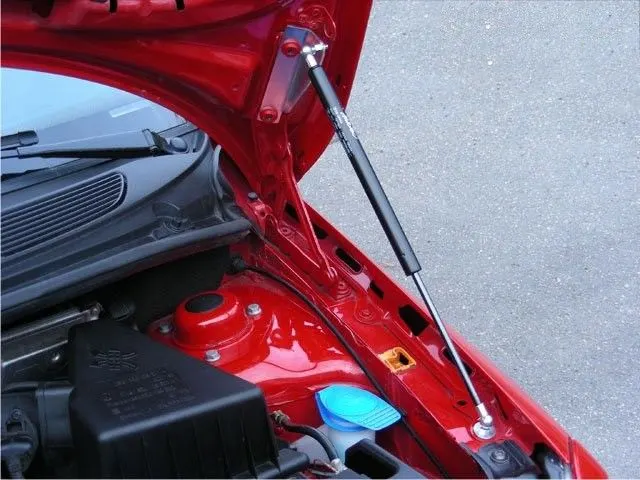
2) Gas Stay :
It is a device used for supporting the engine hood of a vehicle in its open postion by means of an actuator which is activated by gas.
In case of gas stay only intial force is required to open the hood then it automatically opens at desired angle with the extension of pneumatic piston in cylinder of gas stay assembly.
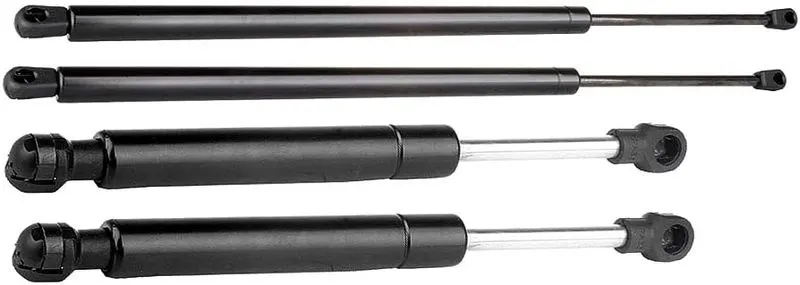
Advantages of Gas stay are as follows
- No human effort is required
- Easy to operate
Disadvantages of Gas stay are as follows
- They are heavy in weight compared to support rod.
- Cost is more.
- Consideration Of Noise Vibration Harshness (NVH)
Noise, vibration, and harshness (NVH), also known as noise and vibration (N&V), is the study and modification of the noise and vibration characteristics of vehicles, particularly cars and trucks. While noise and vibration can be readily measured, harshness is a subjective quality, and is measured either via "jury" evaluations, or with analytical tools that can provide results reflecting human subjective impressions.
- Safety Requirement
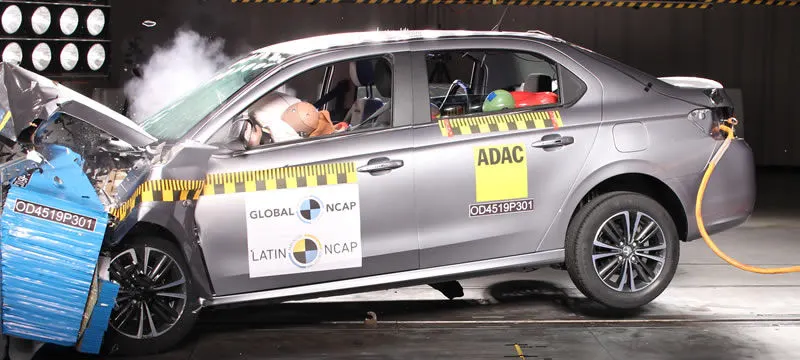
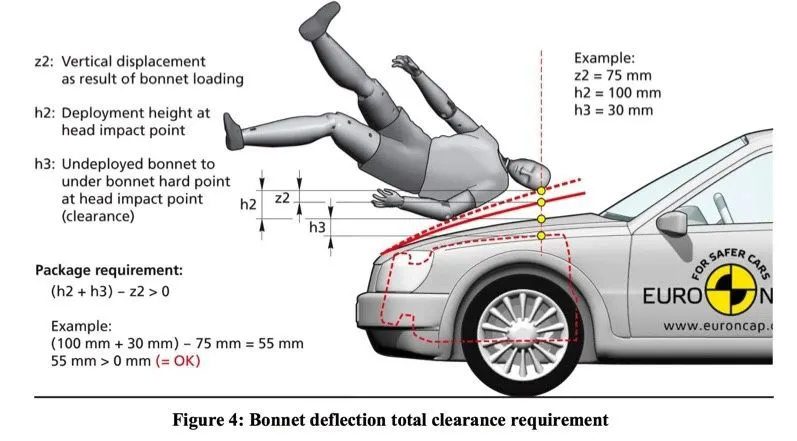
Safety is the most important criteria in automobile designs which concentrates on both pedestrian and occupant safety. The pedestrians are the most vulnerable road users and are at high risk of traffic accidents. The major reason for the fatality of the pedestrian in traffic accident is due to the head injury resulting from the hard impact of the head against the stiffer hood or the ground. This leads to the necessity of new inner hood panel which is less stiffer and pedestrian friendly. The head impact analysis on the present hood of the car was done to study the response of the adult head form at two different locations. Structural and modal analysis for the same present hood assembly was done to observe the local and global stiffness. In order to reduce the head injury of the pedestrian the local stiffness over the area of head impact has to be reduced thus the new design of hood inner panel was focused on that and the structural and modal analysis was done for the new design. The design with lesser local stiffness and similar global stiffness compared to the existing hood was finalized. The head impact analysis for the new design of hood inner panel was performed. The HIC values of the adult head form for two different locations are found to be 706 and 948 which meets the safety limitations of the adult head acceleration during impact as proposed by EEVC WG17 and Euro NCAP regulations. Thus the new design of the hood is pedestrian friendly, considerably maintaining the overall global stiffness of the hood. It should withstand in high collision forces as well as it should divert the forces in outward direction so intensity of collision forces would be reduced to cabin side of car.
- Pedestrain Safety:
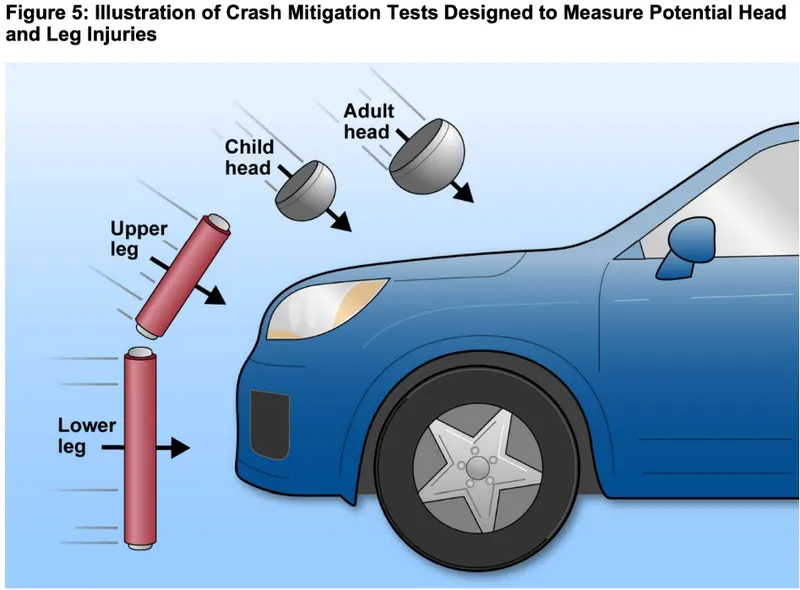
Design should be such way that it should reduce the injuries to the pedestrians in the event of a pedestrian vehicle collision. The objective of these measures is to reduce the number of road accident fatalities and the severity of injuries sustained by pedestrians involved in a collision with a vehicle in urban traffic.
The height, weight and age of the pedestrian all play a role in the kinematics of the event and in his ability to survive. Most fatalities for the younger population are related to brain damage caused by head impact on the bonnet. For older people additional risks include rupture of arteries in the lower limbs and pelvis from bumper and bonnet leading edges.Impact frequency and seriousness of injury has been studied for many years, resulting in rating systems and improved design.
- Wrap Around Distance:
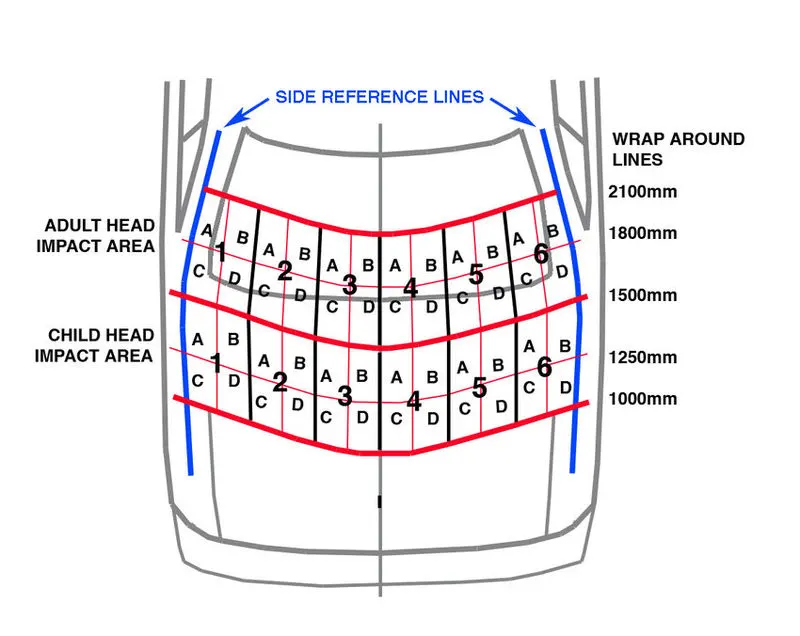
The headform test area is defined as the outer structure that includes the upper surface of all outer structures. It includes, but is not limited to, the bonnet, wings, windscreen scuttle, wiper arms/spindles, windscreen frame, A-pillars and roof. It is bounded by the geometric trace of the 1000mm wrap around line in the front, the Bonnet Side Reference Lines and the 2100mm wrap around distance (WAD)
Side Reference line :- The geometric trace of the highest points of contact between a straight edge, held parallel to the lateral vertical plane of the vehicle and inclined 45 deg. is traversed down the side of the front structure, and the side of the front structure.
Child Head Impact Zone :- 1000 WAD to 1500 WAD
Adult Head Impact Zone :- 1500 WAD to 2100 WAD

DESIGN
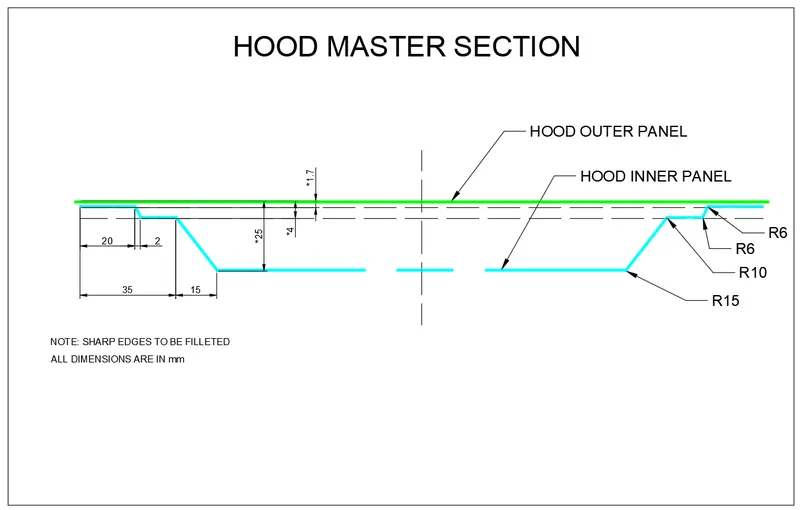
Master section
Master section is a predefined sketch which will be adaptable for different situations.
Four main parts of Hood assembly are as follows
- Outer Panel
- Inner Panel
- latch and striker system
- Hinge system
Hood Thickness Information
- Outer Panel Thickness = 0.75mm
- Inner Panel Thickness = 0.75mm
- Reinforcement Thickness = 1.5mm
Outer Panel
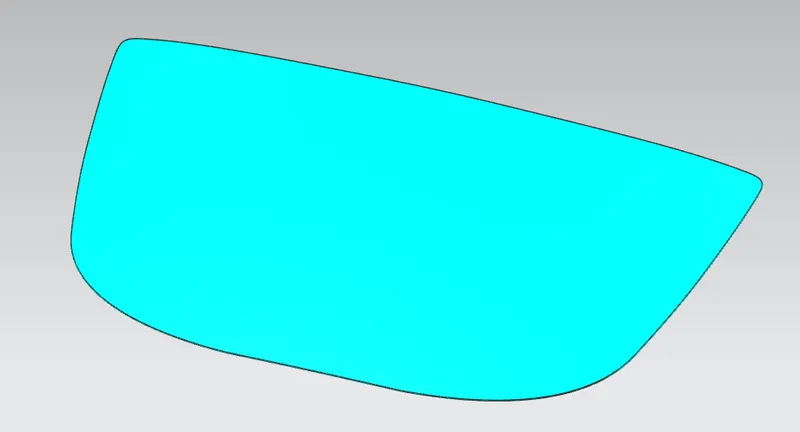
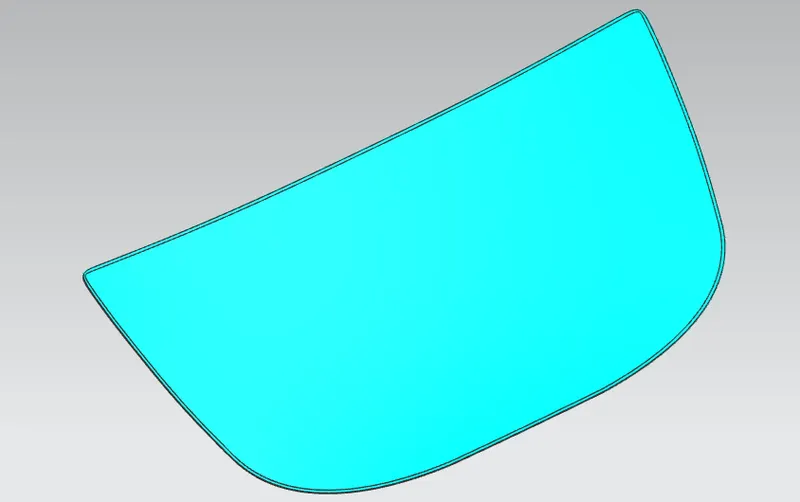
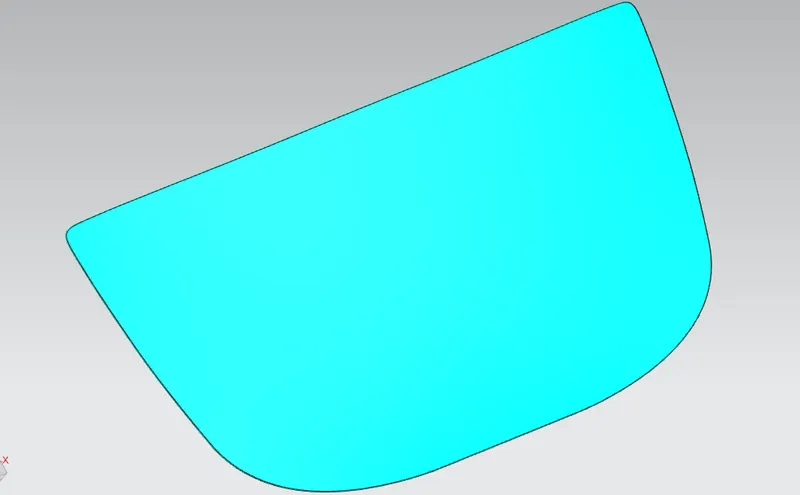
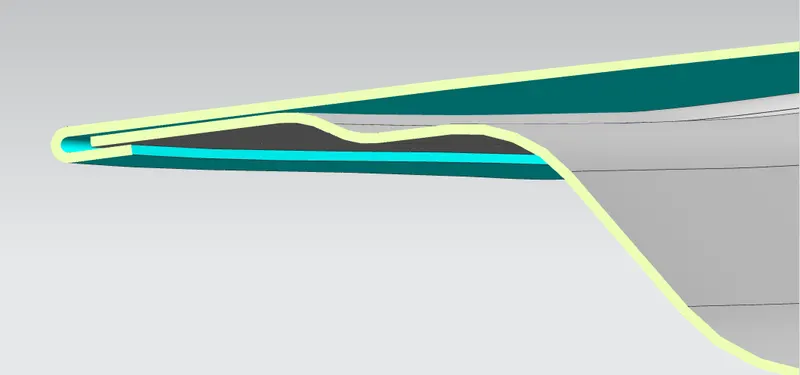
Outer panels are the aesthetic elements of a car. It is the styling team who provides the skin for the outer panel. The shape, position and size of the hood should satisfy the safety norms. So while designing the hood we should give more importance to pedestrian safety. The outer panel is attached to the inner panel by hemming. So, it is necessary to provide required hemming flange and reliefs for the hemming operation. We also provide mastic sealants between outer panel and inner panel to reduce vibration. The shape of the Outer panel is made aerodynamic in order to minimize the air effect. Shape of Outer panel is reffered as a base to design a inner panel.
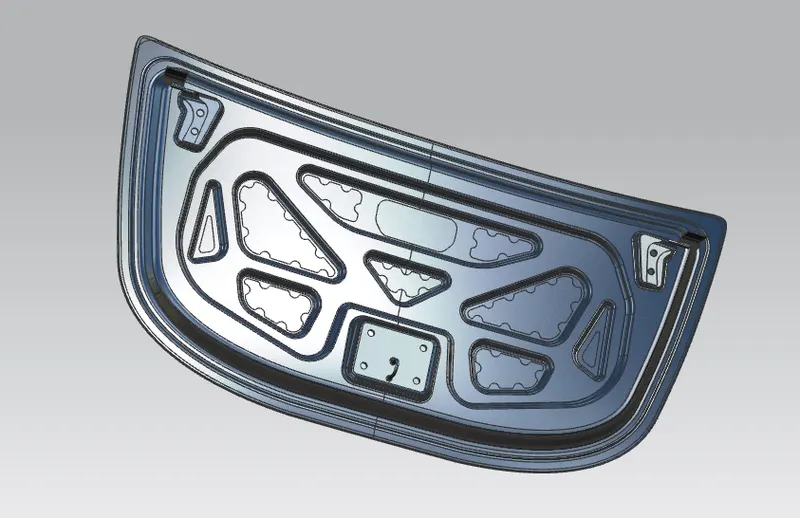
BOTTOM VIEW TOP VIEW
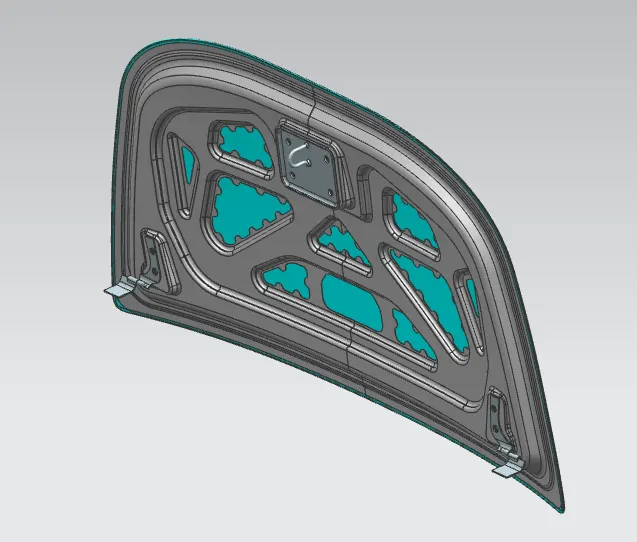
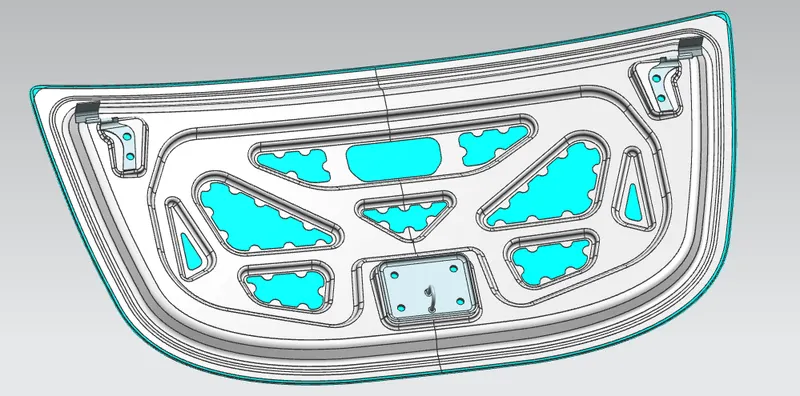
Inner Panel
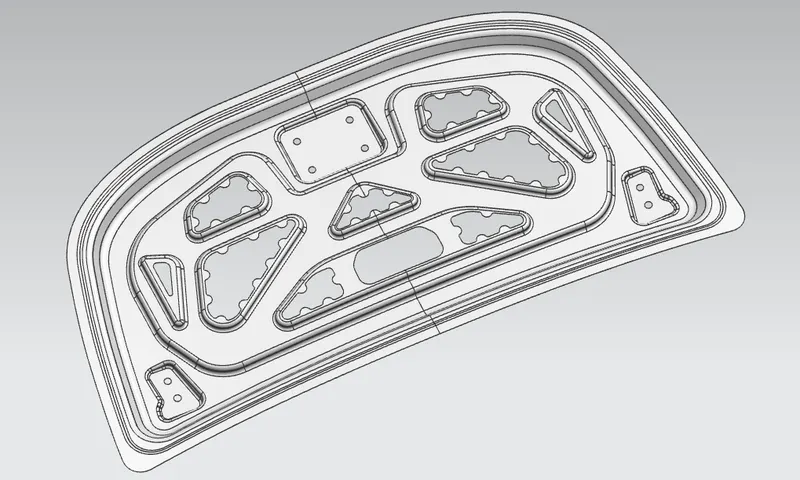
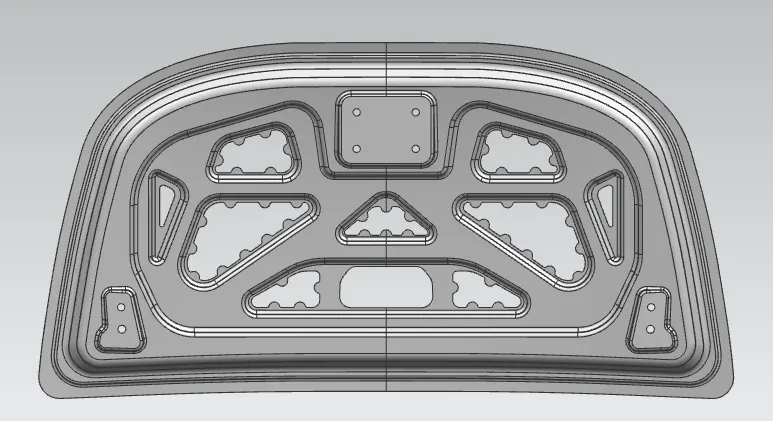
Hood Inner panel is main functional part in hood design. It gives structural support and strength to the outer panel of Hood.The master section represents the initial emboss shape and size. Then we provide the emboss for the latch and hinge elements after fixing the location.
Latch and striker
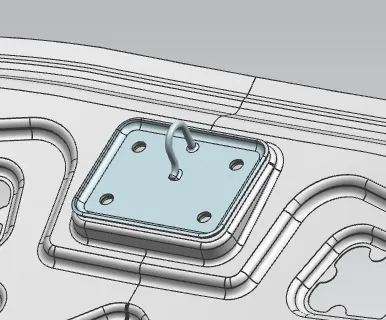
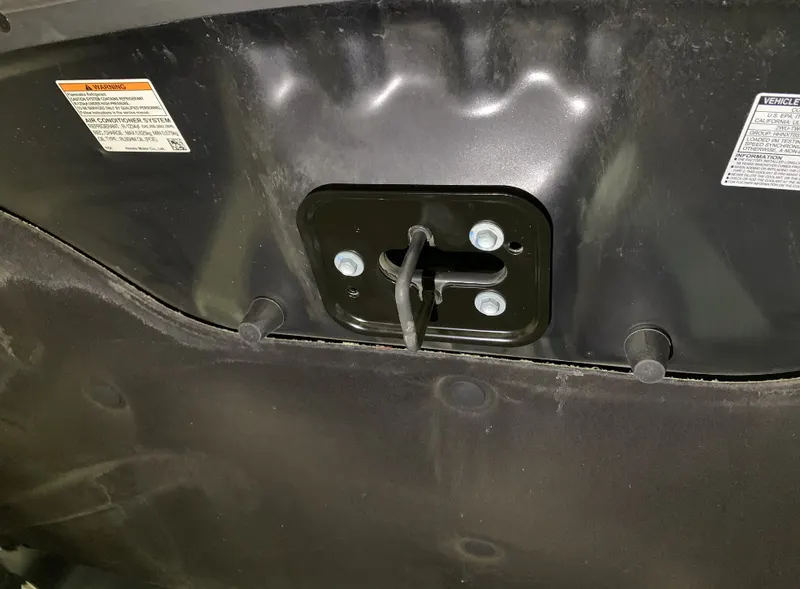
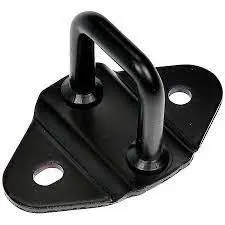
This system is the attachment of hood assembly and vehicle body. The hood latch system must be able to catch the striker of the hood upon closing and instantaneously, as well as automatically, lock. Once in the locked state, it must remain locked and only unlock upon the operator’s control.
Hinge system
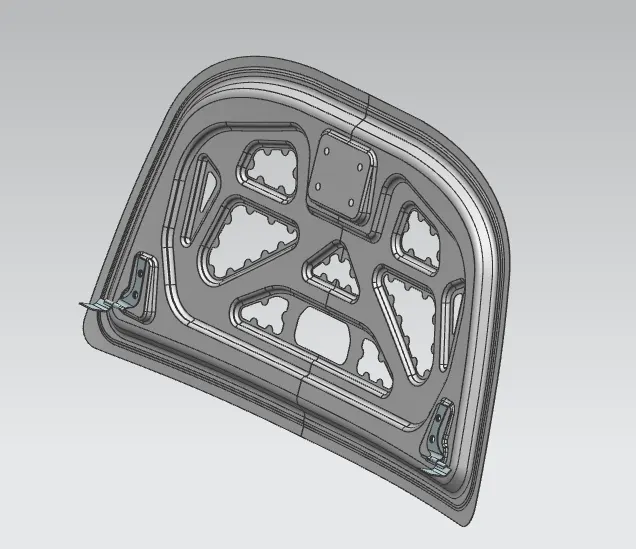
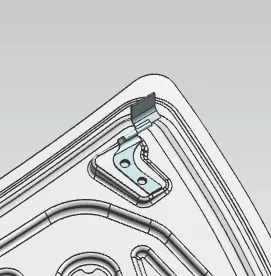
The hinges are used to guide and hold the hood when open & close. Hinge assembly consists of two parts one is connected to the hood inner panel and second is connected to the vehicle body.
Reinforcements
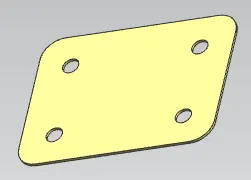
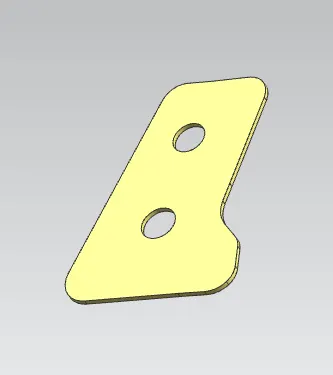
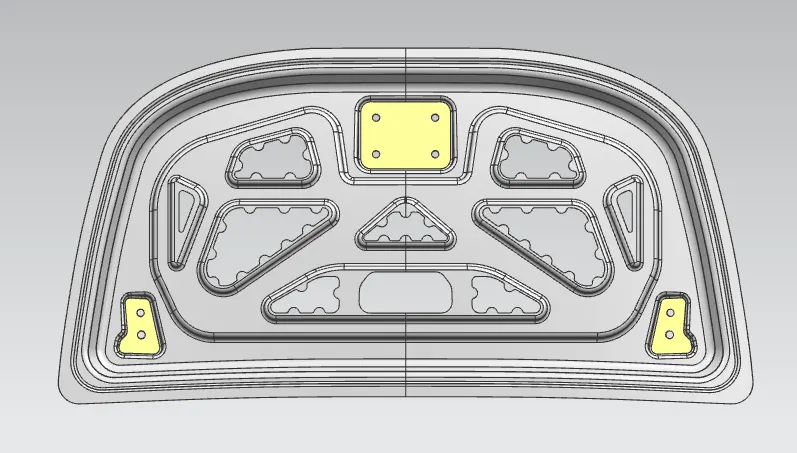
Reinforcement are provided mainly in hinge and latch region. When hinge and latch assemblies are attached to inner panel, strength of that area reduces locally so we add some additional material to increase the strength of the area locally. Thickness of reinforcement material is provided according to the design requirements. In this project, 1.5mm thickness has been given to both latch and hinge reinforcement.
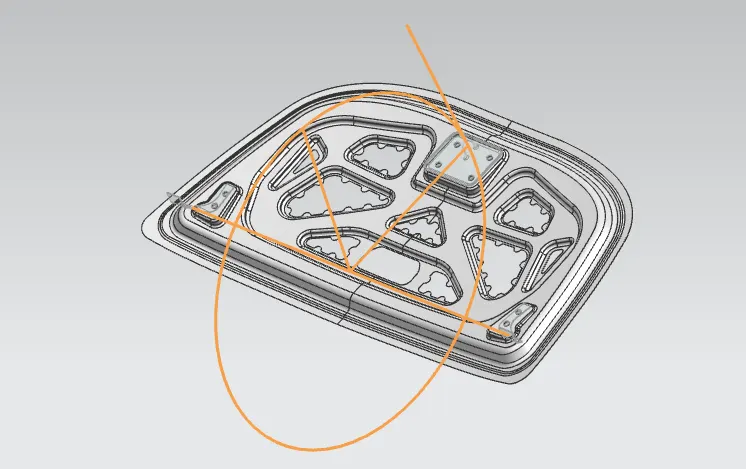
Latch Trajectory
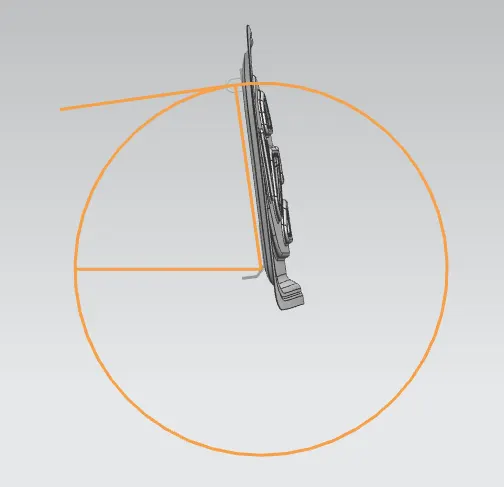
Circle is drawn from the hinge axis center so we can finalize the position of latch striker. For proper mating, the tip of the striker should be tangential to the latch trajectory. the position of latch striker follows the path of this circle.
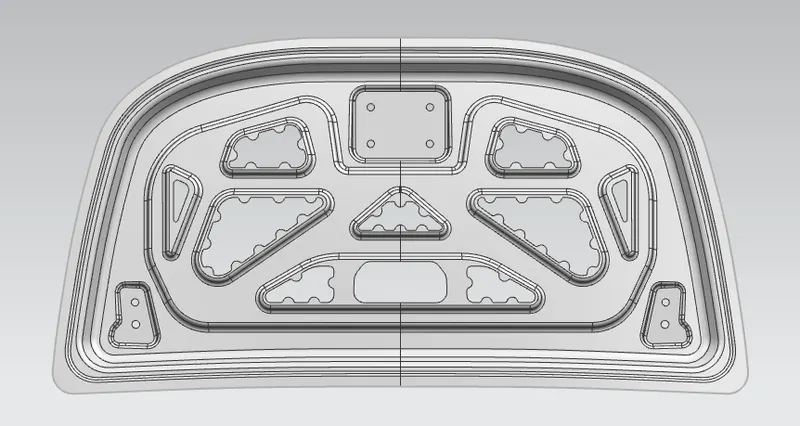
Emboss definitions
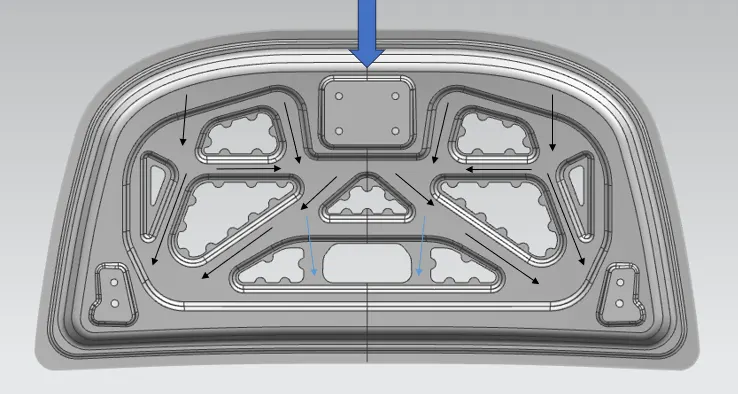
We can increase the stiffness of the inner panel through these embosses. Embosses are provided to increase the strength of inner panel. Shape of embosses also determines the direction of collision force distribution. the shape of the embosses should be designed in such a way that, the collision forces should be directed towards outward side of the car (towards hinge side).
Force distribution
Mastic data
Hood commonly possess large surface area and hemming can only be provided through its boundary. We cannot use other joining techniques like welding, riveting etc because they leave marks on the outer panel which spoil its aesthetic appearance. So, mastic sealants are used to stick the inner surfaces of outer panel and inner panel. Mastic sealants are elastic compound that behave like rubber. It is applied between the inner and outer panels at specified spots.
It also helps in improving NVH (Noise, vibration, and harshness) characteristics.
Mastic salant points are effective around a circular region of 80mm diameter.
Manufacturing Aspects
The most important design consideration of any component is manufacturing aspect. In sheet metal, the component is manufactured by press tool dies. The Press tool is stamping which includes cutting operations like shearing, piercing etc. and forming operations like bending, Deep drawing, hemming etc. The main focus of manufacturing aspect is to manufacture hood assembly with minimum operation sequence and process time.
Deep Drawing
The manufacturing of deep, cuplike products from thin sheet metal is known as deep drawing. The process involves a punch with a round comer and a die with a large radius. The punch-die clearance is slightly larger than the thickness of the sheet metal to be deep drawn.
As the load applied through the punch, the sheet metal is forced to flow radially and sink into the die cavity to form a cup. The process is best suitable for complex shaped problems.
The deep drawing process is a forming process which occurs under a combination of tensile and compressive conditions. A flat sheet metal blank is formed into a hollow body open on one side or a hollow body is formed into a hollow body with a smaller cross-section.
Deep drawing creates a seamless effect on metal, allowing for the creation of a smooth, curved edge. Deep drawn metal parts are created using a single metal blank, not a repeated course of metal blanks as is typically the case with traditional metal stamping.
Deep drawing is one of the most widely used processes in sheet metal forming. Apart from its use in many other sectors, it is applied in the automotive industry for the manufacturing of car body parts.
When drawing complex car body parts in practice, there is usually a combination of stretch and deep drawing involved. It is necessary that the sheet metal is stretched as well as possible without reaching the material’s limits (e.g. splits, wrinkles).
Hemming
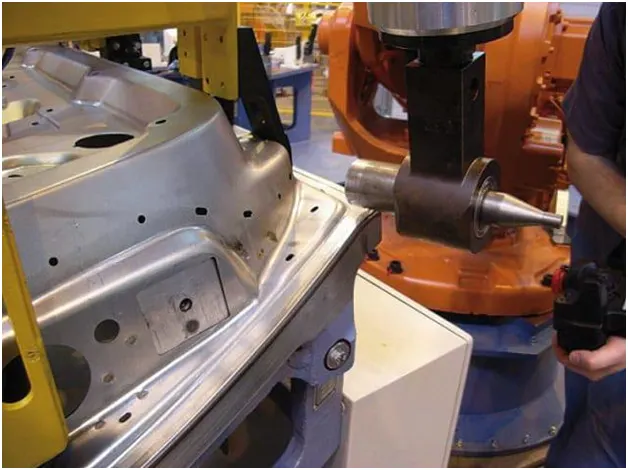
Hemming is a forming operation in which the edges of the sheet are folded or folded over another part in order to achieve a tight fit. Normally hemming operations are used to connect parts together, to improve the appearance of a part and to reinforce part edges. In car part production, hemming is used in assembly as a secondary operation after deep drawing, trimming and flanging operations to join two sheet metal parts (outer and inner) together. Typical parts for this type of assembly are hoods, doors, trunk lids and fenders. The accuracy of the hemming operation is very important since it affects the appearance of the surface and surface quality. Material deformations, which occur during the hemming process, can lead to dimensional variations and other defects in parts. Typical hemming defects are splits or wrinkles in the flange, material overlaps in the corner areas or material roll-in. It is important to provide required reliefs at the corners.
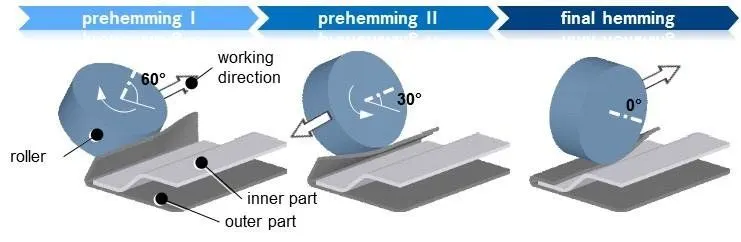
HOOD ASSEMBLY