Hood design-Week 2
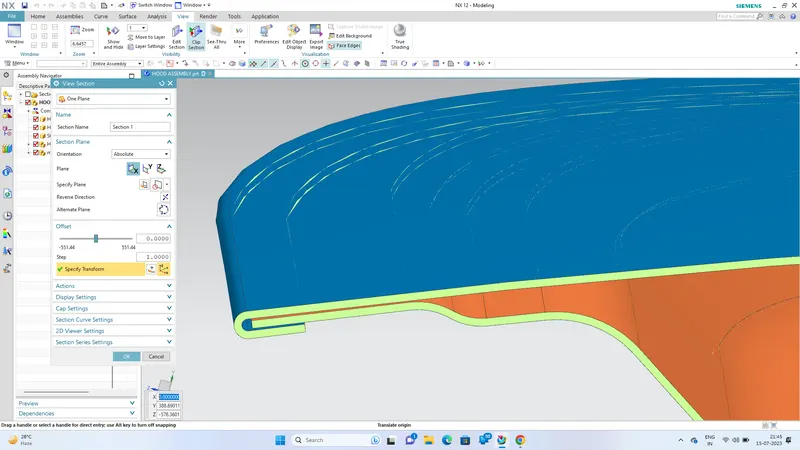
-
Introduction The purpose of this report is to provide a detailed explanation of the design and manufacturing process for the hood of a vehicle. The hood is an essential component of a vehicle's exterior, providing protection for the engine and other vital components. This report will cover various aspects of the hood design, including its components, latch trajectory, mastic data, emboss definitions, and the manufacturing process involving deep-drawing and hemming.
-
Hood Components The hood consists of three main components: the outer panel, inner panel, and necessary reinforcements. Each component serves a specific function and contributes to the overall structural integrity and aesthetic appeal of the hood.
2.1 Outer Panel The outer panel is the visible and exposed part of the hood. It is responsible for providing a smooth and stylish appearance while protecting the underlying components. The thickness of the outer panel is specified as 0.75mm.
2.2 Inner Panel The inner panel provides structural support to the hood. It is located on the underside of the hood and helps maintain its shape and rigidity. The inner panel also contributes to noise reduction and acts as an additional layer of protection. The thickness of the inner panel is specified as 0.75mm.
2.3 Reinforcements Reinforcements are strategically placed within the hood to enhance its strength and rigidity. These reinforcements are typically made from high-strength materials and are added in critical areas where additional support is required. The thickness of the reinforcements used in the design is specified as 1.5mm.
-
Latch Trajectory The latch trajectory refers to the path followed by the hood latch during the opening and closing process. It is crucial to ensure that the latch trajectory is smooth and allows for easy operation. The design must consider factors such as latch clearance, alignment, and safety.
-
Mastic Data Mastic is a sealing material used to prevent water, dust, and noise from entering the vehicle's engine compartment through gaps between the hood and the body. The mastic data includes the type of mastic material, its dimensions, and the locations where it needs to be applied. Proper application of mastic helps improve the vehicle's aerodynamics and reduces noise levels.
-
Emboss Definitions Embosses are raised portions on the hood's surface that provide additional strength and stiffness. These embosses are strategically designed to enhance the hood's structural integrity and minimize panel deformation. The emboss definitions specify the dimensions, locations, and patterns of the embosses on the hood.
-
Manufacturing Process The manufacturing process of the hood involves several stages, including deep-drawing and hemming.
6.1 Deep-Drawing Deep-drawing is a process used to shape flat sheets of metal into three-dimensional forms. In the case of the hood, the outer panel and inner panel are formed through deep-drawing. The specified thicknesses of the outer panel (0.75mm) and inner panel (0.75mm) are taken into account during the deep-drawing process to ensure the desired shape and dimensions are achieved.
6.2 Hemming Hemming is a process used to join two or more sheet metal components together by folding or bending one edge over the other. In the case of the hood, hemming is employed to attach the outer panel and inner panel, creating a secure and rigid structure. The necessary reinforcements are also integrated into the hemming process to provide additional strength.
- Parameters and Design Considerations During the design process of the hood, several parameters and considerations are followed to ensure optimal performance and durability. These include:
- Structural strength: The design must provide sufficient strength to withstand various loads and stresses encountered during vehicle operation.
- Weight optimization: Efforts are made to minimize the weight of the hood without compromising its structural integrity.
- Corrosion resistance: Suitable materials and coatings are selected to protect the hood from corrosion and environmental damage.
- Safety: The design should consider pedestrian safety by incorporating features that minimize injury risks in case of a collision.
- Aesthetics: The design of the hood should complement the overall vehicle design and provide a visually appealing appearance.
- Conclusion In conclusion, the hood design is a critical aspect of vehicle manufacturing. It involves the careful consideration of various components, latch trajectory, mastic data, emboss definitions, and manufacturing processes such as deep-drawing and hemming. By adhering to the specified thicknesses and following the design parameters, a functional, sturdy, and visually appealing hood can be produced, ensuring the overall performance and safety of the vehicle.