Hood design-Week 2
DESIGN OF A HOOD
Objective: To designing a hood(development inner hood panel Emboss, outer panel hem) and assembly the hood by using NX12
Introduction of Hood:
The hood is a sheet metal component, which is, covered an engine in a front-engine vehicle. The hood can open to allow access to the engine compartment. The hood consists of two panels one is an inner panel, and another one is an outer panel, hinge reinforcement, latch system, the outer panel skin surface from style department with proper aesthetic look, gap, and falseness, Outer hood panel follows the aerodynamic criteria. Hood inner is the main functional part in hood design It is the most complicated and weight-consuming part in the hood assembly. In the vehicle development, the hood inner was designed to meet the standard load cases. The hood latch system is vital to all cars, trucks, or other vehicles. This system is the attachment of hood assembly and vehicle body. The hinges also guide and hold the hood when open &close. Hood can call it a bonnet and this bonnet shape has made it aerodynamic in order to minimize the air effect.
Components of hood
Hood inner panel
Hood outer panel
latch
hinge and the reinforcements
Data to be used
Hood Thickness Information
- Outer Panel Thickness = 0.75mm
- Inner Panel Thickness = 0.75mm
- Reinforcement Thickness = 1.5mm
Master sketch
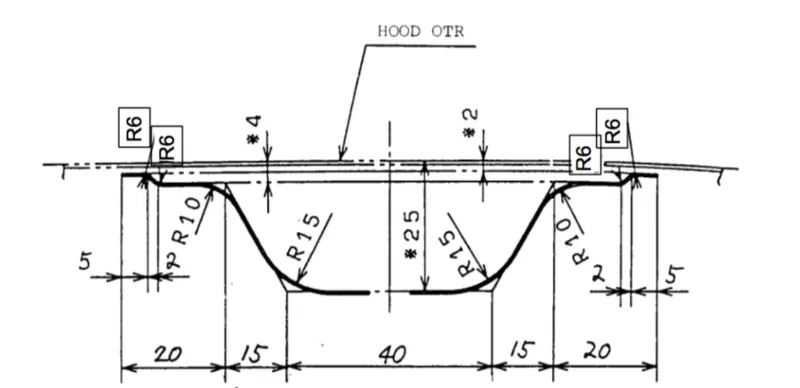
Design procedure of hood
- Development an inner panel
- Create an emboss on the inner panel
- Positioning of hinge and latch
- Designing outer panel with hem
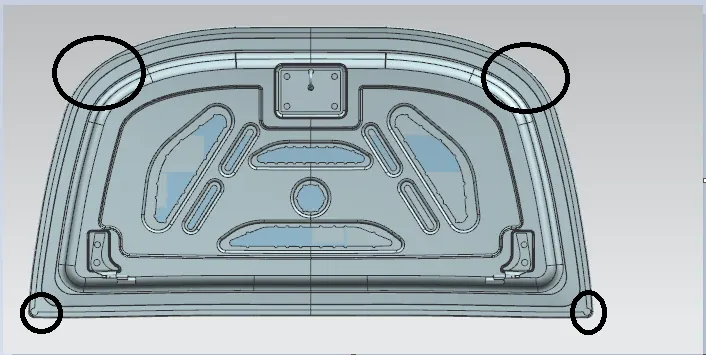
- Corners Relief cut on the outer panel
Development an inner panel
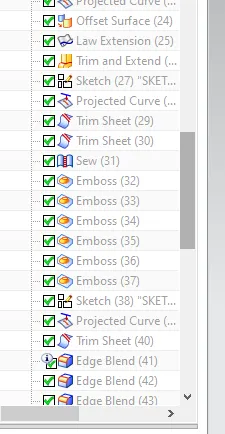
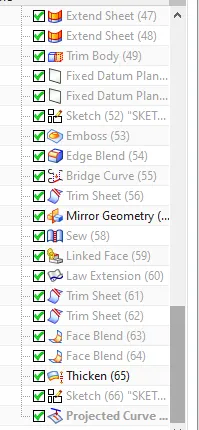
Hood inner is the main functional part of the hood design. inner panel supports outer panel. for developing the inner panel extract the outer panel into hood inner panel part navigator and create flanges as given master sketch and trim unwanted body and use the edge blend tool for creating smooth corners and mirror the body in ZY plane using sew tool for joining the mirror inner panel and thicken the inner panel with 0.75
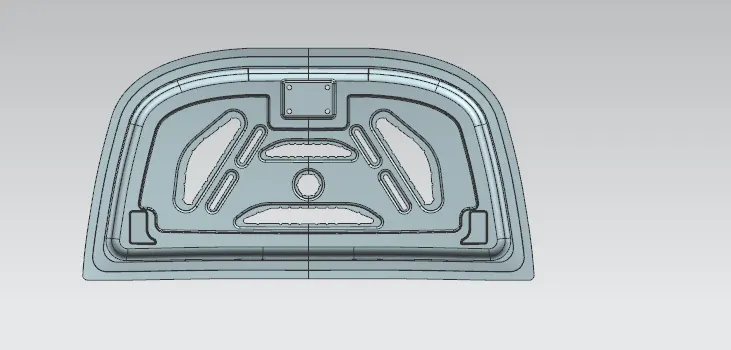
tree images of the inner panel
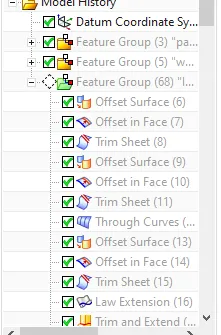
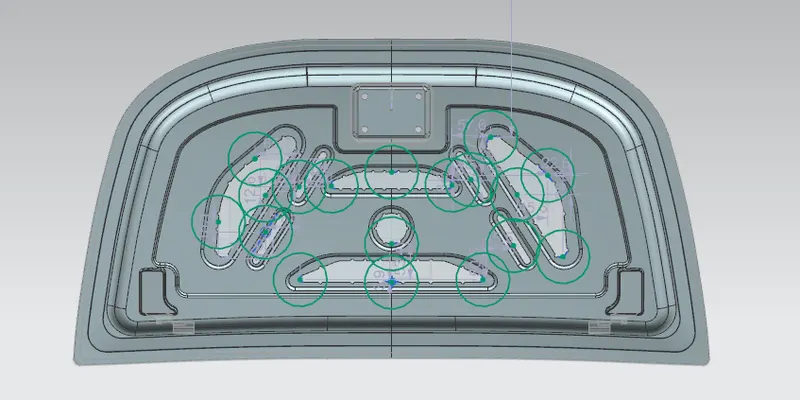
Create an emboss on the inner panel
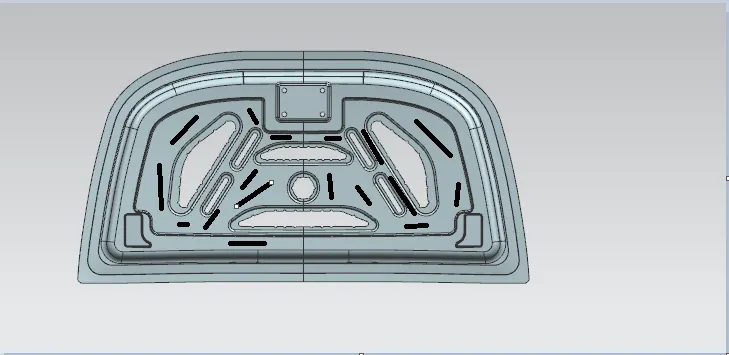
embossing is used in the inner panel used to increase the stiffness of metal and mainly used pedestrian safety
Positioning of hinge and latch
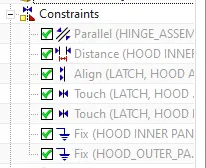
Hinge is used for closing and opening the hood for hinge assembling on the hood we have to create emboss on both bottom sides hood because hood has some inclined due to inclined we can't make fastening hinge on a hinge so we create emboss on both bottom sides hood and assembled by using touch constraints
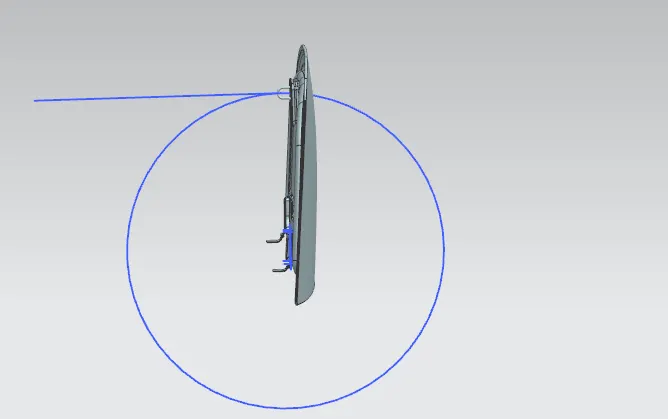
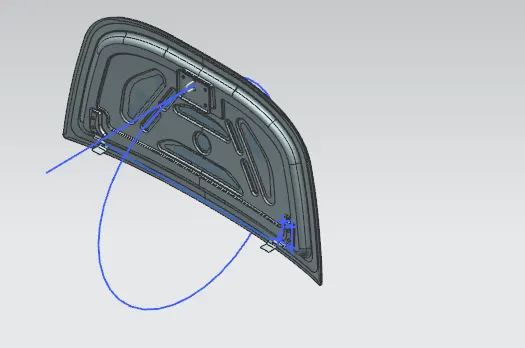
for striker placing, we have to create a circle called as trajectory circle by referring mid of hinge axis and draw a large circle on it to make assembly
Designing outer panel with hem
Corners Relief cut on the outer panel
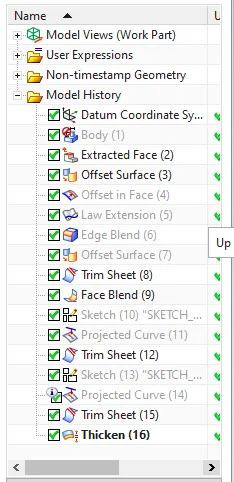
outer panel tree images
assembly of hood
assembly constrains tree image
mastic data
mastic data is a type of sealant this mastic sealant used to join to metals in the hood we apply mastic on the inner and outer panels for reducing vibration's
Deep drawing
Deep drawing is a sheet metal forming process in which a sheet metal blank is radially drawn into a forming die by the mechanical action of a punch.[1] It is thus a shape transformation process with material retention. The process is considered a "deep" drawing when the depth of the drawn part exceeds its diameter. This is achieved by redrawing the part through a series of dies. The flange region (sheet metal in the die shoulder area) experiences radial drawing stress and tangential compressive stress due to the material retention property. These compressive stresses (hoop stresses) result in flange wrinkles (wrinkles of the first order). Wrinkles can be prevented by using a blank holder, the function of which is to facilitate controlled material flow into the die radius
Embossing:
Embossing is a metal forming process for producing raised or sunken design or relief in sheet material by roller dies with no change in metal thickness or passing sheet or a strip of metal between rolls of the desired pattern
Hemming:
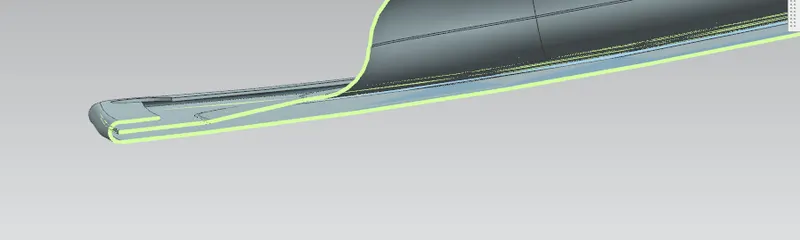
Hemming and seaming are two similar metalworking processes in which a sheet metal edge is rolled over onto itself. Hemming is the process in which the edge is rolled flush to itself, while a seam joins the edges of two materials. Hems are commonly used to reinforce an edge, hide burrs and rough edges, and improve the appearance
Different views of the hood
Isometric view of the hood
Front view of the hood
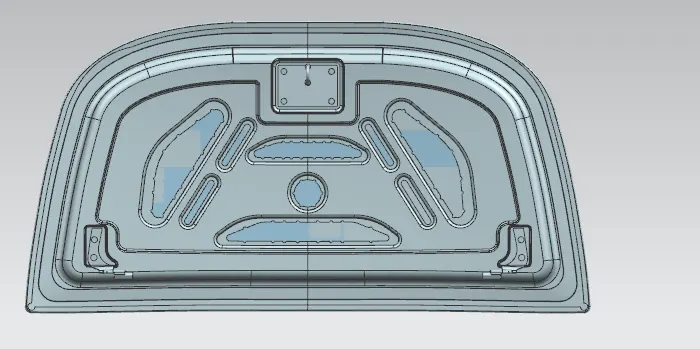
Right view of the hood