Hood design-Week 2
AIM
To create and assemble the hood inner panel, outer panel and the necessary reinforcements by following the master section mentioned with the design parameters.
SOFTWRE USED
NX SIEMENS STUDENT VERSION
OBJECTIVES
Design hood inner panel, outer panel and the necessary reinforcements by following master section mentioned with the design parameters.
A detailed report about the hood design which includes a detailed explanation abouut hood and its components, latch trajectory, mastic data, emboss definitions, manufacturing process like deep-drawing and hemming, and all the parameters followed in the design.
HOOD
Hood is the hinged cover over the engine of motor vehicles. Hood can open to llow access to the engine comprtment, or trunk on rear-engine and some mid-engine vehicles formaintenance and repair.
On front-engined cars, the hood may be hinged at either the front or the reredge, or in earlier models it may be split into two sections, one each side, each hinged along the centre line. Another variant combines the bonnet and wheelarches into one section which allows the entire front bodywork to tilt forwards around a pivot near the front of the vehicle.
MATERIALS USED
Hoods are typically made of the same material as the rest of the body work. This may include steel, aluminium, fiberglass or carbon fiber. Some aftermarket companies produce replacements for steel hoods in fibreglass or crbon fiber to reduce vehicle weight.
SAFETY AND SECURITY MECHANISMS
The hood safety system is common on most vehicles and usually consists of an interior hood latch handle, hood release cable and hood latch assembly. The hood latch handle is usually located below the steering wheel, beside the driver's seat or set into the door frame. On race cars or cars with aftermarket hoods the hood may be held down by hood buttoned down if thge latch fails.
PEDESTRIAN SAFETY
In Japan and Europe, regulations have come into effect that place a limit on the severity of pedestrian head injury when struck by motor vehicle. This is leading to more advanced hood designs, as evidenced by multicone hood inner panel designs as found on the Mazda RX-8 and other vehicles. Other changes are being made to use the hood as an active structure and push its surface several centimeters away from the hard motor components during a pedestrian crash. This may be achieved by mechanical or pyrotechnic devices.
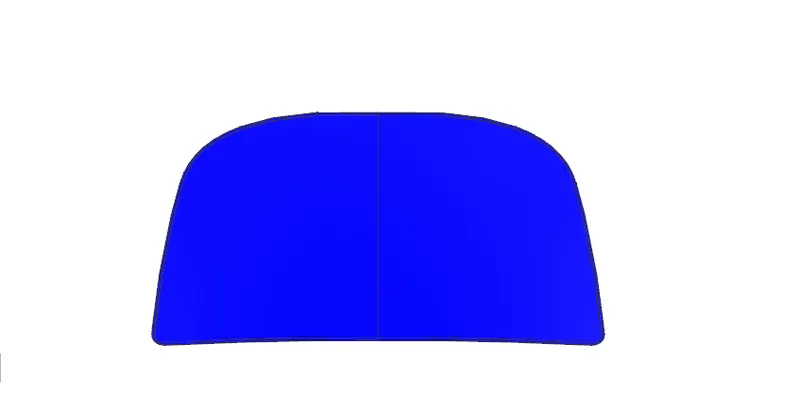
HOOD OUTER PANEL
It is the aesthetic part of the hood. In other words, it is the outer skin of the hood which provides a luxurious look to the vehicle. Thickness of outer panel is 0.75mm.
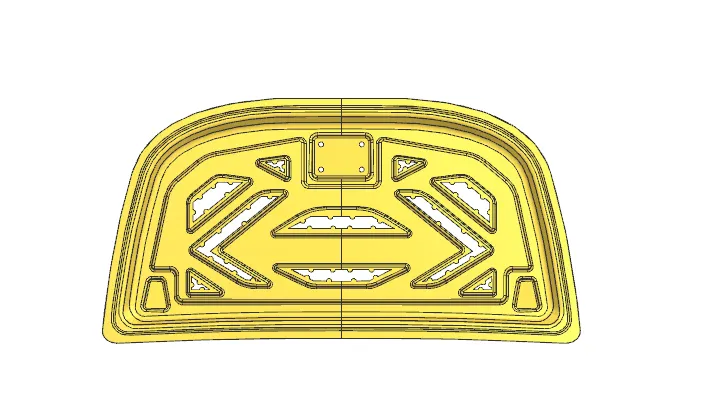
HOOD INNER PANEL
The hood inner panel of thickness 0.75mm provides strenght and rigidity to the hood. It also directs the force of the collision outwards instead of into the engine compartment of the car.
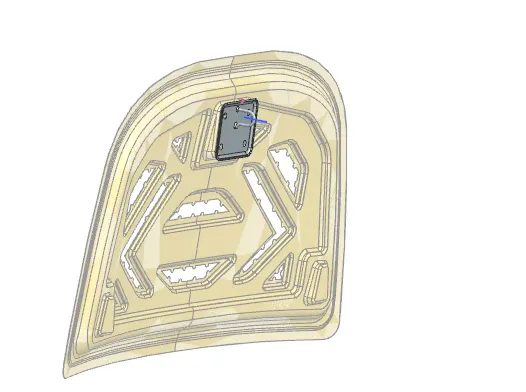
STRIKER
It bolts to the underside of the hood at the front. It engages the hood latch when closed. It prevents any loose movement during car motion.
HINGE ASSEMBLY
A hood hinge assembly having a pivot pin having a D-shaped cross sectional shape positioned within a recess. The hood and pin are pivotal to a positon whereat the D-shaped cross section is oriented to pass through a slotted opening to the recess to thereby allow the hood to be removed or installed on the vehicle.
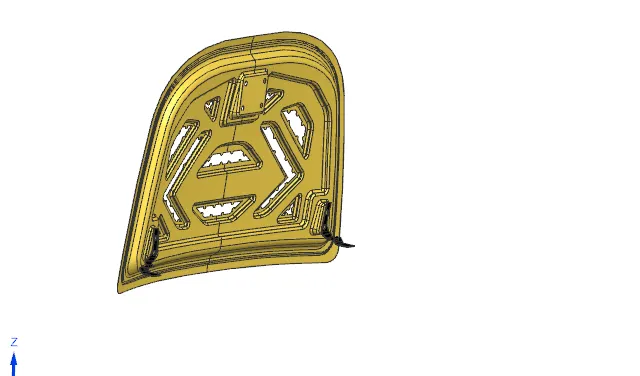
LATCH TRAJECTORY
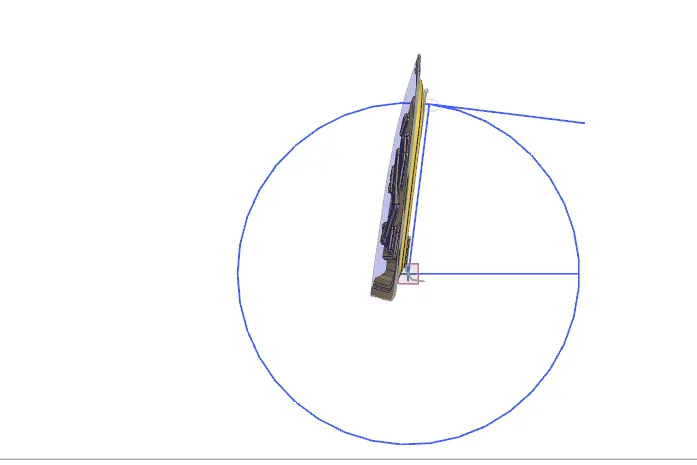
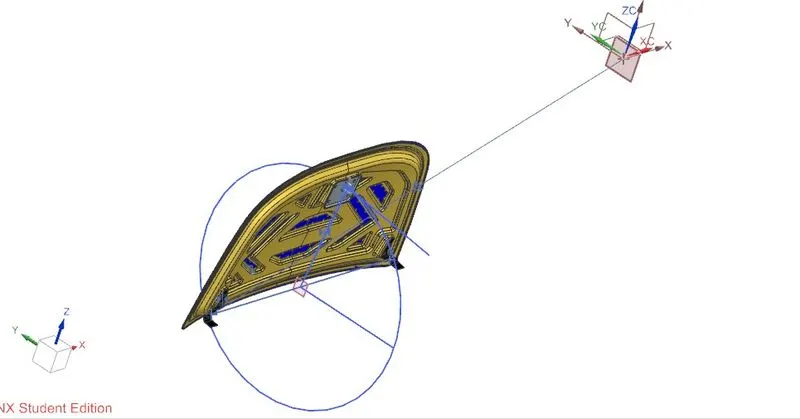
The latch trajectory is the path which the striker will follow when the hood is open/closed while pivoting on the hinge axis. The latch trajecxtory is taken as a circle with the hinge axis. The latch trajectory is taken as a circle with the hinge axis as the center of the circle.
REINFORCEMENTS
The reinforcements are attached to the hood inner panel using the spot welding method. The positions to be spot welded are provided by the design team.
MASTIC DATA
The mastic sealant is an elastic compound that behaves like a rubber. The mastic points are defined on the hood inner panel where the hood can easily deform. They help the hood outer panel to come back to its original shape after it gets deformed.
EMBOSS DEFINITIONS
After performing the initial stages of design, we will provide local embosses to strengthen the component. The component will be strengthened based on the master section. When a force impacts the hood from the front, it travels in an upward direction. The component is designed to divert the force away from the passengers into the hinges.
DEEP DRAWING
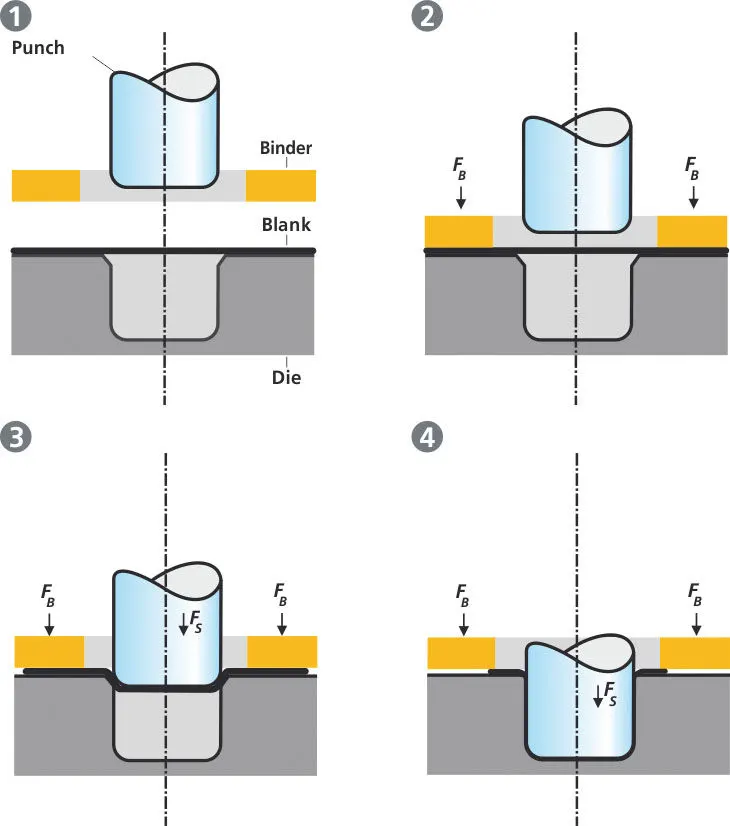
The deep drawing process is a forming process which occurs under a combination of tensile and compressive conditions. A flat sheet metal blank is formed into a hollow body open on one side or a hollow body is formed into a hollow bdy with a smaller cross-section.
Deep drawing processes are divided into three types:
- Deep drawing with tools
- Deep drawing with active means
- Deep drawing with active energy
In the automotive industry, deep drawing is usually carried out using rigid tools. The rigid tools consists of a punch, die and binder. In deep drawing, the plate holder closes after the metal sheet blank has been inserted.
HEMMING
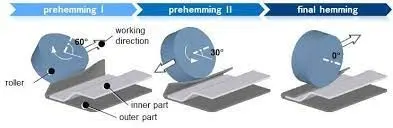
Hemming is a sheet metal forming process in which sheets are joined by bending it to 180°. Automotive body panels and automotive parts are formed by hemming process.
RELIEFS
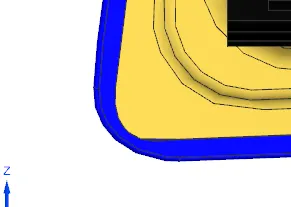
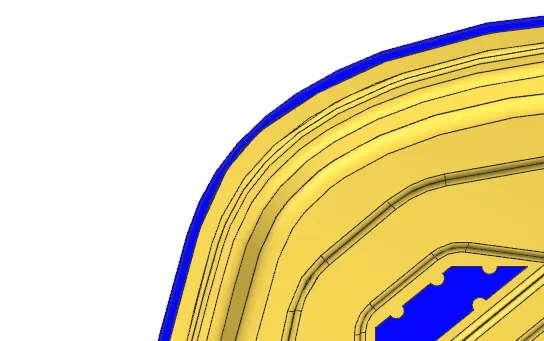
HOOD ASSEMBLY
CONCLUSION
Thus the hood inner panel, outer panel and the necessary reinforcements are created and assembled by following the master section mentioned with the design parameters.