Hood design-Week 2
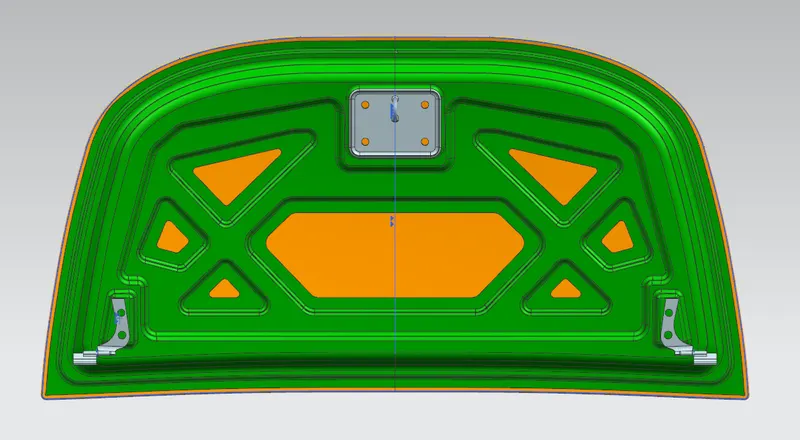
What Is a Car Hood?
A car hood, also referred to as a “bonnet” in some countries, is the hinged cover that rests over the engine bay of a front-engine vehicle. The car hood protects the engine and connected parts from the elements while providing easy access for repairs and maintenance.
HOOD DESIGN
AIM: Our aim for this project is to create a hood assembly from the hood outer panel which is provided as an input surface to us according to the master section sketch.
MASTER SECTION SKETCH
THEORY: The hood is an opening body panel covering the front-engine vehicle's engine. The hood is an assembly of the following parts:
- Hood outer panel
- Hood inner panel
- Striker and latch
- Hinge assembles
The hood inner panel provides strength while the hood outer panel is the metal cover. While designing the hood, we have to keep the following things in mind at the initial level
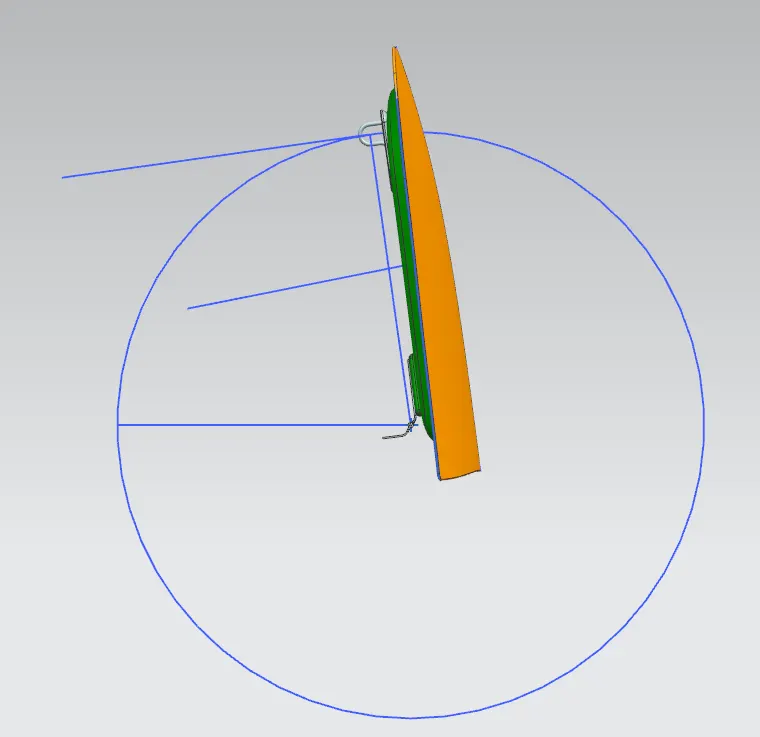
Opening angel: The angel up to which the hood should open. This angle varies from region to region as the average height is the basis for the same. For example, the average height in India is 5.5 feet while in Europe it is 6 feet, so the opening angle of the hood in Europe has to be more than that in India.
The hood is opened in 2 mechanisms. First, we pull the lever from inside the car, this unlocks the primary latch. Here we have to consider giving enough gap so the secondary latch can be unlocked using fingers.
The type of support for the hood. After opening the hood, we need to keep it stable in one position so that we can work on the engine without getting hurt. We have to consider various factors and decide if we have to give a support rod or gas stay for holding the hold at one position.
MASTIC SEALANTS:
It is a paste laid between outer and inner panels. After cooling down, this hardened between them. Every sealant improves the strength locally in 80mm diameter around it. Therefore, they are given in a way so that we cover most of the area of the hood.
REINFORCEMENTS:
When we add weight to the hood, like hinges and latch, the area decreases and so does the strength of the hood. To compensate for this strength, we introduce the reinforcements at that position. The thickness of the reinforcements is usually more i.e. 1-1.5mm.
HEMMING:
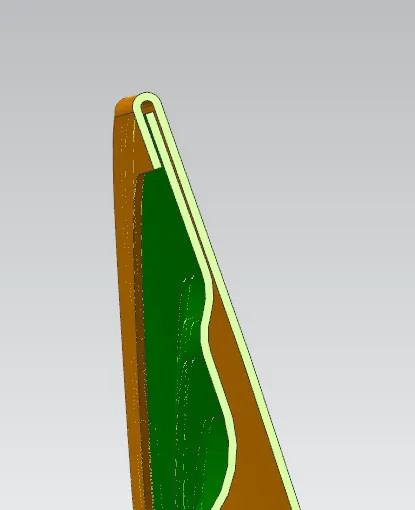
Hood outer panel and inner panel are joined together using the hemming process. In this process, the outer panel is wrapped around the inner panel from all sides to restrict its movement. This is done using rollers.
EMBOSS:
They distribute the forces outwards rather than towards the passengers in the situation of a crash.