Hood design-Week 2
Hood design-Week 2
Scope:
Here I have going to design the hood which called engine compartment cover for the passenger vehicles.
As a hood designer, I should follow below major design considerations,
- To be good Pedestrian Safety Rating under Euro NCAP Regulations
- To be less NVH product
- Applicability for Gas Stay mounting / support piler
- Latch & striker point fitment
- Hinge axis
- Deform of brackets
- My vechile excute on which county, becuase we should decide the Head Zone.
In this project my hood assembly incorporated with following parts,
- Hood Outer Panel
- Hood Inner Panel
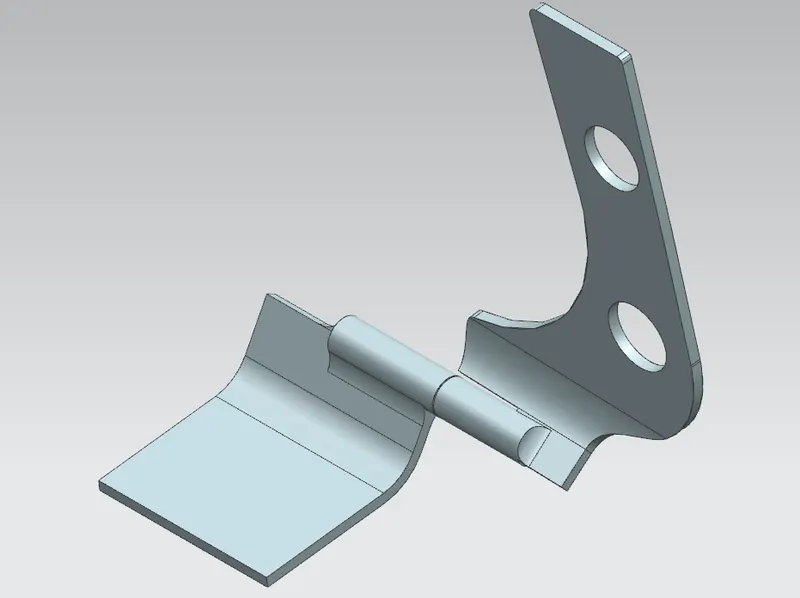
- Hinge assembly
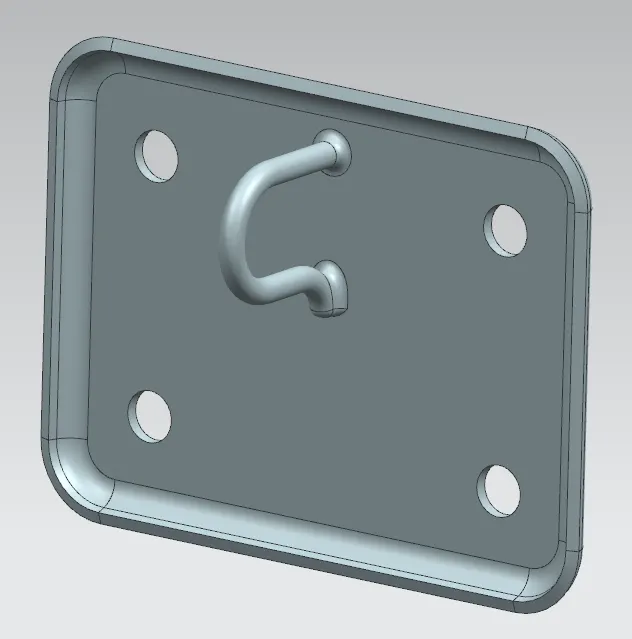
- Striker
Tool Used to develop my hood is NX CAD.
Inputs:
1) Hood Thickness Information
- Outer Panel Thickness = 0.75mm
- Inner Panel Thickness = 0.75mm
- Reinforcement Thickness = 1.5mm
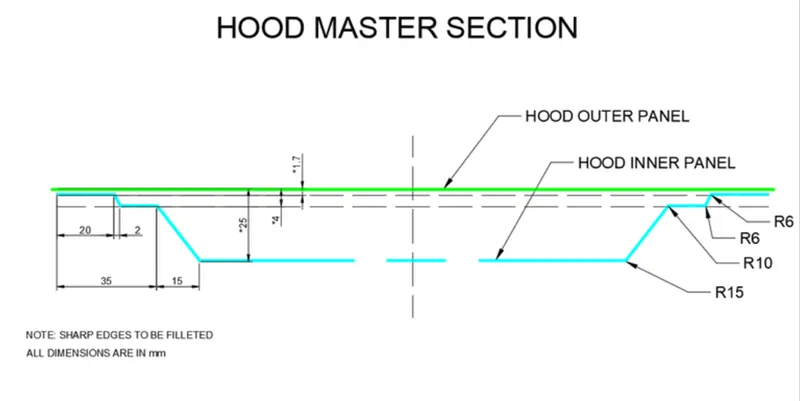
2) Master Section:
About Hood:
Hood is the most important component of engine room assembly and its being as a safety cover for engine compartment to protect the engine from dust, small small stones and other particles which can be possible to disturb their function or make any defects.
Also its consider as other door which can help to operate the engine compartment parts for usual repairs and maintenance.
In this hood assembly, hood outer panel is provides best look and make our car smart and atractive by the way to make this hood as best asthetic profile and designary product.
Hood stay is the part whcih can be helps to open and close the hood panel assembly.
Hood inner and outer panels are usually manufactured through metal stamping processes. Metal stamping is a manufacturing process used to convert flat metal sheets into specific shapes
About Hood Stay:
A device fpr supporting the engine hood of a motor vehicle in its open position.
there is 2 types usually runnig in the market.
- Support rod: Its a simple rod which is cost effective and simple design. But, its should be operate by manually.
- Gas stay: its operate by gas there is no manpower is required to operate just with help of simple lever near driver inside the car, we can open our hood cover. But is quite costly also its increase the weight with compart to support rod.
The following procedure, I did followed while designing the hood by NX CAD.
I create new assembly view in NX CAD, then insert what ever provided hood assembly sub system components,
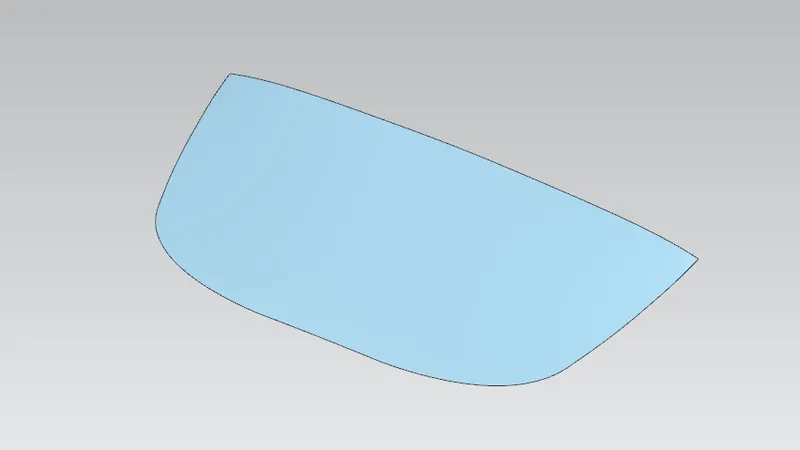
Hood outer panel,
Hinge Assembly,
Striker,
I have create a part body of Inner Hood panel.
The inner panel is the component which make sure your hood assembly and your head imact pedestrian rates. So as a hood designer we have to take care of following design consideration while start to design the inner pannel,
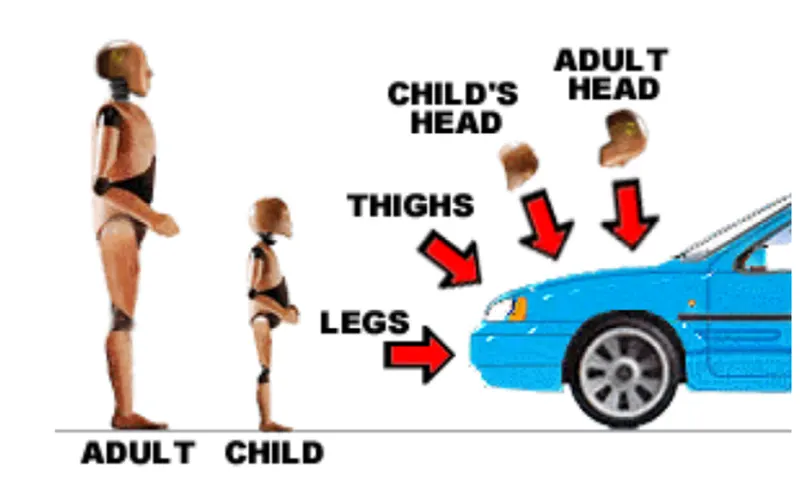
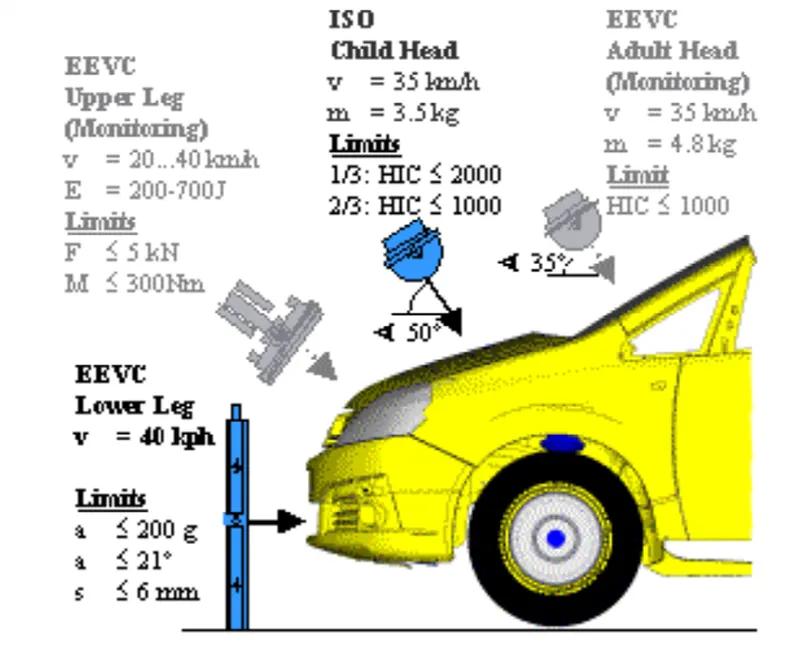
The above image is one of the NCAP standard which provides my car safety rate make best. Likewise if we fulfill it standards then obviously my car will be best safety rated one and also raise demands for my car in market under best safety one.
Engineering principles of good design:
The engineering principles for a good hood design were applied while developing the inner hood structure concepts. The principles are as follows:
- use of maximum possible corner radii and avoidance of sharp corners
- use of smooth transitions in surface changes and avoidance of steps or discontinuities
- use of maximum possible radii at the intersection of beams
- use of effective joints to reduce the loads in surrounding beams
- use of design strategy to reduce mass and cost.
- Aluminium and steel were considered in the analysis for the inner and outer hood material because they generally meet the requirements for noise and vibration, durability and high–speed crash performances. A thickness range of 0.4mm to 1.5mm was considered for the inner and outer hood thickness, values less than 0.4mm will not meet the durability and forming requirements while those above 1.5mm will result in high structural stiffness and structural inertia as well as increased mass.

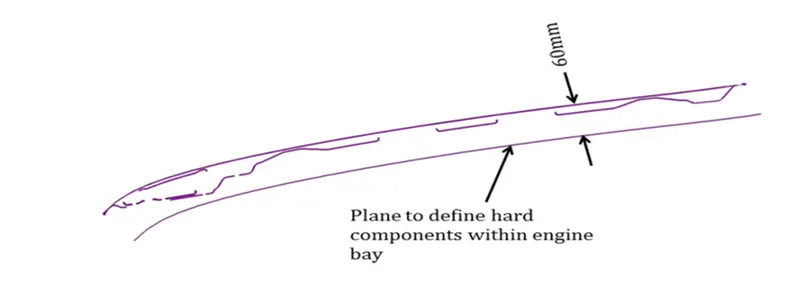
The detail designs of attachment strategy and boundary conditions are out of the scope of this research. In addition, durability, noise, vibration, dent resistance, occupant protection and other performances have not been considered in the analysis.
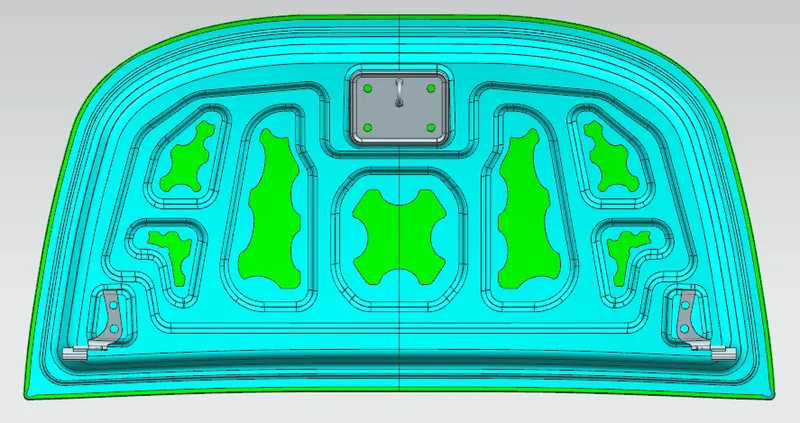
Hood Inner panel:
I have design the inner hood with help of NX tools, Emboss surface, varies curve creation tools, Law extension, offset surface trim sheet & other surface tools.And the following process i have done with my hood inner panel,
Tooling axis creation:
To create any sheet metal and plastic components, we have to create tooling axis which can help us to make our design for easy manufacturing also it can be a directional support to make our product can be minimum draft angle requirements of fullfilment.
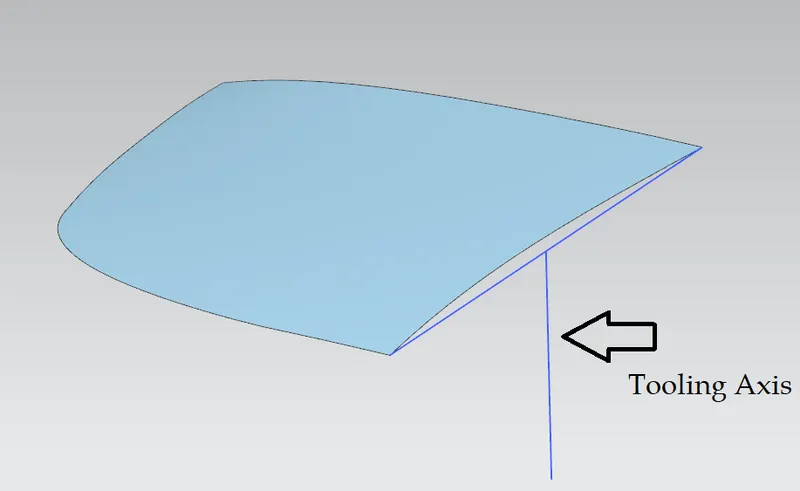
In sheet metal component minimum draft angle considered as 7 Dgrees.
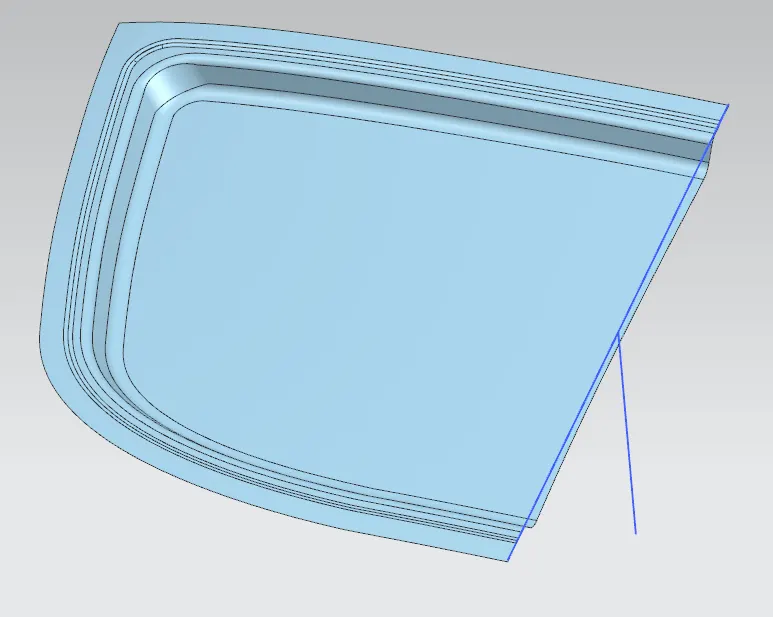
Flange creation:
The next step have followed that made flage with help of Asthetic outer panel surface and input dimensions from master section,
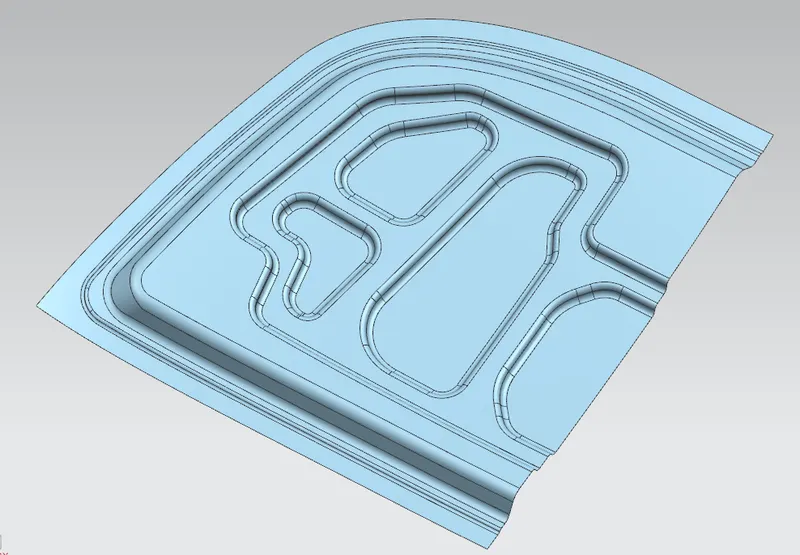
Embosses creation:
Here accourding to the reference of market lastest design of embosses I have made 5 emboss shape into my hood inner panel.
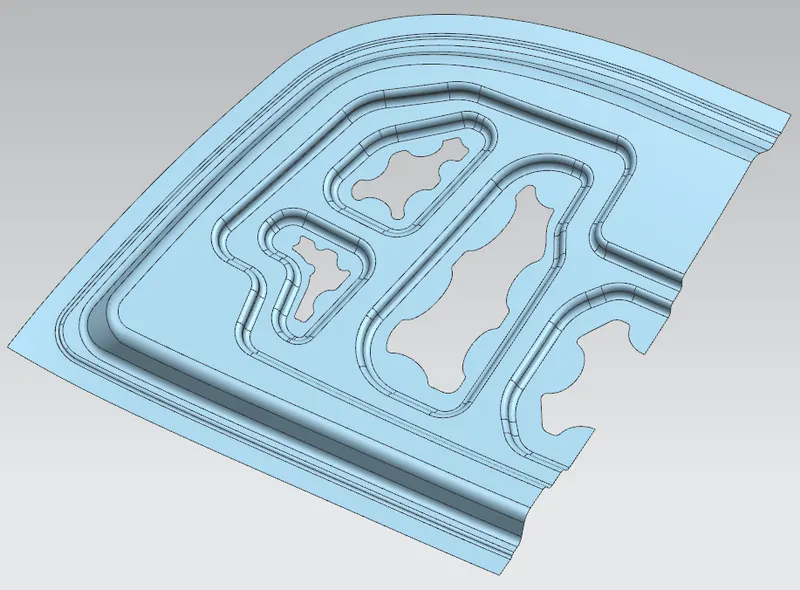
Holes creation at emboss portion:
I have provides holes, see it as stiffening I make the outer skin structurally rigid when the two parts are bonded, which is how the inner panel is designed and punched from sheet metal while mfg.
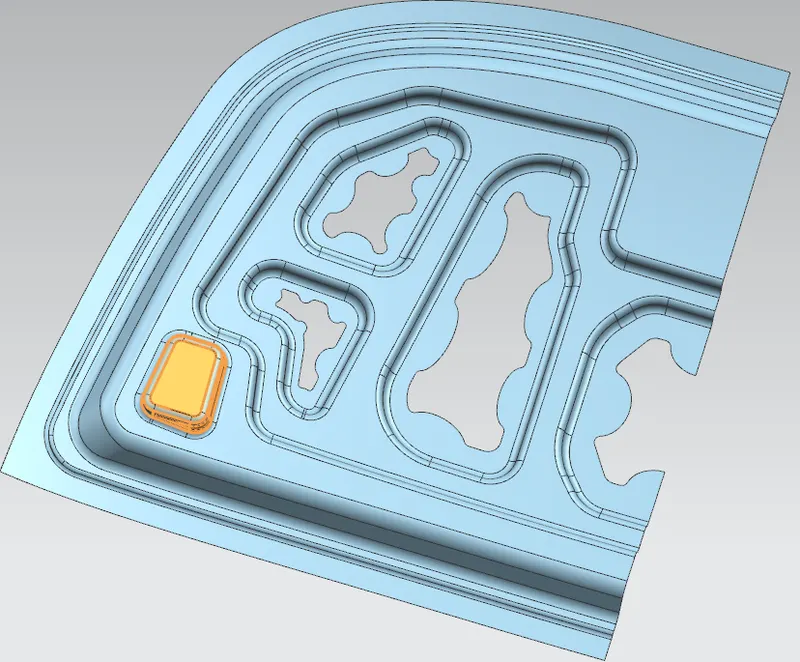
Defining Hinge base:
Hinge is the component which will be help to provides our Hood assembly for movement in rotary way. so it will be mount on the below highlighted portion accourding to my design view, as well as followed standards,
I have mirror the overall surface to make my inner panner as completed shape.
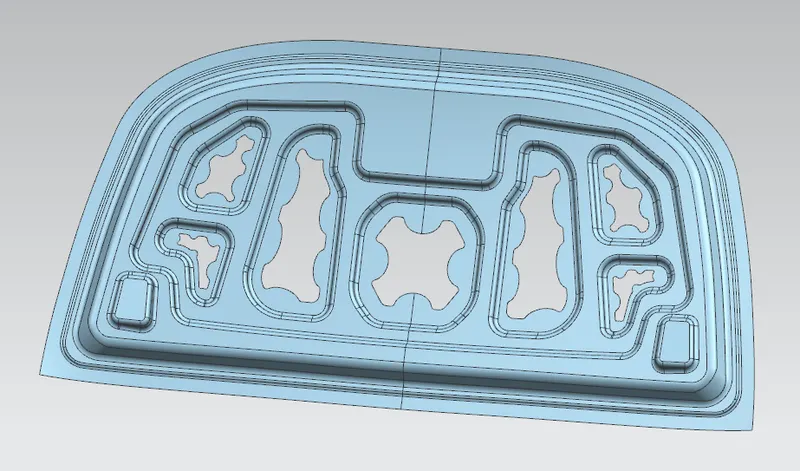
Hinge Axis creation with striker nose locking orinetaion decides:
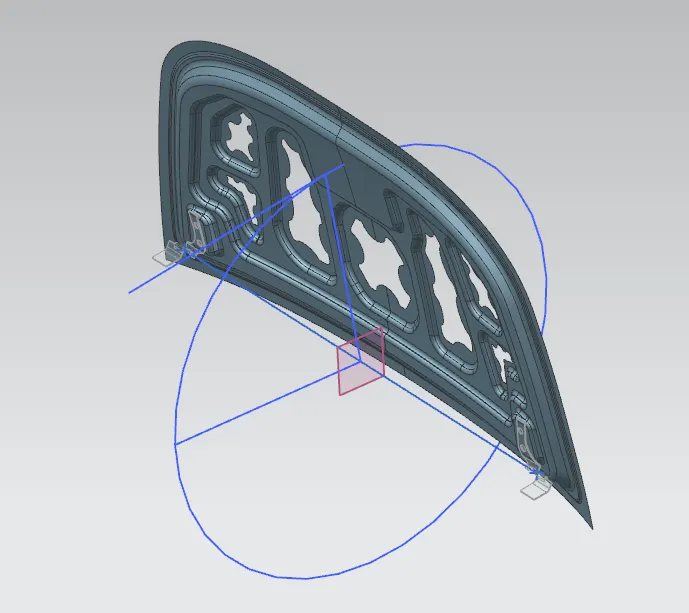
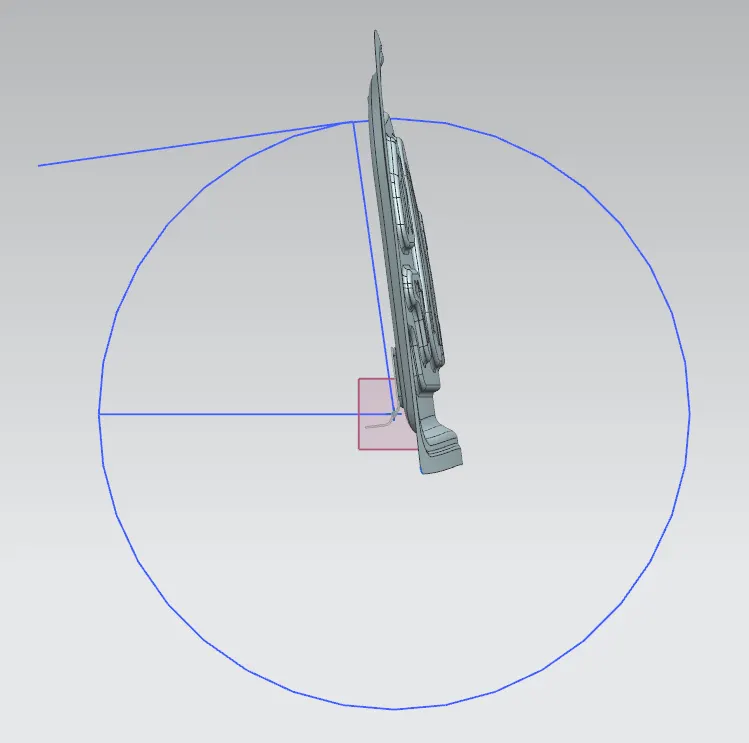
I have design and decided hinge axis and locking nose rotate orinetation with help of Hinge and striker. as shown in below image.
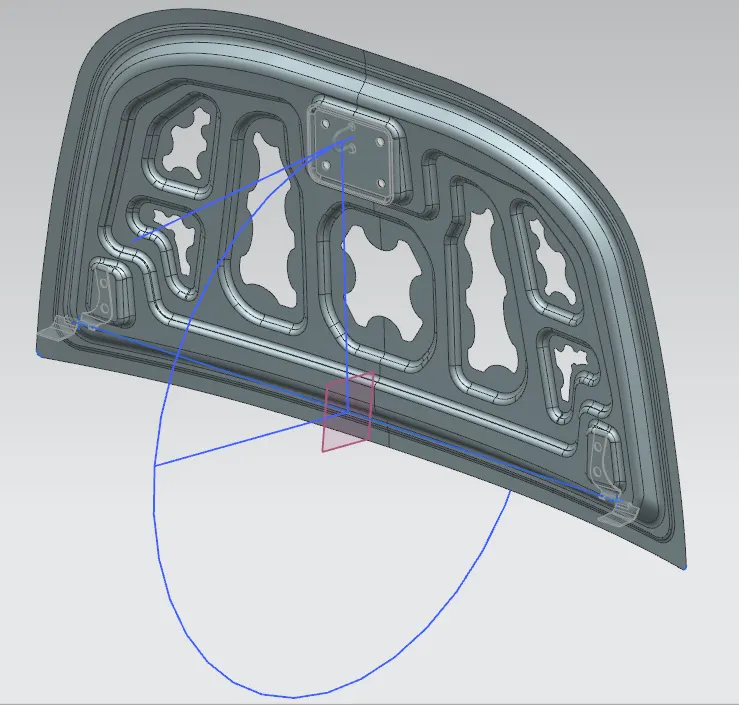
After thicken my final trim surface by 0.75mm of inner hood panel, I have made finsih the Hood inner panel component with considering the master section and other standard engineering design principles.
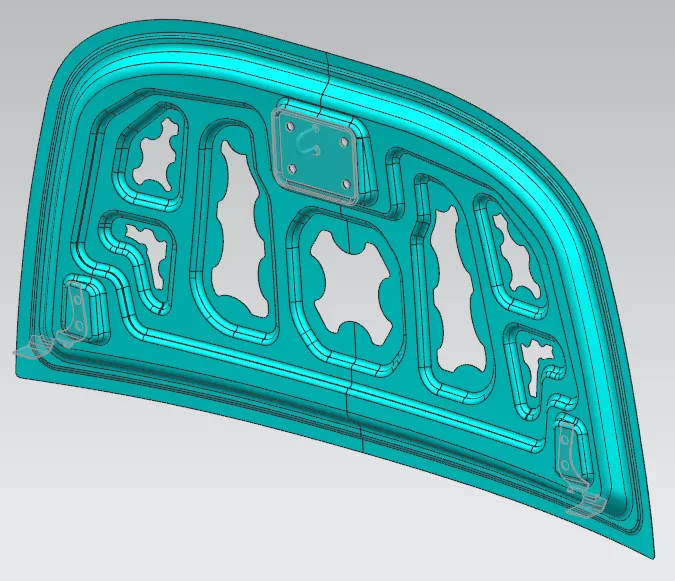
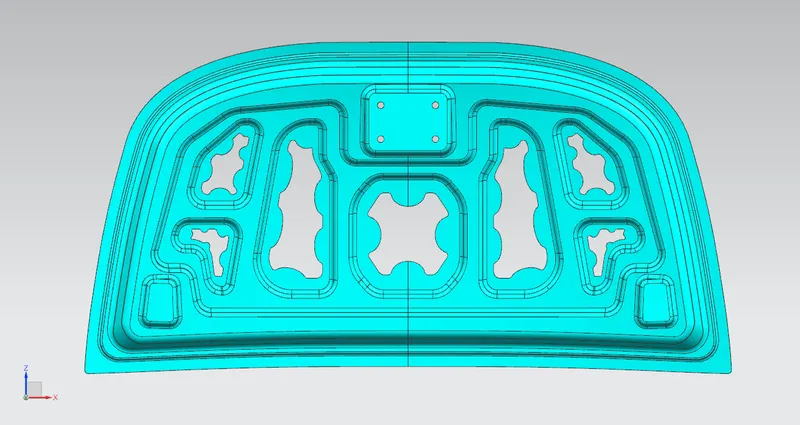
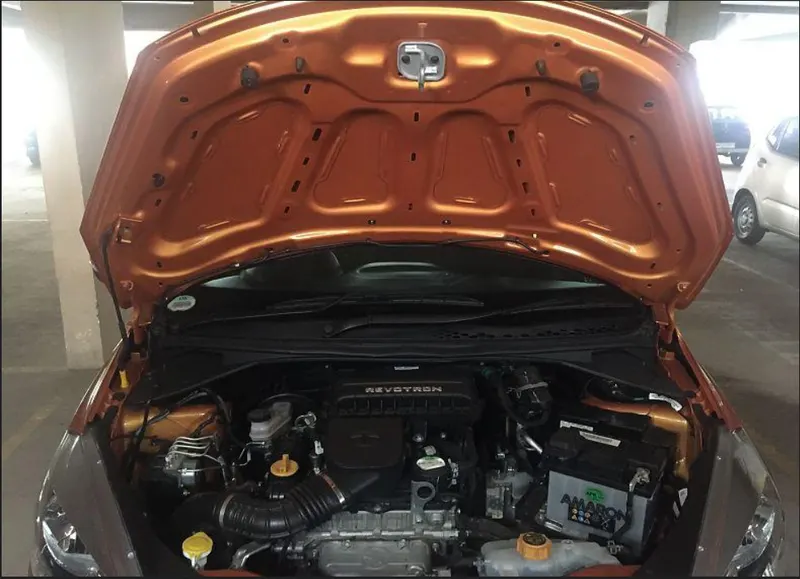
This shape I have refered from TATA Tiago vehicle but profile not same at all. just tried to make near similer at trimmed portion. which make easy deformed while collision so that less impact may happen to pedestrian as much as possible within available inputs.
Hood Outer Panel:
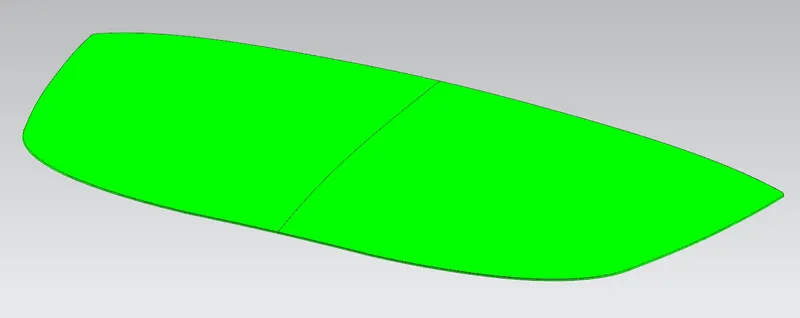
I have made finalize the hood outer panel surface by design tools, then thicken the outer panel by 0.75mm. The below image shows the thicken hood outer panel.
In the outer panel we have to consider the following process to reduce the NVH and perfect fittment each to other hood assembly components.
- Hemming
- Front relief
- rear section relief
I have assembled the Hood inner panel, outer panel, Striker & hinges by make constraining each to other. The below images shows assembly view of my hood Panel assembly,
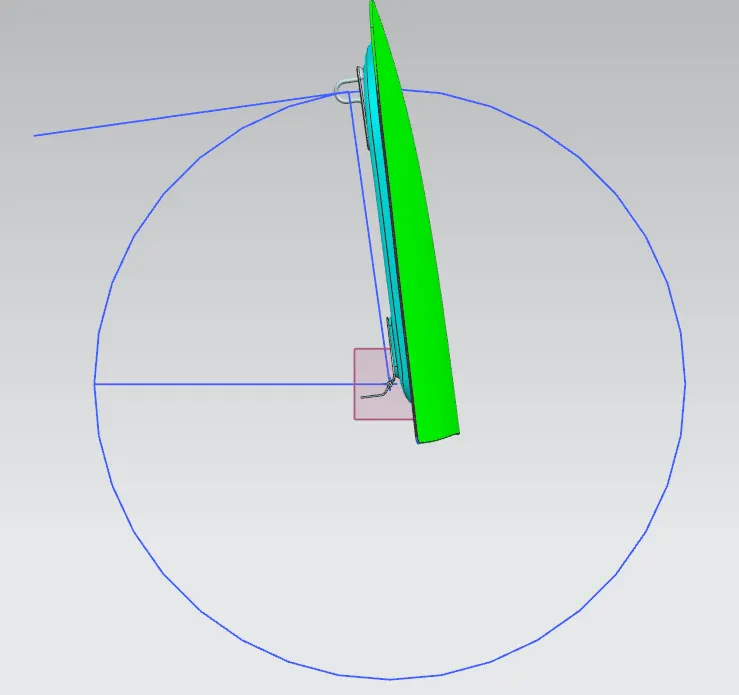
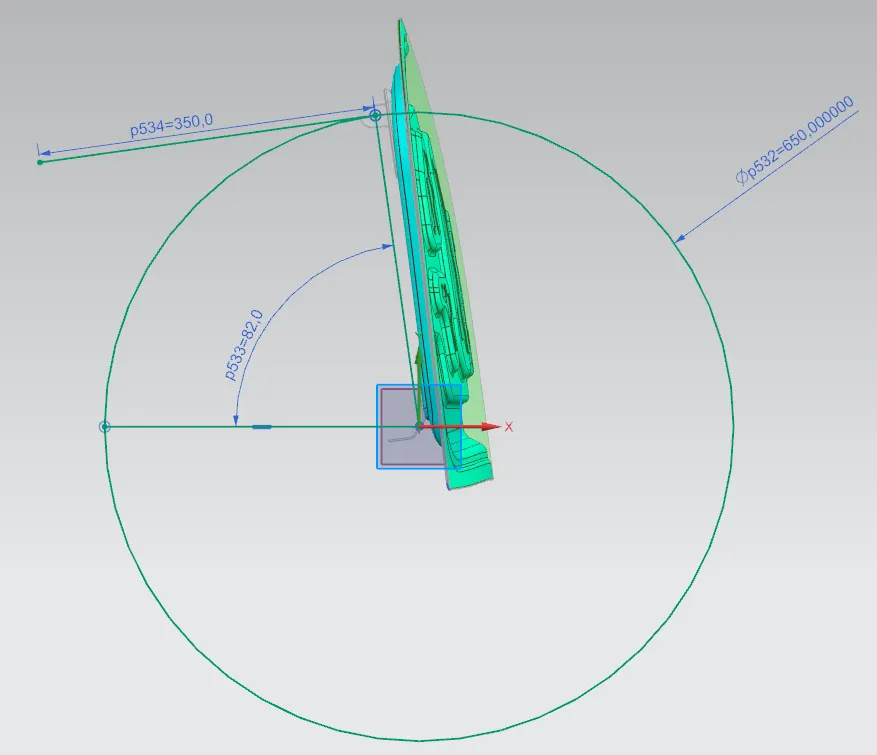
With modifing the above image values, we can change the rotation likewise manual simulation can be do for orientation confirmation.
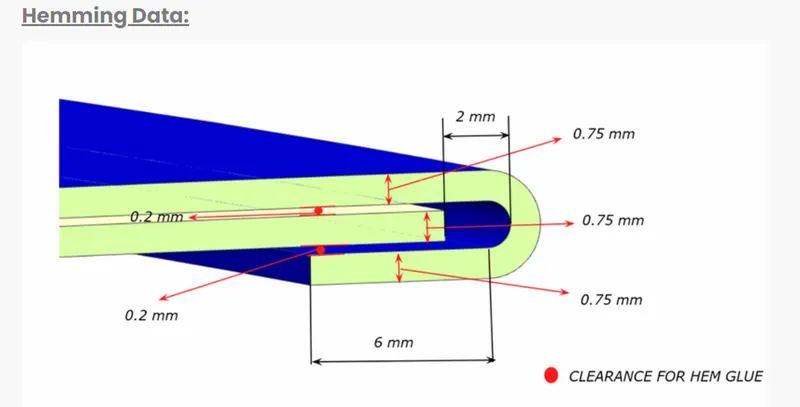
Hemming:
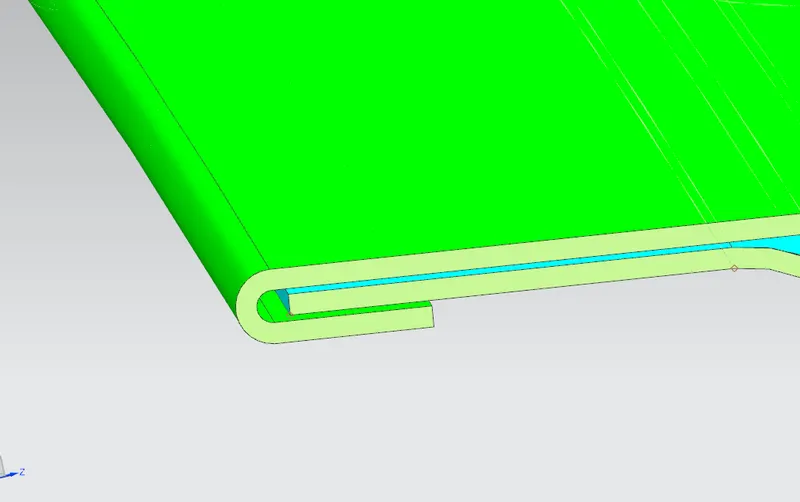
Input reference taken from the below picture,
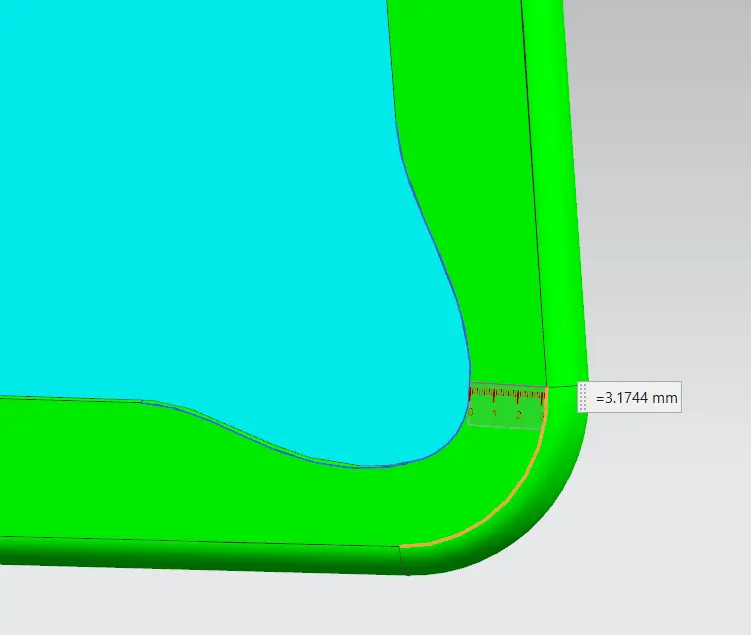
Rear section relief:
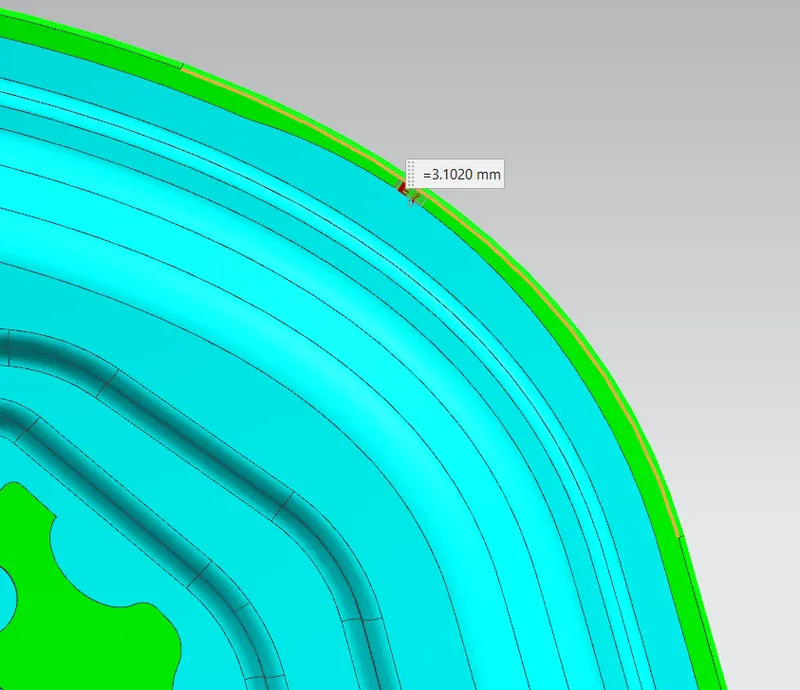
Front relief:
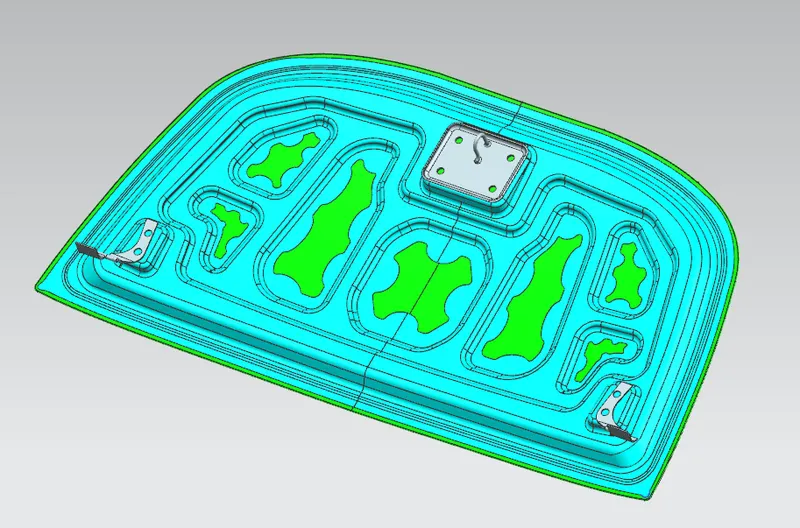
We have made perfect Hood assembly with includes all the design considerations with input of master section.
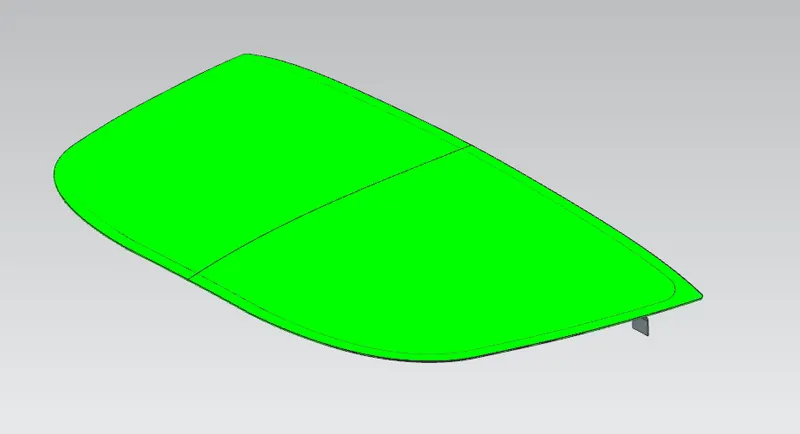
Lets see the short brief about Pedestrian Safety and Protection:
A pedestrian can be defined as a vulnerable road user that is at risk when it comes to roads. Thus the safety of such being is essential. The pedestrian safety and protection norms are aimed to do so. It will ensure that the new cars meet a minimum requirement of safety for the pedestrians. It’s one of the phases of Bharat New Safety Vehicle Assessment Program (BNVSAP).
India will also be getting its own safety test named BNVSAP. Soon, our country roads will get safer. But you cannot clap using a single hand. It is our duty also to check whether the cars we purchase have a good pedestrian score or not. Are the cars safe for anyone at risk, be it the occupants or the vulnerable road users? Tata Motors and Mahindra have worked significantly towards making their cars safer. Other manufacturers such as Maruti Suzuki direly need to ensure safer vehicles too.
The vehicles be tested for pedestrian safety so as a hood designer I should take care of them while designing the inner panel which will be most important thing to be consider in hood assembly.
I have mentioned here the pedestrian safety protection rating There is a maximum possible score awarded by Euro NCAP depending on the level of protection offered by a vehicle are:
- 12 points for child head impacts
- 12 points for adult head impacts
- 6 points for lower leg impacts
- 6 points for upper leg impacts.
Therefore, the maximum possible overall score is 36 points. The pedestrian protection rating is awarded as a percentage score. The sum of all the points from these tests determines the overall vehicle star rating. The overall vehicle star rating includes adult protection, child protection, pedestrian protection and safety assists.
In Hood assembly the following 3 safety points are considered most important while design the Hood, fender & front side bumper design, aslo the way of possibilities increase in best safety star rated.
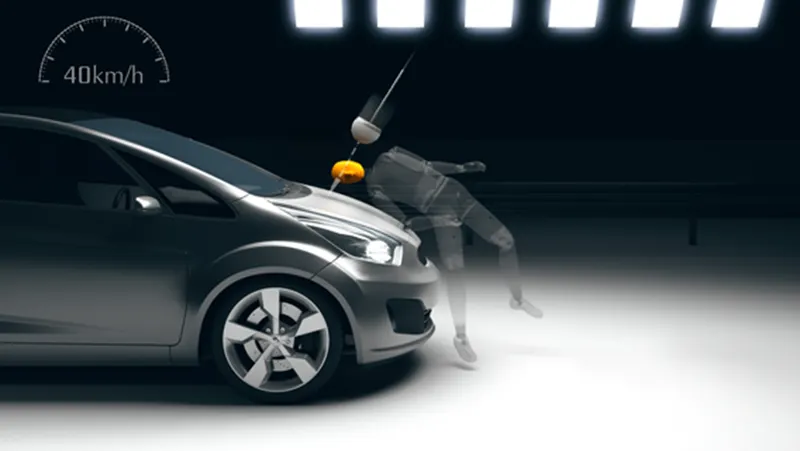
1) Head Impact:
This test is carried out for a vehicle speed of 40 km/h. To have an estimate of the potential head injury in the fateful event of a vehicle striking an adult or a child, a head form impactor is used in a series of impact tests and the impact sites are then assessed for and rated accordingly.
This test will give essential information about the deformation clearance, energy-absorbing structures and deployable protection systems such as pop-up bonnets and external airbags in a new vehicle.
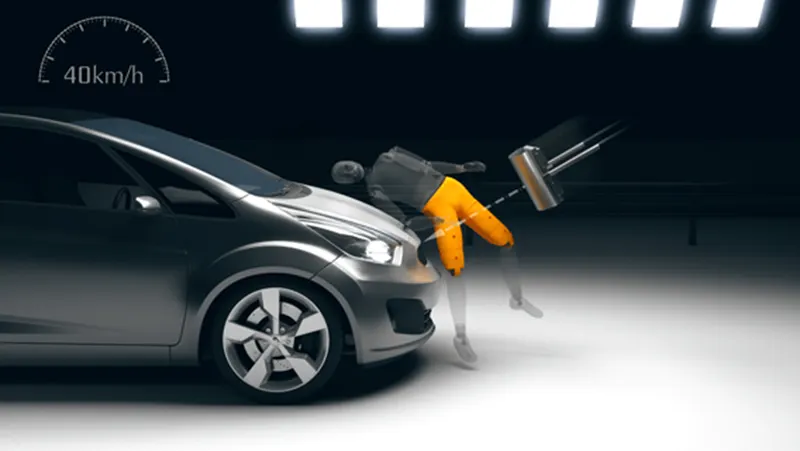
2) Upper Leg Impact:
This test is carried out for a vehicle speed of 40 km/h. To have an estimate of the potential head injury in the fateful event of a vehicle striking an adult or a child, a head form impactor is used in a series of impact tests and the impact sites are then assessed for and rated accordingly.
This test will give essential information about the deformation clearance, energy-absorbing structures and deployable protection systems such as pop-up bonnets and external airbags in a new vehicle.
3) Lower Leg Impact
Euro NCAP carries the test at the same speed standard as the above ones. It uses an adult leg impactor and a series of tests are carried out. Impact sites are then assessed and the protection rating is offered.
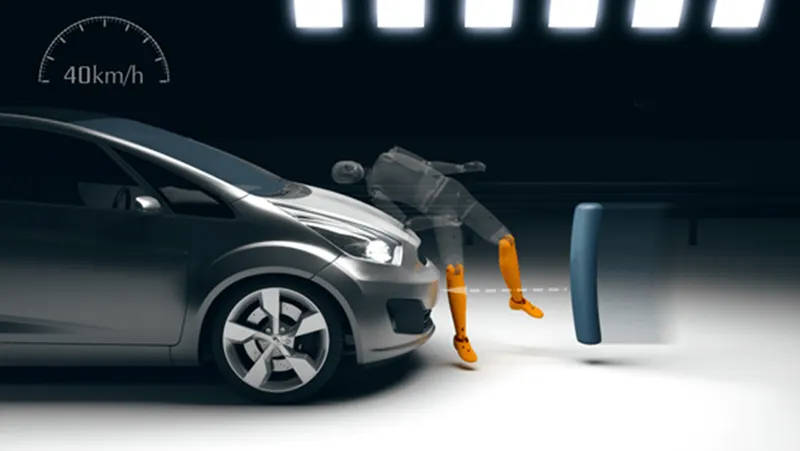
So as a hood designer, we should take care of pedestrian safety as first preparance also design consideration of EURO NCAP Standards.
It help us to make our car best safety rated one.
Note: I herewith enclosed Assembly of Hood Design in NX CAD format and step format too.