Hood design-Week 2
Aim: - To design a Hood outer panel, inner panel and the necessary reinforcements by the given Master section and design parameters.
Theory:-
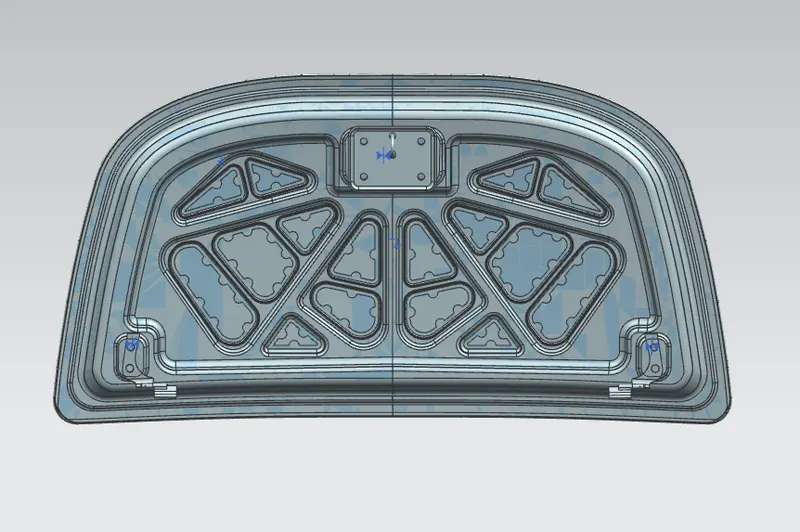
The hood is the main component of the front of a car. An engine cover for front-engine vehicles is an opening body panel. It consists of an outer and an inner panel. The inner panel provides strength while the outer panel functions as a metal cover. It is an access panel to the engine compartment to enable maintenance of the power train, drive belts, battery, fluid levels, and lamp units.
Design considerations:-
The human comfort factor in automobile design is the first consideration. It is a method to safeguard and protect space for the human user and the necessary components that make up the vehicle being designed. Safety regulations are followed during this process. Ergonomic considerations include Hood clearance, Hood Opening angle, and location of support rod or gas stay.
The hood opening angle is different in different regions or countries. It is determined by the average height of humans in that particular country.
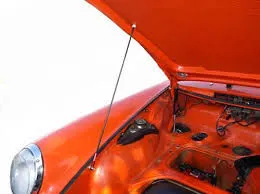
There are two common types of hood stays used to hold a hood at a desired angle: support rods and gas stays.
Support rods:-
Support rods also known as prop rods or hood struts, are typically made of metal. They are designed to support the hood's weight while holding it open. They are commonly found on older vehicles and are often manually adjusted to hold the hood at a desired angle.
Gas stays:-
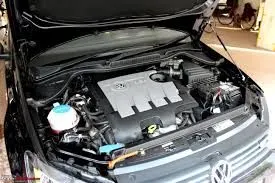
Gas stays, also known as gas struts or lift supports, use compressed gas to hold the hood in place at a desired angle. They are commonly found on newer vehicles and are often designed to automatically adjust the hood position based on the weight and position of the hood.
Both types of hood stays are designed to provide support and stability to the hood while it is open. They play a crucial role in ensuring vehicle safety and functionality.
Safety requirements :-
There are several safety requirements for hoods in cars, as they play a crucial role in protecting passengers and drivers in a collision. Here are some of the most critical safety requirements for hoods in cars:
- Hood latch: The hood latch keeps the hood securely closed while the vehicle is in motion. It is necessary to be able to withstand certain forces and stresses. It must be designed to prevent accidental hood opening while the car is in use.
- Hood material: The material used to construct the hood must be strong enough to withstand impact forces and prevent debris from penetrating the passenger compartment in a collision. Hoods are typically made of steel or aluminum, although some modern cars may use other materials such as carbon fiber.
- Hood insulation: Many hoods must be equipped with insulation to reduce the transfer of heat from the engine compartment to the passenger compartment. This helps to protect passengers and prevent fires in engine compartment fire.
- Hood hinges and stays: Hood hinges and stays must be strong and durable enough to hold the hood in place while it is open, and must be designed to prevent the hood from accidentally closing while it is being worked on.
- Hood deformation: The hood is designed to deform in a controlled manner in the event of a collision, absorbing and dissipating impact forces to protect the passengers inside the car. As such, hoods must be designed to crumple in a specific way to minimize the risk of injury in a collision.

Pedestrian safety:-
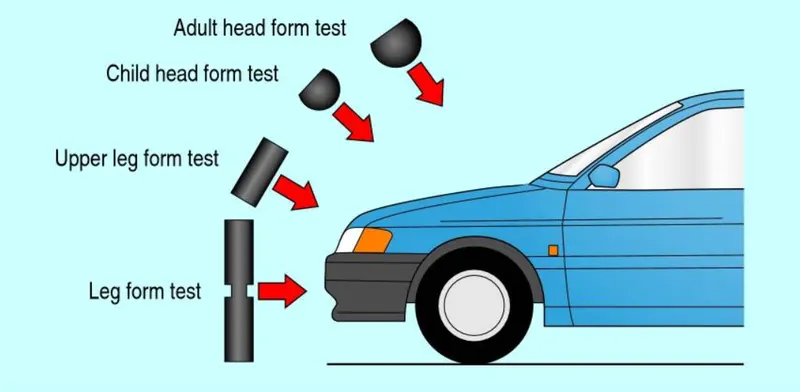
Pedestrian safety has become an increasingly important consideration in the design of hoods in cars, as accidents involving pedestrians can result in serious injuries or fatalities. Here are some of the key factors that are considered in the design of hoods to improve pedestrian safety:
- Hood height: The height of the hood is an important factor in preventing injuries to pedestrians. Hoods that are too high can cause a pedestrian's head to strike the windshield or A-pillar in the event of a collision, while hoods that are too low can result in the pedestrian being struck by the vehicle's undercarriage. As such, modern hoods are often designed to be lower and flatter than older hoods, which can help to reduce the risk of injury in the event of a collision.
- Hood shape: The shape of the hood can also have an impact on pedestrian safety. Hoods that are more rounded and less angular are less likely to cause injuries to pedestrians in the event of a collision.
- Hood material: The material used to construct the hood can also impact pedestrian safety. Hoods made from materials that are more flexible, such as plastics or composites, can reduce the risk of injury in the event of a collision.
- Hood insulation: The insulation used in the hood can also play a role in pedestrian safety. Insulation that is designed to absorb impact forces can help to reduce the severity of injuries in the event of a collision.
- Active safety features: Some modern cars are equipped with active safety features that are designed to reduce the risk of accidents involving pedestrians. For example, some cars are equipped with sensors that can detect pedestrians and apply the brakes automatically if a collision is imminent.
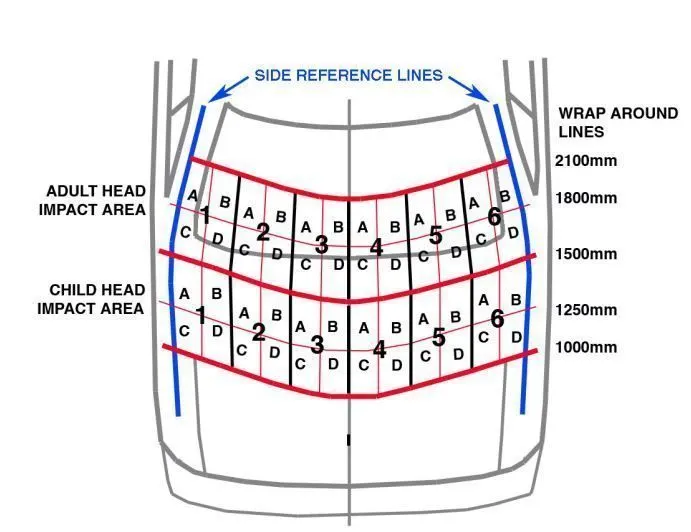
Design
Master section :-
Master section is a predefined sketch which will be adaptable for different situations.
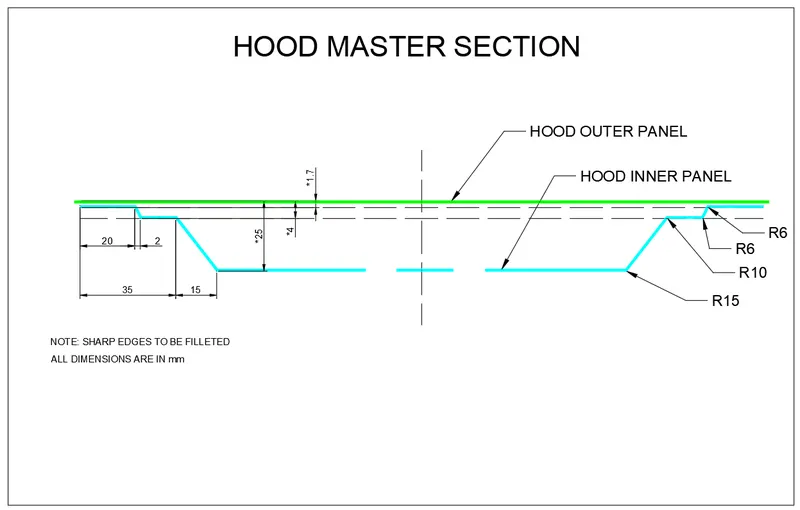
The four main parts of the Hood assembly are as follows
- The outer panel
- Inner panel
- Latch and striker system
- Hinge system
Hood thickness information
- Outer Panel Thickness = 0.75mm
- Inner Panel Thickness = 0.75mm
- Reinforcement thickness = 1.5mm
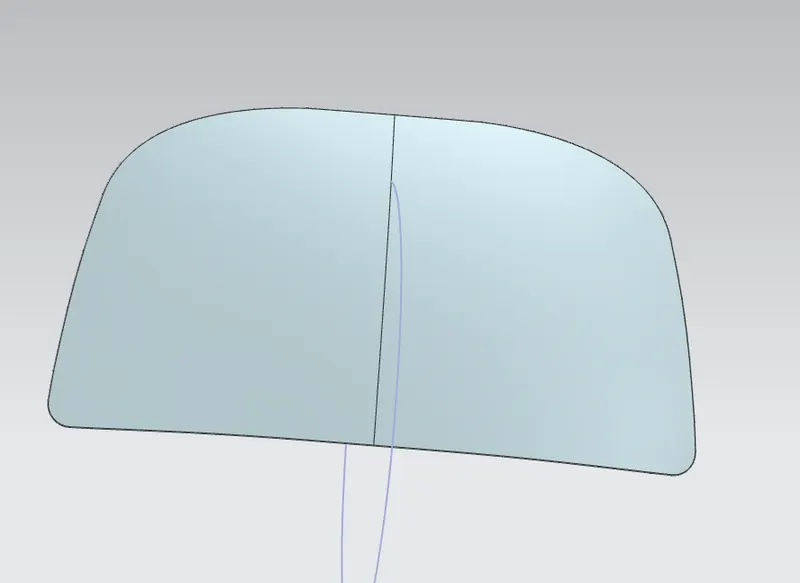
Outer Panel:-
We get the outer panel skin surface from the style department with a proper aesthetic look, gap, etc. The shape of the outer panel is made aerodynamic in order to minimize the air effect. The shape of the outer panel is referred to as a base to design an inner panel.
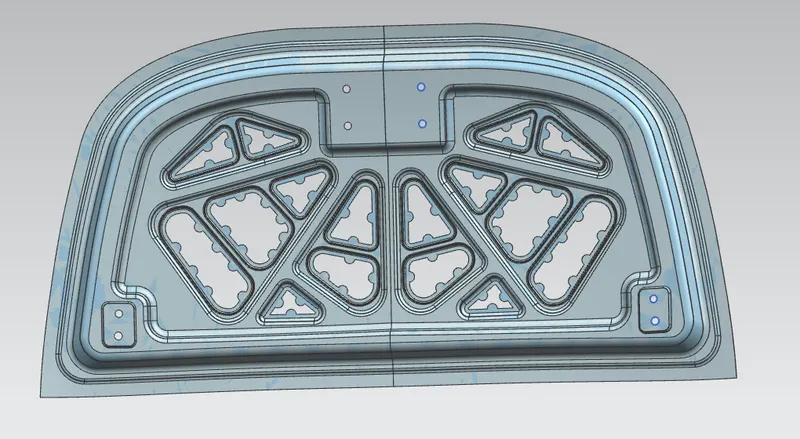
Inner Panel:-
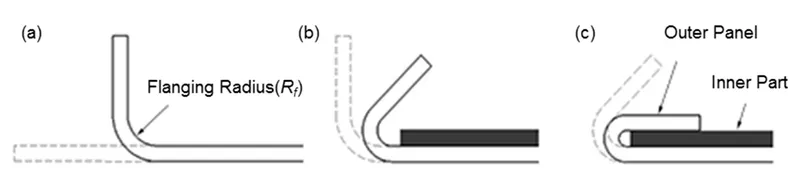
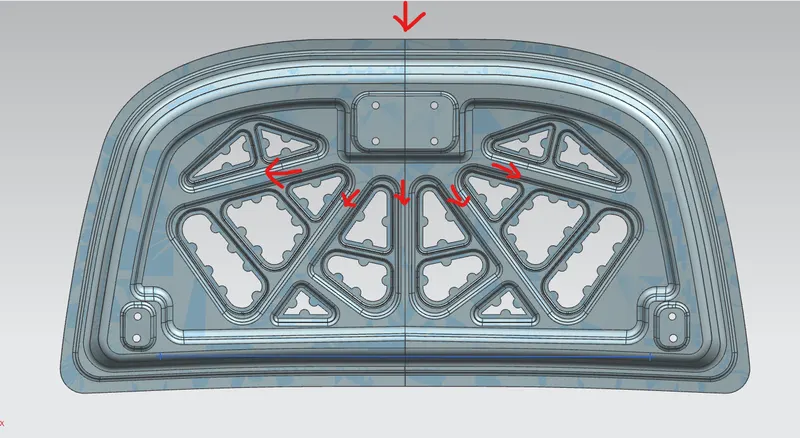
The inner panel of the hood is the main functional component of the hood. It gives structural support and strength to the Hood's outer panel. The outer and inner panels of the Hood are typically attached together using a hemming operation at the edges.
Latch and striker:-
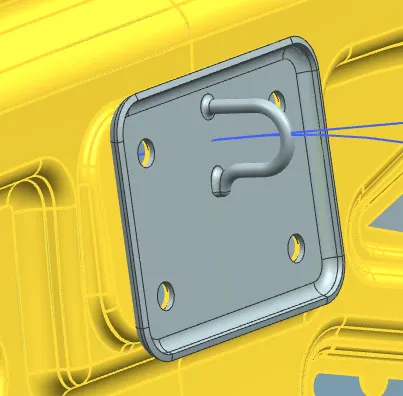
This system attaches the hood assembly and vehicle body. The hood latch system must be able to catch the hood striker upon closing and instantaneously, as well as automatically, lock. Once in the locked state, it must remain locked and only unlock upon the operator’s control.
Hinge system:-
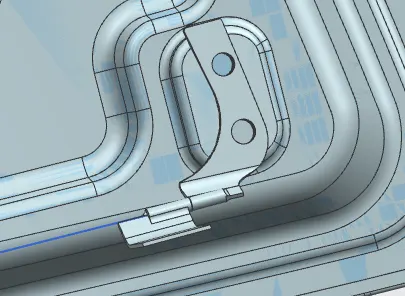
The hinges guide and hold the hood when open & closed. One part of the hinge assembly attaches to the inner panel of the hood, and the other part attaches to the body of the vehicle.
Latch Trajectory:-
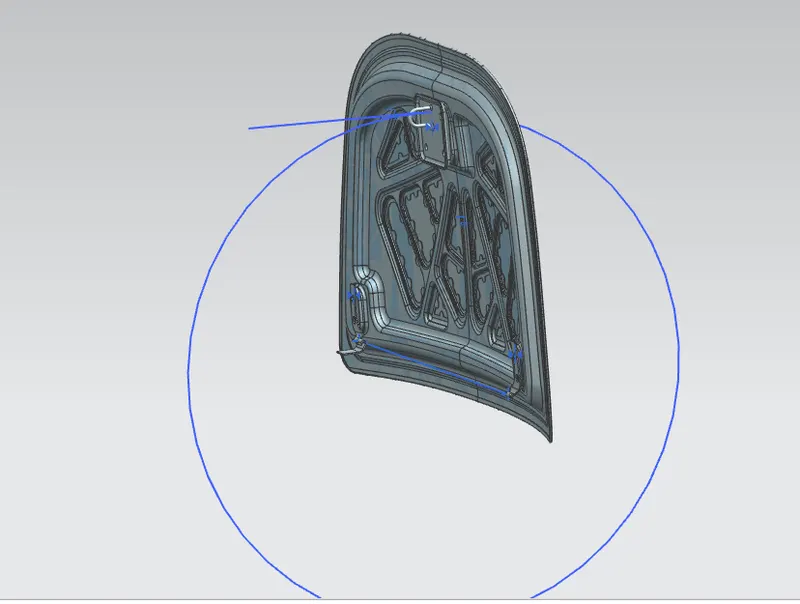
The circle is drawn from the hinge axis center so we can finalize the position of the latch striker. For proper mating, the tip of the striker should be tangential to the latch trajectory. the position of the latch striker follows the path of this circle.
Mastic data :-
Mastic sealants are used between the outer and inner panels. Mastic sealants are rubber-like elastic compound that connects the exterior and inner panels of the car hood at specified points. Mastic sealants are used in the region between the inner and outer panels because other joining processes like welding or riveting are not good for car aesthetic design. It also helps in improving NVH (Noise, vibration, and harshness) characteristics.
Mastic sealant points are effective around a circular region of 80mm diameter.
Manufacturing aspects
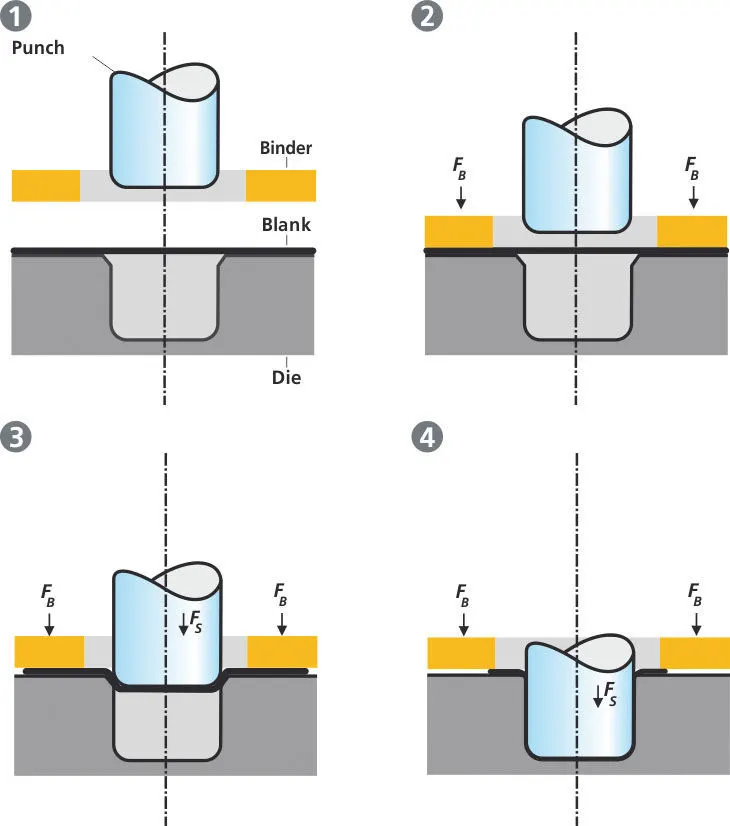
The most important design consideration of any component is the manufacturing aspect. In sheet metal, the component is manufactured by press tool dies. The Press tool is stamping which includes cutting operations like shearing, piercing, etc., and forming operations like bending, Deep drawing, hemming, etc. The main focus of the manufacturing aspect is to manufacture hood assembly with minimum operation sequence and process time.
Deep drawing:-
Sheet metal manufacturing is the process of forming and shaping metal sheets into finished products. This process involves cutting, bending, and assembling sheet metal to create a wide range of products, from household appliances to automotive parts and aerospace components.
The first step in sheet metal manufacturing is the cutting of the metal sheet to the required size and shape. This can be done using a variety of methods, such as shearing, laser cutting, or water jet cutting. The cut metal sheet is then formed into the desired shape using a variety of techniques, such as bending, rolling, or stamping.
Bending involves using a press brake to bend the metal sheet into a specific shape or angle. Rolling involves passing the metal sheet through a series of rollers to create a curve or cylinder. Stamping involves using a stamping press to form the metal sheet into a specific shape, often with the use of a die.
Once the sheet metal has been formed into the desired shape, it is assembled using various techniques, such as welding, riveting, or adhesive bonding. The assembled sheet metal product may then undergo additional finishing processes, such as painting or powder coating.
Sheet metal manufacturing is widely used in a variety of industries, such as automotive, aerospace, construction, and consumer products. Its versatility and cost-effectiveness make it a popular choice for creating high-quality, durable products that meet the needs of various industries and applications.
Overall, sheet metal manufacturing is an important process that involves cutting, bending, and assembling metal sheets to create a wide range of finished products. The use of advanced technologies and techniques has made sheet metal manufacturing faster, more efficient, and more precise, allowing for the creation of complex shapes and designs with high accuracy and consistency.
Hemming:-
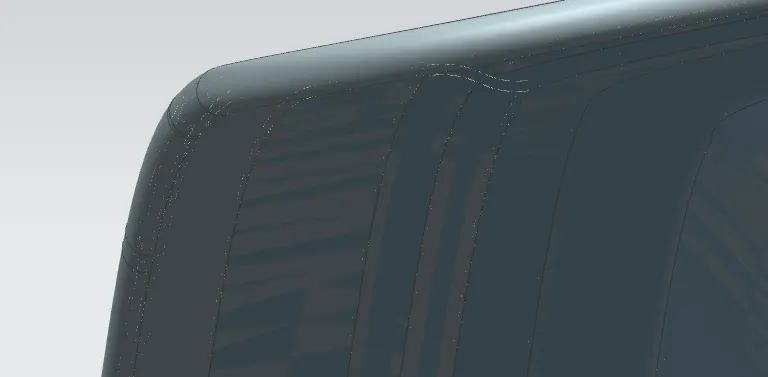
Hemming is a sheet metal forming process used to fold and bend the edge of a metal sheet over itself to create a double-thick panel with a smooth edge. The process is commonly used in the automotive industry to join sheet metal panels together to form the body of a vehicle.
The hemming process involves several steps. First, the edge of the metal sheet is bent up to a specified angle using a hemming die. The sheet is then placed onto a hemming clamp, which holds the sheet in place while a hemming blade is used to fold the edge of the sheet over onto itself. The blade and clamp move together to create a uniform fold along the entire length of the sheet.
Hemming can be performed in several ways, including in-die hemming, roll hemming, and hemming with a separate hemming machine. In-die hemming is performed as part of the stamping process, with the hemming die and clamp built into the stamping die. Roll hemming involves using a series of rollers to bend the sheet metal over onto itself. Hemming with a separate machine involves using a dedicated hemming machine to perform the process.
Hemming is often used in the automotive industry to join sheet metal panels together, as it provides a strong, permanent joint that is resistant to vibration and corrosion. Hemming can also be used to create decorative edges on sheet metal panels, giving them a clean, finished look.
Roll hemming:-
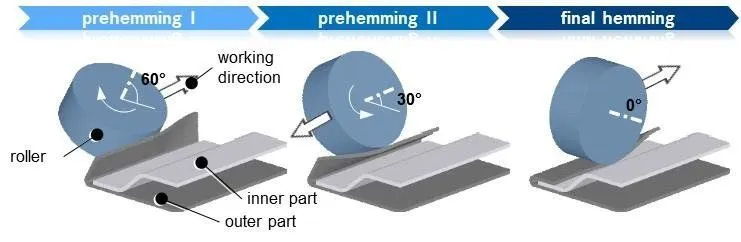
Roll hemming is carried out incrementally with a hemming roller. An industrial robot guides the hemming roller and forms the flange. Roll hemming operation can also be divided into several pre-hemming and final hemming process steps. Roll hemming is very flexible to use and tool costs are significantly lower as compared to those of conventional die hemming. However, the cycle times are much higher since the hemming is realized using a hemming roller which follows a defined path.
Corner relief :-
Force distribution :-
Final assembly :-