Hood design-Week 2
REPORT
HOODS DESSIGN :-
*the car hood consists of an inner and an outer panel . the inner panel provids strengths , while the outer panel is just a metal cover . the the underside of the hood is the hood is often covered with a sound adsorbing material .
*hood are typically made out of steel or aluminum although aftermarket manufacturer may manufacture hoods out of fiberglass carbon fiber or dry carbon.
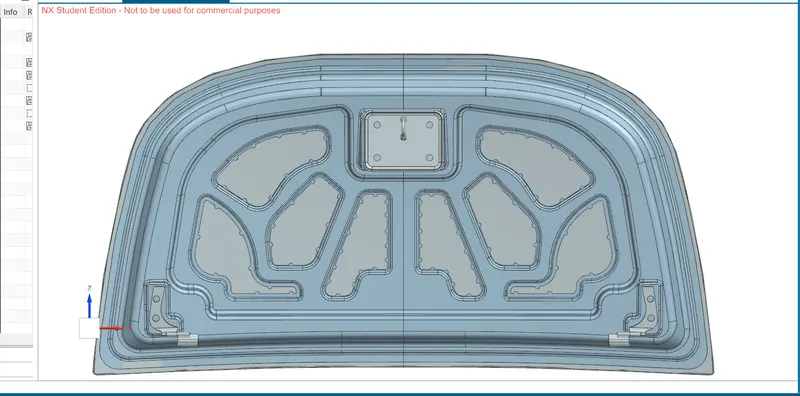
*the hood releascted to the hood latch to be released brfore the hood latch has a safety feature which requires a second latch to be released before the hood will open . this is to prevent accident opening while driving .
inner panel :-
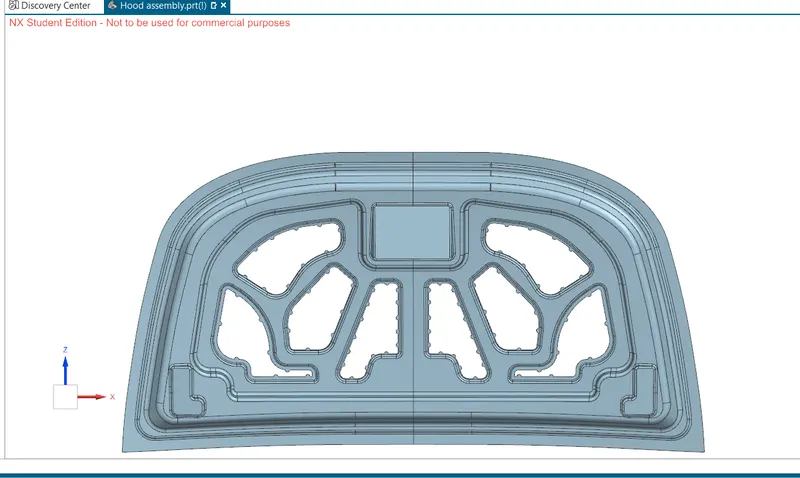
the inner panel supports the outer panel .it consists of embosses and holes . embosses provide stiffness as well as it dissipates energy towards reinforcement.
outer panel:-
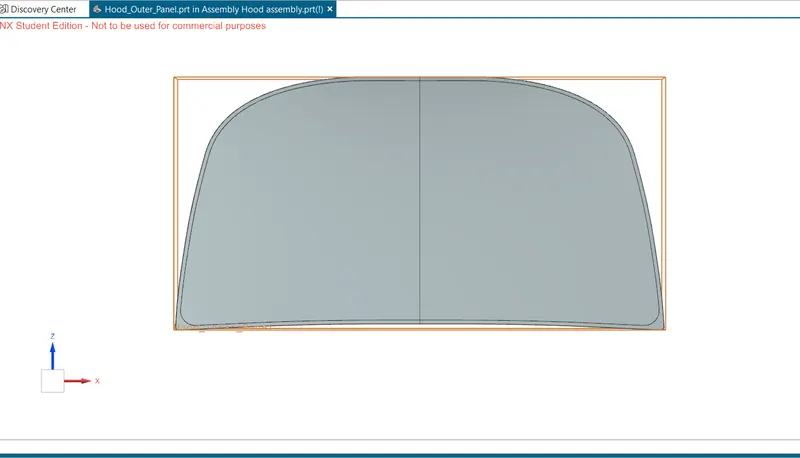
outer panel is nothing but a outside cover for engine and its a used to make a car looks good .
hemming :-
*the outer panel and inner panel can not join by any welding process if we did it will leave a spot on the outer panel and it will spoil the look of a car
.so ,to join inner and outer closure panels together we use the hemming process.
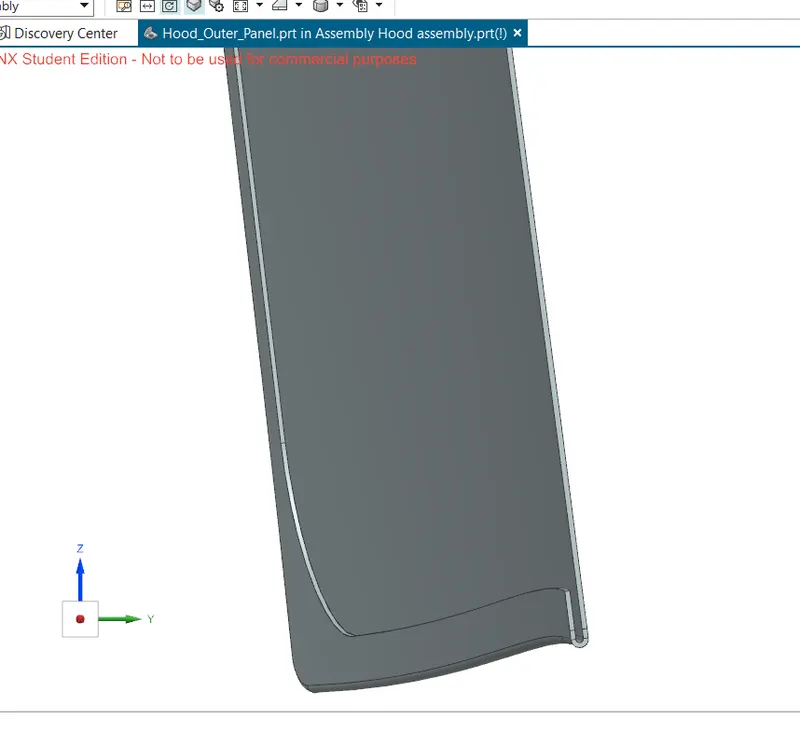
* it is the process of bending the flange of the outer panel over the inner one .
corner relief :-
there are many types of hemming process but in hoods roller hemming i used . in this process the roller will be rolling over the edges of the outer panel to close it with the inner .
mastic sealant :- the mastic sealant or mastic points is a elastic compound that behaves like a rubber . it is applied between hoods outer panel . it have outer panel and inner panel .it have an influence area of about 80mm.
Reinforcements:- reinforement are used to provide more strength to the assembly.
1.latch and striker
2. hinge
LATCH AND STRKER :- latch and strker is used for locking the car . its usually placed on the space provided on the inner panel .
HINGE:- hinge are used to connect the hood aand cowl panel of an automobile . it enable the opening and closing operation of the hood .the hinge should be made strong enough to handle the weight of the hood and also to handle the force action on it during the collision .
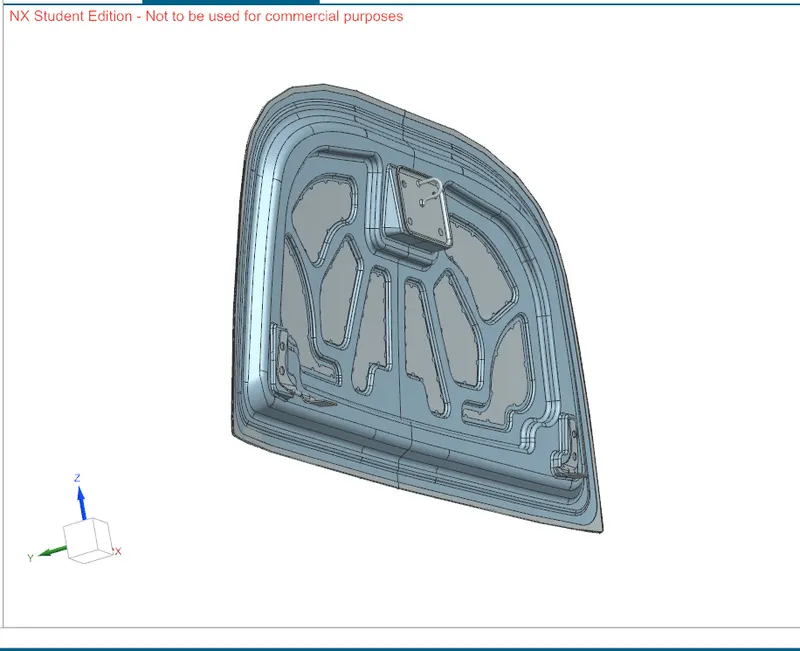
POSITION AND HINGE AND STRIKER :- the hinges should be usually placed on both sides of the hood in such a way that the strike fits exactly into the hole provided .
To ensure this the following conditons are follow :-
1. both the hinges should be on the same axis .
2. the centre of the striker circular traiectory should be always perpendicular to the hinge aris.
EMBOSS :- embosses are the projections made on steet metal using deep drowing techniques . the operation is carried out the mostly for the mostly for the purpose of stiffeing flat surface and design in the inner panel . the the major function of embossing is to dissipate the force acting on the hood during the collision of the car toward the hinge as early as possible . this helps reduce the import of the collision of the car toward the hinge as early as possible . this helps reduce the impact of the force on the passenger sitting inside .
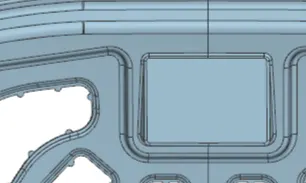
draft analysis:-
once the design was ready the inner panel of the hood was anaylzed for manufacturability .here draft analysis shows that all part are clearing when core is removed from cavity .
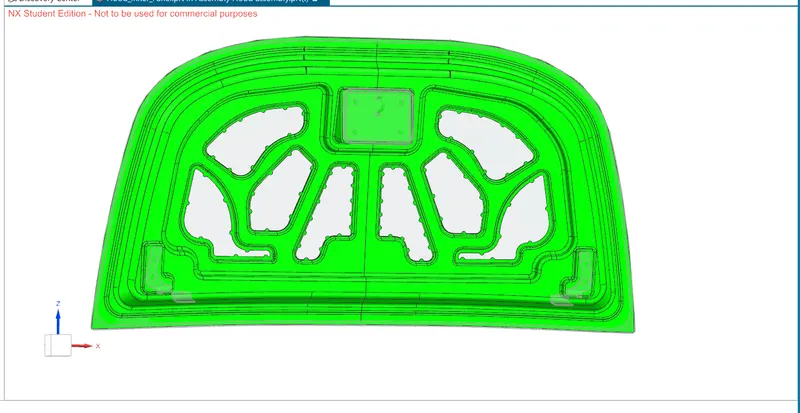
CONCLUSION :- All the parts of the hood are design based on the required condition and given dimensions . with the completion of hood design and analyzing for succeessful manufacturability . we can conclude that the hood can be utilized for the vehicle .