Hood design-Week 2
Aim: To design a car hood in NX using the given master section and provided design parameters.
INTRODUCTION
The hood is the hinged cover over the engine of motor vehicles. Hoods can open to allow access to the engine compartment (or trunk on rear-engine and some mid-engine vehicles) for maintenance and repair. In design perspective hood should meet some specific conditions like pedestrian safety, hood head zone for the lock striker, force distribution when subjected to frontal collision (occupant safety), manufacturability etc. A typical hood assembly consist of hood outer panel, inner panel, latch and striker, hinge, hood stay. Hood is the combination of an outer and inner panel and as per its design consideration, it also dissipates energy outside the car body.
Hood mainly consist of 4 components:
Inner panel, Outer panel, Hinges and Latch striker.
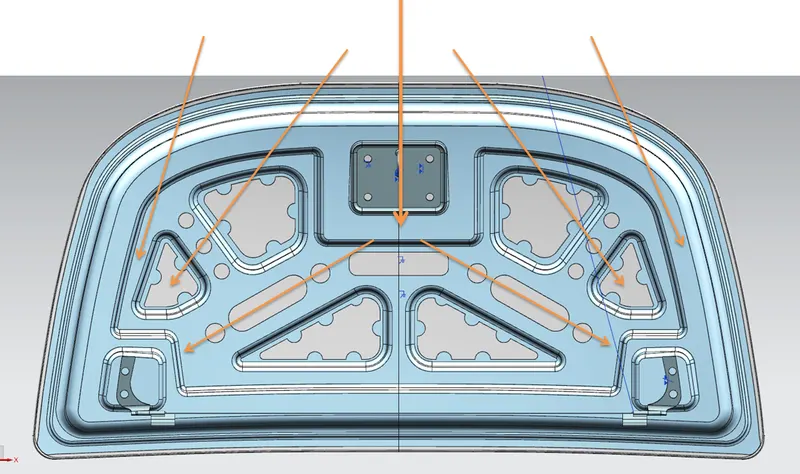
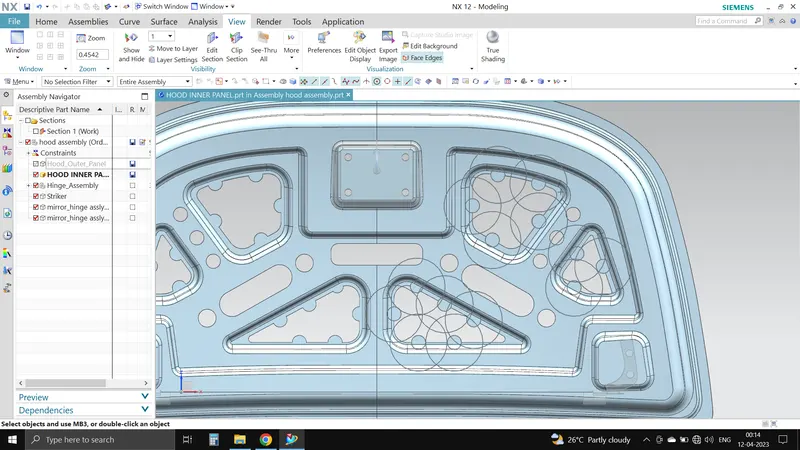
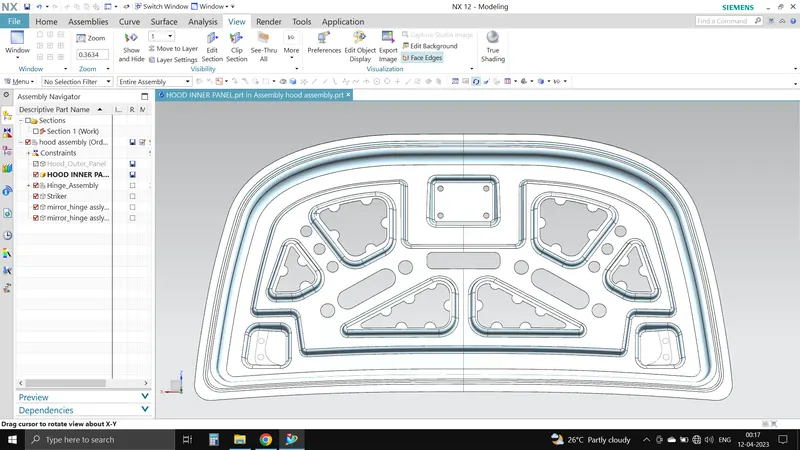
Outer panel gives the aesthetic look whereas inner panel have some embossing on it according to the force distribution and safety requirements.
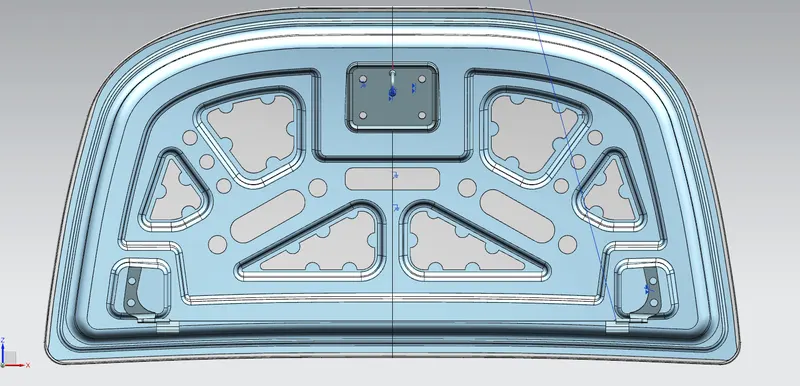
DESIGN CONSIDERATIONS FOR CAR HOOD :
- Head clearance zone
Consideration of Noise Vibration Harshness (NVH):
Noise Vibration Harshness (NVH) is a critical factor in the design and development of automobiles. NVH refers to the levels of noise, vibration, and harshness experienced by the occupants of a vehicle. Excessive NVH can lead to discomfort, fatigue, and reduced driving pleasure, and can also affect the safety of the vehicle.
There are several sources of NVH in an automobile, including the engine, transmission, suspension, and tires. The following are some of the measures taken by automobile manufacturers to reduce NVH levels:
- Engine Design: The engine is one of the primary sources of NVH in an automobile. Manufacturers use various techniques such as improved engine mounts, tuned exhaust systems, and active noise cancellation to reduce engine noise.
- Transmission Design: Transmission design is another critical factor in reducing NVH levels. Manufacturers use various transmission designs, such as dual-clutch and continuously variable transmissions, to reduce noise and vibration.
- Suspension Design: The suspension system of a vehicle plays a crucial role in NVH reduction. A well-designed suspension system with high-quality shock absorbers can absorb vibrations and reduce harshness.
- Tires: Tire design and quality can also affect NVH levels. Low-quality tires can create excessive noise and vibrations, while high-quality tires can significantly reduce NVH levels.
- Soundproofing: Automobile manufacturers use various soundproofing materials, such as acoustic insulation, sound-absorbing materials, and sound barriers, to reduce noise levels inside the vehicle.
- Active Noise Cancellation: Active noise cancellation is a technique used by automobile manufacturers to reduce engine and road noise. It involves using microphones and speakers to create counteracting sound waves that cancel out unwanted noise.
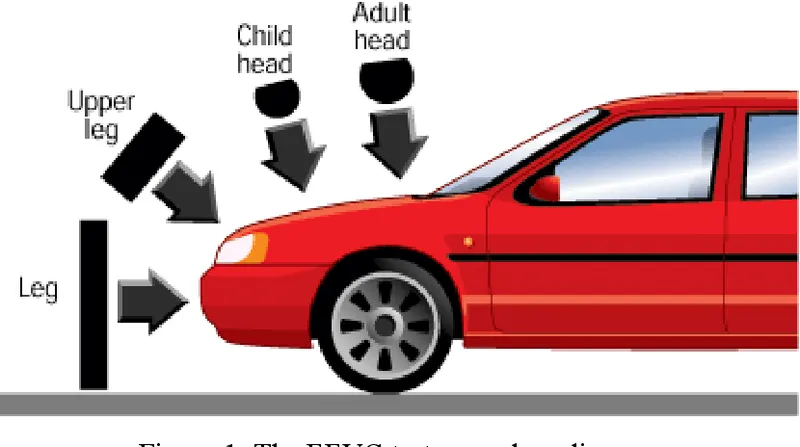
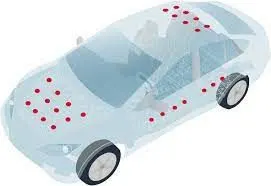
- Pedestrian safety: Pedestrian safety is important consideration while designing the hood. According to the wrap around distance and pedestrian head impact zone hood is designed.
The wrap-around distance is an important consideration in car hood design for pedestrian safety. It refers to the distance between the edge of the hood and the point where the pedestrian's head may make contact with the vehicle during a collision. This distance is critical because it determines the severity of the impact on the pedestrian's head, which can significantly affect the risk of injury or fatality.
Car manufacturers design the hood of their vehicles to minimize the wrap-around distance and reduce the risk of head injuries in the event of a collision with a pedestrian. The pedestrian head impact zone, as I mentioned earlier, is typically located towards the edge of the hood. By minimizing the wrap-around distance, car manufacturers can reduce the likelihood of a pedestrian's head impacting the vehicle, or at least reduce the severity of such an impact.
To minimize the wrap-around distance, car manufacturers use several design features, including a more gradual slope towards the edge of the hood, energy-absorbing materials, and reinforcement structures. They also use computer simulations and physical tests to evaluate the impact of different design features on pedestrian safety.
accident.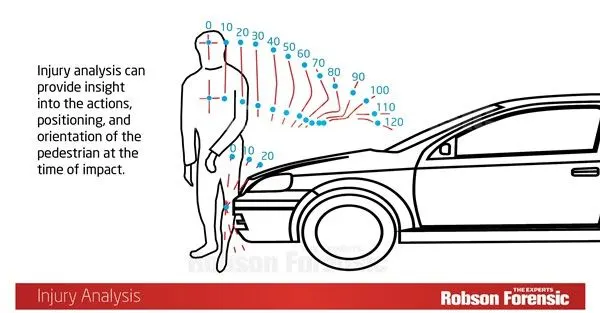
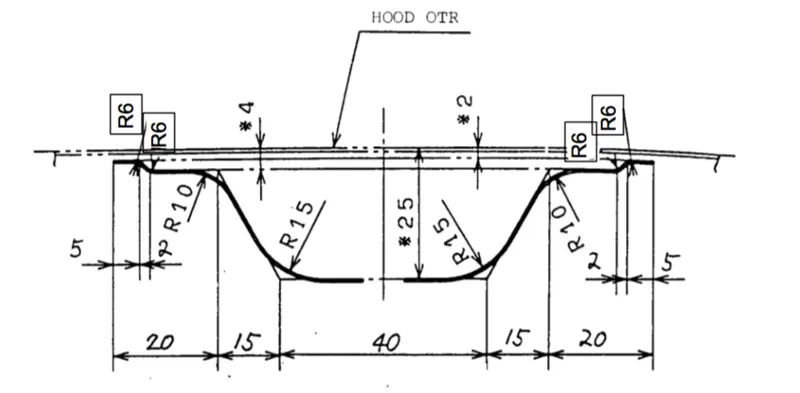
Design parameters
- Outer Panel Thickness = 0.75mm
- Inner Panel Thickness = 0.75mm
- Reinforcement Thickness = 1.5mm
Master sketch
MANUFACTURING PROCESSES:
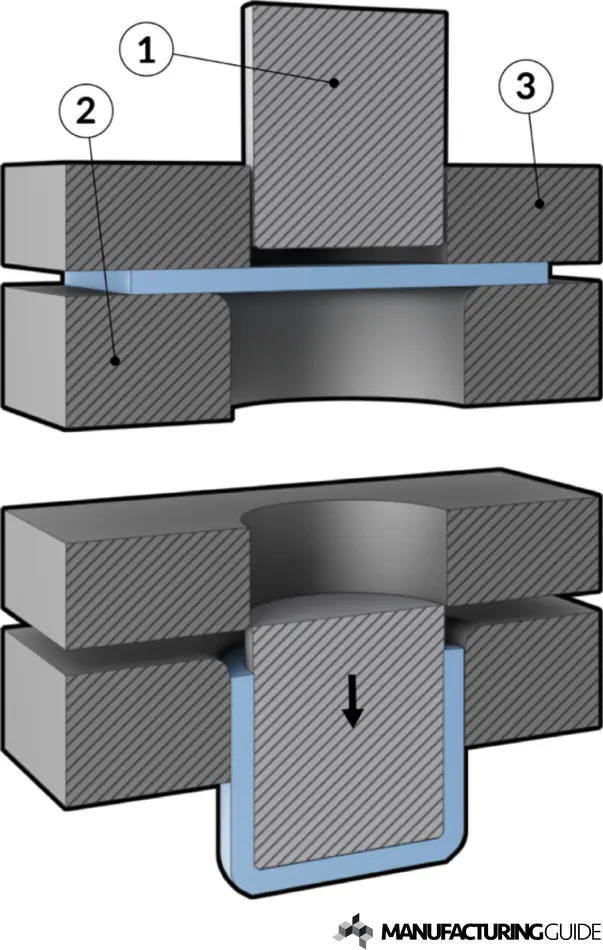
- Deep Drawing:
Deep drawing is a metal-forming process that involves the use of a punch and die to create a three-dimensional shape from a flat sheet of metal. The process involves drawing the sheet metal into a die cavity, which forms the sheet metal into the desired shape. The deep drawing process is commonly used in the manufacturing of car body panels, such as hoods, fenders, and doors.
Some considerations for deep drawing includes:
- Material selection: The material used for deep drawing must be ductile and have high formability. Common materials used for deep drawing in the automotive industry include aluminum, steel, and magnesium.
- Die design: The die used for deep drawing must be designed to create the desired shape without causing tearing, wrinkling, or fracture of the sheet metal. The die design must also take into account the material's springback properties, which can affect the final shape of the part.
- Lubrication: Lubrication is essential in the deep drawing process to reduce friction and prevent galling, which can cause surface defects on the sheet metal. The type and amount of lubrication used depend on the material being formed and the die design.
- Blank size: The size of the blank sheet used for deep drawing must be carefully calculated to avoid wrinkling or tearing of the metal during the process.
- Hemming:
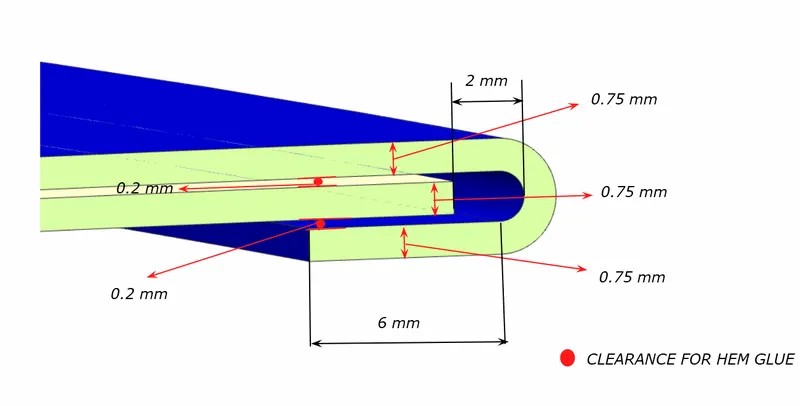
Hemming is a metal forming process used to join two sheet metal parts together by folding the edge of one sheet over the edge of the other sheet. Hemming is commonly used in the manufacturing of car body panels, such as doors and hoods.
Some considerations for Hemming includes:
- Material selection: The material used for hemming must be ductile and have high formability. Common materials used for hemming in the automotive industry include aluminum and steel.
- Hemming tool design: The hemming tool used for the process must be designed to create a strong and secure joint between the two sheet metal parts. The tool design must also take into account the material's springback properties, which can affect the final shape of the part.
- Hemming force: The force required to create the hemming joint must be carefully controlled to avoid overforming or underforming the sheet metal parts.
- Hemming width: The width of the hemming joint must be carefully controlled to ensure a secure joint while minimizing the visual appearance of the joint.
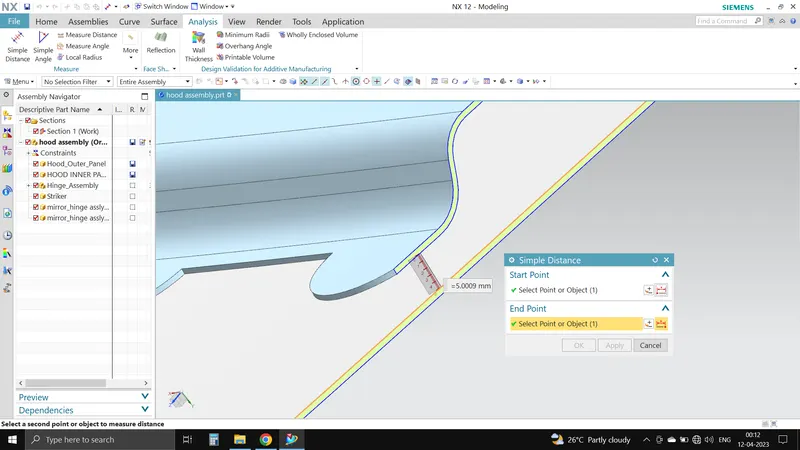
- HEMMING DATA:
Design Data:
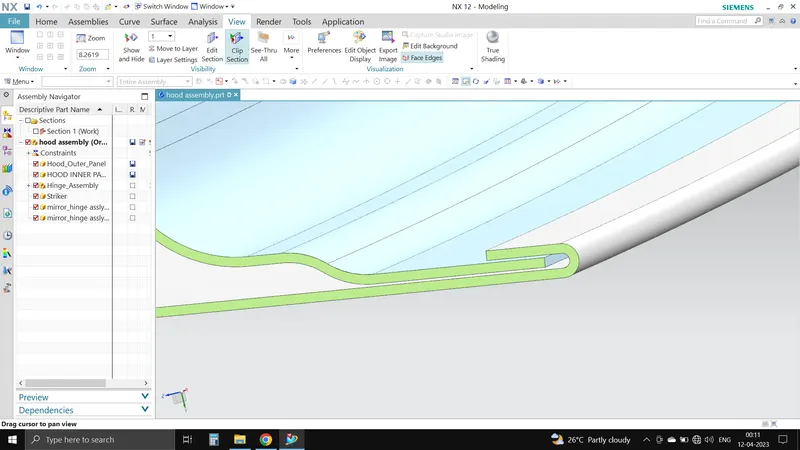
OUTPUT:
- Reliefs in hood design:
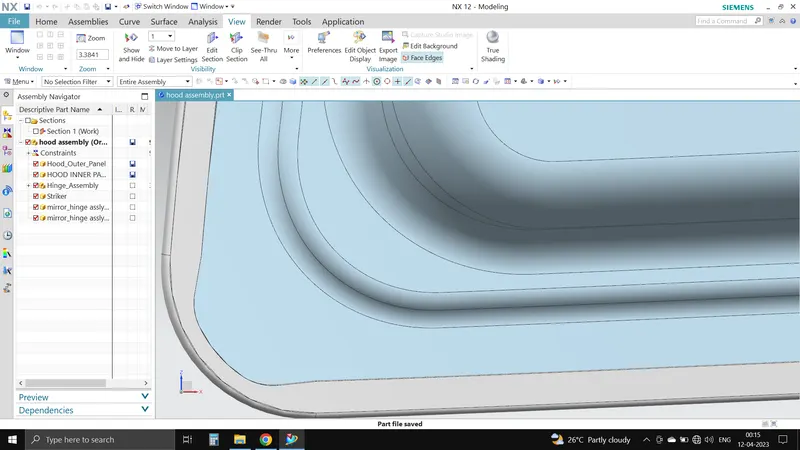
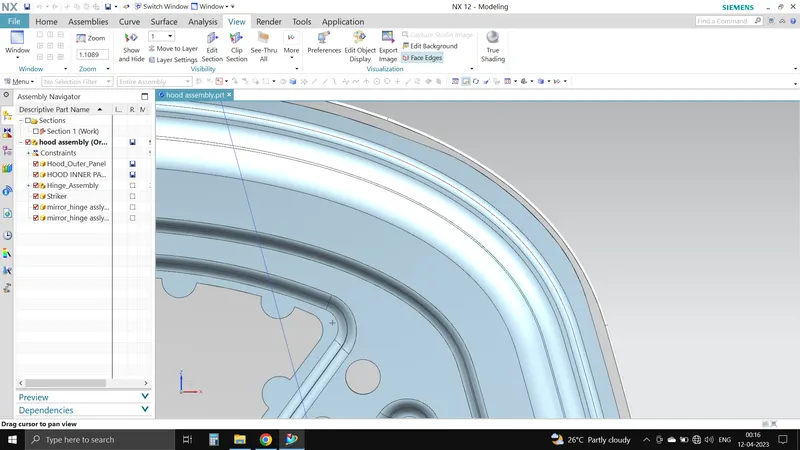
Reliefs are provided in hemming of sheet metal for several reasons. Hemming is a process of folding the edge of a sheet metal component onto itself, creating a double layer of metal for increased strength and rigidity. The relief is a small cut or notch that is made on the inside of the hem to allow the metal to bend and prevent cracking or buckling. Here are some of the reasons why reliefs are provided in hemming of sheet metal:
- Reduce Stress Concentration: During the hemming process, the metal is bent to a sharp angle, creating a high level of stress concentration at the bend point. The relief reduces the stress concentration by allowing the metal to deform more easily and uniformly, preventing cracks or fractures from forming.
- Improve Bend Quality: Reliefs help to improve the quality of the bend by reducing the risk of deformation or wrinkling. By allowing the metal to deform more uniformly, reliefs ensure that the hemmed edge is smooth and consistent.
- Increase Material Formability: The presence of reliefs increases the formability of the sheet metal, making it easier to hem without damage. The relief allows the metal to bend more easily, reducing the force required for the hemming process and preventing damage to the metal.
- Maintain Tolerance: Reliefs help to maintain the dimensional tolerance of the sheet metal component. By reducing the risk of deformation or buckling during the hemming process, reliefs ensure that the final dimensions of the component are accurate and consistent.
Mastic sealants:
Mastic sealants are commonly used in the automotive industry as a sealing and bonding agent for a variety of applications. These sealants provide excellent adhesion to a wide range of substrates, including metals, plastics, and composites, and can withstand the harsh conditions of automotive environments, such as high temperatures, moisture, and vibration. Here are some of the applications of mastic sealants in automobiles:
- Body panel sealing:
Mastic sealants are used to seal the gaps between body panels in automobiles, such as doors, hoods, and trunks. The sealant creates a waterproof and airtight barrier that prevents water, dust, and other debris from entering the vehicle's interior.
- Windshield bonding:
Mastic sealants are used to bond windshields to the vehicle's body. The sealant creates a strong and durable bond that can withstand the stresses and vibrations of the vehicle's operation.
- Sound dampening:
Mastic sealants are used as a sound-deadening material in automobiles. The sealant is applied to the vehicle's interior surfaces, such as the floor, doors, and roof, to reduce noise and vibration from the engine, road, and wind.
- Underbody coating:
Mastic sealants are used to coat the vehicle's underbody to protect it from corrosion and damage caused by rocks, salt, and other debris on the road.
- Electrical insulation:
Mastic sealants are used to insulate and protect electrical components, such as wires, connectors, and sensors, from moisture, dust, and other contaminants.
The advantages of mastic sealants in the automotive industry include:
- Excellent adhesion to a wide range of substrates
- Resistance to high temperatures, moisture, and vibration
- Provides a waterproof and airtight seal
- Improves sound insulation
- Protects against corrosion and damage
- Hood and its Components: The hood is a critical component of an automobile that covers the engine and provides access for maintenance and repairs. The hood assembly comprises several components, including the hood panel, hinges, latch, release cable, and insulation.
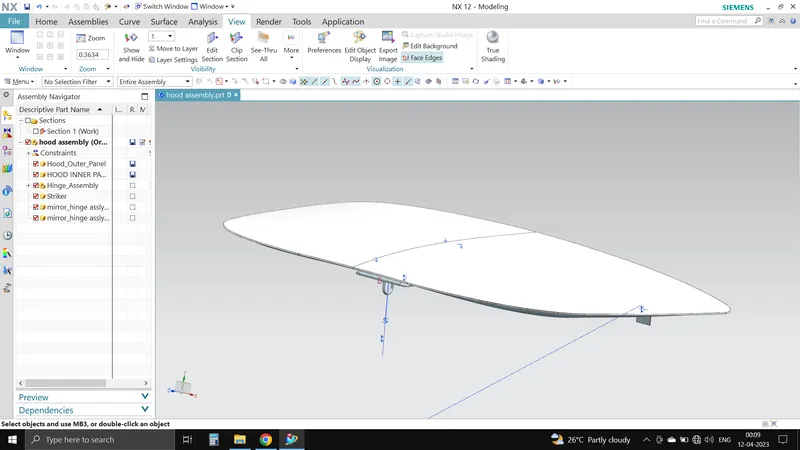
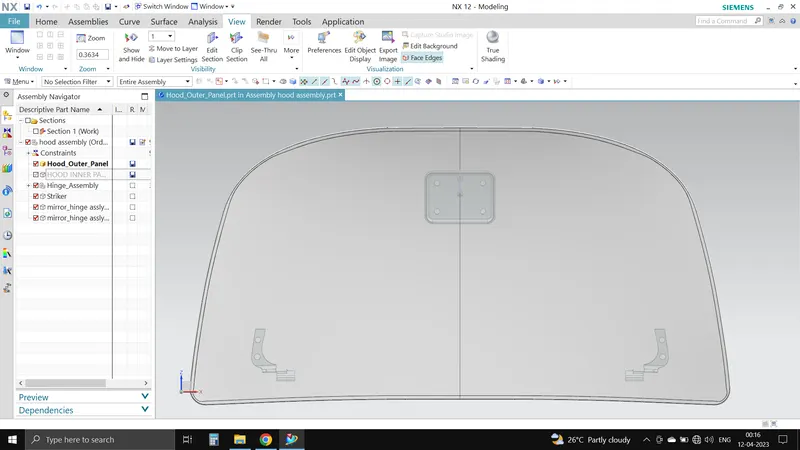
OUTER PANEL
INNER PANEL:
- Hood Panel: The hood panel is the outermost part of the hood assembly, and it's typically made of steel or aluminum. The hood panel can have different designs, such as a flat or domed shape, depending on the vehicle's aesthetics and aerodynamic requirements.
- Hinges: The hinges connect the hood panel to the vehicle's body and allow the hood to be opened and closed. The hinges are typically made of steel and are attached to the hood panel and the body using bolts or screws
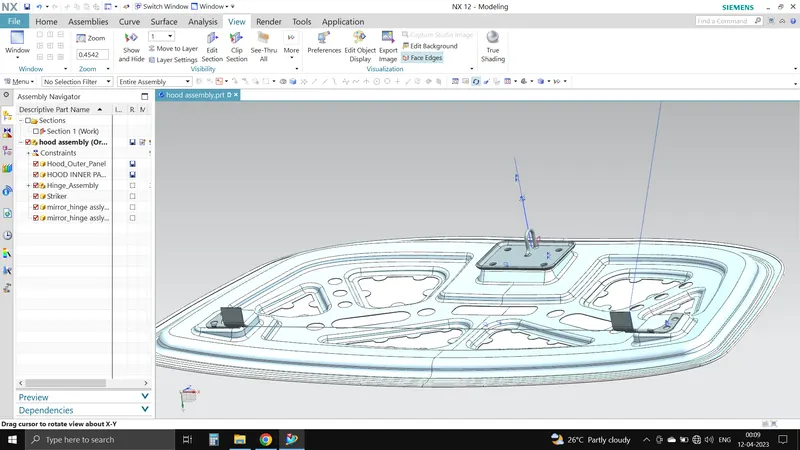
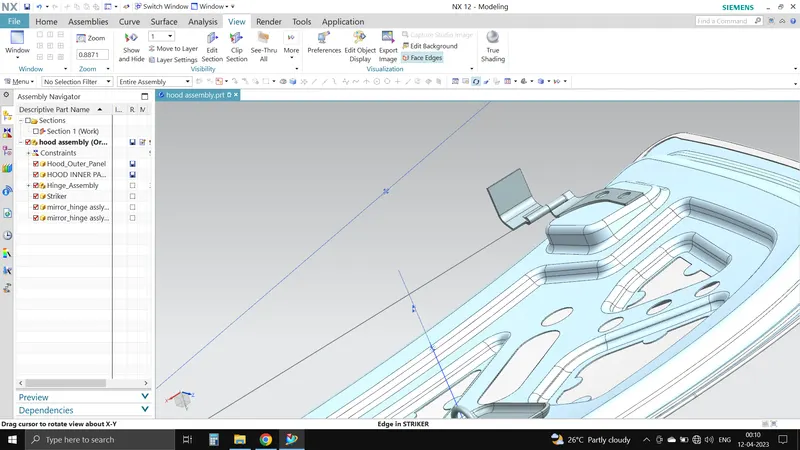
- Latch and striiker: The latch is a mechanism that secures the hood panel to the vehicle's body when closed. The latch comprises several parts, including the latch assembly, striker, and release cable.
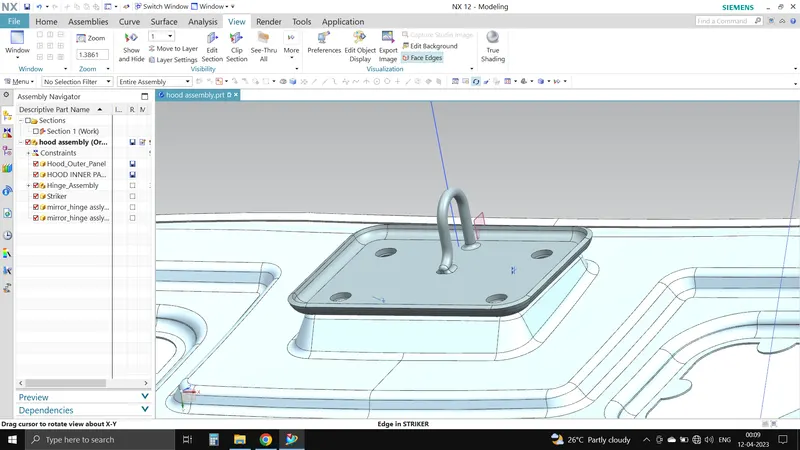
- Release Cable: The release cable is a cable that connects the latch assembly to the inside of the vehicle, allowing the driver to open the hood from inside the car.
- Insulation: The insulation is a layer of material, usually made of foam or fiberglass, that is placed between the hood panel and the vehicle's body. The insulation helps to reduce noise and vibration from the engine and protects the hood from heat damage.
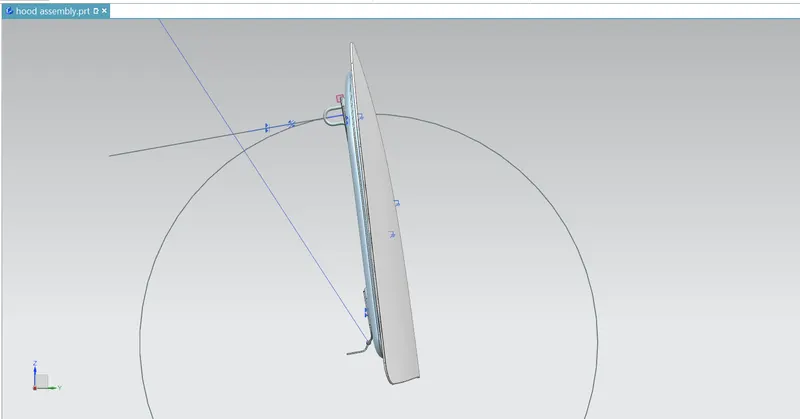
- Latch Trajectory: The latch trajectory is the path that the hood latch takes when the hood is closed. The latch trajectory is critical for ensuring that the hood is securely closed and does not open accidentally while the vehicle is in motion. The latch trajectory is determined by several factors, including the location of the latch assembly, the position of the striker, and the shape of the hood panel.
- Mastic Data: Mastic is a type of sealant that is commonly used in the automotive industry to seal and bond components. Mastic data refers to the specifications and properties of the mastic used in the hood assembly, such as its adhesion strength, curing time, and temperature resistance. Mastic data is critical for ensuring that the mastic used in the hood assembly meets the required specifications and provides the necessary sealing and bonding properties.
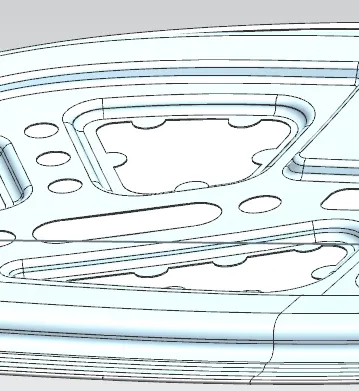
- Emboss Definitions: Embossing is a process used in the manufacture of sheet metal components, such as the hood panel, to create raised patterns or designs on the surface of the metal. Emboss definitions refer to the specifications and parameters of the embossing process, such as the depth, width, and shape of the embossed pattern. Emboss definitions are critical for ensuring that the embossed pattern meets the design requirements and is consistent across all hood panels produced.
Conclusion
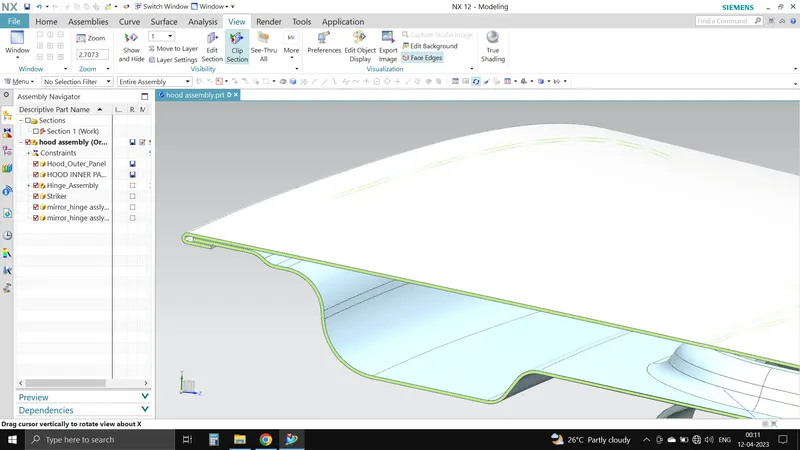
In this challenge I learned to design the hood inner panel, outer panel with the help of master sketch and the styling surface. And also learnt the assembly of Hood inner panel, Outer panel, and the reinforcements like latch and hinge assembly.