Hood design-Week 2
Objective - To design different components of hood and the design procedure and know the different stages of designing the hood.
Design of Hood
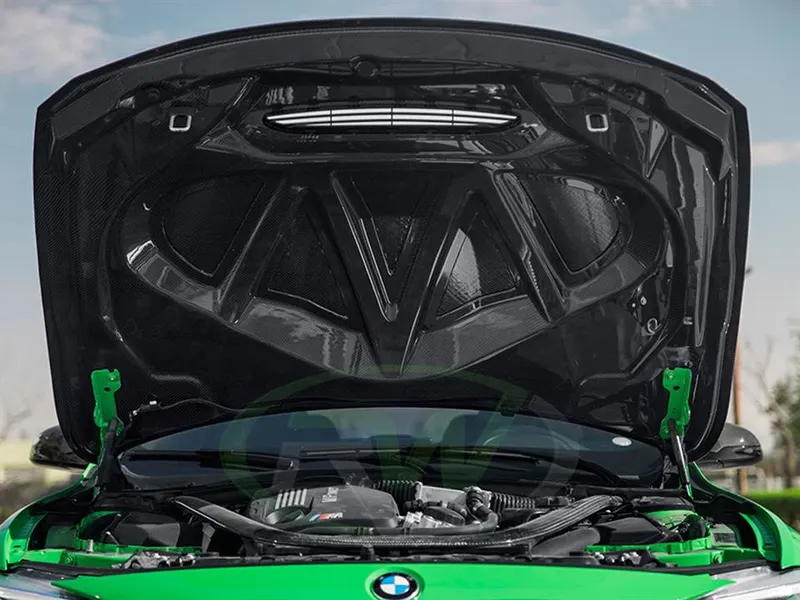
The hood or bonnet is the hinged cover over the engine of motor vehicles. Hoods can open to allow access to the engine compartment, or trunk on rear-engine and some mid-engine vehicles for maintenance and repair.
It consists of the inner hood and the outer hood which are fit together using mastics as well as hems, latch and two hinges.
Outer hood - is the outer component which is visible to the eyes of observers and hence should be aesthetic in design.
Inner hood - is the inner component which can be seen only when the hood is lifted and contains all the hinge and striker mounts.
Hinges - Hinges are the components which allow the hood to open at an angle so that the engine can be seen for repairing purpose.
Striker - It is the component used to lock the Bonnet when in closed position
Latch Trajectory
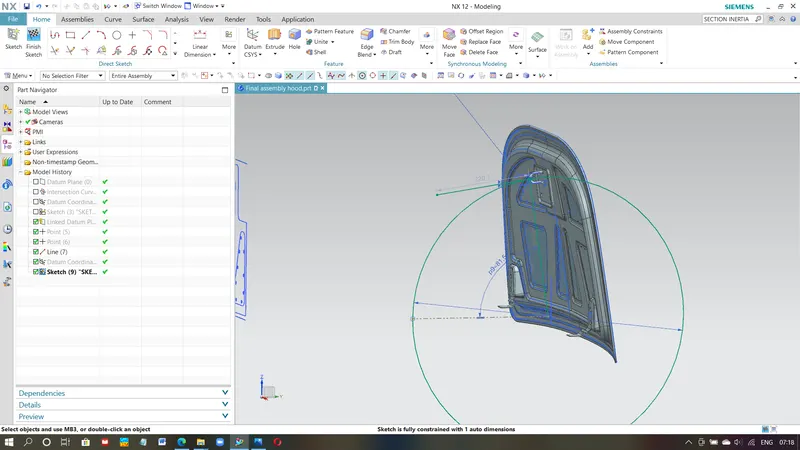
The position of the striker is defined by the position of the Hinges. According to the height required, a cirle is drawn around the Hinge axis. Then, the striker position is defined by projecting the position required from the circle arc drawn.
Embosses
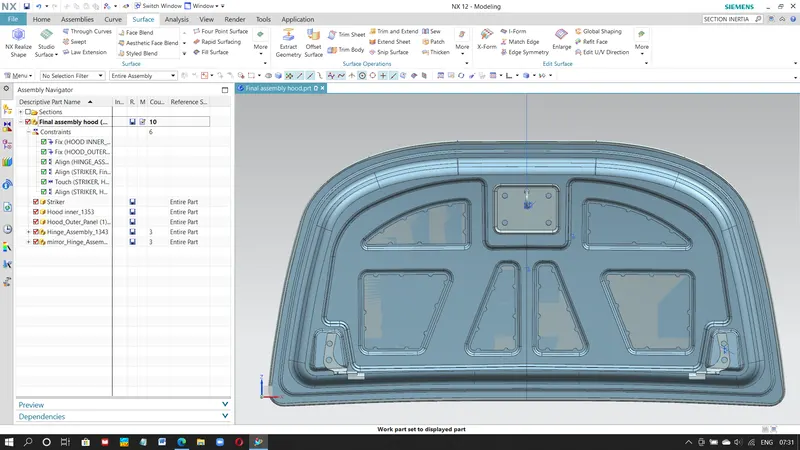
Material is removed more from the Side rather than the center so that on impact the impact is distributed or pushed sidewards from the passengers. The embosses can be seen in the image below.
Reinforcements
Reinforcements are provided to compensate the loss of material due to attachment of a component or material loss due to any other reason as it may make the surface weak.
Hemming
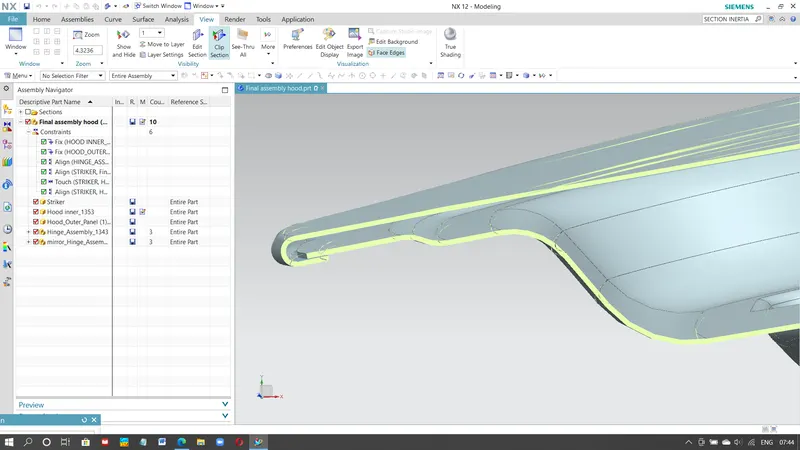
The following process is called Hemming and the Inner and Outer panel are fitted together without any rivets or welds using this technique.
A relief as shown in the image below is given to at the corners during hemming to avoid crumbling of the outer hood panel while rolling.
Mastics
To avoid vibrations between the inner and the outer hood, hemming is not enough to hold the two components tights. Rivets or welds cannot be done as it may ruin the outer appearance of the car.
As a result, mastics are used in order to hold both the components together. Mastic points are provided on the Inner panel so that both the inner and outer panel fit tightly.
Conclusion-
The design of hood and its different components were studied and designed with respect to different parameters.