Hood design-Week 2
HOOD DESIGN
OBJECIVE:
To design the hood inner panel and outer panel ,position the striker, hinges and providing emboss and mastic point.
DATA TO BE USED:
- Hood outer panel thickness = 0.75mm
- Hood inner pannel thickness = 0.75mm
- Reinforcement thickness = 1.5mm
- Minimum fillet radius = 3+0.75= 3.75mm
- Providing reliefs at corners to reduce stress concentration
HOOD:
The Hood is the opening body panel that covers the engine in a front engine vehicle.The hood is also considered as another type of door in a vehicle as it consits of an outter panel and inner panel .The inner panel provides the strength while the outter panel functions as the metal cover.
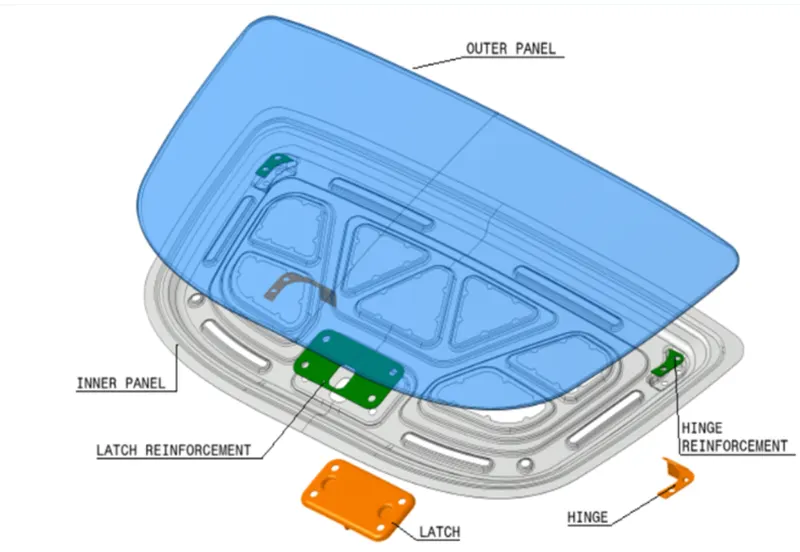
Hood are typically made out of the same material as the rest of the body work.This may include steel,aluminium,fiberglass or carbon fiber.However, some after market companies produce replacements for steel hoods in fiberglass or carbon fiber to make the vehicle lighter.
COMPONENTS OF HOOD:
- Hood stay
- Hood outter panel
- Hood inner panel
- Latch and striker
- Stiffner pad
- Hinge
HOOD STAY:
A Hood stay rod for a vehicle is provided to use conveniently , and oto prevent pollution by installing and releasing a hood stay rod automatically accroding to opening and closing a hood without using a hand.
Hood stay is an apparatus for a engine room of a car,which can safetly keep a engine hood in open position even if external force is abruptly generated due to vibration,wind and can facilitate an opening or closing operations of engine hood.
or
A device for supporting the engine hood in an open position.
The length of the rod depends upon the angle which the hood opens.If the ange is more,then the length of the rod is also more and vicee versa.
Purpose:An automotive engine hood is arranged to be opened for the purpose of inspecting the engine room,replinishing and orengine oil,changing parts ,making repairs etc.,
There are two types of hood stay:
- Support Rod
- Gas stay
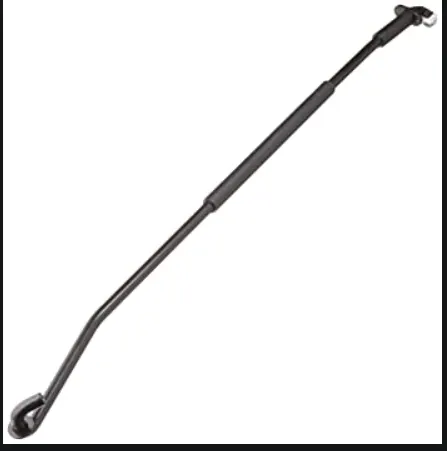
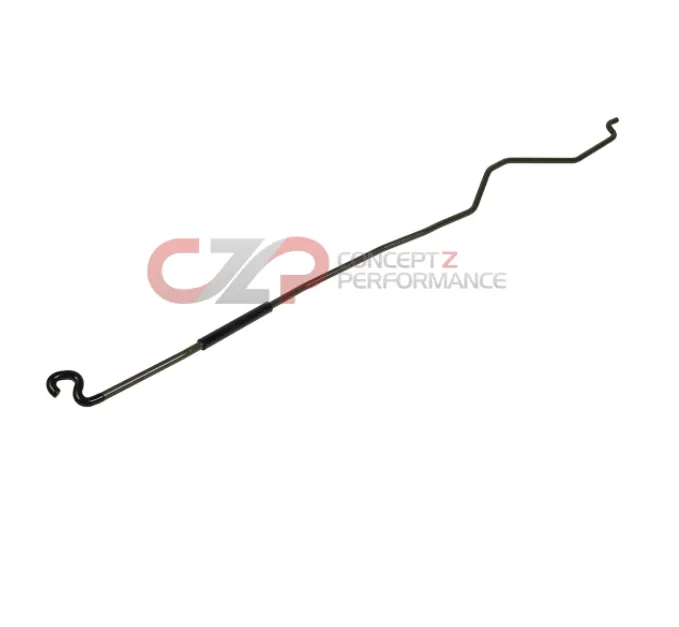
- SUPPORT ROD:It is the straight rod which holds the hood in open position.The support rod is either stright or bent.The straight rods may create vibrations and noise while travelling due to air movement.In case of bent rods, the vibrations are reduced and gives more strength to the rod.There is particular dimensions for the bent if the bent is more which results in bending or deformation of the rod.And one more important thing is that the support rod must be place opposite to the battery for example, if the battery is place left side ,then the support rod must be placed on right side and vice versa.
STRIGHT ROD BENT ROD
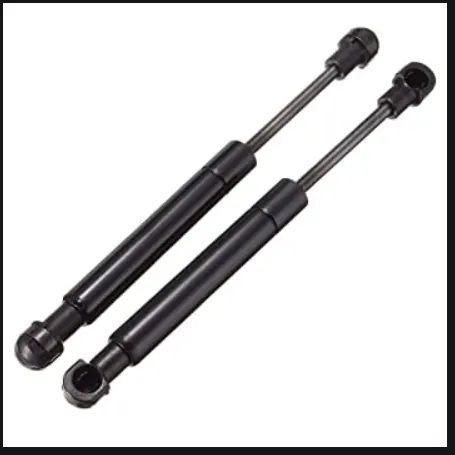
- GAS STAY:It is the rod consists of piston cylinder arrangement.Whent it is actuated the car hood is automatically opens which doesn't require manual force to open the hood.It is actuated formt the inside of the car itself and it require only a little initial push only then it automatically opened up.It can be place either one side or on the both sides of the hood.And it also requires only little space to accomodate.
HOOD OUTTER PANEL:
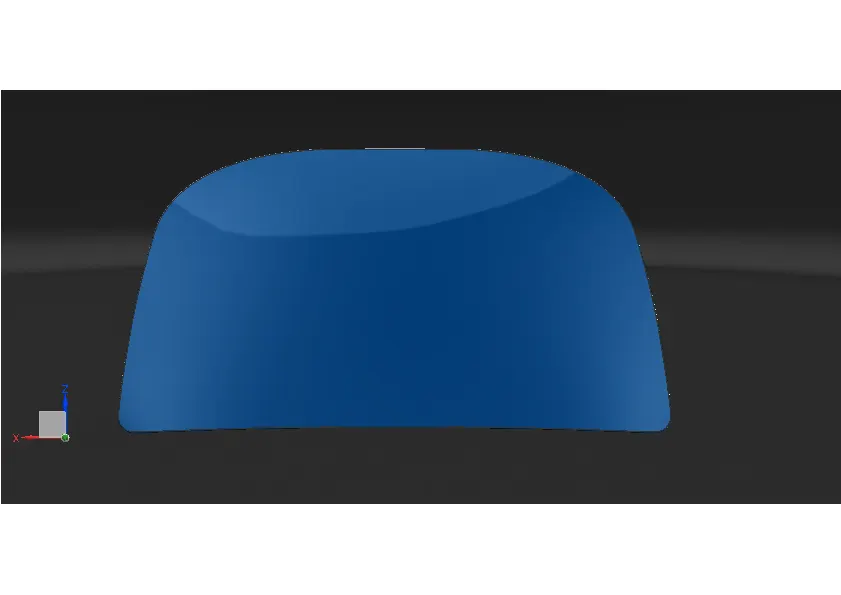
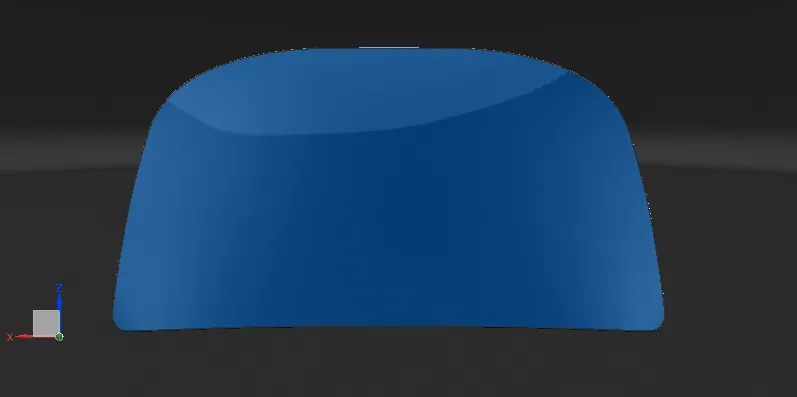
It is the skin surface of the car hood.It also gives the style to the car.Outter panel is wraped around the inner panel through hemming process.
HOOD INNER PANEL:
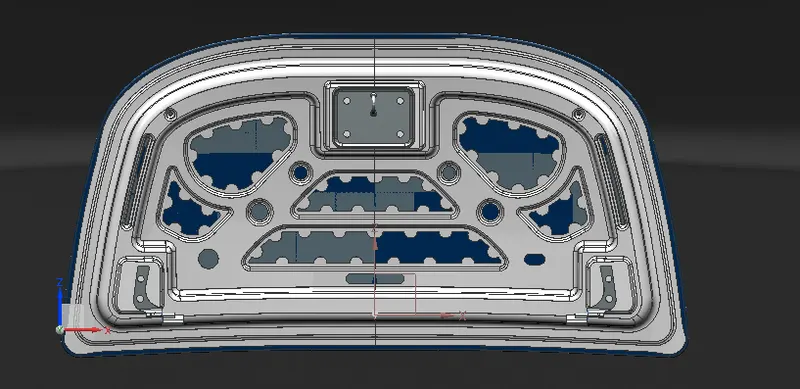
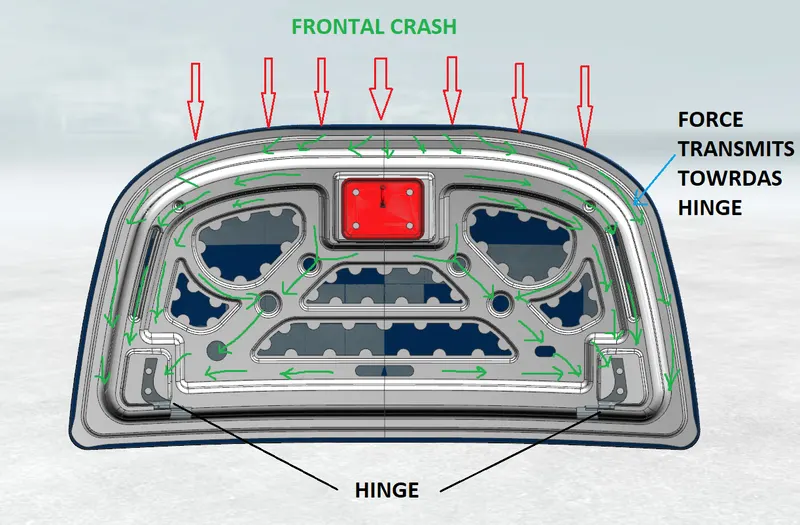
It is the rigid structure and it gives the strength to the hood.Emboss in the inner panel diverts the force due to frontal collision towards the hinge of the hood.so that it reduces the froce drastically.
LATCH AND STRIKER:
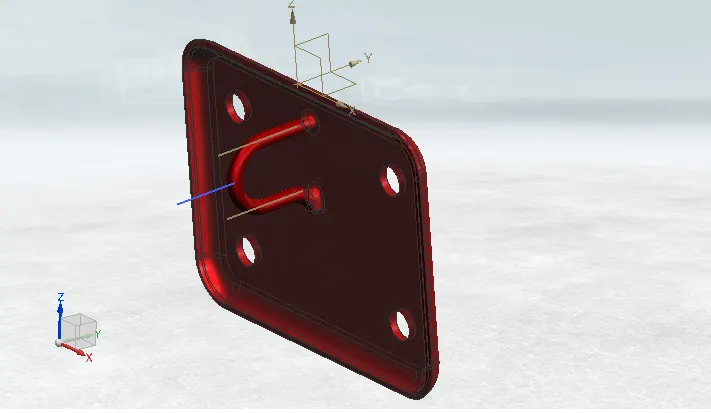
Latch and striker are the parts which helps to lock the hood to the engine compartment .
STIFFNER PAD:
Stiffner pad is th rectangular cross section strip used to hold the inner hood panel and the outter hood panel.
HINGE:
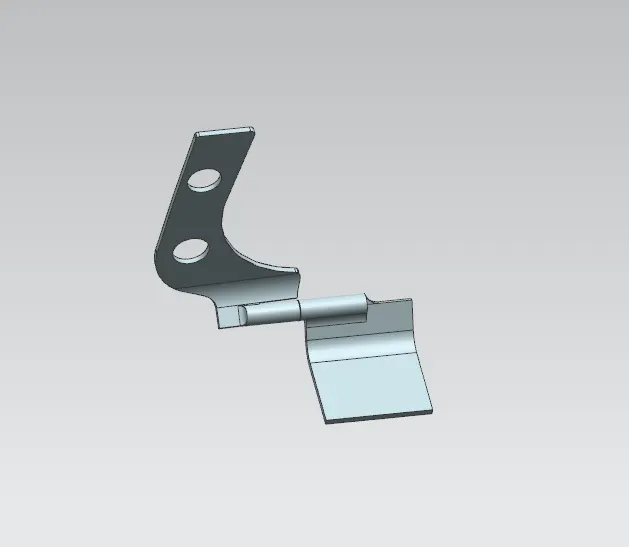
Hinge is the part which helps to open the hood thought the hinge axsis.One part of hinge is connected to hood inner panel and other part of the hinge is connect to the engine compartment of the car.
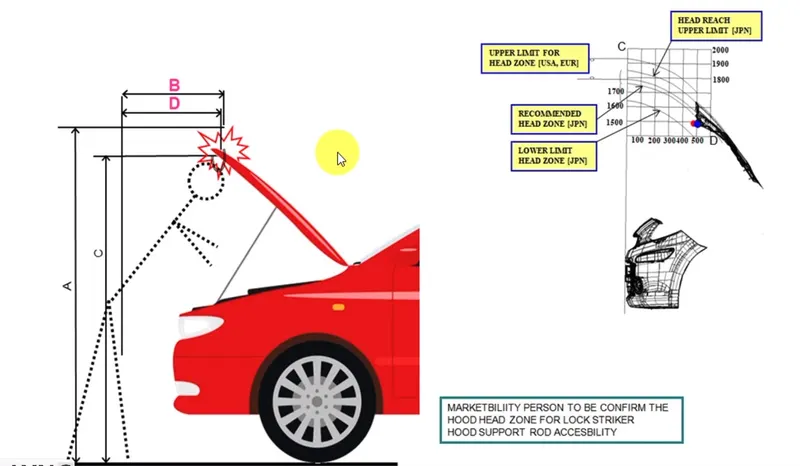
HOOD HEAD ZONE FOR LOCK STRIKER:
While designing the hood we have to consider the opening angle of the hood .It may differ from countries to countries based on their heights.
In India the average human height is 5.5' ft. and in the european countries average human height is 6' ft.
The opening angle is 60 degrees in india whereas in europe the opening angle is upto 80 degrees.
DESIGN REQUIREMENT OF SUPPORT ROD:
While designing the hood , we should pre-plan where the support rod should be mounted or unmounted either in hood or in engine compartment.
Support rod is either stright or with some bent.Stright rod may wobbling due to air which creates noise whereas support rod with bent is more rigid which does not make any noise or wobble in air.
So no support rods are stright . support rods comes with some structures.
We can make bent anywhere in support rods , there is no such regulations to follow while designing but we have to make sure those ben desn't collide with other parts in the engine compartment.If it collide with any parts in the engine compartment then it will make rattling noise.When car is is in motion there is a vibration in the car body and this support rod will also vibrate so we have to make sufficient space for support rod.
HINGE CONSTRAIN:
- The axsis of the hinge is parellel to the X- axsis.
- The face of hinge is parellel to the face of emboss on the inner panel.
- Both faces are parellel to the YC-XC PLANE.
HATCH AND STRIKER POSITION:
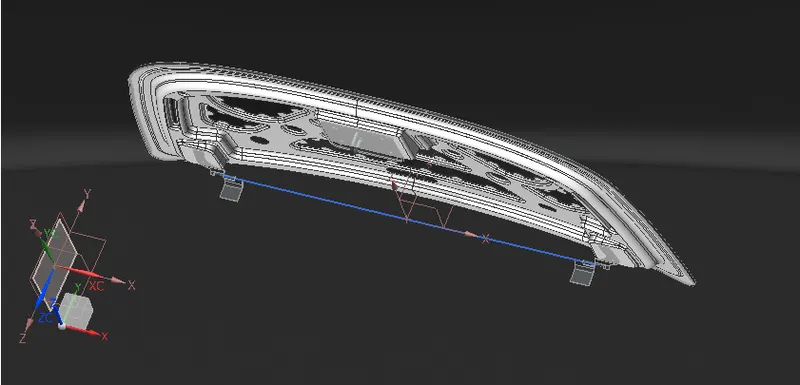
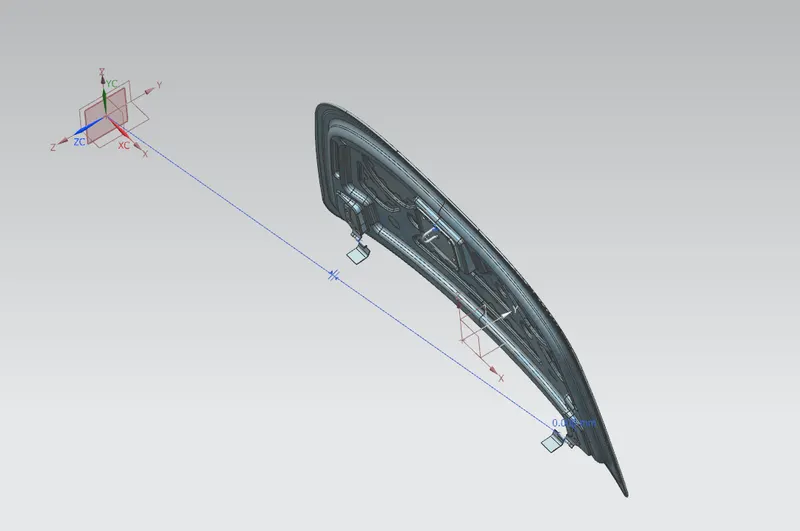
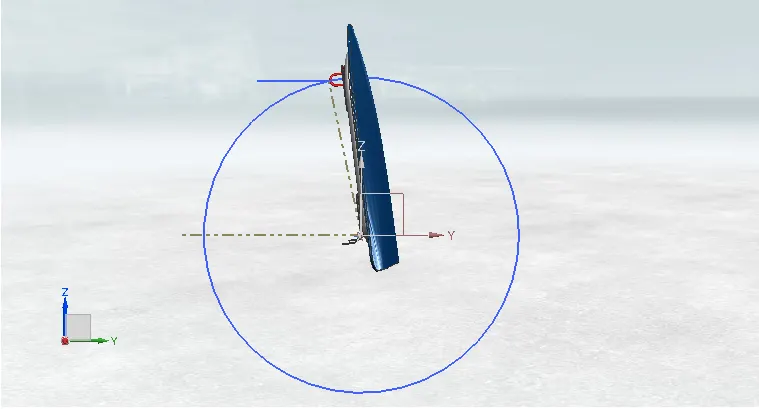
- To position the hatch and striker , we have to draw a axsis for the hinge.
- At the midpoint of the hinge axsis ,big circle is drawn.
- In striker line must be drawn at mid-point.
- That striker line is must be tangent to the circle or perpendicular to that circle.
- We can adjust the hinge position to make the striker line meet perpendicular to the circle.
CORNER RELIEF:
- After the design is prepared CAE team validate the design for manufacturing feasibility.
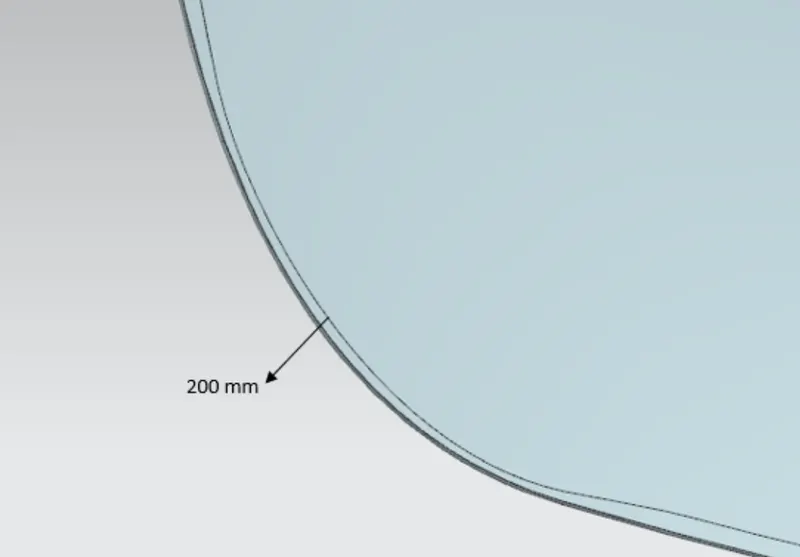
- During Hemming 2-3 rollers passes for perfect hemming.In this process the panel vibrates and deviates from the panel design,and after that process the panel spring back to the panel design.But in corners ,the panel doesn't comes to the panel design creates more stress on those areas.
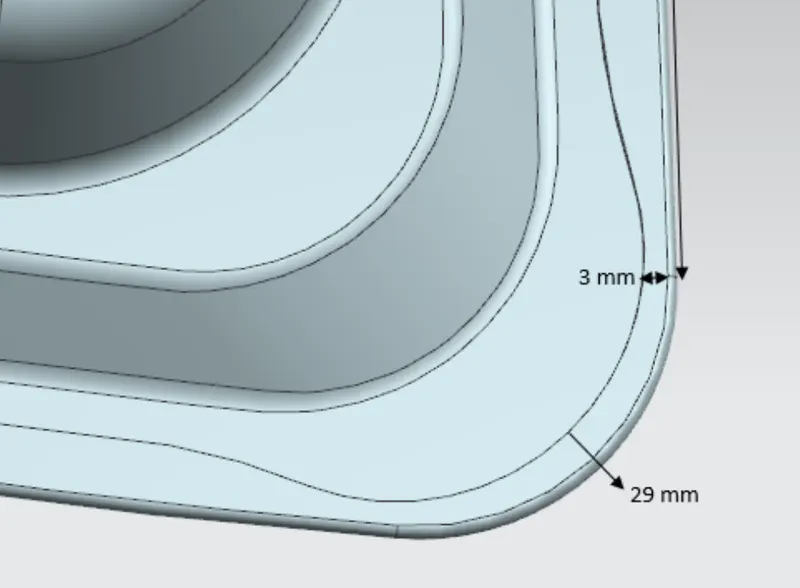
- To avoid that stress concentation and bring back the panel to the panel design,those corners are trimmed and make a relief.Now the panel spring back to the panel design even if the manufacturing process are done.
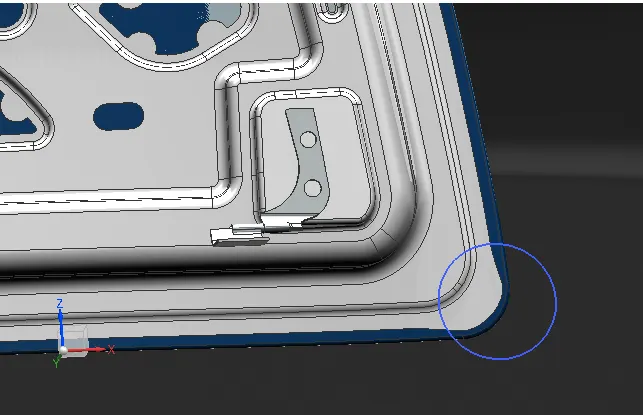
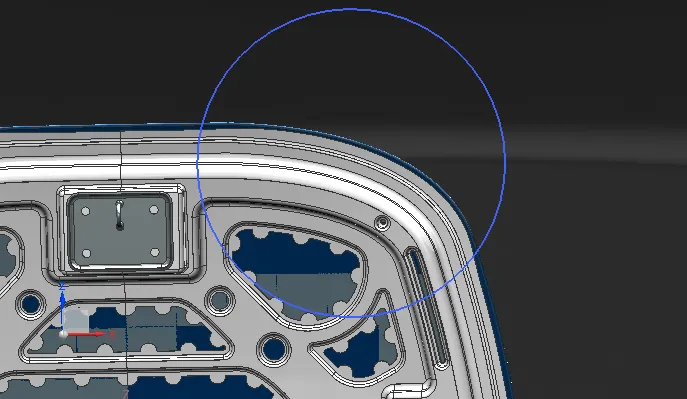
there are dimensions for those reliefs
EMBOSS DESIGN:
Sheet metal embossing is a stamping process for producing raised or sunken designs or relief in th sheet metal.This process made by matching male and female roller dies or by passing sheet or a strip of metal between rolls of the desired pattern.It is ofen combine with fosil stamping to create a shiny , 3D effect.To provide strength to the inner paneland to distribute the forces producing during the impact with pedestrain or other obstacles to ensure the safety of the passenger.The forces are directed towards the embossing path.
There is no particular design for embossing.We can come with our own design to produce the emboss.
We should design the emboss so that when there is a frontal collision , the force diverts towards the hinge of the panel.
If the force diverts towards the hinge , then that force will reduces drasticlly.
MASTIC POINTS:
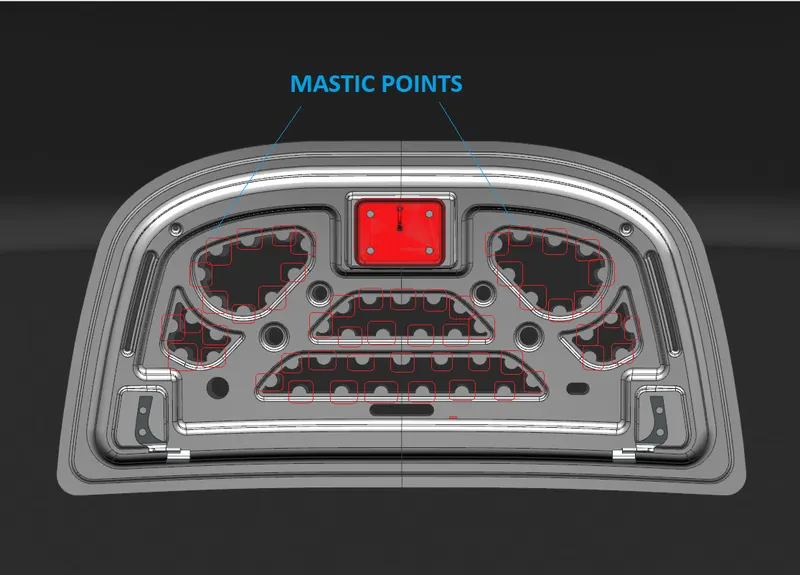
Mastic points are given in the panel for the mastic seal purpose.
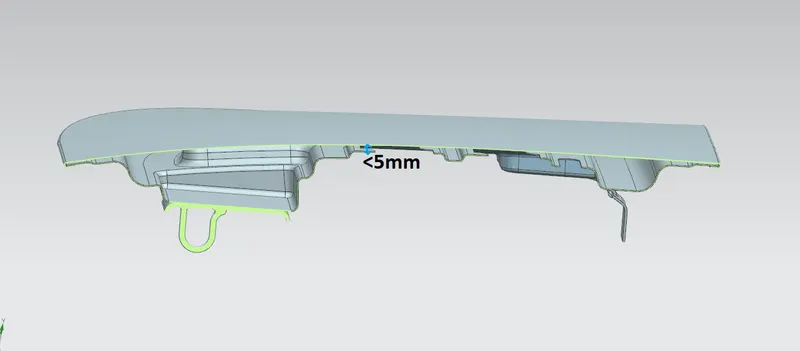
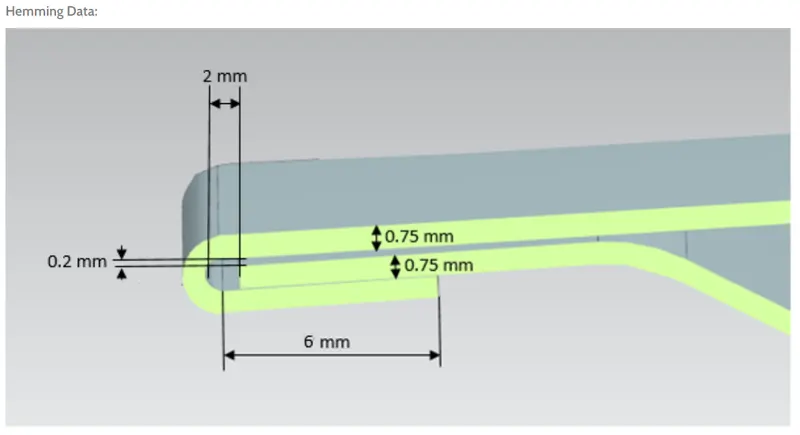
Mastic seal is a kind of hard rubber glue added between outer and inner panel of hood to join them at different points called mastic points locally around 80mm diameter. There should be minimum 2mm gap amd maximum 5mm gap between outer and inner panel to make a constant joint.
HEMMING:
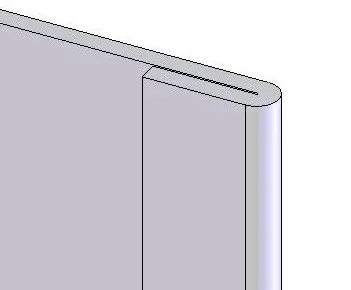
Hemming and seaming are two similar metalworking processes in which a sheet metal edge is rolled over onto itself. Hemming is the process in which the edge is rolled flush to itself, while a seam joins the edges of two materials.
Hems are commonly used to reinforce an edge, hide burrs and rough edges, and improve appearance.
PEDESTRIAN SAFETY:
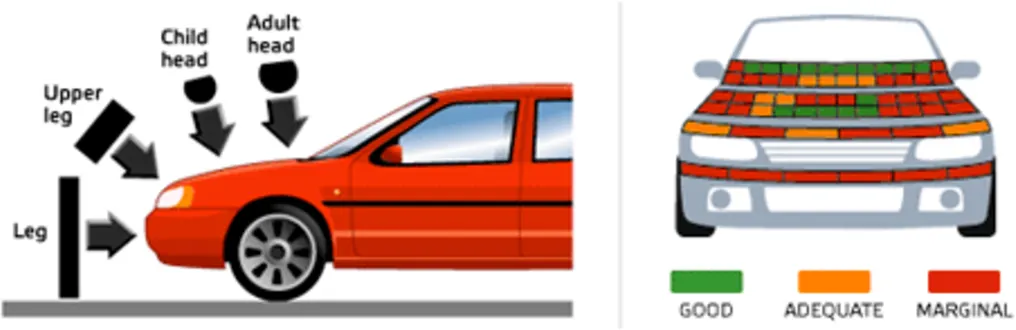
Many pedestrian crashes involve a forward moving car (as opposed to buses and other vehicles with a vertical hood/bonnet). In such a crash, a standing or walking pedestrian is struck and accelerated to the speed of the car and then continues forward as the car brakes to a halt. The pedestrian is impacted twice, first by the car and then by the ground, but most of the fatal injuries occur due to interaction with the car. Vehicle designers usually focus on understanding the car-pedestrian interaction, which is characterized by the following sequence of events: the vehicle bumper first contacts the lower limbs of the pedestrian, the leading edge of the hood hits the upper thigh or pelvis, and the head and upper torso are struck by the top surface of the hood and/or windshield.
PEDESTRIAN SAFETY ON HOOD:
There are two types of hood one is inlaid hood and the other one is wrap around hood.
In inlaid hood the side reference line falls on the fender whereas in wrap around hood the side reference line falls on the hood itself.
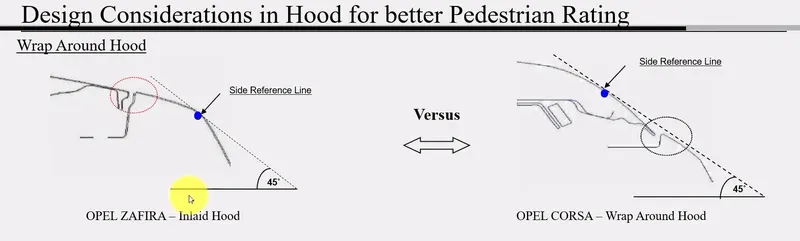
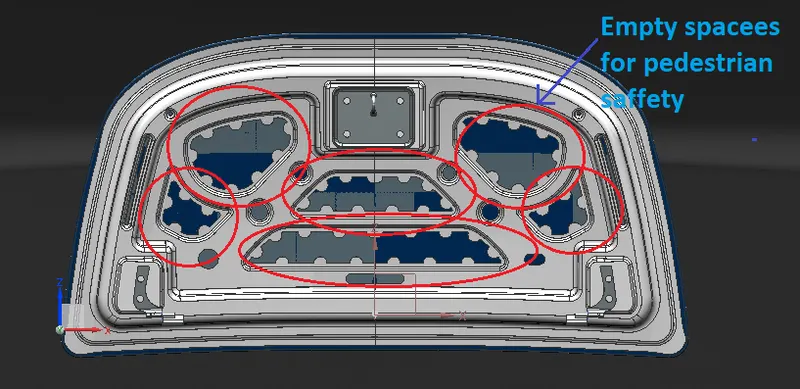
In hood inner panel there will be a empy spaces which is for reduce the impact of a pedestrian.When a person hit by a car his/her head is falls on those empty spaces and the impact for that is less on those empty spaces.If the impact is less then injury to the person is also less.EURO-NCAP is a car safety programme,If the EURO-NCAP rating is high then there will be reduce in car price which reults in high sales.
EURO-NCAP REGULATIONS:
W should design the car hood for the safety of passengers inside the car and at the same time we have to consider the safety of person walking on the road.This is what improves the standard and quality of the car.
Each car is awarded up to five stars. In recent years, it has been virtually impossible to get a full five star rating without advanced technology that helps to avoid crashes.
5 stars Five stars equates to “overall good performance in crash protection. Well equipped with robust crash avoidance technology.”
4 stars Cars must also achieve “overall good performance in crash protection ... additional crash avoidance technology may be present”.
3 stars Occupant protection must be “average to good” but a three star car is likely to lack crash avoidance technology.
2 stars Euro NCAP describes crash protection in a two-star car as “nominal” and that such models are expected to lack crash avoidance technology.
1 star Cars are rarely awarded just one star for “marginal crash protection”. In one case, more than a decade ago Euro NCAP warned of the potential of “life-threatening injury” in a crash that was similar to its tests”. In more recent years, the organisation has re-tested cars that scored well in previous years, showing how far standards have increased. The Fiat Panda was awarded four stars in 2011 but no stars in 2018
CONCLUSION:
The inner panel ,outter panel is designed from the given styling surface accroding to EURO-NCAP regulations.The latch and striker positions are studied and the necessary reinforements are given.