Automotive Hood Design
Automotive Hood Design
Introduction
The hood is a part of a car that covers and protects the engine. It is usually located at the front of the car and can be opened to allow people to access the engine compartment for repairs and maintenance. The hood is also an important safety feature of a car because it helps to protect passengers and pedestrians during a collision.
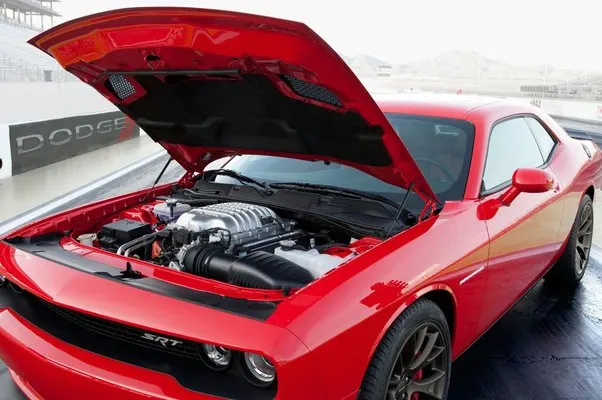
If a car has a latch, it will hold the hood down to keep it securely in place. Some cars, especially those used for racing, may use pins to keep the hood in place instead. The hood may also have additional features like wipers to clean it or a special design to make the car look unique.
The hood is usually made of steel or aluminium because these materials are strong and durable. However, some hoods may be made of other materials like carbon fibre or fibreglass, which are lighter and can improve the car's performance. The design of the hood may vary depending on the make and model of the car. It is designed to protect the engine and make it easy to access for repairs.
To ensure that the hood works properly and remains safe, it's important to take care of it. This includes keeping it clean, checking the latch or pins regularly, and addressing any damage or issues promptly. By maintaining the hood, you can help ensure that your car is safe to drive and that the engine remains in good condition.
| Type of Hood Support | Description | Advantages | Disadvantages | Use |
|---|---|---|---|---|
| Gas Stay | Device that supports the engine hood of a vehicle in its open position using gas |
- No manual effort required -Can hold up heavier hoods - Can be easily activated and deactivated |
- Can fail over time and require replacement - More expensive than support rod - Requires more force to close the hood |
Used for heavier hoods where manual lifting may be difficult |
| Support Rod | Device that supports the engine hood of a car in its open position using a rod |
- Less expensive than gas to stay - Easy to install and use - Lightweight |
- May not hold up heavy hoods - Requires manual effort to lift and hold the hood |
Used for lighter hoods where manual lifting is easy |
Gas Stay
Car Hood support rod
Hood Components:
Outer Panel: The outer panel of the hood is typically made of steel, aluminium, or composite materials. It is responsible for providing the visual appearance and aerodynamic performance of the hood.
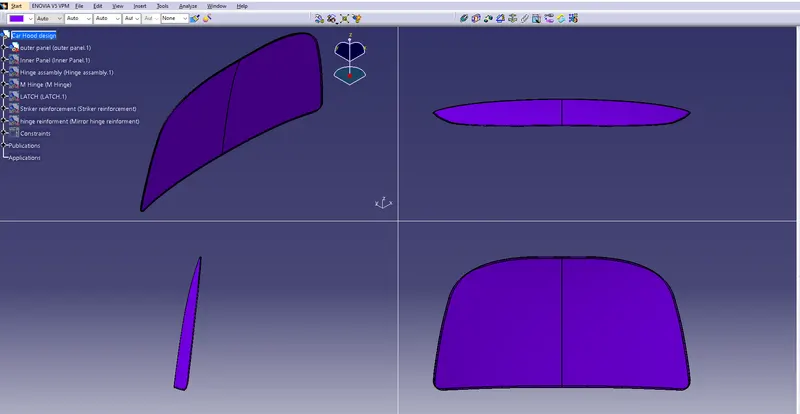
Inner Panel: The inner panel of the hood is made of sheet metal and is designed to provide structural support to the hood. It also helps to absorb energy in the event of a collision.
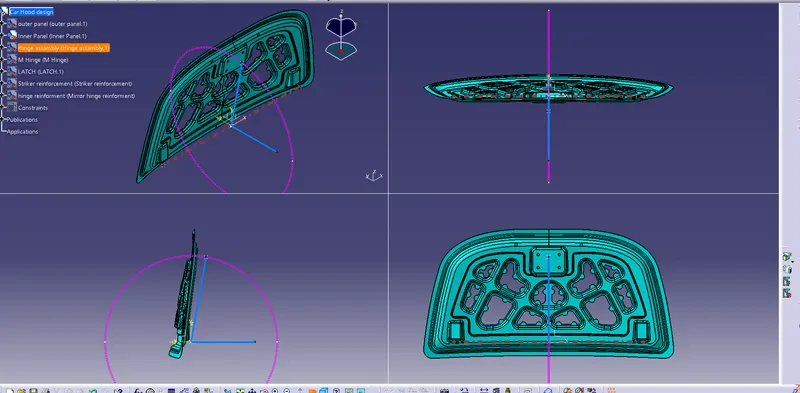
Striker: A striker is a steel component that is part of the hood latch mechanism in a vehicle. It is attached to the body and engages with the hood latch to keep the hood closed while the vehicle is in motion. The striker is adjustable and often has additional features such as a rubber coating to reduce noise and vibration. Proper installation and maintenance of the striker are crucial for safe operation of the hood latch system.
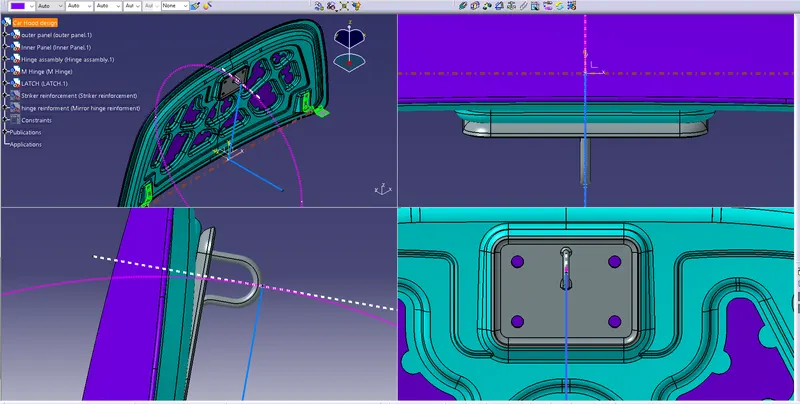
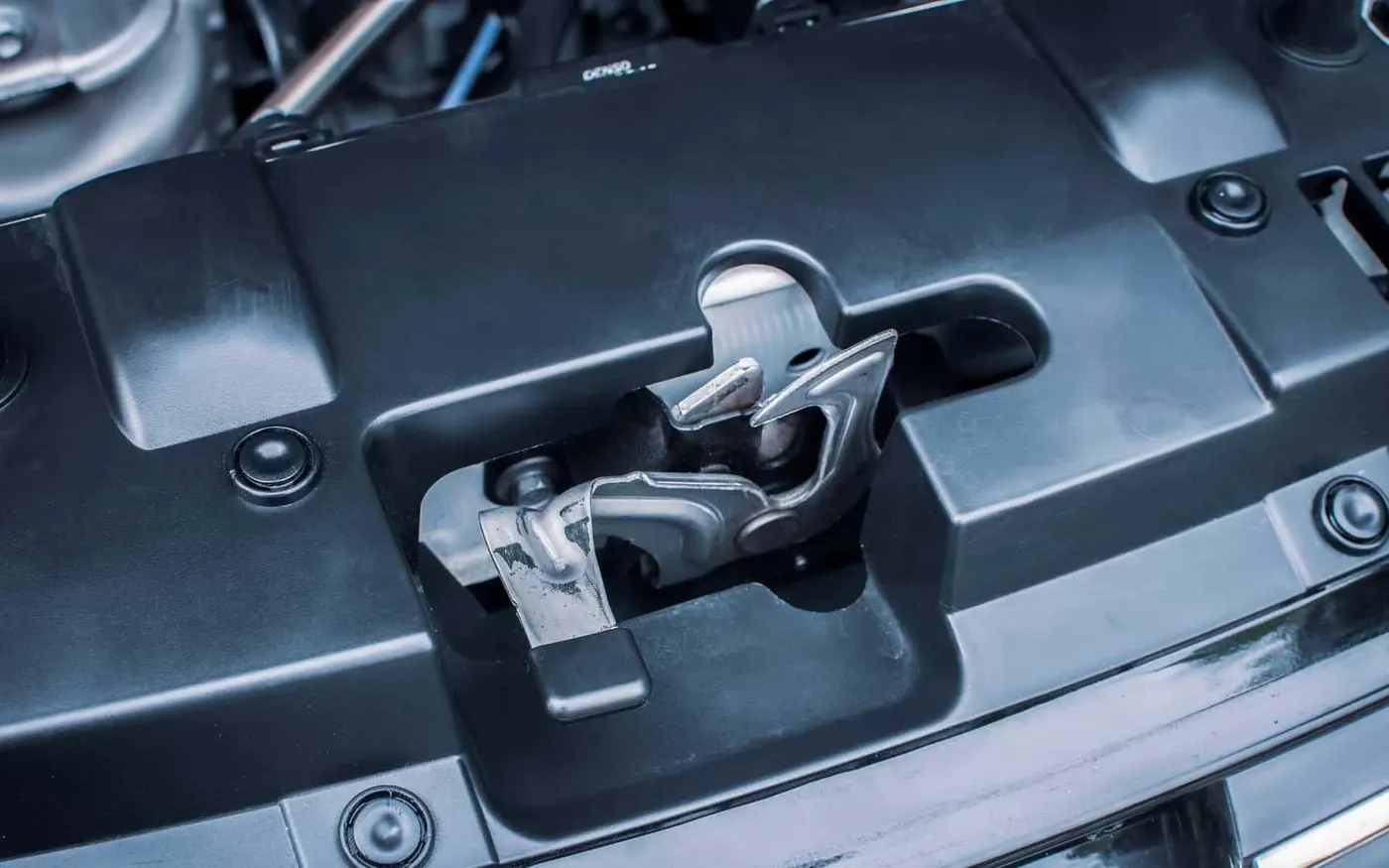
Latch: The latch is a mechanism that secures the hood to the car body. It is typically located at the front of the hood and may be operated manually or electronically.
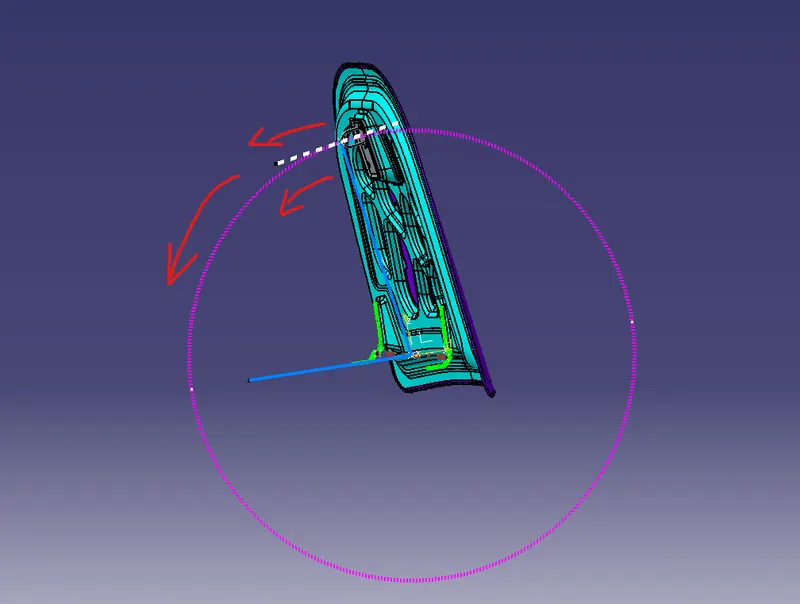
- Latch Trajectory:
The latch trajectory is the path followed by the hood when it is opened and closed. The design of the latch trajectory is critical to ensure that the hood opens and closes smoothly and does not interfere with other components of the car.
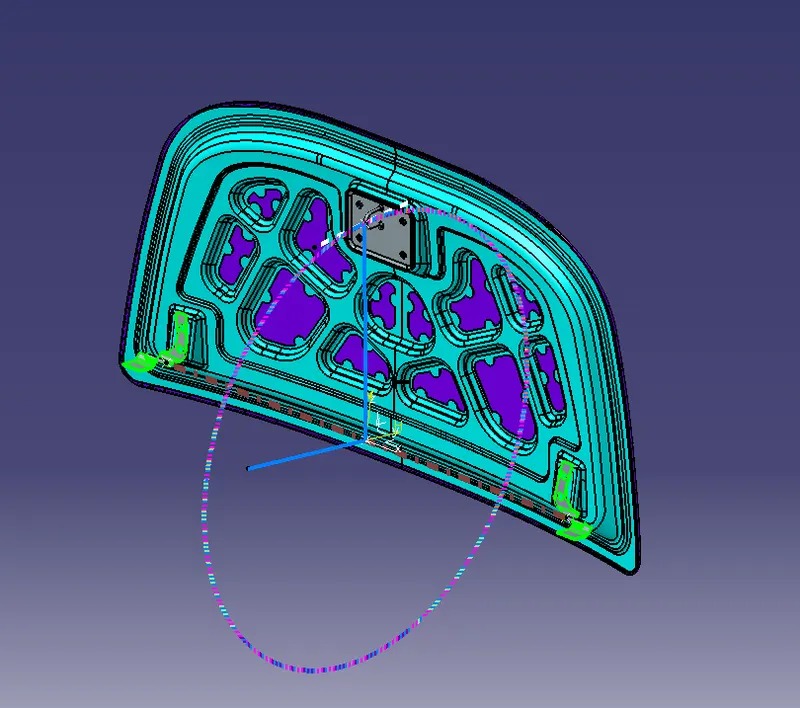
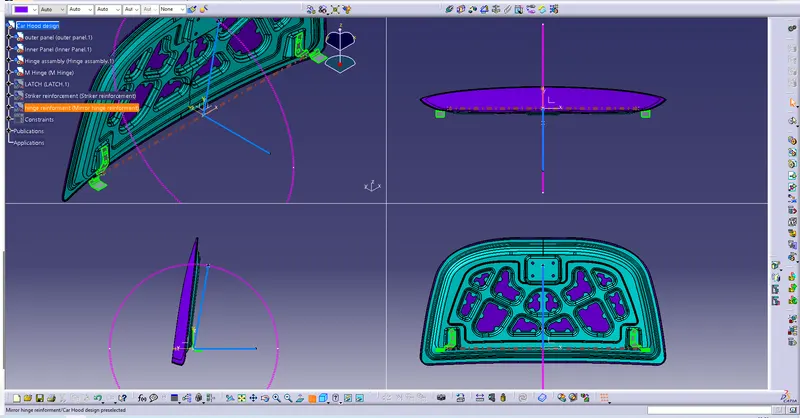
Hinges: The hinges of the hood are responsible for connecting the hood to the car body. They allow the hood to pivot up and down when opened or closed.
Reinforcement: Reinforcement in a car hood refers to high-strength steel or aluminium components that are strategically placed to enhance the hood's structural integrity. Reinforcements absorb and distribute impact forces during a collision, preventing the hood from collapsing and protecting passengers inside the vehicle. Reinforcement is an important component for safety in modern vehicle design.
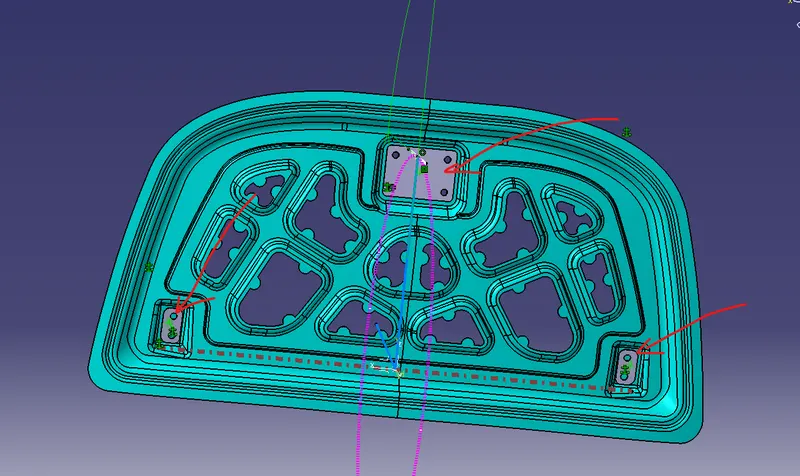
Mastic: Mastic is a type of adhesive material used in hood design to reduce vibration and noise. It is applied between the outer and inner panels of the hood to provide damping and insulation properties. Mastic data includes information on the type, thickness, and location of the mastic used in the hood design.
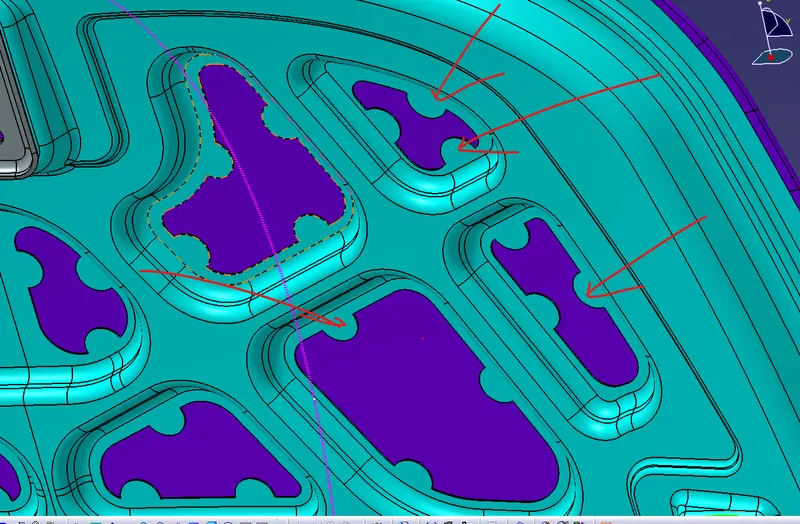
Emboss:
-
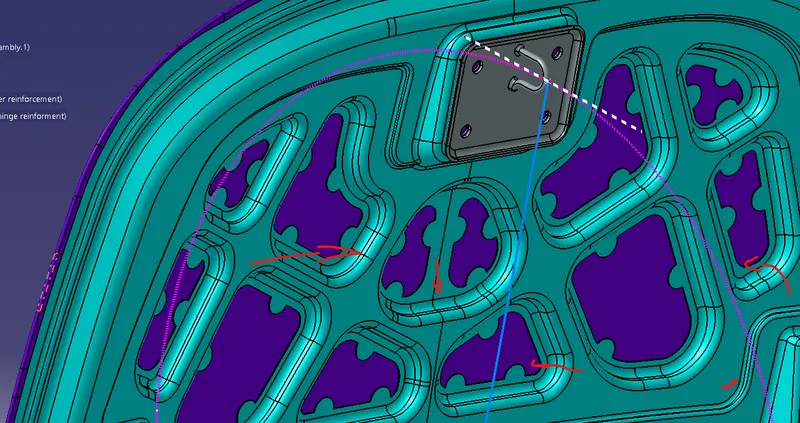
Embossing is a metalworking process used to create raised or sunken designs in the sheet metal of a car hood, enhancing its visual appeal and strength.
-
Emboss definitions refer to the specifications of the embossed design, including depth, shape, and location on the hood, which are carefully planned to ensure the finished hood meets all design and performance requirements.
-
Embossing and emboss definitions play a vital role in the manufacturing process, considering factors such as material properties, sheet metal thickness, and manufacturing equipment capabilities, contributing to a strong and visually appealing car hood.
Manufacturing Process:
The manufacturing process of a car hood involves several steps that ensure the final product meets all design and performance requirements. Two important processes used in the manufacturing of a hood are deep-drawing and hemming.
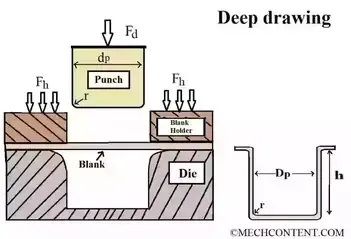
Deep-drawing is the primary process used to create the outer and inner panels of the hood. It involves drawing a flat sheet of metal into a die using a punch to form the desired shape. The sheet metal is clamped around the die, and a punch applies force to draw the sheet metal into the die, creating the desired shape of the hood.
Hemming is another process used to join the outer and inner panels of the hood. It involves folding the edge of the outer panel over the edge of the inner panel and then crimping the two edges together. This process creates a strong bond between the two panels, providing stiffness and resistance to bending and deformation.
These manufacturing processes are carefully planned and executed to ensure the hood meets all design requirements, including size, shape, strength, and aesthetics. Factors such as the material properties, sheet metal thickness, and manufacturing equipment capabilities are taken into account to ensure the finished product meets all standards and specifications.
Design Parameters:
Several design parameters are considered when designing a hood, including aerodynamic performance, weight, strength, and safety. These parameters are critical to ensuring that the hood performs optimally while also meeting safety standards.
-
Aerodynamic Performance: The hood's shape and design affect the aerodynamic performance of the car. The hood must be designed in such a way that it minimizes wind resistance and improves airflow to the engine, which can improve fuel efficiency and performance.
-
Weight: The weight of the hood is an essential consideration as it affects the car's overall weight and performance. Lightweight materials such as aluminium or carbon fibre can be used to reduce the hood's weight while maintaining strength.
-
Strength: The hood must be strong enough to protect the engine and other critical components in the event of an impact. The material used and the reinforcement of the hood must be carefully designed to meet the necessary strength requirements.
-
Safety: The hood must meet safety standards to ensure the safety of passengers and pedestrians. For example, hoods must be designed to crumple and absorb energy in the event of an impact to minimize the risk of injury.
These design parameters must be balanced to ensure that the hood performs optimally while meeting safety standards and other regulatory requirements.
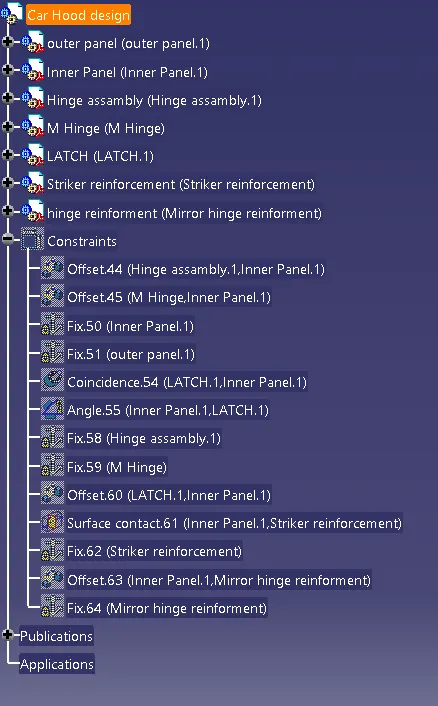
Assembly tree structure
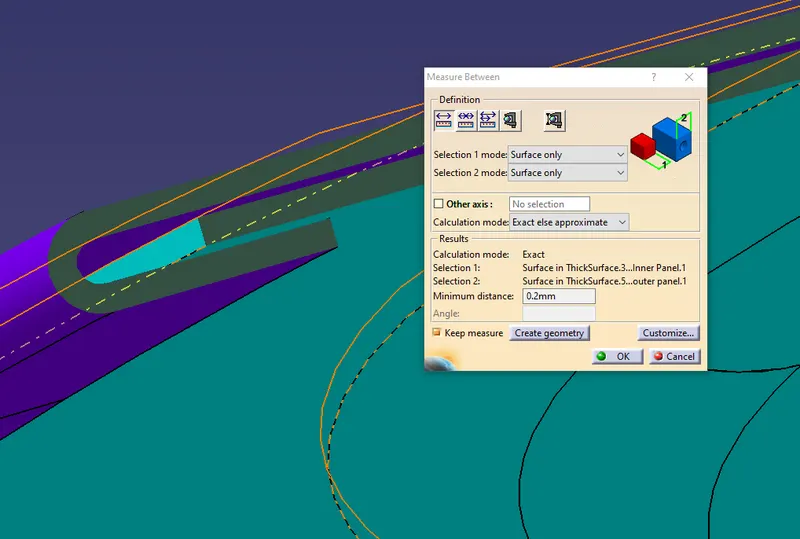
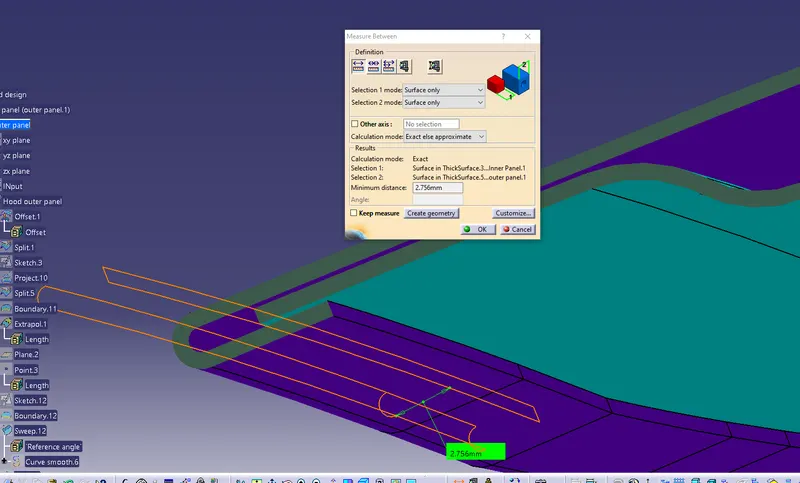
Section views
Conclusion:
In conclusion, the design of the hood is a critical aspect of automobile design. It is responsible for protecting the engine, providing easy access for repairs and maintenance, and contributing to the aesthetic appeal of the vehicle. The design of the hood involves several components, including the outer panel, inner panel, striker, and hinges. Design parameters such as weight, strength, safety, and aerodynamic performance are considered during the design process. The manufacturing process involves deep-drawing and hemming, and mastic is used to reduce vibration and noise.