Hood design-Week 2
Designing a Car Hood
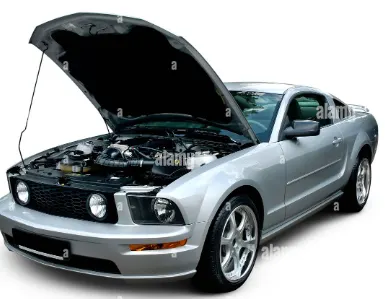
A car hood is the hinged cover that rests over the engine bay of a front engine vehicle.The hood protects the engine and the connected parts.The hood is designed in such a way that it meets the design considerations like manufacturability,pedestrian safety,head clearance zone and also the force distribution when subjected to collision.
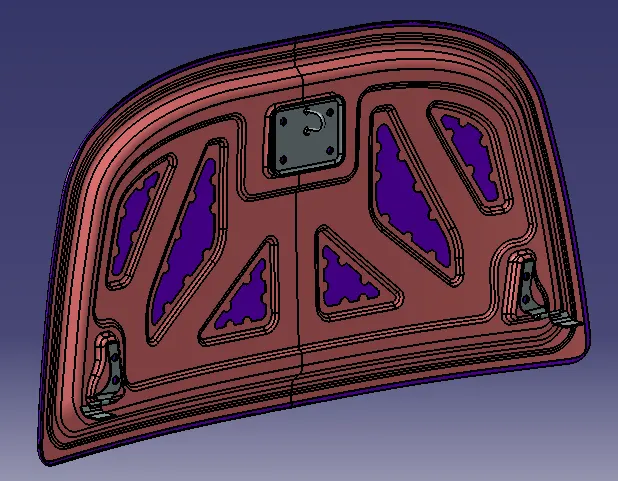
The hood assembly consists of outer panel, inner panel, latch and striker, hinge and hood stay.Hood stay may be a connecting rod or a gas stay used to keep the hood in a uplifted position while doing the repair work.
Below shown is the image of the car hood.
Design considerations
1.Head clearance zone
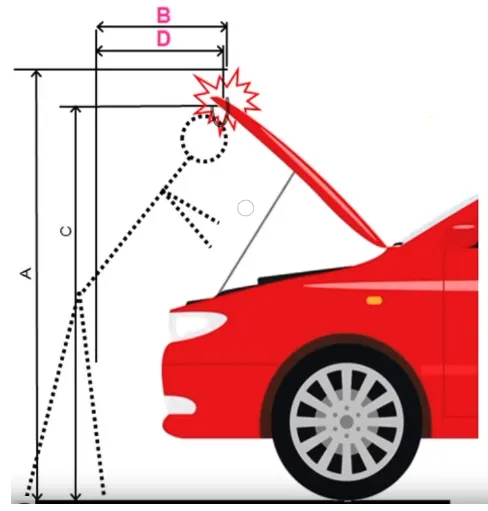
this is the zone when the hood is in the uplifted position in full range so that the person engages in the repair work,The range of opening of the hood depends on the height of the person, for example the average height of a person in European countries is 6 feet, whereas in India the average height of human being is 5 1/2 feet,hence this clearance zone is different for different countries.
The opening angle is the important design consideration in the designing of hood.this opening angle can be adjusted by the supporting rod or the gas stay
Supporting Rod
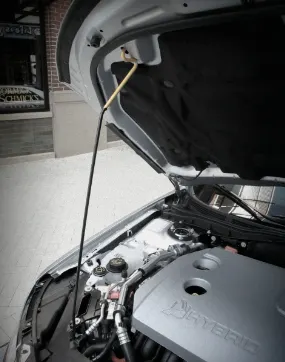
also called as Hood lift supports or Hood struts.
supporting rod can either be mounted on the hood or on the body of the car,the mounting of the supporting rod is always on the opposite side of the engine compartment.
Gourmets are provided to keep the support rod in rest condition,the rod should have sufficient clearance with respect to other engine compartments so as to avoid the noise.
Gas stay
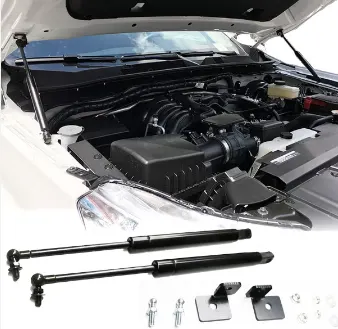
gas stay performs the same function as the supporting Rod but assists in lifting the hood easily due to the actuator which is activated by gas.it also holds the hood in the uplift position.
only initial force is required to lift the hood and after it the gas stay opens the hood to the maximum extended position.
Advantages
1.very less human effort is needed
2.no noise and vibrations
Disadvantages
1.Costly
2.more weight than supporting Rod.
2.Pedestrian safety
The hood should also be designed considering the safety of the pedestrians if a car is going to hit the pedestrian.aim of this consideration is to reduce the injury caused to the pedestrian upon collision.
when a car hits a person, the person's body is going to fall on the hood part of the car,hence the hood must be designed in such a way that it acts as a cushion to the impact of the person's head and the body and do not directly hit to the harder parts of the engine compartment.
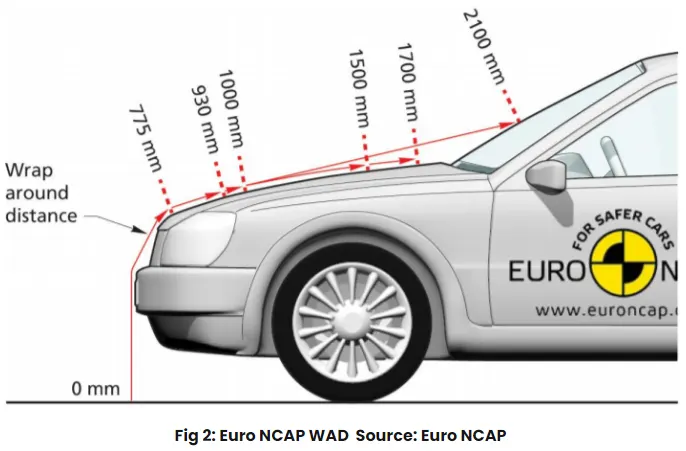
wrap around distance
The distance up to which the head impacts on the car front part from the ground is called the wraparound distance.
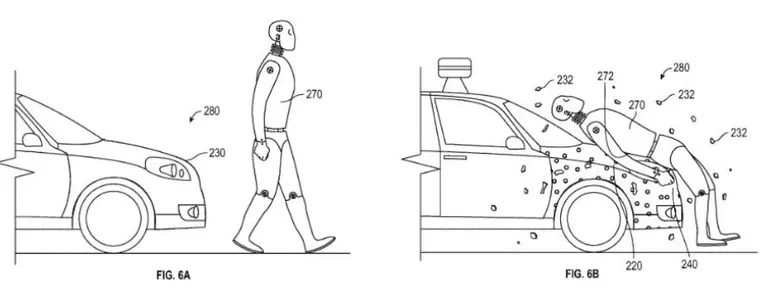
The severity of the injury caused depends on the type and shape of the car, the speed of the car and the movement of the pedestrian relative to the car.
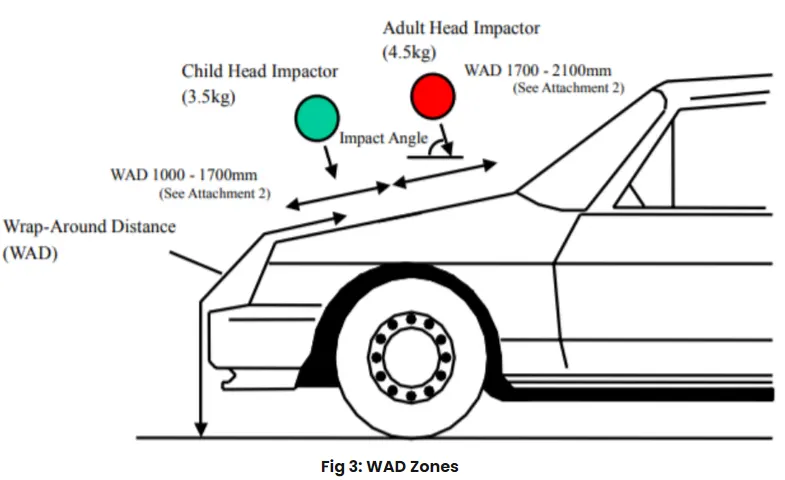
Crash analysis is done on the car with respect to the collision to the pedestrian considering the wraparound distance,the wraparound distance is divided into two zones-
1.Child head impact zone- 1000 to 1700 mm
2.adult head impact zone- 1700 to 2100 mm
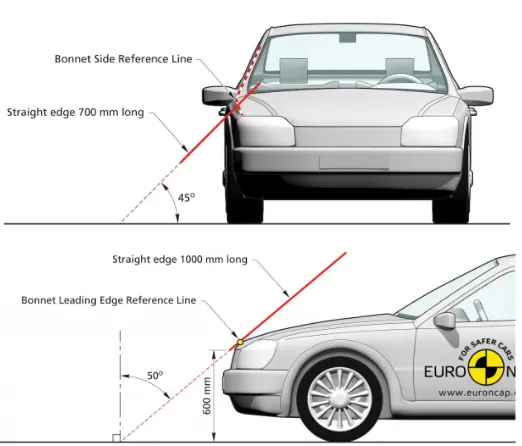
Side reference line-as a shown in the below figure when a line is drawn at 45° from the ground such that it touches the end of the hood it is called inlaid hood.
if the end of the point of side reference line is at pillar then it is called wraparound hood.
if the side reference line is on the hood resulting in a bigger hood the wraparound distance will be less and hence the impact zone will be high.
3.Passenger safety
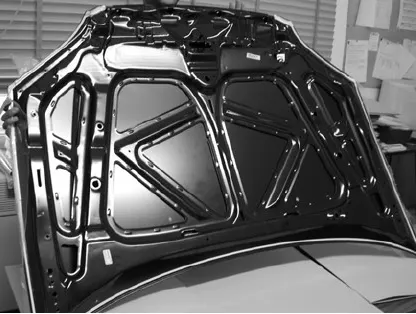
safety of the driver and the passengers are also considered in designing the hood inner panel by creating embosses on the inner panel.
The Embosses are created in such a way that the force due to collision is directed Outward and the hood inner panel absorbs most of the collision force by undergoing deformation.
Clearance between hood and engine compartment
The hood is at offset to engine compartment to allow the deformation of the hood upon collision and to provide a clearance to the deformation of the hood upon collision of the pedestrian on the hood.
Manufacturing processes involved in designing hood
Hemming
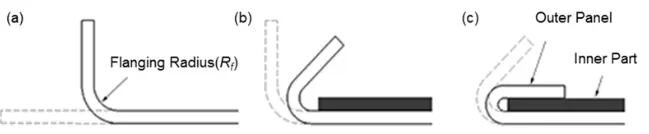
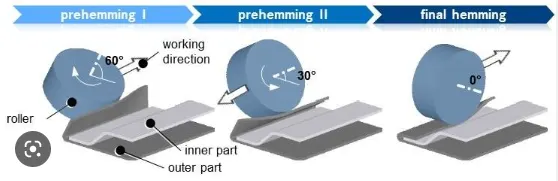
hemming is a sheet metal forming process in which sheets are joined by bending one of the sheet metal around the other.it involves rolling the edge of the sheet metal over itself.The two newly formed layers lie flush with each other.
Hemming involves three steps of bending process
1.Flanging
2.per-hemming
3.Final hemming
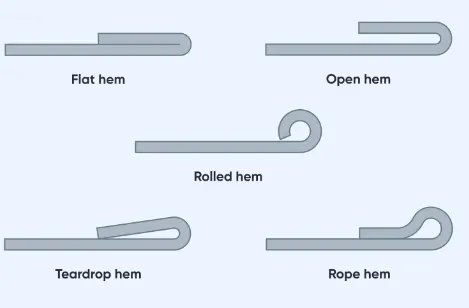
the types of hems are shown in the below image
there are two types of hemming processes
1.Die Hemming process
die hemming is the conventional hemming operation that uses a die and press to carry out hemming.
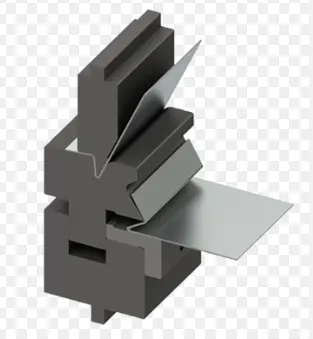
2.Roller Hemming process
In this type of hemming process the roller travels along the edges and bend the part edge to the desired angle in multiple steps.The roller is travelled on the edge multiple times creating small angular bends.
Deep drawing
Deep drawing is a manufacturing process used in the forming of sheet metal into cup or box like structures.pots and pans for cooking, containers, sinks, automobile parts such as panels and gas tanks are a few examples which are manufactured by deep drawing process.
Deep drawing of sheet metal is performed with a punch and die,The punch is the desired shape of the base of the part one drawn.
The blank is placed over the die opening, blank holder surrounding the blank applies pressure to the entire surface of the blank holding the sheet metal work flat against the die.then the punch forces the sheet metal into the die cavity forming its shape.
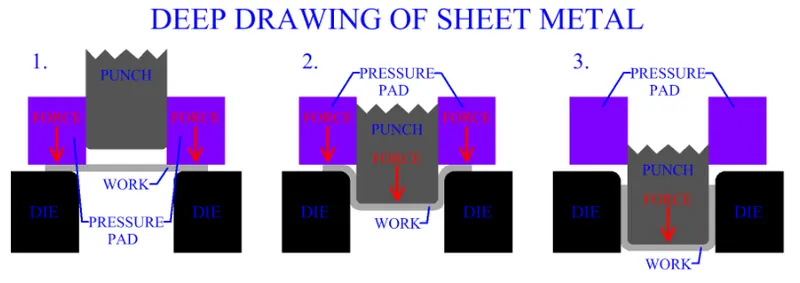 Deep drawing processes are divided into three types
1.Deep drawing with tools
2.Deep drawing with active means
3.Deep drawing with active energy
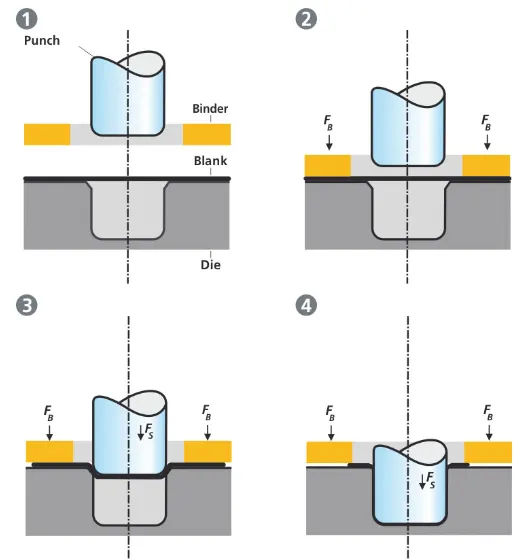
Punching
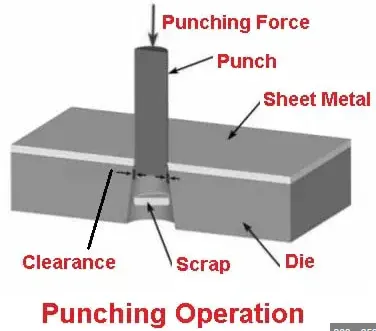
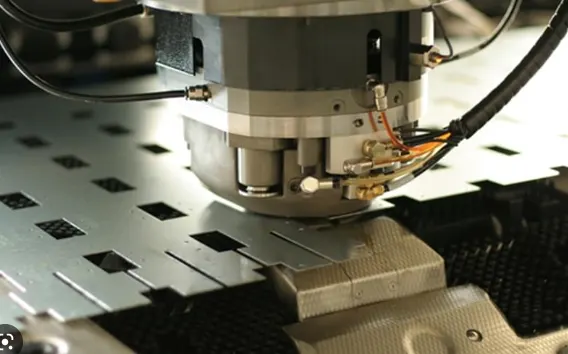
Sheet metal punching is a subtractive fabrication process that cuts metal as it passes through a punch press.The punching tool and die set the shapes and forms custom designs into metal work pieces.A Die consists of male punches and female dies.
Bending
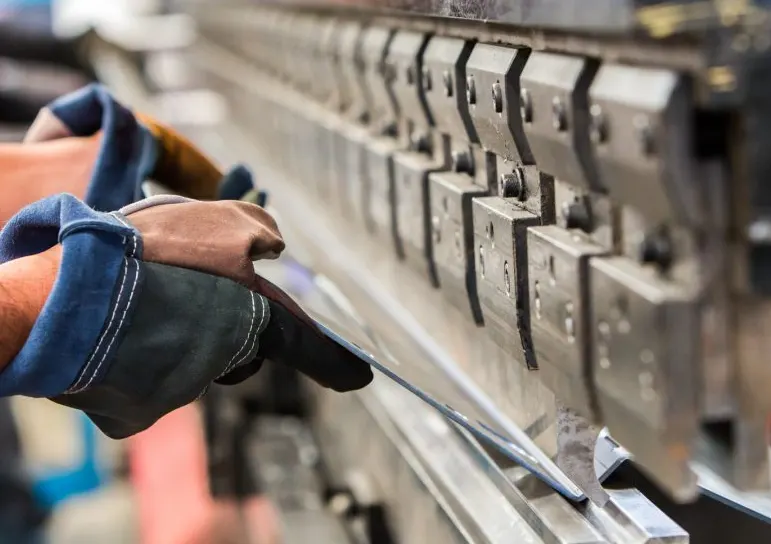
bending is a method used by manufacturers to form metal parts and components to a desired shape. It is a common fabrication process where forces is applied to plastically deform the metal on one of its axes.
Designing the Hood in Catia
INPUTS-
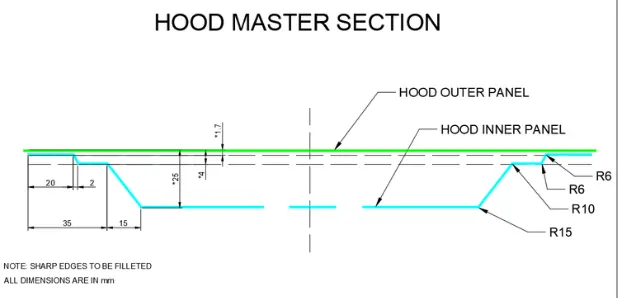
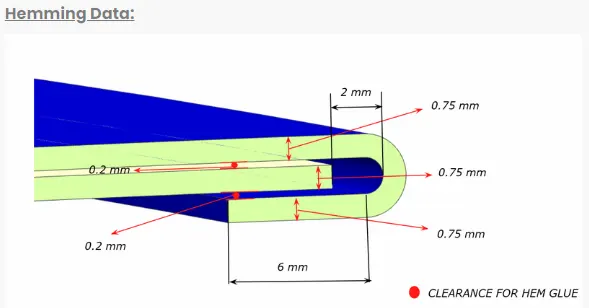
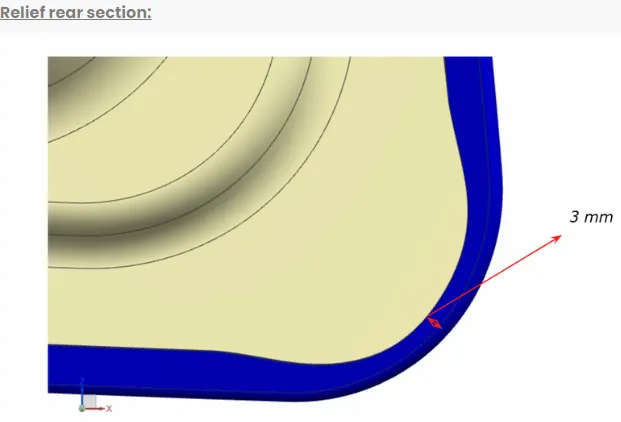
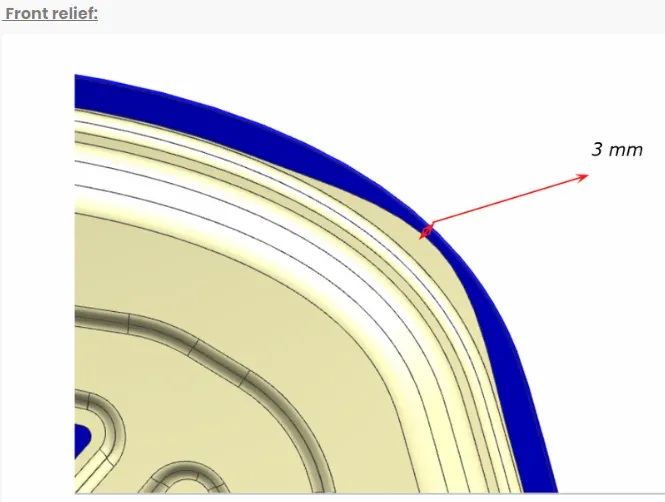
Hood Outer panel Class A Surface
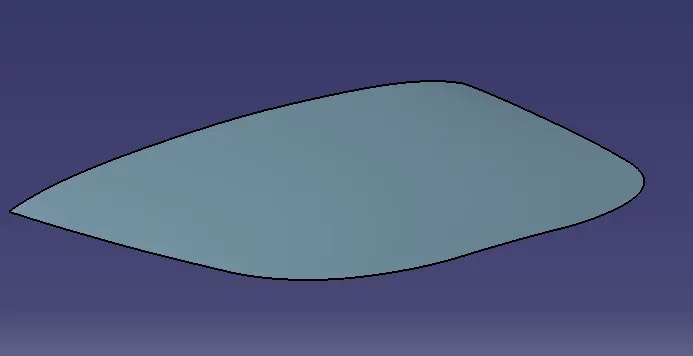
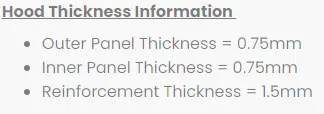
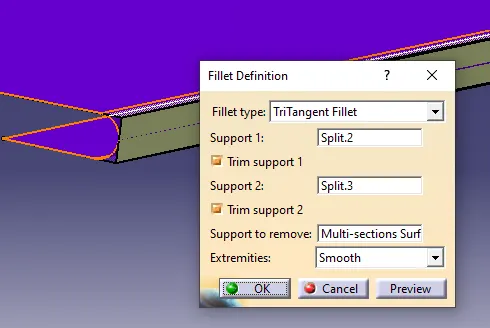
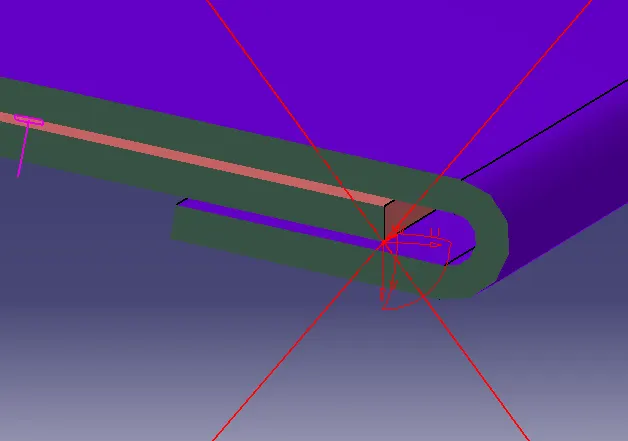
From the given design details for the outer panel the hemming feature is performed using a tri tangent fillet operation,considering thickness of the panel to be 0.75mm,clearance for application of hem glue to be 0.2mm between the inner and outer panel.
Inner Panel
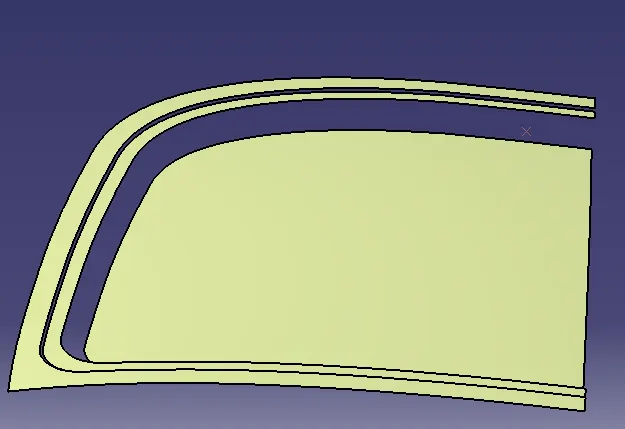
The outer panel is offset to three different values to create embosses.
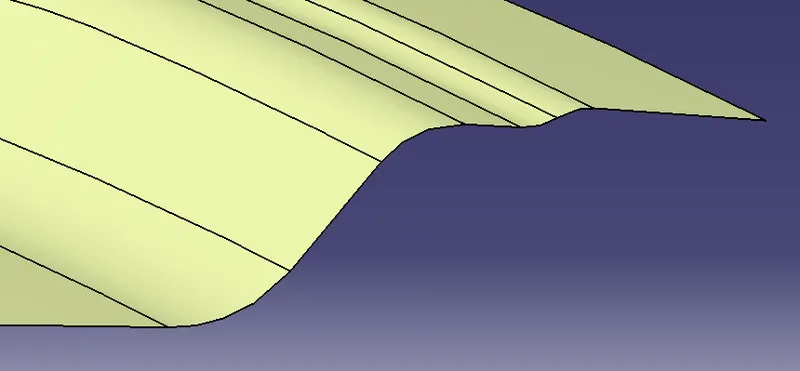
The edges of the flanges are joined and given fillet of 6mm
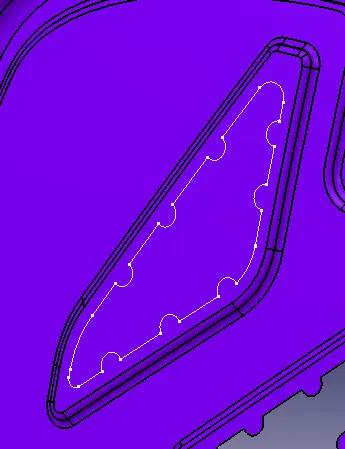
Embossing in patterns
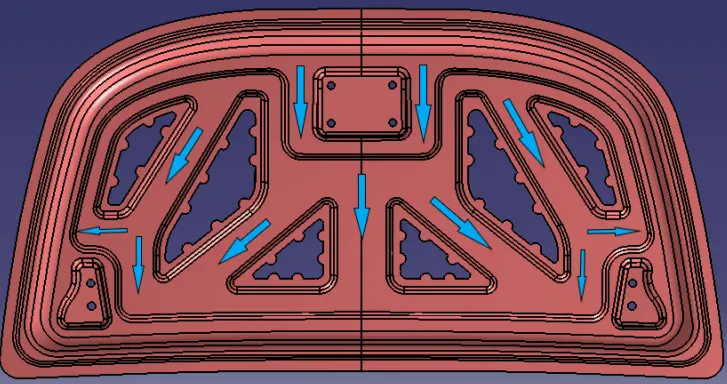
Embosses are created in such a way that the force is distributed towards the outer edge away from passengers,hence assuring safety of passengers.
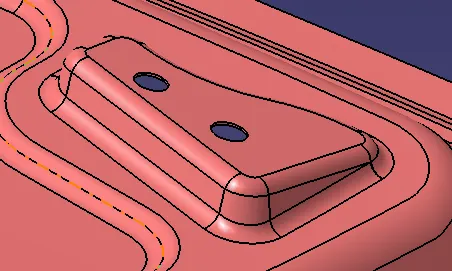
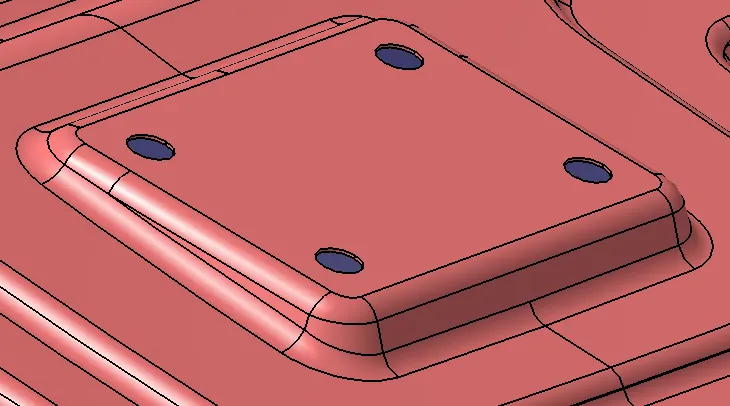
Embossing for Hinges and Latch
Mastic sealants-It creates a strong, flexible and waterproof seal, making it ideal for sealing gaps and joints in places where it will need to resist some movement.
Mastic sealant points are created in between inner and outer panels of the car hood.
Mastic Sealants are used to Join Inner and outer Panel as welding both panel will create a ugly look of outer panel. So the joing of Both the panel is done by Hemming and Mastic sealant.
Assembling the Hinges and Latch according to the Trajectory
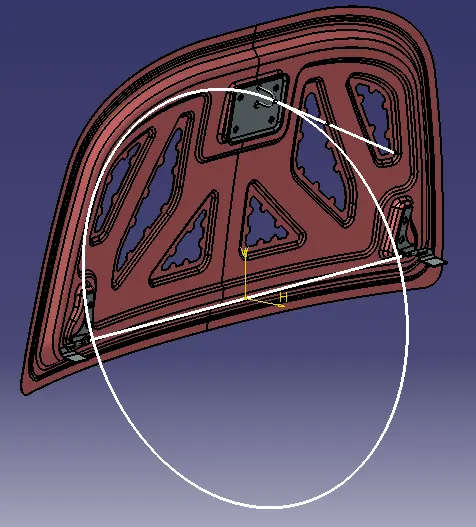
The hinges are constrained with the inner panel using the coincidence constraint of faces and their axis line are coincided with the X axis of the inner panel.
The axis of the hinges are coincided and a line is drawn between them which forms the axis of rotation of the hood.
A circle and the tangent to the circle is drawn in such a way that the tangent to the circle coincides with the line perpendicular to the latch.
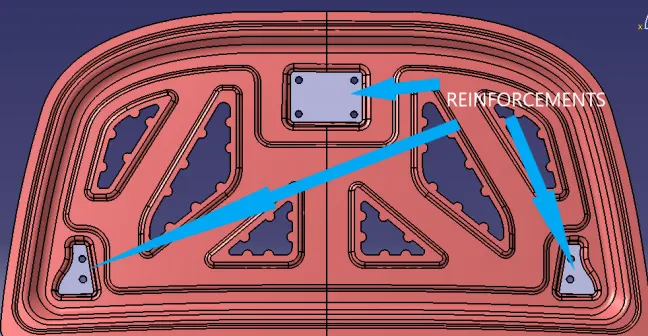
REINFORCEMENTS
Both the inner and outer panel are thickened to 0.75 mm according to the values given in input.below is the image showing the hemming feature
Assembling the Hinges and Latch to the Inner panel
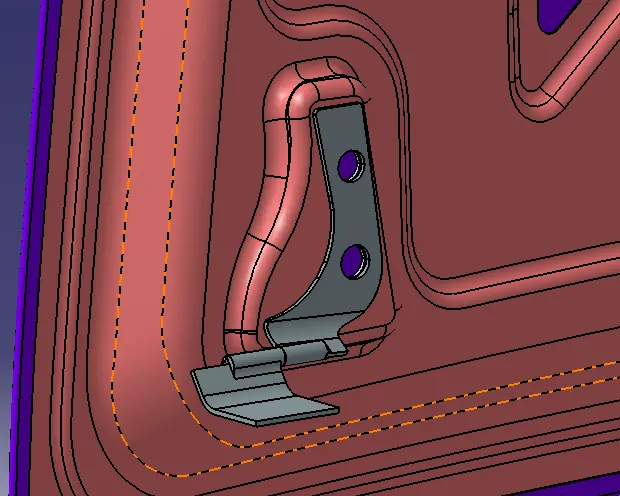
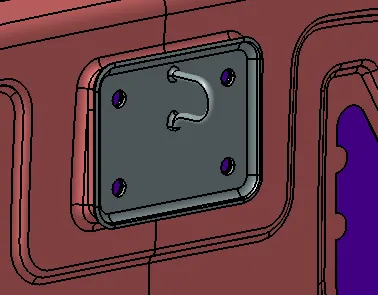
Final Image of the assembled Hood panel