Hood design-Week 2
HOOD ASSEMBLY DESIGN
What is Hood?
The hood or bonnet is the hinged cover over the engine of motor vehicles Hoods can open to allow access to the engine compartment, or trunk on rear-engine and some mid-engine vehicles for maintenance and repair. It is used to decorate the car and add a luxurious look. The shape of the Hood is made aerodynamic in order to minimize the air effect
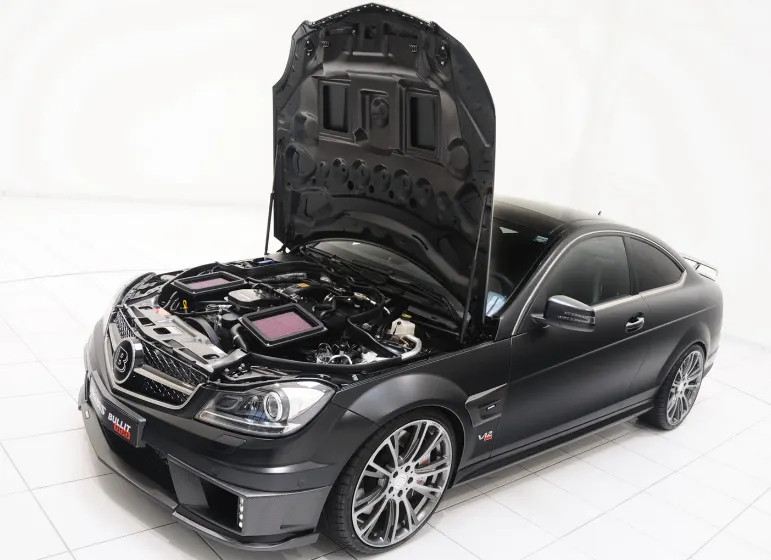
Hood assembly:
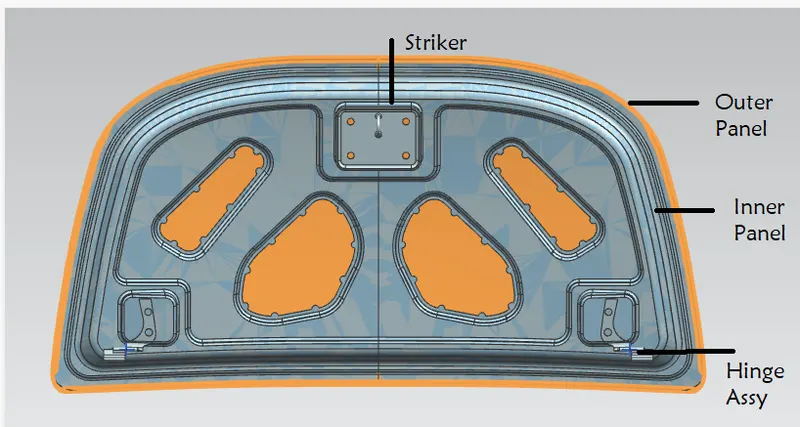
Hood is consisit of
- Hood outer panel
- Hood inner panel
- Hinge
- Striker
1. Hood Outer Panel
Outer panels are the aesthetic elements of a car. It is the styling team who provides the skin for the outer panel. The shape, position and size of the hood should satisfy the safety norms. it is important for reduce Airodynamic force . for our design we have consider outer panel length for considering Hemming and releif for connecting Inner panel.
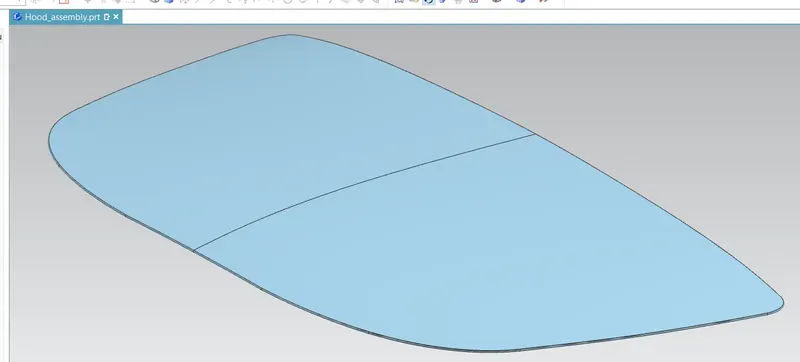
Fig 1.1 Outer Panel
2. Hood Inner Panel
Inner panel is the part that gives strength and rigidity to the outer panel. It have empose for considering pedastian safty at the time of collision (Accident). it does not harmfull for humans head when it is hitting so that we need to make cutout in inner panel also it does not affect hood strenght. Inner panel having proper space for mastic and Hinge assembly empose ,Striker assembly empose it will help to make final hood assembly.
A. Mastic data
Mastic seals are used as a bond between the inner and outer panels.it is also used to improve the stiffness of the area. It plays a vital role which is reducing the NVH, the gap between the inner and outer panel is 1.7 mm. Mastic seal will occupy the 1.7mm gap.
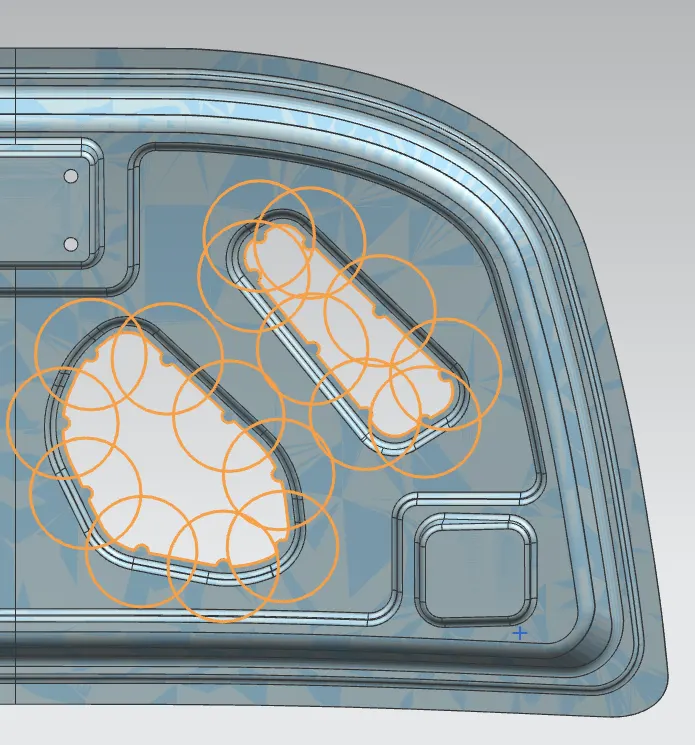
Fig 2.1 Mastic point
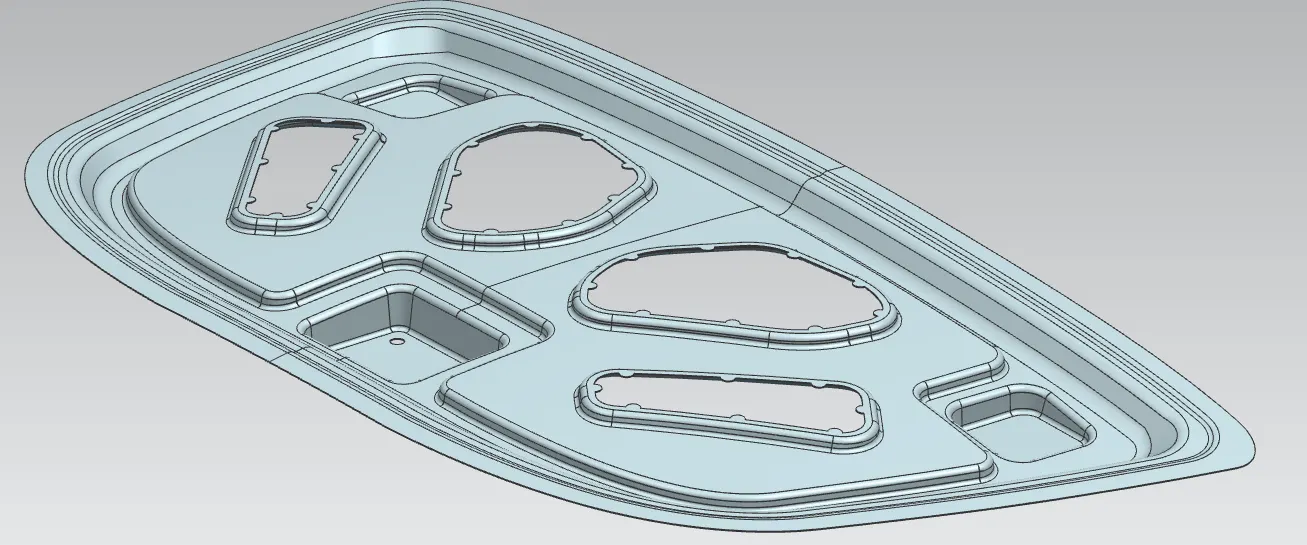
Fig 2.2 Inner Panel
3.Hinge
Hinge is used to hold and rotate the Hood while open and Close. Our Hood is rotate in Hinge axis only So we have ensure correct place for mounting and give appropriate Constrain with Hood.
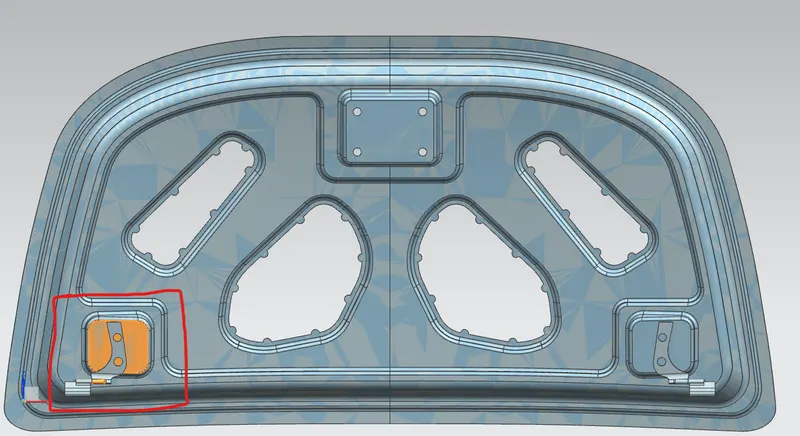
Fig 3.1 Hinge Assembly
4.Striker
A system for releasing and lifting an automobile hood includes a sensor located proximate a front location of an automobile that detects impact with an object. Also included is a hood having a striker pin operably connected to the hood for engaging a rotatable latch, wherein such engagement places the hood in the secured position. Further included is a releasing mechanism operably connected to one of the striker and the latch for lifting a front region of the hood in response to a signal from the sensor.
In Design while mounting Striker we have to provide proper empose for mounting and need to provide constraing with latch Axis and trajectory line from hinge axis with inner panel and made proper law extension in inner panel.
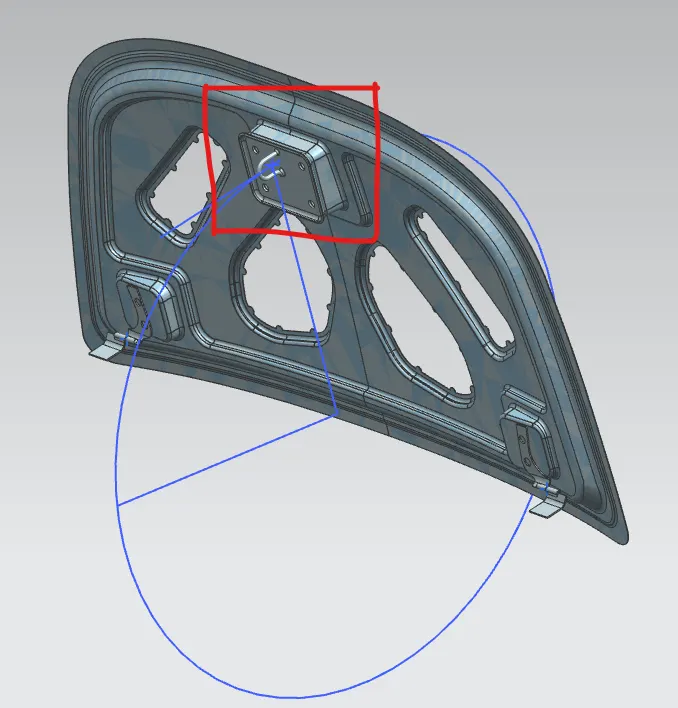
Fig 4.1 Striker
Manufacturing Process for Hood Assembly
for Sheet metal Operation Deep drawing and hemmimg is mainly used for Hood.
1. Deep Drawing
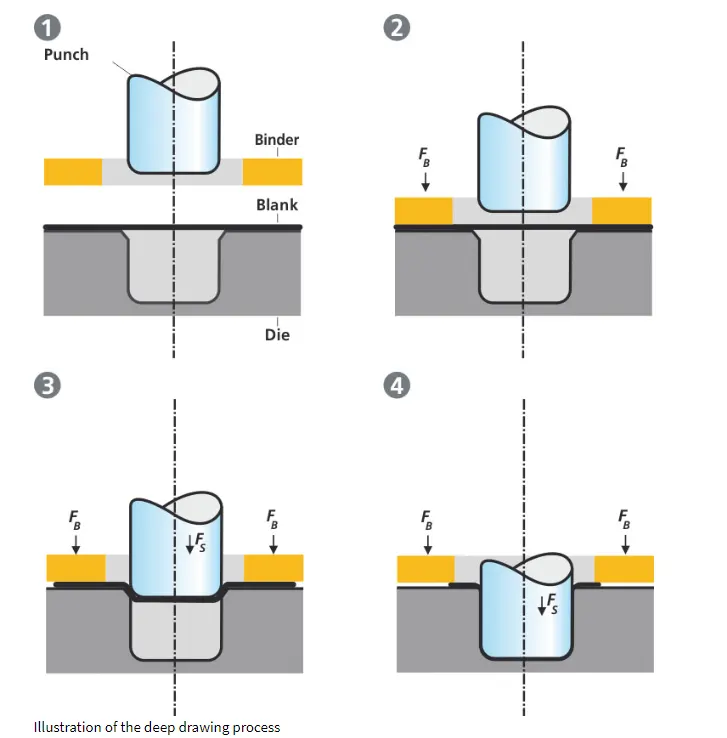
Deep drawing is a sheet metal forming process in which a sheet metal blank is radially drawn into a forming die by the mechanical action of a punch. It is thus a shape transformation process with material retention. The process is considered "deep" drawing when the depth of the drawn part exceeds its diameter.
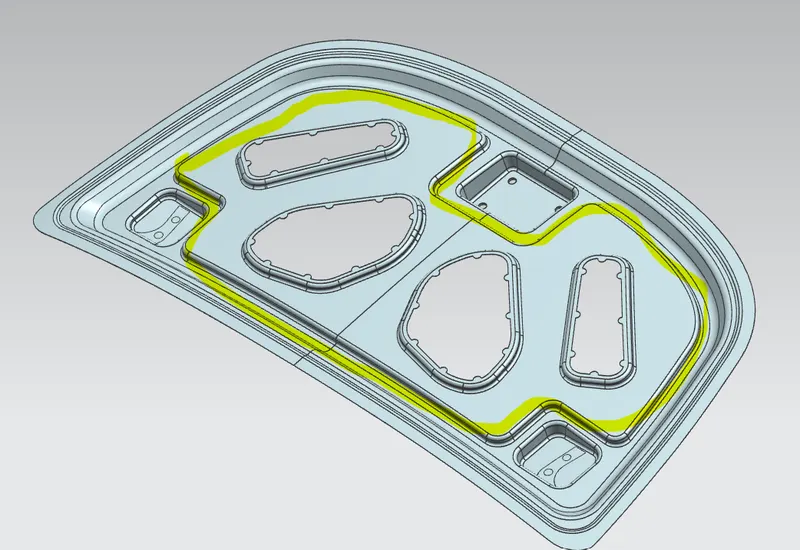
Here Inner Panel are manufacturing using below process . the tie consist of hinge assembly emboss,Striker emboss ,various Steps and others. while designing we are given 7 degree as Draft angle .
2. Hemming Process
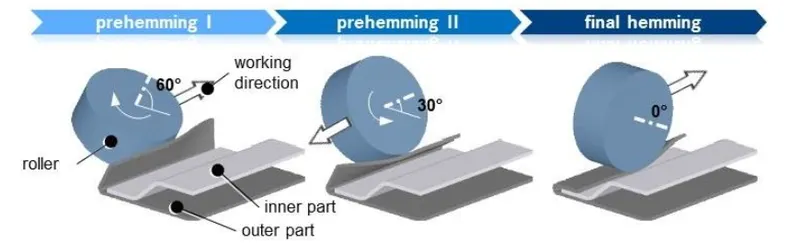
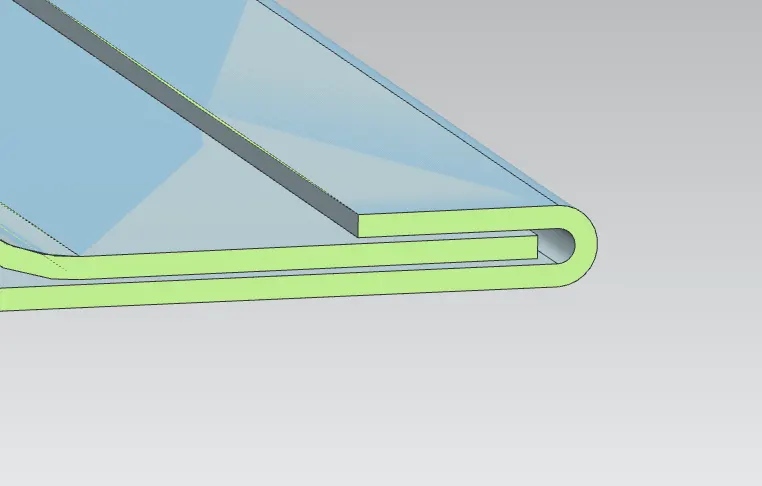
Hemming is a forming operation in which the edges of the sheet are folded or folded over another part in order to achieve a tight fit. Normally hemming operations are used to connect parts together, to improve the appearance of a part and to reinforce part edges.
Here we used for joining Hood Outer panel and Inner Panel
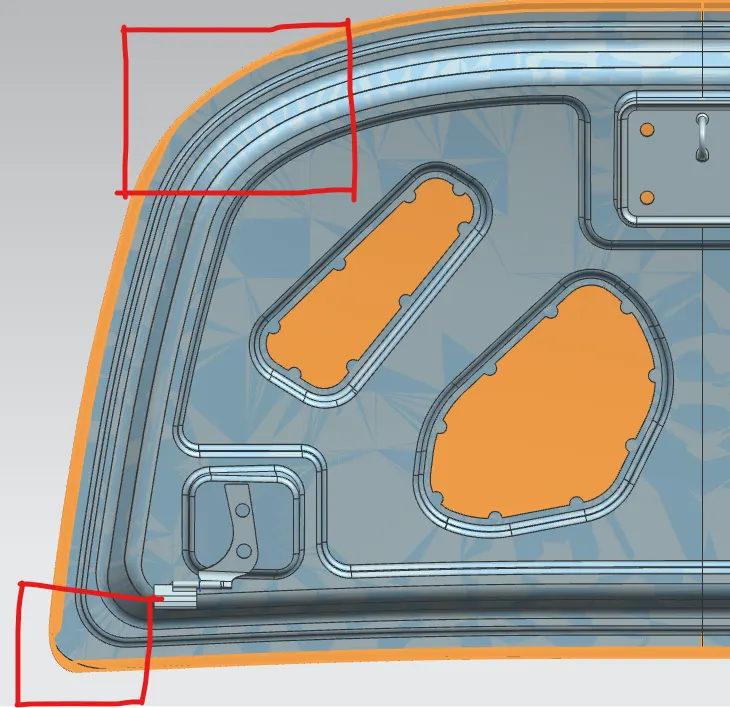
Hemming and relief
Using Above process i have done Hood assembly design Using UG-NX.
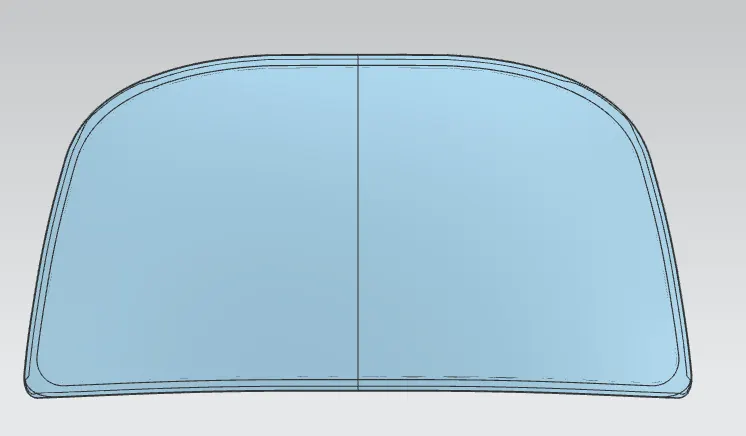
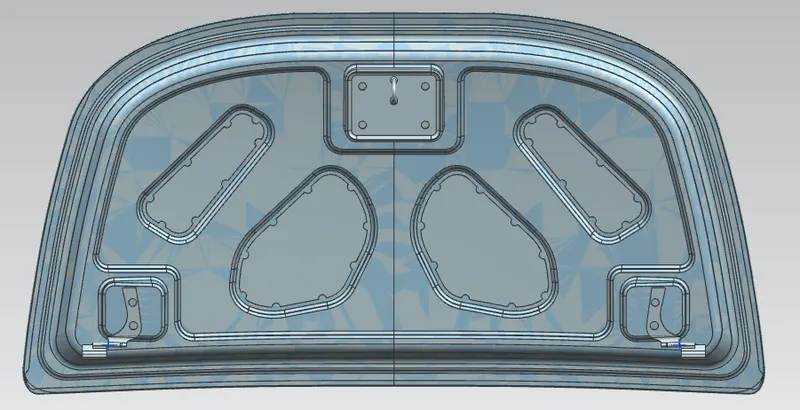
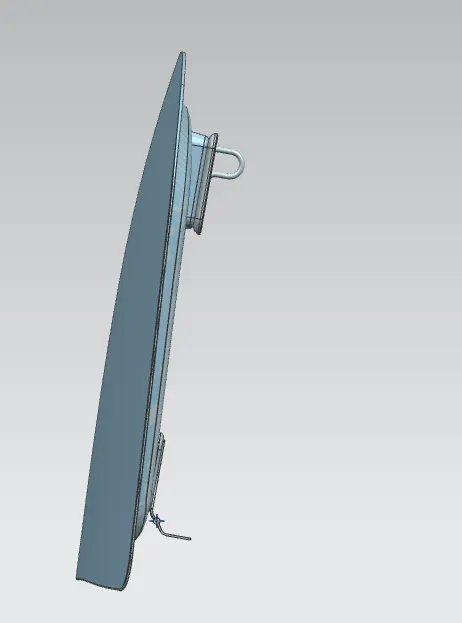
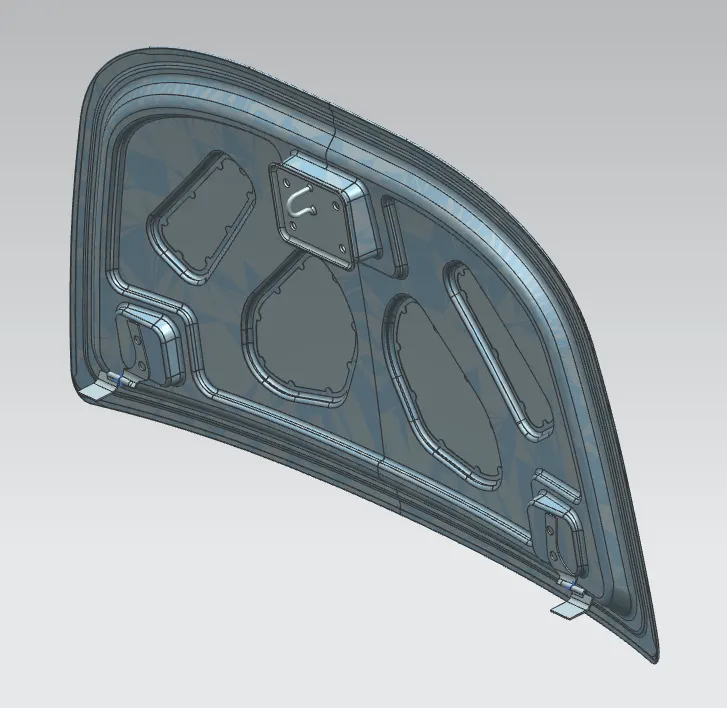
here we see differnt types of views in Hood Design
Top View
Bottom View
Side View
Isometric View
CONCLUSION
understand how to use the NX CAD software for design Surface modelling understand how to design hood and what is the purpose of hood.
Understand the Sheet metal manufacturing process and impact of Hood design.
Understand the need to the safety requirement to be needed while designing the hood