Hood design-Week 2
DESIGN OF CAR HOOD/BONNET
The hood or bonnet is the hinged cover over the engine of the automobiles that allows one access to the engine compartment or trunk for rear mounted or mid mounted engine for any maintenance or repair.
Parts of a Hood
- Hood outer panel
- Hood inner panel
- Latch and Striker
- Hinge engine compartment
- Hinge hood part
Hood outer panel
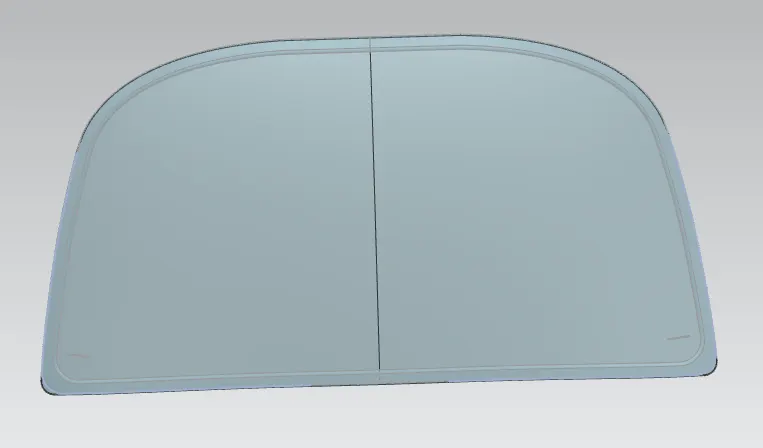
- Outer panel is nothing but a outer skin of inner panel. Otherwise called as a cover of inner panel.
- It is the part, which gives luxurious look to the hood or bonnet.
- Outer pannel and inner pannel cannot join by any welding process like spot welding or rivet, which spoil the outer look of a car
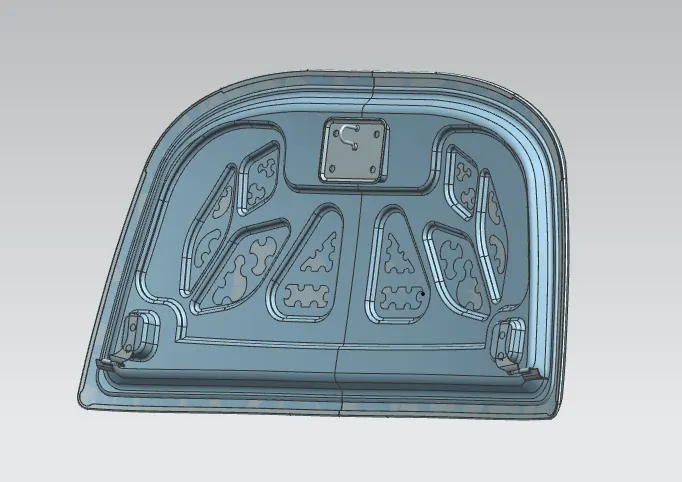
Hood inner panel with Embosses
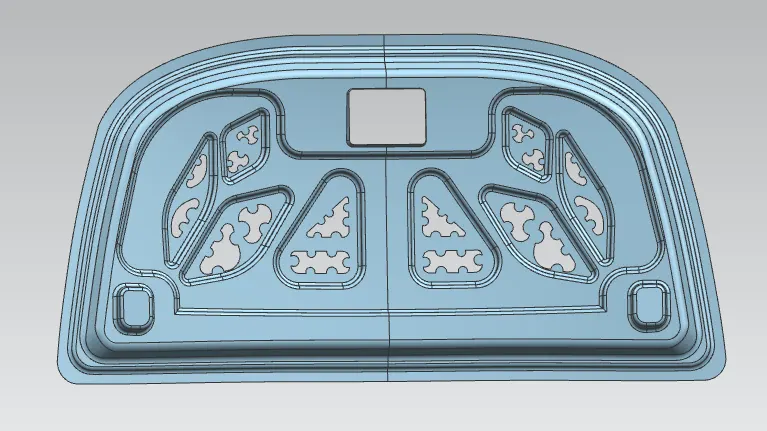
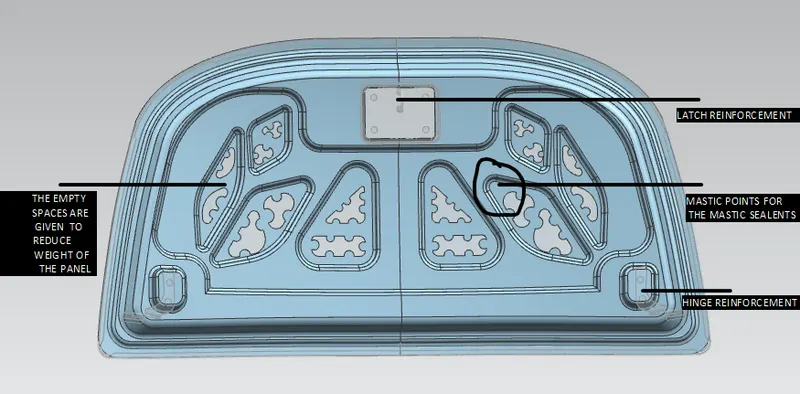
- The inner panel is designed with one thing in mind which is at impact the forces should be dissipated away from the passenger and move towards the hinges.
- This is done by creating embosses to direct the forces towards the hinges and away from the passenger for their safety.
- The outer and inner panel after hemming are joined using mastic sealents which are placed between the inner and outer panel at mastic points and when the hood panel goes into the heat chamber the mastic sealents melts and fix inner and outer panel creating the hood.
Latch/striker
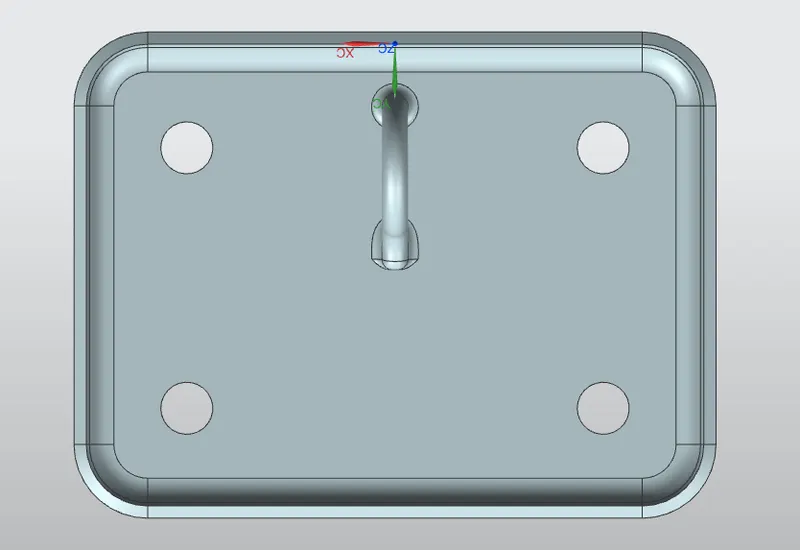
- It is a part that helps in locking the hood with the striker which is mounted on the engine block when it is not in use.
- It plays a major role in opening and closing hood for maintenance of car engine and gives a tight locking position not to create undisturbed noises when the vehicle is running.
Hinges:
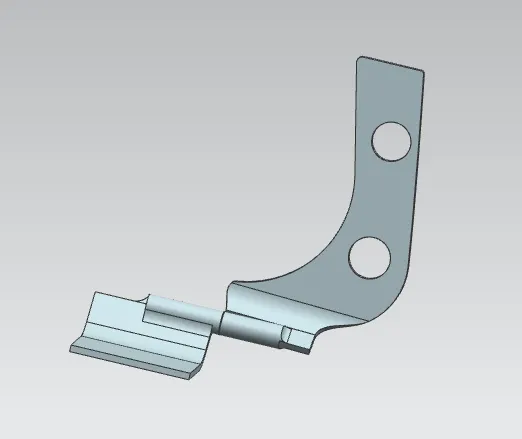
The hinge consists of two parts- hinge at the inner panel and hinge at the engine compartment. This coupling allows the hood to open and close, as well as makes contact between the engine block to the hood. It also controls the lifting of the bonnet mitigates the consequences of a collision between a pedestrian and a vehicle.
POSITION OF HINGE AND STRIKER
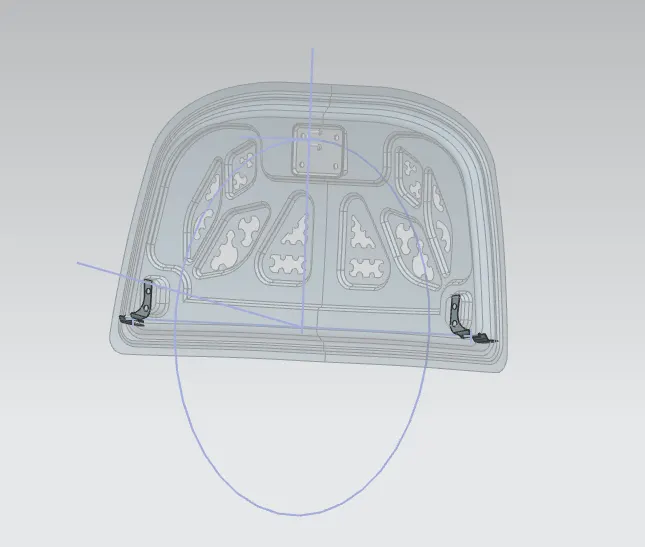
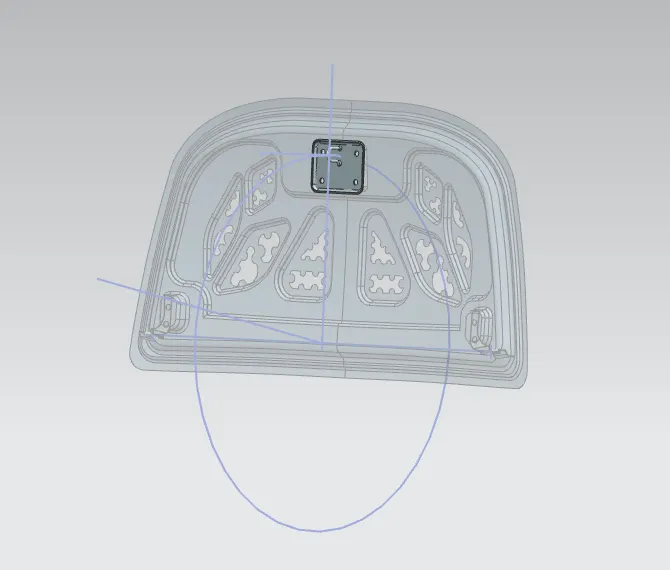
- This is determined by measuring the distance between the hinges and drawing a trajectory to see the hood opening and closing. From that take hinge radius for the striker location and draw a circle.
Relief on the Corners
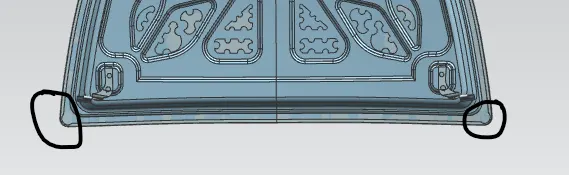
- A relief on the corners is provided for the hemming process in order to avoid spring back issues.
- When the rollers are moving on the panels the force that is used to bend the sheet metal has to be maintained within the limit to avoid spring back issue. Due to which a relief is given on the corners to avoid the red zones on the hood.
HEMMING
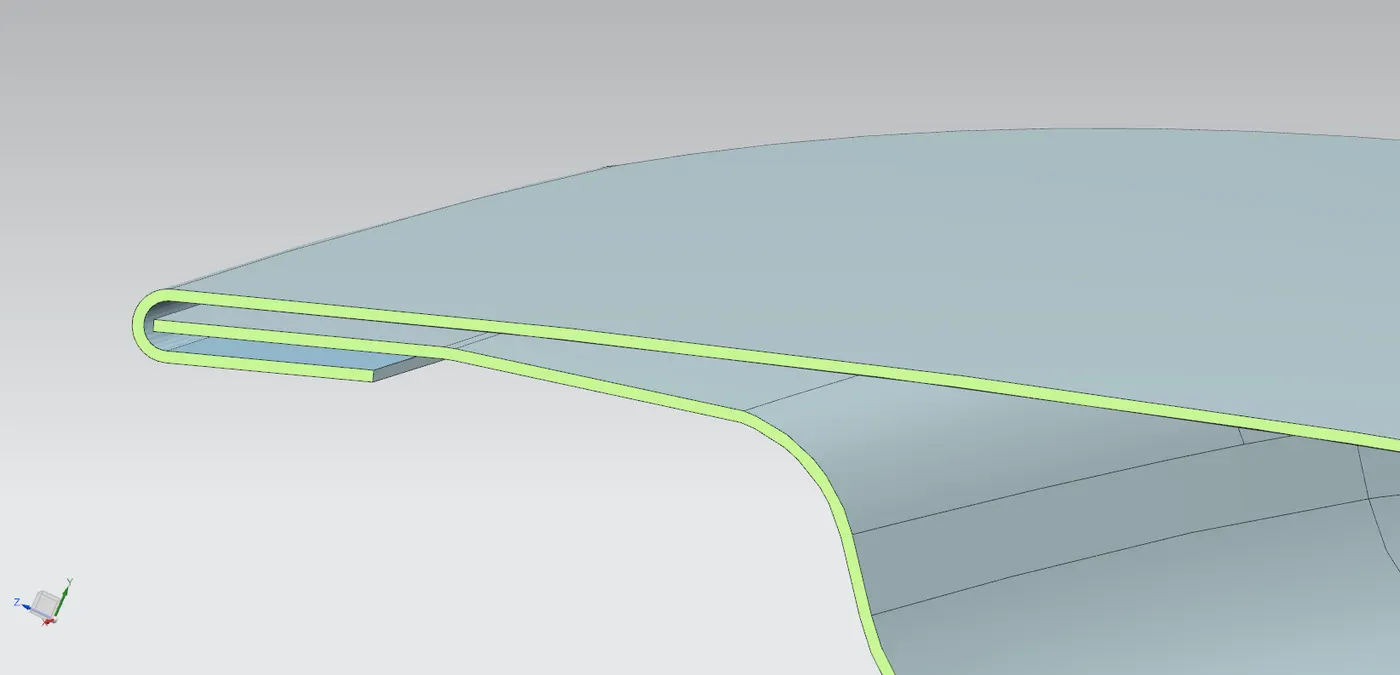
- Sheet metal is metal, in sheets. It’s thinner than plate metal (.25 in and thicker) but thicker than foil (.006 in and thinner).
- It’s most commonly available in steel and aluminium, in various gauges (thicknesses).
- It’s available with various coatings for corrosion resistance or surface finish.
- Sheet metal is made by taking a large cast ingot and rolling it into a long ribbon of the desired thickness.
- This long, flat piece of metal is then rolled into a coil and sent directly or cut into sheets before being sent to a machine shop.
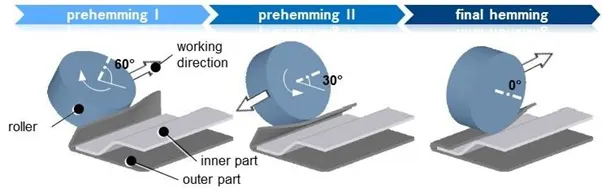
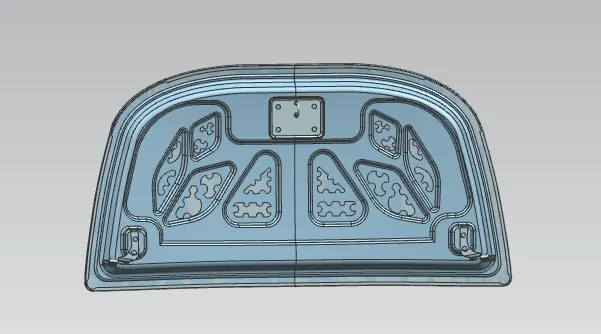
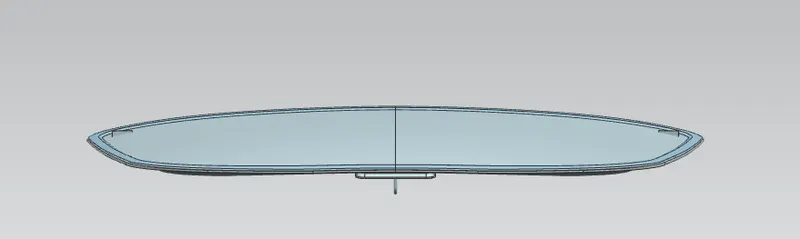
Different Views of The Designed Hood
FRONT VIEW
SIDE VIEW
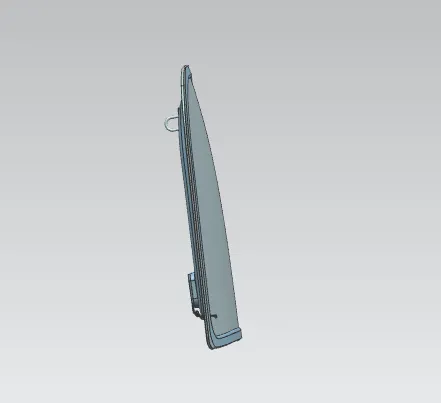
TOP VIEW
ISOMETRIC VIEW
CONCLUSION
The Hood design successfully completed with help of NX Cad.