Hood design-Week 2
HOOD DESIGN CHALLENGE:-
INTRODUCTION:- Hood is the main component of car at the front position. The shape of the bonnet is made aeridynamic in order to minimize the air effect .A car hood also referred to as a bonnet in some other countries is the hinged cover that rests over the engine of a front-engine vehicle. Its purpose is to provide access to the engine for repair and maintenance. Car hoods are typically constructed from steel and sometimes from aluminum.
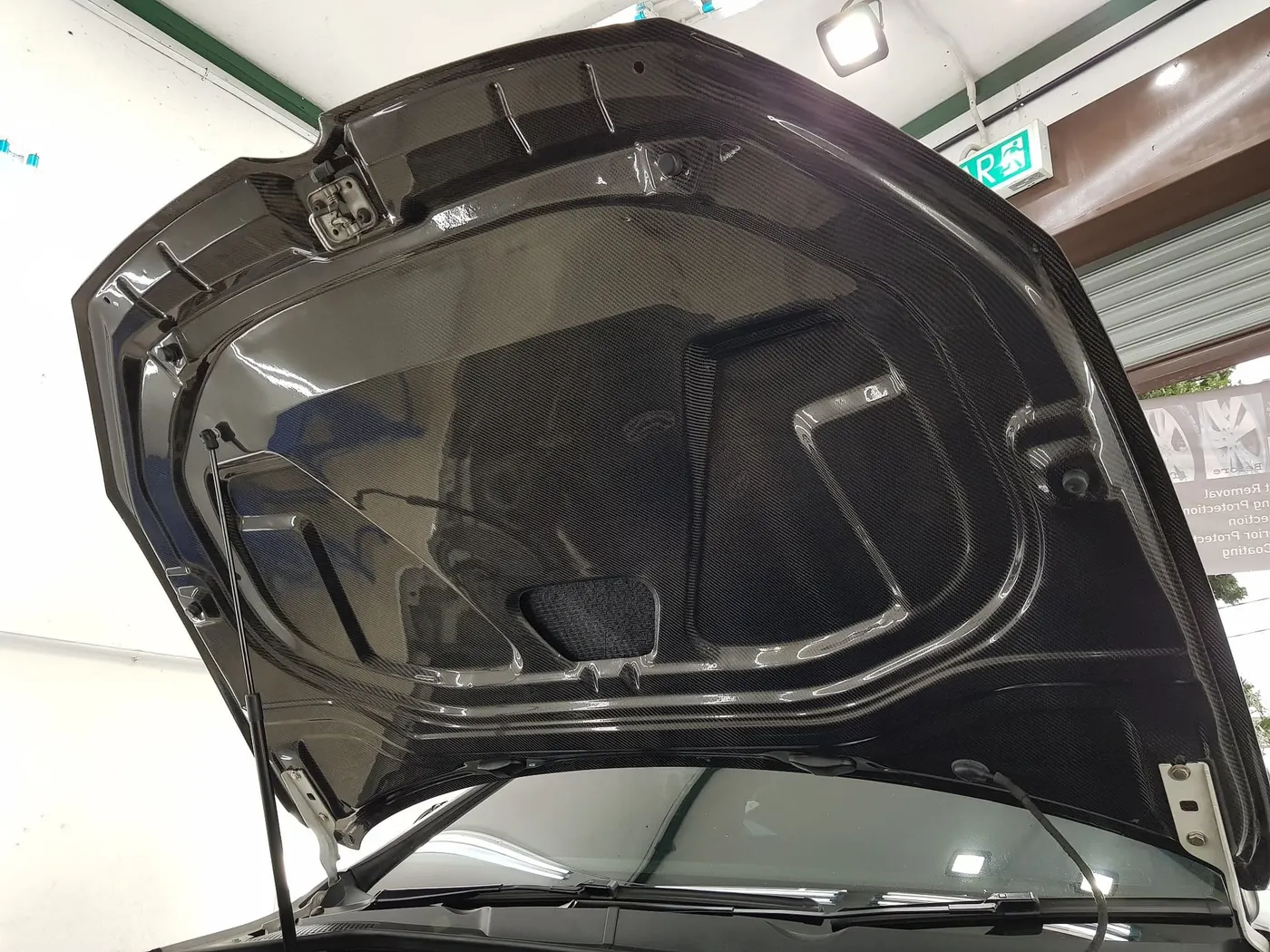
HOOD DESIGN:
There lot more things before the hoo gets in to designing hands that to be considered.
The height of the hood is designed based on the country standards as the heught of a average person changes from place to place.
The material consideration is also required that should be cost effective to manufacture.
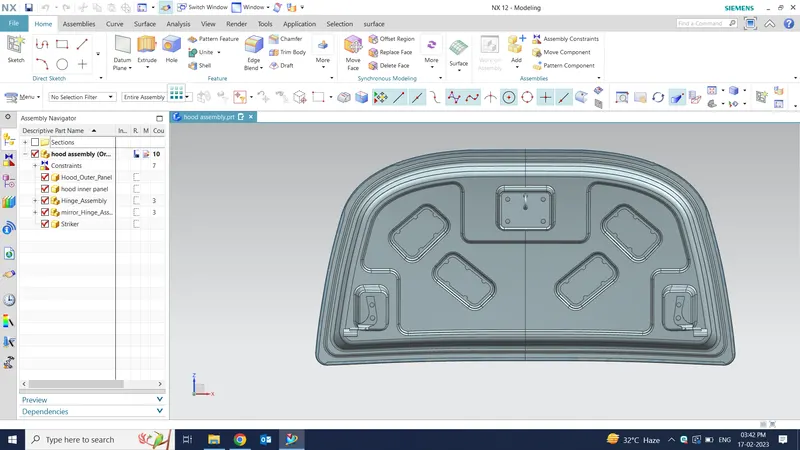
Following parts are using in hood Assembly for this report:
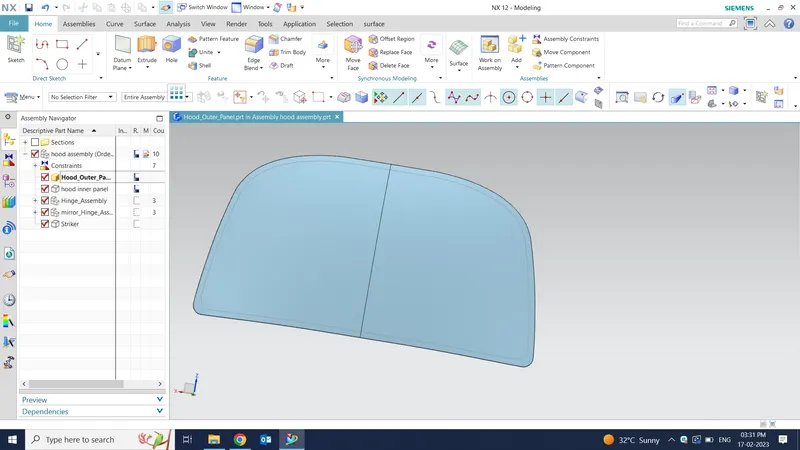
Hood outer panel
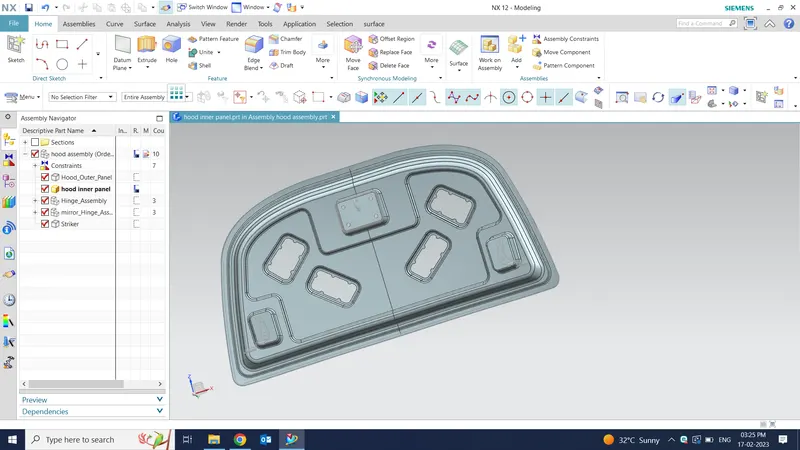
Hood inner panel
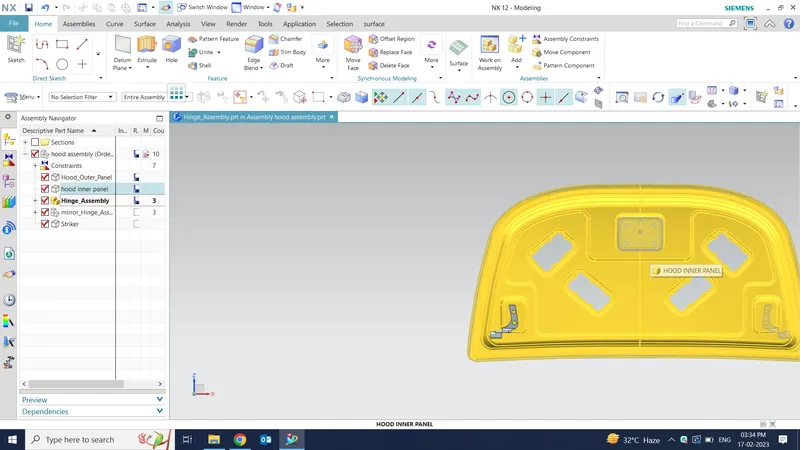
Hinge assembly
Striker
Inner Panel-
- In the inner panel only we can research & implement the safety of pedestrians & as well as the driver. In this panel only we can attach the reinforcement, embossed, mastic points etc.
- It is an object of the present invention to provide a hood inner panel capable of reduction of a reaction force of the hood inner panel even if a level of deformation of a hood of a vehicle increases, & ensuring a sufficient energy absorption capacity.
OUTER PANEL:
We can also call it as cover of inner panel. It is the part, which gives luxurious look to the hood or bonnet. Outer & inner panel can not join by any welding process like spot welding or rivet, which spoil the outer look of a car. The outer panel is generally extracted model from the prototype design
Hinge Assembly-
Hinge is a component that fixes the hood to the fenders of the car.
Reinforcement : Reinforcements are provided according to the design requirements. Mainly it is provided at the hinge and latch regions to improve the strength locally. Usually thickness of reinforcements will be higher than that of the inner panels and the value varies according to cost and requirement. According to the design requirement here it is given 1.5mm thickness to both hinge and latch reinforcements.
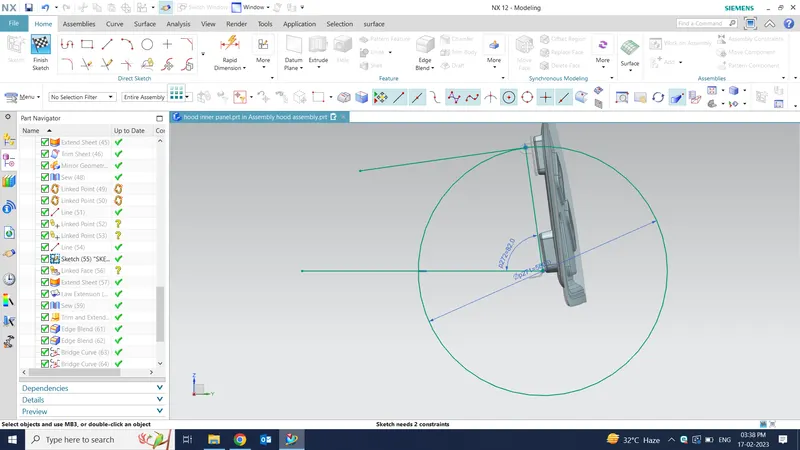
Latch Trajectory : Latch trajectory is given by the circle drawn from the hinge axis point. Hinge axis point is the centre point of the hinge axis. First, we can fix either the latch or the hinge. If we have fixed the hinge position then we should plot the Trajectory circle for the latch. For proper mating condition the striker axis through the tip of the striker should be tangential to the latch trajectory.
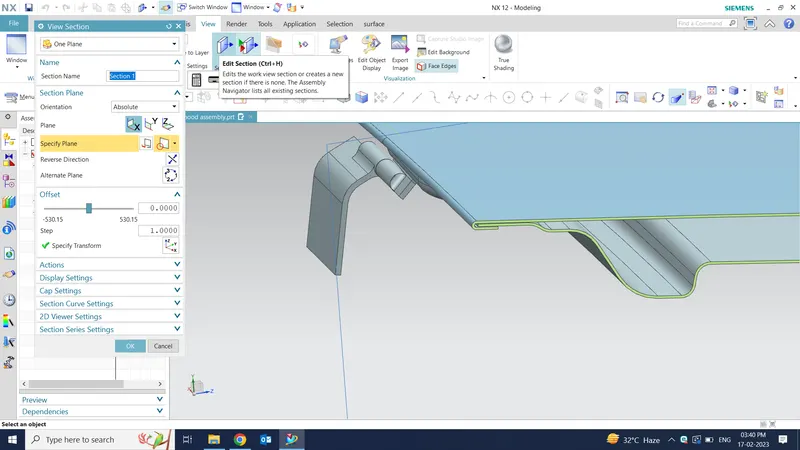
Hemming : Hemming is a forming operation in which the edges of the sheet are folded or folded over another part in order to achieve a tight fit. Normally hemming operations are used to connect parts together, to improve the appearance of a part and to reinforce part edges. In car part production, hemming is used in assembly as a secondary operation after deep drawing, trimming and flanging operations to join two sheet metal parts (outer and inner) together. Typical parts for this type of assembly are hoods, doors, trunk lids and fenders. The accuracy of the hemming operation is very important since it affects the appearance of the surface and surface quality. Material deformations, which occur during the hemming process, can lead to dimensional variations and other defects in parts.
Final assembly:
HOOD INNER PANEL DESIGN:
Conclusion:
In this challenge i learned the design hood inner panel ,hood ouer panel,with the help of master sketch and the styling surface.