Hood design-Week 2
A Detailed Report On Hood Design
Design and assembly of -
- Hood outer panel
- Hood inner panel
- Latch
- Hinge and reinforcements.
Hood-
In a car hood or also known as bonnet is a hinged cover that rests on the engine in the front-engine vehicle. It is made of sheet metal with tensile properties, widely most cars consist of steel, aluminum or carbon fiber reinforced plastic. Hood plays a crucial role both in terms of aesthetics and safety of passengers and pedestrians where many norms are to be considered. It also protects engine and connected parts while providing easy access for maintenance at the same time. It consists of several parts;
- Outer panel
- Inner panel
- Hinge & Mountings
- Latch-Striker lock
- Support rod/Gas stay
- Stiffener Pads
- Mastic Sealant
- Reinforcements
Outer panel-
It is the outermost component which is designed keeping in mind the aesthetics and pedestrian safety.
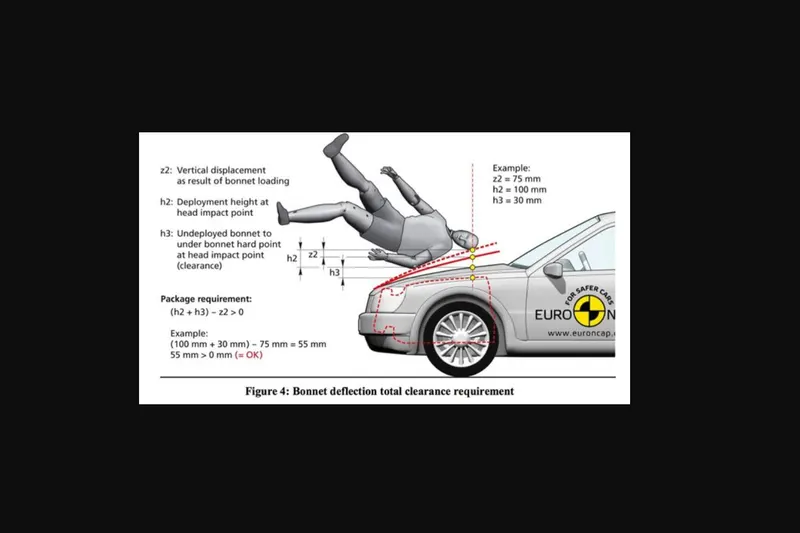
- Euro NCAP Pedestrian safety standards
Inner panel-
It acts as the backbone of the hood which is designed to withstand external collisions and keep the passengers and components under the bonnet safe.
Hinge-
It is the link that connects the hood and the car about an axis. This axis is called the hinge-axis.
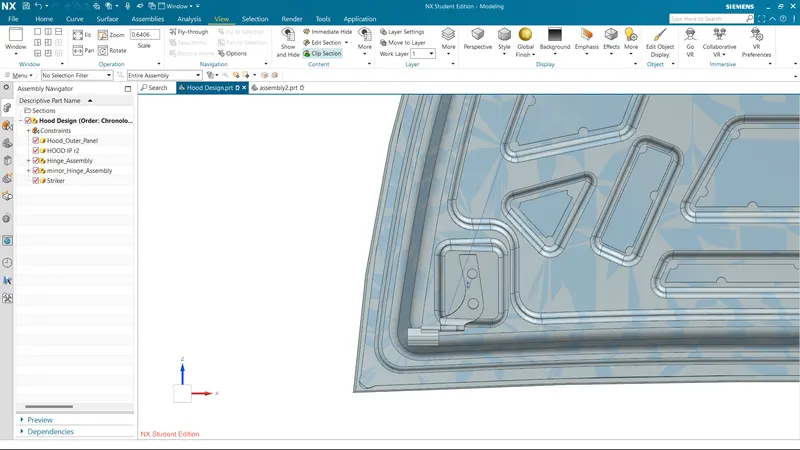
- Hinge assembly with hinge-axis
Latch-striker lock-
The lock holds the bonnet locked to the engine compartment and provides protection from external dust and particulates. It can only be opened from inside by the driver when necessary.
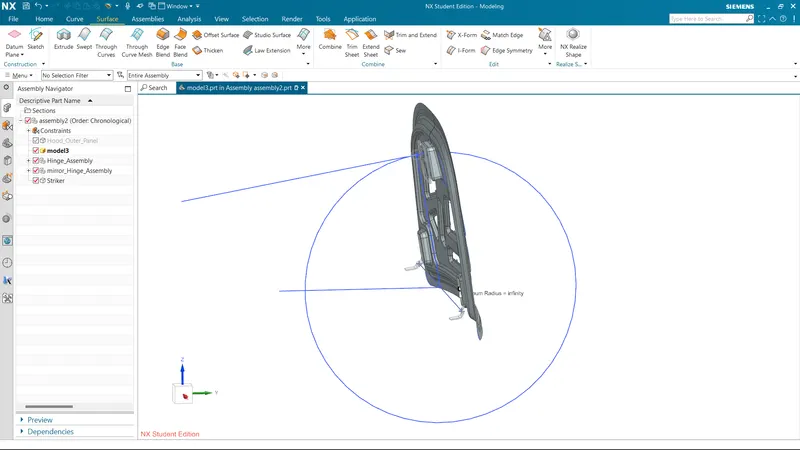
- Striker
Support rods/gas stay- It helps in holding the bonnet in open conditions as working while holding the bonnet is uncomfortable. The support rod is either mounted in the engine compartment and mounted to the bonnet or vice-versa. It must be strong enough to hold the weight of the hood.
Stiffener pads & mastic sealants- These are placed in b/w the outer and inner panel and the outer panel of the hood. They provide reinforcement and tensile strength to the outer panel. This enables reduction of NVH (noise, vibrations, harness) which helps with comfortable ride and minimum wear and tear.
Data given:
Hood Thickness Information
- Outer Panel Thickness = 0.75mm
- Inner Panel Thickness = 0.75mm
- Reinforcement Thickness = 1.5mm
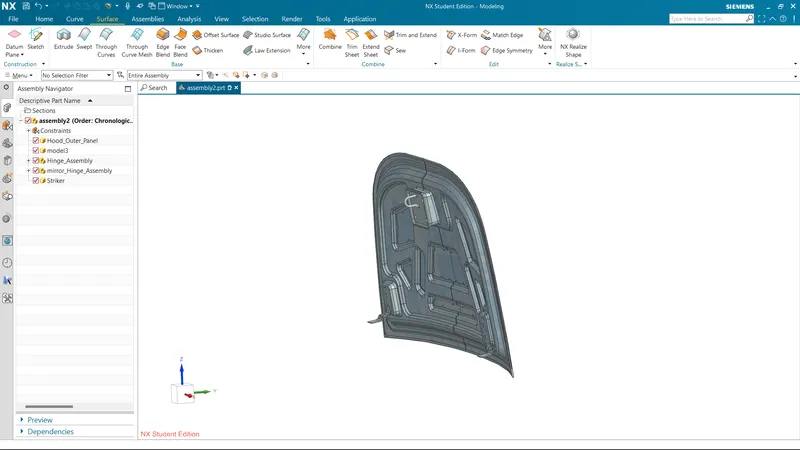
- HOOD DESIGN