Hood design-Week 2
AIM:-
To design Hood Outer Panel, Inner Panel and the necessary reinforcements and the embosses by considering the master section and Design parameters.
INTRODUCTION:
A car hood, also referred to as a bonnet in some other countries, is the hinged cover that rests over the engine of a front-engine vehicle. Its purpose is to provide access to the engine for repair and maintenance. A concealed latch is typically used to hold down the hood. On vehicles with an aftermarket hood and on racecars, hood pins may be used to hold down the car hood. A car hood is meant to protect the performance parts of your vehicle, including the engine, while also providing easy access for repairs and maintenance. It is possible for the hood to incur damage as well. One of the most common types of damage is to the hinge, which is the device that connects the hood to the body of the vehicle.
DESIGN CONSIDERATIONS FOR CAR HOOD:-
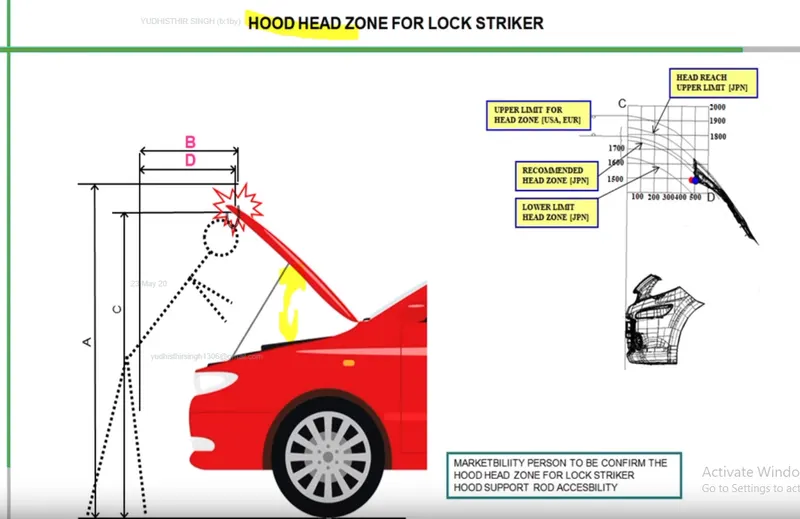
- Head Clearance zone
Hood clearance zone is the clearance such that when the hood is in fully open condition it does not hurt the head of the person that is standing in front of the hood. This is controlled by the opening angle of the hood. The opemimg angle of the hood is decided for the region the car is manufatured. Some region may have people with average height of 5.5 ft and another region may have people with average height of 6 ft. So deciding the right hood opening angle is the main criteria.
- Consideration of Noise Virbation and Harshness:
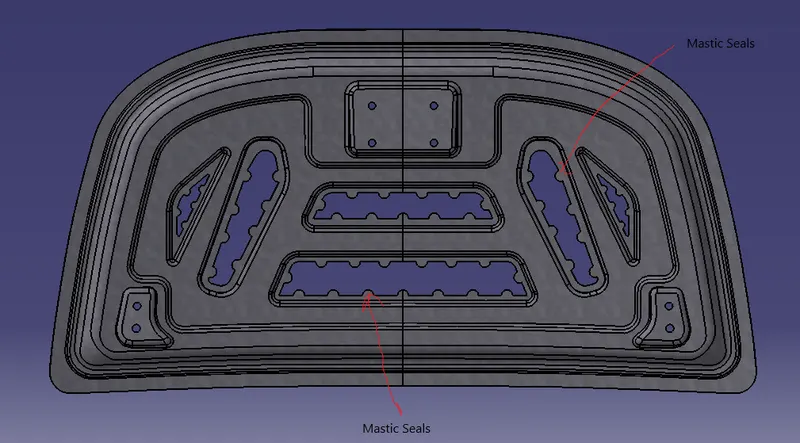
NVH plays a major role is car design. The noise and vibration produced by the car should be minimized. In the hood, to avoid vibations stiffner pads are used. Mastic Sealants also reduce the NVH. Stiffner pads and Mastic sealants are provided between the Outer panels and inner panels or the Hood.
- Pedestrian Safety
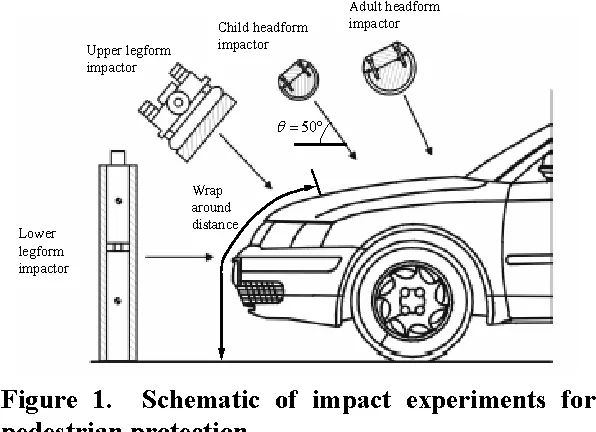
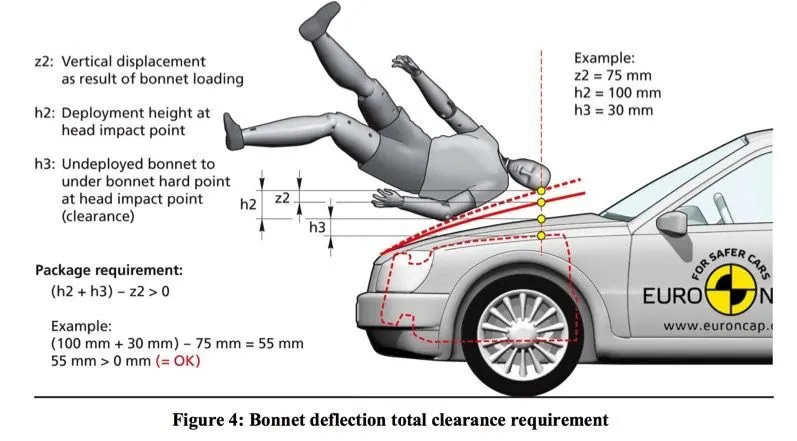
Safety is the most important criteria in automobile designs which concentrates on both pedestrians and the passenger safety. The pedestrians are the most vulnerable road users and are at high risk of traffic accidents. The major reason for the fatality of the pedistrian in road accident is due to head injury resulting from the hard impact of head against the stiff hood of the vehicle. This leads to the necessity of new inner hood panel which is less stiffer and pedistrian friendly. The head impact analysis on the present hood of the car was done to study the response of the adult head from to two different locations. Structural and Modal Analysis for the same present hood assembly was done to observe the local and global stiffness. In order to reduce the head injury of the pedistrian the local stiffness over the area of head impact has to be reduced thus the new design of hood inner panel was focused on that and the structural and modal analysis was done for the new design. The design with lesser local stiffness and similar global stiffness compared with existing hood was finalized. The head impact analysis for the new design of hood inner panel was performed. The HIC values for adult head from two different locations are found to be 706 and 948 which meets the safety limitations of the adult head accleration during impact proposed by EEVC WG17 and EURO NCAP regulations. Thus the new Design of the hodd is pedestrian friendly, considerably maintaining the overall global stiffness of the hood.
DIFFERENT METHODS OF MANUFACTURING CAR HOOD:
- Blanking:-
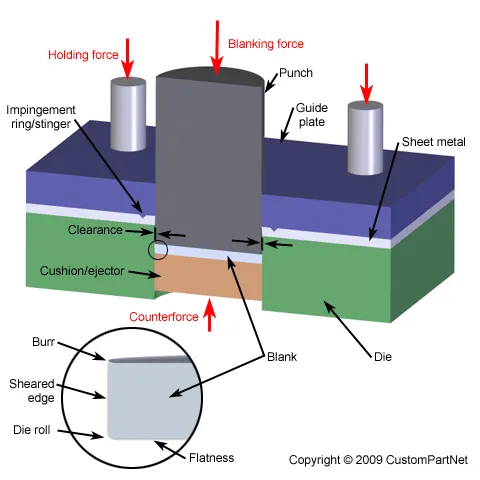
The sheet metal blanking process is a one of the shearing operation. Blanking process is cutting process obtain in sheet metal in which sheet metal piece is removed from the large piece of stock by shearing force applied in the sheet metal. When the blanking of sheet metal process the removal of piece is called as “blank”
.
- Deep Drawing:
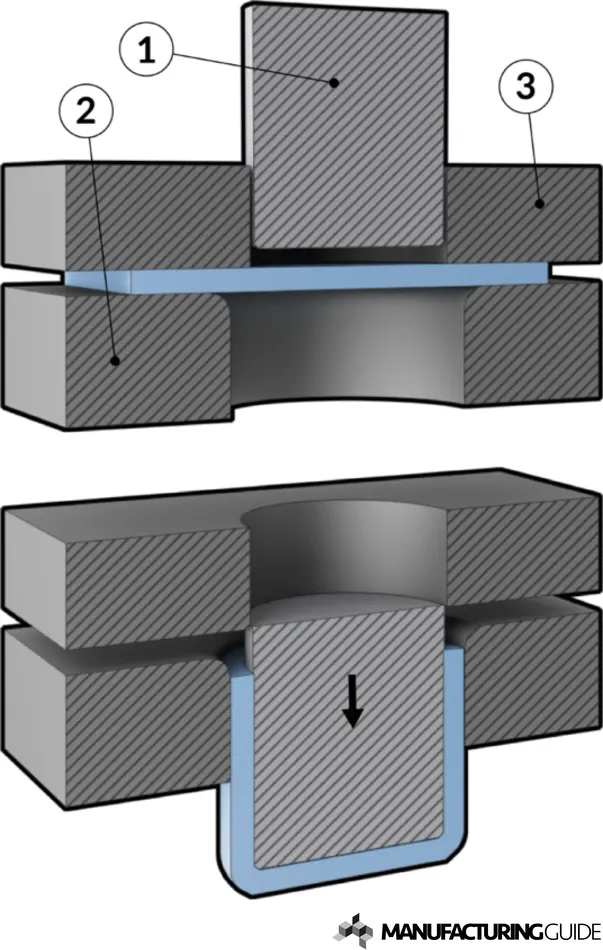
Deep drawing is a sheet metal forming process in which a sheet metal blank is radially drawn into a forming die by the mechanical action of a punch. It is thus a shape transformation process with material retention. The process is considered "deep" drawing when the depth of the drawn part exceeds its diameter.
- Trimming:
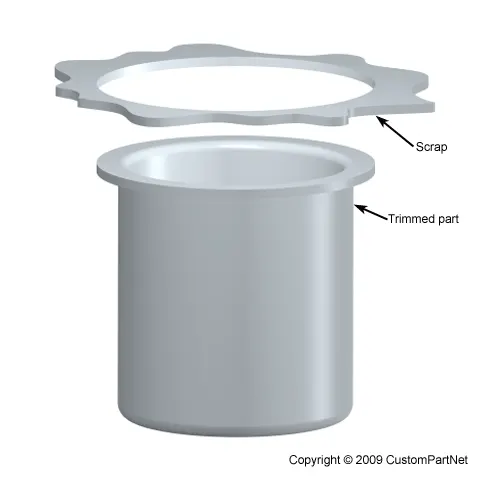
Trimming operation is a manufacturing process that is used as a finishing operation for forged parts in order to remove flash. Most often it is desirable to perform this operation while the work is still hot for maximum efficiency, therefore it is usually incorporated into larger production process.
- Hemming:
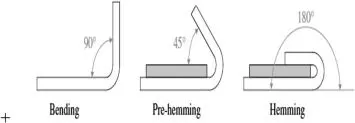
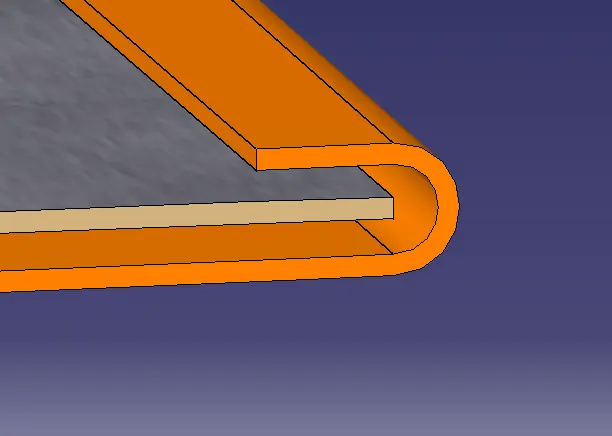
Hemming is a forming operation in which the edges of the sheet are folded or folded over another part in order to achieve a tight fit. Normally hemming operations are used to connect parts together, to improve the appearance of a part and to reinforce part edges. In car part production, hemming is used in assembly as a secondary operation after deep drawing, trimming and flanging operations to join two sheet metal parts (outer and inner) together. Typical parts for this type of assembly are hoods, doors, trunk lids and fenders.
CAR HOOD DESIGN:
Data Given:
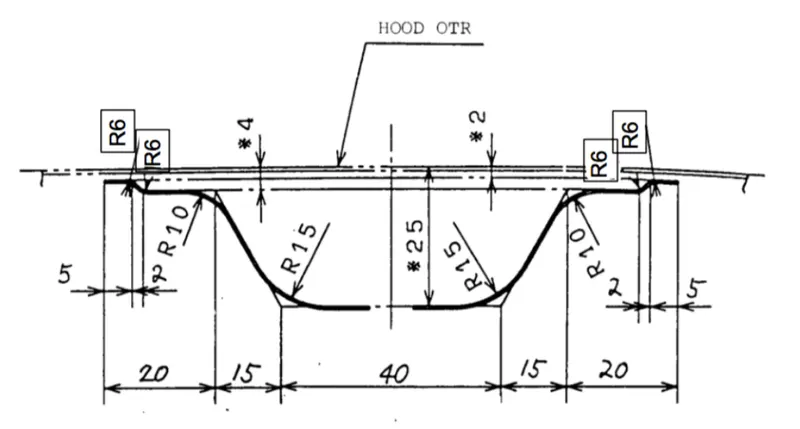
- Master section of Hood Inner Panel
- Hood Hemming data
- The thickness of Relief surfaces
Master Section:
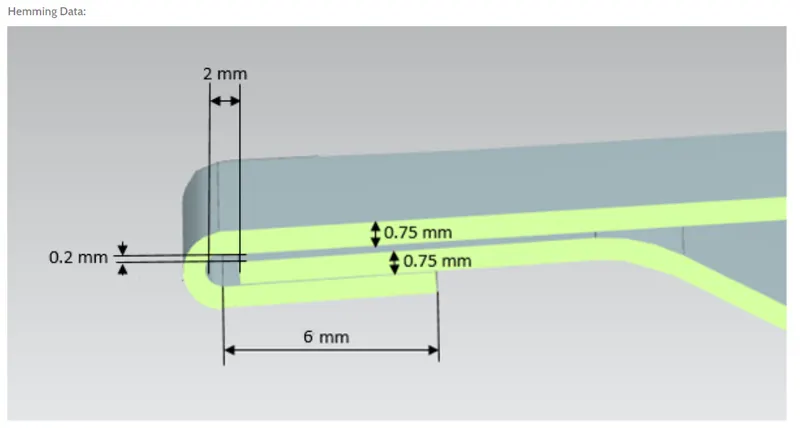
- Hemming Thickness:
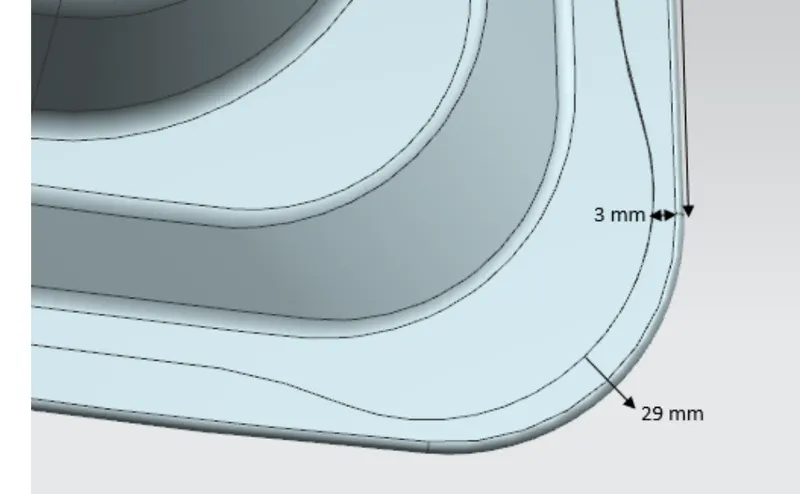
- Side Relief:
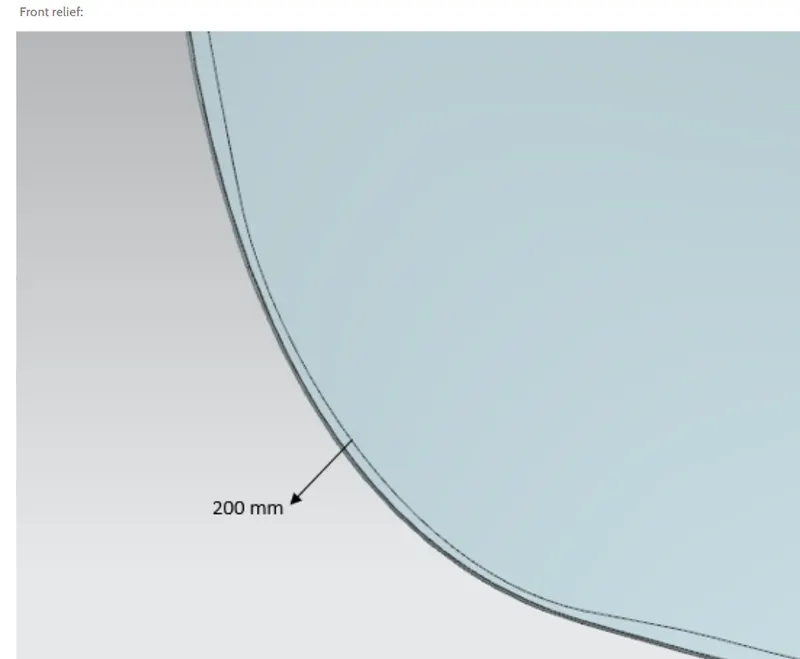
- Front Refief:
PROCEDURE:
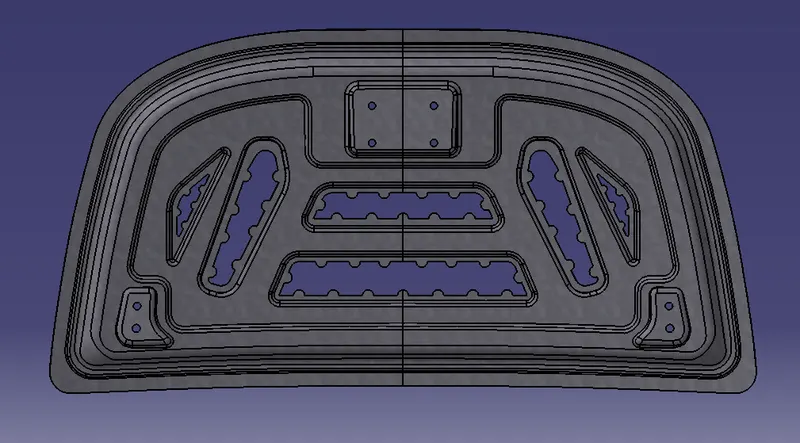
- Design Of Hood Inner Panel
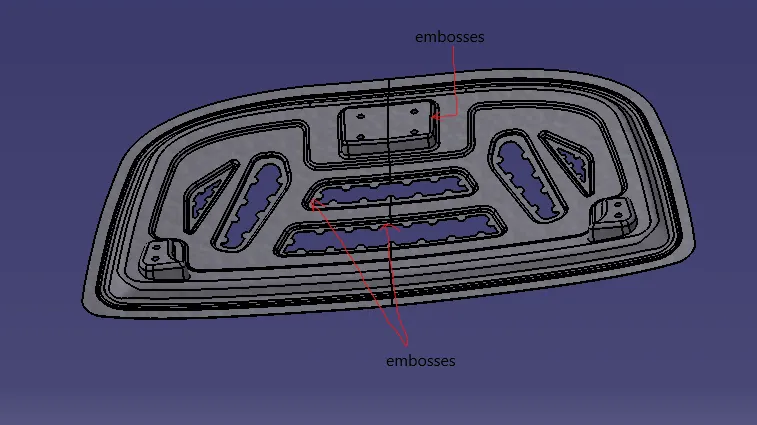
Inner Panel is a major part which acts as support for the outer panel. It consists of embosses which helps in distribution of forces during impact. The thickness of the inner panel is 0.75mm as per the given data. The inner panel is created using the master section shown in the given data.\
- Design Of Hood Outer Panel:
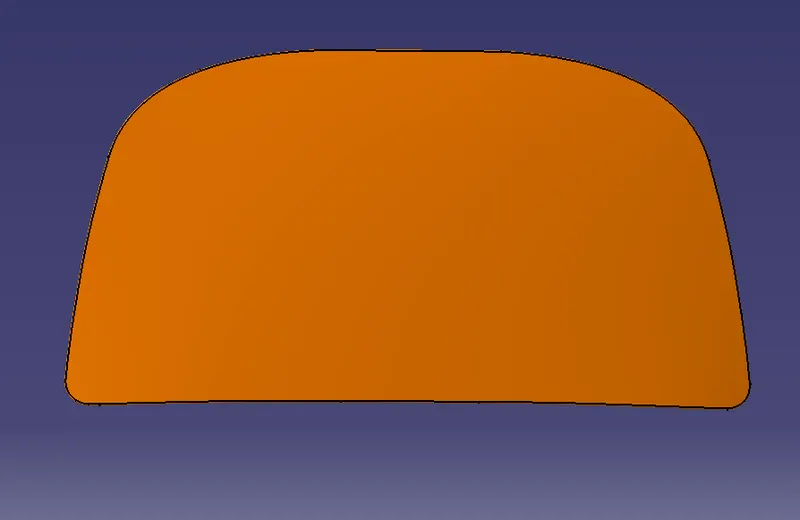
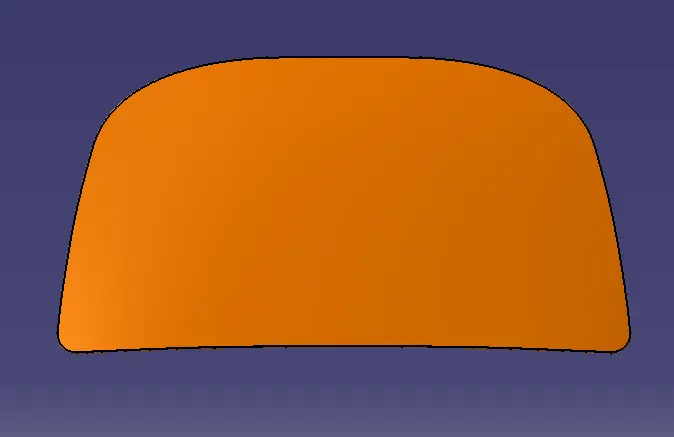
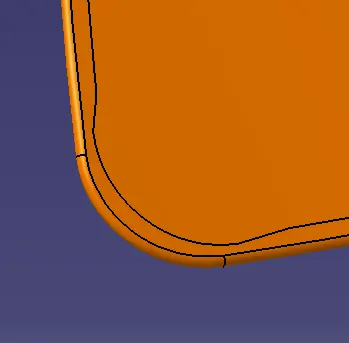
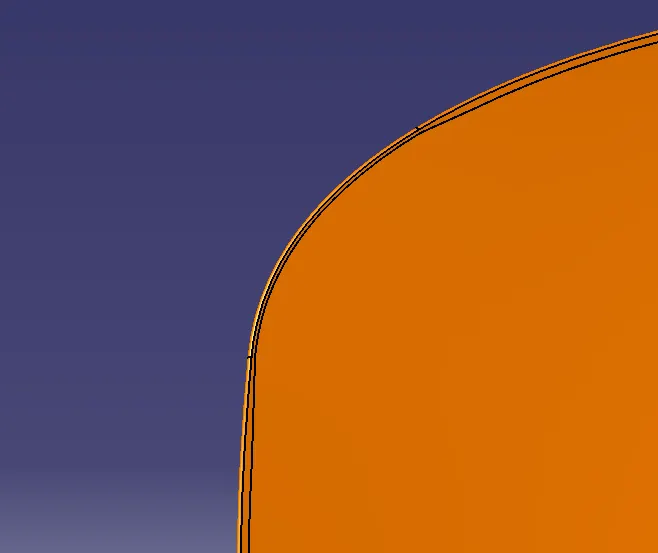
Outer panel is a skin of inner panel which gives a luxurious look of the car. The hemming region is created to the class A surface, Through which the outer panel is joined to the inner panel. The relief has given in the corners, relief is provided on the surface to avoid springback situations. The thickness is 0.75mm as per the given data.
- Embosses:
Embosses will add a strength to the material. These will help in distributing of forces during the impact rather than directing it towards the passenger sitting inside the car.
- Stiffner pads and mastic seals:
These both will help in minimizing the NVH in the vehicle during motion. Basically mastic seals are rubber kind of material placed between the inner panel and the outer panel of the hood, it also helps in holding both together. Every mastic seals have a tendency to improve the strength locally by 80mm diameter.
- Hemming
Hemming is the process where the outer panel is joined with the inner panel by adding extra material on the outer panel and made to wrap around the inner panel. The wrapping is done using the running ball rollers through out the end of the sheet.
- Striker position:
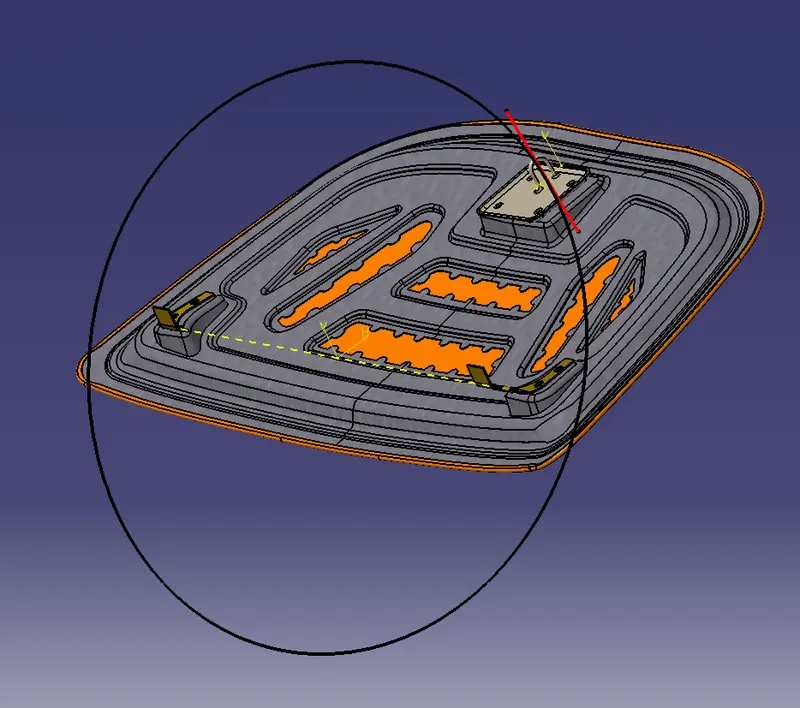
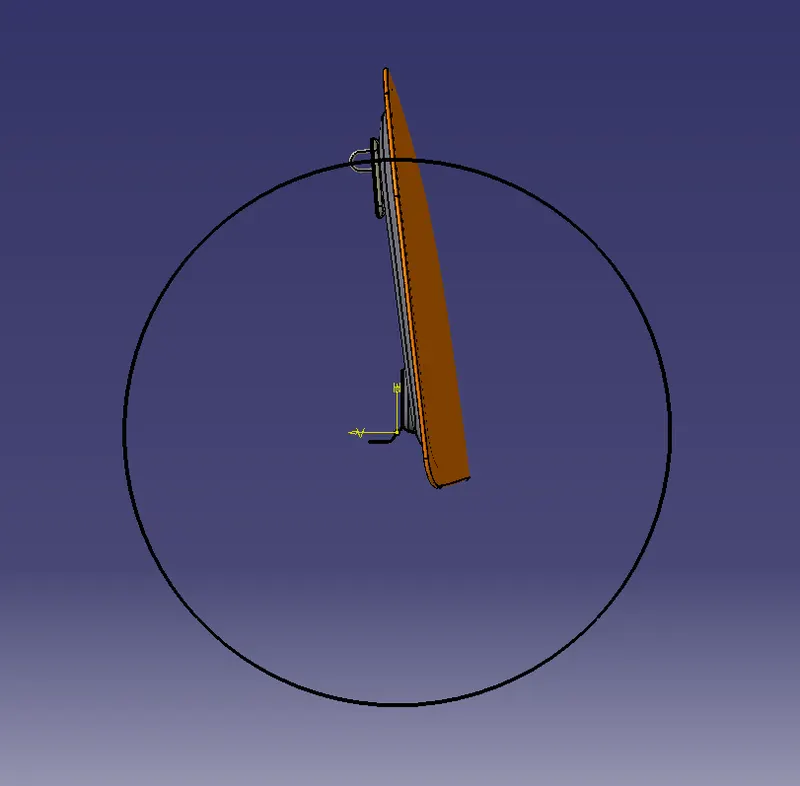
For the proper opening and closing of the hood, the striker should be placed at a correct position. The striker should be perpendicular to the trajectory of the hood. The trajectory of the hood is denoted as a circle which is drawn by using the center of a straight line which passes through both the hinge axis at respective position.
RELIEF AT CORNERS
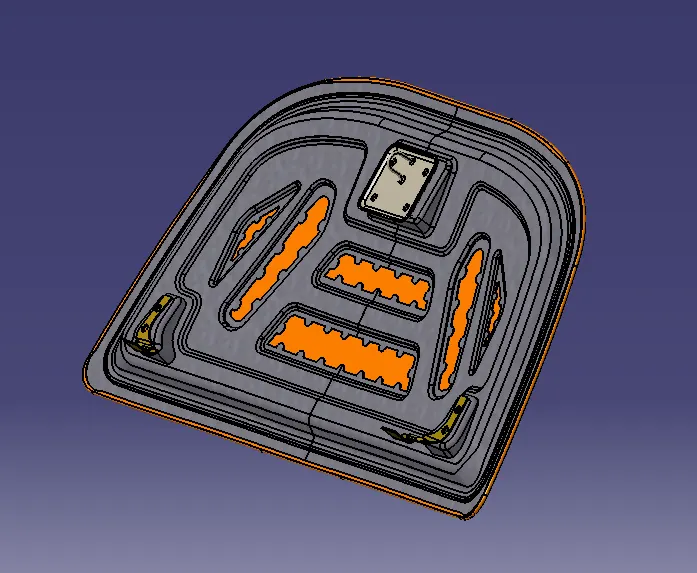
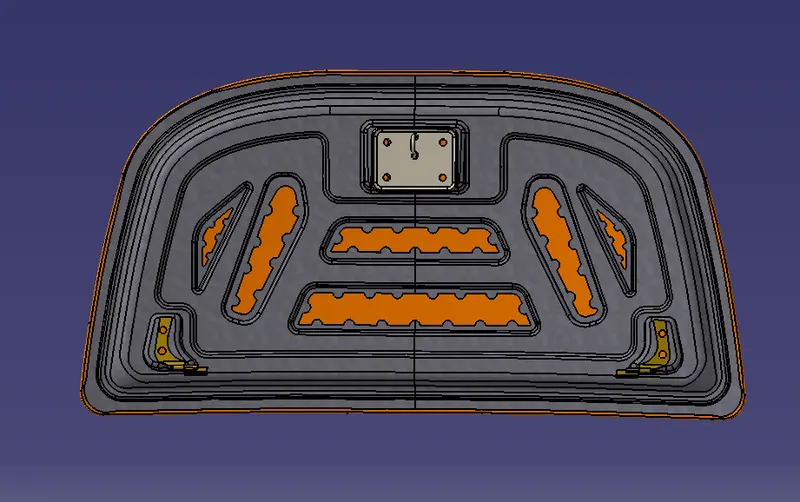
FINAL IMAGES OF THE HOOD DESIGN
CONCLUSION:
Hood is deigned by using CATIA V5 software by understanding all the design parameters and considering the passengers and pedestrians safety.