Hood design-Week 2
HOOD
INTODUCTION:
The hood or bonnet is the hinged cover over the engine of motor vechicles. Hoods can open to allow access to the engine compartment, or trunk for maintenance and repair. It is used to decorate the car and add luxurious look. The shape of the bonnet is made aerodynamic in order to minimize the air effect. Bonnet is generally used to access the parts easily such as radiator, engine and many other parts. In automotive world the weight optimization plays an important role.
In recent years, the work has been done on the bumper and hood design of the vehicle front end to reduce the injuries to the pedestrians in the event of a pedestrian vehicle collision. The front portion of the vehicle gets damaged including bonnet when met with an accident. So there is need to change the existing design of bonnet or by changing the material. The bonnet is the hinged cover over the engine of motor vehicles that allows access to the engine compartment for maintenance and repair.
PARTS OF AN HOOD:
hood has the
- Inner pannel
- Outer panel
- Striker
- Hinge
TYPES OF HOOD SUPPORT:
There are two types of support is there,
- Gas stay
- Support rod
Gas Stay:
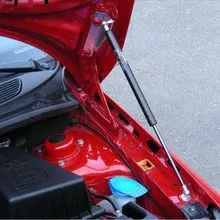
This type of apparatus is used in most heavy vehicles where the weight of the hood is more and it is difficult for a human being to open it conveniently. So, basically, a gas stay system uses gas-filled telescopic cylinders which only require an initial force to set it in motion.
Support Rod:
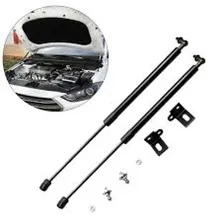
It is a rod that accommodates itself easily inside the engine compartment and support the hood when we open it by attaching the rod in the hook provided inside the hood. Initial bends are been provided to the support rod to provide stiffness
INNER PANNEL:
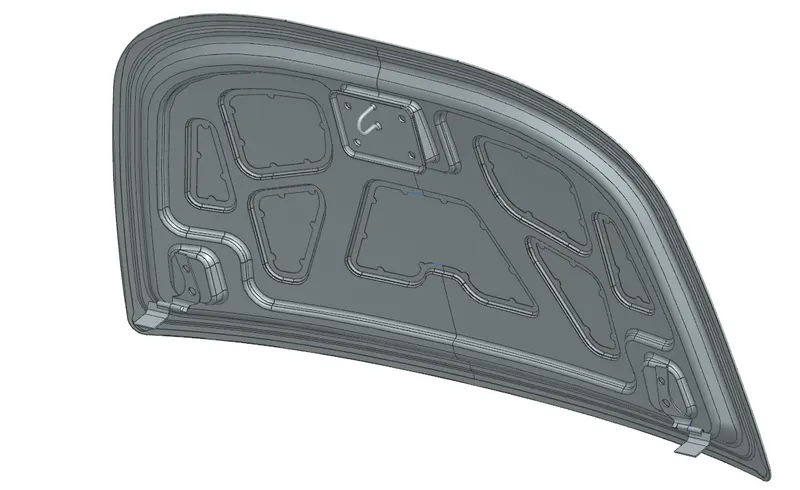
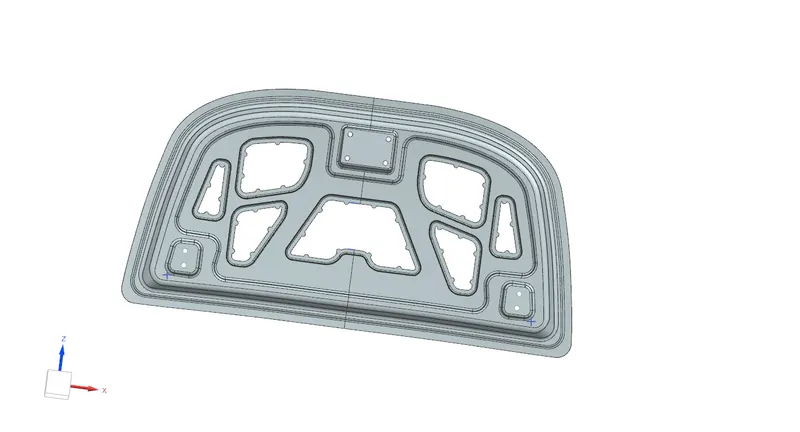
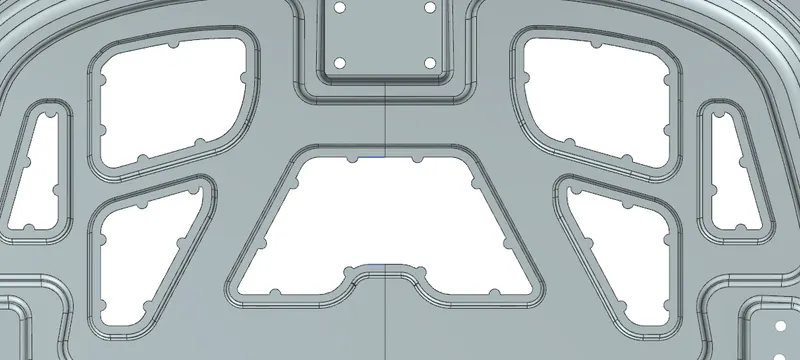
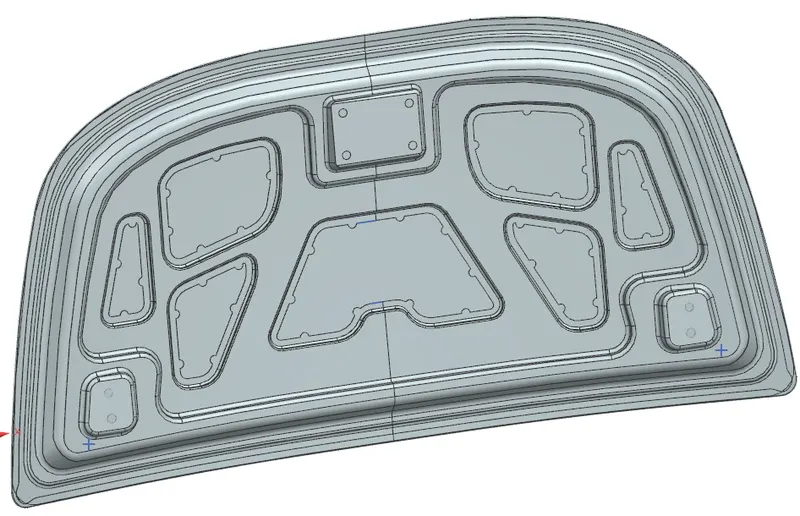
Inner panel supports outer panel. It consists of different embosses and hole at different places. Embosses provide stiffness as well as dissipate energy towards hinges. To determine the most effective position of hole, the method of modal stiffness is employed.Inner pannel is offset of the parent work surface.inner pannel thickness is 0.75mm.
OUTER PANNEL:
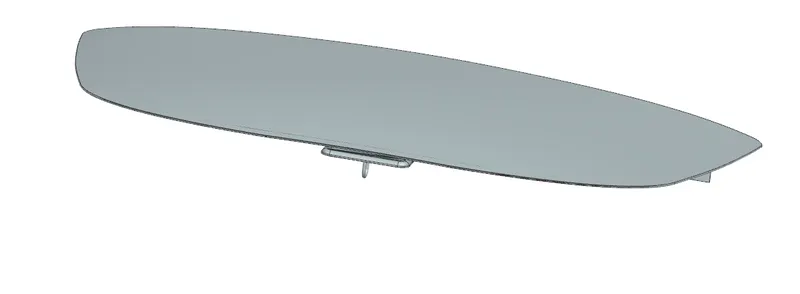
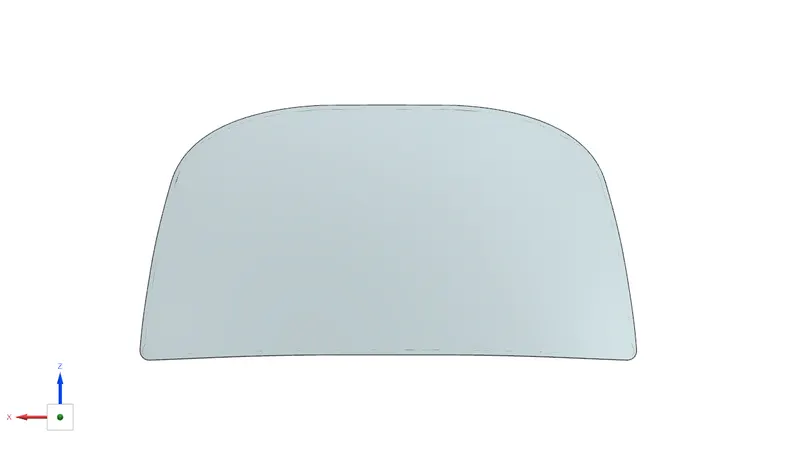
Outer panel is nothing but a outer skin of inner panel. Otherwise called as a cover of inner panel. It is the part, which gives luxurious look to the hood or bonnet. Outer pannel and inner pannel cannot join by any welding process like spot welding or rivet, which spoil the outer look of a car.The outer pannel is generally extracted model from the prototype design.
EMBOSS:
The geometry is created based on the master section that was designed above. After performing the initial stages of design, we will provide local embosses to strengthen the component. The component will be strengthened based on the master section. When a force impacts the hood from the front, it travels in an upward direction. The component is designed to divert the force away from the passengers into the hinges, as shown in the image belowThe embosses in the inner panel are made according to the diversion of the load path. The emboss depth is kept at a maximum of 5mm to be on the safer side so that the part is manufacturable.
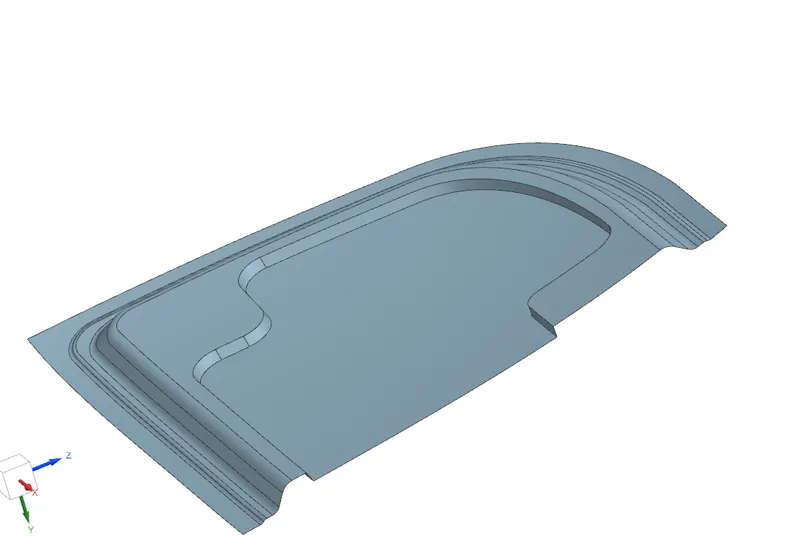
To provide strenth to the inner pannel and to distribute the force produced during the impact with pedstrian or other obstacles to ensure the saftey of the passengers.The forces are directed outwards through the embossing path.
Mastic Sealant:
The Mastic sealant or the Mastic point is an elastic compound that behaves like a rubber. The mastic points are defined on the hood inner panel where the hood can easily deform. They help the hood outer panel to come back to its original shape after it gets deformed. The mastic has an influence area of 80mm.
HEMMING:
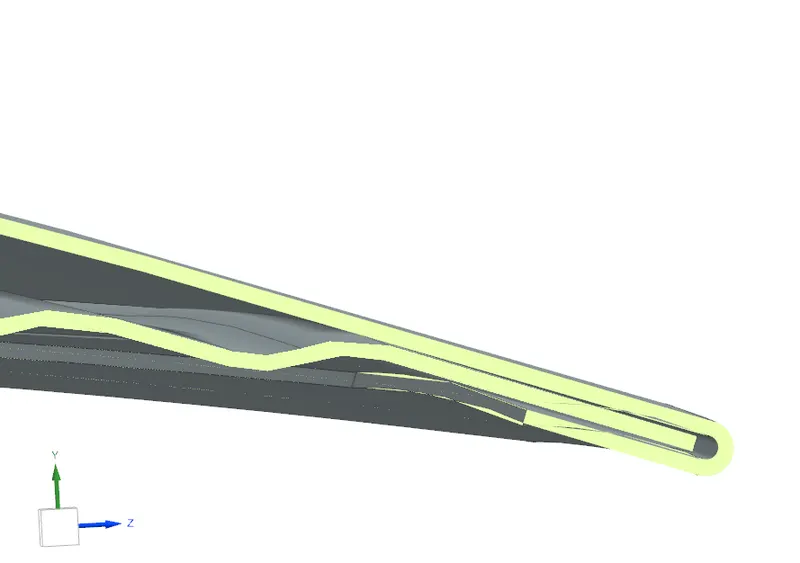
Hemming is the process of joining both the outer and inner panel together. The hemming process roles and wraps the hood outer panel around the inner panel and holds it tightly together. The following are the dimensions followed for hemming.
POSITION OF HINGE AND STRIKER:
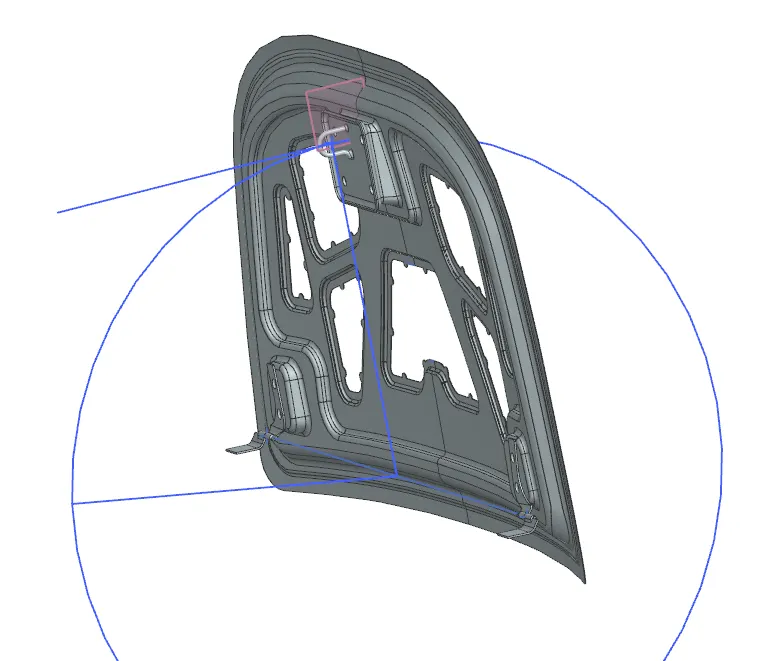
For postioning hinge and striker,we have to place hinge tantatively and take hine axis point and place position from data taken from the parent car or our own.The other major functional of the hood is the opening and closing of the hood. This is done with the help of the latch and striker. To position the latch and striker effectively, we position the hinge and draw the hinge axis. Now, using the hinge axis as the center we draw a big circle to the position where we need the latch to be placed. Then, we draw a tangent line to the circle at that point and place the latch in that region.
ASSEMBLED VIEW: