Hood design-Week 2
Design and develop Hood and its respective components:
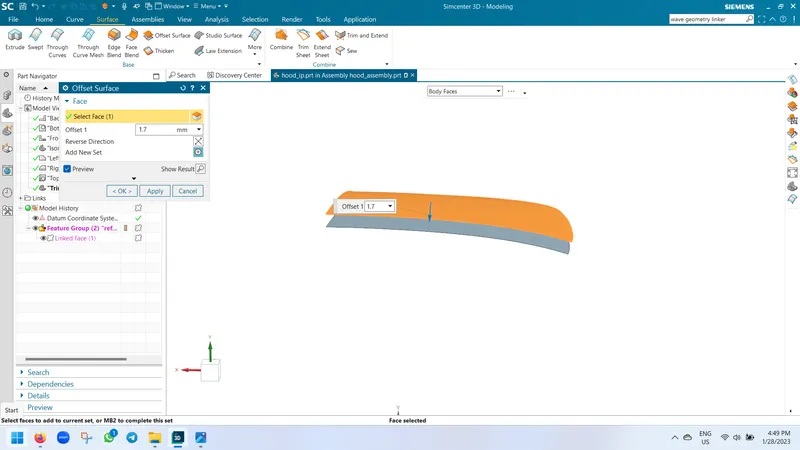
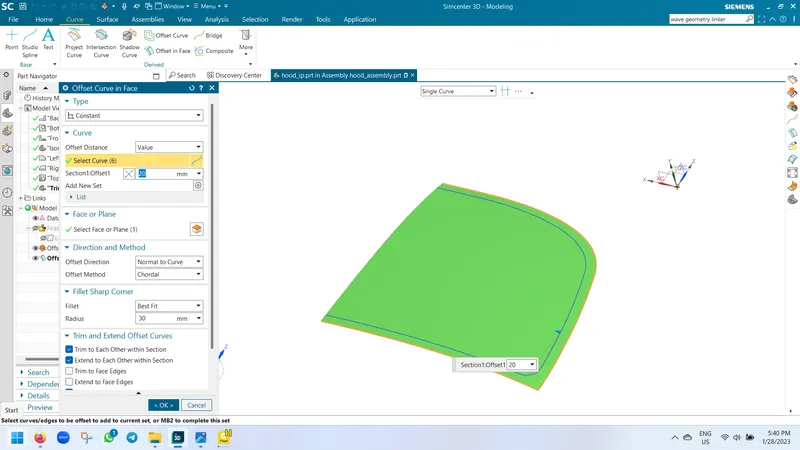
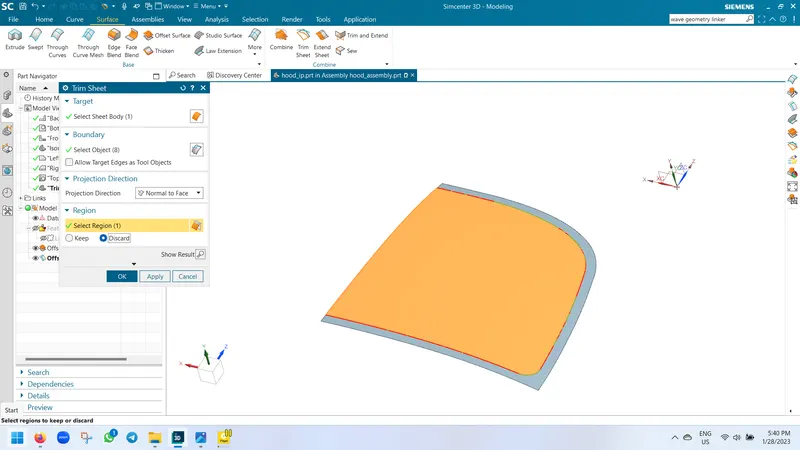
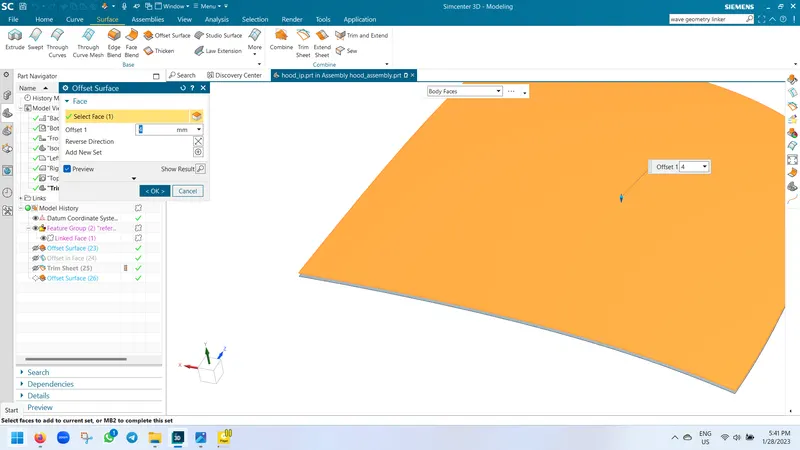
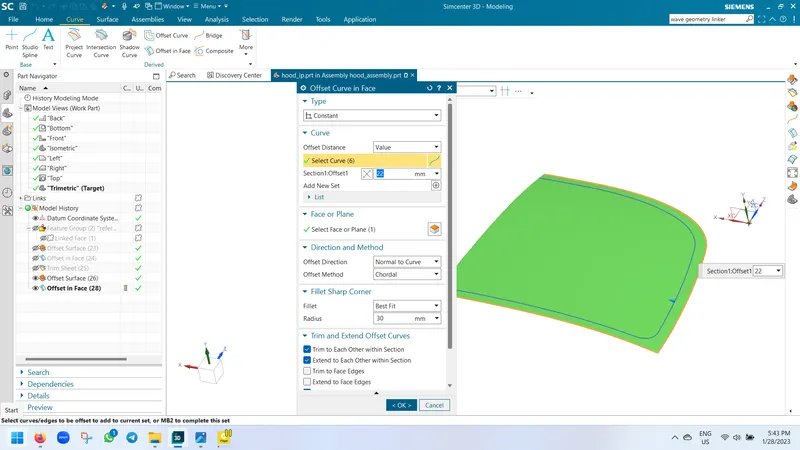
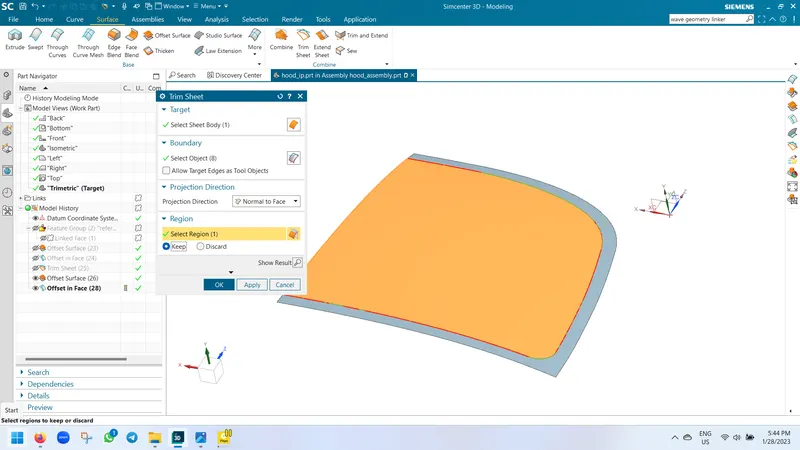
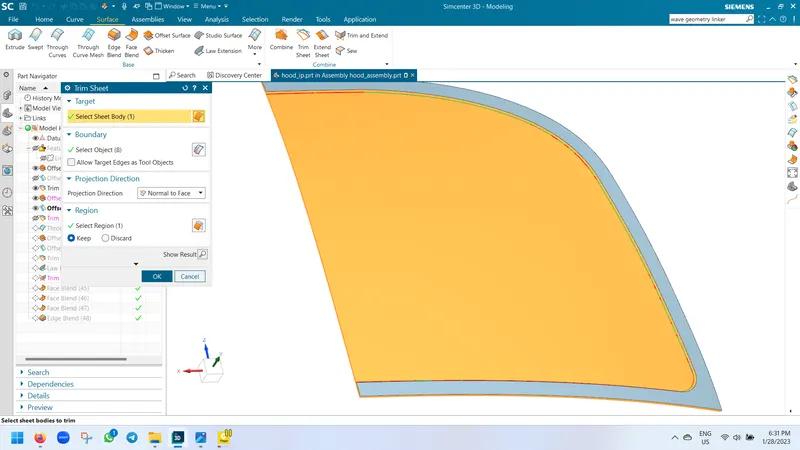
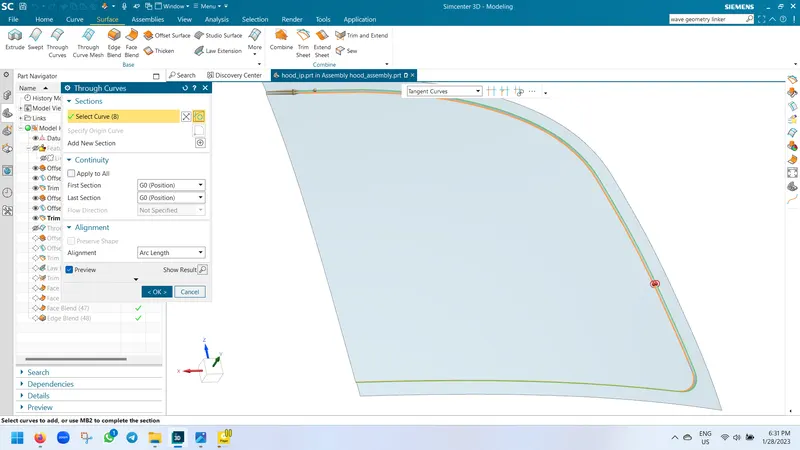
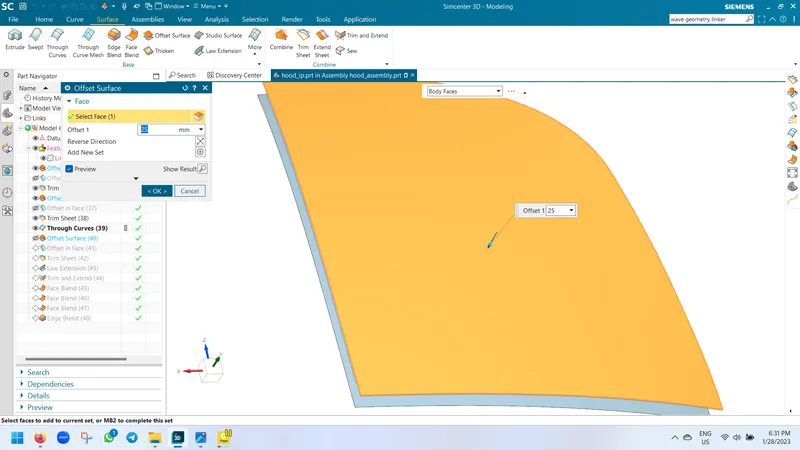
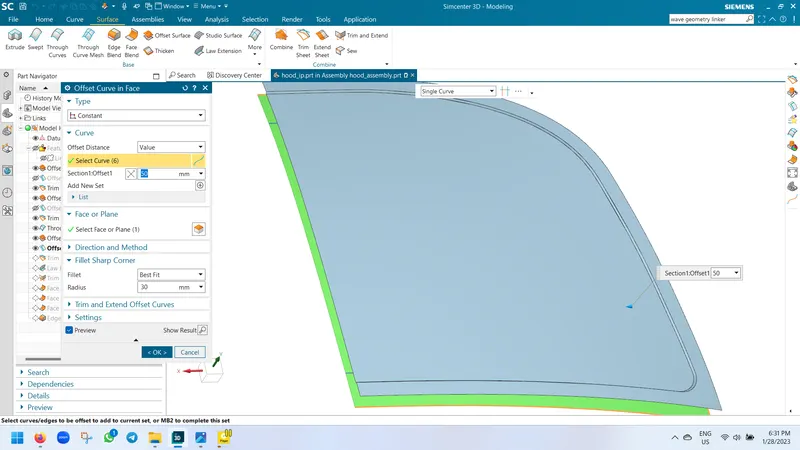
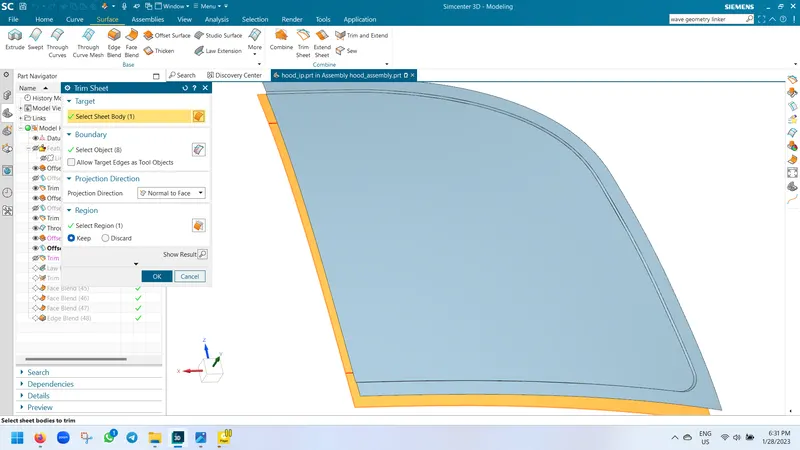
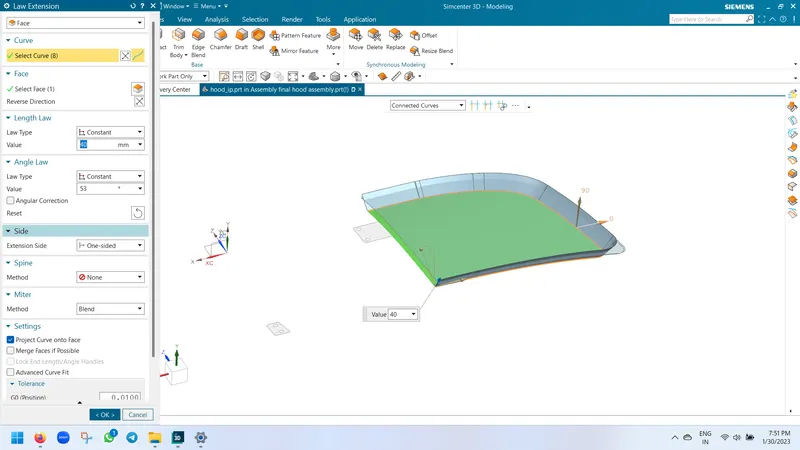
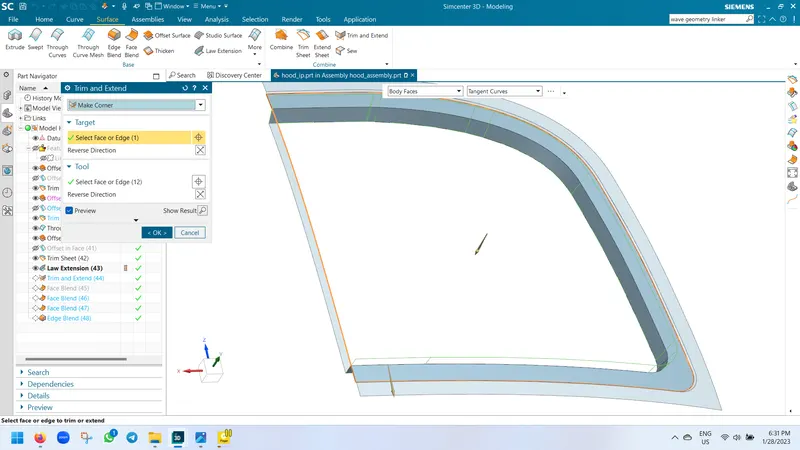
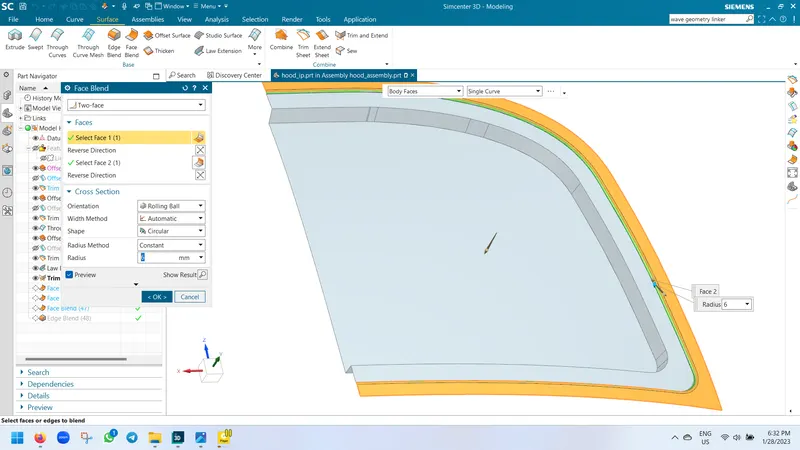
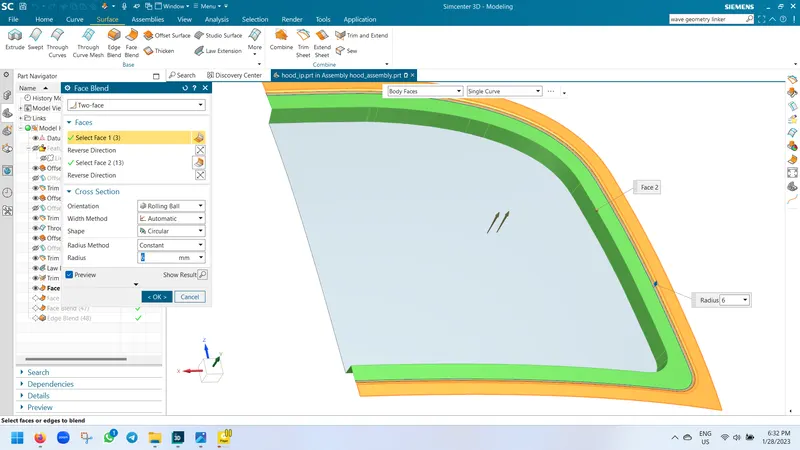
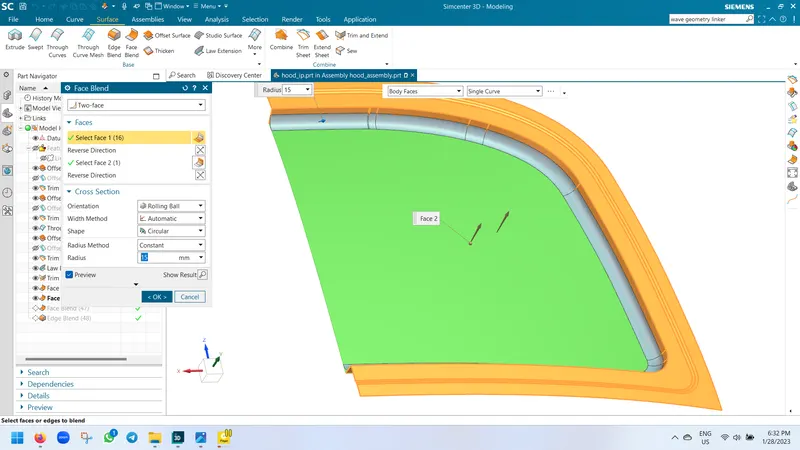
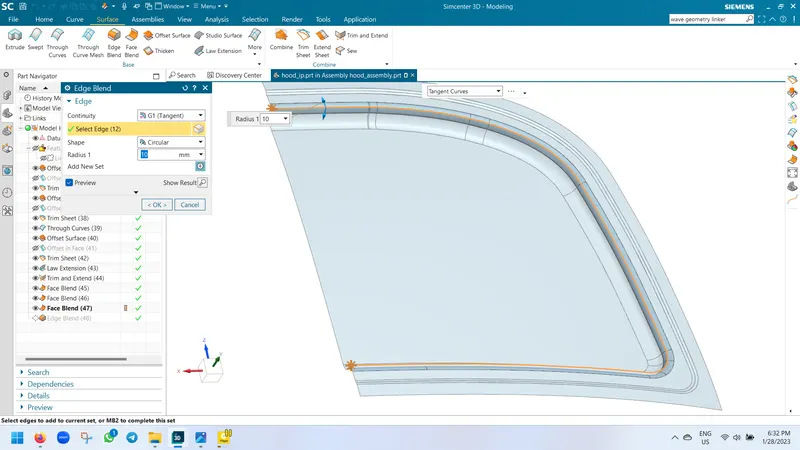
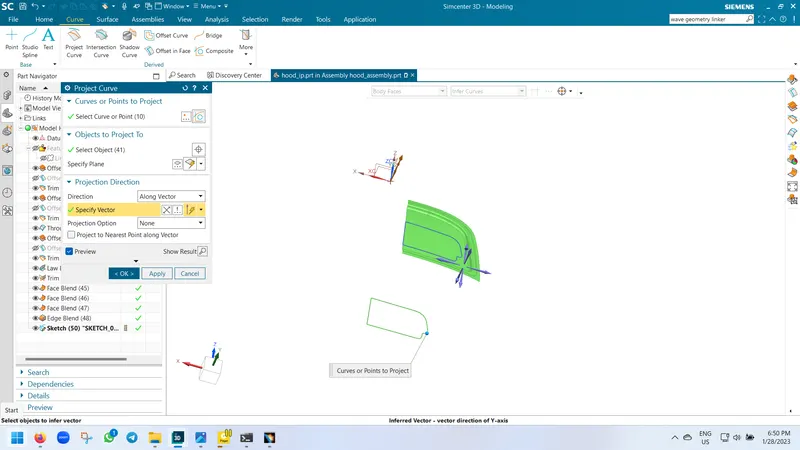
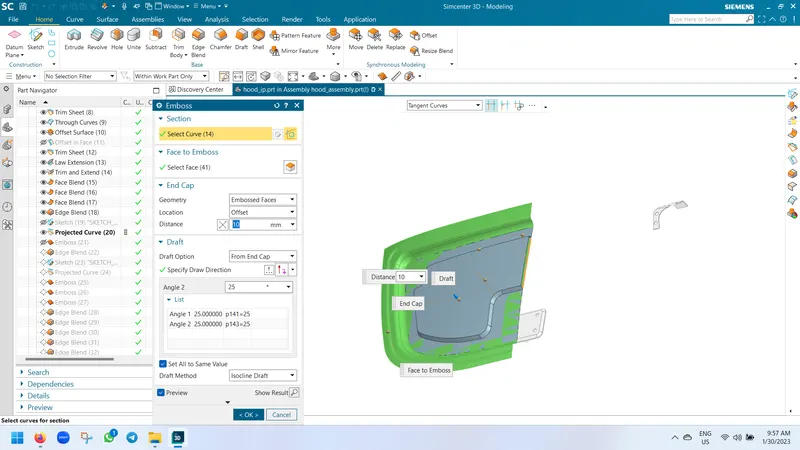
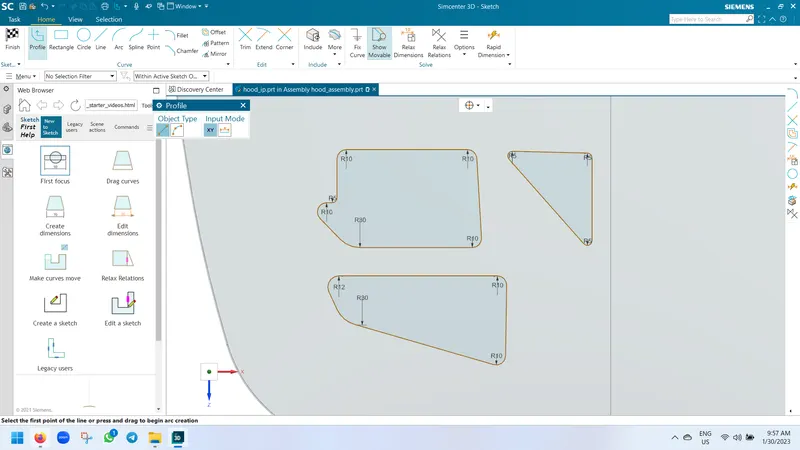
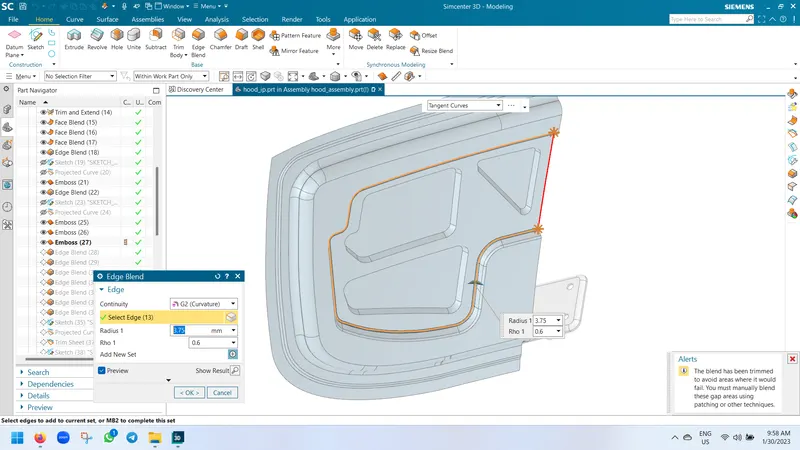
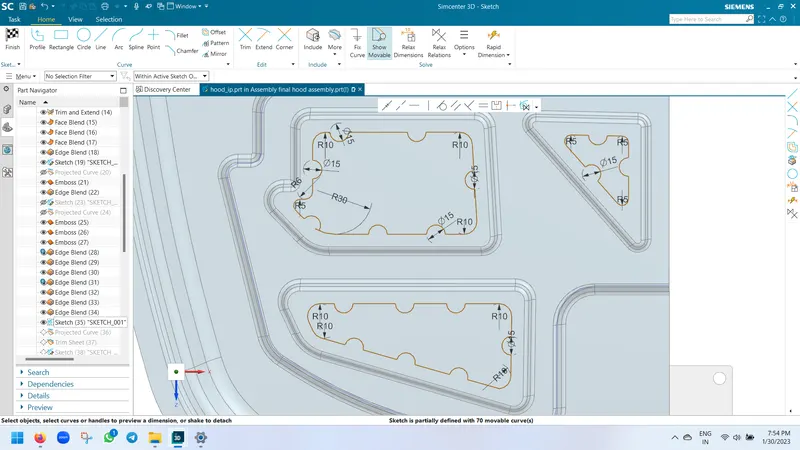
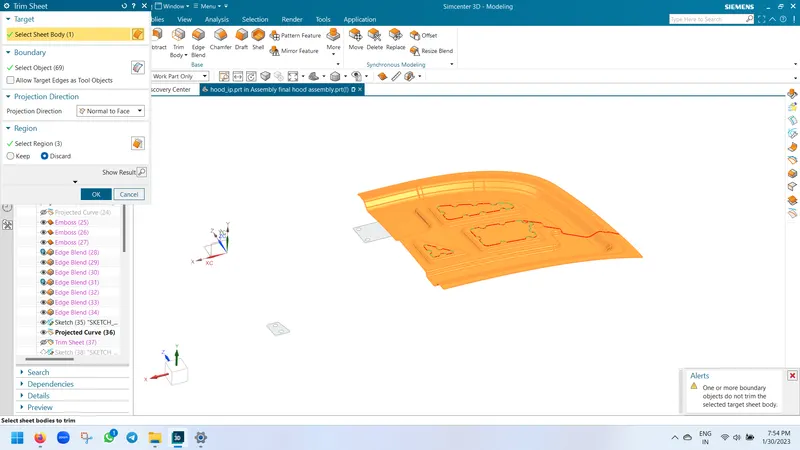
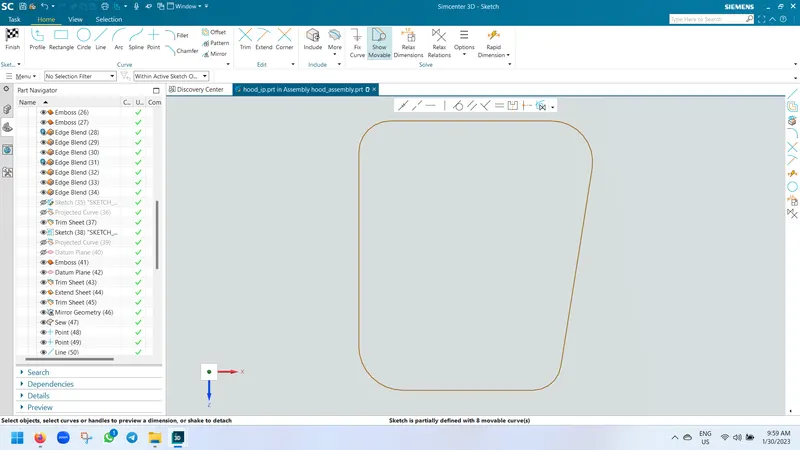
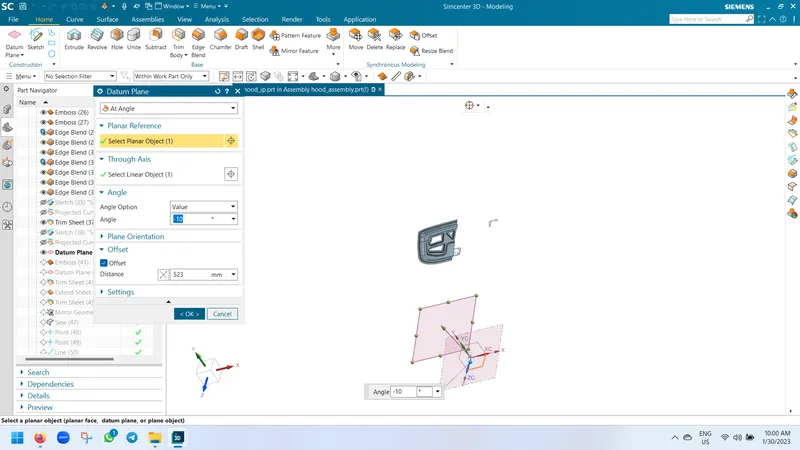
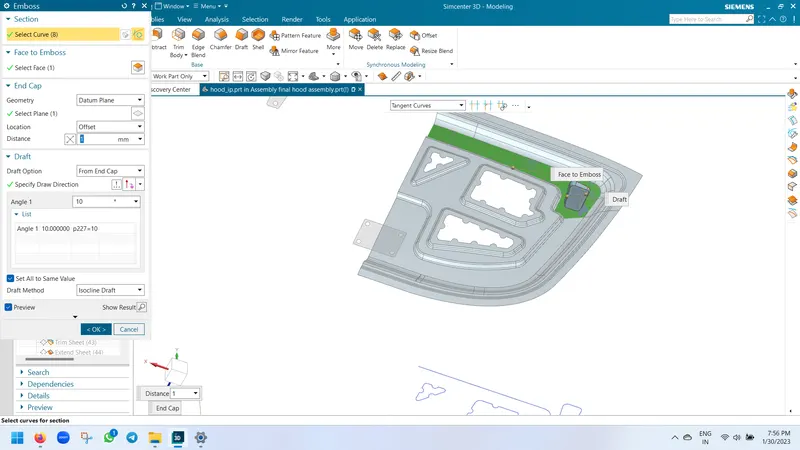
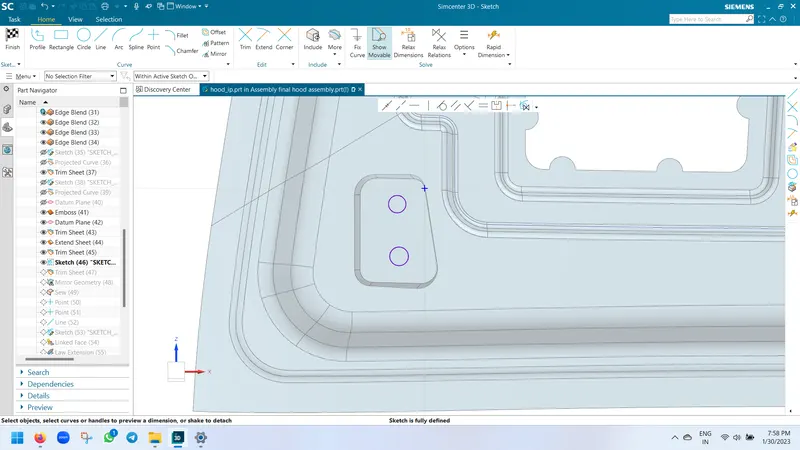
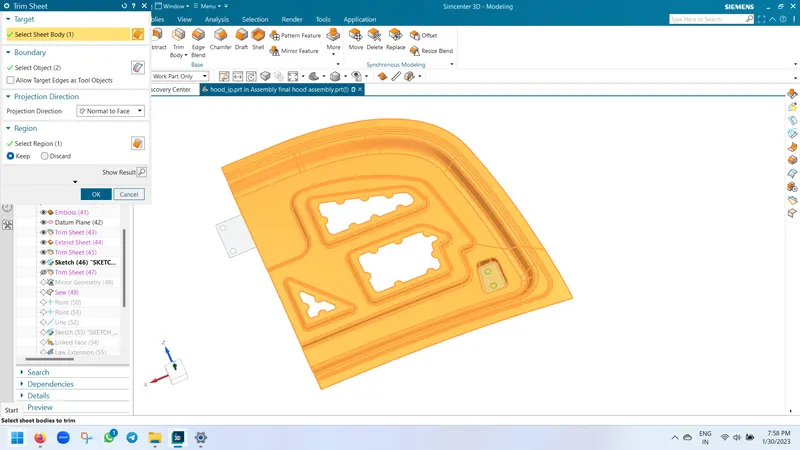
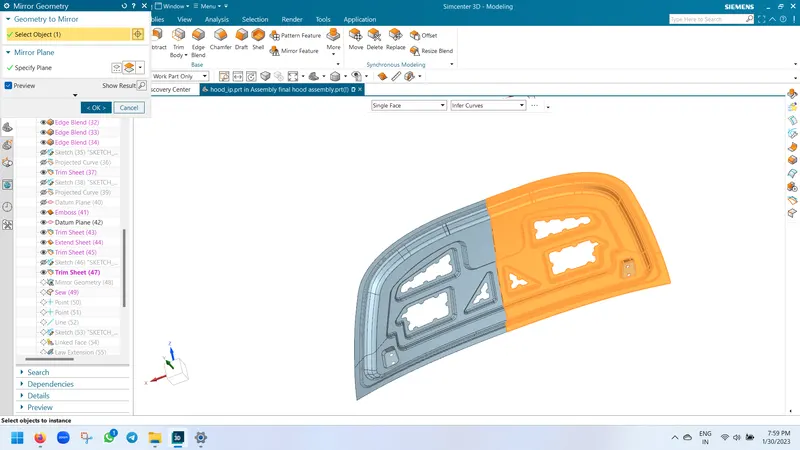
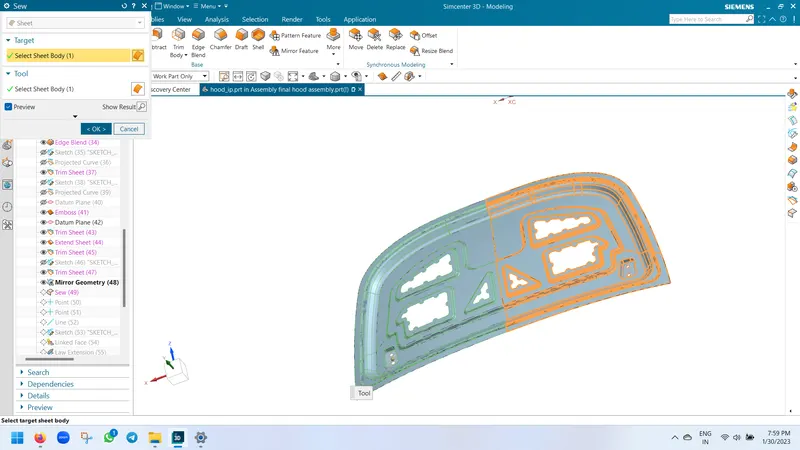
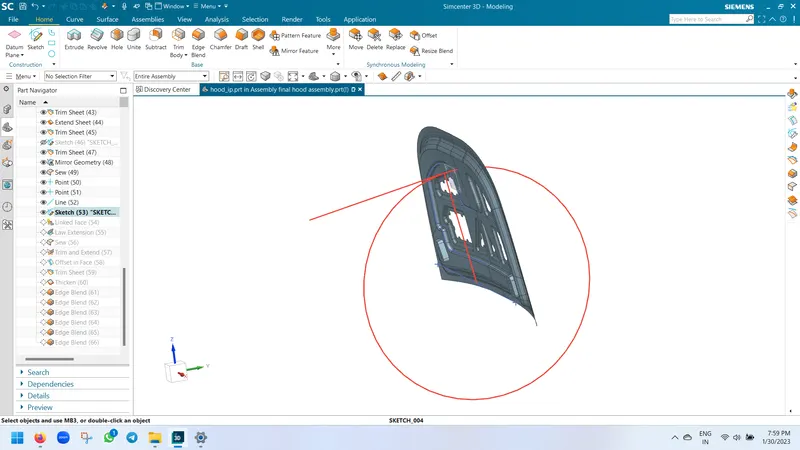
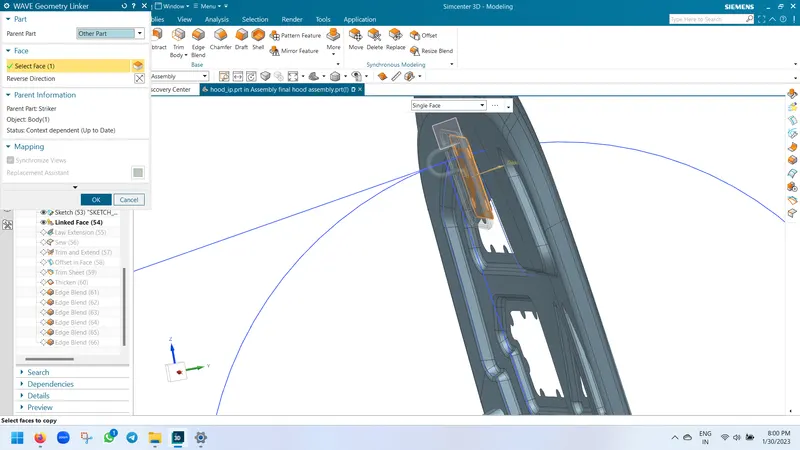
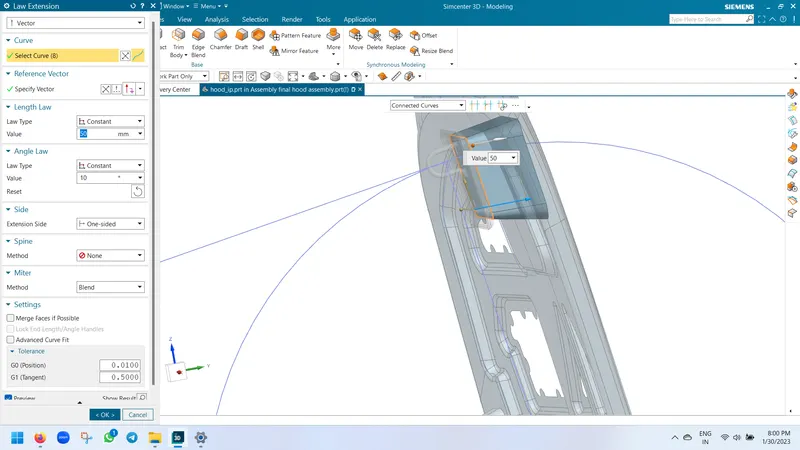
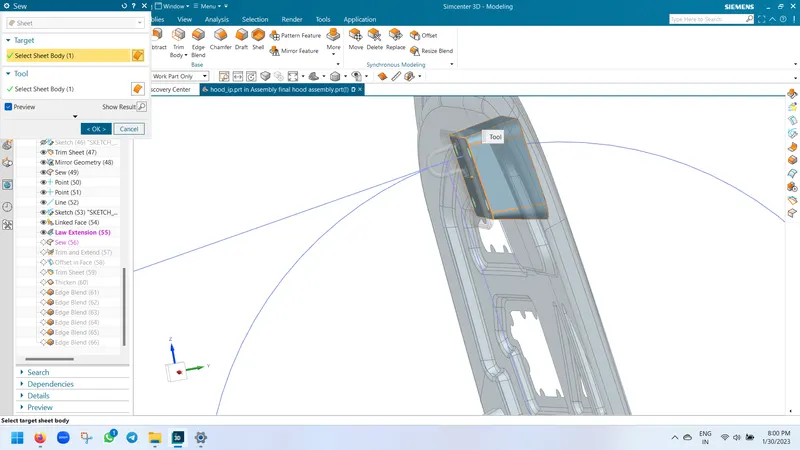
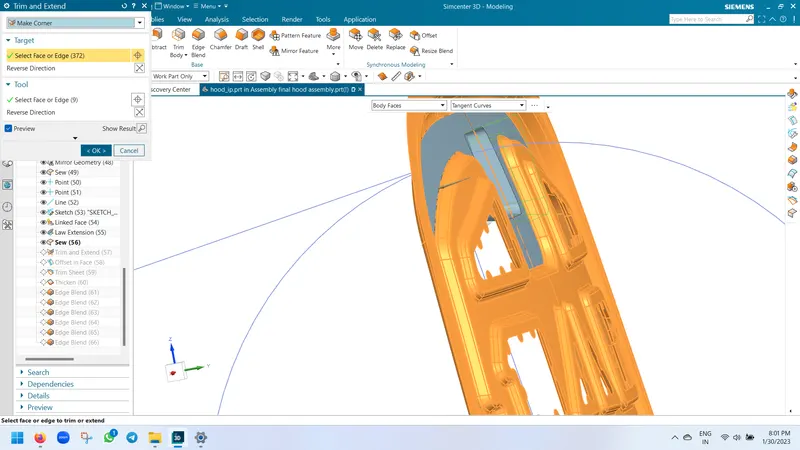
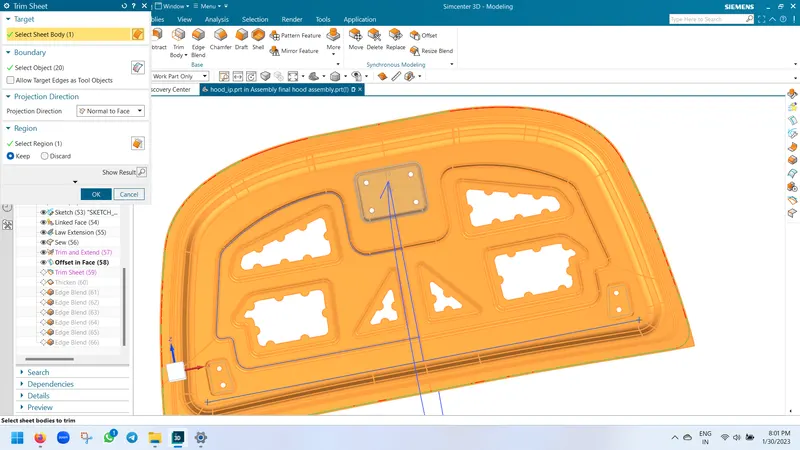
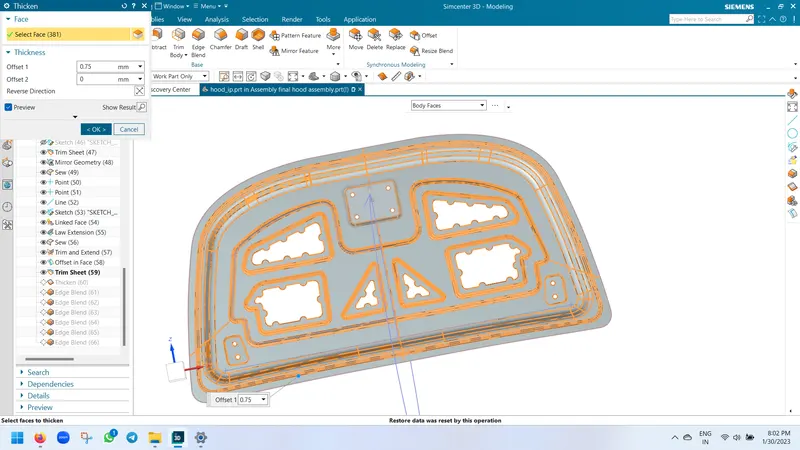
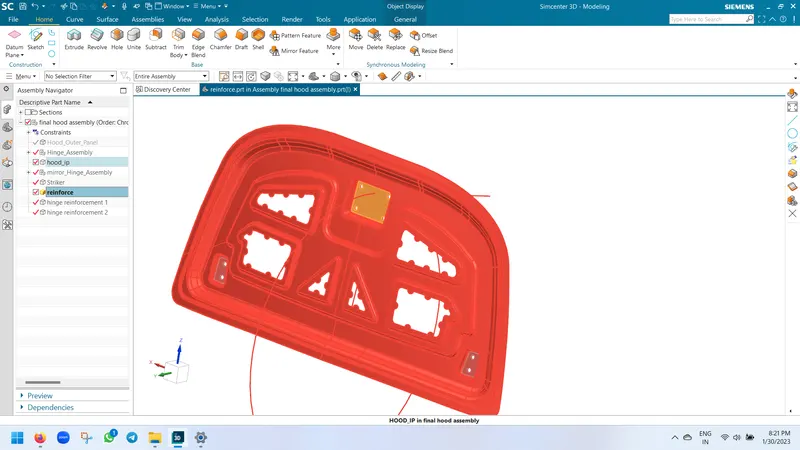
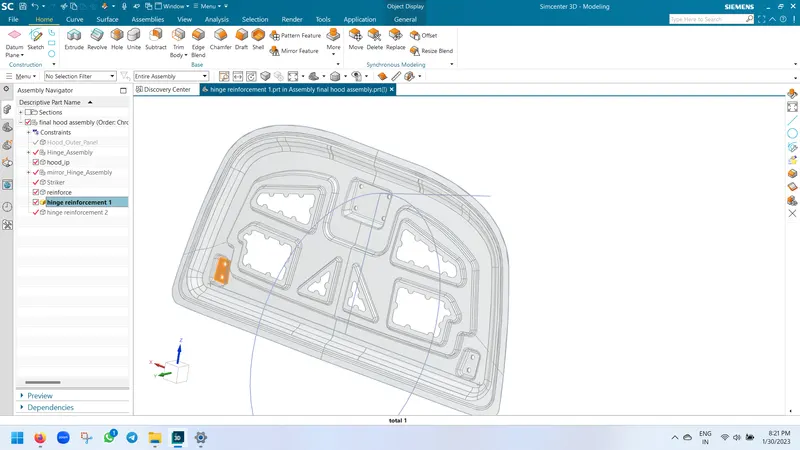
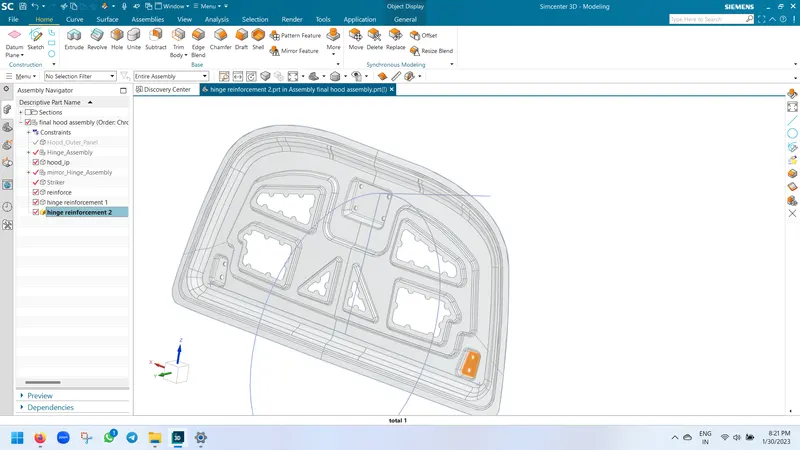
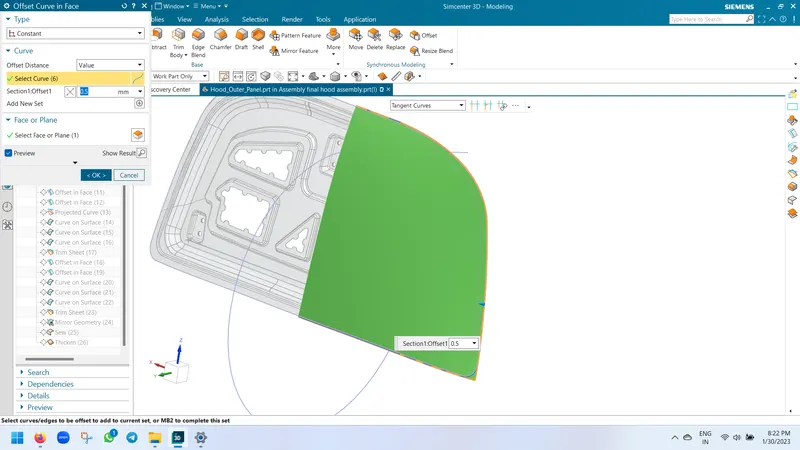
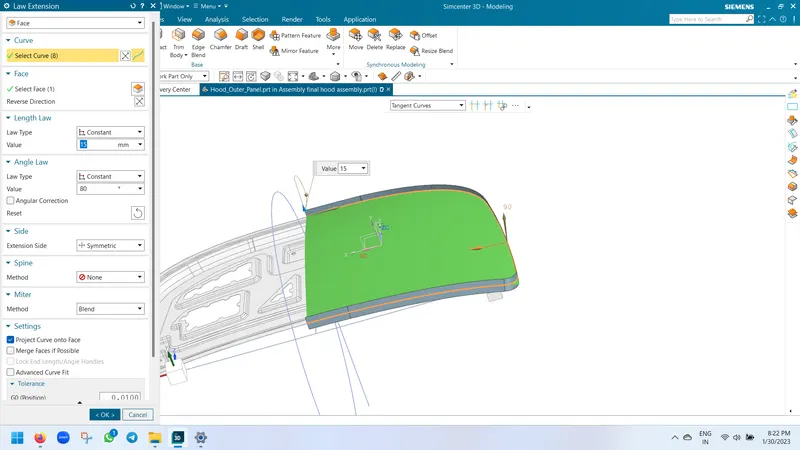
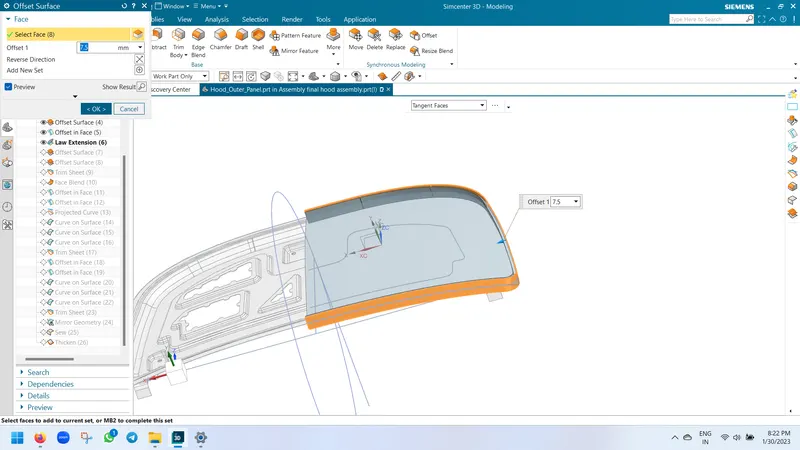
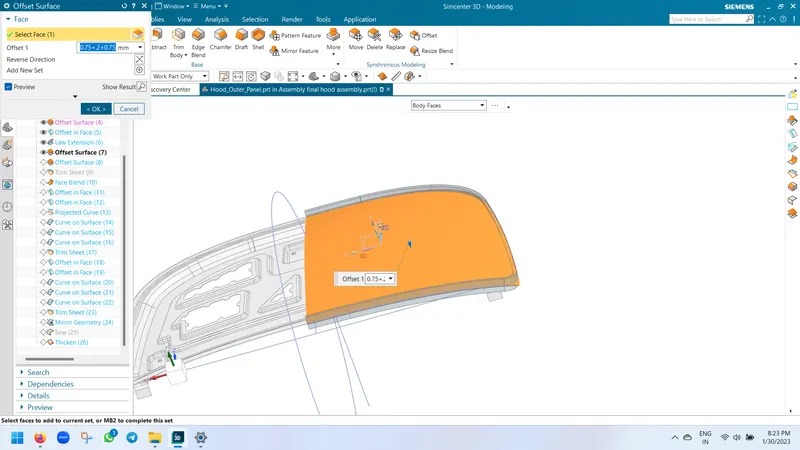
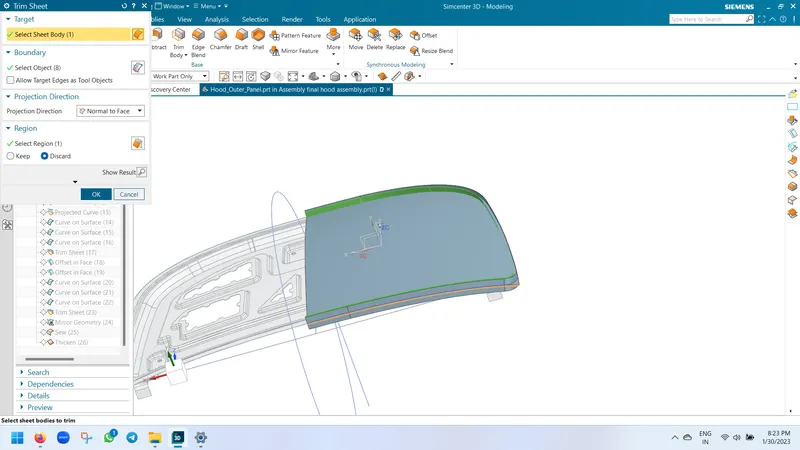
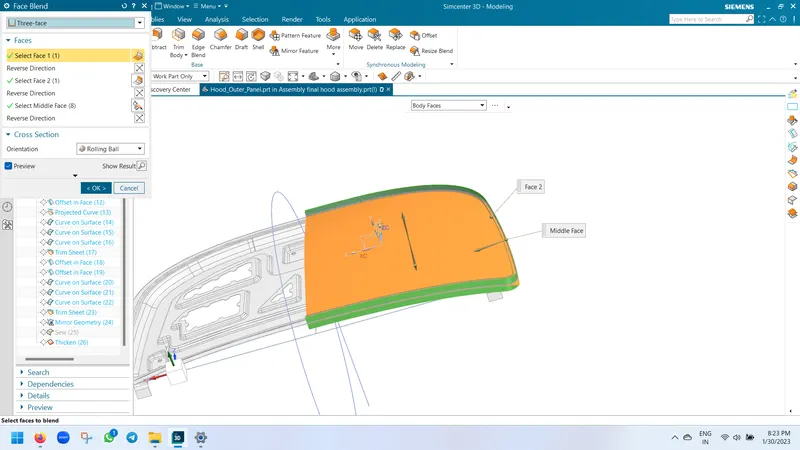
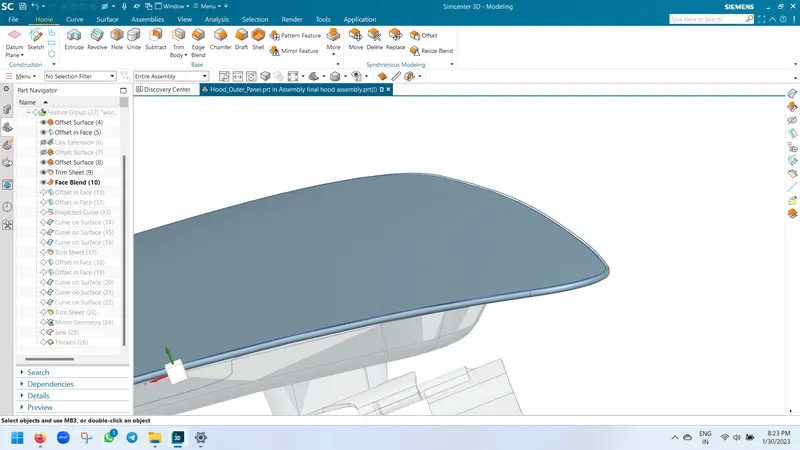
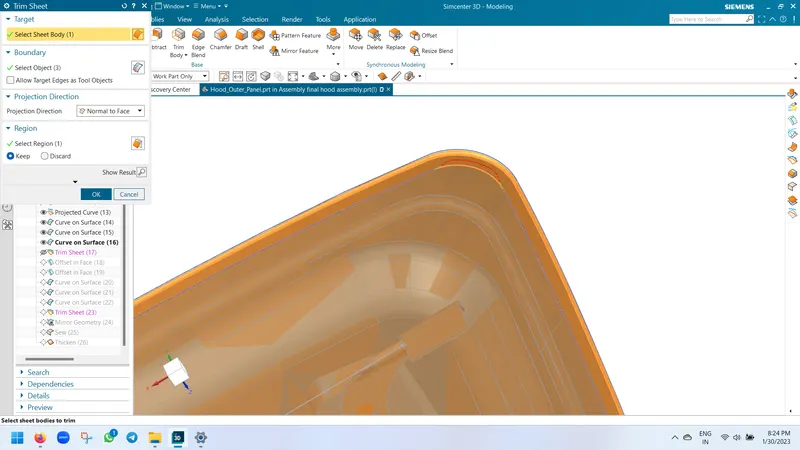
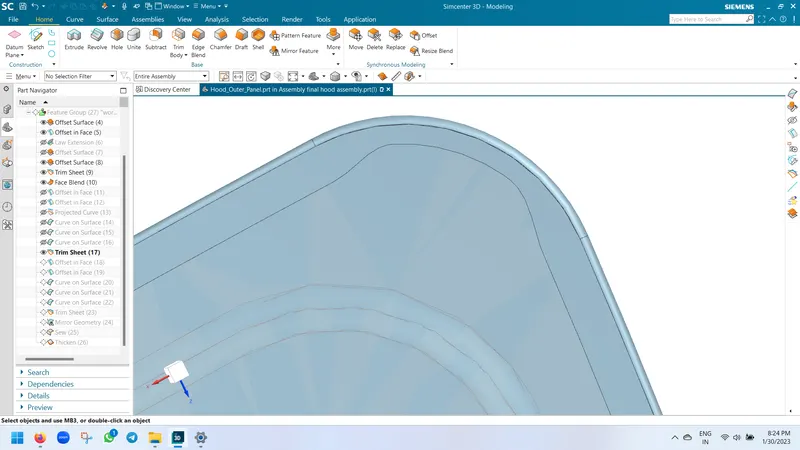
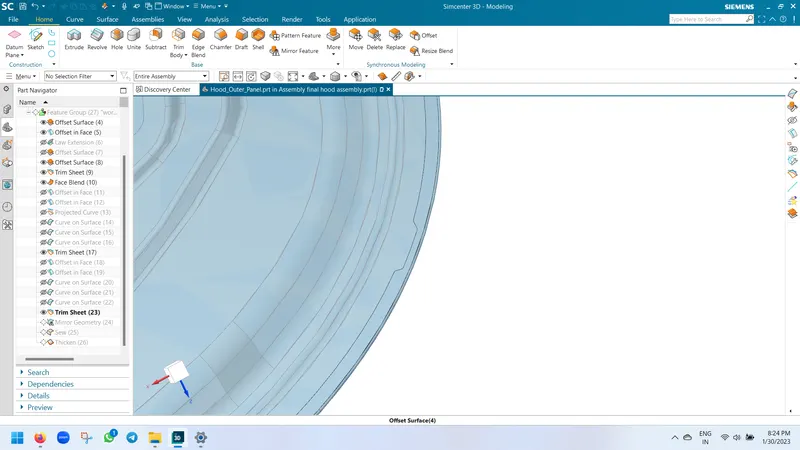
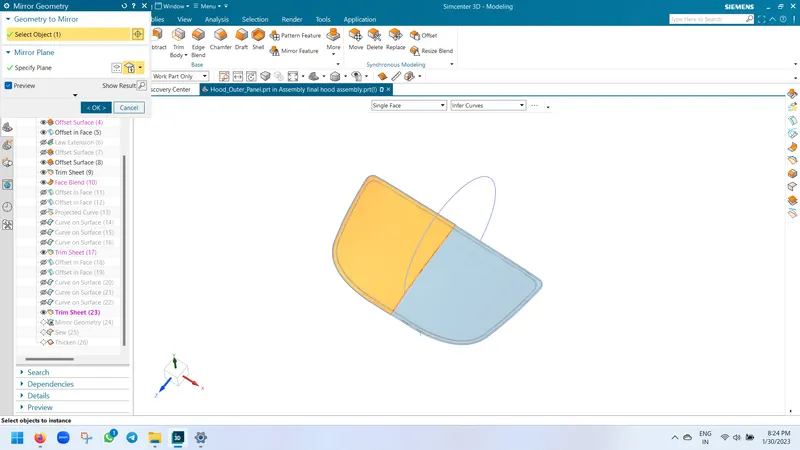
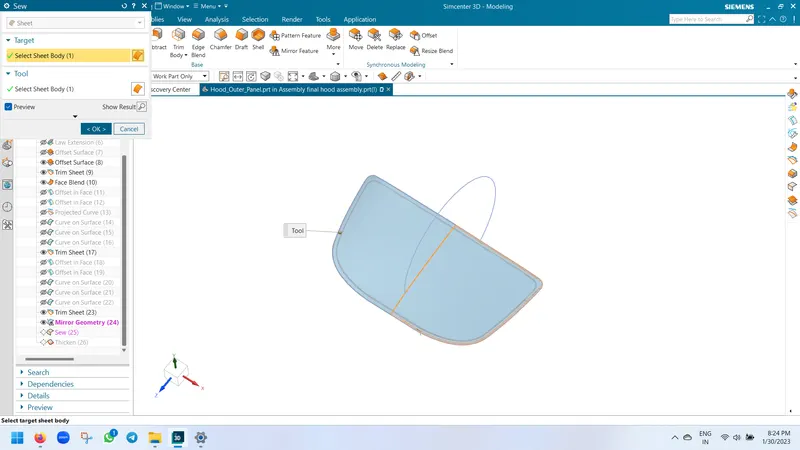
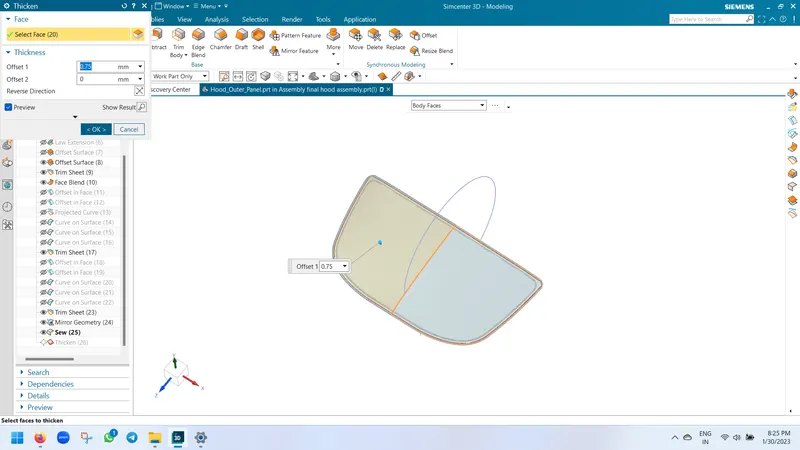
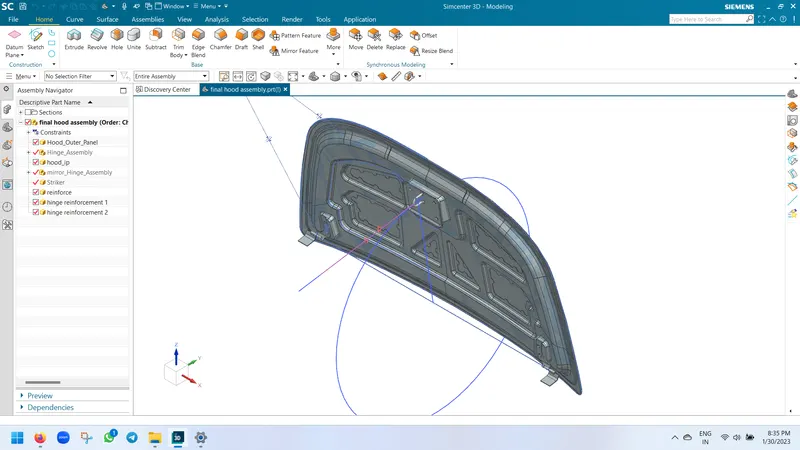
Different orientations of the final part:
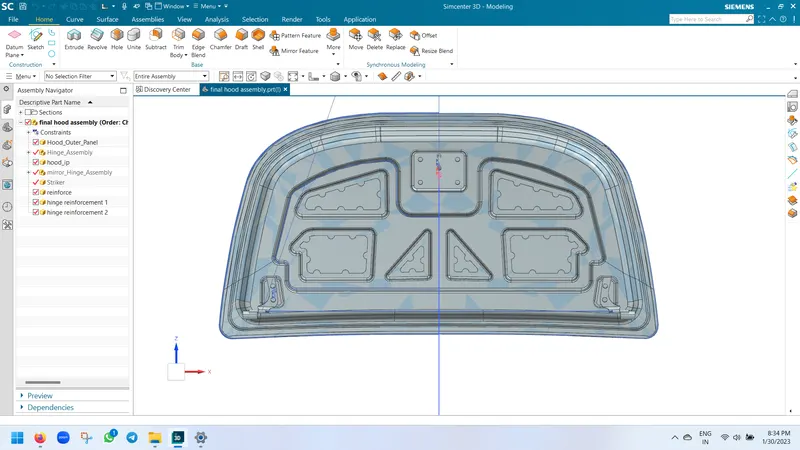
Top view:
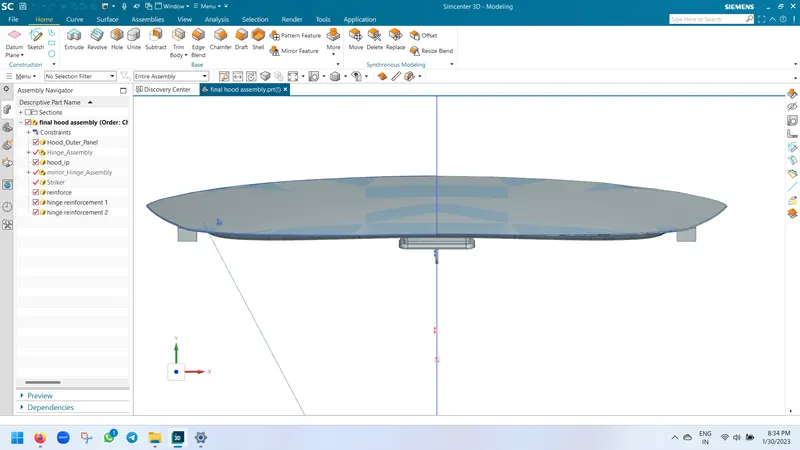
Front view:
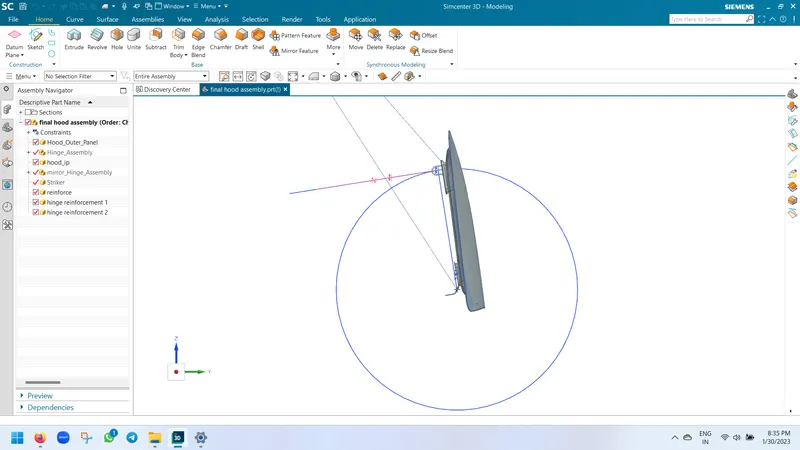
Side view:
Isometric view:
Report:
Hood design:
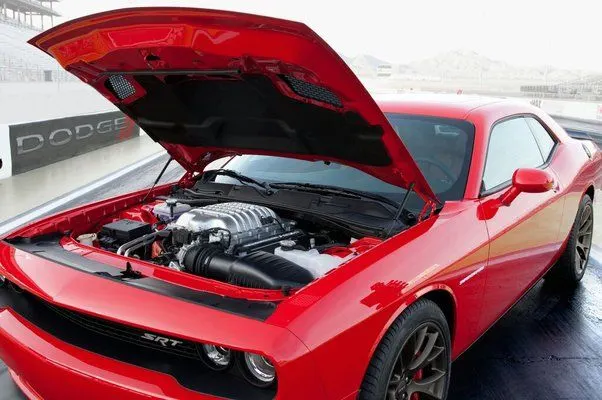
The hood is the main component of a car at the front portion. It is used to decorate the car & add a luxurious look. The shape of the bonnet is made aerodynamic in order to minimize the air effect.
Purpose of Hood Design:
- Save and safety of purposes inside the car.
- Cover all engine parts and radiators.
- Reduce the Air effect due to the design's aerodynamic shape.
- provide access to the engine for repair and maintenance.
- reduces engine noise, providing you with a quieter drive.
- It can also help keep the paint underhood last longer.
- it can give motorists more time to get out of their cars before the fire blazes out of the hood.
Hood design consideration:
The hood of a car is considered the frontal BIW enclosure component. Bonnets are designed to reduce air resistance as the air flows around the car. Apart from this, bonnets are also designed to meet several other requirements.
They serve a great deal of purpose in protecting the passengers inside the car & the pedestrians in the event of an accident. It also acts as the cover for the engine.
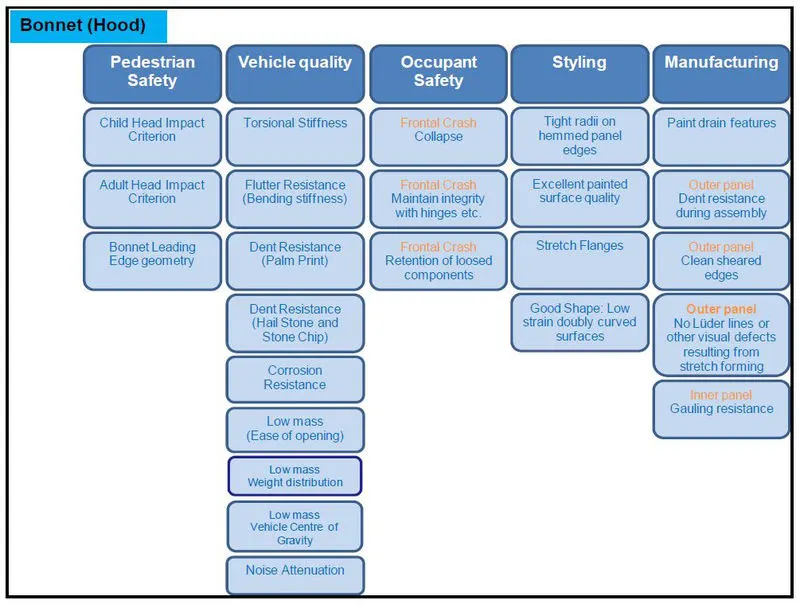
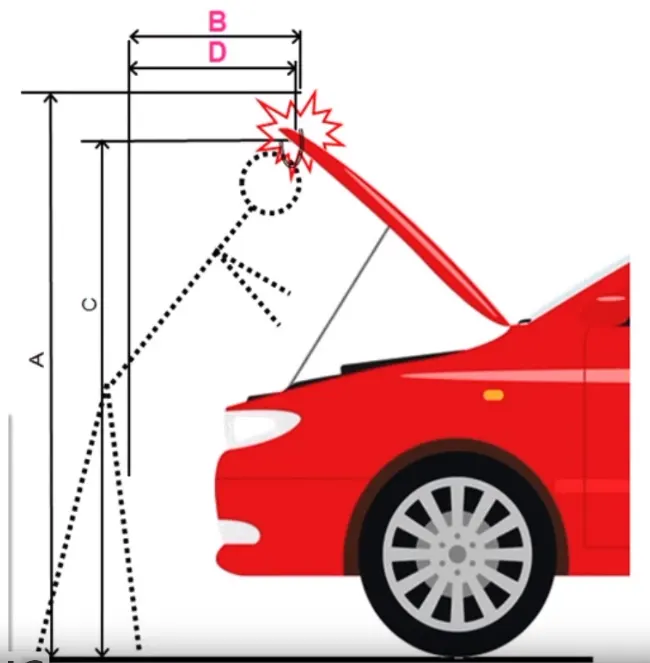
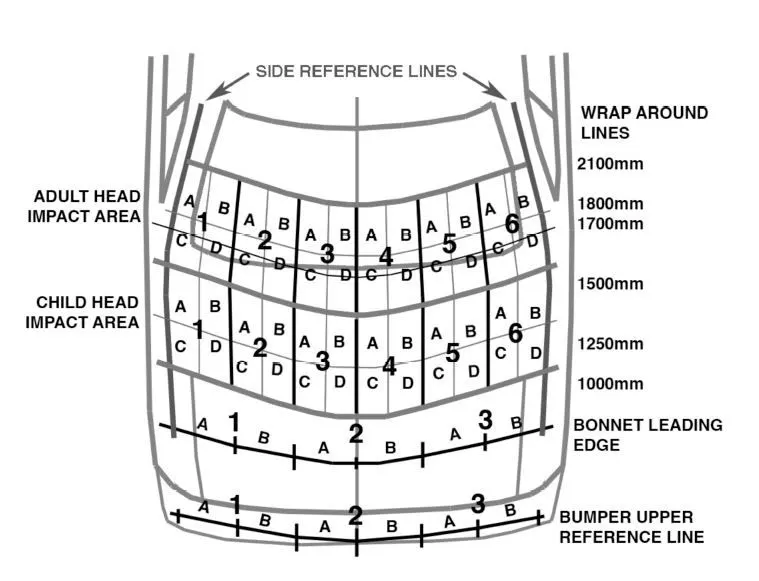
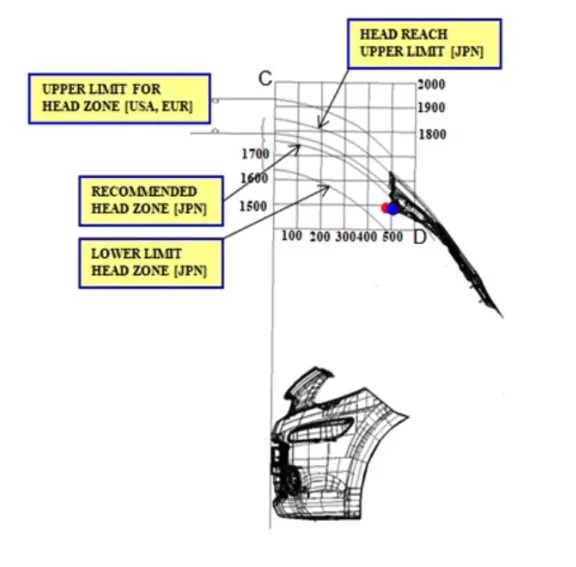
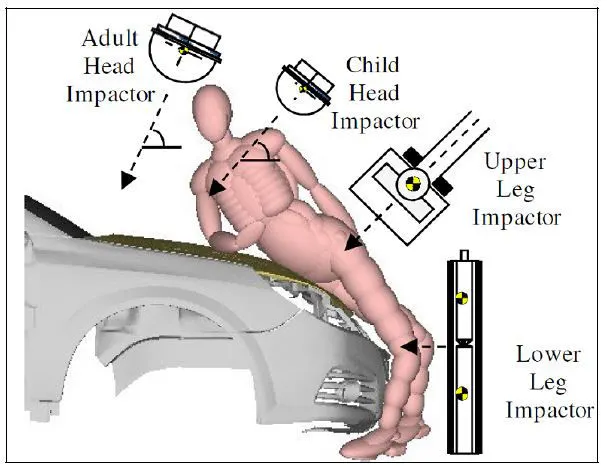
The European New Car Assessment Programme (Euro NCAP) is a European car safety performance assessment program that has developed test specifications & rating systems for assessing pedestrian injuries during impacts with the front of vehicles such tests include a series of tests using impacts designed to bio-mimic a collision at speed of 40 km/h.
They describe a situation in which a pedestrian is situated laterally & a car first hits one of his legs. Tests are conducted on the leg, upper leg & most importantly the head, as head trauma is most commonly responsible for casualties.
So to avoid severe injuries to the head, the high-impact area for adults & children is subjected to less thickness. Also, no reinforcement should be provided in that area as during head collision, the hood will absorb the head impact energy leading to the collapse of the hood & thus protecting the severe head injury.
Another important criterion for the hood design is the protection of the occupants inside the car during a front collision. The design of the hood should be in such a way that during the collision, the force should travel in an upward direction through the embosses & directed towards the body of the car. Thus protecting the occupants inside.
Following parts are used in hood assembly for this report,
- Hood outer panel
- Hood inner panel
- Hinge assembly
- Striker assembly
Hood thickness-
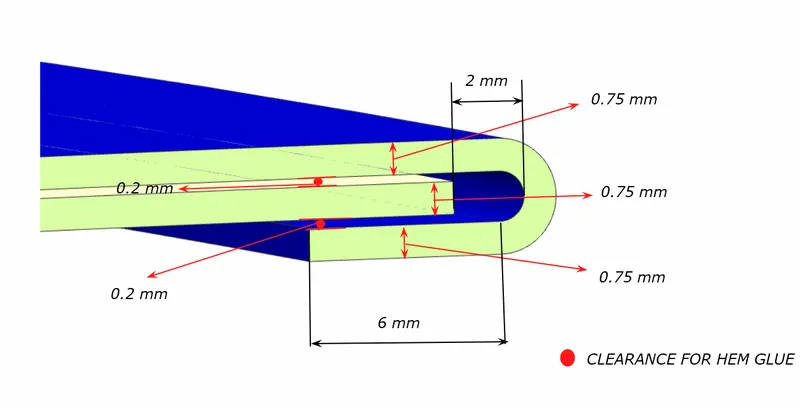
Outer panel thickness= 0.75 mm
Inner panel thickness= 0.75 mm
Reinforcement thickness= 1.5 mm
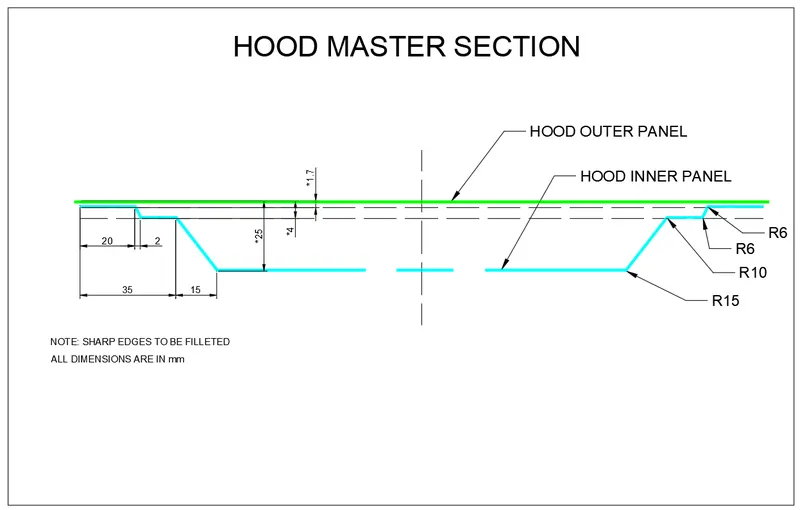
Inner Panel:
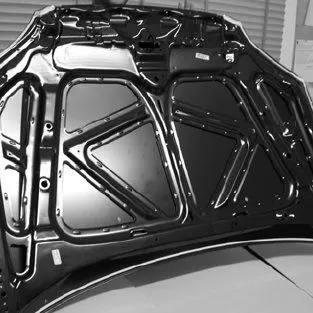
- In the inner panel only we can research & implement the safety of pedestrians & as well as the driver. In this panel only we can attach the reinforcement, embossed, mastic points, etc.
- It is an object of the present invention to provide a hood inner panel capable of reduction of a reaction force of the hood inner panel even if the level of deformation of a hood of a vehicle increases, & ensuring a sufficient energy absorption capacity.
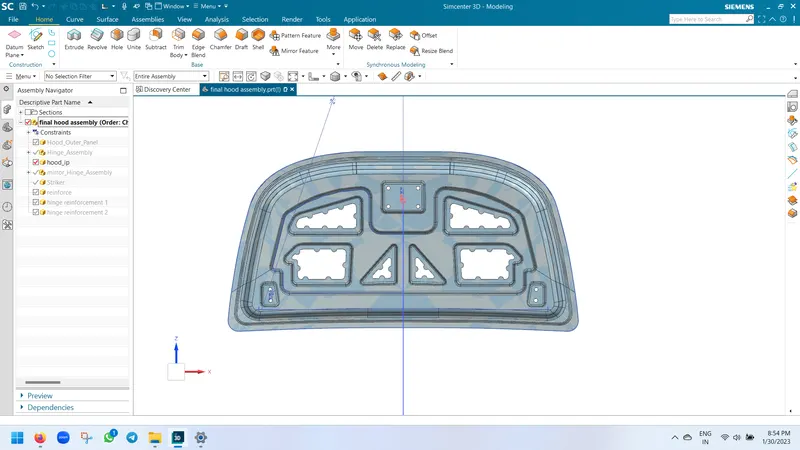
Outer Panel:
We can also call it the cover of the inner panel. It is the part, which gives luxurious look to the hood or bonnet. Outer & inner panels can not join by any welding process like spot welding or rivet, which spoils the outer look of a car. The outer panel generally extracted the model from the prototype design.
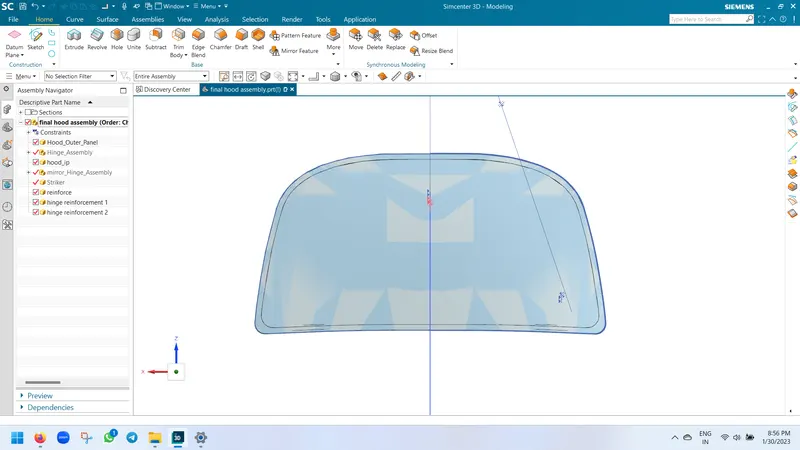
Mastic Data Design:
- The main purpose of the outer panel is for aesthetic looks. Thus we cannot use bolts or welding. This has to be done with the help of hemming and mastic sealants. Mastic sealants are elastic compound that behaves like rubber. It is placed between the outer and inner panels. Initially is it in paste form, but after the hot furnace bath, it gets hardened thus joining the outer and inner panels. Mastic sealant has the tendency to increase the strength of the panel and has the influence of 80mm diameter.
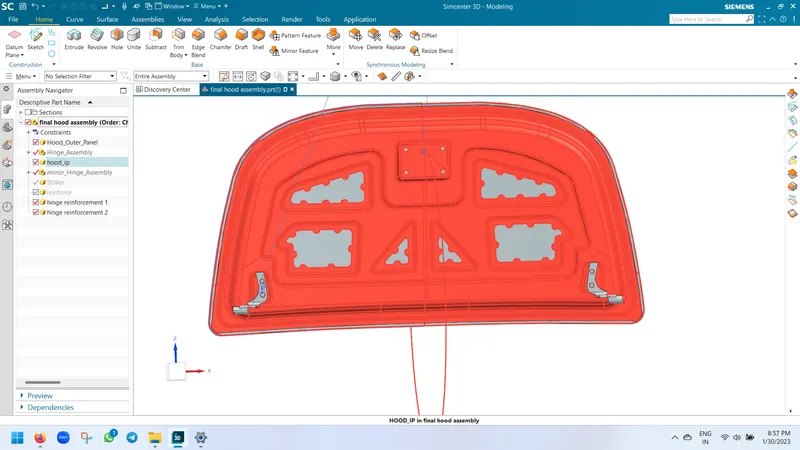
Hinge Assembly:
A hinge is a component that fixes the hood to the fenders of the car. The latch must be fixed perpendicular to the hinge axis so that the hood opens or closes properly.
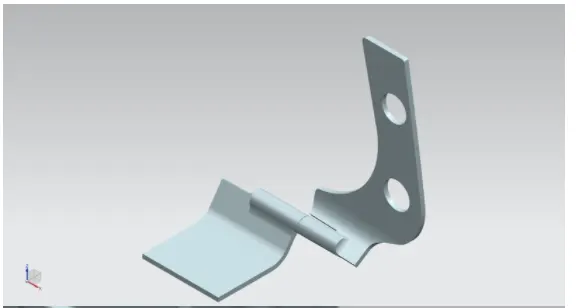
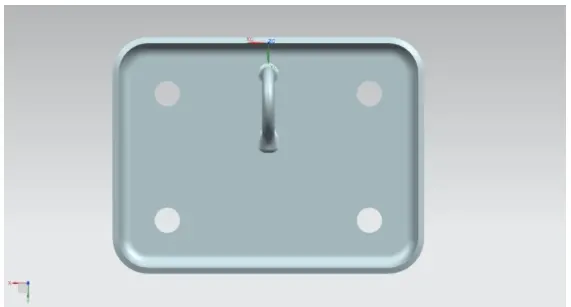
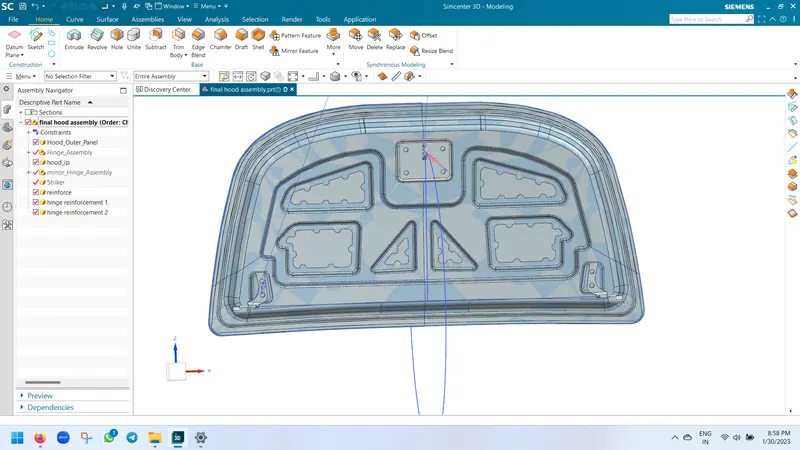
Striker Assembly:
Latch & striker is used for locking the hood of the car. It is usually placed in the space provided on the inner panel.
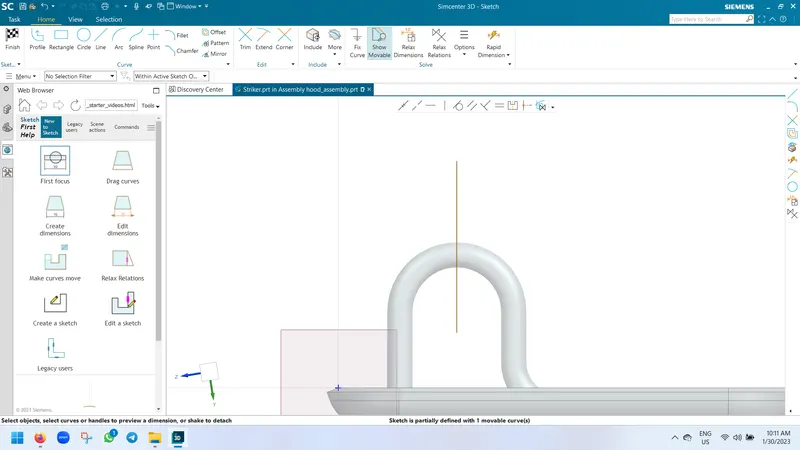
Latch trajectory:
While opening or closing the hood, the latch must be perfectly aligned with the fixing or striker point. For that, the latch's trajectory must be perpendicular to the hinge axis.
Reinforcements:
Vehicle hood reinforcement structures as provided to reduce impact in collisions. In one embodiment, the structure is to include a lower reinforcement panel configured to mount to a vehicle chassis and an upper reinforcement panel welded to the lower reinforcement panel wherein the deflection of a front deformable wall of the upper reinforcement panel is configured to trigger deflection of the rear deformable wall of the lower reinforcement panel.
Relief data:
- Relief is provided onto the part or component in order to remove any stresses developed in a particular area i.e sharp corners that take place during the hemming process are carried out. Thus corners are rounded or chamfered
Sheet Metal Operation Sequence Wise for Hood Design:
1. Deep Drawing Operation:
- Deep Drawing of sheet metal is used to form contains or objects with depth. it is a Plastics deformation in which a flat sheet or plate is formed into a recessed three-dimension part with a depth several times the thickness of the metal. The process of deep drawing begins with a flat sheet metal blank held on the upper surface of the die.
- A deep drawing process is used for the manufacturing of the inner panel. The material used is aluminum as it can absorb twice the crash energy of mild steel, lighter, dent free, and can make body panels thicker while still lowering the weight.
Purpose Deep Drawing Operation:
- Operation in which the thickness of the shell wall is reduced and its surface smooth. When materials get compressed between the punch and die, which reduces the thickness and increase the height of the cup.
2. Blanking and Piercing Operation:
Blanking and piercing are shearing processes in which a punch and die are used to modify webs. The tooling and processes are the same between the two, only the terminology is different: in blanking the punched-out piece is used and called a blank; in piercing the punched-out piece is scrap. The process for parts manufactured simultaneously with both techniques is often termed "pierce and blank." An alternative name for piercing is punching.
Purpose of Blanking and piercing:
- Reduce Body weight.
- Improve the Strength of the Body.
- Distribute Impact Force.
- Improve Mileage of Car.
3. Embossing:
- The sheet metal embossing operation is commonly accomplished with a combination of heat & pressure on the sheet metal, depending on what type of embossing is required.
- A sheet metal is drawn through the male & female roller dies, producing a pattern or design on the sheet metal. Depending on the roller dies used, different patterns can be produced on the sheet metal.
4. Hemming Operation:
- Hemming is a sheet metal forming process in which sheets are joined by bending them to 180°. Automotive body panels and automotive parts such as deck lids, trunk lids, doors, hoods, and tailgates are formed by the hemming process. In this process, usually, a sheet is bent with the help of the inner sheet in three different stages.
- Hemming is a forming operation in which the edges of the sheet are folded or folded over another part in order to achieve a tight fit.
Purpose of Hemming Operation:
- Hemming is a sheet metal forming operation in which the edge of the sheet is folded back on itself. It serves several purposes: to fasten two sheet metal parts, to improve the appearance of edges (remove burrs and rough edges), and to increase the part stiffness.
Conclusion:
We have designed a hood that falls under the rules & regulations of the manufacturer's standards.