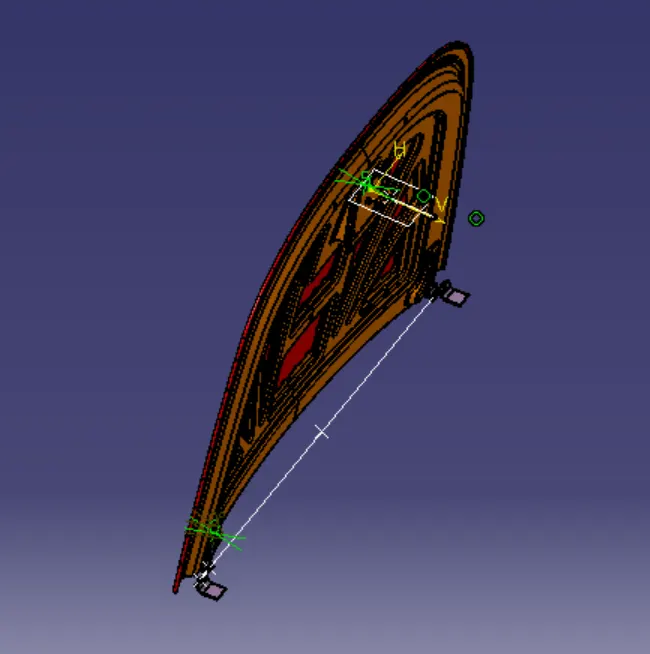
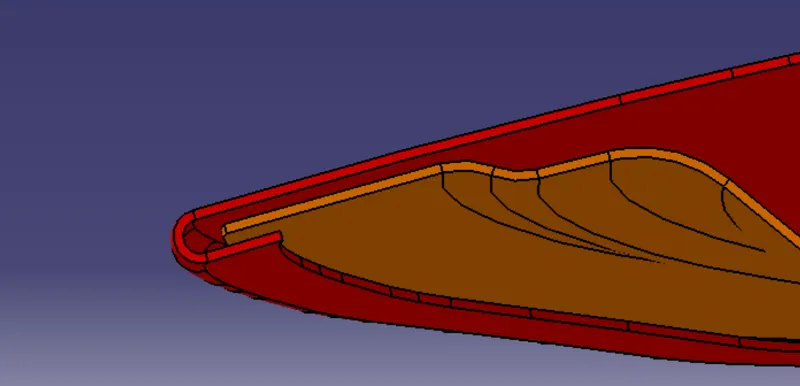
Hood design-Week 2
HOOD DESGIN
The hood is the hinged cover over the engine of motor vehicle. The car's hood consists of an inner and an outer panel. The inner panel provides strength, while the outer panel is just a metal cover. The underside of the hood is often covered with a sound - absorbing. Hood can open to allow access ot the engineengine compartment for maintenance and repair. A typical hood assembly consist of hood outer panel, inner panel , latch and striker, hinge hood stay.
Hood mainly consist 4 components
Inner panel, outer panel, hinges and latch striker
DESIGN METHODOLOGY
I have used a top- down Method to designing a hood.
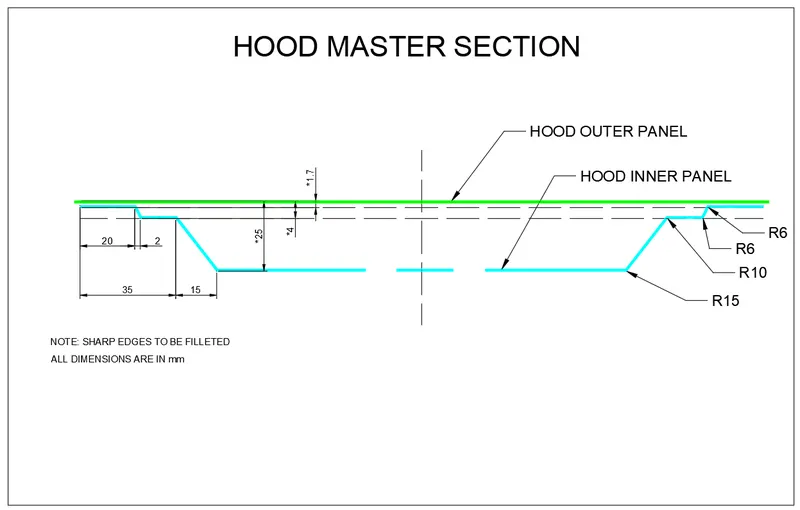
The master sketch is nothing but a desgin principle of sketch workflow.
MASTER SKETCH
DESGIN CONSIDERATIONS
Head clearance zone , consideration of noise vibration , Harshness: noise, vibration And harshness (NVH) Also know as noise and vibration N&V is the study and modification of the noise and vibration characteristics of vehicle Particularly cars And trucks.
Pedestrian rating
Pedestrian safety is important consideration while designing the hood.the pedestrian are the most vulnerable road users and are at High risk of traffic accidents. While the head Is laid on the hood that specific portion should absorb the energy insted of resisting.
Warp around distance
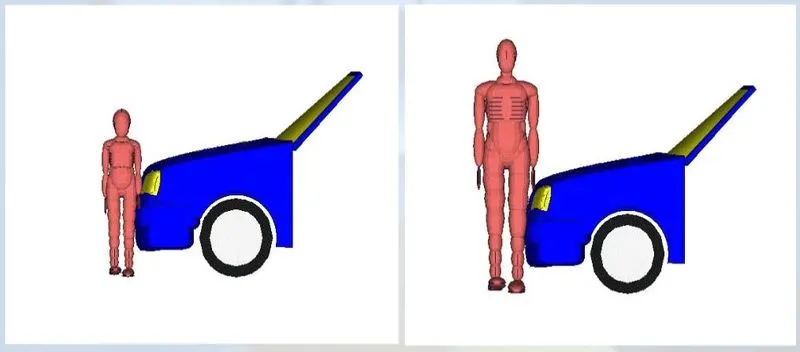
When a car crashes on a pedestrian the whole body warps around the front shape of the car. And the head impact on the widescreen.
The distance on which the head the car from the ground is called ( WAD) .
Child's head impact zone = 1000mm to 1700mm (3.5kg)
Adult head impact zone = 1700mm to 2100mm(4.5kg)
Force distribution
The force should be spread like a wava instead of single direction. It will drastically reduce the impact on the passengers.
By adding emboss we can achieve this
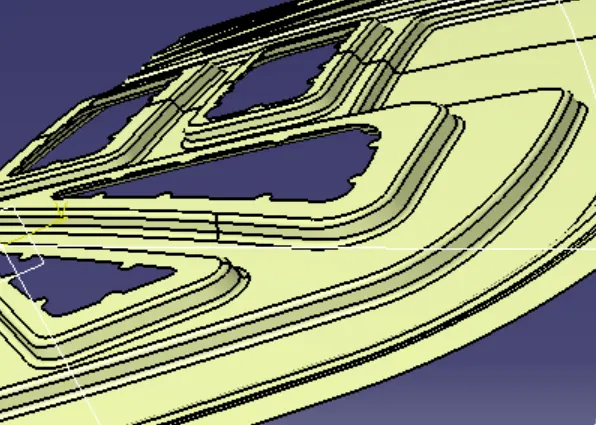
EMBOSS
HOOD COMPONETS
The car hood consists of following components,
1) Hood Outer Panel
The outer panel works as a metal cover. It is responsible for aesthetics of the vehicle.
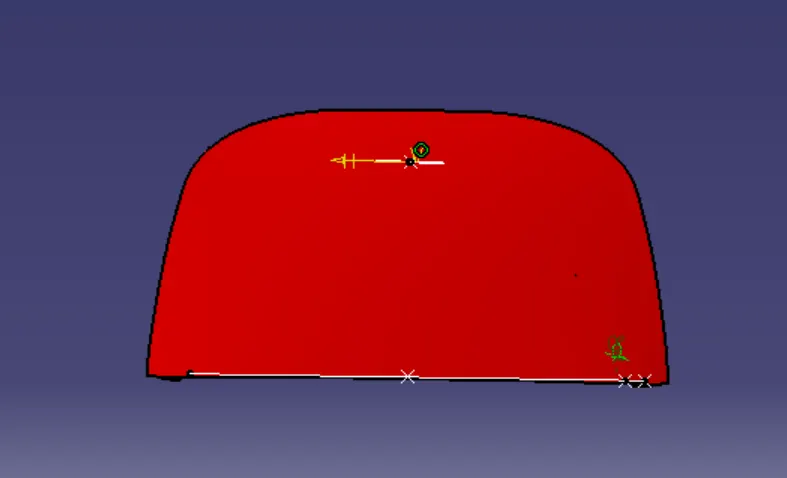
Hood Outer Panel
2) Hood Inner Panel
The inner panel provides strength and supports the outer panel. It is where hood balancer and hinges are attached.
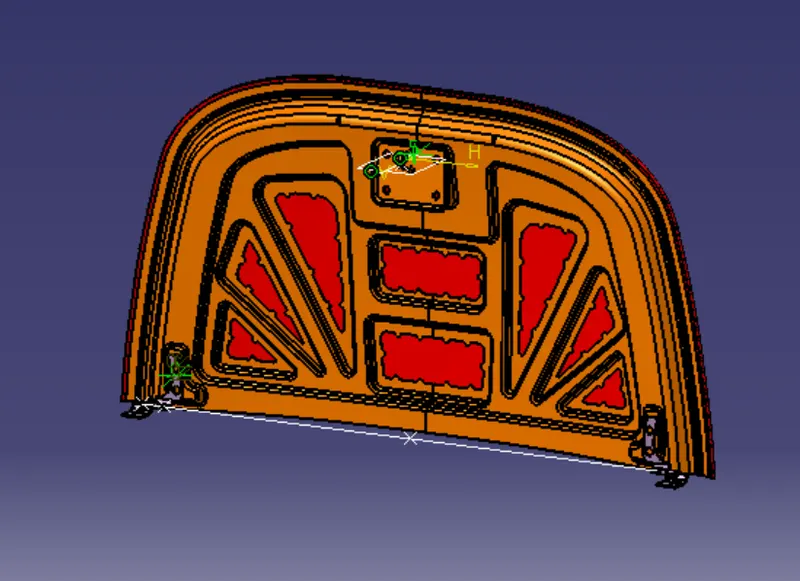
Hood Inner Panel
3) Hinges
Hinges allow the hood to rotate around a fixed axis for opening and closing movement. One part of the hinge is fixed with the engine compartment, while other part is connected to hood.
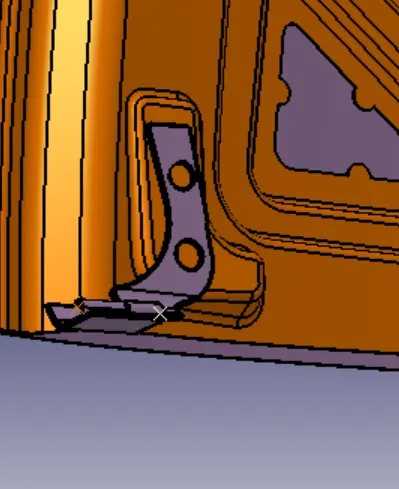
Hinge Assembly
4) Latch and Striker
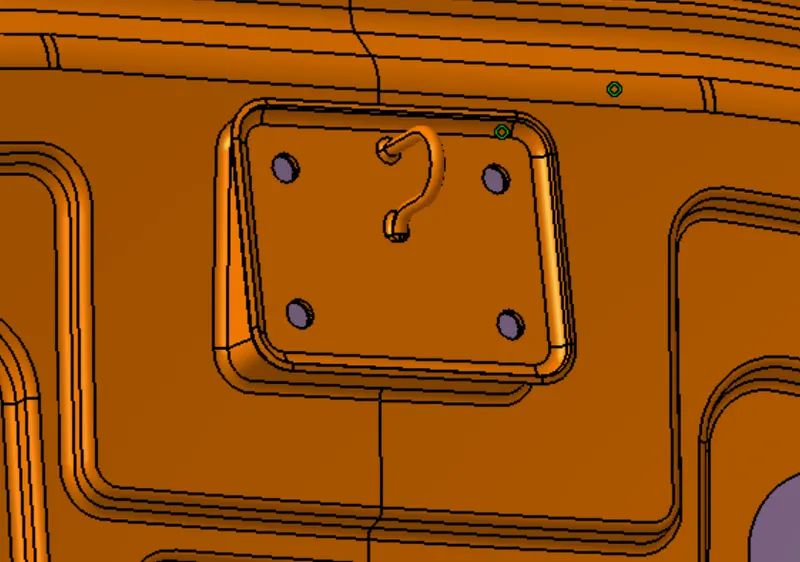
Latch and striker mechanism is provided to lock the hood, in order to prevent accidental opening of the hood during driving. The latch is present on the engine compartment while the striker is attached to inner part of hood.
Car Hood latch striker
5) Support Rod
It is a device that supports the hood in open position. It is also called as hood balancer rod.
6) Latch Trajectory
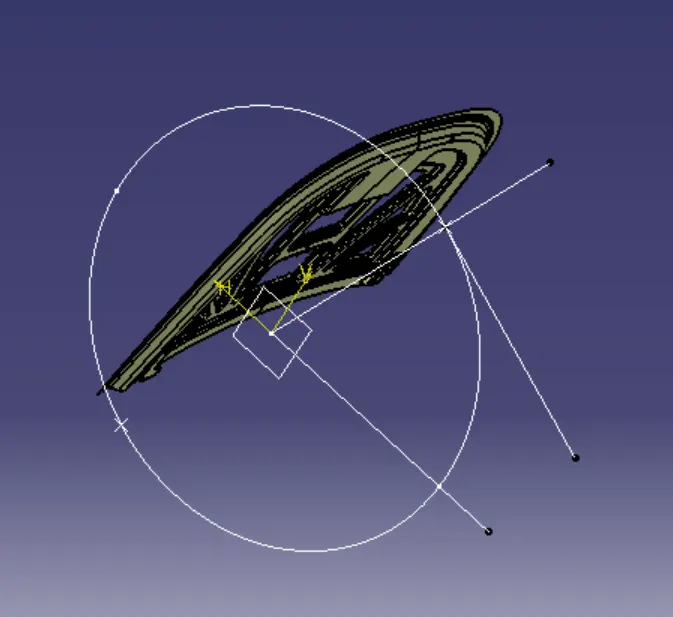
Latch trajectory is given by the circle drawn from the hinge axis point. Hinge axis point is the centre point of the hinge axis. First, we can fix either the latch or the hinge. If we have fixed the hinge position then we should plot the Trajectory circle for the latch. For proper mating condition the striker axis through the tip of the striker should be tangential to the latch trajectory.
7) Emboss
We provide different embosses throughout the inner panel . We can increase the stiffness of the inner panel through these embosses. The shape and size of the embosses also determines the direction of the force distribution resulted from frontal collision. The force should be always distributed away from the passengers. Here in the figure the embosses are designed in such a way that the force is directed to either sides of the car.
8) Mastic data
MAstic is the sealant applied between hood's outer panel (which is styling surface) and hood's inner panel. Mastic Sealant have 80 mm diameter range of effect which holds and joins the outer panel and inner panel having 5mm thickness.