Hood design-Week 2
HOOD DESIGN OF A CAR
Aim:
To create and assemble the inner and outer panel of hood and fixed reinforcement of hood by following design rules and master section.
Introduction:
Hood:
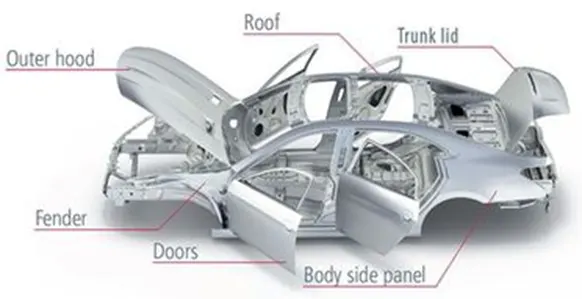
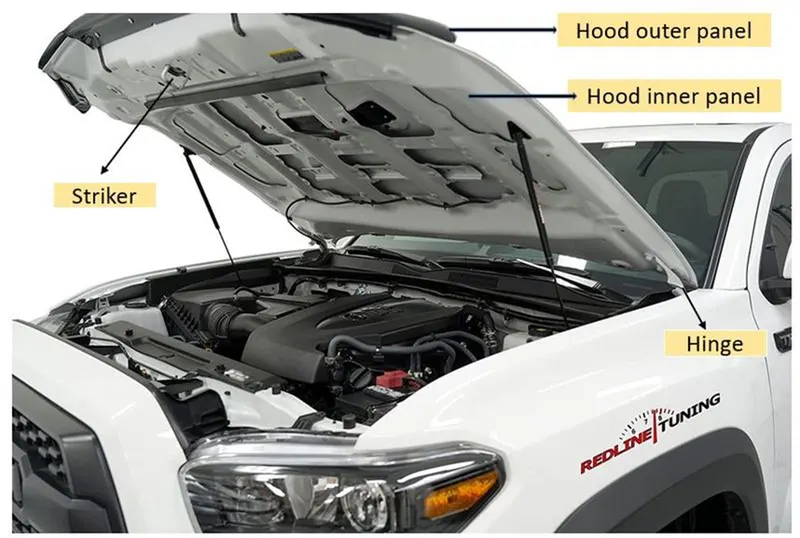
Hood is also called as bonnet. It is one of the BIW part of car. It consists of inner and outer panel. Hinge system and striker. Inner panel gives strength and outer panel is cover and gives appearance to the car. Hood beside part is covered with sound absorbing material. Hinge gives rotation to the hood. It is rotating in one axis. Two hinges fixed in two corner side of hood. Striker locks the hood with main body.
Hood main purpose is which covert the engine component of car. It is designed by open and closing system because of maintaining the engine parts and services and other purpose. Sometime hood scoop, wiper jet and hood ornament are fixed on the hood. It is fixe for good appearance and other purpose.
Typically, hood is made out of aluminium or steel although in market manufactures manufacture the hoods out of different composites such as fiber glass, carbon fiber or dry carbon.
SAFETY FACTORS IN HOOD:
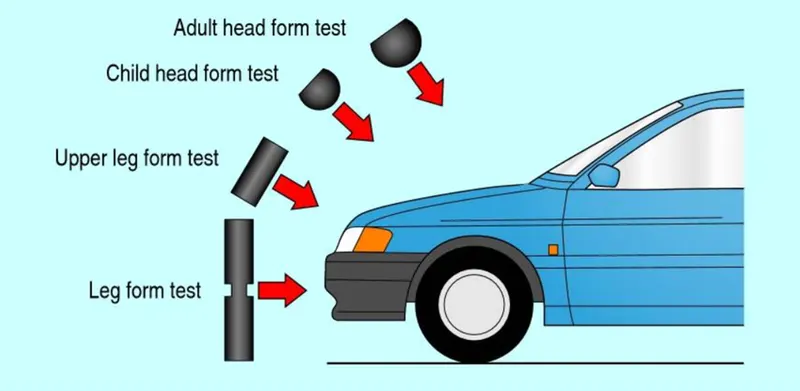
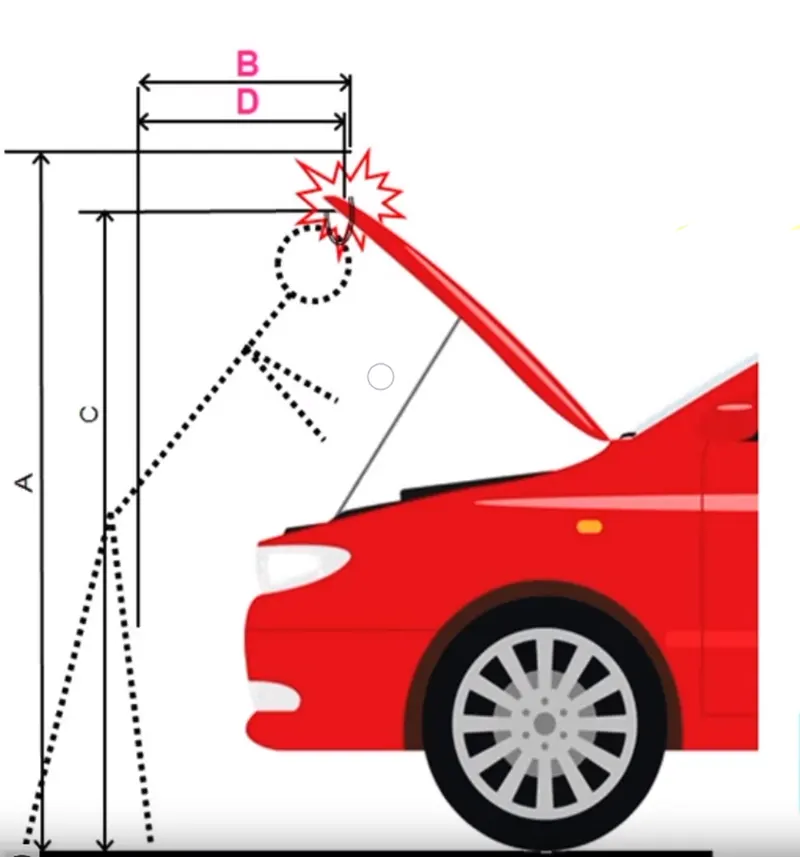
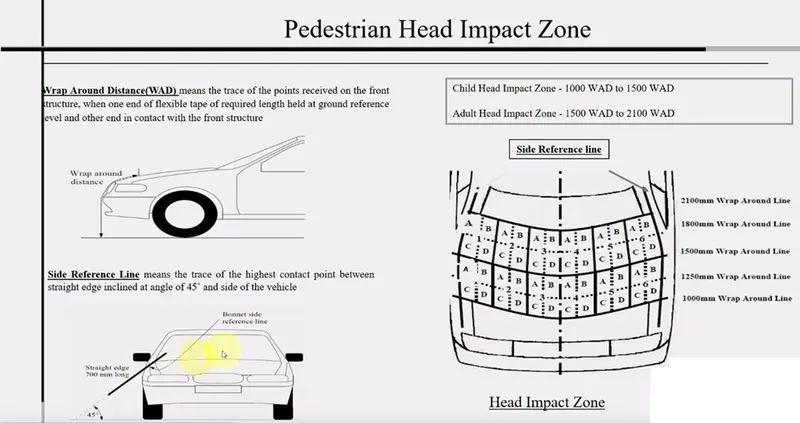
Safety is most important criteria for designer to create the automobile parts who should concentrate on both occupant safety and pedestrian safety. Pedestrian safety is very important because of lot of traffic and accidents. Mostly there is head injury in accident because of hood and ground. So, this is necessary to develop new inner and outer panel with stiffer and more pedestrian friendly. So, head impact analysis is done by different location with adults and children hight. In hood design mostly focused and worked for this factor. Then hood design also compared with previous model and check stiffness and other factors. This stiffness also compared with global stiffness and finalized the new design of hood. And also, analysis the probability of impact in different parts of adults like lower leg and upper leg.
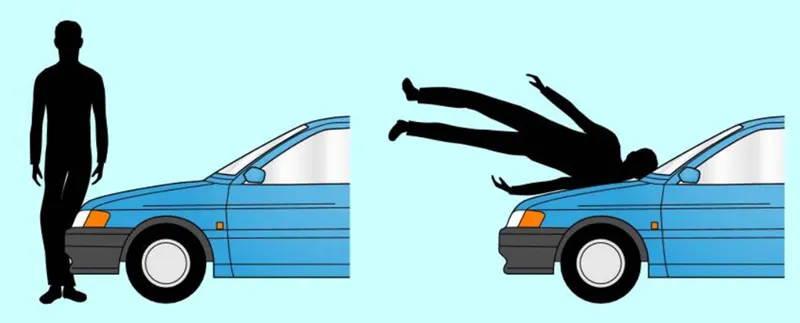
When the hood is in open condition check the probability of head impact also checked. Hood wide distance front side flange also consider in designing.
COMPONENTS OF HOOD:
1.Hood outer panel:
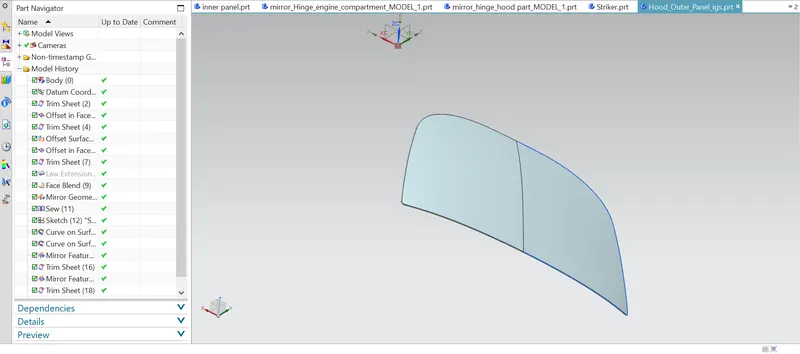
Outer panel is designed by the styling team to give good look. It is actually called the skin of vehicle. It is hemmed with inner panel and cover the inner panel. This part isn’t welded with inner panel. Using of the sealant and mastic points are connected them and hood get good stiffness. hood scoop, wiper jet and hood ornament are fixed on the hood. Hood ornament is fixed for good appearance and give individual look. Wiper jet is used for clean the outside hood part. Hood scoop is used to allow air to the engine.

Hood inner panel:
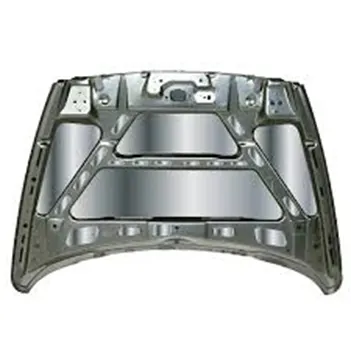
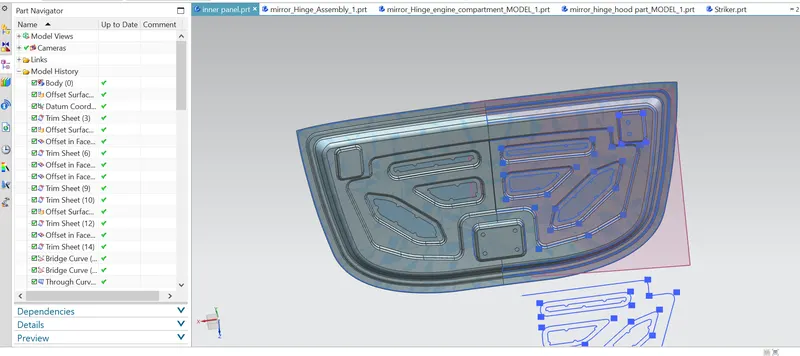
It gives stiffness to the hood and support the outer panel of the hood. Its emboss parts and holes dissipates the force in different directions while vehicle takes crashes. So, very less injures the human and car.
Striker:
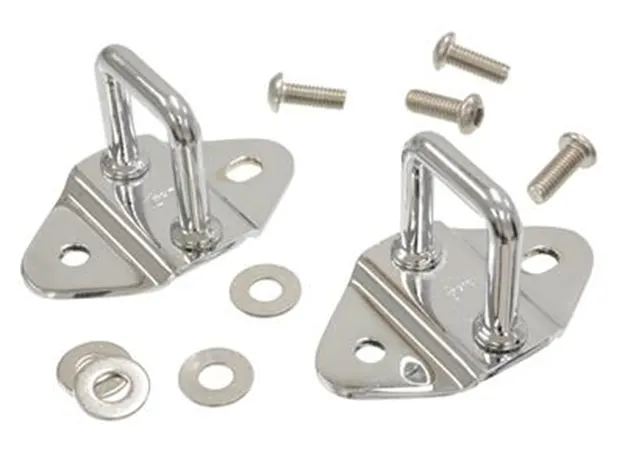
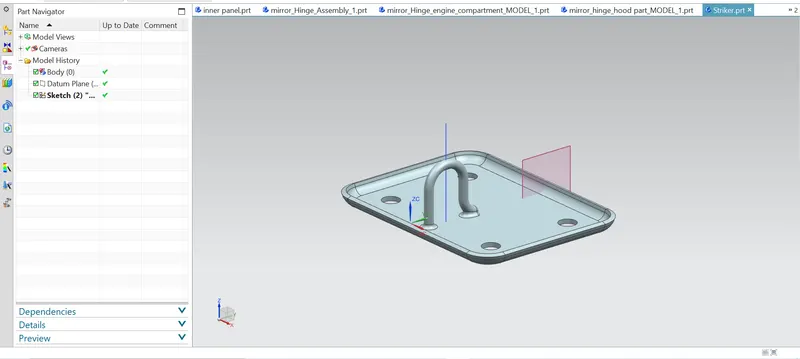
It is lock and unlock the hood in main body of car. It is one type of hook. It is assembled with hood by nuts.
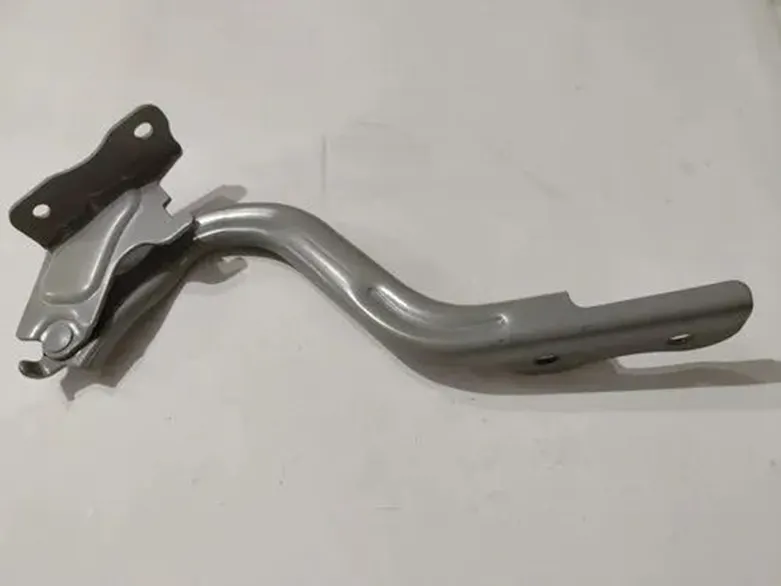
Hinge assembly:
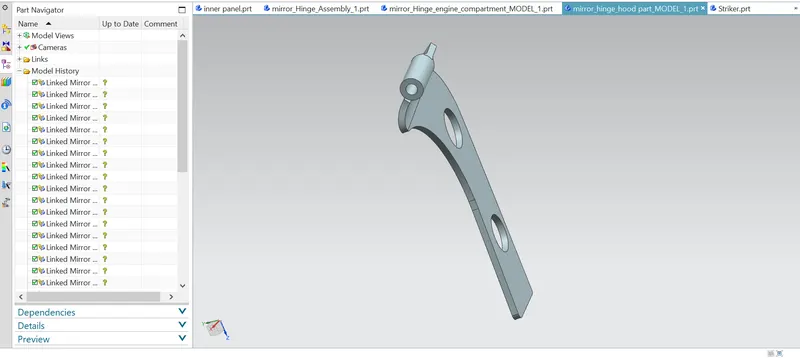
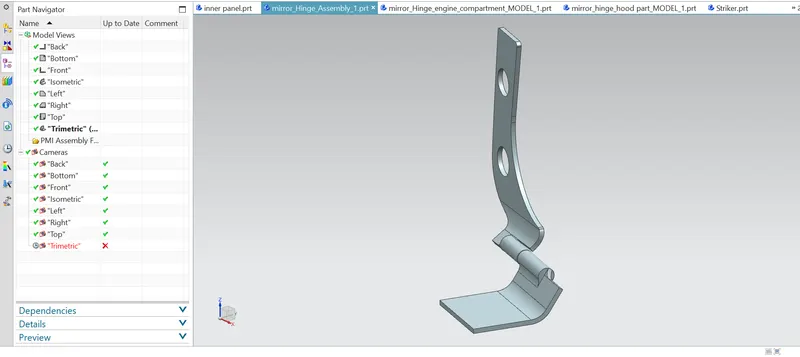
The hinges are placed inside panel of hood. It is used to hood move upside and down side. It is rotating in an axis by rod or fixer. Striker and hinges are also called reinforcement. It increases strength also.
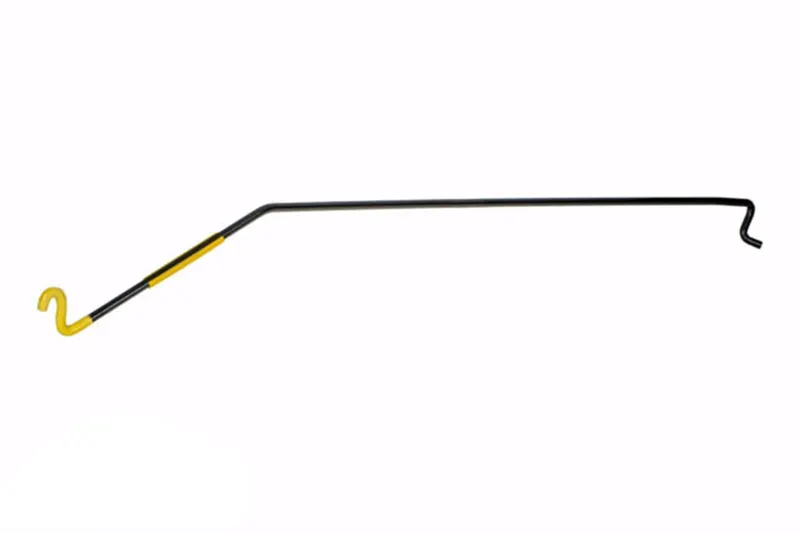
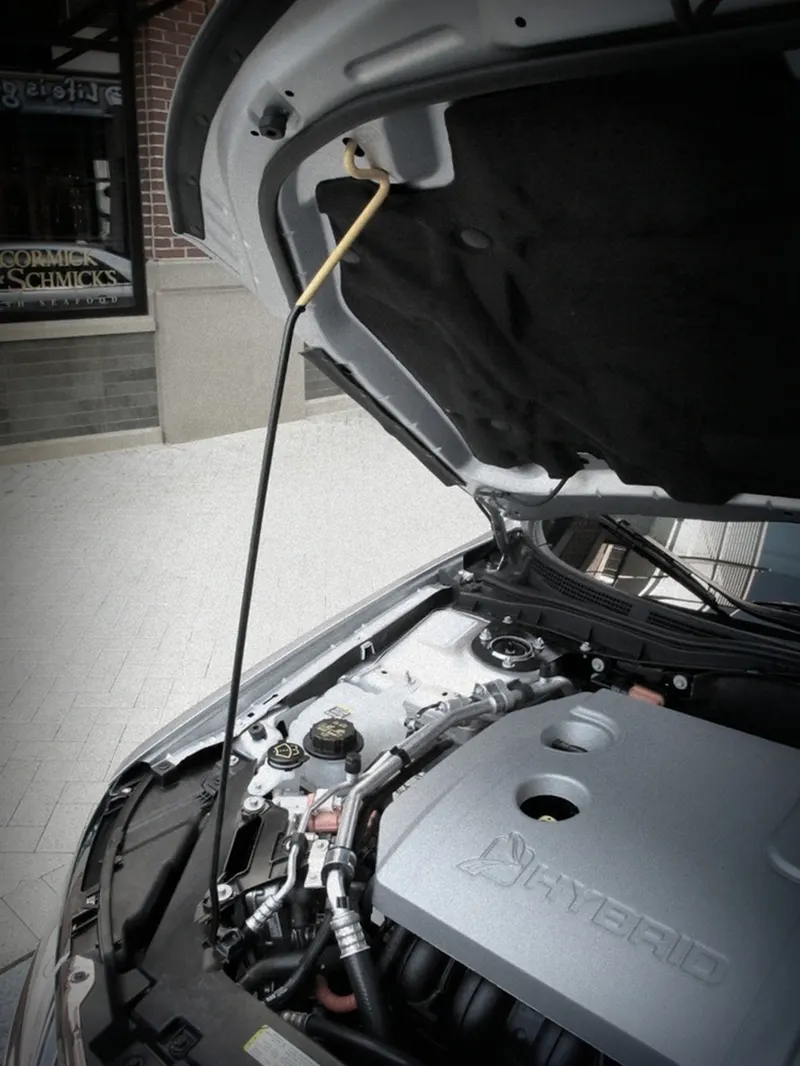
Support rod:
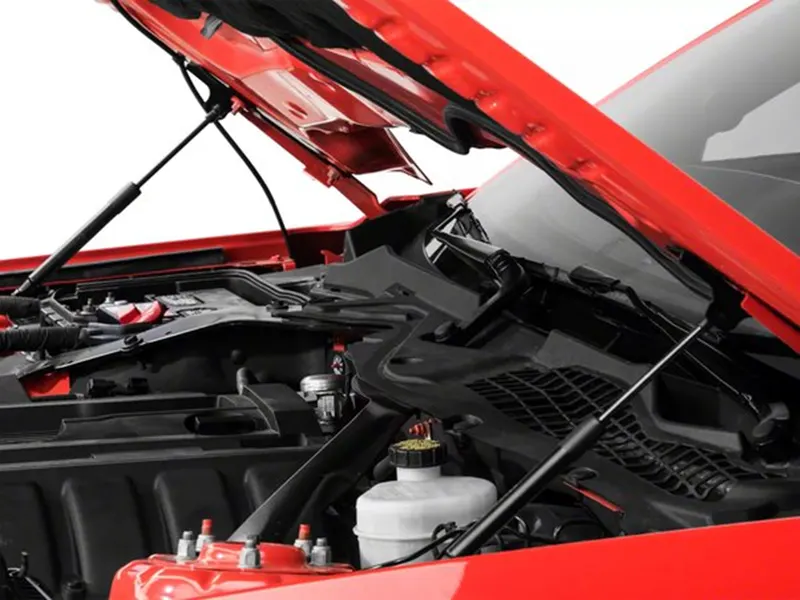
It is places on the engine components. It keeps the hood or support the hood while hood open condition. One end of the rod is fixed with inside assembly of engine component and other side is in free. When hood is opened, manually take support rod and give support to the hood. It is not in straight rod. It has some bands to increase stiffness and strength. Support rod is generally mounded opposite side of engine to avoid disturbance while manage battery.
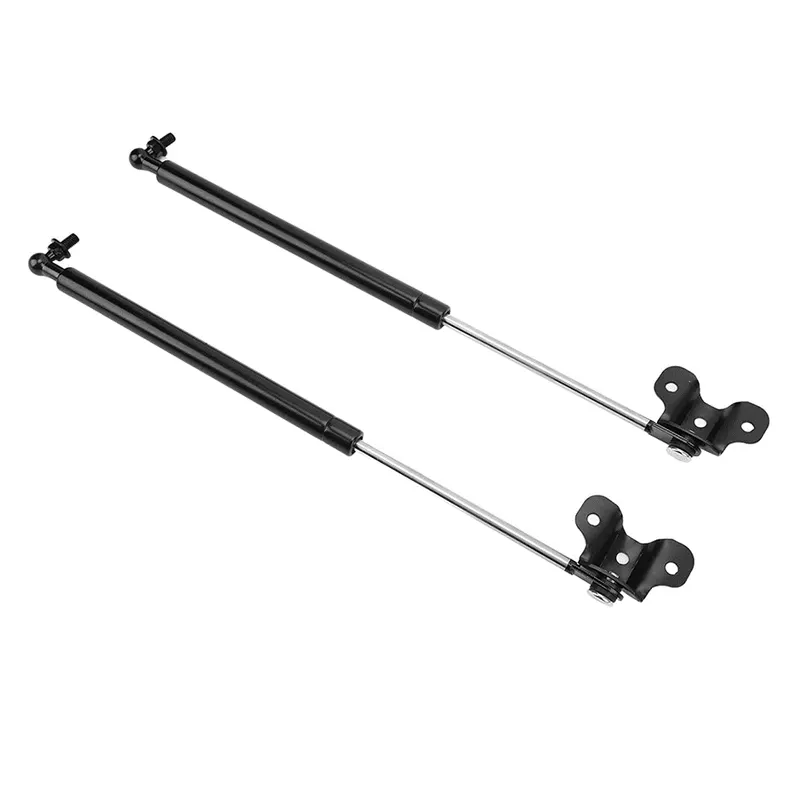
Gas stay:
It is uses to open and close the hood automatically. When the gas compresses this bonnet is open. It has rod type of arrangement. It is mostly used in high weight bonnets. Its cost is high. So, this type of arrangement is mostly fixed in high budget cars.
Manufacturing process of hood:
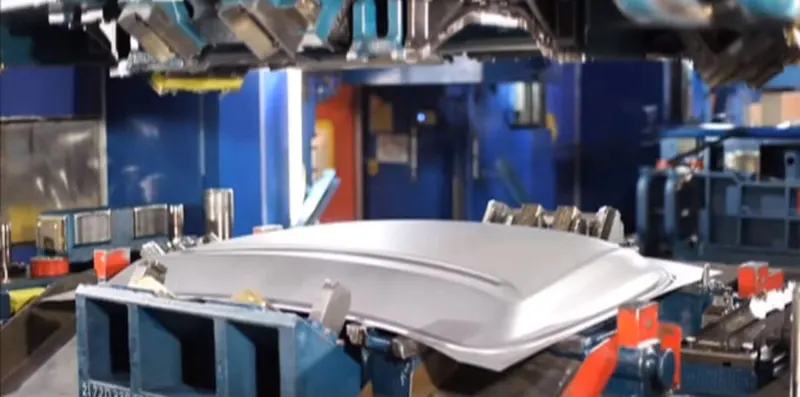
Deep drawing method is widely used to sheet metal forming.
Deep drawing:
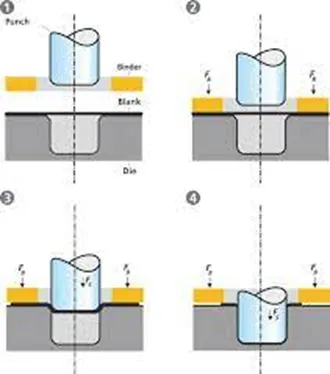
It is one of the forming processes in which process combination of tensile and compressive pressure is given to change flat sheet to hollow sheet bodies.
It is basically classified into three types depend on load application.
- Deep drawing using tools
- Deep drawing using active media
- Deep drawing by means of active energy
Deep drawing using tools method is mostly used in sheet metal forming.
Process of deep drawing:
- The rigid tools consist of a punch, die and binder. This punch and die will be the product replica.
- In this process the holder closes after the sheet has been inserted.
- Then sheet is clamped on the die and binder hold the sheet
- The process will do slowly to prevent wrinkles forming under the binder.
- The punch pushes the sheet slowly get and the sheet gets die shape.
- The amount of punching force continually increased to lower dead centre of punch.
- In this process achieved in stretch purely decreased the thickness of the sheet metal.
- This is forming process in which only forming slightly curved and low depth product.
- This process is combination of stretch and deep drawing involved. So, in which process should stretched the sheet metal as well as possible without reaching material limits. If give low stretching in complex parts sometime it will give defects such as wrinkles and splits.
EMBOSSING:
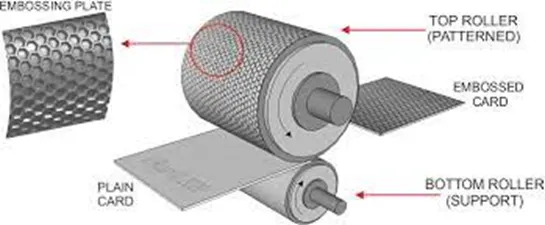
It is one of the forming processes which is used to form raised, sunken and relief design. In this process male and female rollers are passed on both sides and give desired patten. This design is fully depended on the dies of the male and female rollers. There is no thickness reducing in this process.
Characterises:
- Ductile sheet metal also formed in this process
- Production rate is medium to high
- Same thickness is got after processing
- Varity of Parten is available in this processing.
- Reproduces also done without variations.
HEMMING:
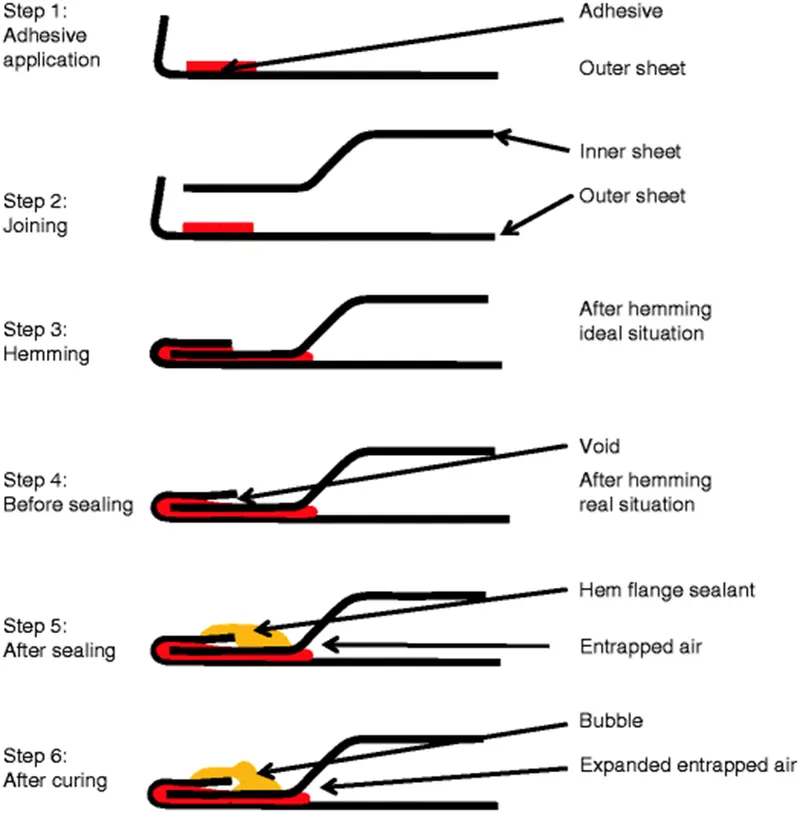
Hemming is one of the cold joining processes which is used to join a sheet metal part on another part. Outer panel has flanges which flanges will fold on the inner panel bottom side which is permanently joined. It is done by traditional press or robotically controlled roller. This process mostly used for doors, hoods and decklids.
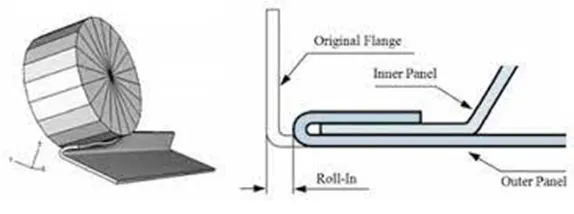
Types of hemming:
- Open hemming
- Flattened/closed hemming
- Tear drop hemming
- Rolled/ rope hemming
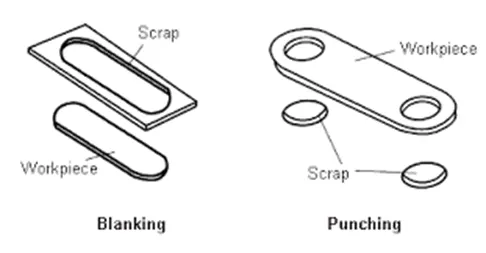
BLANKING AND PIERCING:
- These two processes are used to cut the sheet metal to get desired hole features.
- In the blanking process push the punch and get required part. This final part is called blank which is separate from work piece and tool fixture. Remaining part in tool fixer which is called scarps.
- In the piercing process push the punch and unwanted part. It is called scarps. Final part is kept in the fixing tool. It is called washer.
MASTIC SELANTS:
Mastic sealant is a type of liquid sealant that cures an in elastic state. It gives bonding between two surfaces. It is one type of adhesives. In the hood model hood outer panel is aesthetic look. So, we can’t use fasteners. So, we use hemming and mastic sealant. Hemming only joined with outside part. But this sealant is used in the rest of part. It is one type of elastic component. Initially it is in semi solid form after curing it will come solid form additionally, which increases strength of the panel.
Designing of hood:
Designing software:
In this project we use NX CAD software which is one of the Computer Aided Designing software which is used to create 3D modelling, assembly the parts and drawing etc. It supports the product developing and manufacturing at all stage of life cycle.
METHODOLOGY:
Metod for hood creation:
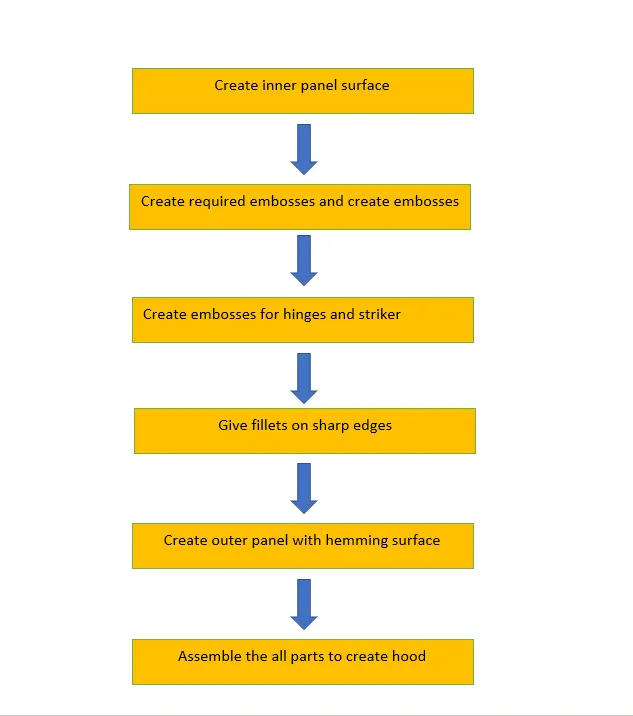
HOOD ASSEMBLY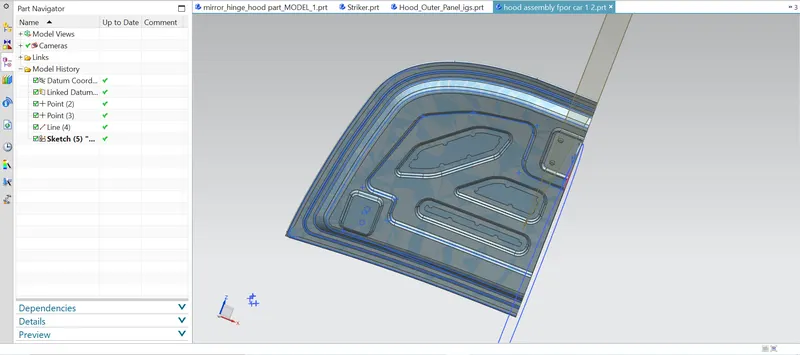
HOOD OUTER PANEL
STRIKER
MIRROR HINGE
HINGE ENGINE COMPARTMENT
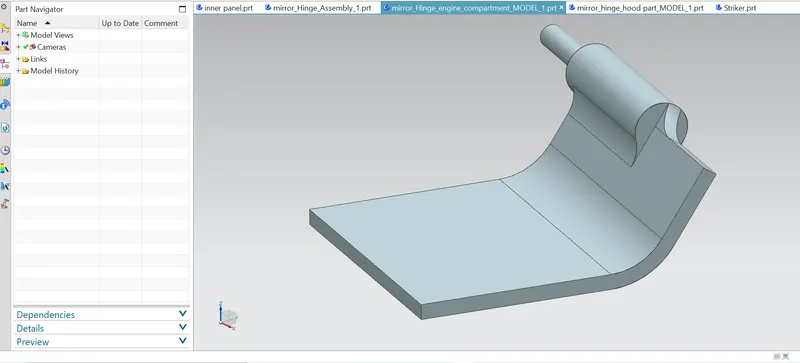
INNER PANEL
HINGE ASSEMBLY
CONCLUSION:
Finally the complete hood design of given master section is created respectively.