Hood design-Week 2
HOOD DESIGN
Aim : In this project of hood desing we will analysis and design the hood by consider standard design consideration and understand the working and safty condition.
Hood: Hood which is also called as bonnet generally, is the part of the car, which help to protect the engine of the car. Hood also play role in the safty role for the inside driver and the passengers, it also play the major role in aerodynamic theory. Hood is design in such a way that its very easy to reach the engine component for repaire if required. The hood is conneted with the car body with the help of hings, which helps for opening and closing hood at specific angle. The hood child parts wich helps to get connect with the car body and helps for other functionality are listed below-
Hood Outer pannel
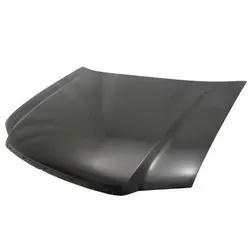
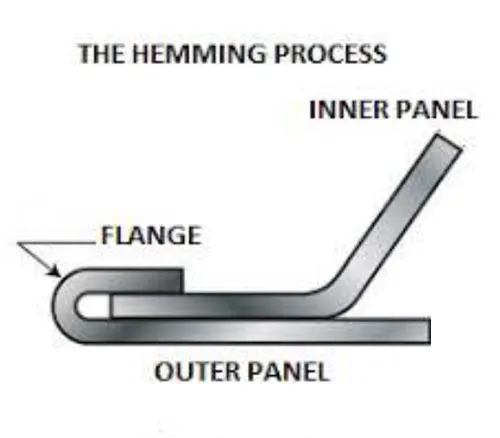
The outer pannel of the hood, is the aesthetic surface which is directly visible to the customers, becuse of that we should careful while designe the hood, its should not contain any punching and welding mark on it.The outer pannel is attached with the inner pannel by the hamming and mastic process.
Striker:
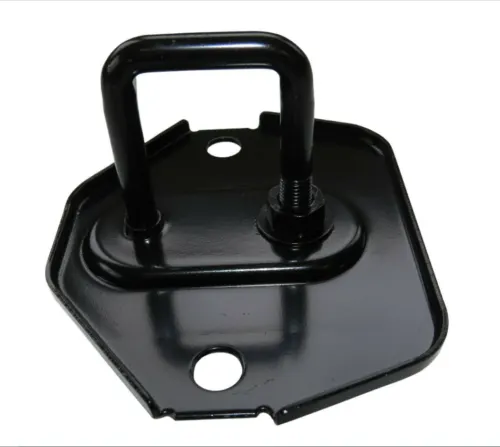
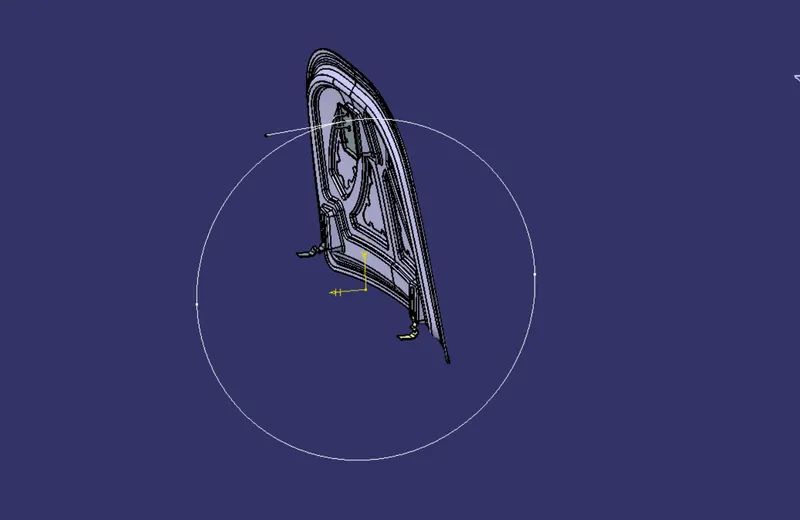
Striker is the component which is fixed to the hood whith the help of fastener by providing with proper emboss to place or fixed it in correct position and follow the trajectory part in correct direction. The below image show the striker and the trajectory path which follow by striker.
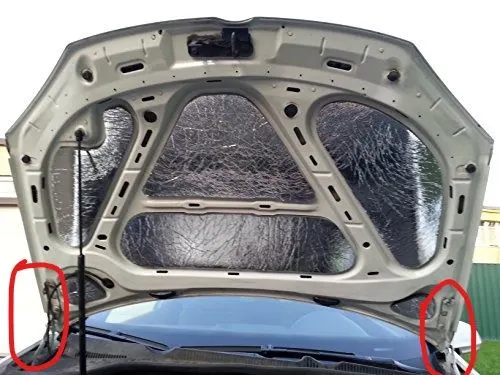
Hings:
Hings are mounting in the inner pannel of the hood and will connect to car body. Hings helps hood to get open and close wit very less effort, because it provide the rotary movement with the specified axis. The hings is fixed with the hood inner pannel by using fastners. In below images the hings is showing with red mark.
Inner Pannel:
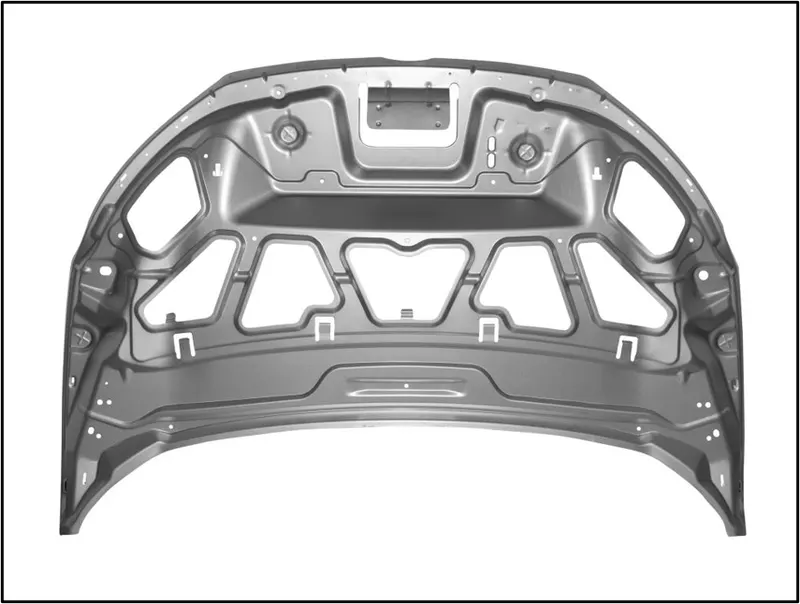
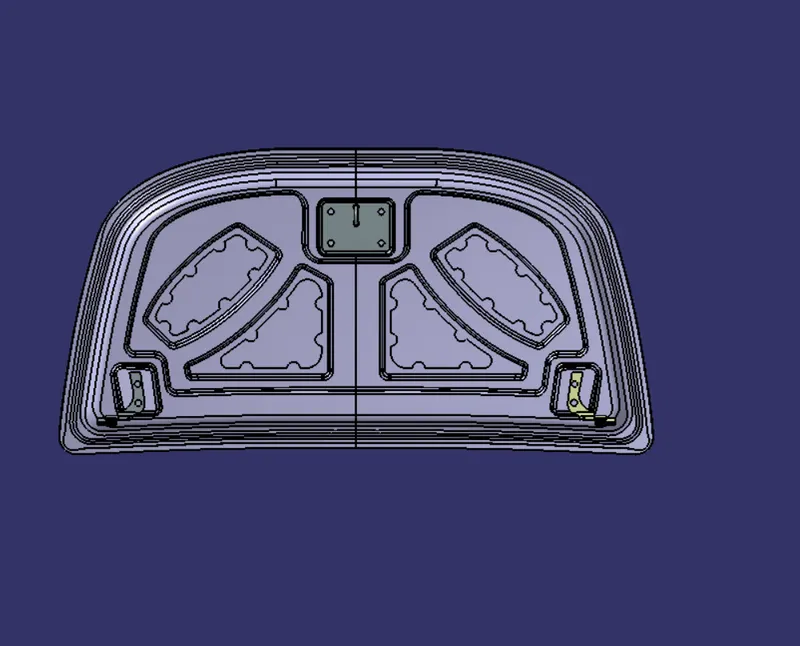
Inner pannel of the hood is the part where the all part like hings striker are get fixed. The inner pannel contin emboss (a hump stracture ) which hleps to reduce the force impact to the passengers by diverting the force direction and becuse of its stracture its also absorbe force.Below image show the inner pannel -
Hood Support Rod
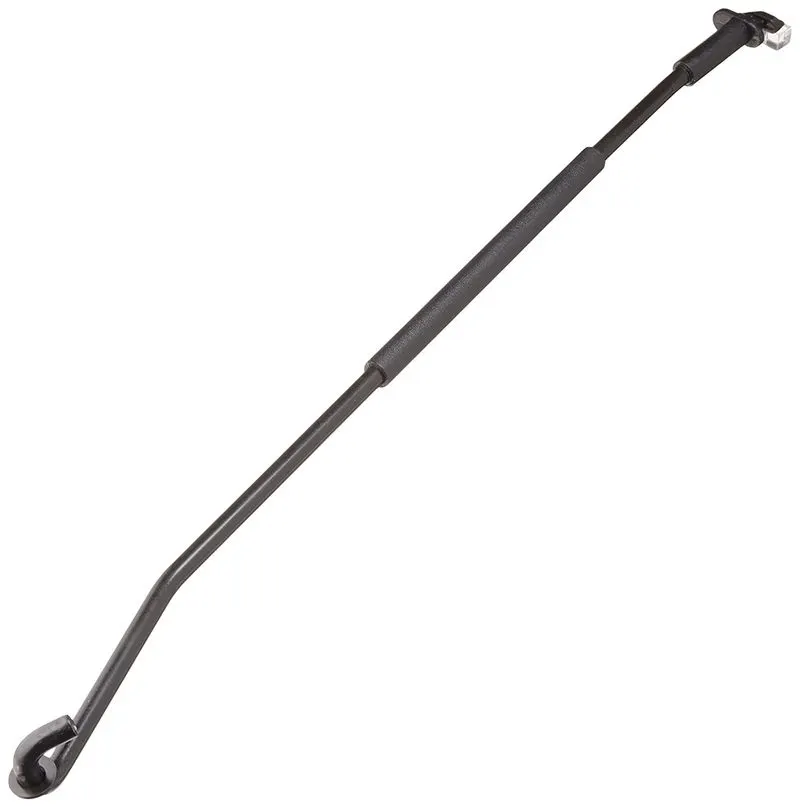
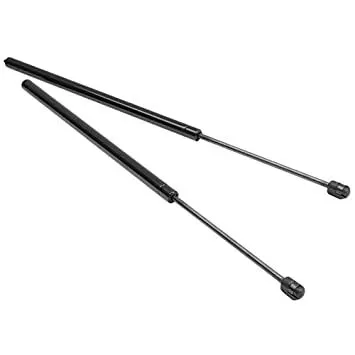
The hood support rod is help to hold the bonnet load in specific angle so the repair operation can be done without any difficulties. The support rod alway position on left side of the bonnet because in most of the car right place is occupied by battry unit , and battry is the component which is frequenty need service or replacement. In some of the car whose bonnet is more weight n it will difficult to lift by human in that case gasstay is using instead of support rod. gasstay is one kind of mechanism which help to open bonnet without any effort by providing small force at initial stage. Gasstay is alos mounted and connected with bonnet and car like a hings with the helps of fastners.
Support Rod
Gas stay
Design Consideration:
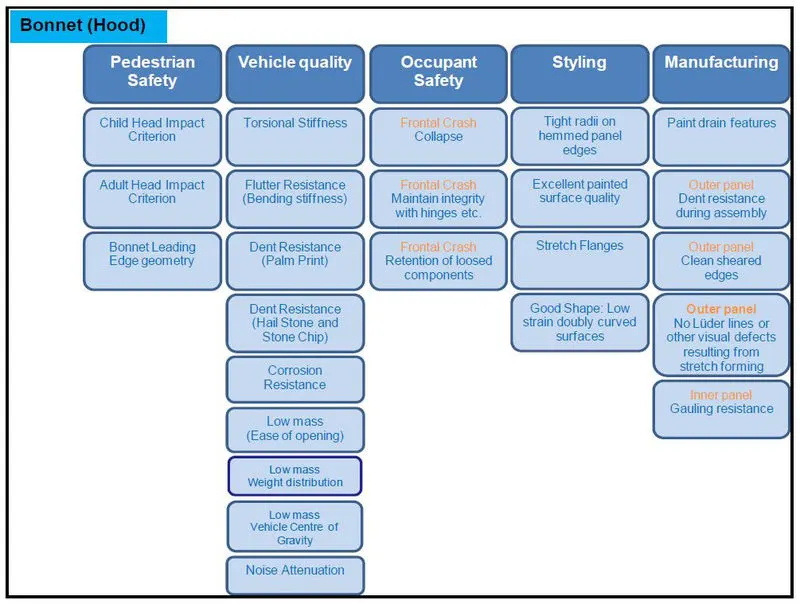
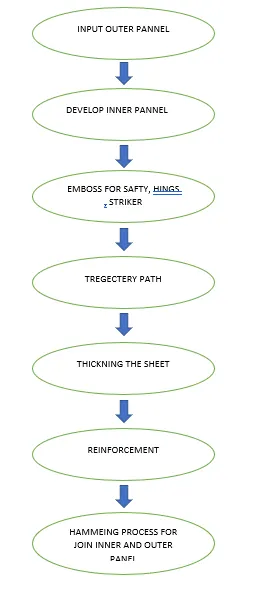
Below Flow Chart shows the design consideration for hood
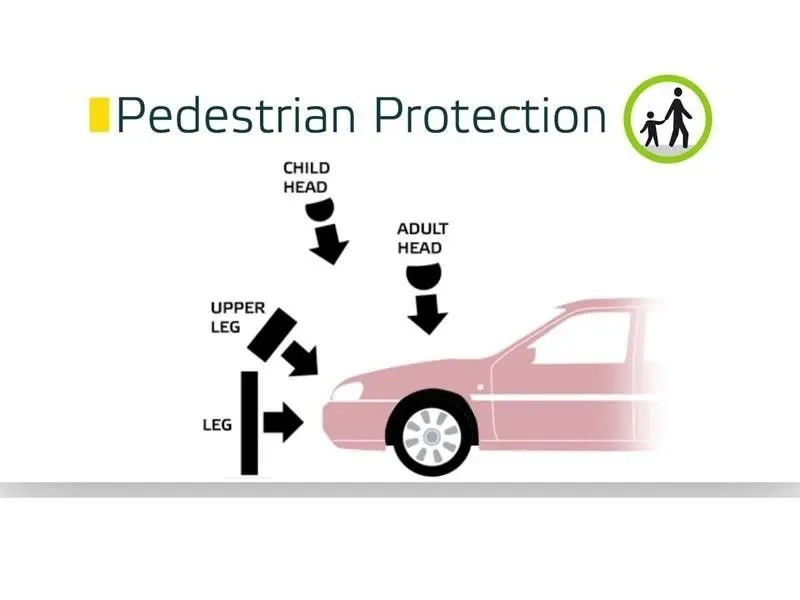
While designing hood its is very import to consider the safty parameters set by EURO NCAP , we have to consider all those parameters.Below pics shows the impact position for the adult and children .
The manufacturing process followed in industry for producing final product of sheet metal are mention below-
1)Deep drawing
2)Stamping
Deep Drawing:
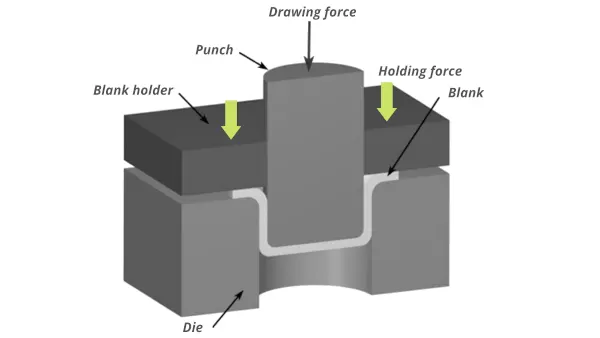
Deep drawing is a sheet metal forming process in which a sheet metal blank is radially drawn into a forming die by the mechanical action of a punch. It is thus a shape transformation process with material retention. The process is considered "deep" drawing when the depth of the drawn part exceeds its diameter.
Stamping:
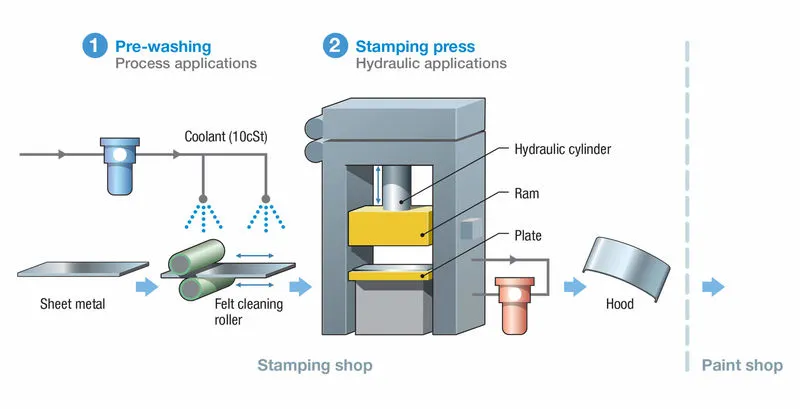
The process of turning sheets of metal into a useful part or component is called sheet metal stamping. The metal is fed into a press, where the stamping tool, also known as a die, creates the desired shape. The die is pressed into or through the metal with tremendous force.
Joining Methodes for Sheet metal production:
- Mechanical Joint
- Rivet Joints.
- Clinching Joint.
- Welding Joint.
- Folding / TAB Sheet Metal Joints.
- Adhesive Bonding.
- Brazing Joint
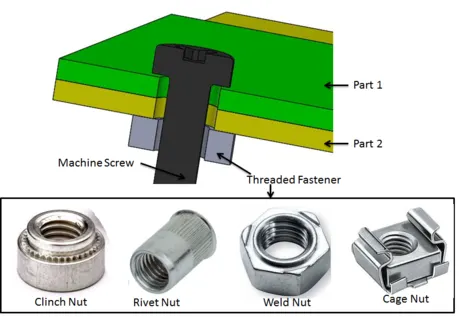
Mechanical joint means that assemble and joining sheet metal pieces together with some hardware or fasteners such as screws, bolts, or nuts. Mechanical joining is the ideal solution for a metal fabrication strategy as it provides simplicity and flexibility. That allows you to be able to reassemble the products or replace the parts or accessories inside the products since the fasteners you are utilizing for the installation are removable.
Welding Joint:
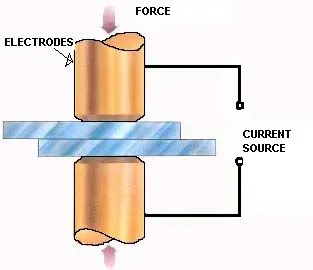
Welding is a popular sheet metal joint method that is widely used, not only that, it’s also traditional that was used several hundred years ago. Most metal products fabricated in the industry apply welding joints. One of the reasons why welding is widely applied is that metal pieces with welding joints can achieve their larger sizes and not influence their properties.
Folding Joint (Hamming):
Folding joining is performed without any fastener and additional accessories, so it’s a cost-effective method for making sheet metal joints. What you only need to do is to place the metal pieces on the bending machines. The edges of the two pieces of sheet metal are bent and folded, they buckle and clamp each other together.
This joining method is more simple and convenient than other types, it can quickly achieve assembly. However, it doesn’t ensure perfect positioning that needs some additional auxiliary manners to complete. Folding joining is suitable for metal without fragility such as aluminum, copper, soft steel, etc.
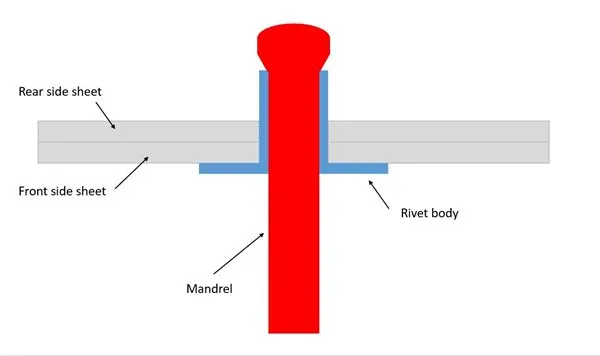
Revit Joint:
Applying the rivet joining process also has a long history. It became a main part of the modern assembly, as it’s widely used in various applications, such as metal tools, constructions, cars, and so on. The cost of this procession is cheaper than welding, but it comes with durability and strength that is just a little lower than welding, though, assemblies with this sheet metal joining technique get a more robust structure when it’s under pressure and at varying temperatures. The Eiffel tower and other symbolic buildings were built with numerous rivets.
Brazing Joint:
Applying the rivet joining process also has a long history. It became a main part of the modern assembly, as it’s widely used in various applications, such as metal tools, constructions, cars, and so on. The cost of this procession is cheaper than welding, but it comes with durability and strength that is just a little lower than welding, though, assemblies with this sheet metal joining technique get a more robust structure when it’s under pressure and at varying temperatures. The Eiffel tower and other symbolic buildings were built with numerous rivets.
Clinching Joint:
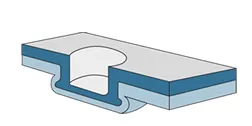
Clinching joint is a permanent joining process that applies the mutual fixation of deformation (looks like a button) between two or more metal sheets to clamp each other together. This method utilizes a cold-forming process, it’s excellent for the application of joining different thicknesses and types of metal. Although the operation is simple, it’s not suitable for the metal products that need to be disassembled in the future.
Adhesive Joint:
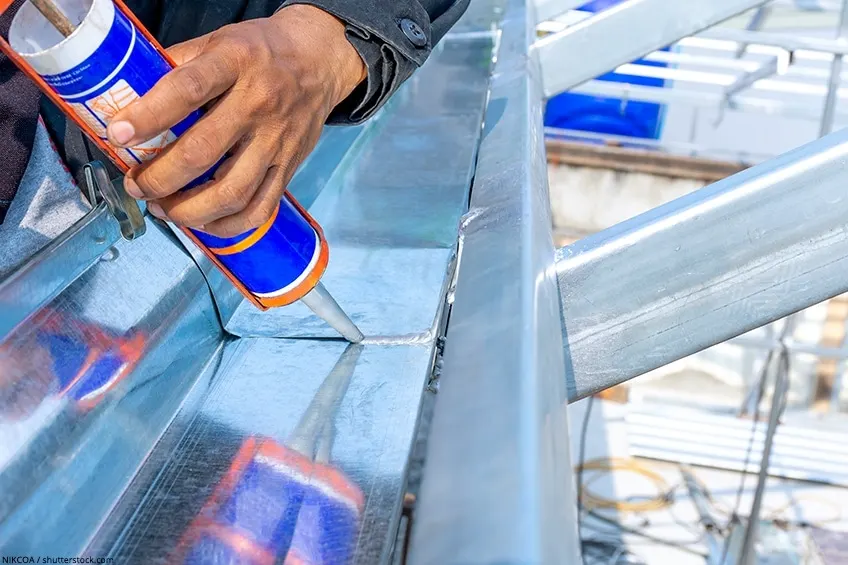
This type of sheet metal joining techniques is performed by using adhesive bonding between two metal sheets. The assembled products can be disassembled by chemical solvents. For adhesive joints, pressure needs to be applied to enhance the bonding strength after the adhesives are placed on the sheet surfaces.
Flow Chart for the project :
Trajectory path: The trajectory path is an imaginery path where the movement direction of the striker and the hood will decide. The trajectory path is very importent for hood design , if the striker will not foollow the trajectory path he locking mechnism will not work.The striker should be perpendicular to the trajectory path so it will correctly match with the locking mechanism . Below diagram show the trajectory path of the striker. The circle shown in pic is tregectory path and the striker is follow the perendicukar position of the trajectory path.
Hings :
Hings is the subcomponent of the hood, which helps the hood to open and close in specified hing axis. hings are fixed with the hood with the help of reinforcment and mechanical joint in inner panel and attached with the car other respective body.
WRAP AROUND DISTANCE:
When a car crashes on the pedestrian, the whole human body wraps around the front shape of the car and the head impacts on the bonnet or the windscreen. The distance on which the head impacts on the car from the ground is called as the Wrap Around Distance (WAD).
To be specific the Wrap Around Distance is a measurement of distance from the ground to the head impact zone over the outer surface of the car. The wrap around distance is measured longitudinally in the center of the vehicle from the ground.
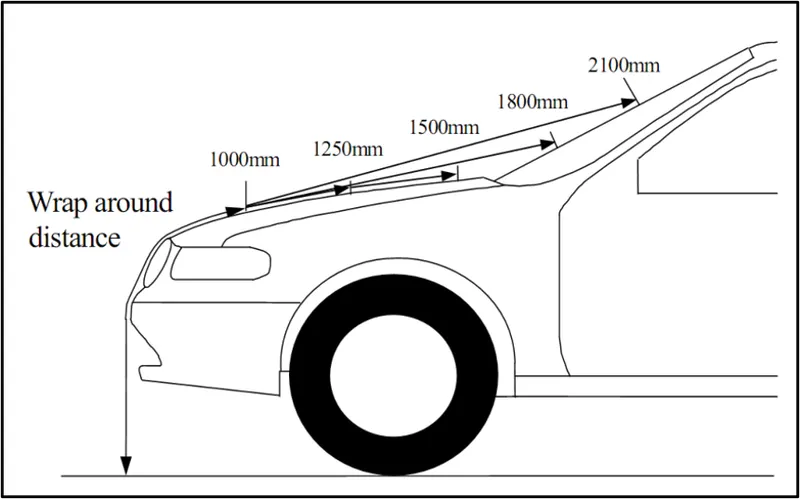
The severity of the injury caused by the frontal crash depends on the type and shape of the vehicle, speed of the vehicle and the movement of the pedestrian relative to the vehicle. In addition to these parameters, the wrap around distance plays a major role in the safety measurement of a pedestrian. During the crash analysis, based on the Wrap Around Distance(WAD), two test areas will be created namely Child head impact zone and the Adult head impact zone. The child head impact zone is between 1000 to 1700 mm WAD and the adult head impact zone ranges between 1700 to 2100 mm WAD.
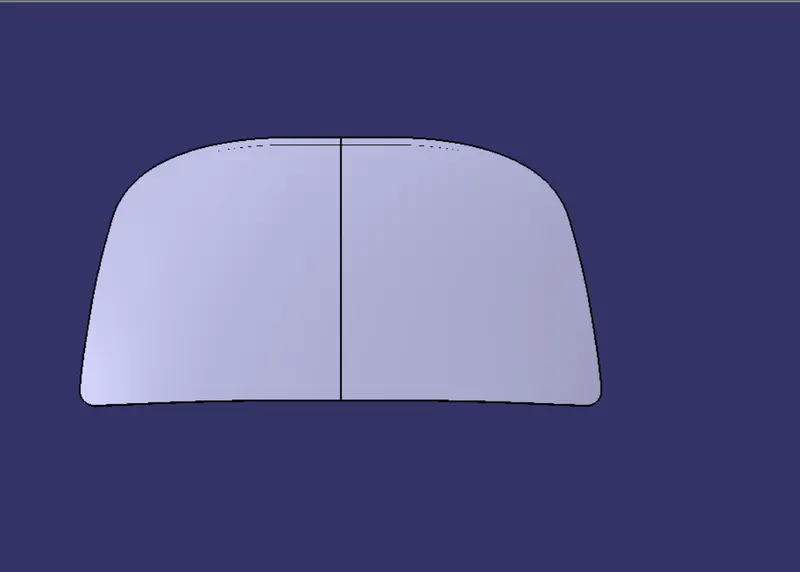
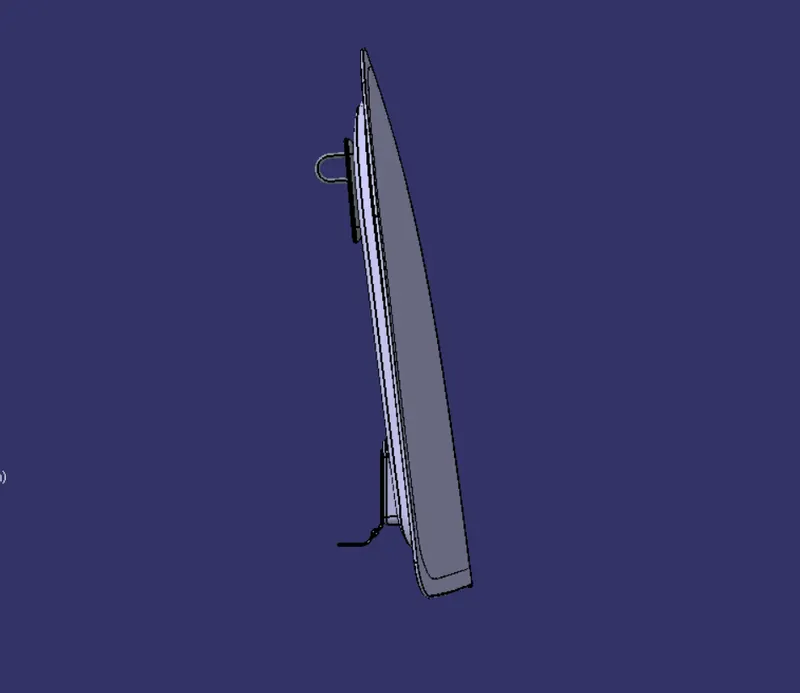
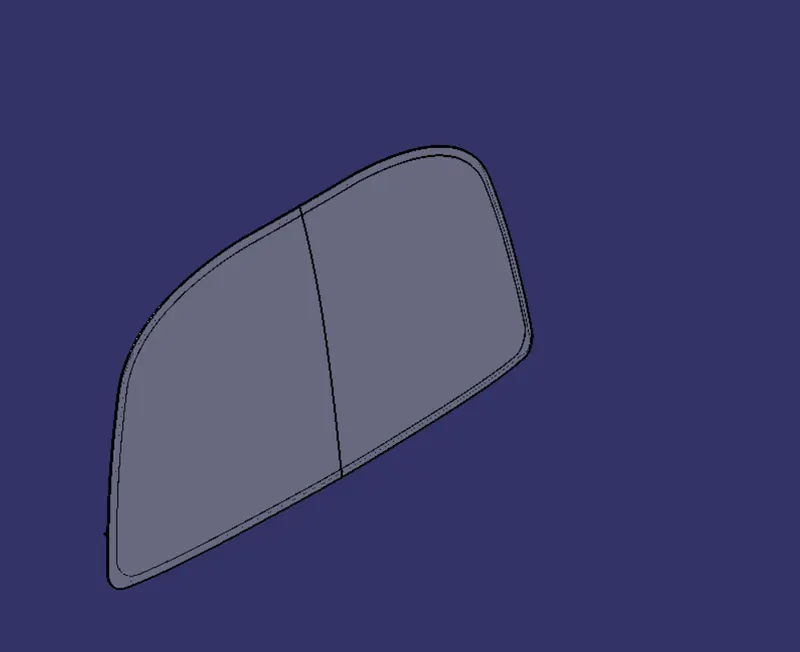
VEIW OF THE MODEL:
CONCLUSION:
In this project we understand the importance of the hood for the safty of passengers and the padestrain. While design the hood we should as a design engineer follow all the standard consideration and at the same time follow the safty for the pedestrian as well.